Categories
Stories

Much a-doe about a deer


The Sariska Wildlife Reserve was, at one point of time home to over 40 tigers. During our safari, our guide informed us that wildlife enthusiasts preferred Sariska over Ranthambore. Unfortunately, poachers felt likewise. Due to poor monitoring and rampant poaching, by 2004 there was not one tiger left in the Reserve.

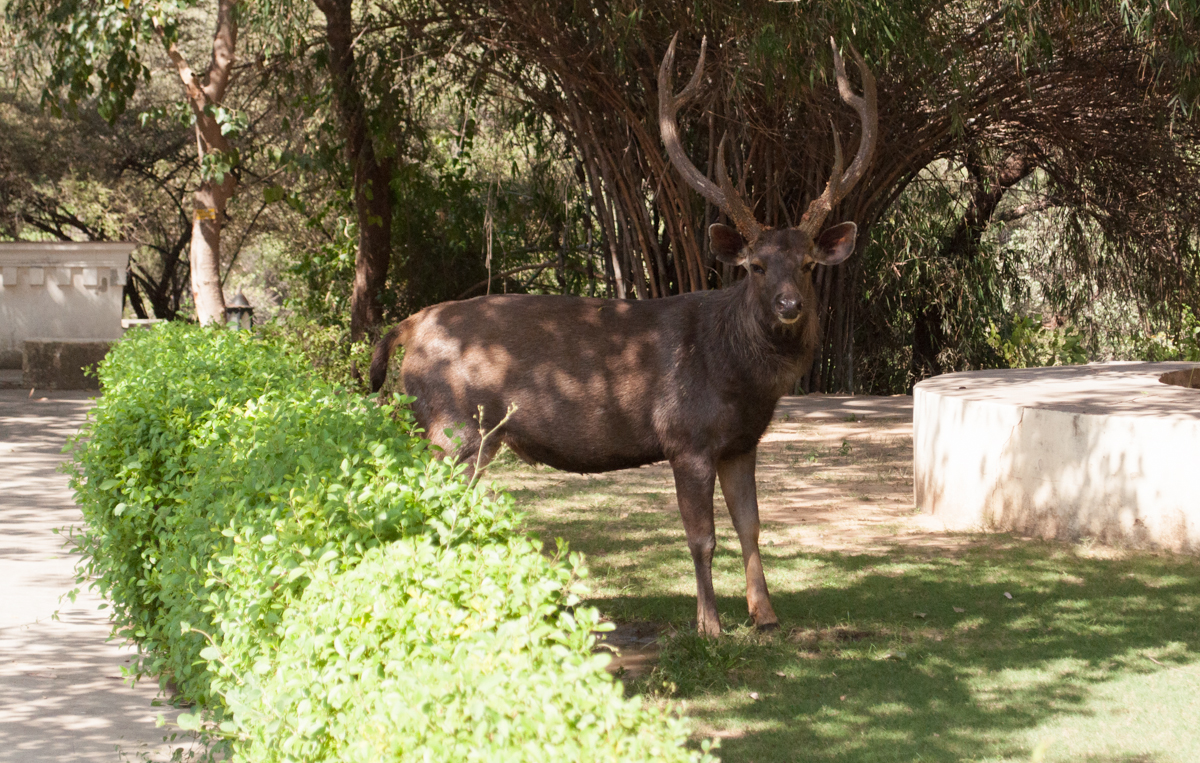
The lack of tigers led to an increase in deer with the population of over 25,000 Sambar deer alone.

In 2005, three tigers were relocated from Ranthambore and the number of tigers in the 800 sq km forest has now risen to 13 (with less than half the area allocated to it, Ranthambore boasts over 50 tigers)

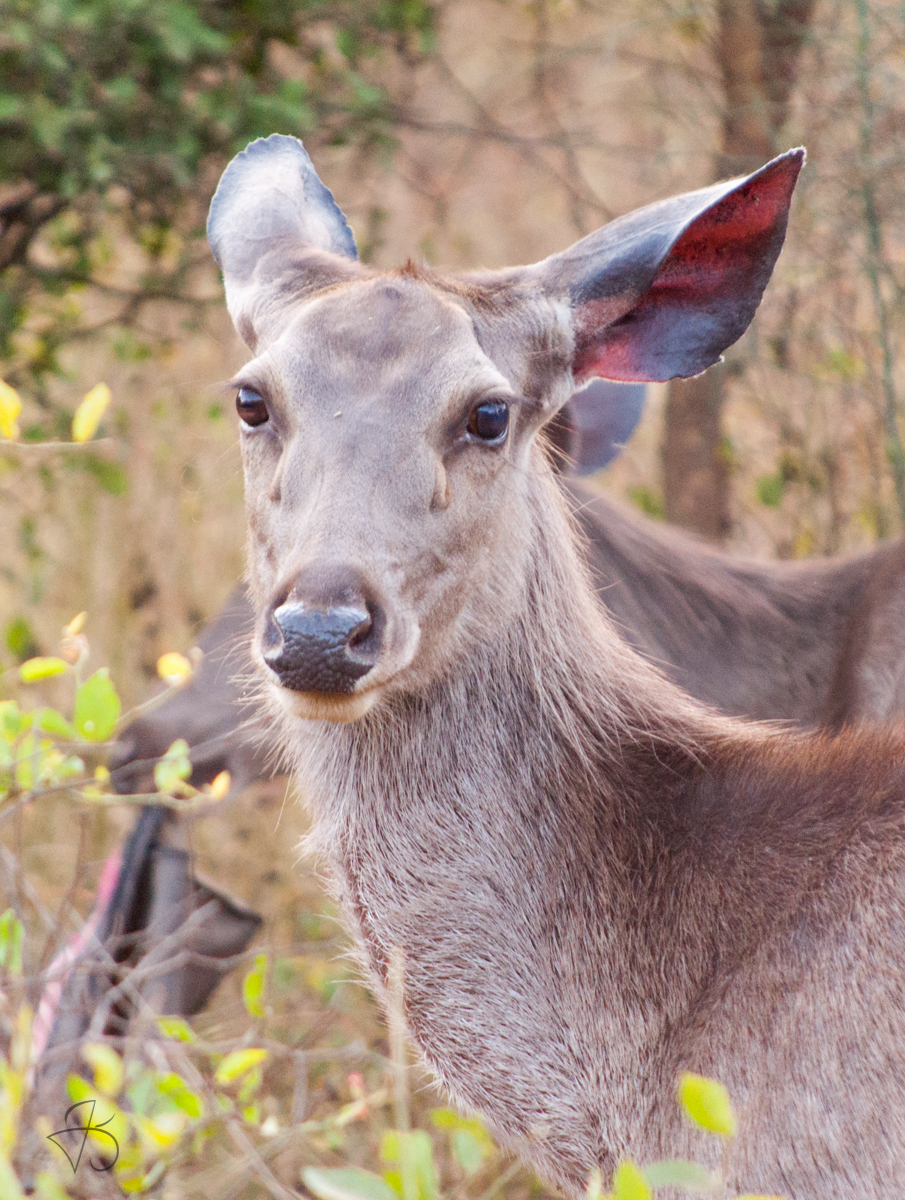
Doe, a deer. A female deer

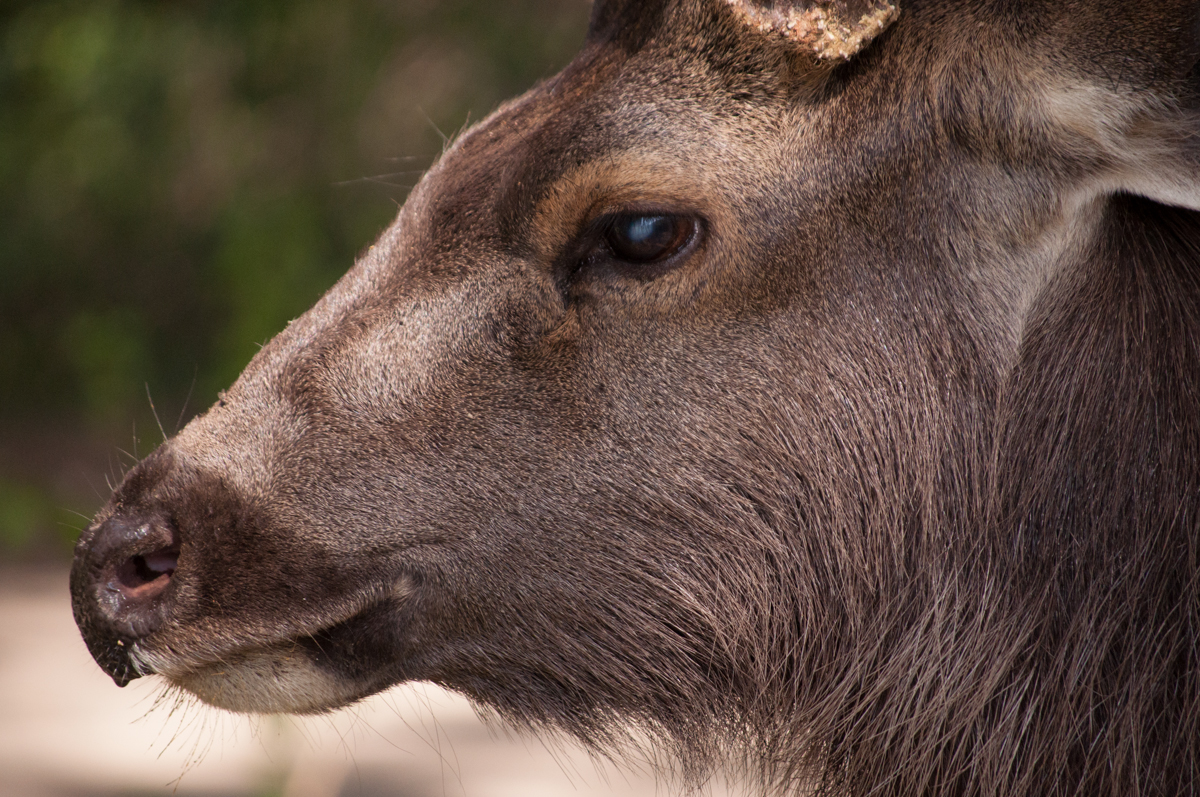
This gorgeous creature is one of thousands of deer at the Sariska Wildlife Reserve.


It’s November. Regular bloggers may be familiar with the Nanos. This year, I’m also going to try to post something every single day. So I’ll see you tomorrow 🙂


nanopoblano2015lightThis is post #2 in this year’s NaBloPoMo, or as Ra calls it Nano Poblano

NaBloPoMo = National Blog Posting Month = Thirty straight days of blogging

Thanks a bunch to all the cheering peppers who have been tweeting and liking posts across WordPress 🙂

Categories
Stories

Ink-Stained Fingers


‘Hey you! Come over here,’ The teacher smiled and called the chubby girl to the front of the class. Addressing the other students, she pointed at her face and said, ‘Look at her! Doesn’t she look funny!’ The class of forty students began laughing. The girl stood there, clueless about what the joke was. The teacher told the girl to go and take a look in the mirror.

Confused and embarrassed, she made her way to the girls’ bathroom and stared at the mirror. A small blue patch of ink had made its way to her face. She turned around a bit, acting out the scenario from a few moments ago, curious to know how she would have looked in front of the class.

The class was the fifth standard. The little girl was me. The patch of blue on my face had come from my ink-smeared fingers.

That teacher taught us Hindi. She was a good teacher, and probably the sole reason I actually know the Hindi alphabet better than most of my Hindi speaking peers. But for reasons I am still not sure of, she constantly picked on me. My Hindi was terrible. My handwriting even worse. Every page of my notebook bore scars from her red pen. Strangely, her remarks in my notebook were all written in English. I can vaguely recall one such remark, ‘Instead of improving, your handwriting is getting worse with every class!’

I was terrible with pens. We were only allowed to use fountain pens. Ball pens were a complete no. ‘It’s bad for your handwriting,’ that’s what they said. I had to change my pen frequently. I broke nibs. The refilling compartment would leak as I wrote — leaving blue fingerprints on my notebooks. I took it as a sign of achievement — proof of a great writer, or at least one that writes a lot. I could make the best pens leak. I began using different kinds of pens, and they leaked too. I even managed to break the nib of roller-ball pens.

For over three years, I have attempted to narrate this little incident from my childhood. And every time it ended up with me breaking down. I always imagined that I would write about having forgiven her and sound magnanimous. But I cannot bring myself to say that. Her insult was a personal one — one which no child should be subjected to, and most definitely not by a teacher.

One might say that hatred is another side of love, and that deep down inside I probably want her to like me and be nice to me. That may be true. And by not letting go of that incident and allowing it to torment me, I am more likely to harm myself more than anyone else.

But today, as I prepared to write this — my 200th post — I wanted to put to rest the whole issue. Having ink-smeared fingers is no crime, and my inability to take care of a pen has nothing to do with my ability to write.

This morning, I took out my fountain pen and washed the dust off it. I cleaned the nib and watched my fingers get soaked in ink. Then I sat down to type.

Now that I have written this, I realise why that incident refuses to leave me. As angry as her behaviour makes me today, my own reaction to it at that time never ceases to amaze me. For some reason it never hurt me. The little girl I saw in the mirror didn’t react – at all. She was different. She was indifferent.

Did she notice that? Was the teacher trying to get under my skin and make me feel something — love or hatred — towards her? I’ll probably never know. But it sure feels good to think about it!


nanopoblano2015lightThis is post #1 in this year’s NaBloPoMo, or as Ra calls it Nano Poblano

NaBloPoMo = National Blog Posting Month = Thirty straight days of blogging

Thanks a bunch to all the cheering peppers who have been tweeting and liking posts across WordPress 🙂

Categories
Hobbies

Weekly Photo Challenge: Treat


I’ve always had a soft corner for birds. But it’s always been a challenge to photograph them near my house. They hardly sit still long enough to allow me to take a picture. The birds in the jungle though seemed to be quite extroverted.

The Jungle Babblers, which are so restless in the city, didn’t seem to be afraid of us at all. One sat right next to us on our Gypsy, while a few more were perched atop the wind shield. Looking at the pictures, I suppose they were probably angry because we were trespassing their territory.

We spotted a Rufous Treepie at the exact same spot under a bush three times. I suspect it was looking after a nest, although I didn’t find one.

There were several Bulbuls too — some that allowed me to come real close. As strange as it sounds, I’d never been so close to them before in my life. And in my greed to capture a close-up, I didn’t get a clean shot at all.

Here are a few shots I did get.
Click on a picture to view larger size.

In response to The Daily Post’s weekly photo challenge: “Treat.”

Categories
Stories

Weekly Photo Challenge: Careful


‘Look! Peacock feathers!
Can I take one to keep?’

‘Wait! I’ll get it!
You must stay in the Jeep.’

It’s dangerous out there.
Wild creatures only pretend to sleep.

The woods are lovely, dark and deep.

A poor imitation of a poem by Robert Frost


Continuing with photographs from the Sariska Wildlife Reserve, here are a few photographs for this week’s photo challenge. Click on a picture to view larger size.

In response to The Daily Post’s writing prompt: “Careful.”

Categories
Hobbies

I’ll take care of you


careful

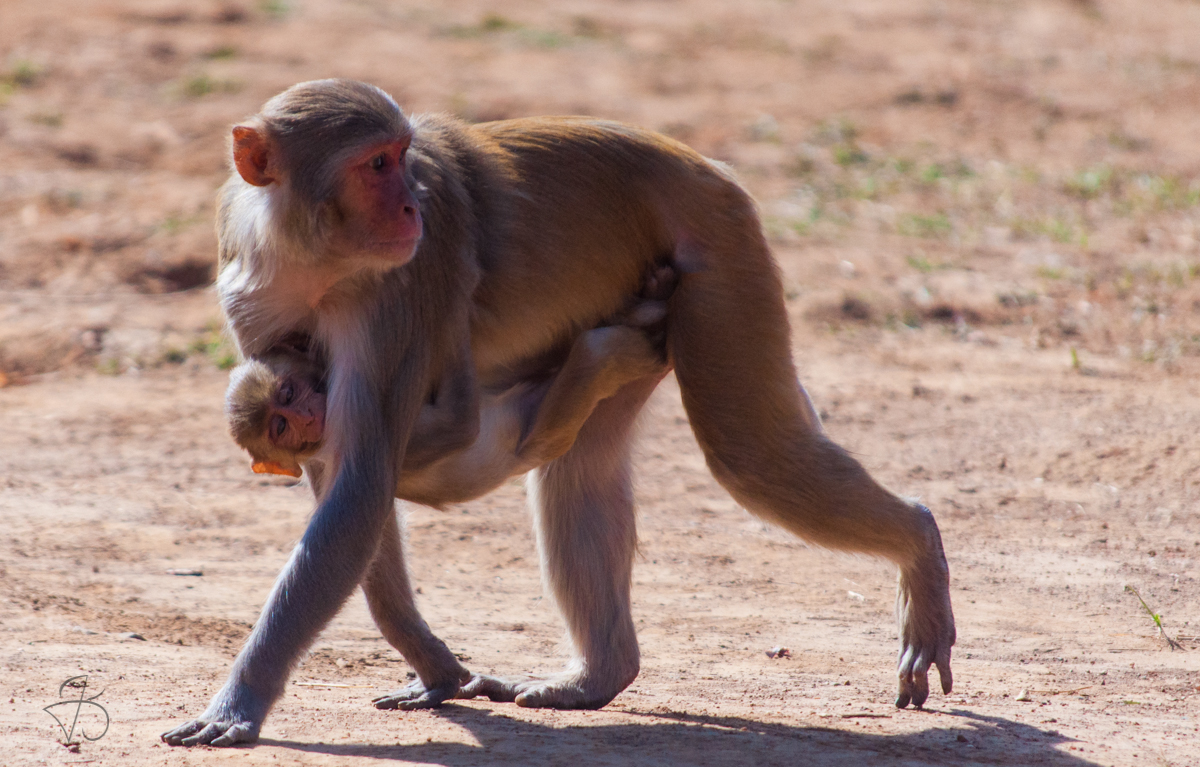
A group of monkeys crossed one of the roads next to the parked safari vehicles. More than one had a young one clinging on to her. This mother paused briefly to look over her shoulder, on the lookout for potential threats to the safety of her young one.

In response to The Daily Post’s writing prompt: “Careful.”

Categories
Stories

An (extra)ordinary cup of tea


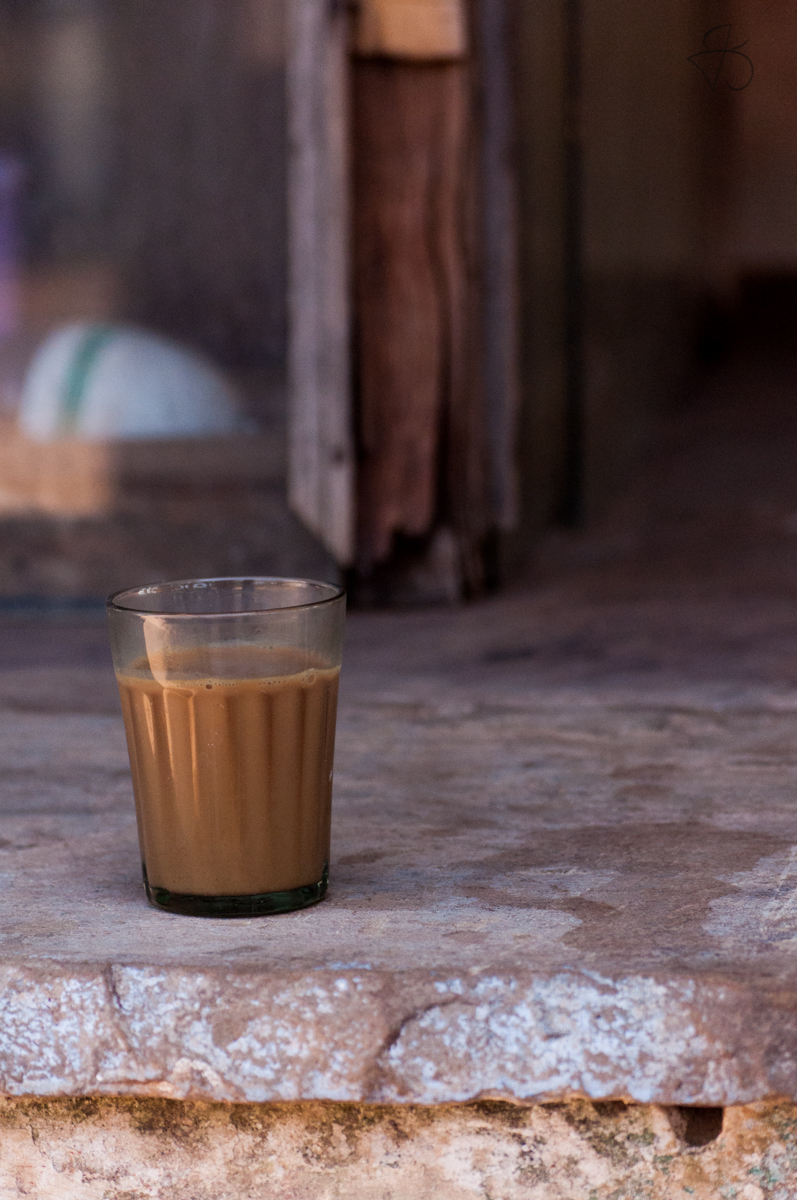
As it happens, I misinterpreted this week’s photo challenge. Let’s set things right. Would you like a cup of tea?


cup_of_tea

Just before our last safari in Sariska, we decided to eat lunch at a dhaba. There was a row of small houses with thatched roofs along either side of the road running along the perimeter of the Wildlife Reserve. Two or three large aluminium vessels kept along a short wall were the only indication that they were eateries. Seeing the number of safari Gypsies* parked around them, we skipped the first few.

We got off the car and walked towards an empty house. Outside the porch was an open shed with a thatched roof supported by logs. Beneath the shed were a few plastic tables and chairs and charpoy. A man appeared from behind the porch and we enquired if food was available. It wouldn’t take long to prepare, he said.

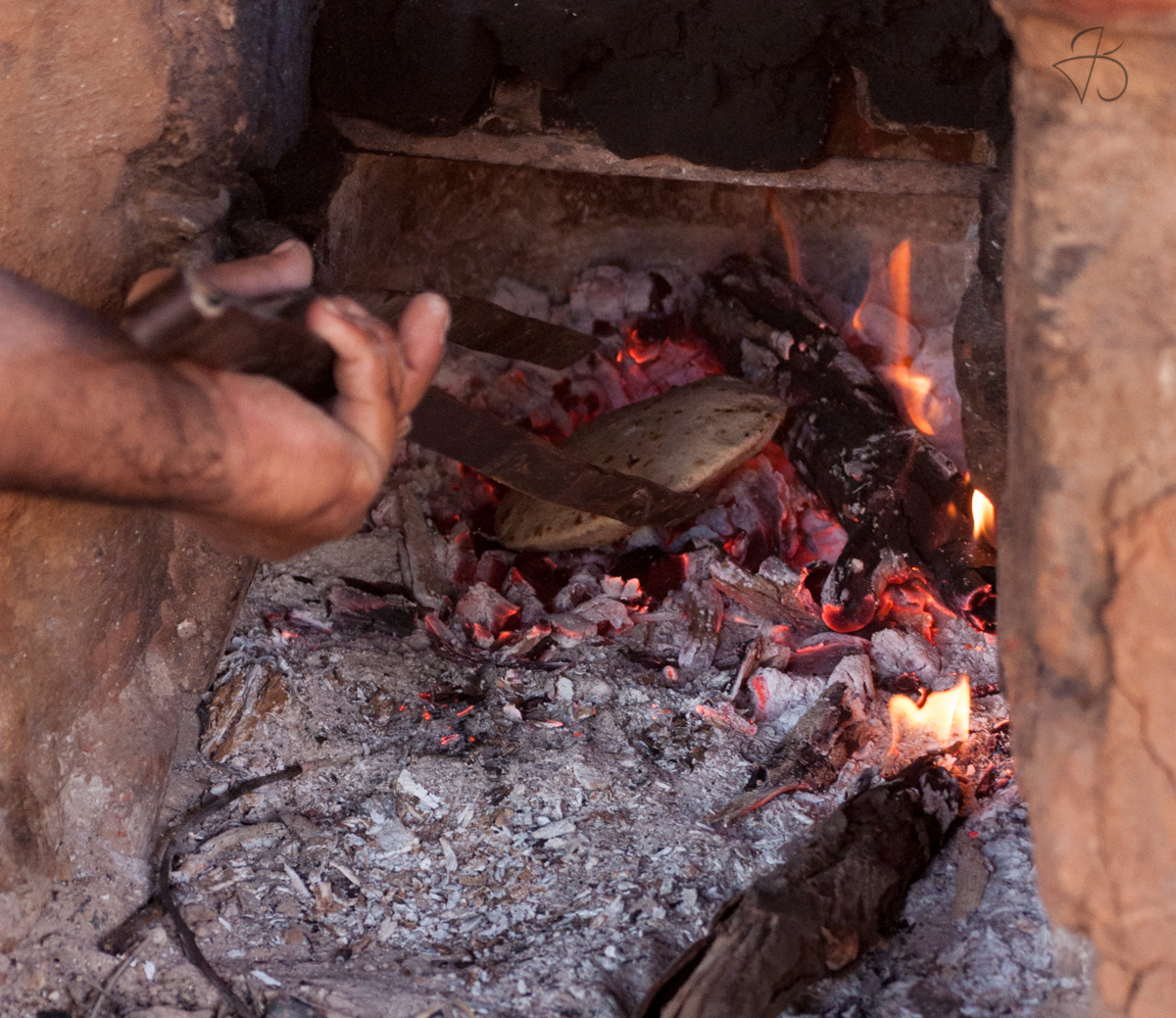
We settled around one of the cots and made ourselves at home. A little while later, our host laid out the platter on the table next to us. Hot dal and sabzi with pickle; thick rotis, freshly baked in a tandoor, served with a generous amount of ghee; and on our request, curd from his own house right behind the restaurant.

In goes the roti to get baked in the tandoor

Though simple, the food was delicious. He asked us if we needed another serving. When we said we were full, he asked if we would like to have some tea. Of course we did! As we waited for the tea, we pulled out our cameras.

A little while later, our host announced that the tea was ready. We noticed two little girls and their mother sitting beside the porch, near the entrance of the house — our host’s family. We sat near them on a makeshift bench made with a stone slab and sipped on the cardamom-flavoured tea. The elder daughter opened up easily and seemed to enjoy our attention. She told us her name and that she had just returned from her school. The younger one remained close to her mother. We learnt that they were farmers, and that they had finished harvesting their crop of corn. They said they didn’t sell the corn. Instead, they made flour to prepare rotis. A little later, we heard a baby’s cry. Our hostess left to attend to her youngest child inside the house.

We told our host that we had got a glimpse of a tiger earlier that day. He confirmed that there indeed was one nearby last night. In a very matter-of-fact way, he said it was most likely out hunting for prey, and that he had heard the call of a deer near his house. We wondered how it would be to live there. Growing a crop with whatever little income came from feeding a few highway passersby and stray wildlife enthusiasts, to live in a secluded part of the state without a proper address and wild tigers for neighbours.

We thanked our hosts for their hospitality and paid the very modest bill. Our hostess returned as we prepared to leave, and presented us some farm fresh corn to take home. And no, she clarified, they weren’t selling it.


* Gypsy – a four-wheel-drive off-road vehicle

dhaba – a roadside food stall
charpoy – wooden cot
dal – split lentils
sabzi – a vegetable cooked in gravy
roti – Indian flat bread
tandoor – clay oven that uses fire (from wood or charcoal) for heat
ghee – clarified butter

In response to The Daily Post’s writing prompt: “(Extra)ordinary.”

Categories
Stories

An extraordinary encounter


We took to the roads early morning and checked into our hotel just before lunch. While our rooms were being readied, we confirmed our safari booking. We then picked up the keys and headed towards the rooms.

Our rooms were towards the back of the property in a separate compound. On entering, we were greeted by a small lawn with a cluster of bamboo plants in the centre.

Near the edge of the lawn stood a Sambar deer with the most majestic set of horns. What a welcome!
sambar_deer_first_look

We rushed to our room, dumped our belongings and went to meet our host.

Not wanting to frighten him away, we maintained a fair distance. Having clicked away to our heart’s content, we moved closer. The deer didn’t seem to mind. We walked further ahead until we were less than 2 metres away.


He humoured us for a while, patiently posing for portraits for a good fifteen minutes. He probably got bored and slowly began turning back. He scratched his horns against some bushes and then disappeared into the thickness.

That thickness was an opening into the Sariska Wildlife Reserve.

Being at the edge of the forest, we were told it was not advisable to go out alone at night. And for good reason. The next morning, our safari guide confirmed that pug marks were found just outside the hotel. One of just 13 tigers in the 800 square km forest had paid us visit while we were asleep.

pugmark

In response to The Daily Post’s writing prompt: “(Extra)ordinary.”

PS: This beautiful creature is a Sambar. The south Indian dish frequently accompanying idly, vada and dosa is pronounced SambAAr.

Categories
Miscellaneous

Weekly Photo Challenge: Boundaries


Farm Fence

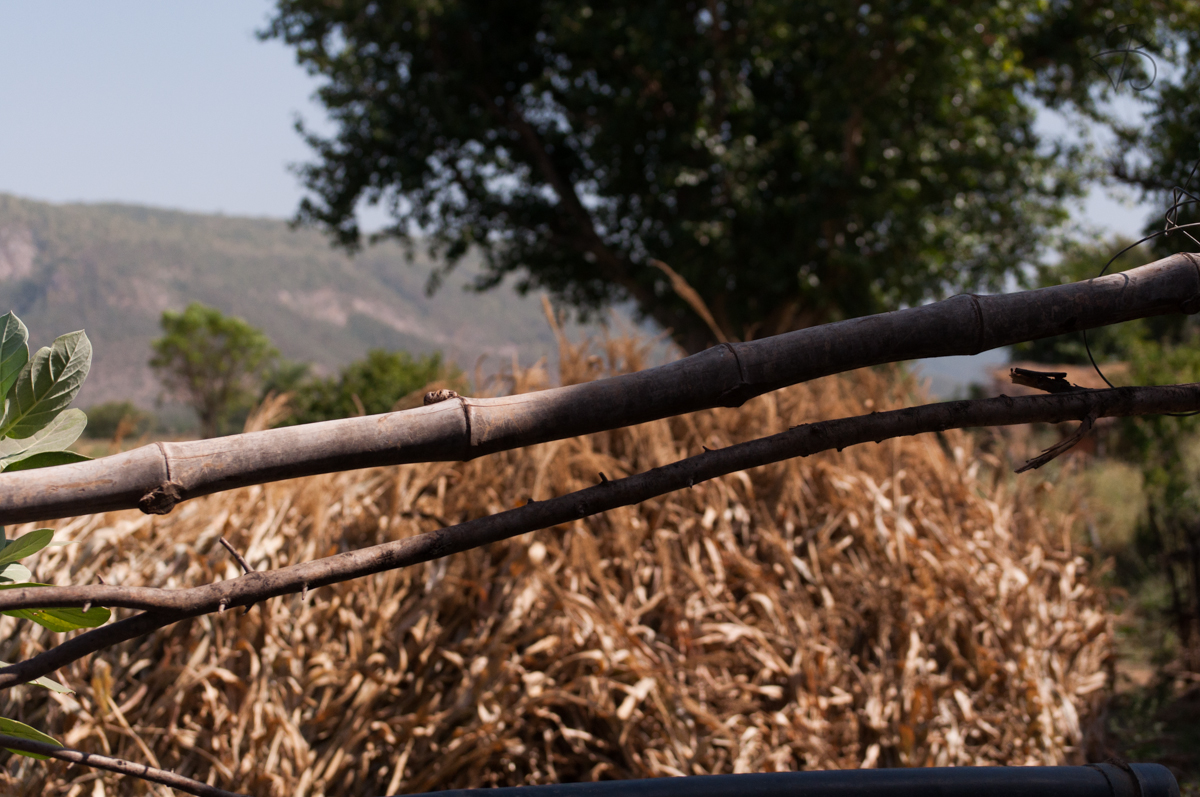
This wooden stick is a crude fence built by a farmer to protect his crop of corn. Sitting at the edge of the Sariska Wildlife Reserve, the family of five has no need to be afraid of robbers. The odd tiger that pays them a visit every now and then, is quite a good security system.

Weekly Photo Challenge: Boundaries

Categories
Hobbies Poetry

WPC: Change


The life an times of pencils
Tall, clean and sharp, they come in shiny boxes.
We draw them out and display their art.

We put them in denim pockets, in rusty boxes and in dusty pouches.
We wear them down and peel them out.

Misplaced, handed over, forgotten, replaced – it’s of no relevance.
They have ensured that they have made their mark.


These pencils have been my silent companions for several years now. A few weeks back, my mother stitched this pencil pouch for keeping them organised, using a few of my old clothes. My pencils have finally found a home – a wonderful one too! 🙂

The changes a pencil undergoes in its lifetime, as well as the transformation of my old clothes into this new pouch are my interpretations for this week’s challenge.

For more changing images, visit the Daily Post’s Weekly Photo Challenge – Change