Categories
Poetry

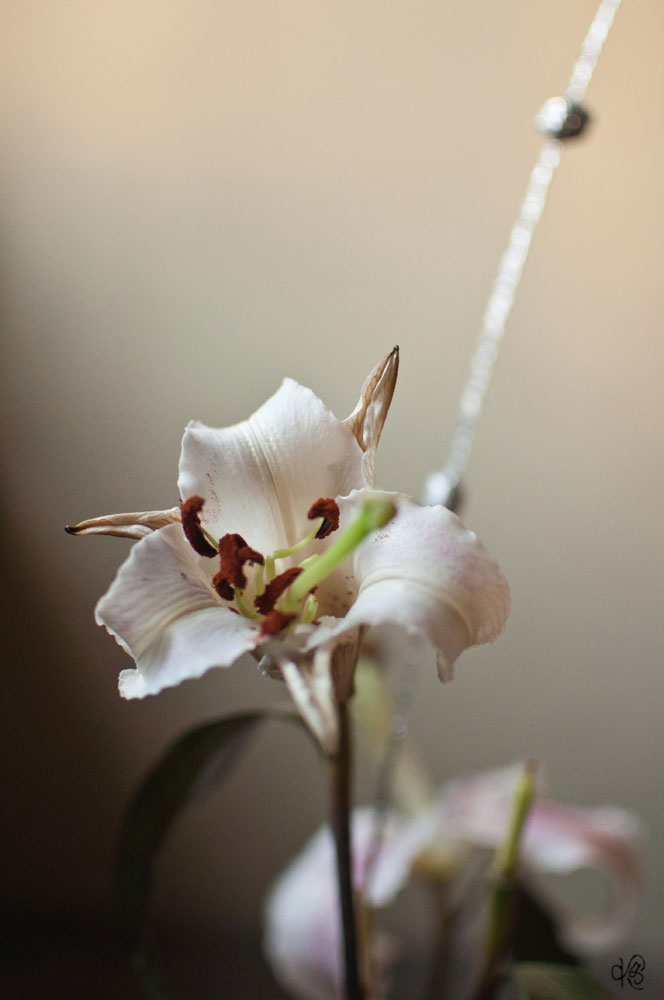
A Flower’s Life


You put in all your efforts,
I smile ’cause I’m impressed.
That is what you think.

To you, I am always pretty.
But it’s not because of you,
That is my ill fate.

You wait for me to blossom,
And at just the right time,
Cut me off my stem.

You give me sparkles,
A little water to drink,
To show me off to your mate.

I may cry before your very eyes,
But you choose to ignore.
For you, that’s my smile.

I wait patiently to get my own way.
That is not what you want,
And I must stay.

Soon the day will be here,
And I will become free.
That is the day you will throw me away.

Categories
Stories

Protected: The Journey


This content is password-protected. To view it, please enter the password below.

Categories
Stories

Taking Payal Home


She was standing at the base of the stairs leading up to the main road, in the subway*. She wore a checked kurta and salwar. A neatly folded dupatta was slung across her shoulders formed a ‘V’. Her hair was braided, tied with ribbons. A huge school bag completed her school uniform. She may have been in middle school. It was lunch time, so it was not unusual to find school students wandering about, and I would have never even noticed her presence.

She held on to the railing, and took one step on the staircase. She dragged herself slowly, up one step. It was then, that I observed her. Her entire body was shaking, as if she had Parkinson’s disease.

I tried not to make her feel like she was out-of-place, and pretended to have not noticed her. I suppose I failed at that. As I walked past her, she spoke, ‘Excuse me Didi! Time kya hai?‘ I looked at my phone and informed her of the time. She then asked me, ‘Aap ek  phone call kar sakte ho?‘ I agreed immediately. She called out a number, and asked in Hindi, ‘Please ask my father to come and pick me up… My name is Payal^.’

She was still holding on to the railing of the staircase, taking one slow step at a time. I dialled the number she called out. It was unreachable. She dragged herself up, and I walked beside her, trying to match her pace. I tried to call the number a second time – still unreachable. Perhaps the network was poor. Maybe I could try once again after exiting the subway. A young man climbing up the stairs looked back, and enquired what the matter was. He seemed a little sceptical, and asked if she came this way everyday. He kept looking back, as I called the number once again.

Once we were on the footpath of the main road, with no more railings to hold on to, she held on to my hand. The young man asked in Hindi, ‘Shall I put her in an auto**, so that she can reach home?’ I ignored the man. Even though I had just met her, I felt responsible for Payal.

I asked her where she lived. ‘I live just behind that’, she said, pointing towards a bend in the road. Her father’s number was still out of reach. ‘Shall I take you home? Do you want to go in an auto?‘ She paused, and then nodded her head. She said we could walk.

She had just met me, and she trusted me enough to put her safety in my hands. I held her hand and we took a few steps. It didn’t take long for her to realise it would be a very long walk. In a soft voice, she asked, ‘ham auto le len?’

I agreed and stopped an auto on the road. I asked the autowallah# if he could take us to her house. I pointed towards the bend in the road. No autowallah would travel such a short distance. The expression on his face, upon looking at my new friend, changed. ‘Baitho,’ he said, gesturing towards the seat. I asked him for the fare. He waved his hand, as if to say, ‘don’t worry about it…’

We hopped in. Payal began feeling a little comfortable around me, and attempted to speak in English. She asked me my name. ‘Its a nice name. You going to office? College?’ She gave directions to her house. It was perhaps a kilometre, and I wouldn’t have minded walking. But for Payal, it would have been a huge struggle. I asked her which school she was in, where it was, and how she ended up at the subway. She told me her school bus dropped her off there, and she was waiting for her father to pick her up.

When we neared the apartments. She smiled widely, and said, ‘Welcome to my home! Please come home.’ We got off the auto. I asked the autowallah how much was the fare. As I paid him, Payal cried, ‘Wait, I will get money from home. No you don’t pay.’

I told her its okay. He had charged only the minimum fare.

I gave Payal a silly excuse to leave. She repeated herself, ‘Welcome to my home!’ I followed her up to the doorstep of her house. Her mother stepped out of the house, and clearly alarmed, asked Payal how she came, who I was, and why she didn’t call. It’s hard to tell if she was angry, or if her natural tone was like that. She tried to give me an explanation, for why no one was there to pick her up, as if she were, in some way, accountable to me.

I hastily said goodbye to Payal and left. On the way back, I couldn’t help but feel sad for Payal. She was such a small girl, and she had to face such huge challenges on a daily basis. At the same time, her courage to put up a brave face, and smile so sweetly, was inspiring.

As I walked back, I caught myself smiling, just as I had caught the autowallah smiling, when he was about to leave.

*  *  *

^Name changed
*subway : also known as underpass –  a walkway that passes underneath an obstacle such as a road (Wikipedia).
**auto : short for auto-rickshaw; also known as a tuk-tuk – a three-wheeled vehicle.
#autowallah : the driver of the auto rickshaw.

Categories
Stories

The Rare One


If the value of the three paisa coin has appreciated, then I am perhaps responsible for the fortunes of another girl 😀

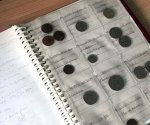
Coin Album
Coin Album With An Index

I loved collecting coins as a kid. I’m not sure when and how it began. Perhaps it was the discovery of a small bag of coins at home, or a few foreign ones left behind by visiting relatives. At first, it was restricted to ten paisa coins and cents – we had an abundant supply of them.

As word spread of my interest in coins, friends and family members, who had been travelling abroad, generously donated currency. I was even given a coin album. It had clear plastic sheets with small pockets to store individual coins. I arranged my coins and added small notes about the country, year, and the symbol and slogans on the coins.

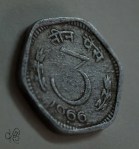
Three Paise
Three Paisa Coin

I had big plans! I thought the collection would grow very large. So using my foresight, I made an index of the countries and currencies to manage the treasure.

I even began keeping coins and notes, which were still in use – I was a ten-year old, and I was already investing in currency!

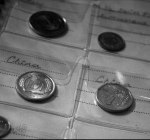
Close Up Of Page
Close Up Of Page

Even as different countries resided within my book, I discovered coins in my own home – one, two, and three paisa coins. I had only one one-paisa coin. But I was more delighted with the three paisa coins. Three was an unusual denomination for a coin, and I took pride in owning two of them!

I spent nothing, and yet owned a lot. My successful collection, soon got to my head. I boasted about the large variety of coins I possessed – far more than I should have. Once, I even took some coins to school, as proof. And that’s when it happened.

A classmate of mine was very impressed with my coins. She asked, in the nicest possible way, ‘Can I take one of these?’

And like a fool, I gave it to her. To this day, I regret that action. I could have traded it for something else – but no! I had to act magnanimous. That’s what happens when you allow ten-year olds to handle so much money!

One Paisa
Holy Coin! One Paisa

A few years later, deep within the depths of my eldest aunt’s huge cupboard, I uncovered a gem – the 1 pice coin. It was older than the Indian democracy, and it had a hole in it! Nothing could have been better than that.

I’m sure there are lots of people who collect coins – and would buy old coins like the one with the hole. In old Delhi, I found coin sellers selling such antique coins on the pavement. The realisation, that the coins I had, were all gifted to me, made me feel great. But my coin collecting days were numbered.

The European Union was formed, and I grew up. The album was relegated to the cupboard, and my collection, nothing more than a lost memory.

A chance discovery of some coins in a piggy bank made me pull out my album, and I found that my foresight was rather too great. I had one, two, and five rupee coins and notes stashed up inside – which I could still use today! Time to add the ten rupee coins I suppose 😀

*  *  *

I had posted some photographs of coins a few weeks back. One of my favourite bloggers, pointed out the scarcity of the three paisa coin… This story was supposed to be a part of that post, but now, is also in response to that comment, and today’s prompt on The Daily Post!

Categories
Hobbies Musings

The Bouquet


She had been uprooted from her home, decorated to highlight her appealing petals, and given away to indifferent people. In her new ‘home’, she sat quietly in a corner, waiting to be noticed.

Her new family did not appreciate her. They had seen many more like her, and like all the others, she would be abandoned. The garbage collector would pick her up, and she would spend the rest of her short life along with plastics and other alien creatures.

She looked absolutely beautiful. And at the same time, she looked sad. We noticed her head looking towards the ground. She was tired, and disappointed. We decided to adopt her.

We peeled away the pins and wires that surrounded her, and even as I offered her water, some of her delicate petals gave way.

Free from the shackles, and getting a little care, she felt lighter. Was there a hint of a smile? She still missed her home. Nothing could replace that, but now, she hoped she could spend the rest of her days in peace.

Categories
Stories

Patterns On The Floor


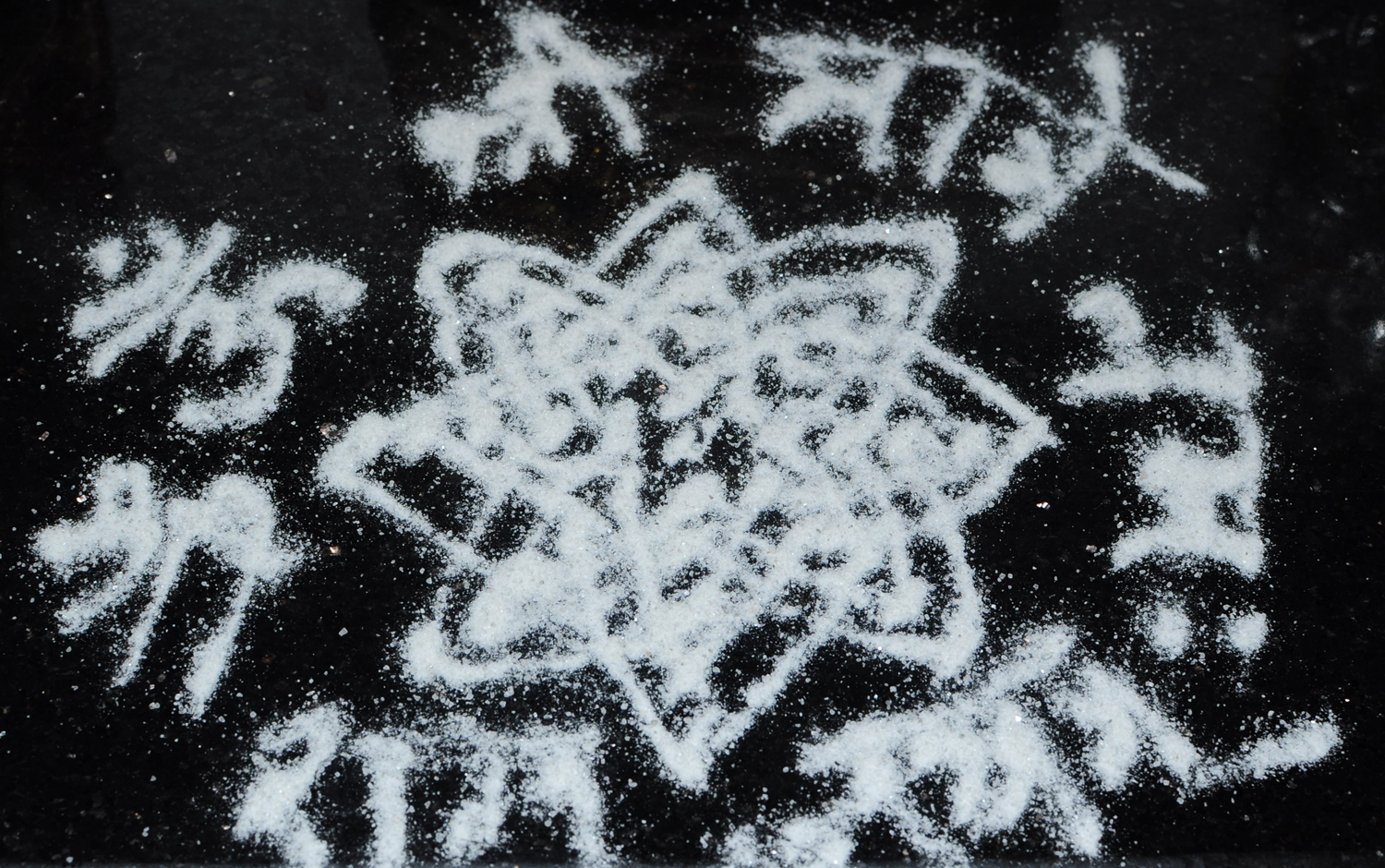
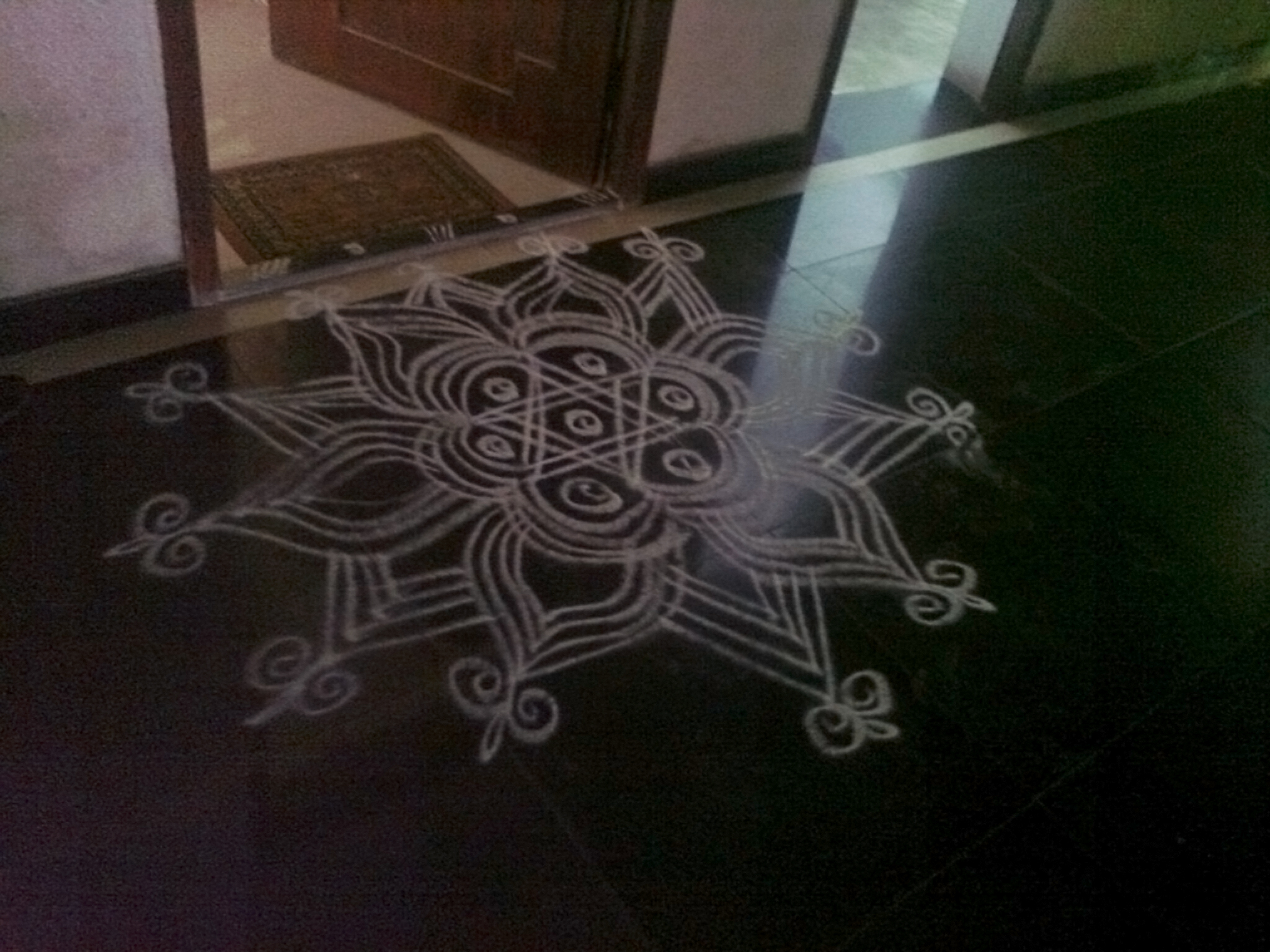
As the sun prepares to visit this part of the world, a few of its rays have jumped ahead, trying to take a peak at our front entrance. While most of the city is either asleep, or busy getting ready to take on the day’s work, my mother opens the door and thoroughly cleans the floor with water. She then opens a small box and picks up a pinch of the white powder that it contains.

The Hrydayakamalam
The Hrydayakamalam

She rolls the powder between her thumb and index finger and makes a series of dots. They are perfectly arranged in a symmetrical pattern – drawn with pin-point accuracy. She picks up more powder and with a steady hand, draws several even lines – some connecting the dots, others, encircling them.

Ever since I can remember, my mother has performed this fascinating ritual, every single day, without fail.

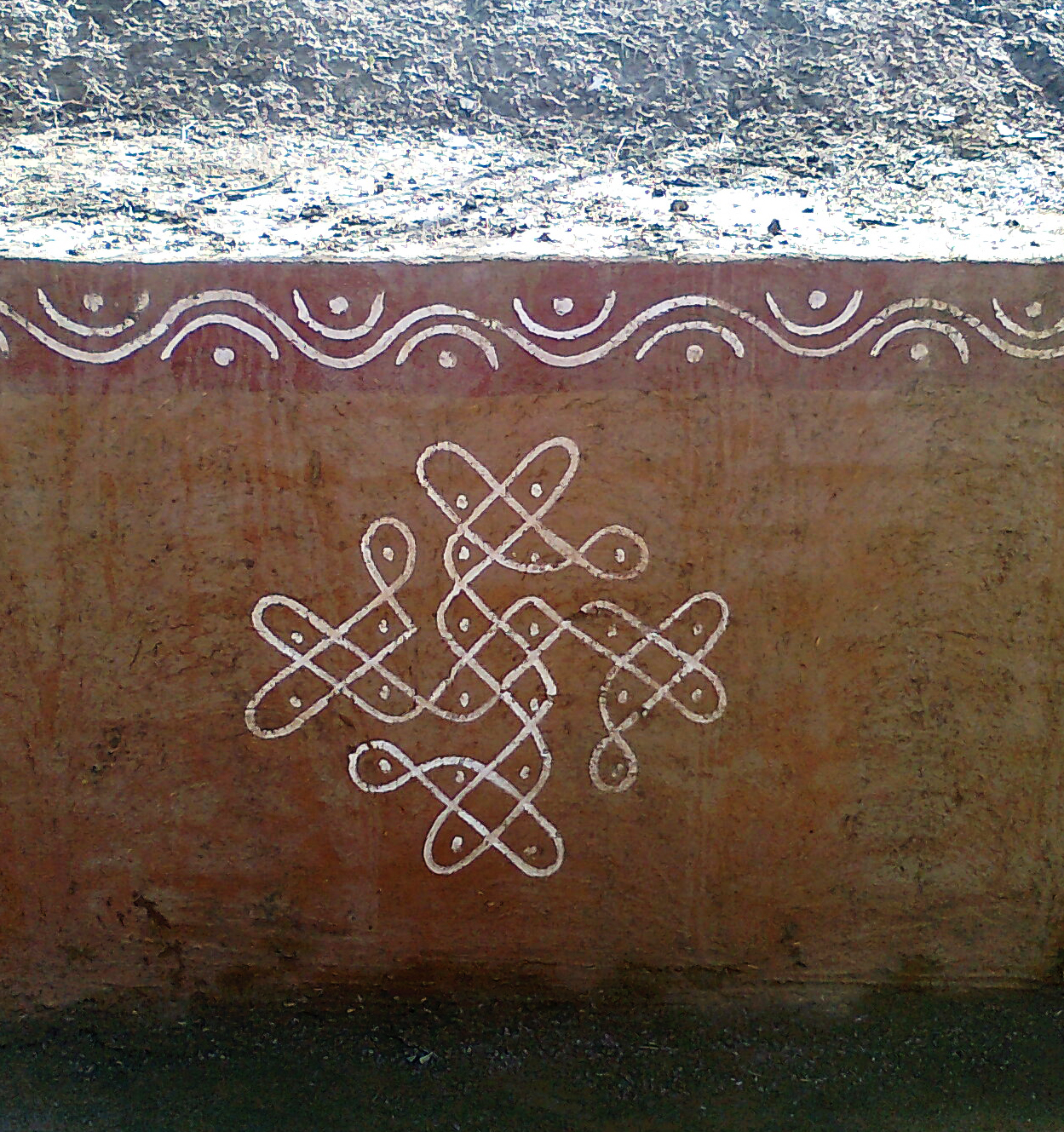
Traditional dots at the Surajkund crafts fair

Earlier, the only source of obtaining the kolam podi*, was relatives who visited us. Our trips to Chennai would be incomplete without buying the white stone powder, which she used for making the designs. Now the powder is available more readily. Kolams are not common in Delhi. Here, elaborate ‘rangolis‘** are made with colourful powders and flowers, that too only on Diwali, or special occasions. Some other migrants like us make the kolams with a more long lasting wet ‘paint’ made using rice flour. Others use ready-made stickers.

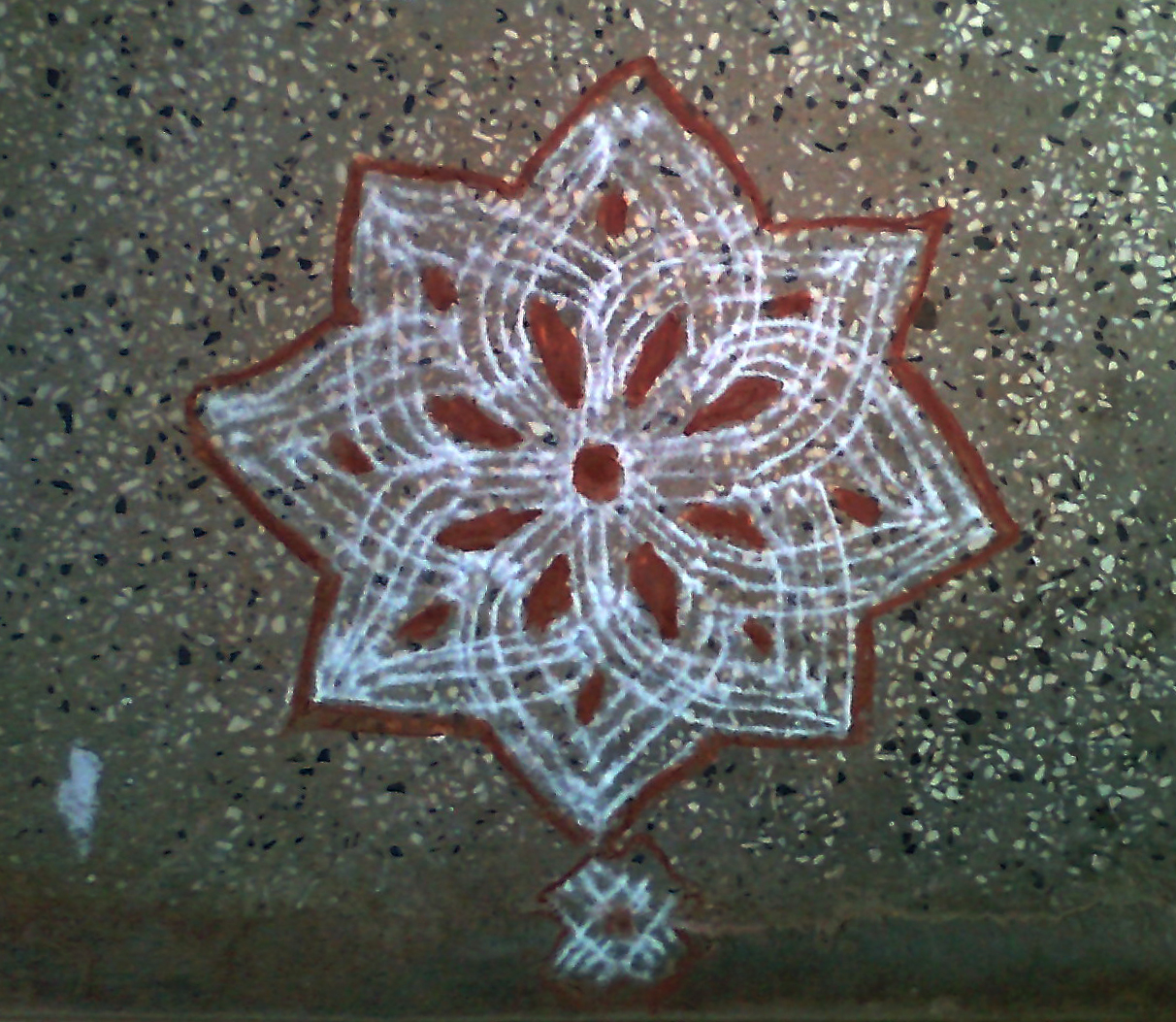
Traditional Kolam made with lines and filled with red stone color
Traditional Kolam made with lines and filled with red stone colour

Visitors often ignore the kolam at the entrance and sometimes step over them. Some mischief makers deliberately destroy them. And on several occasions, the sweeper sweeps them away. It infuriates my mother… “Kolams are swept away only when the family is in mourning… Wiping it away is a sin”, she would shout. But nothing has ever deterred my mother from starting afresh the next morning.

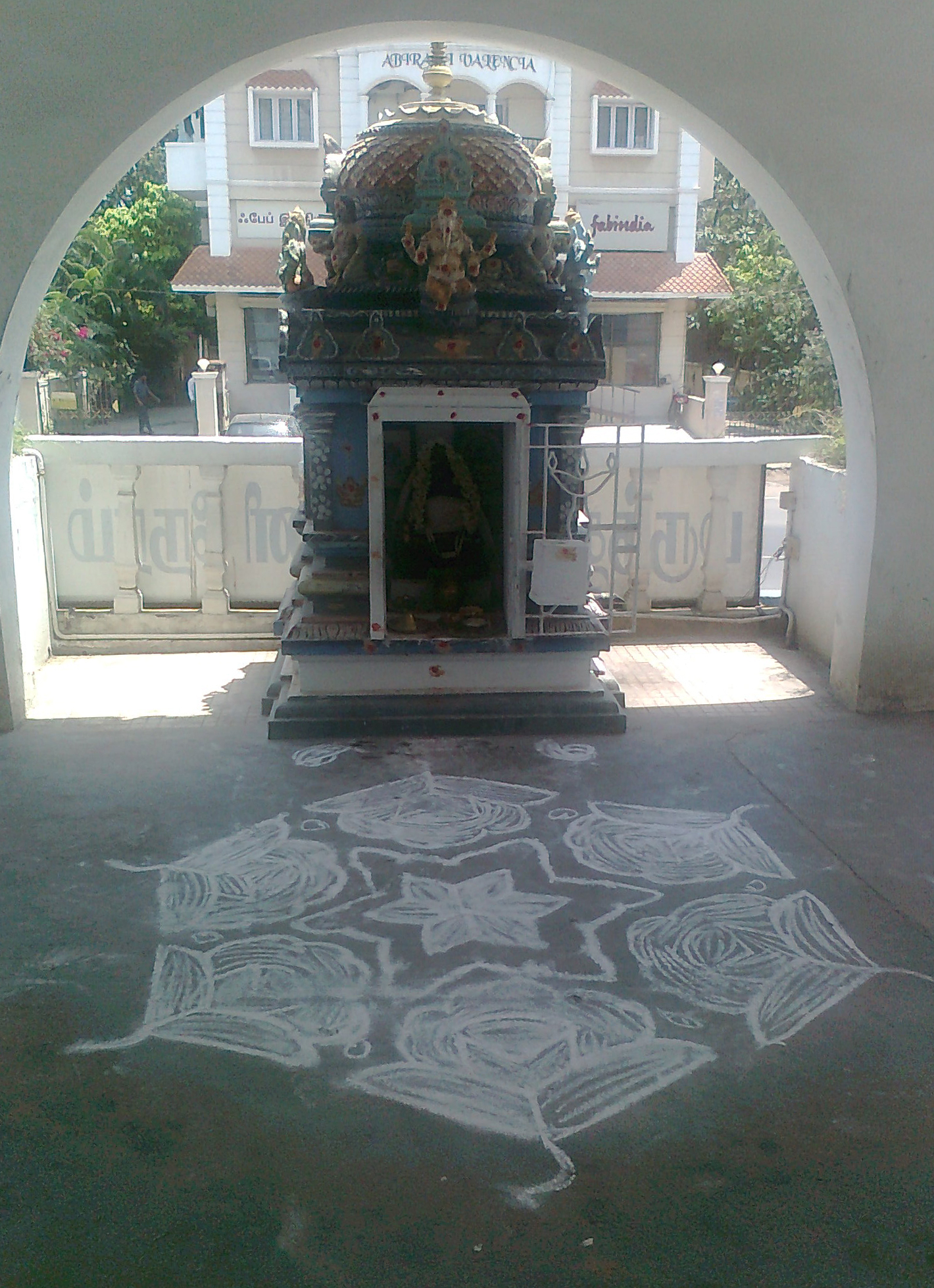
In Chennai, though, kolams are found everywhere – at the entrance of every house, temples, and even public buildings. Friday belongs to Devi, and so, the kolams are extra special on these days. On festive occasions, the red stone comes out of the shelf. The stone is dipped in a little water and the kolam is painted with a deep red colour.

A small temple in a hospital (Chennai)
Kolam in a hospital (Chennai)

Celebrations like marriages present a much larger canvas for the ladies. Rice flour kolams are prepared the night before the auspicious event, and, covering large areas, they are grander than what one can imagine. That they will be hidden beneath the holy flame, does not matter to the artists.

As the years have rolled by, my mother’s kolams have evolved. They are no longer limited to the strict geometrical patterns. Nor are the materials restricted to the traditional ones. The kolams are now more abstract, and created spontaneously. On special occasions, she adds more colour – something that she has adopted from the North Indian rangolis. There are times when she is unable to make it early in the morning, but even today, she does not allow anyone to step out of the house before the kolam is drawn. And we don’t mind – the entire process takes just a few minutes – the years of practice have made it second nature to her.

The neighbour's kolam (Chennai)
The neighbour’s kolam (Chennai)

It is this art form, and my mother’s interpretations and designs, that inspired me to create something of my own. Based on the traditional paisley motif – the  ‘aam‘, or the ‘mangai‘***, it is a tribute to the millions of women who practice traditional art forms as part of their daily lives. It is a tribute to the art form that encourages everybody to become an artist.

But above all, it is a tribute to my mother – who expresses her creativity and skill through patterns on the floor every single day, only to sweep it away the next morning.

This slideshow requires JavaScript.

* * *

* Podi – powder
** Rangoli – Hindi term designs made on the floor.
*** aam – Hindi for mango
mangai – Tamil for unripe mango

Categories
Musings

The Constant Migrant


The city has embraced migrants for centuries, and become home to a huge variety of people. Not many can claim to belong to Delhi, yet, anyone who comes here, belongs to it. People who live here are known for their generosity. They welcome visitors with wide-open arms. This is perhaps the reason why the city has come to be known as ‘dill walon ka sheher‘*. It has embraced different cultures and has a long history – which is evident from the staggering number of monuments.

Over the recent past, its image has been that of an unsafe city. I believe this is because non-residents have taken the lovely people here for granted. But even so, it is a city that I call home. Despite its shortcomings, I love it. If I were told to move out of Delhi and live elsewhere, I would be devastated. And therein lies the problem.

For all my attachment to this city, deep down inside, a small part of me feels like I am a misfit. I need the typical South Indian cuisine, the tunes of Carnatic classical music, the sights and sounds of the intricately decorated temples. Perhaps its partly genetic, partly because its a novelty here, and partly because I do not know much about it. But mainly, because it forms a part of my own identity.

Even though I have grown up in Delhi, my childhood was dominated by stories about life in the villages. Anecdotes about hundreds of family members, whom I have never met, and probably will never know either. It used to be a small world. Everyone knew everyone else. There were so many traditions and customs that I struggled to explain to my north Indian peers. I hardly understood the local culture, and they refused to accept ours. Our native traditions and customs were more numerous and filled with elaborate explanations. I found those much more interesting than any of the local folklore. To be honest, I felt superior, and pitied my companions who did not understand.

But time and circumstances changed many things. The city of Delhi was evolving, and was beginning to accept people from all parts of the country. I began feeling alienated around family members. I felt like I didn’t belong there any more. I made Delhi my home.

The villages have nothing that belongs to us any more. The ancestral houses were either usurped or sold – I never set foot anywhere near them. We all have moved on to our own lives. But there are some traditions that we have held on to. The kolam** at the doorstep, the offering of food to deities, the keen interest in Classical music and art, the spirituality and sanctity maintained on festive occasions.

Indian philosophy demands that we move ahead – not get caught up in sentiments. And I believe I am one of the millions of migrants who belong to Delhi. But one day I hope to visit the ancestral village – to understand where my roots were – and perhaps quell the thirst for knowing myself.

* * *

*dill walon ka sheher – loosely translates to ‘the city that belongs to large-hearted people’
** kolam –  form of painting that is drawn using rice / white stone powder (full wiki article)

Categories
Musings Stories

Letting go


When I was in school, there was a dance teacher who had once asked us to submit an assignment. She had asked us to find out about the various dance forms of India and prepare a scrapbook with pictures and information that we had collected.

I was just going to enter middle school, and this was a time when we did not have such great access to the internet. Broadband was many years away. We did not even have a dial up connection.

What we did have was a very good newspaper which focussed more on culture and art, rather than on gossip and glamour. My aunt pitched in and provided us with glossy brochures of cultural programmes.

My mother and I set about cutting sheets of cartridge paper and folded them to form the book. We punched holes at the joints and tied a shiny brown ribbon into a bow to hold the book. We pasted the photographs from the newspapers and brochures and outlined the pictures with colour.

I had a very bad handwriting at that time. So with colourful felt pens my mother wrote little descriptions of each art form. The pages were numbered, and we even made an index. Every few pages, my mother made little abstract designs to fill in the blank spaces.

Now that I think about it, my mother made the whole thing! And I think she had a great time too.

When it was done, I submitted it to our dance teacher. She was impressed.

After assigning grades to all the students’ assignments, she returned them. She said never in her life had she ever given a student an A1. But she said she loved my assignment, and she wanted to show it to other students. She said she wouldn’t give it back to me.

I was quite upset. I felt it was my assignment. I should keep it with myself. Every week I would ask her for the scrapbook. And she would refuse to give it. She showed it to students of all the classses she took.

A few friends from another class one day came and told me that they had seen my assignment, and that they loved it too. It made me feel proud. But it made me feel even more possessive about it.

Seeing how much I wanted it back, at the end of the year, our dance teacher finally relented to my request and returned it to me.

On the cover page, with a shiny brown glitter pen, she had written A1. I felt very happy.

But the happiness didn’t last long. After a few months, I began feeling guilty. That scrapbook was lying idle in the house. No one would see it. My mother told me I should have let it remain in the school. She even suggested that I return it to her. She said after a few years, it will end up going to the kabaadiwala *. I didn’t want that. I told her I would keep it with me. But in my heart, I wished I had let it remain with my teacher. I couldn’t bring myself to return it to her. My pride didn’t allow me to.

And so, even to this day, it is lying in my cupboard, with some other memorabilia from school. A reminder of a very important lesson. It is important to let go. Ultimately, time will wither away all attachments.

***

* kabaadiwala : Scrap dealer. Old newspapers, magazines, and sometimes other used household items are sold to scrap dealers who in turn send it to be recycled

Update: I scanned and uploaded the pages of the scrapbook

Categories
Stories

Free Bird


I owe inspiration for this post to Saronai.

I started this blog on the 19th of February… It happened to be the day our late grandmother (father’s mother) was born… Like all little children, I loved our grandmother. We called her Delhi pati (as opposed to my mother’s mother, whom we call Madras pati, whom, I may add, I love equally).

Pati came to live with us when we moved to Delhi, and I had the privilege of sharing a room with her. Pati had a very amazing life story. Due to the nature of our grandfather’s work, she spent a lot of time in Burma (now Myanmar). She lived through some of the most important phases of our history…

Married off at the age of 16, Pati didn’t study much… She could read and write fluently in Tamil but not much in English or Hindi… She had a special interest in politics and could recognise fragments of words from the English newspaper we subscribed to. She would point to it and ask us to explain what it was about. She would tell us stories about the War, about our Independence, about Nehru and Jinnah. I neither had an interest, nor did I understand any of it… I always thought she was being nostalgic about the past and wanted to let it out. I wish I had paid more attention, and asked more about our history. I’m sure it would have been more interesting to hear it from her perspective.

At night she used to narrate stories – some mythological, some folk and perhaps even some that she made up – to put me to sleep. She would begin the story, and before it would have reached even the middle, I would have been fast asleep… As a result, I don’t remember any of those stories…

My mother told me about Pati’s children. Her first-born died within a year, in a train. Fearing public outcry, they hid the death of the baby girl throughout the journey. Thereafter she gave birth to six children. I was told that she would have given birth to twins too… Once a thief broke into their house and threatened to kill her with a knife… Out of shock, she miscarried.

I have seen all, but one of my father’s siblings… One of my father’s brothers disappeared at a young age… He was thirty… He had gone for a picnic with his friends to a lake. She had packed a huge bag of home-made potato chips for them… But he never returned. Nor was his body ever found. Till her last breath, Pati hoped her son was safe somewhere and would return one day…

She had once suffered very serious burns and her skin had been damaged badly. She told us that the burnt area had to be grafted  with skin taken from her thighs. It would burn badly when they did that. They had no anaesthetics.

My memory of Pati is hazy now. It’s both surprising, and sad. I had always thought I would have very vivid memories of her. There is one thing that I remember very well… She always had a smile on her face. In everything that she told us, there was never any sign of bitterness or hatred… She was like a child. Her innocence still intact. Despite all that she had been through, she seemed very happy and content.

But she would often say, ‘In my next life, I will study… I will not get married… I want to be a free bird…’

Categories
Stories

Don’t study!!


As little kids, we’re always told by our parents to study… Well, almost always. When I was small, my parents never really had much trouble with me as far as studying was concerned. But once every year, they had to tell me NOT to study!

Navratri is celebrated every year, sometime around October… Although it is celebrated at least twice a year, the one culminating in Dusshera is celebrated with the most enthusiasm. Navratri literally means nine nights. During this festival, various forms of Goddess Durga are worshipped.

Technically speaking, puja (religious ritual) is performed on each day of the festival. But I’ll fast forward to the ninth day. On the ninth day of this festival, we worship Goddess Saraswati, the Goddess of learning and knowledge. In any field, there is always scope for learning. And knowledge can be gained in any form. So all those items from which we can gain knowledge and wisdom are collected and a dias is formed. An idol of the Goddess is placed atop this dias and a puja is conducted. In the north, a similar puja is performed on Vasant Panchami.

A special Rangoli (decorative design) is made, incense sticks are lit, special dishes are prepared and offered to the Goddess…

As little kids, we used to look forward to Navratri – a welcome break from school, special dishes, the festive atmosphere around the entire city. But we had a another reason to be excited…

On this very special ninth day of the puja, it was absolutely compulsory for us not to study! Yes that’s right! We were told not to study. Now which kid wouldn’t want that? 🙂

We wondered why, on the day the Goddess of learning is worshipped, we were told not to learn… Nevertheless, it was a very exciting thought… how nice it would be if we didn’t have to study…

But when the day actually arrived, with nothing to do – we weren’t allowed to read, or engage in any activity related to art or use musical instruments, we weren’t even allowed to work on the computer or watch tv – the day was extremely boring! To not learn, then seemed a terrible thing indeed…

It is said that the Goddess herself offers her blessings to everything that is placed in the dias, so we must not study and wait for the puja to conclude and then study. But more importantly, by not allowing us to do anything, it was a lesson in itself… Life would be incomplete, and worthless without knowledge…

On the tenth day, the puja was concluded. We were told to pick up our books soon after bath and told to read something new… It signified a fresh start… We were once again told to study with interest (pun intended)…


On this year’s Saraswati puja, my mother and I spent the whole day cleaning the house 🙂