It was my first visit to Dubai, and I wasn’t handling the timezone difference very well. On most days, I found myself waking up at 4 am.
Tossing and turning around in the soft hotel bed, try as I might, I couldn’t sleep. Fortunately, the hotel was walking distance from the Jumeirah beach. If I was going to be groggy during the meeting hours, I may as well enjoy some time with the waves. So I strolled up to the beach every morning and watched the waves crash on to the silent shore, waiting for the sun to rise.
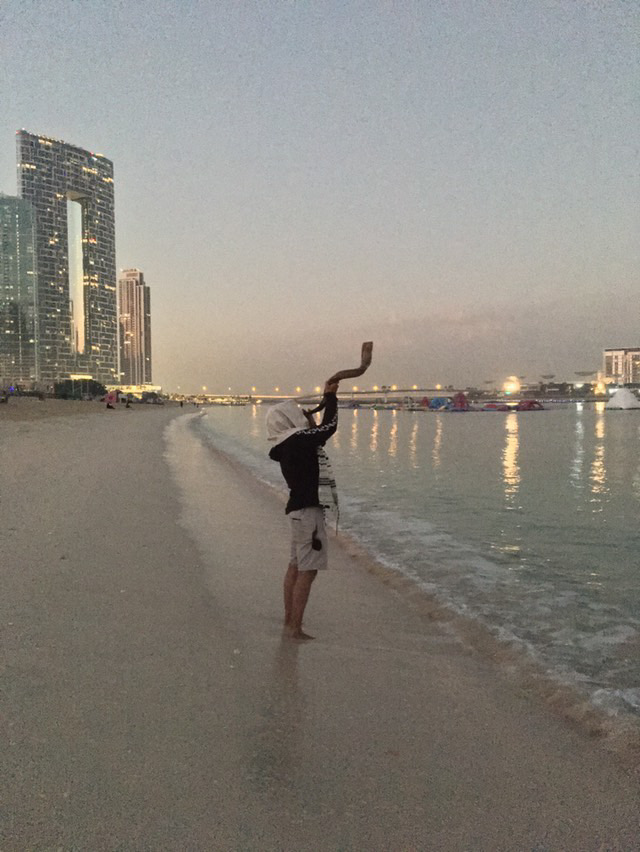
On one of the mornings, I heard someone play music. It wasn’t hard to locate the source. Still dark, I could make out the outline of a man, his head covered and in his hands a giant horn-like instrument. I sounded something like a bugle, but not quite.
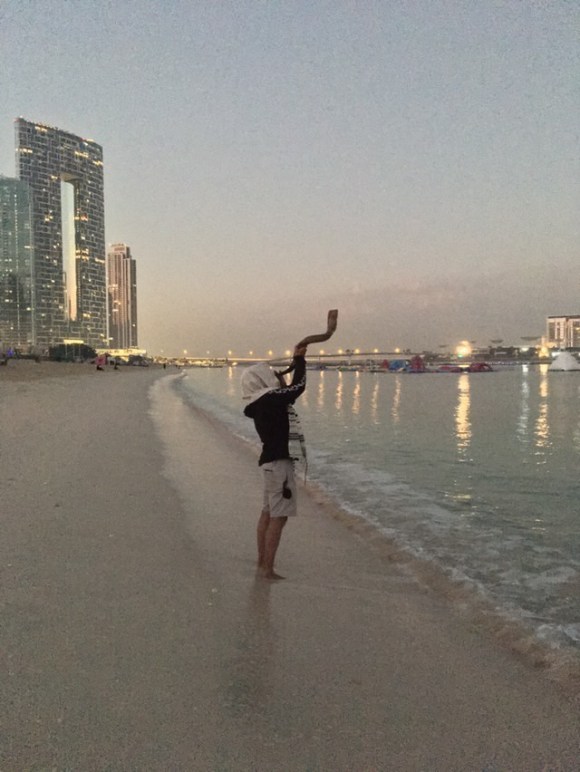
Vernon playing the Shofar at Jumeirah. Picture taken with permission.
I waited for him to finish his piece and mustered up the courage to talk to him. “Where are you from,” I asked. “India,” he responded.
It took me a while to recover from the surprise revelation. “So am I! Where from? And what are you doing here?” I rattled off the questions in quick succession.
He told me his name was Vernon, and he was from Mumbai. By profession, he was a personal trainer.
His client was sleeping that morning, and he decided to extend his stay at the shore.
He then explained to me the significance of the instrument he was playing. The Shofar is an Israeli wind instrument. He played it early morning by the beach, before beginning his day.
Vernon explained a few verses from the Bible and how the instrument was his path to spiritual cleansing. We continued to speak about vibrations and how everything in nature is connected to different types of “waves”.
When the sun had come up fully, he took leave. I lingered around at the beach a little while, reflecting on our conversation.
“There are no accidents,” he said. “If my client wasn’t asleep, I’d have left a long time ago. God wanted me to play for you.”
As I was clearing up some old shelves, I discovered some notebooks with hand-written stories and amusing self-pep talks. Among those abandoned drafts was this unfinished parody of Billy Joel’s “The Piano Man.” Enjoy!
It’s nine o’clock on a Saturday, The regular crowd shuffles in. There’s a young man sitting next to me Swiping up, his face making a grin.
He says, “Alexa, can you play me a melody?” I’m not really sure how it goes. But it sounded sweet and I knew it complete, When I wore a baby’s clothes.
Sing us a ding, you’re the smart device. Sing us a ring tonight. Well, we’re all in the mood for a notification, And you’ve got us feelin’ alright.
I thought I’d complete it, adapting the rest of the song words, but as I read the lyrics of the rest of the song, it seemed eerily appropriate. It seems like Billy Joel’s bar is similar to any social media app. What do you think?
Here’s the rest of the song, with only the slightest modifications:
Now John on the app is a friend of mine He gets me my likes for free And he’s quick with a joke or to share your post But there’s some place that he’d rather be He says, “Bill, I believe this is killing me” As the smile ran away from his face “Well, I’m sure that I could be a movie star If I could get out of this place”
Now Paul is a real estate novelist Who never had time for a life And he’s talkin’ with Davy, who’s still in the story And probably will be for life And the comedian is practicing politics As the marketers slowly get drowned Yes, they’re sharing a reel they call loneliness But it’s better than scrollin’ alone
It’s a pretty good crowd for a Saturday And the Faang* gives me a smile ‘Cause he knows that it’s me they’ve been comin’ to see To forget about life for a while And the app, it sounds like a carnival And the microphone smells like a beer And they sit on the app and put bread in my cap And say, “Man, what are you doin’ here?”
* FAANG: Facebook, Amazon, Apple, Netflix, and Google
My cab driver replied, when I asked him if we were on the right route. The criss-crossed, perfectly planned, roads of Lutyens Delhi all looked the same to me. And their names — the names of kings and their ministers — that we struggled to memorise in our social studies class in school. It was a struggle then. And it continues to be a struggle, all these years later, to distinguish between the roads named after them.
But my cab driver had circled these roads for several years. And he knew them well. He also noticed something.
“You see these trees here?”
Lutyens Delhi has beautiful tree-lined roads.
“Yes, that’s what I love about this part of town,” I said.
“They’re tamarind trees. And never once, have I seen flowers or fruits on them,” said the cabbie.
And his explanation was simple. It’s because the trees are surrounded by politicians.
I try not to talk about politics with cab drivers. But that comment on the tamarind trees helped me open up about my opinions, and through the rest of the journey, we continued our conversation around modern politics, agreeing with each other’s assessment of how low Indian politics was.
“You must show them music.”
We were visiting my aunt in Bengaluru. She has a lovely garden, filled with bonsais and orchids. And her betel-leaf plant, has no rival anywhere on this planet — in its appearance, and taste!
She was sharing the secrets to her green thumb. They are very sensitive, she said. And they love music. Don’t play them the same music every time. Mix it up, rock music, Bollywood, bhajans… Keep them happy, she said.
I love pine cones.
Ever since I first saw them as a little kid, when my father took us for a vacation, I have been fascinated by them. We’d picked up a couple that we found on the ground during that vacation, and I hadn’t had the joy of picking up another.
So when I saw a pine tree in the college, I was excited. But during the three years I spent there, it never bloomed.
I continued to visit the college, as part of the Alumni Association, for the next several years. Every time I visited the college, I’d look up, only to find needles. No cones.
And then, one day, I saw them. Several of them.
“This pine tree has cones in it!”
I jumped for joy, as a teacher and a couple of students looked at me. I can’t say for sure, but it’s likely, that they were amused by my childlike behaviour and my explanation. I told them:
This tree is happy! This tree is responding to the energy around it. Truth be told, when we were in college, this place was dead. No energy, and a lot of negativity. But now, it is so lively. There is so much energy around here. And now this tree has cones in it!
“This tree was planted when I joined this college,” replied the amused teacher. “It’s twenty-five years old. Back then, I didn’t think it would even survive this weather,” he added.
“Well, if we didn’t kill it, maybe our lot wasn’t that bad, then?”
Back in college, I went with a friend of mine, to a debate being held in another campus.
We located the room in which the debate was to be conducted, and then waited, as the participants trickled in. The room was large, the ceilings high. Perhaps, it could have comfortably seated a hundred people. Multiple doors and large windows on either side ensured there was good ventilation and ample natural light. On one side of the room, was an open passage, that overlooked a beautiful, large lawn. The other side, also had an open passage, that overlooked an atrium.
The room began filling up, one by one. There were, perhaps, thirty students, in all, when I began to feel a little uneasy.
It was early winter. There was that wonderful Delhi-winter sunshine around us. The room was large, and people, fewer than half capacity. And yet, I felt suffocated. I couldn’t understand why.
“Oh, we’re not participating. We’re just here to see,” I don’t recall which one of us replied to the participant’s question.
“Oh, no wonder you look so relaxed!” she replied.
And that’s when it struck me. That uneasy feeling wasn’t within me. It was in the air.
The collective tension was being spread by the participants, that, being an objective observer, I had experienced externally, as opposed to internally.
The deluge – pencil sketch drawn many years ago
They say, that man’s best friend is a dog. I believe, that humanity’s best friend is practically everything under the sun, except another human being.
Plants and animals can understand human energy, better than other humans. And that’s because humans have that one ability — no, handicap — that other creatures don’t have — telling lies. We lie to others. And we lie to ourselves. And we spend a lifetime on this planet just trying to figure out the truth about ourselves. For some, that truth comes through reading, or speaking with close family and friends. For others, it comes through art. Humans invented psychology to help figure out the human mind. And science, to explain energy. And for anything that couldn’t be explained by either, there was religion.
While we are still figuring out ourselves, plants and animals can see right through us. They don’t speak our language. They don’t need to. They just sense.
We are all bundles of energy. We reflect light, and produce sound. We feed off energy. And we disseminate energy.
Vitamin D is known as the sunshine vitamin, because it is produced by the body with the help of sunlight. Sunshine, is also associated with happiness. Perhaps that is why tropical countries tend to be depicted by photographers through smiling portraits. Because even in poverty, the sunlight makes people happy. Sunlight is energy — quite literally.
I once read that looking at flowers, first thing in the morning, makes us feel good. Plants that get ample sunlight, convert the light energy into beautiful flowers. Those flowers are a manifestation of energy.
Those flowers are happy, and we feed off their energy.
And when we feel happy, we spread that energy.
All these disjointed memories, and energy that binds them, came to me after I shared a painting “A Ray of Hope”.
We’re all bundles of energy. We helped create the current pandemic. And we can all feel the after-effects of it. Perhaps for the first time in history, the entire world, is sensing the same type of energy — fear, helplessness, uncertainty, and hope.
Let’s turn this pandemic into an opportunity. To spread positivity. And treat nature — plants and animals with respect. We feed off their energy. We disseminate energy back to them. And the cycle repeats.
One of the strongest memories of my childhood is that of AM Radio. It would begin playing on the ancient transistor even before I woke up. Sanskrit mantras recited by M.S. Subbulakshmi, followed by the railway timetable, and finally, news in Sanskrit that would end with a few beeps. The last of the beeps would be longer than the first few — the clock had struck 7 AM.
I’m not sure if the order of the programs is right. There’s no way for me to verify either. We don’t listen to radio anymore, unless we’re in a car — and even in a car, it’s FM, or a USB stick, or internet radio that’s streaming from a smartphone — not AM.
Back then, on Sundays, the radio played Vishnu Sahasranama Stotram — the thousand names of Lord Vishnu. Towards the end of the half-hour long recitation, is a conversation between Goddess Parvati and Lord Vishnu. The Goddess asks, dear Lord, what might a lay person do, in order to pray to you. Not everyone can possibly recite all the thousand names every day. Is there a shortcut to this? And the Lord obliges. He says, repeat this one verse three times, and it is equivalent to reciting all the names. I am paraphrasing, of course.
I learnt this one specific verse very early in my life — long before I learnt about its significance. I learnt it because every single Sunday, at precisely the moment that this verse was recited, I would wake up. One could say, I learnt it by accident, or divine intervention, or coincidence — I leave it to you, to decide, which of these is more accurate.
I don’t think I am very religious — certainly not to the extent my parents or grandparents are. I don’t perform the elaborate pujas that my mother performs. Nor can I recite any of the Sahasranamams the way my grandparents can. But religion does interest me.
True to the stereotypes of TamBrahms, as children, our summer vacations were spent touring temples. We were taught Sanskrit shlokas (couplets / verses), that I can still recall. I was also taught how to perform a basic neyvedyam (sacred offering). I pride myself in knowing what little I do. And I wish to learn the proper neyvedyam that my mom performs on special occasions. Hopefully, one day, I will be able to perform one of those with the camphor flame… But I digress.
What I am trying to say is, I am religious enough to take the shortcut of reciting one verse three times, as opposed to 108 verses.
Over the past few years, I have realised that being religious and being spiritual are not the same thing. Religion, is the path towards spirituality. And spirituality, is the path towards peace of mind. I came to this realisation when, a year into our marriage, Atul began playing a playlist of bhajans.
Knowing him for as long as I did — he who who wasn’t particularly interested in going to temples or explicitly praying — he was playing bhajans.
He wasn’t listening to the lyrics of these songs, he said. The melody just made him feel relaxed. It gave him the peace of mind that is so essential in today’s rage-infused society.
This inclination towards peace of mind, came up again, when he insisted that we visit the temple I frequented. It wasn’t that he did not like visiting temples at all, he said; he just had not found such peace of mind in the ones he had visited before.
Atul is not an atheist. He is spiritual. I began appreciating his world-view, when he said this: I don’t need to go to a temple, or speak a certain language, to speak with my God. And that was also the essence of the verse in Vishnu Sahasranama Stotram — you don’t have to say all the 108 verses. Just one, repeated thrice, was enough. The Lord himself, was giving a shortcut.
Over the past few months, I have begun my own morning ritual — somewhat similar to what my parents did back then. What used to play as clock-work, every morning on AM radio, now plays on an online streaming service, as soon as I wake up (let’s just say, the morning is a spectrum).
As one wise man said to me, language and form shouldn’t come in the way of spirituality and peace of mind. Hence, I will not share my morning invocation playlist with you.
What I will share, though, is another feel-good playlist that focuses on spirituality and peace. Here it goes:
1. Ma Rewa
Band: Indian Ocean Album: Kandisa Year: 2000 Language: Local dialect of Hindi
It was during last year’s Indian Ocean Concert (in picture) that I first heard Ma Rewa. I swayed and clapped and danced on this number. It was only later, that I saw the lyrics.
Rewa is another name for the river Narmada. And life-sustaining, as all rivers are, Rewa is called Ma – mother. This song praises the holy river, and apparently, was used as a protest song by the Narmada Bachao Andolan (save the river Narmada). There is enough feminism and rebellion in this to become my week-day alarm.
Growing up, this song, and all the songs by the duo (Leslie Lewis and Hariharan) hit the sweet spot for us, bringing together classical music and English pop. We were such big fans, our parents bought two cassettes(!) of their albums — the only band accorded that multi-cassette honour.
3. Kandisa
Band: Indian Ocean Album: Kandisa Year: 2000 Language: Aramaic-East Syriac
This song is familiar. I’ve heard this, yes… Alam Alam Alam… I fished out my memories. “It’s Kandisa,” said Eeshta. And just like that, I rediscovered Indian Ocean. There’s a chance you’ve heard it before too. You can thank me later. Also, this my week-end alarm.
4. Madho
Band: Faridkot Album: Ek Year: 2011 Language: Local dialect of Hindi
“You now owe me some songs!” This was the message Sunaina sent, after sharing the album by Faridkot. If it weren’t for her, I probably wouldn’t have known about this beautiful album.
From where I sat in the office, I was within earshot of everyone in the office (and yes, I could see folks, before they could see me). I’d asked her for the songs after hearing them on her work-station — on loop. Haal-e-dil and Banjaare were her favourites, I think. I liked them too. Eventually, though, my favourite became, Madho. The song is about a devotee, who wants Krishna to come and help her cross the river on her boat.
5. Tajdar-e-Haram
Singer: Atif Aslam Album: Coke Studio Season 8 Year: 2015 Language: Urdu
Because no playlist of melodious music can be complete without Coke Studio. I’ll admit, I am no fan of Atif Aslam’s music (based on the songs sung for Hindi Cinema / Bollywood). But this one is an absolute gem!
6. Gurus of Peace
Singers: A.R. Rahman, Nusrat Fateh Ali Khan Album: Vande Mataram Year: 1997 Language: Hindi, Urdu, English
The stage is set at the school assembly ground. On the left side of the ground is the administrative block. On the right are classrooms for primary students. Connecting these two blocks are two bridges on the first and second floor levels, running behind the centre stage. The music begins playing, and the performers enter. As they begin performing their choreographed moves in perfect sync, more dancers enter in front, and below the main stage. Others stream in from behind the audience. And more fill in the bridges above the stage. This was the first block-buster musical I had seen — long before Kingdom of Dreams was even dreamt of.
The song, Gurus of Peace; the dancers, students handpicked from the primary, middle and senior secondary classes; the occasion, the school annual day; and the audience, an awe-struck set of students, and some very proud parents.
I was in school when this song was released, and it became an instant hit. Perhaps, because it cut across all faiths and cultures; or maybe, because it shattered stereotypes of Sikh musicians, the topics that rock music could cover and the format in which Sufi could be performed; or maybe, just maybe, it resonated with teenagers trying to figure out their identity. “Bulla, ki jaana, mai kaun hoon” (Bulla! I know not, who I am).
This is one of very few songs that I remember seeing. Apart from its deep philosophy, what has endured through all these years is the visualisation of the song.
There are a number of versions of this song on YouTube. The official version is live in concert. There is another version with better audio quality and lyrics. But I’d rather show you the original music video (you can check out the better audio later).
For the rest of the songs, check out the playlist on Gaana here: Playlist for Peace.
PS: I know there are only male singers in the playlist. I’d love to hear more female voices in this space — if you know any, I’d love to listen to them. In the meanwhile, I have my morning invocation, dominated by M.S…
PPS: Happy Thanksgiving everyone. Here’s wishing for a peaceful dinner, and world 🙂
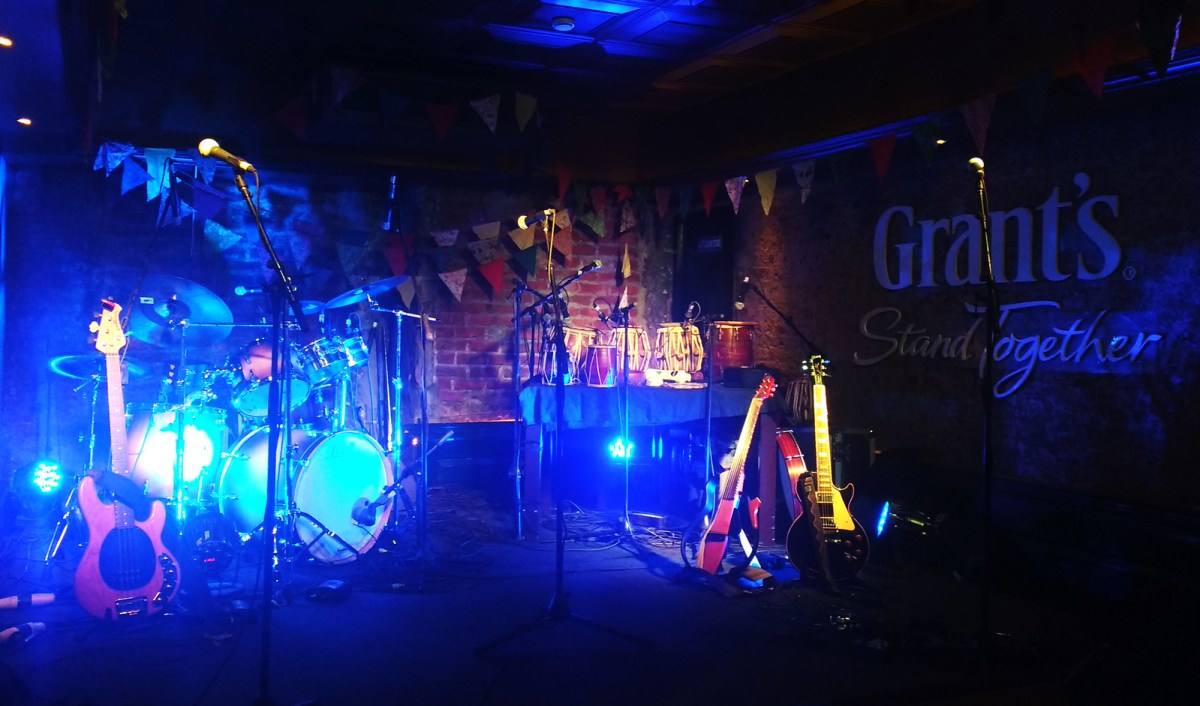
Featured Image: The stage for Indian Ocean’s concert on 23 November 2018. Here’s the story about that concert: Behind the Sounds.
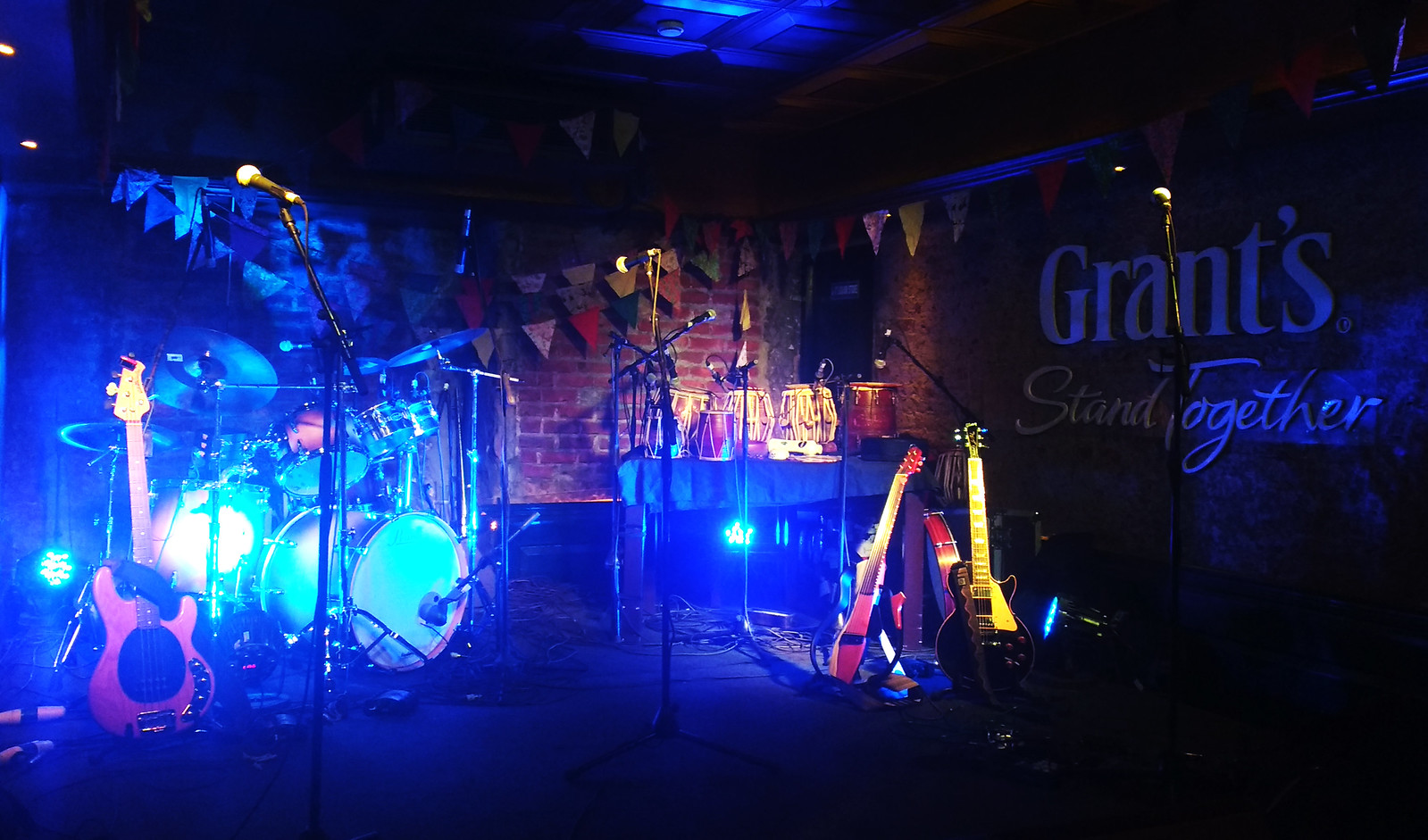
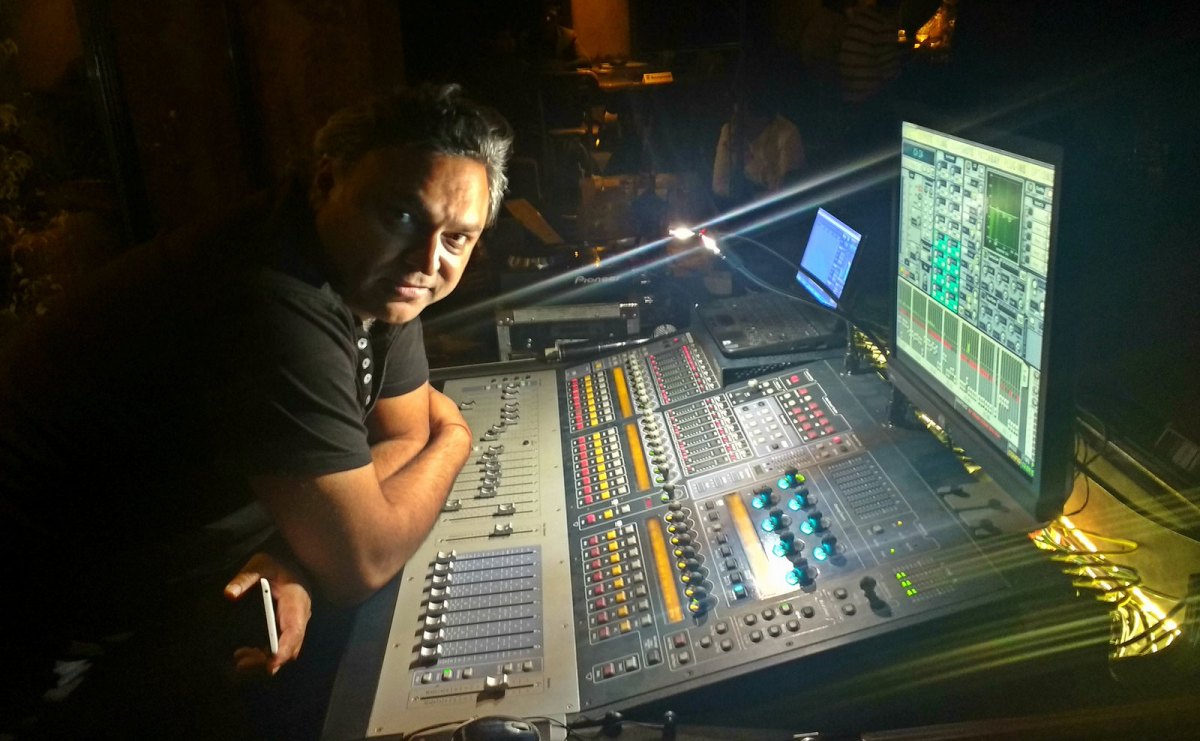
Entering the bar, the small stage was straight up ahead—the drums, electric guitars, the tabla, all set up, lit beautifully. The mikes stood straight, the huge speakers on either side waiting for the music to flow through them.
The few seats on the left were exclusively for patrons; the bartenders were on the right.
9:40 pm.
“The show should begin at 10,” Vikram tells me. “I guess we’re waiting for more folks to turn up. We’ve sold 150 tickets!”
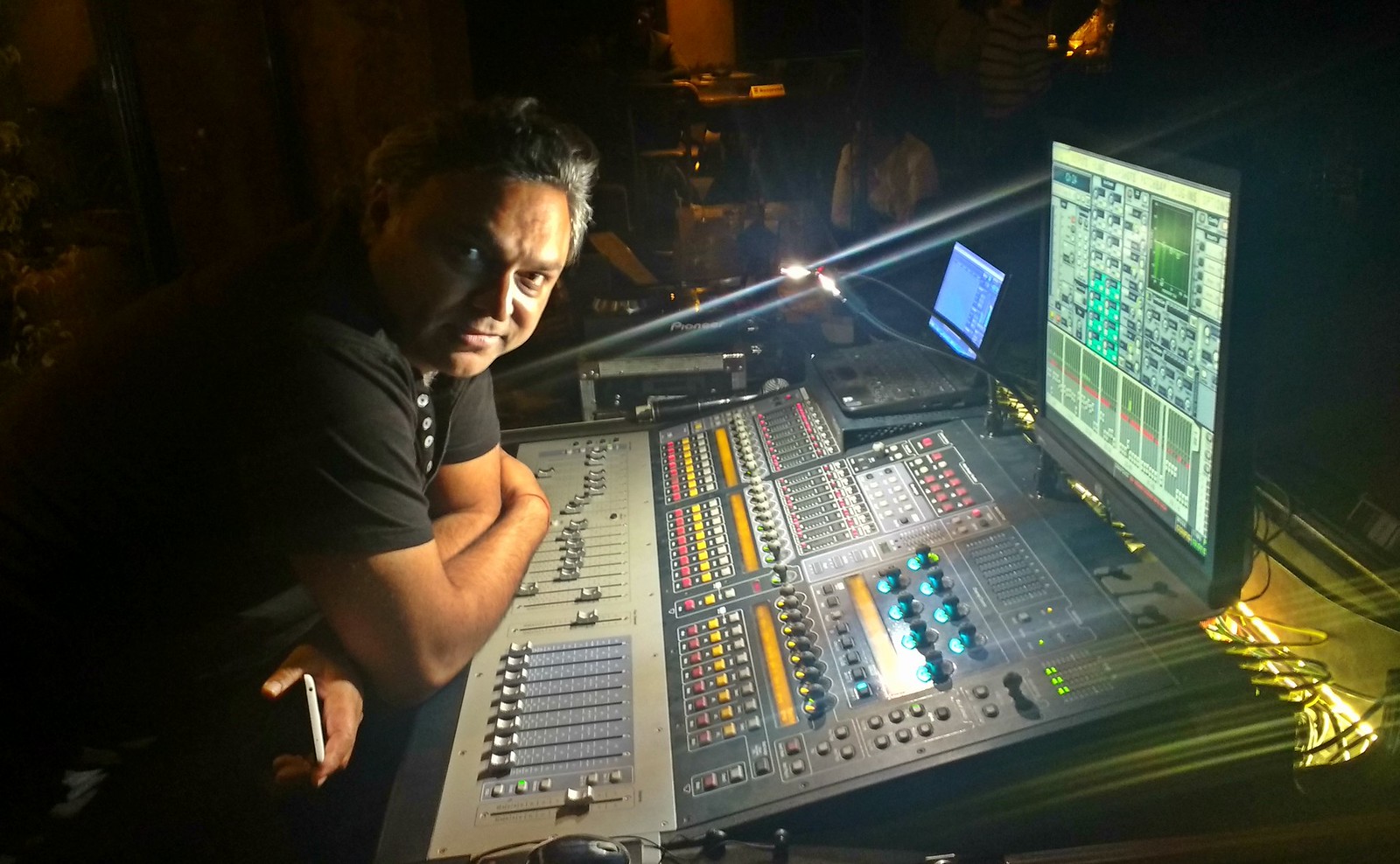
Standing at the back of the bar, just beside the entrance, Vikram is busy fine tuning the settings on the mixer. He’s a seasoned professional—I find out that he’s been with Indian Ocean for a while now, and he’s also worked with Euphoria.
“So, these gadgets interest you?”
“Well, yes. I do find them rather fascinating.”
“These are digital ones, the sound isn’t as great as analog. You know, like how digital doesn’t match up with film.”
“Digital? But where’s the touch screen? I see all these physical sliders”
He hit a button to the left of the console, and all the sliders danced their way into different positions.
Oh.
We continue to talk about our digital society, and how it has impacted the way we work, the way we live. And then we get back to the music. We look towards the stage. The crowd had swelled up a little. “The view may be good there, but the sound isn’t going to be as good. That zone there, in the center, that’s the worst place to be. You won’t hear the beat at all!”
The band members finally take the stage, and we step away to let Vikram do what he does best.
We cheer and hoot along with the crowd. Some voices request the popular songs. “Bande!” “Kandisa!”
Deeply engrossed in the music, some in the audience sway around with their eyes closed, oblivious to other people’s gaze. And some others, sway with eyes wide open, a drink in one hand, and a hookah in the other, pretty much oblivious to their own selves.
We stay at the back just as Vikram had told us; but only after the first song. We wanted to feel the difference in sound for ourselves, and stood in front for a while, before moving to the back.
11:30 pm
After playing their lesser known songs, the band finally gives in to the requests of “Bande!” And the audience suddenly grows larger.
The first request fulfilled, the crowd insists on Kandisa. The musicians tease the crowd. A few more songs, and the crowd grows restless. Two men, who had had more music than they could handle begin singing Kandisa by themselves.
12:15 am
The first few notes play, and we dance along to the tunes of “Ma Rewa”. The band and the crowd play together—a jugalbandi with a difference. And then the final song of the night. The crowd has now swelled to its fullest strength. This is what they’d been waiting for all night. “Kandisa Alahaye, Kandisa Esana…” the crowd’s voice drowns out the singers’. The strings and the classical vocals fill up the hall, and we sway and sing along too, with one eye set on the watch, the other out to avoid those who had transcended into a different zone altogether.
We give out a loud cheer and clap for the musicians out in the front, and equally for the supporting team standing at the back, who stood sane and still, concentrating on making sure the sounds were just right.
As we make our exit into the cold morning, out of the corner of my eye, I catch Vikram giving a high five to his assistant. All in a night’s work.
Of all my childhood memories, our Saturday routine has perhaps left the biggest imprint. Every Saturday, we went to the Vinayak Temple and the adjoining market at Sarojini Nagar.
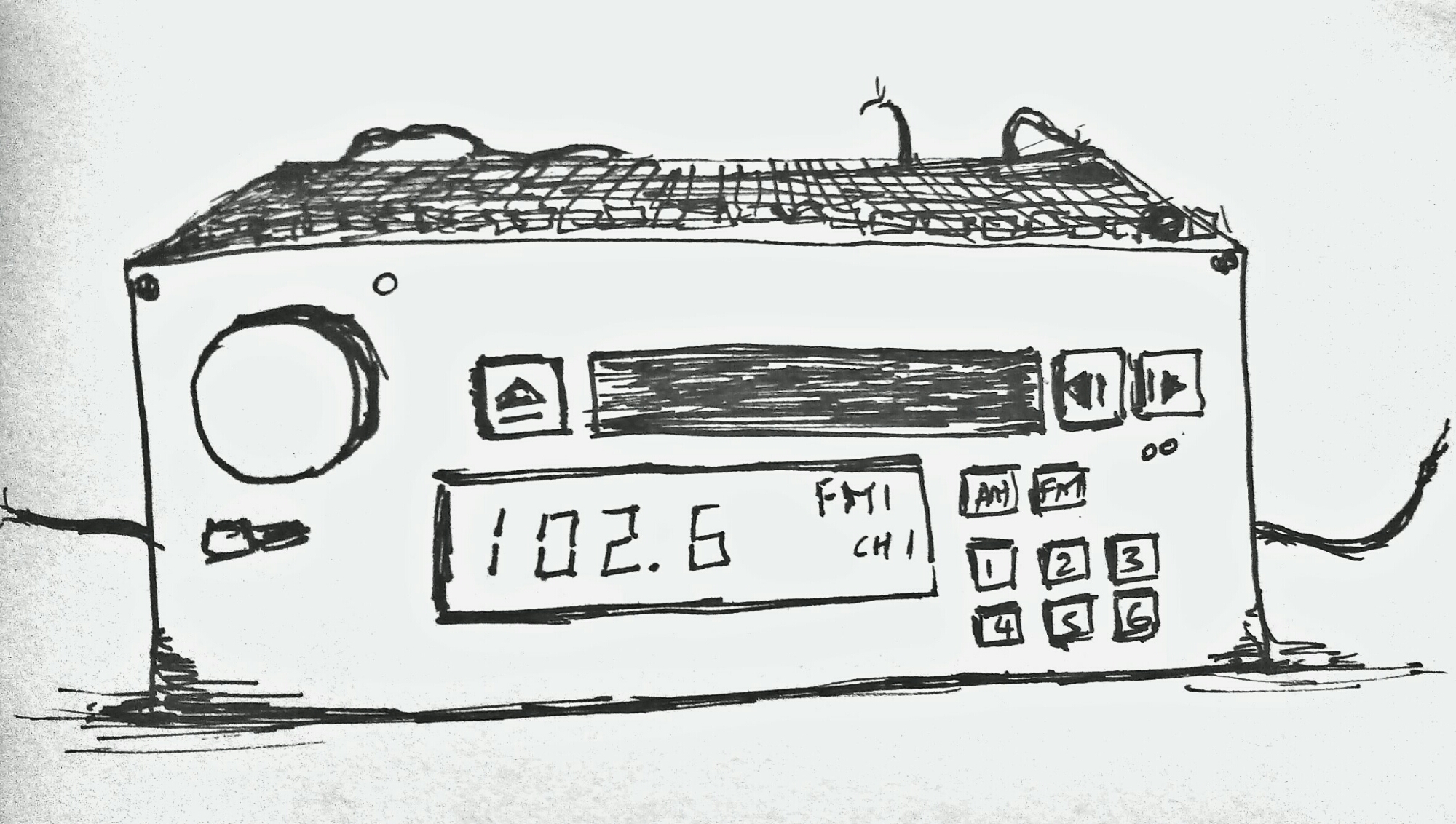
Appa drove his old Premier Padmini – we used to call it the Fiat – on the near empty roads. The FM radio in the car was always set to All India Radio 102.6 MHz – that was the only station back then. It was our only source of contemporary music, and it was all we needed. We would sing along in loud voices to distorted lyrics that our ears chose to hear.
Years later, the Fiat was scraped. Our Saturday visits continued – with a new in-car radio for company. We retained the Fiat’s radio system.
Apart from the controls on her face, there was little to cover the body of that radio, save a raw metal exterior and lots of wires hanging loose. Anna rigged her up with a set of small speakers and connected it to a plug.
Some years later, we relocated. For a while we continued to visit Sarojini Nagar. But that trip was long and tiring and we began visiting a different temple nearer to our new house. The old car radio, though, was still going strong at home. She became my faithful companion while I prepared for my final school exams, and subconsciously memorized lyrics of John Denver’s songs… Ihearher voice in the morning hour as she called me.
I went to college and got my first feature phone – one with an FM radio. Over the next several years, more sophisticated phones followed. And today, my smartphone has replaced the need for a radio altogether.
I don’t know what happened to that car radio system. Maybe it was given away, maybe scraped, but certainly it is in a very different shape right now as compared to what she was back then – just like everything else from my childhood:
Many shops we visited in Sarojini Nagar have shut down or changed their line of business. The market is no longer our weekly grocery and vegetable market. The roads leading to it are choked, and the mad rush ensures we keep our distance.
All India Radio is not the only radio station in town. It is surviving, but their best RJs have moved on to private stations and even internet radios – including the one I’m listening to right now.
As the internet channel plays a classic, all my memories gather round her…
And John Denver echoes the sentiment
Radio reminds me of my home far away
In response to this week’s Photo Challenge. To see what the world is feeling nostalgic about, visit the Daily Post.
I was invited by my friend to attend a choir competition to celebrate the founder’s day of a Church. The competition included solos, duets and quartets. The main event was the choir in which seven teams from different Prayer groups across the city competing.
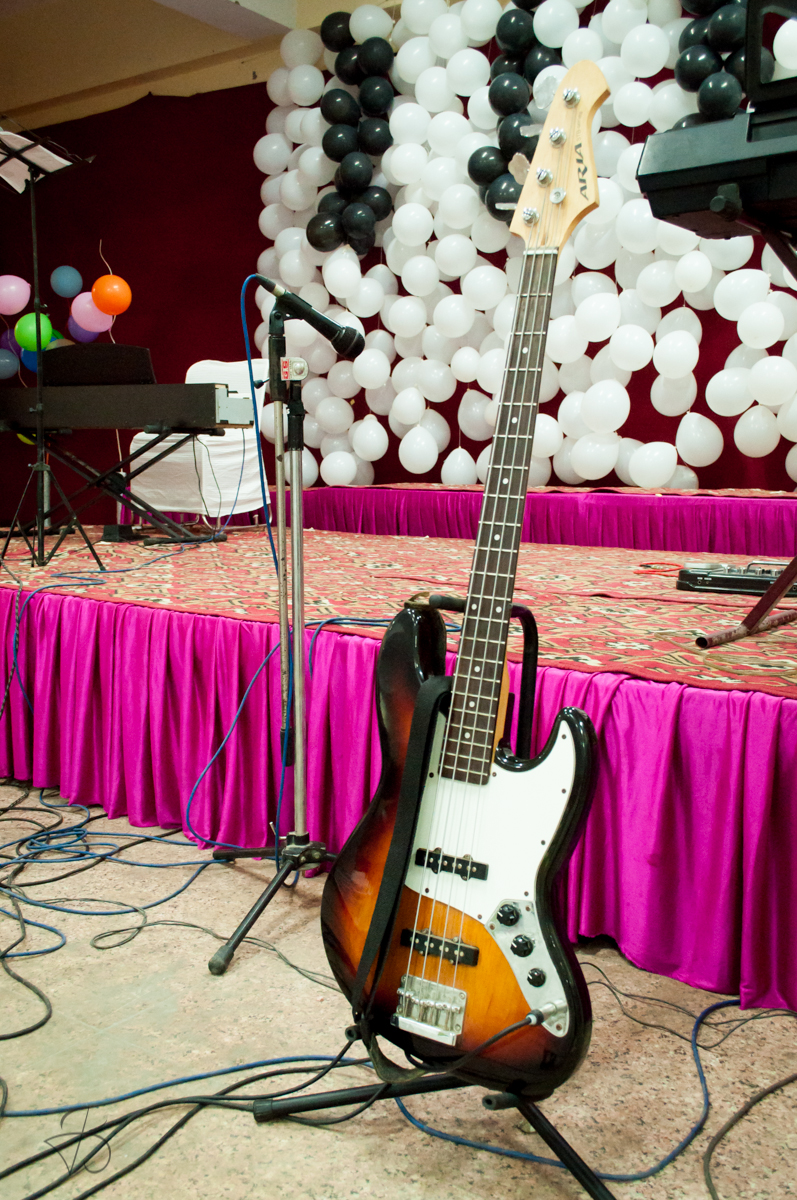
The stage’s backdrop was decorated with balloons to make it look like the keys of the piano. Unfortunately, there was a shortage of black balloons, and the keys could not be completed. Not for long, though. The musicians performing on that stage more than made up for the lack of the key balloons — all the performances I had the opportunity to listen to, were of a very high quality and a treat to the ears!
Ready to play
This is post #9 in this year’s NaBloPoMo, or as Ra calls it Nano Poblano
NaBloPoMo = National Blog Posting Month = Thirty straight days of blogging
While I was in Chennai last year, I received a message from a friend of mine:
‘So are you coming tomorrow?’
‘I’m in Chennai right now’, I replied.
‘Ooh Margazhi. Have fun!’
I didn’t understand what she meant by that. I had visited Chennai during the winter months a few times in the past, but apart from the pleasant weather, I couldn’t think of any other reason to enjoy. I soon found out.
The Tamil month of Margazhi* is considered highly auspicious. For those who are religiously inclined, Margazhi is a month of lots of pujas — temples open much earlier and devotees visit in large numbers for the special pujas. But that was not what my friend, an ardent follower of performing arts, meant.
Margazhi is a cultural extravaganza, a haven for fans of the classical arts, with hundreds of Kutcheries — music and dance concerts — organised throughout the month. Margazhi is, in fact, now synonymous with the music festival.
Chennai takes its music seriously, and audiences don’t clap unless the performance is very good. I found that out on our last day in Chennai, when we spent close to six hours in one auditorium, listening to back-to-back musical performances (for free)!
Even those not interested in the arts — and there are probably few of those in Chennai — cannot escape the Margazhi season, for the art overflows on the streets. Take a walk in the interior parts of residential areas. The Kolams that are drawn at door-steps of every house are much bigger and colourful. The kolams at the temples, though, were my favourite. These are from the Chidambaram temple:
Kolam at Chidambaram Temple
One of the twin kolams along the side of the entrance of Chidambaram Temple
And if you are not interested in art, well then there’s always the sea. The cool sea breeze, on the cool sand is the perfect place to relax.
Yes, Margazhi is the time to visit Tamil Nadu.
*Margazhi begins in mid-December and ends in mid-January. The Corresponding Sanskrit name is Mārgaṣīrṣa. After the end of this month, the harvest festival of Pongal (which falls on Makar Sankranti) is celebrated. The festival marks beginning of Uttarayan – the beginning of the sun’s ascent, signifying the beginning of the end of winter.
The images in this post are my entries for this week’s Photo Challenge. To see more symmetrical images, check out the Daily Post’s Weekly Photo Challenge.


















 Musings of an eccentric mind