Mylapore is to Chennai, as Chandini Chowk is to Delhi. One of the oldest residential areas of Chennai, Mylapore is home to a colourful bazaar as well as a number of temples. Last year, we decided to explore this area on foot.
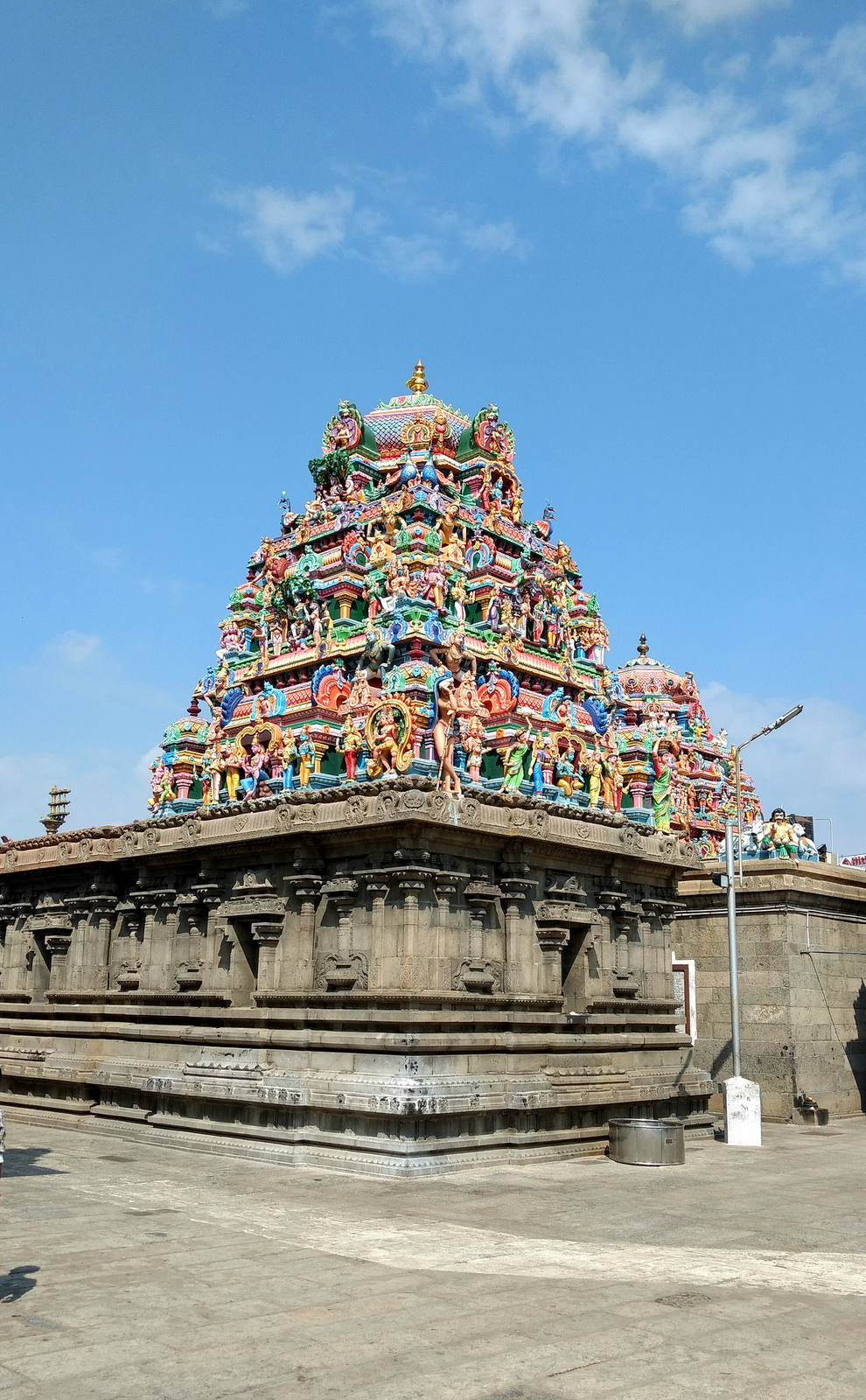
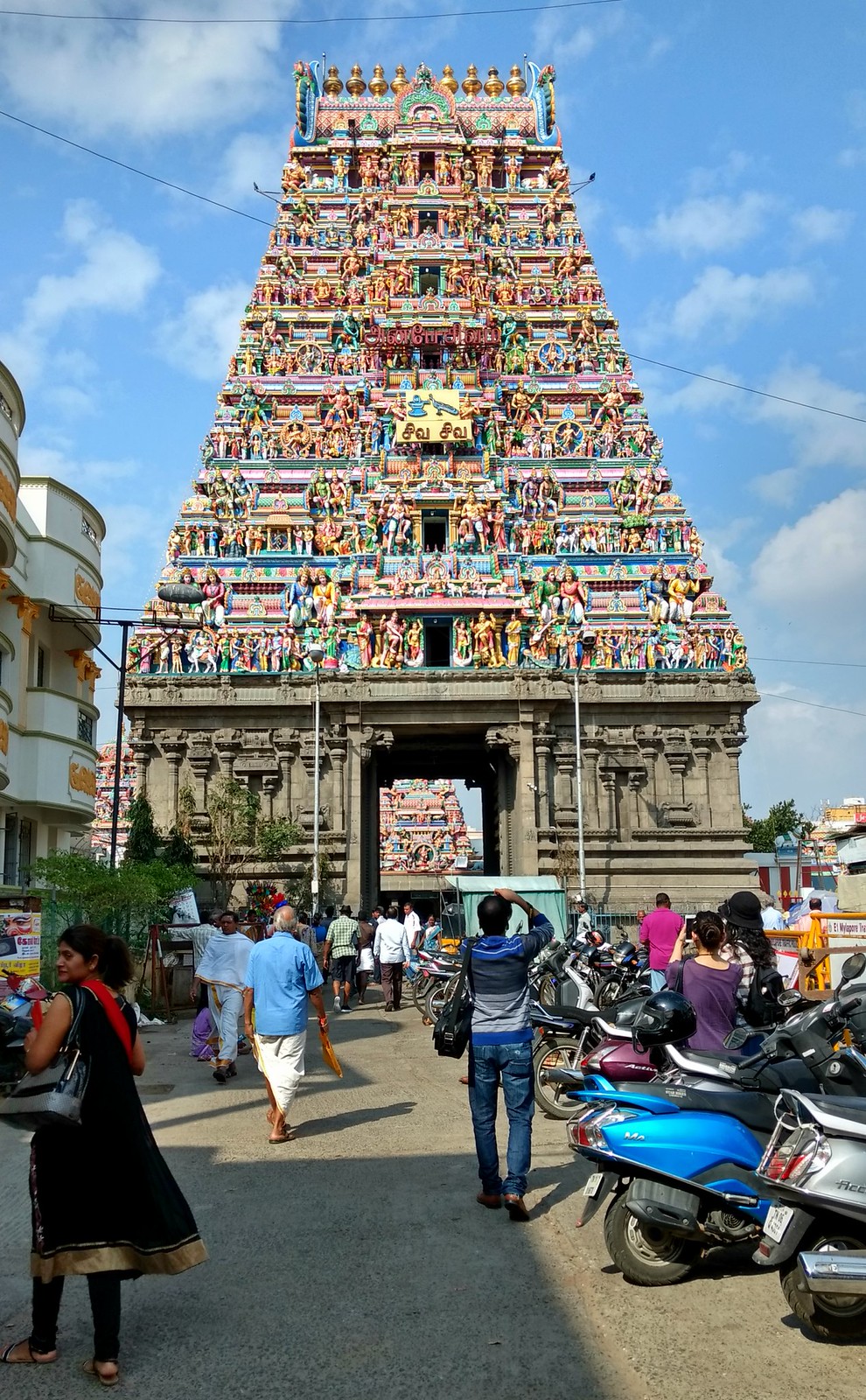
We began our journey at the Kapaleeshwarar Kovil.
Of the numerous beautiful temples of Tamil Nadu, the Kapaleeshwarar temple in Mylapore, Chennai is one of my favourites. The detailed sculptures on the gopurams, the elaborate kolams on the floor, and the peaceful ambience of the temple always leave me spellbound.
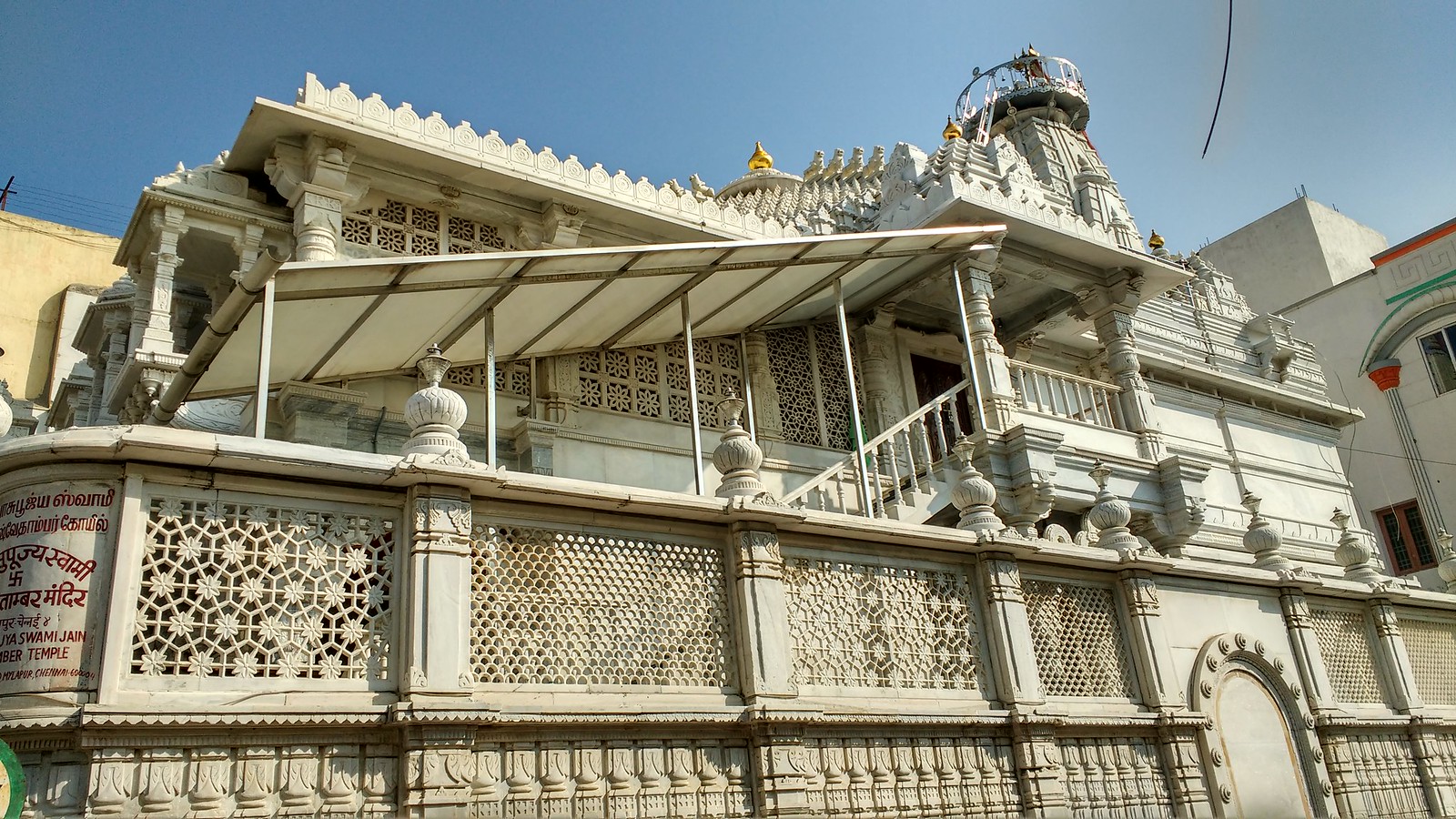
We then walked towards Santhome Basilica. On the way, we saw a beautiful Jain temple.
The temple was closed, so we continued walking.
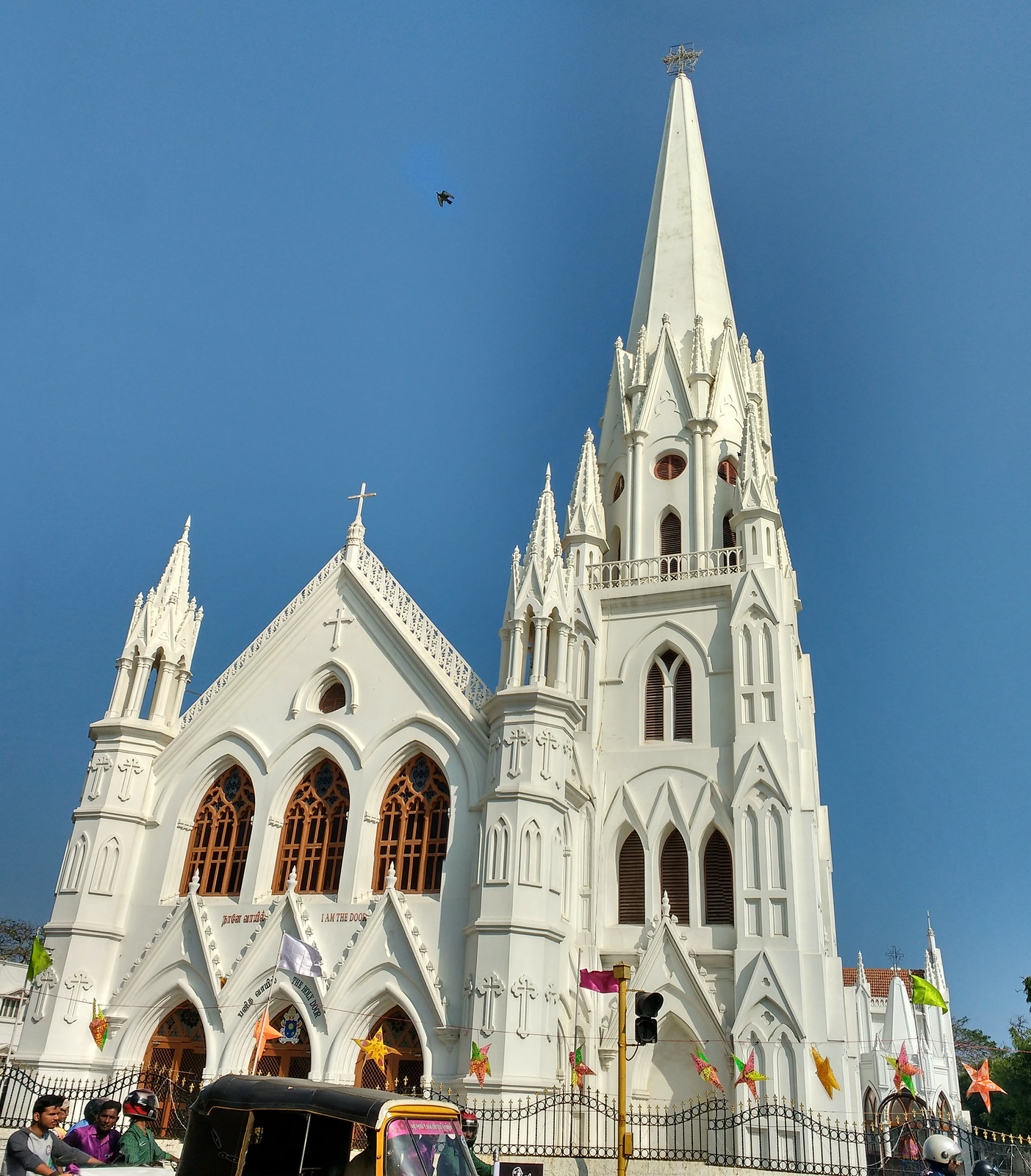
Being Christmas time, the Church was decorated with colourful linen and stars.
San Thome Basilica was built in the 16th century by Portuguese explorers, after demolishing the original Kapaleeshwarar Temple which stood on the grounds.
There is a small museum next to the Church which has architectural remains from older constructions, including some distinctly Dravidian motifs. Strangely, the plaques on the exhibit attribute it to the Church, even when the stone sculpture is clearly distinct from the rest of building materials on display.
Our next stop was the Marina Beach Lighthouse.
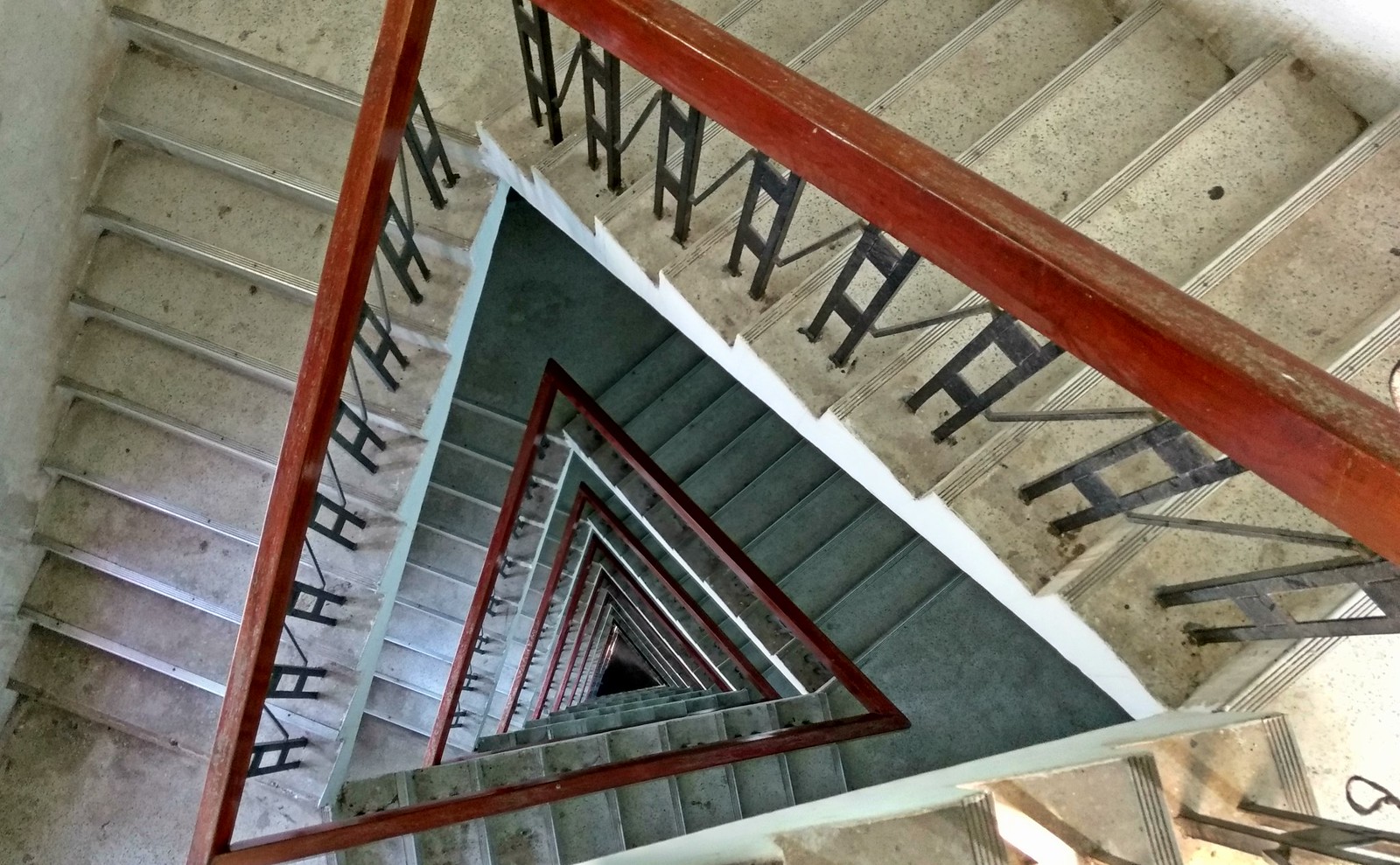
No, we didn’t have to climb all the way up. But it sure was interesting to look down the flight of stairs!
The viewing area at the top of the lighthouse is quite narrow, and it was quite crowded. Nevertheless, the view was amazing!
With the sweeping panoramic views of the beach done, we decided to walk towards the sea.
Sadly, the state of this world-famous beach was not as beautiful as its surroundings. Nearer the sea, the beach looked more like a dump yard than a space to relax in. The only solace, for us, was the sounds of the sea – the waves caressing the sand and filth with equal warmth. Humanity may attempt to seek redemption and forgiveness through spiritual and religious pursuits, but isn’t it ironical how that concept of cleanliness, that is the holiest of them all, is still some distance away?*
Our route map:
* I don’t mean to pick on Chennai. In fact, it is a relatively cleaner city, as compared to many of its northern counterparts (especially the temples).
This is post #14 in this year’s NaBloPoMo, or as Ra calls it Nano Poblano
NaBloPoMo = National Blog Posting Month = Thirty straight days of blogging
I first applied homemade kajal when I visited an acquaintance many years ago. While I waited for my friend to get ready to head out, I chatted with her mother — a tall and slim, simple rural Haryanvi lady. As our mundane conversation veered towards the use of kajal, she mentioned that she had prepared some herself.
I had a vague idea about kajal being nothing but soot. But the small boxes available in the market contain a sticky substance which smeared, so I wasn’t quite sure. She showed me her preparation. The homemade kajal that I saw was, indeed, soot and a tad rough to the touch. I gingerly dipped my finger in it and applied it to the waterline of my eyes. To my surprise, it spread easily and gave a beautiful definition to my eyes. I wondered how she had made it, but our conversation was interrupted, and I didn’t get the chance to ask her.
Life has a funny way of answering our questions, and seemingly disconnected memories find themselves being connected into one big picture. I had shelved this memory of the homemade kajal in the corners of my brain. Until one fine day — on the first Deepavali after our wedding, to be precise — I saw my in-laws performing a puja.
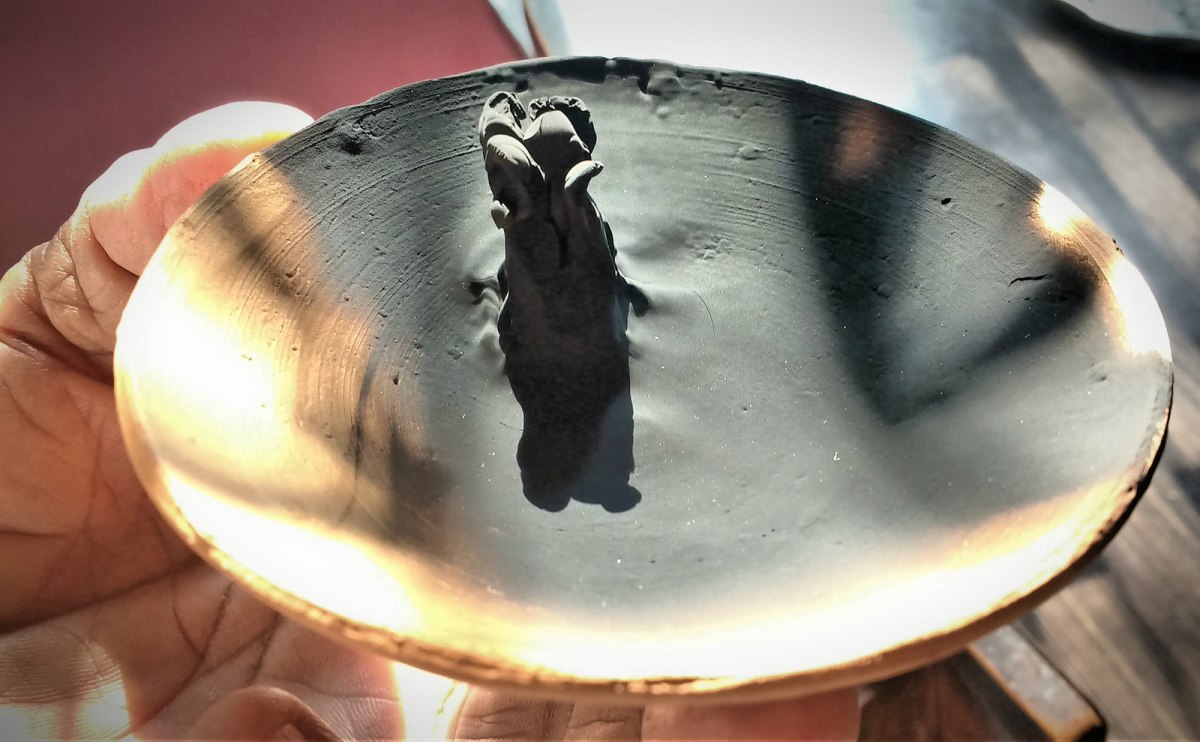
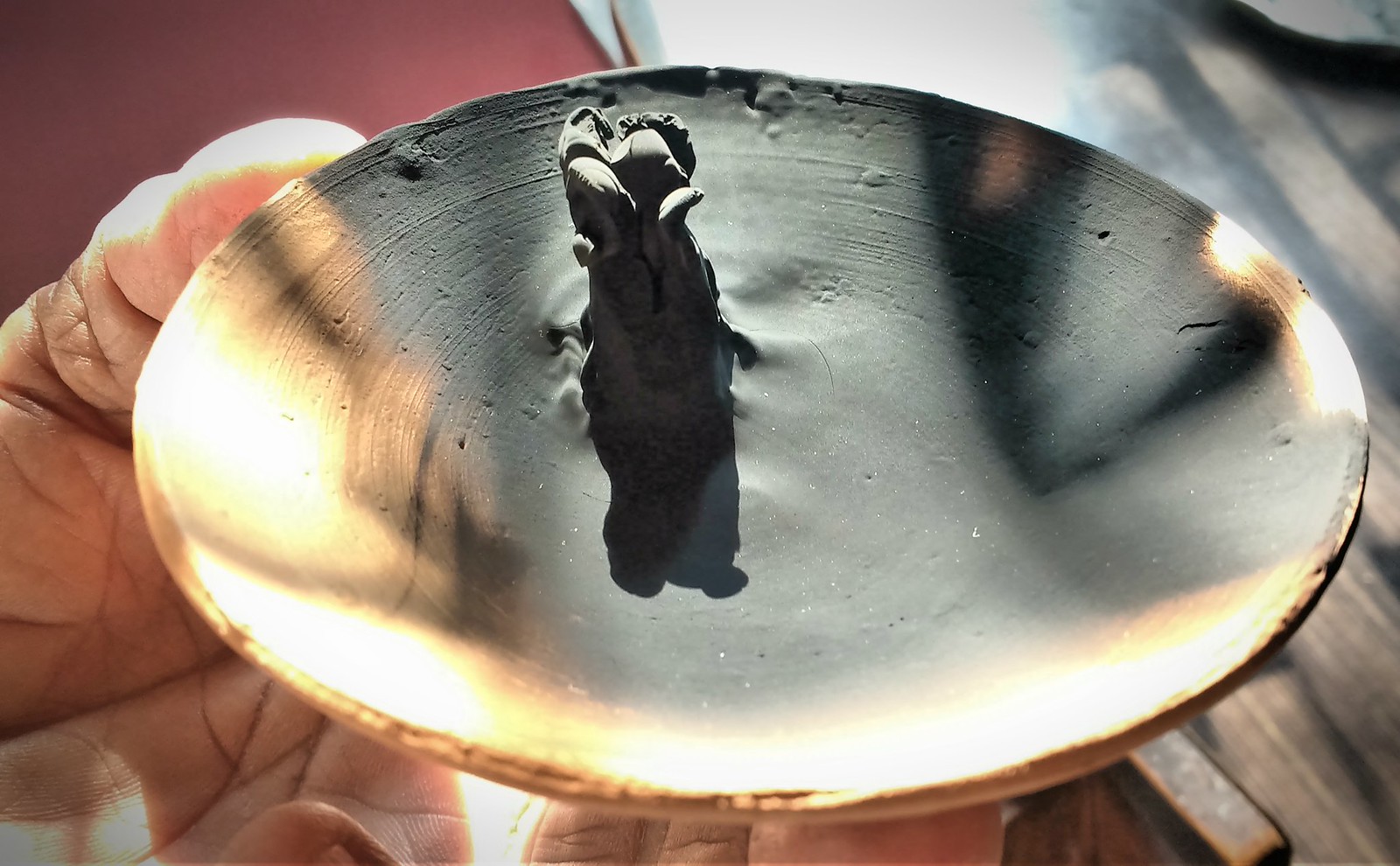
I saw them pray, and then light a large earthen lamp. They then placed an empty lamp, upside down atop the flame, supported by smaller lamps around the flame.
The next morning, I saw our own kajal, ready to be used.
It is not the beauty of a building you should look at; its the construction of the foundation that will stand the test of time.
–David Allan Coe
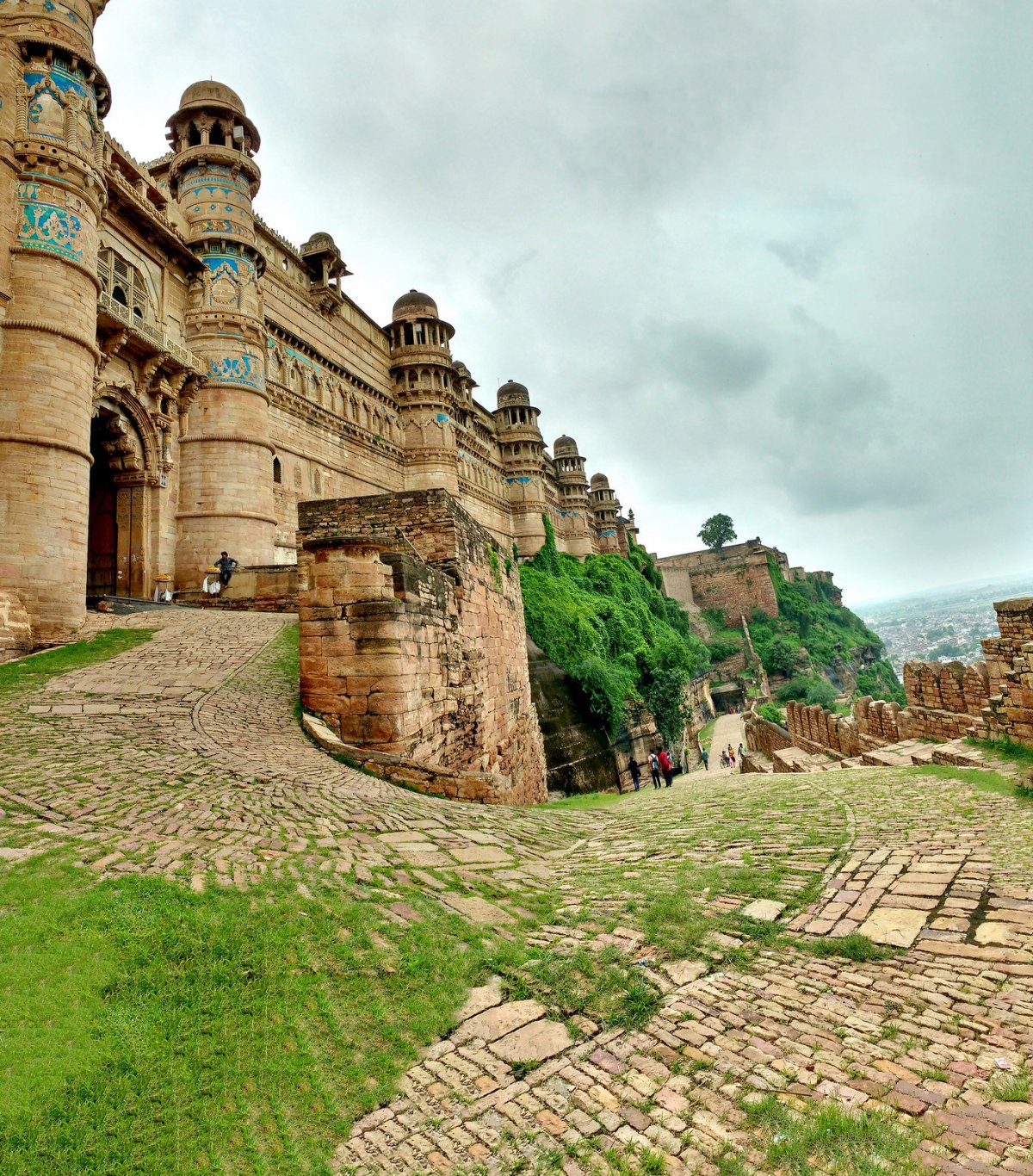
The Gwalior Fort, constructed atop a hill, is a mammoth structure. Legends say its construction began in the 3rd Century, while historical accounts put it anywhere between the 8th and 14th Century. This Fort has seen numerous rulers and severe onslaughts across the centuries and withstood all that has been thrown at it.
As with many of the places we have visited, it is extremely difficult to paint a true picture of the scale of the structure. I could write about the long trek to the top, and the sweeping views of the city, but the closest that I can get to explaining it, is to point to the size of the people in this (incomplete) picture below.
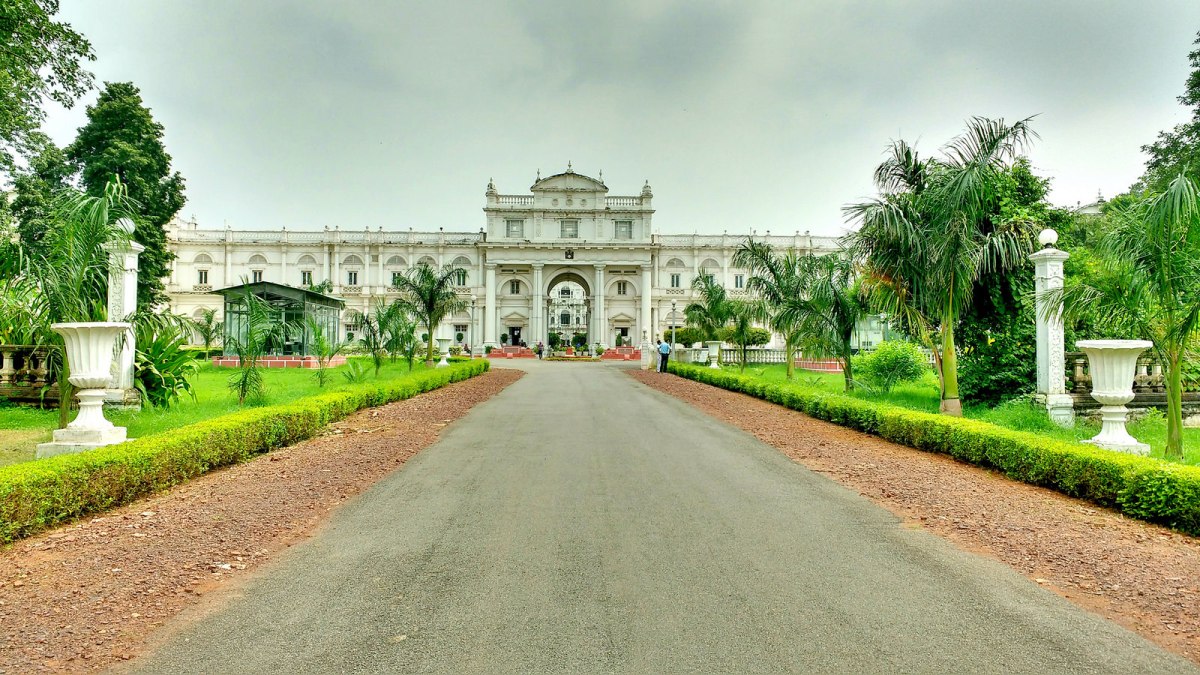
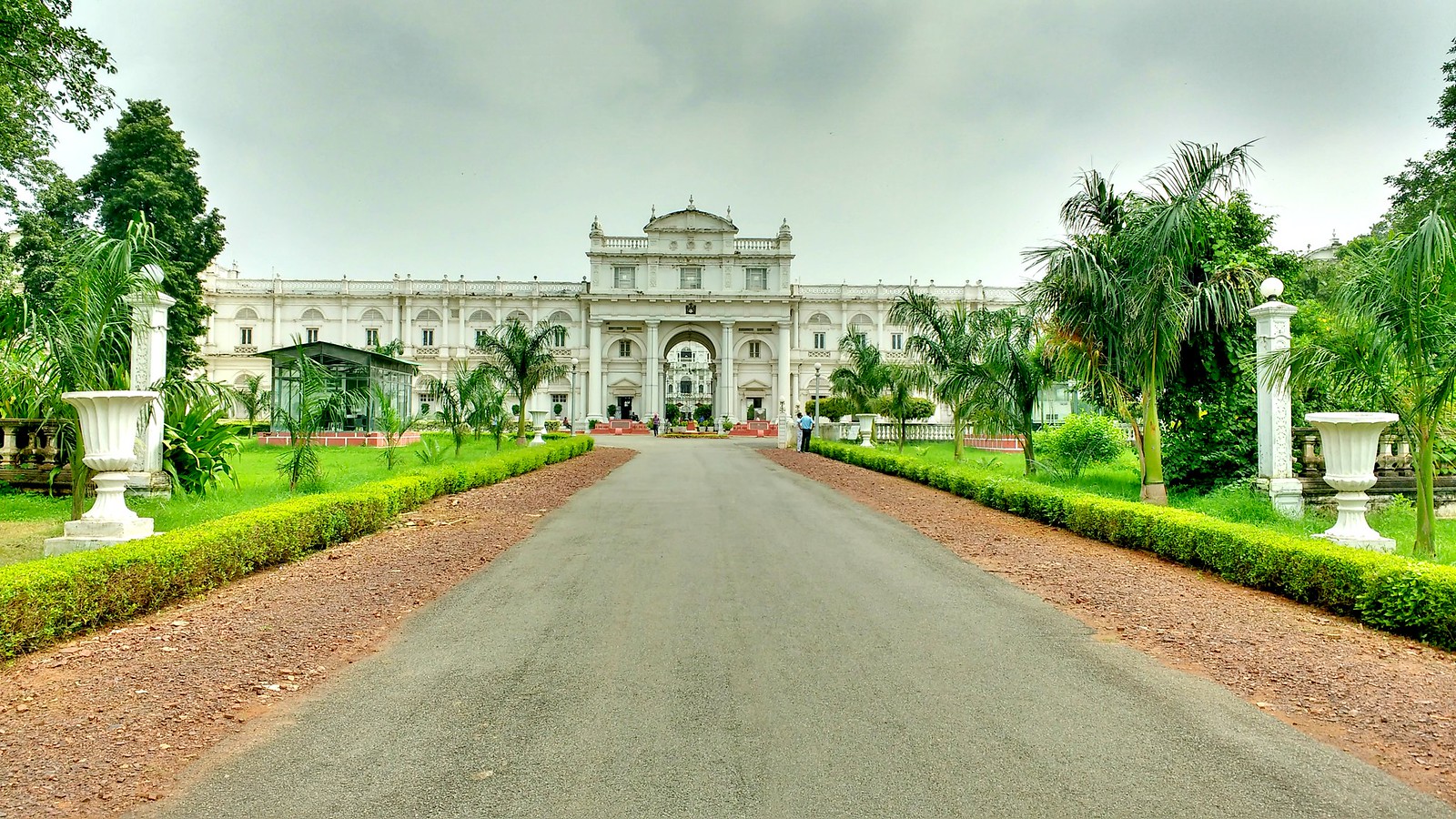
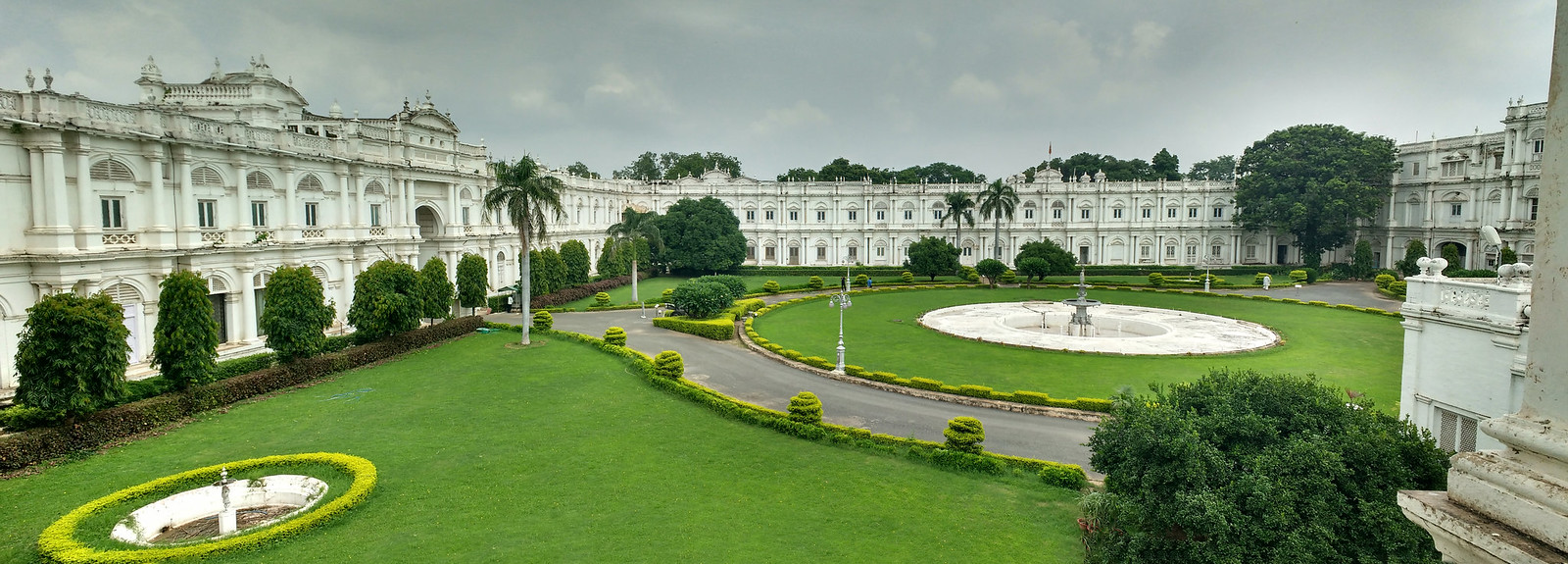
The Jai Vilas Palace in Gwalior combines three European architectural styles—the first storey is Tuscan, the second Italian-Doric and the third Corinthian.
There is an eclectic collection of items housed inside the museum, which can be visited by the public. One section still serves as the residence of the heirs of this Palace.
We weren’t allowed to carry bags inside (there is a provision of a locker), and strangely, we weren’t allowed to carry umbrellas inside either. While the museum itself is entirely indoor, to exit the Palace, one must pass through the central lawn. As luck would have it, it began pouring just before we were about to complete our tour.
If you plan to visit this Palace in Gwalior, make sure you have sufficient time—we spent over two hours (excluding the rain delay), as there is much to see. And if you are short on time, pace yourself to keep the maximum time for the last section—the opulent Durbar Hall. We had read about the extravagant decor and seen pictures of the massive chandeliers. But it was only when we saw the hall that the reality of its grandeur hit us.
In our limited exposure to exotic places, some places leave a lasting impression, some of romance, others of awe. The Jai Vilas Palace, even with all its magnificence, left a somewhat cold and distant feeling. It’s hard to tell why – perhaps it’s the excessive indulgences; or the exclusively European architecture; or perhaps it was the weather; or just maybe, the contrast between the lifestyles of the common people, and that of their representatives, that is so blatantly visible to the casual observer.
Jai Vilas Palace, house of the Scindias. The imposing structure and all its extravagance is visible right from the entrance.
Quick, what’s the first thing that comes to your mind when I say the word: Jalebi
If you’ve grown up in India, sometime in the 90’s, then let me describe this for you.
A sulking boy, his head sunk low, marches into a railway station. He throws his bag on to the bench and perches himself, continuing to frown. He tells an ‘uncle’ that he has decided to run away from home because everyone scolds him. But then, when he finds out that there are hot jalebis being made at home, his eyes light up, and he decides to abandon his plans of running away (just for another 20 years, that is!)
Come on, you know what I’m talking about. Let’s say that together now, Jalebi!
Here’s the iconic ad (in Hindi) for a not-so-healthy cooking oil, to refresh some old memories.
Jalebis are sweet orange bundles of pure sin—zero nutrition, and complete addiction. So I can understand why it is simple for people to fall in love with them. What I don’t understand though, is why they are almost universally prepared by the neighbourhood halwais (confectioners) only during the evenings. As I would find out, years later, this wasn’t as universal a truth, as I thought it to be.
* * *
We reached Allahabad in the morning, and my stomach was grumbling a little. “You want to get some breakfast? Let me treat you to the local speciality here.” It was our second trip to my in-laws’ house, about a month after our wedding—a new family, a new town, a completely new culture. I was expecting a very special something that would blow my mind. And blow my mind, it did!
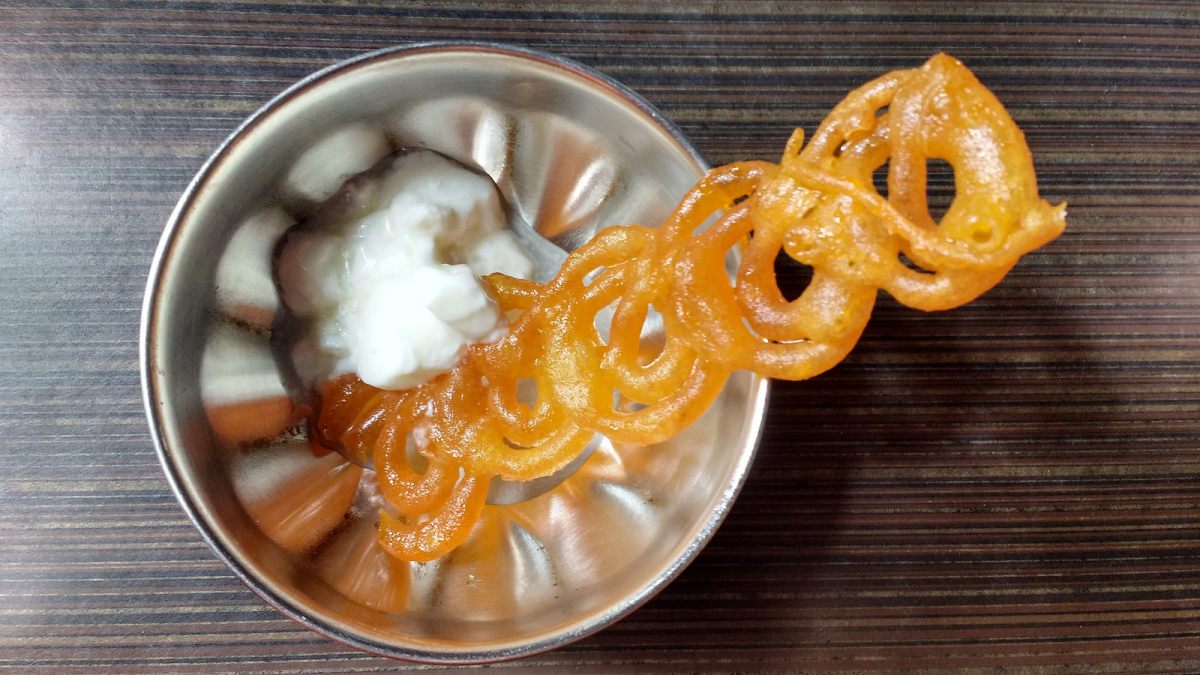
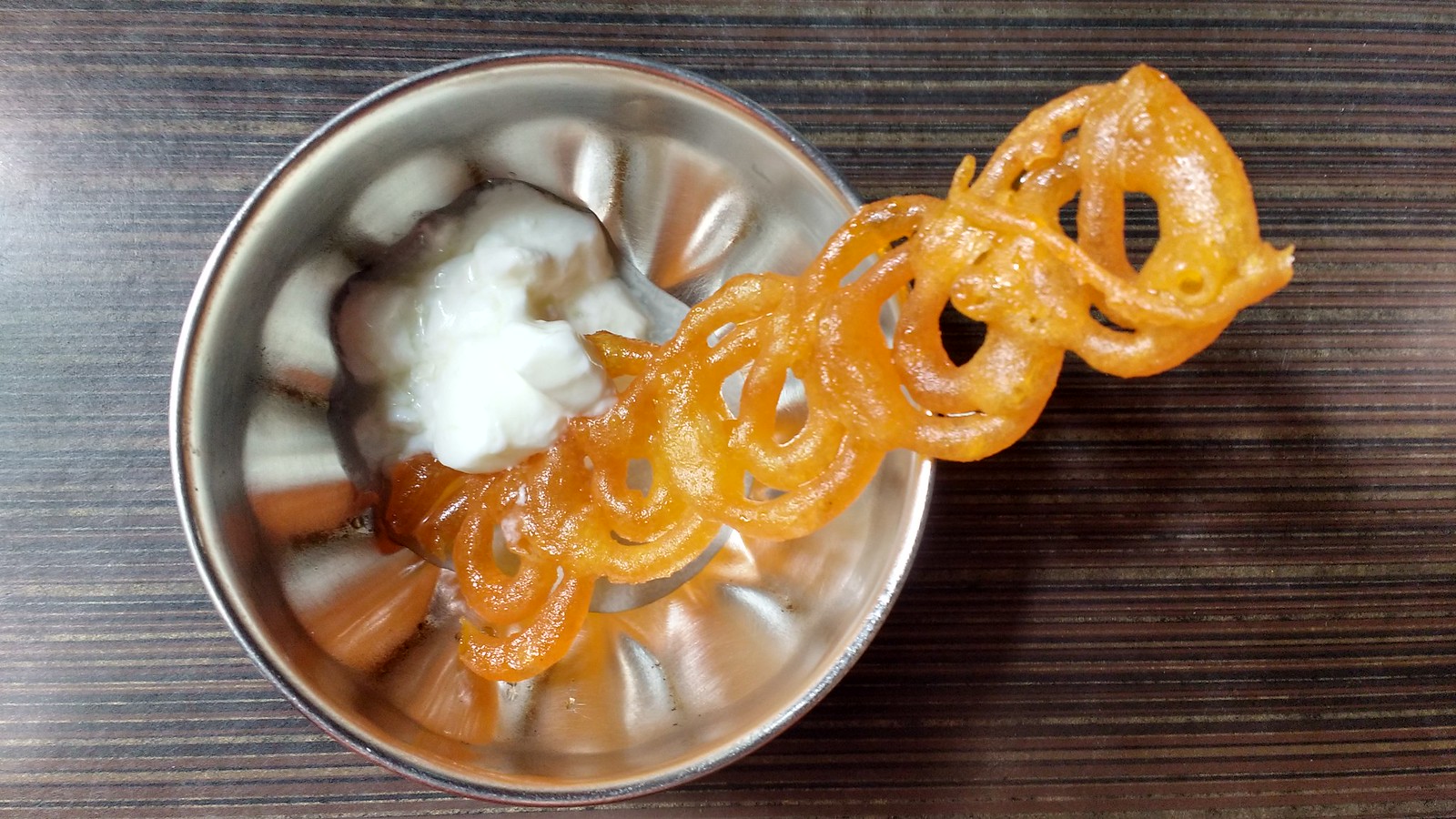
“You know how jalebis are made only in the evenings in Delhi? Well, in these parts of the world, you won’t find jalebis in the evening. They’re made exclusively in the mornings. And they’re had for breakfast, with dahi (curd/yogurt).”
Say what?
In my world, curd was meant to be had as is, as a cool refreshing dish; as a dip with savoury paranthas; as a main course with rice (thayir sadam, yum!); or as a dessert in mishtidoi or lassi. But sour curd with jalebi? It just didn’t sound right. The mental picture of the two together, ruined both dishes for me. Sitting at a table at a local halwai, though, I saw several customers enjoying their jalebi dipped in curd.
Eventually, I tried it too. The point is, apparently, to lessen the sweetness of jalebis with dahi. So that you increase your capacity to eat more jalebis (yay, for cholesterol and sugar!) I get the logic. But the taste, I suppose, is an acquired one. Even after several attempts, I always end up relishing them separately.
I had often wondered how people could eat jalebis with rabri (sweet condensed milk). Oh, how the mere thought of that much sweet hurt! But try as I might, dahi with jalebi will be more of a mystery to me.
So which foods do you find difficult to understand?
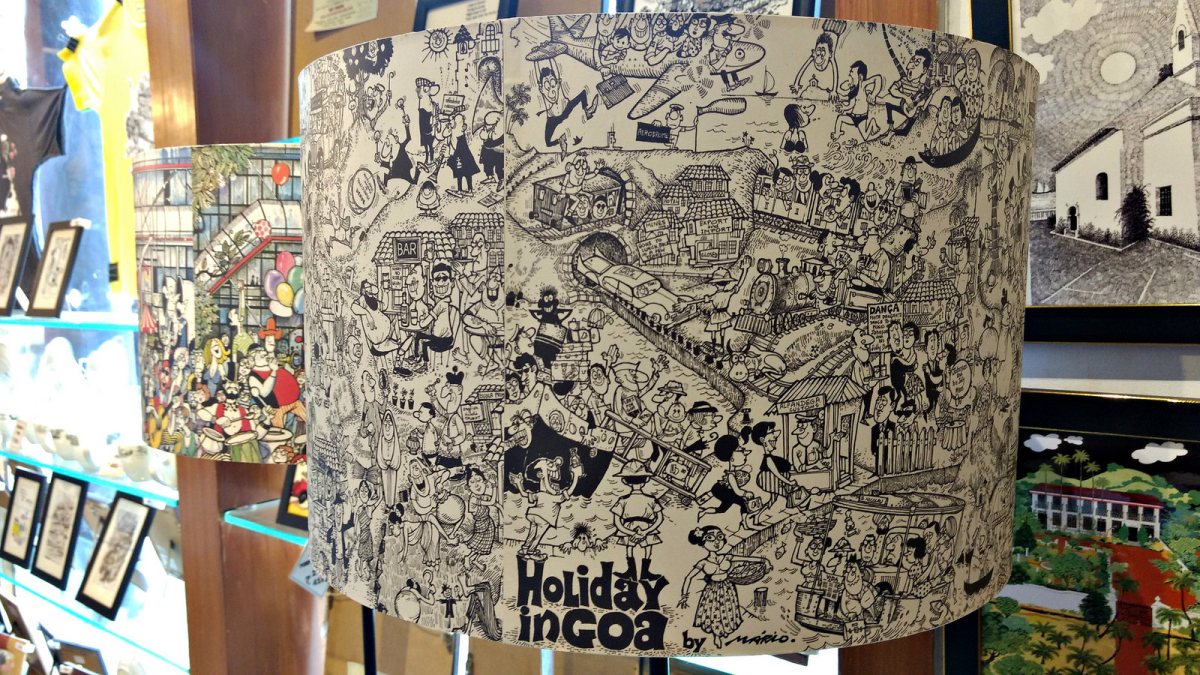
Mario de Miranda was a celebrated Goan artist, illustrator and cartoonist. He began his career in the Times of India in 1953. He passed away in December 2011, and was posthumously awarded the Padma Vibhushan (India’s second highest civilian honour) in 2012.
There are four galleries dedicated to his art viz. Panjim, Porvorim, Calangute and Mumbai.
Having spent two full days in Calangute, with the Gallery just over a kilometre of where we stayed, we felt it would be quite an injustice, not to visit. And so, with barely an hour left for our departure, we decided to make a dash towards the Gallery.
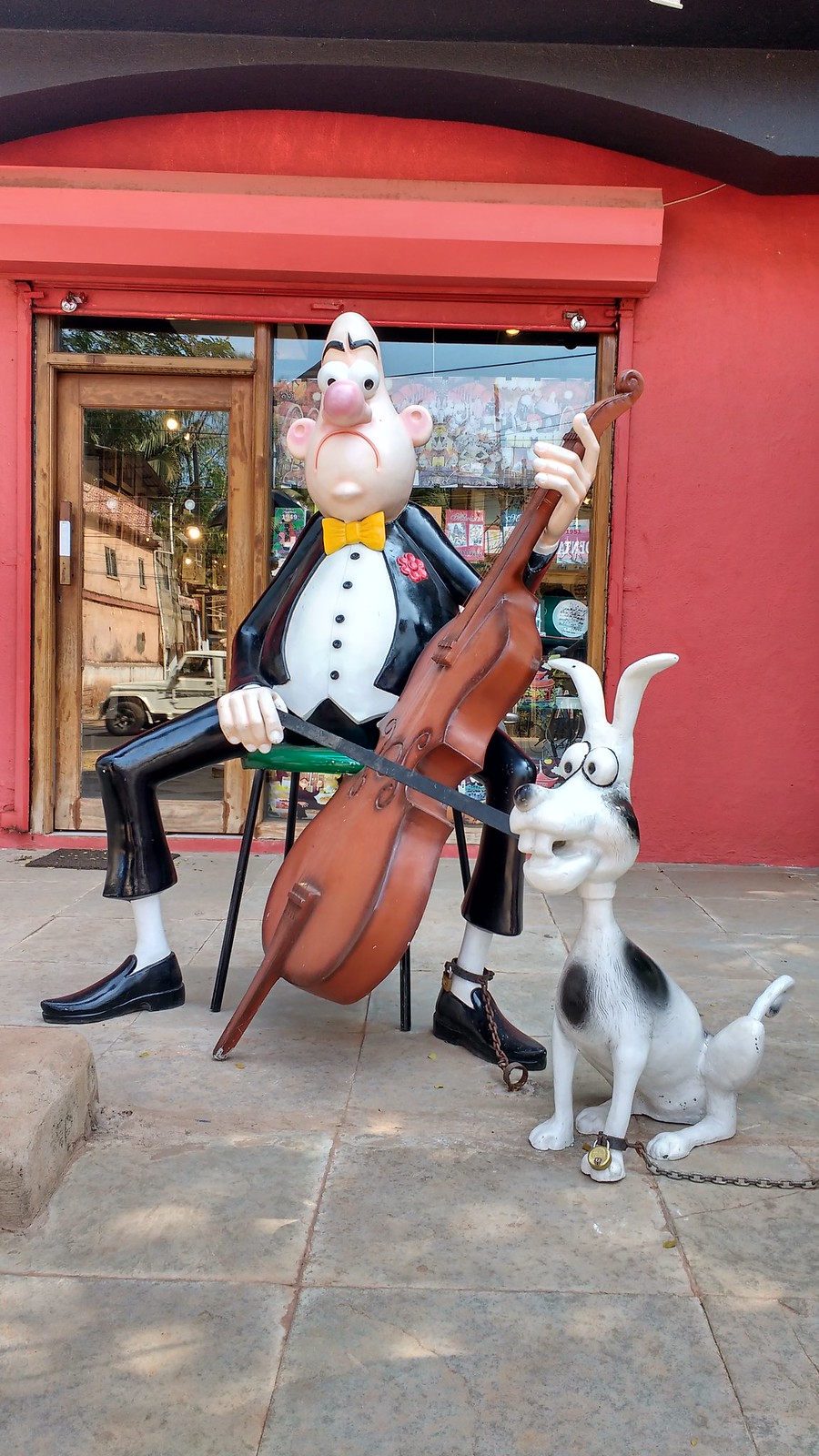
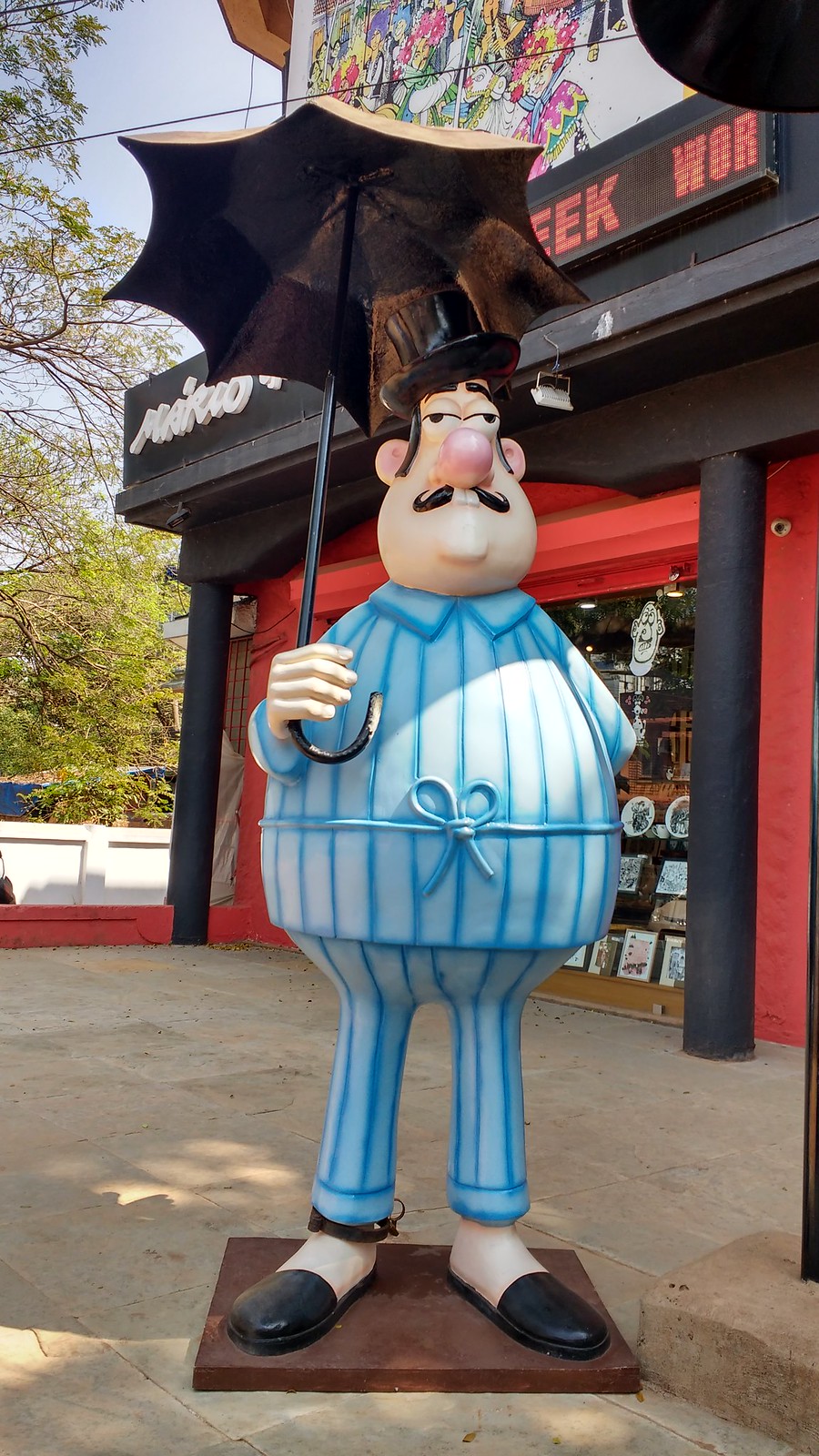
Mario’s character welcomes us at the porchHello, it’s quite sunny here. Maybe you’d like to step inside
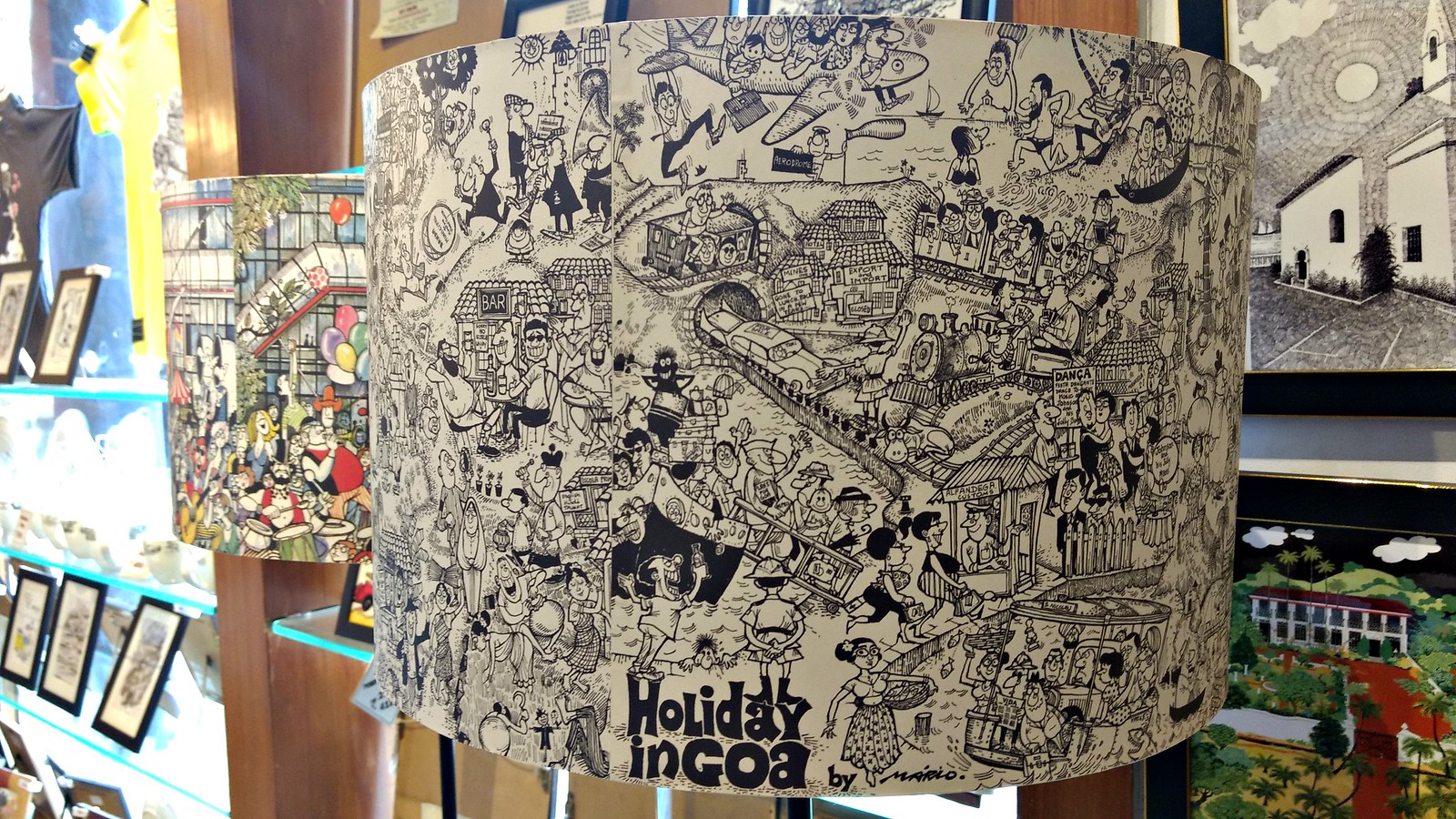
At the Gallery, we were treated to a mouthwatering array of everyday objects adorned with cartoons.
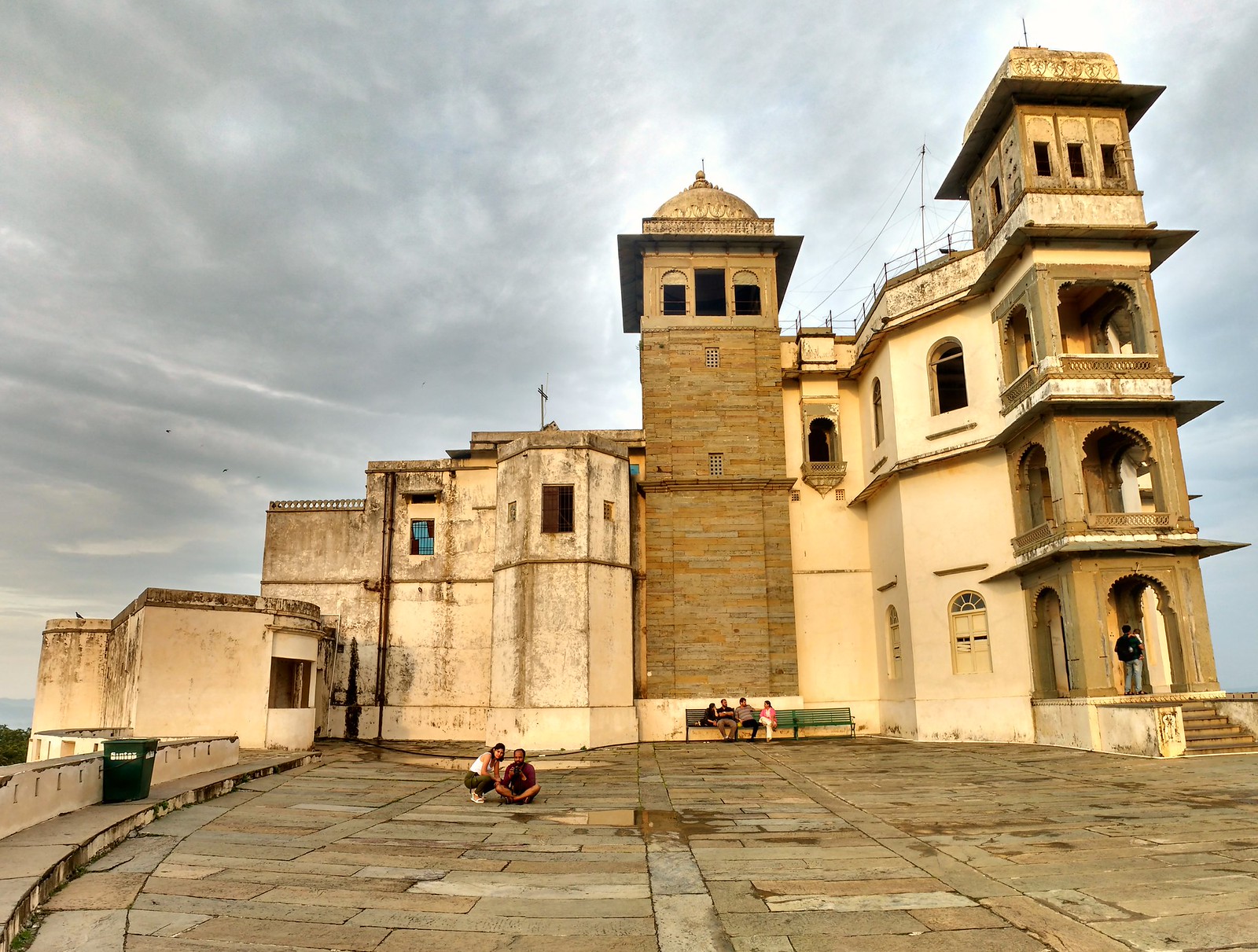
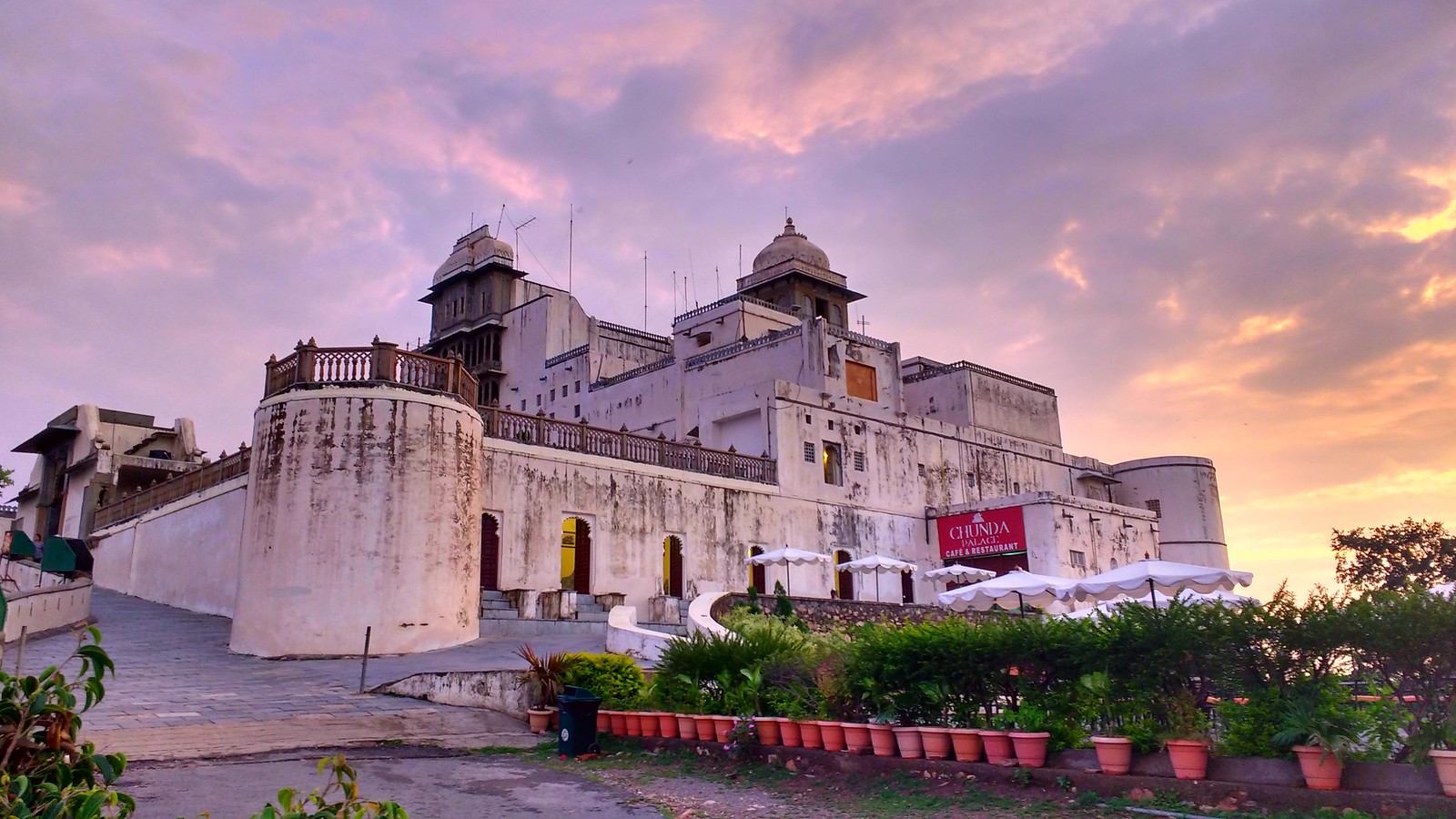
Researching for our trip to Udaipur, we had heard and read about the amazing views of the Aravalli hills from the Monsoon Palace, especially at sunset. The Monsoon Palace was constructed specifically for the purposes of observing the monsoon clouds—and what better time to visit the Palace than in the monsoon!
It had poured heavily the day we reached Udaipur, and it appeared that the heavens above would deny us our visit to this Palace. Amazingly enough, the rain stopped in the early evening, and we headed out to catch the setting sun under a rather overcast sky.
From what we had read in the travel reviews, it was a long trek uphill, and not much upstairs, apart from a neglected building; that one must carry food and water, as there were no food stalls; and keep them safe as there were lots of monkeys who would snatch away your food. And so we went, fully prepared with snacks and water, tucked in a canvas bag, secured safely with the modern miracle called a zip.
Atop the Monsoon Palace
It turns out, either this place hasn’t been reviewed by travellers for a while, or I ended up reading every old one!
So I’m going to attempt to set it right, by debunking all the myths (and adding one observation) about the Palace.
The building didn’t really look neglected or decaying.
There is a restaurant there.
There are also public water dispensers (as with most other monuments)
There are no monkeys (except for one big Langoor, that had probably been hired to keep the red ones away)
There are lots of multi-legged insects. Not dozens or scores or hundreds, there were literally thousands of centipedes/caterpillars/millipedes (I have no idea which of those they were) on the stone steps and walls—possibly due to the rains.
What each of the travel reviewers did get right, though, were the views. To quote one reviewer, “the views are to die for”.
Such was the breathtaking view of the Aravalli hills at sunset, that neither my words, nor my pictures could do justice to it.
We spent a couple of hours drenched in the golden hues of the sun, and as grateful as we were to be in presence of such magnificence, there was one greedy thought still lurking within, “if it weren’t so overcast!” Oh well. 🙂
So what were the great views, that captivated us, you ask? I’ll leave that hanging for one more day.
We had had a rather strange morning. Waking up at 3:30 am, to be stuck in a traffic jam around 5 am, and then racing against the sunrise to get to the top of Tiger Hill. We missed the famous golden Kanchenjunga due to bad weather, but took away some interesting memories nonetheless.
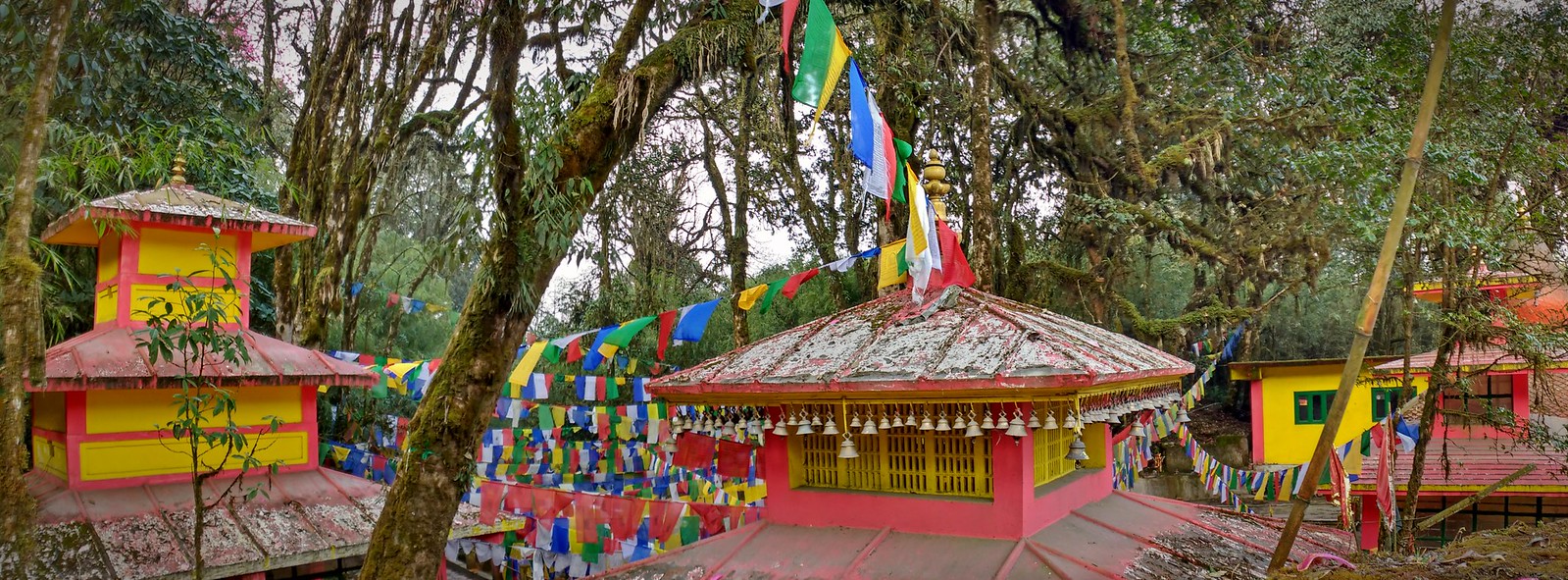
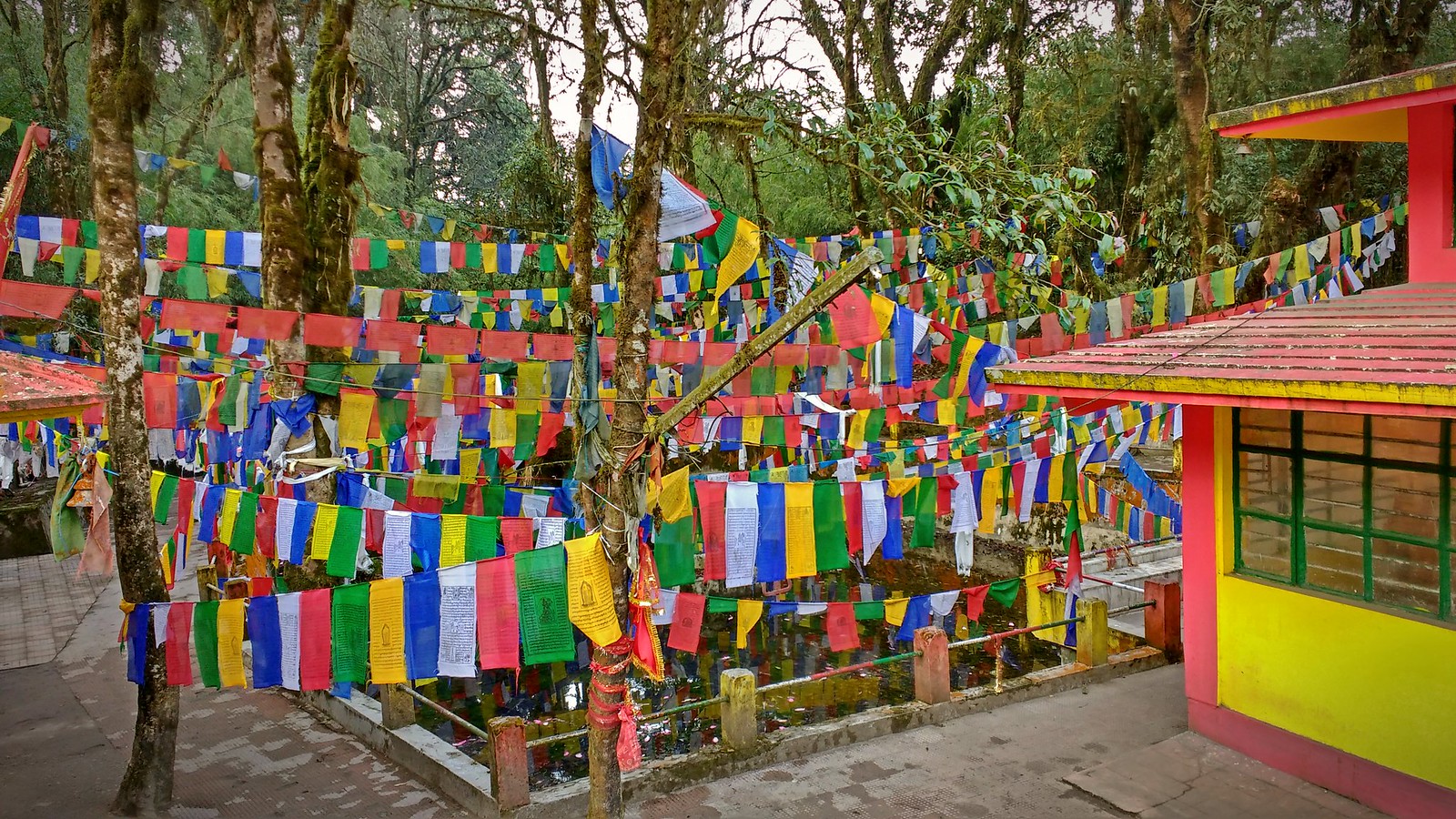
We are extremely slow travellers. And on that foggy morning, we were the last of the tourists to slowly descend the hill, soaking in every inch of the natural beauty and scores of colourful flags. Somewhere along the path, lay a beautiful temple with more strings of flags than any other place we’d seen.
Temple towards the base of Tiger hill.
It was also very quiet, ignored by all the tourists scrambling to get into their cars to visit the next item on their list of places to see. We wondered why this one was missing on anyone’s itinerary.
Our own ‘package’ didn’t include this, and with our driver asking us to hurry up, all we could manage were a few quick photographs from the outside.
I did a quick search on Google, and sadly, could not find the name of this temple; there weren’t any tourist brochures or itineraries that mention this place. I’m not sure if visitors are permitted to enter (they must be, if there are so many flags here!) If they are, and if you have the time, perhaps you could add this to your list. If you’ve visited the temple, I would love to hear your story.
Travelling during the Indian monsoon is tricky. Apart from the dangers of landslides and floods, there is the danger of being trapped inside a cold hotel when it is pouring outside. Fortunately, we are not crazy enough to venture towards perilous terrains or poorly administered areas.
Our first monsoon vacation was to Gwalior last year, during the Independence day weekend. I’d assumed that the rains would keep people away. We couldn’t be further from the truth. And I’d assumed that the monuments would be fresh and clean after a wash. I can’t quite comment on that. But that didn’t stop us from being mesmerized.
In the city, with the high rise buildings, its hard to lay our eyes on one continuous skyline. In fact, we sometimes give up on our chances of seeing it. And that is where smaller towns come to our starved senses’ rescue, especially during the monsoon. The massive and magnificent structures we visited were made all the more beautiful in the backdrop of the most amazing expansive skies.
Sure, we did get caught in the rain. We had to cancel our plan of visiting other places because there was a huge downpour while we were inside Jai Vilas Palace. But when you’re marooned in a Palace, it’s really not that bad!
This year, too we planned a vacation for the same weekend—but because there were so many more like-minded travelers, we couldn’t get tickets! So we did something that we felt was smart—we travelled a couple of weeks later, when most of the city tourists would be away (and we secretly hoped that hotel prices would be slightly cheaper; they weren’t). We also hoped that the impact of monsoon rains would be lesser. But when we checked the weather predictions, we were made well aware of the risk we were taking.
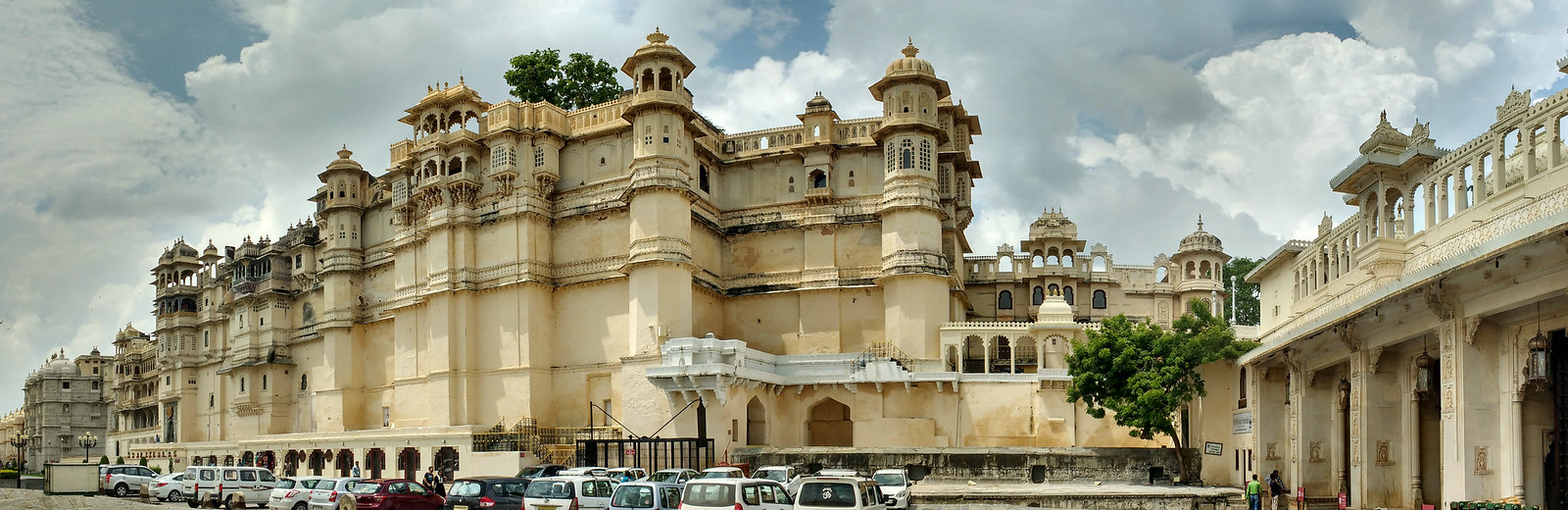
Day one in Udaipur, saw us marooned inside our home. But we did manage a visit to the Monsoon Palace. On day two, we literally headed for the hill to avoid getting wet in the rain, and just managed to make it inside the City Palace, before the downpour began. And like the year before, we found ourselves marooned in yet another palace!
So what’s our take on travelling during the Indian monsoon? Well, the weather is going to be cloudy, with a chance of great views!
Yup, these pictures were taken with a phone 😉 These are panoramas stitched together from individual pictures taken with a Moto G3. Click/tap to view my Flickr photostream.
Hat tip to R. Karthik photography for recommending the software used to stitch the pictures. Check out his review here.
This is post #2 in this year’s NaBloPoMo, or as Ra calls it Nano Poblano
NaBloPoMo = National Blog Posting Month = Thirty straight days of blogging
As we were stepping out of the hotel room, we saw a tall, broad man peering through the viewfinder of a DSLR. The SUV behind him was open and the valet placed our bags in the boot.
As we closed the door, the driver kept his camera on the front passenger seat and hopped in. He had a small goatee and wore an earring. His black leather jacket and slim fit jeans completed his look. Like almost all the SUV drivers we had interacted with on the mountains around the river Teesta, he looked like a rock star.
“My name is Mahesh,” he announced in a jovial voice as soon as he closed his door. “So you’re headed to Darjeeling, eh? How was Gangtok?” His laid back manner appeared as if he had known us for a long time. And we eased into a conversation without any hesitation.
“It’s absolutely beautiful! So much to see. So clean. And people are so friendly. We’re already planning our next trip here!” It had rained for three days and there was not one camouflaged puddle, and the roads were free from slush and filth. The hospitality we had received at the hotel was outstanding, and we didn’t really want to leave.
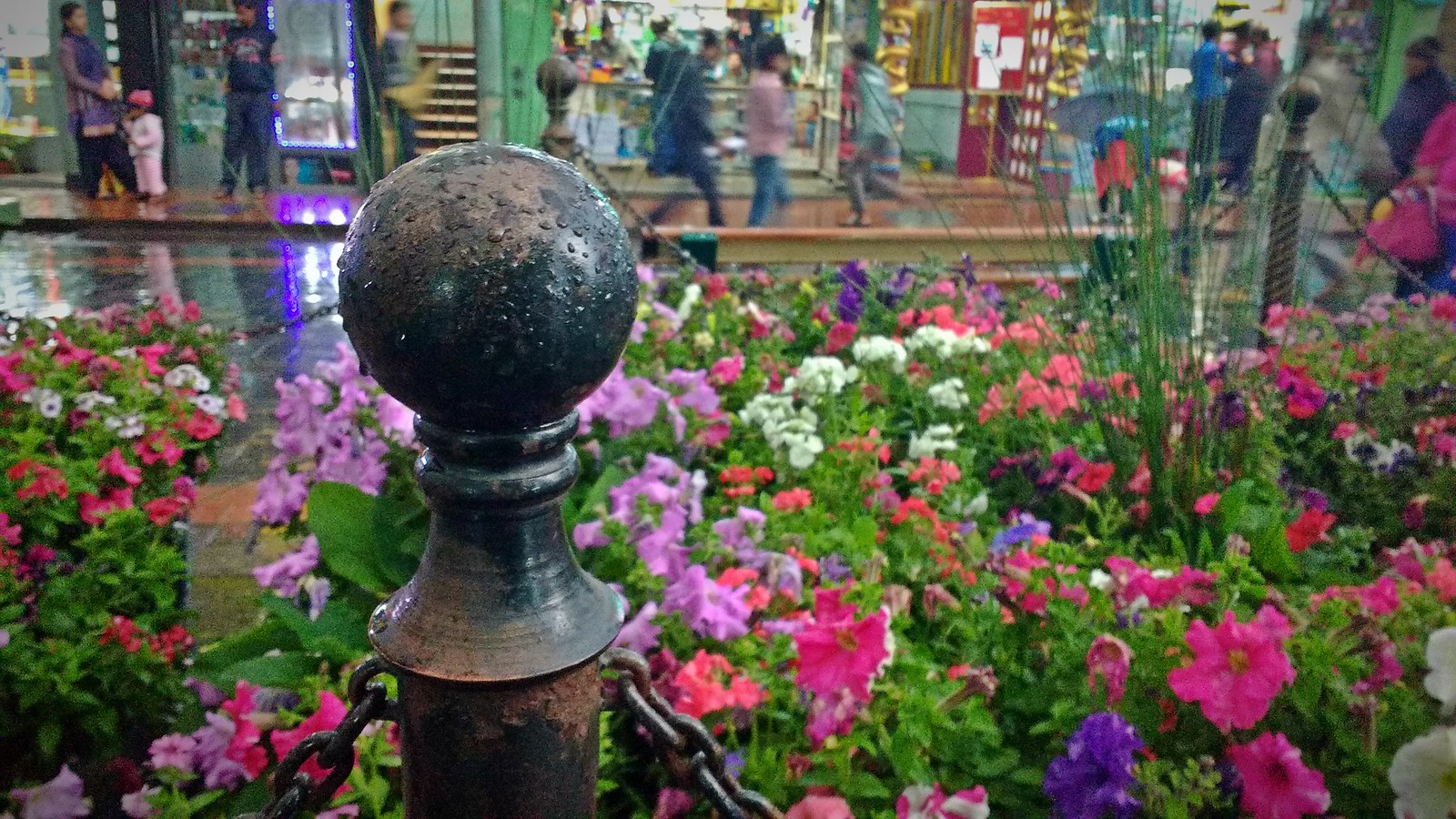
MG Marg in the rain
“Yes, I love Gangtok,” said Mahesh. “Every time I come here I like to take pictures. You’ll see a huge difference between Gangtok and Darjeeling. That’s such a dirty place.”
As we made our way along the narrow, winding roads, we approached a fork—one road led steeply uphill, while the other continued downhill. Wedged in the middle of the fork was an SUV. The driver had apparently taken a wrong turn uphill, and was backing down slowly. Cars had begun piling on all sides. And something miraculous happened—everyone waited patiently as the driver reversed, moved forward, turned a little, and reversed again to repeat these mini movements for maneuvering the tricky slope.
We told Mahesh how amazed we were by the orderly conduct of the drivers in Gangtok. In the Delhi-NCR region, people honk even if the traffic signal is red! And here, people waited silently for what seemed like an eternity for the driver to course-correct. That done, we proceeded downhill.
“There is very good enforcement of law here. People don’t go breaking rules.” Mahesh was clearly happy in Sikkim. “I come to Gangtok every now and then. But one day I will come here only to take pictures. I want to photograph the traffic ladies here. And want to compare and contrast them with police in Bengal.”
As Mahesh was speaking aloud his artistic dreams, the scenery outside took a beautiful turn. Beside the road, a shallow stream was flowing on a bed of hundreds of smooth pebbles, with hills all around. We had got used to the natural beauty of Sikkim by now, but it appeared that there was no way for us to document it through the windows of a moving vehicle. As if reading our minds, Mahesh slowed down. “You can take the picture now! See, I want you take as many pictures as you can. I want, that when you go home and you see these pictures, you will remember me!”
The turning where the road splits three ways. A chance photograph taken from our moving car.
We continued smoothly, when Mahesh parked the car to the side of the road beside a huge boulder. He paused, looked outside his window, and quite abruptly, grabbed his camera and hopped out without a word. Puzzled, we looked at each other, and then tried to follow his movements. A short distance behind us, Mahesh was straining his eyes and looking up. He peered into the viewfinder of his camera while we kept wondering what it was he was looking at. He came back and placed his gear on the passenger seat and we resumed our journey. “There was a vulture’s nest up there on top of the boulder. I thought I saw two baby vultures there. But couldn’t get a decent photograph.” If there was a hint of disappointment in his tone, it went away in a few minutes.
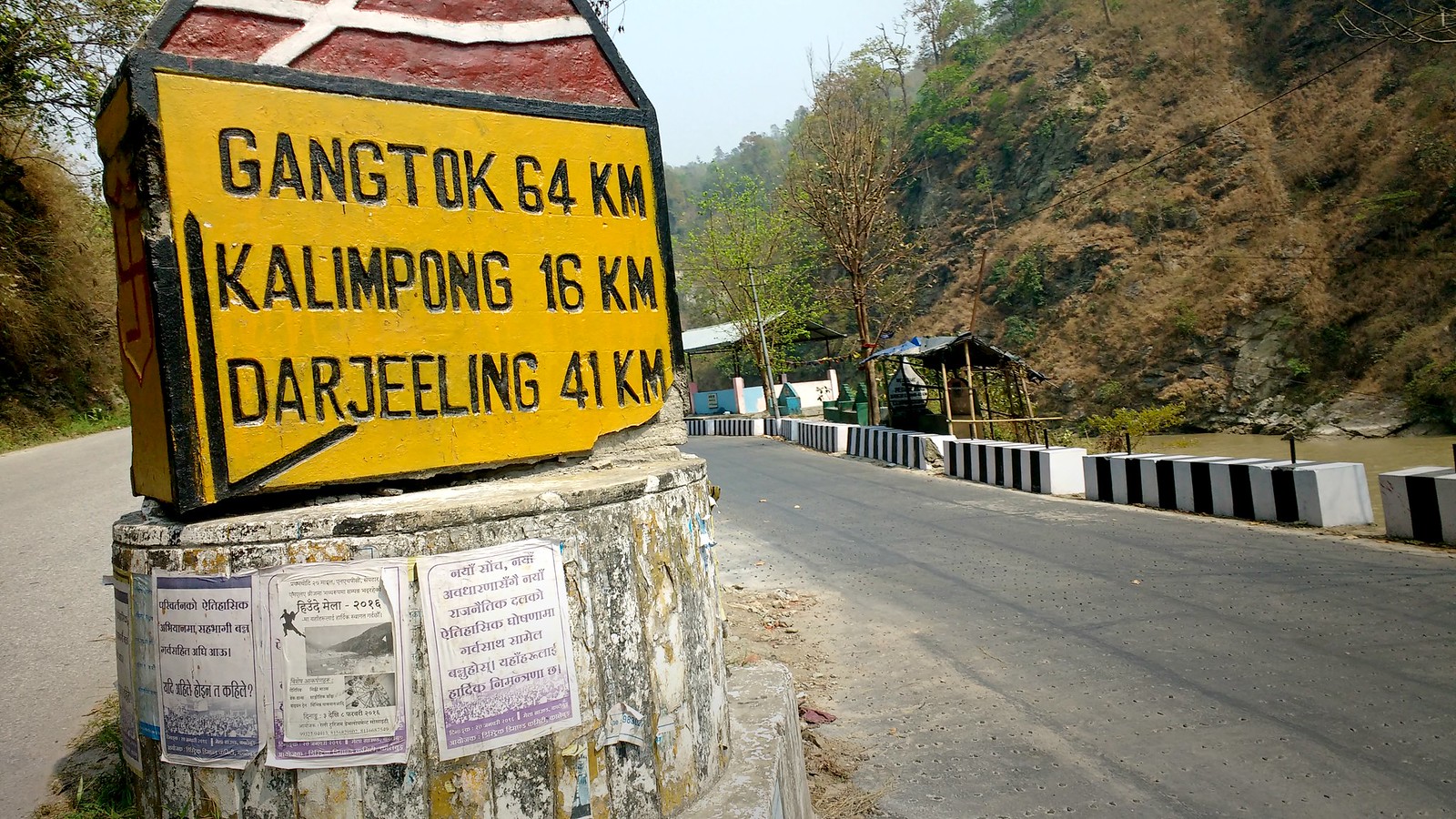
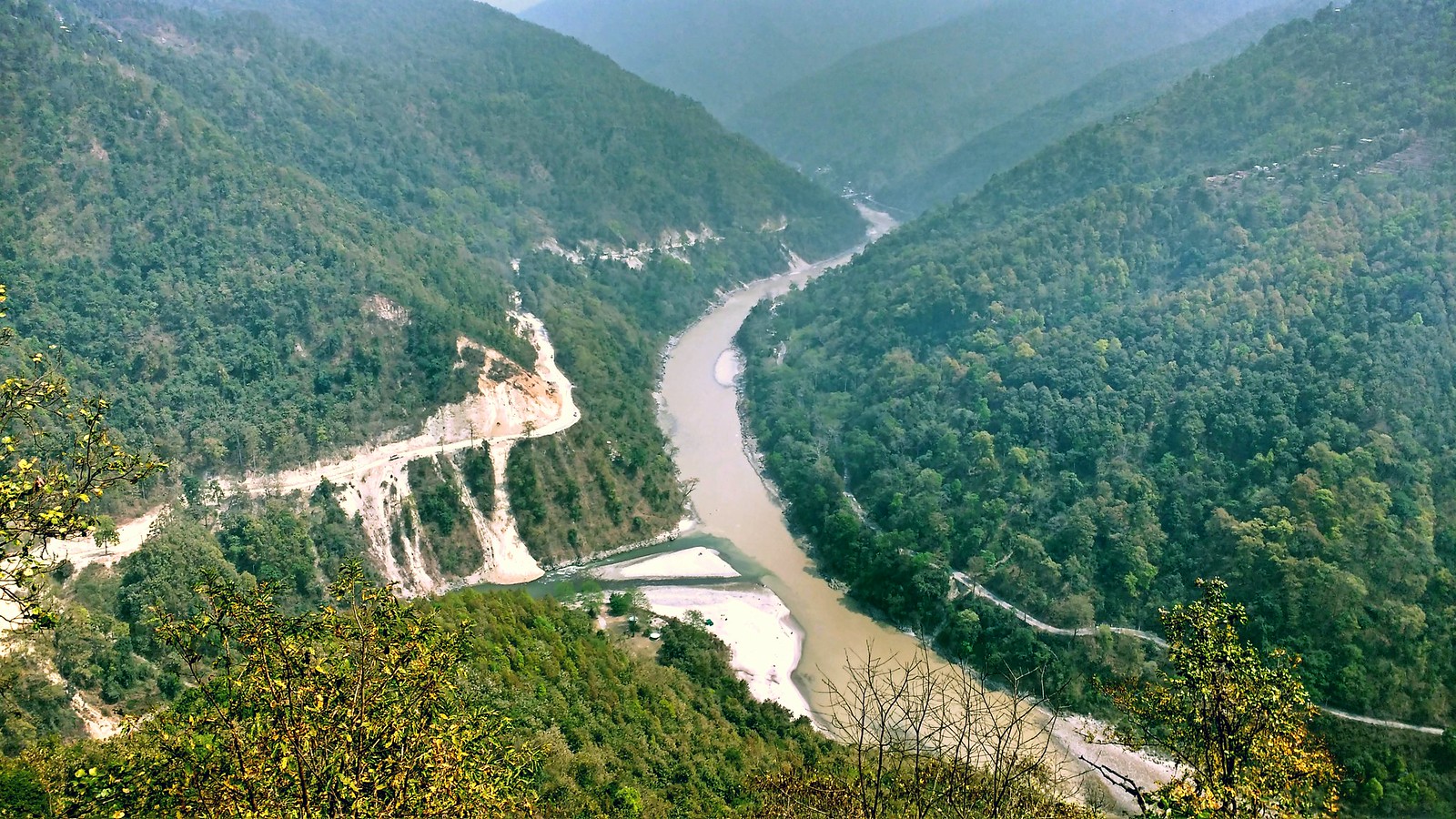
Our next stop was at the ‘Lovers Meet’ viewpoint, from where one could see the confluence of the rivers Rangeet and Teesta. Mahesh asked us to soak in the view and take our time—something, that we later realised, no one had said throughout any of our road trips.
Lovers Meet
Once we had crossed the viewpoint, Darjeeling was not very far.
“Welcome to Darjeeling! I hope you enjoy your stay here. It won’t be as nice as Gangtok, you’ll see. But I hope you have a good time.” As we finished unloading our bags at the entrance of the hotel in Darjeeling, Mahesh’s phone rang, perhaps a relation had called. Still chatting on the phone, he nodded his head in acknowledgement of our small goodbye and reversed the vehicle to begin his ride back home.
Our scenic journey over that week had many exotic destinations and experiences that we would remember for months, if not years to come. And looking back, we now realise how important the role of our drivers was in our journey.
Throughout our trip, we had travelled with many drivers, some for transfers, and some for sightseeing. None of them were particularly remarkable, and stuck strictly to their jobs. For them, it was about getting us from point A to point B, as per the itinerary. While our driver in Gangtok had allowed us a small extension of our sightseeing time to accommodate our slow pace of exploration, the drivers in Darjeeling would keep calling us and telling us to hurry up. Towards the end of our trip, though, one driver left a lasting impact on both of us.
We had left Darjeeling to spend a day in Kalimpong, a town where my father had spent some part of his childhood. It seemed like our driver didn’t want to drive and tried to talk us out of visiting an old monastery by saying that all monasteries looked the same! We got him to take us there, albeit grudgingly, by arguing that it was included in our itinerary, and no, they weren’t all the same to us.
As we were making our way to the hotel after completing our sightseeing, I noticed a sign board.
“Hill top!” I squealed with delight. “That is where my grandfather used to live! Could we stop for a few minutes, please. I just want to have a look at that house.” The light was fading fast, and we had to leave the next day. If we had a shot at laying our eyes on the old house I had heard so much about, this was it. “That’s not part of the package!” retorted the driver and continued onward.
That’s not part of the package. It was simple, and as inconsequential to him, as that. But to me, those words stung. It took a while to get over it, and we both vowed never to take packaged tours after that.
We returned to Delhi the next day, our cameras and phones full of pictures and videos. We told our friends stories of beautiful buildings, clean marketplaces and the blank foggy vistas that hid Kanchenjunga from us throughout. We praised the hospitality of each of the Summit hotels we stayed in, the colourful strings of prayer flags and the scenic routes we travelled. We shared our disappointment of missing the Kanchenjunga, and the little joys of travelling with one very interesting driver who took us from Gangtok to Darjeeling.
It was a pity we didn’t take down Mahesh’s number, nor did we take any pictures with him. But what we do have is the memory of the road trip we shared. Every time you look at these pictures, you will remember me, he had said. He was wrong. We remember Mahesh even without looking at the pictures.
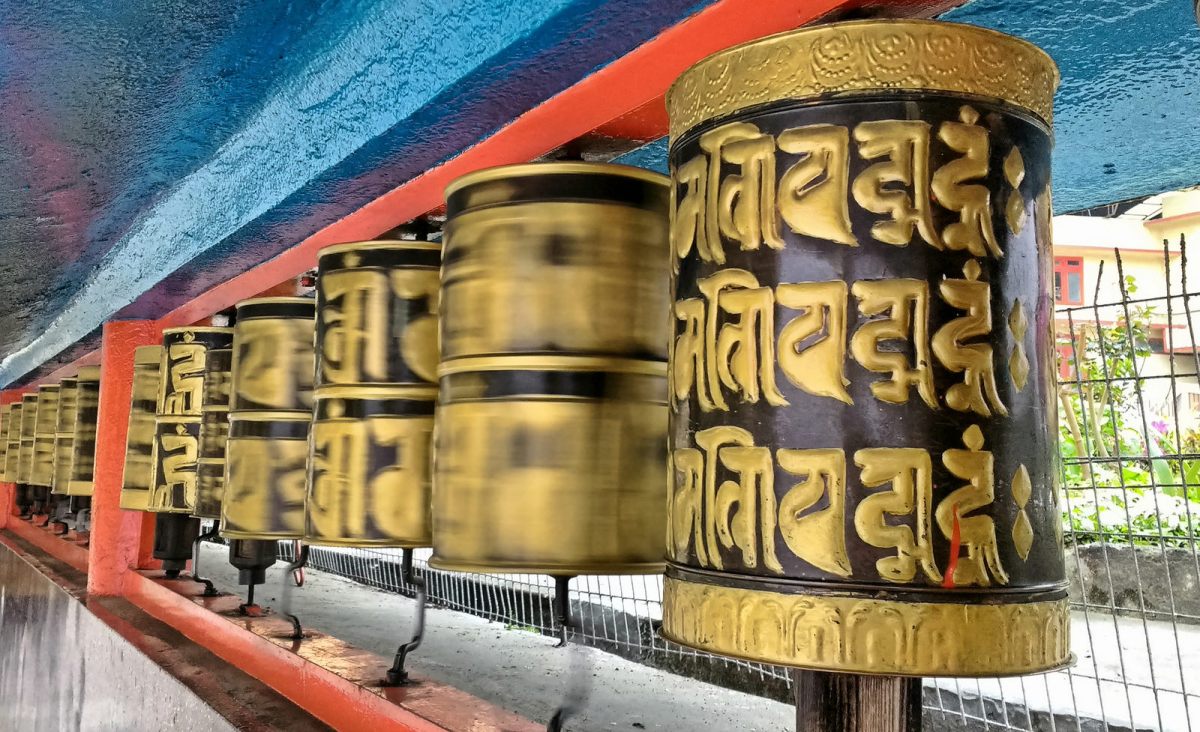
Spinning prayer wheels at a monastery in Gangtok
Tagging the images in this post for this week’s weekly photo challenge for their curves! Here’s my previous entry for the challenge: Lamps in the sun











 Musings of an eccentric mind