Categories
Stories

The temples of Mylapore – a photo story


Mylapore is to Chennai, as Chandini Chowk is to Delhi. One of the oldest residential areas of Chennai, Mylapore is home to a colourful bazaar as well as a number of temples. Last year, we decided to explore this area on foot.

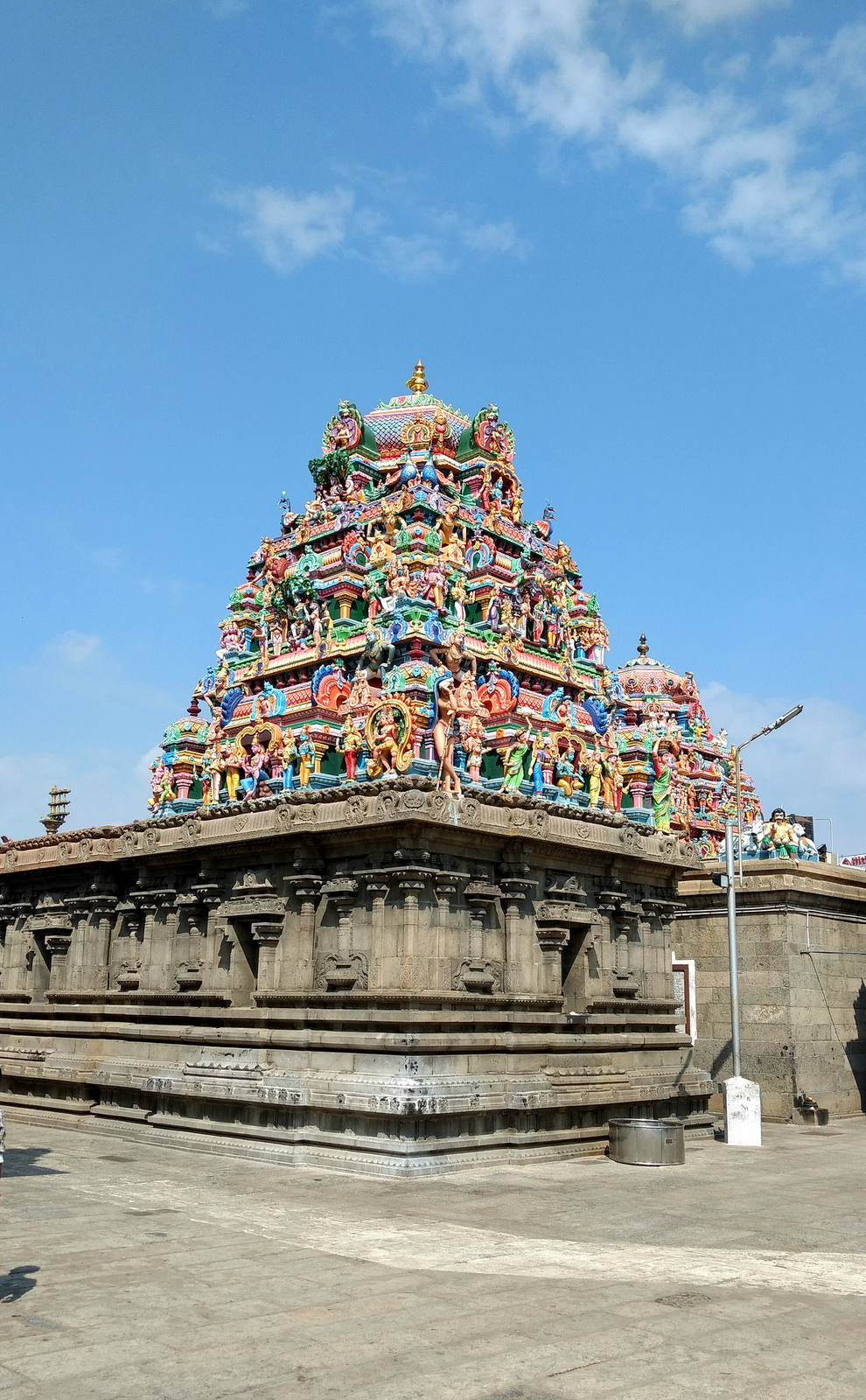
We began our journey at the Kapaleeshwarar Kovil.
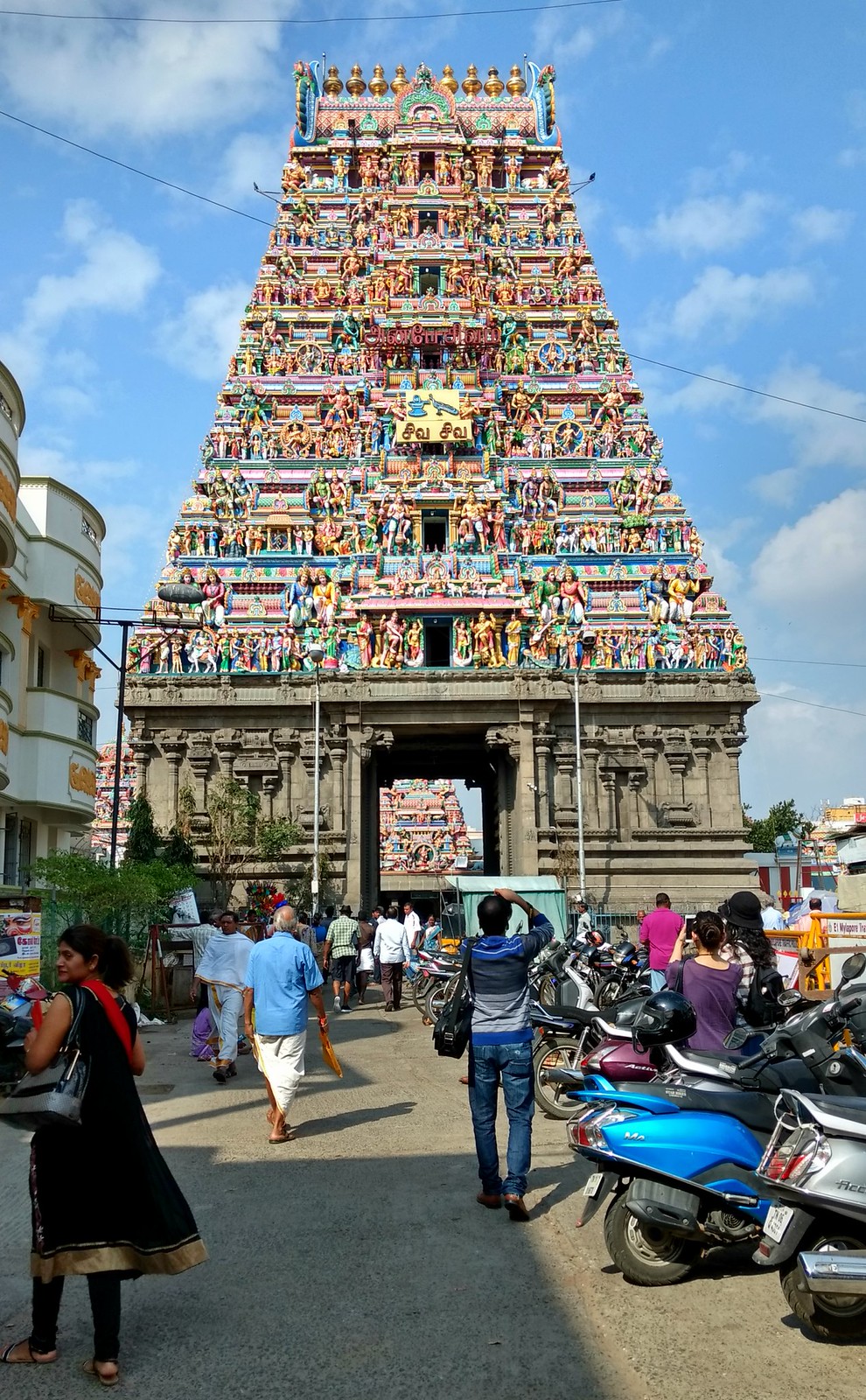
Gopuram at entrance of Kapaleeshwarar Kovil

Of the numerous beautiful temples of Tamil Nadu, the Kapaleeshwarar temple in Mylapore, Chennai is one of my favourites. The detailed sculptures on the gopurams, the elaborate kolams on the floor, and the peaceful ambience of the temple always leave me spellbound.

Kapaleeshwarar Kovil

We then walked towards Santhome Basilica. On the way, we saw a beautiful Jain temple.
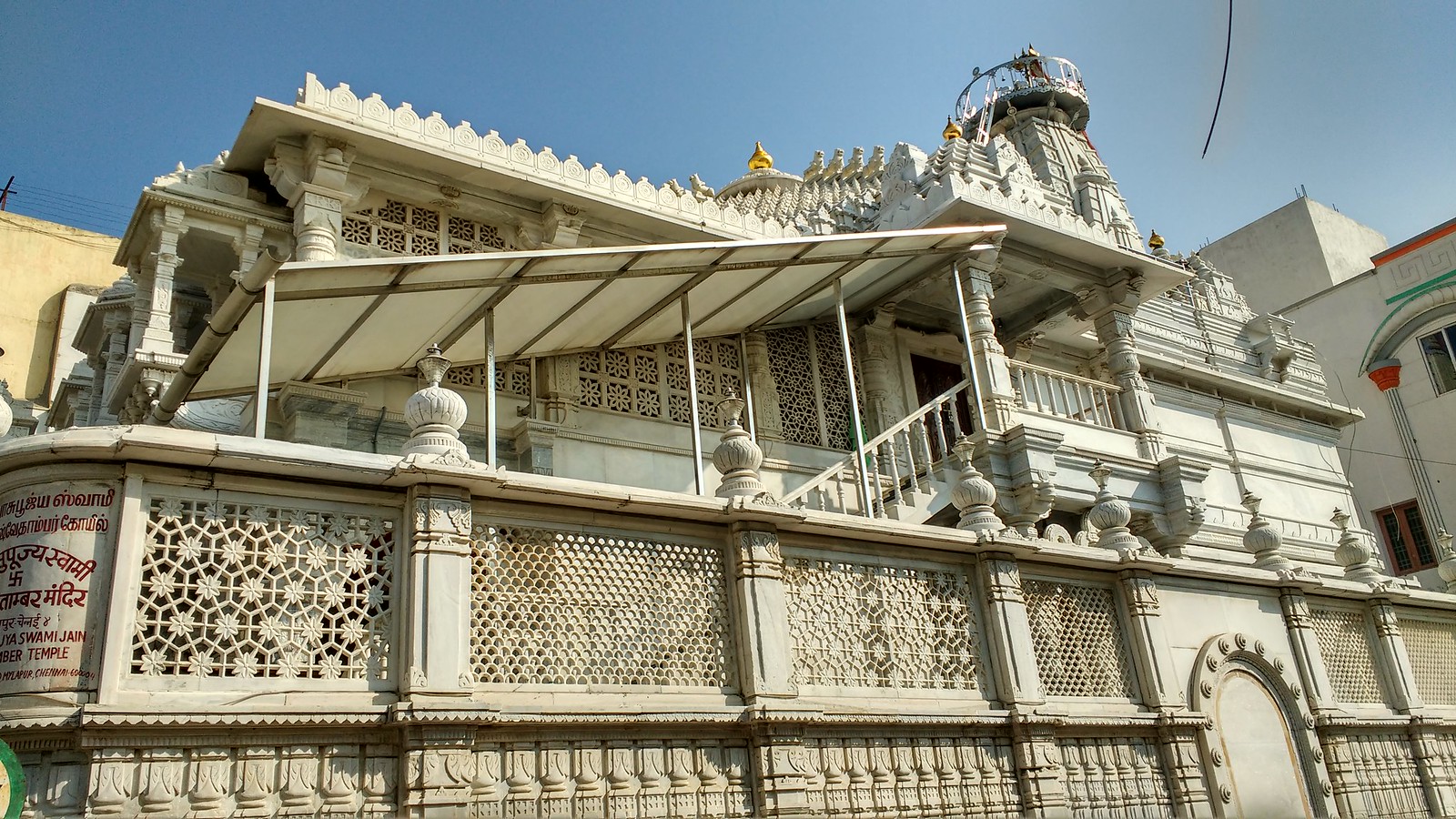
Jain temple in Mylapore

The temple was closed, so we continued walking.
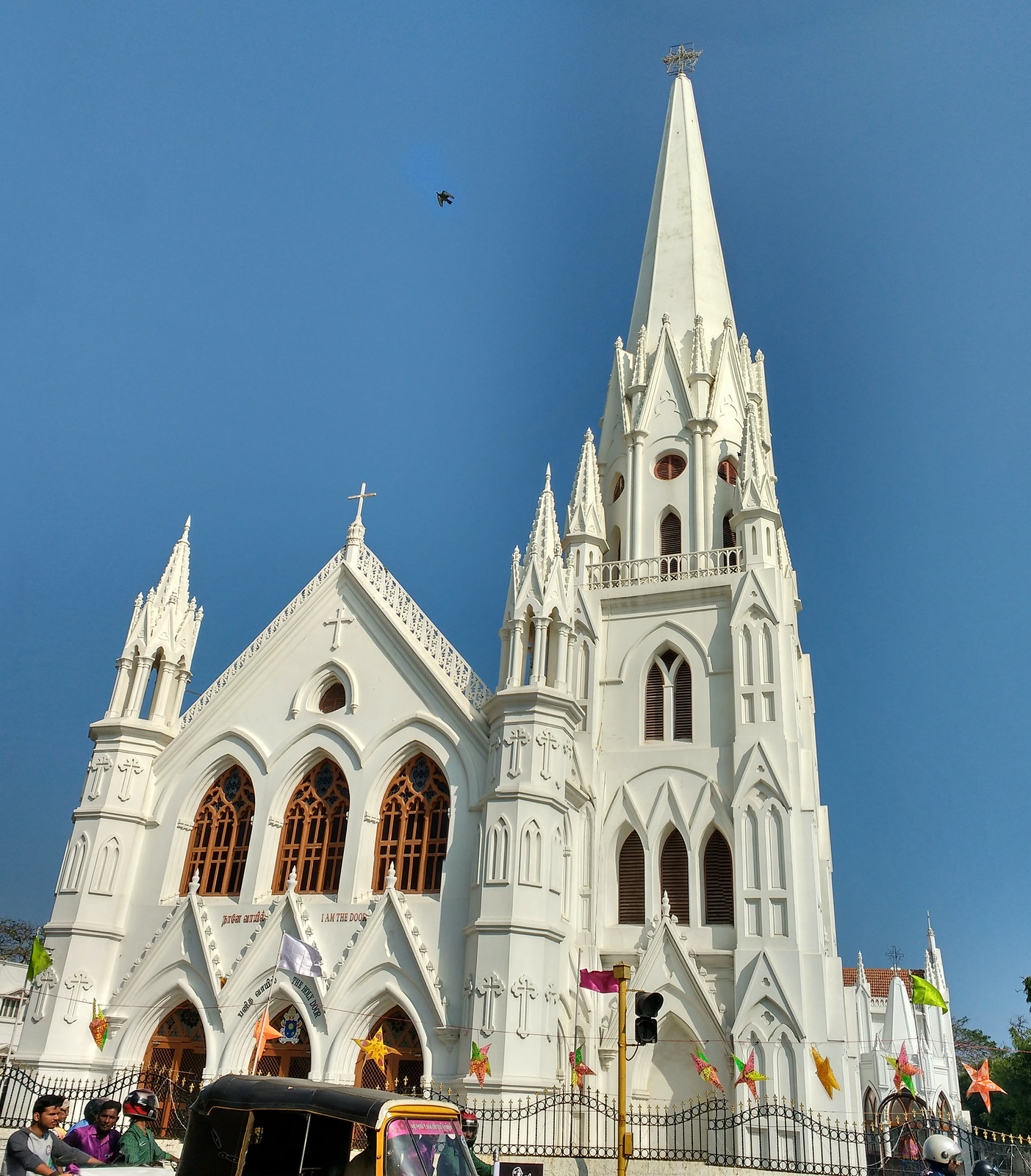
Santhome Basilica

Being Christmas time, the Church was decorated with colourful linen and stars.

Inside Santhome

San Thome Basilica was built in the 16th century by Portuguese explorers, after demolishing the original Kapaleeshwarar Temple which stood on the grounds.

There is a small museum next to the Church which has architectural remains from older constructions, including some distinctly Dravidian motifs. Strangely, the plaques on the exhibit attribute it to the Church, even when the stone sculpture is clearly distinct from the rest of building materials on display.

Our next stop was the Marina Beach Lighthouse.

Marina Lighthouse

No, we didn’t have to climb all the way up. But it sure was interesting to look down the flight of stairs!
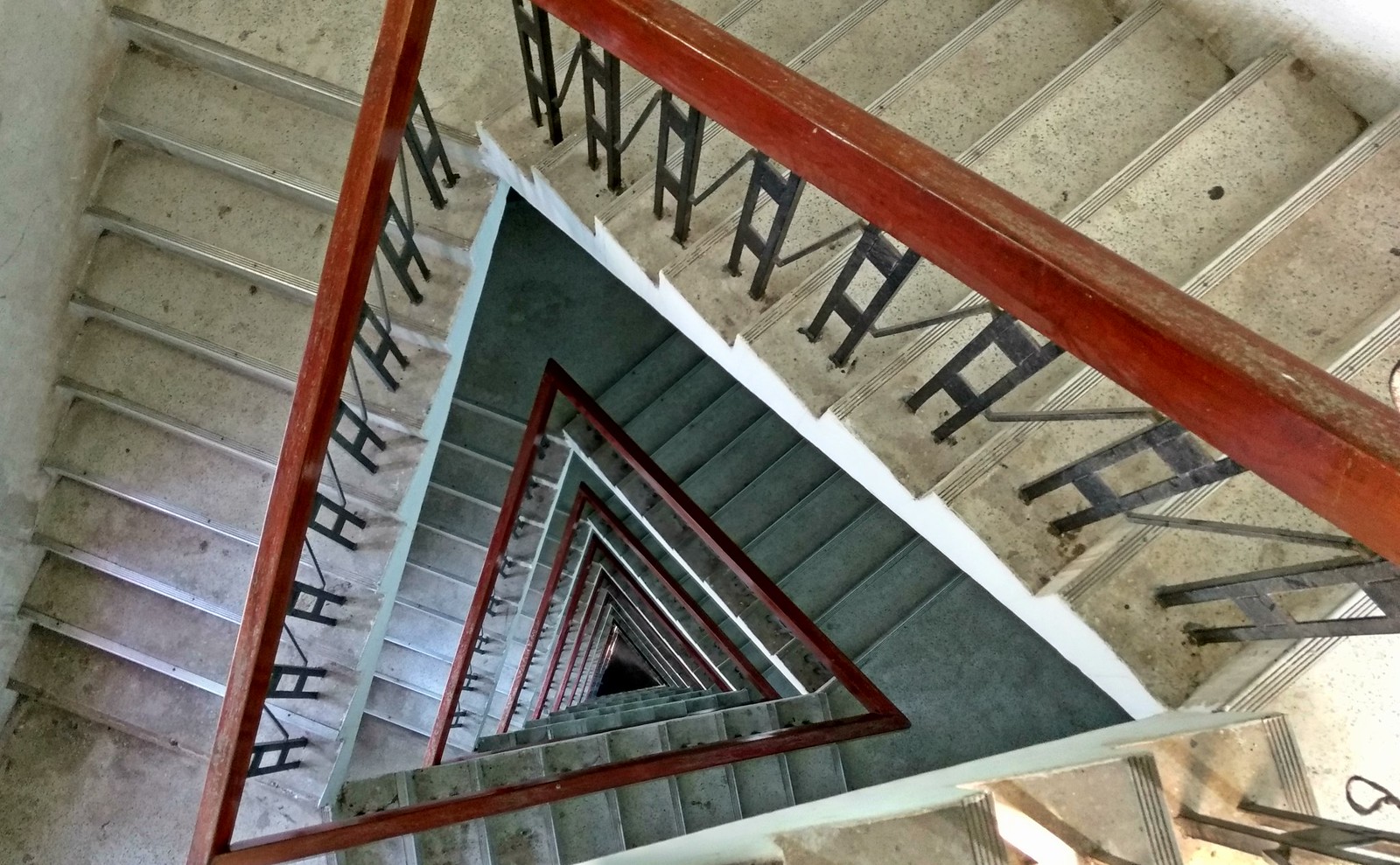
Staircase inside the Marina Lighthouse

The viewing area at the top of the lighthouse is quite narrow, and it was quite crowded. Nevertheless, the view was amazing!

Marina Beach from the lighthouse

With the sweeping panoramic views of the beach done, we decided to walk towards the sea.

Sadly, the state of this world-famous beach was not as beautiful as its surroundings. Nearer the sea, the beach looked more like a dump yard than a space to relax in. The only solace, for us, was the sounds of the sea – the waves caressing the sand and filth with equal warmth. Humanity may attempt to seek redemption and forgiveness through spiritual and religious pursuits, but isn’t it ironical how that concept of cleanliness, that is the holiest of them all, is still some distance away?*

Our route map:


* I don’t mean to pick on Chennai. In fact, it is a relatively cleaner city, as compared to many of its northern counterparts (especially the temples).


This is post #14 in this year’s NaBloPoMo, or as Ra calls it Nano Poblano

NaBloPoMo = National Blog Posting Month = Thirty straight days of blogging
Categories
Stories

Defining eyes


I first applied homemade kajal when I visited an acquaintance many years ago. While I waited for my friend to get ready to head out, I chatted with her mother — a tall and slim, simple rural Haryanvi lady. As our mundane conversation veered towards the use of kajal, she mentioned that she had prepared some herself.

I had a vague idea about kajal being nothing but soot. But the small boxes available in the market contain a sticky substance which smeared, so I wasn’t quite sure. She showed me her preparation. The homemade kajal that I saw was, indeed, soot and a tad rough to the touch. I gingerly dipped my finger in it and applied it to the waterline of my eyes. To my surprise, it spread easily and gave a beautiful definition to my eyes. I wondered how she had made it, but our conversation was interrupted, and I didn’t get the chance to ask her.

Life has a funny way of answering our questions, and seemingly disconnected memories find themselves being connected into one big picture. I had shelved this memory of the homemade kajal in the corners of my brain. Until one fine day — on the first Deepavali after our wedding, to be precise — I saw my in-laws performing a puja.

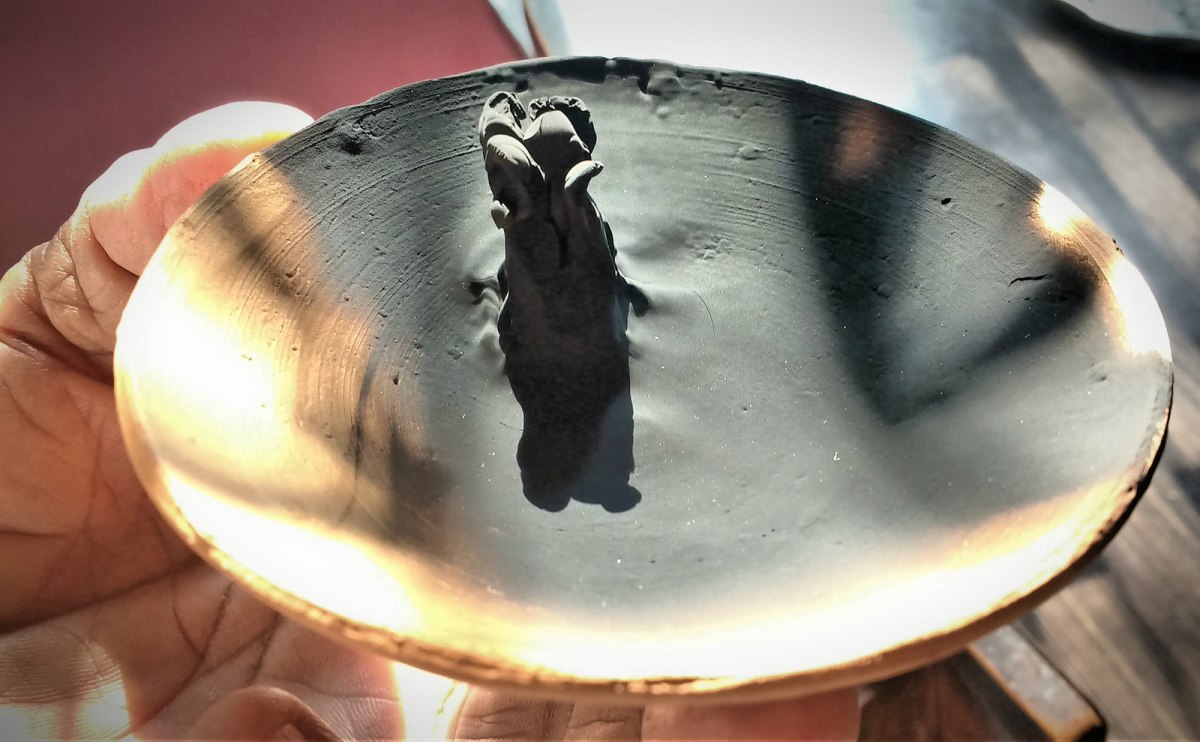
I saw them pray, and then light a large earthen lamp. They then placed an empty lamp, upside down atop the flame, supported by smaller lamps around the flame.

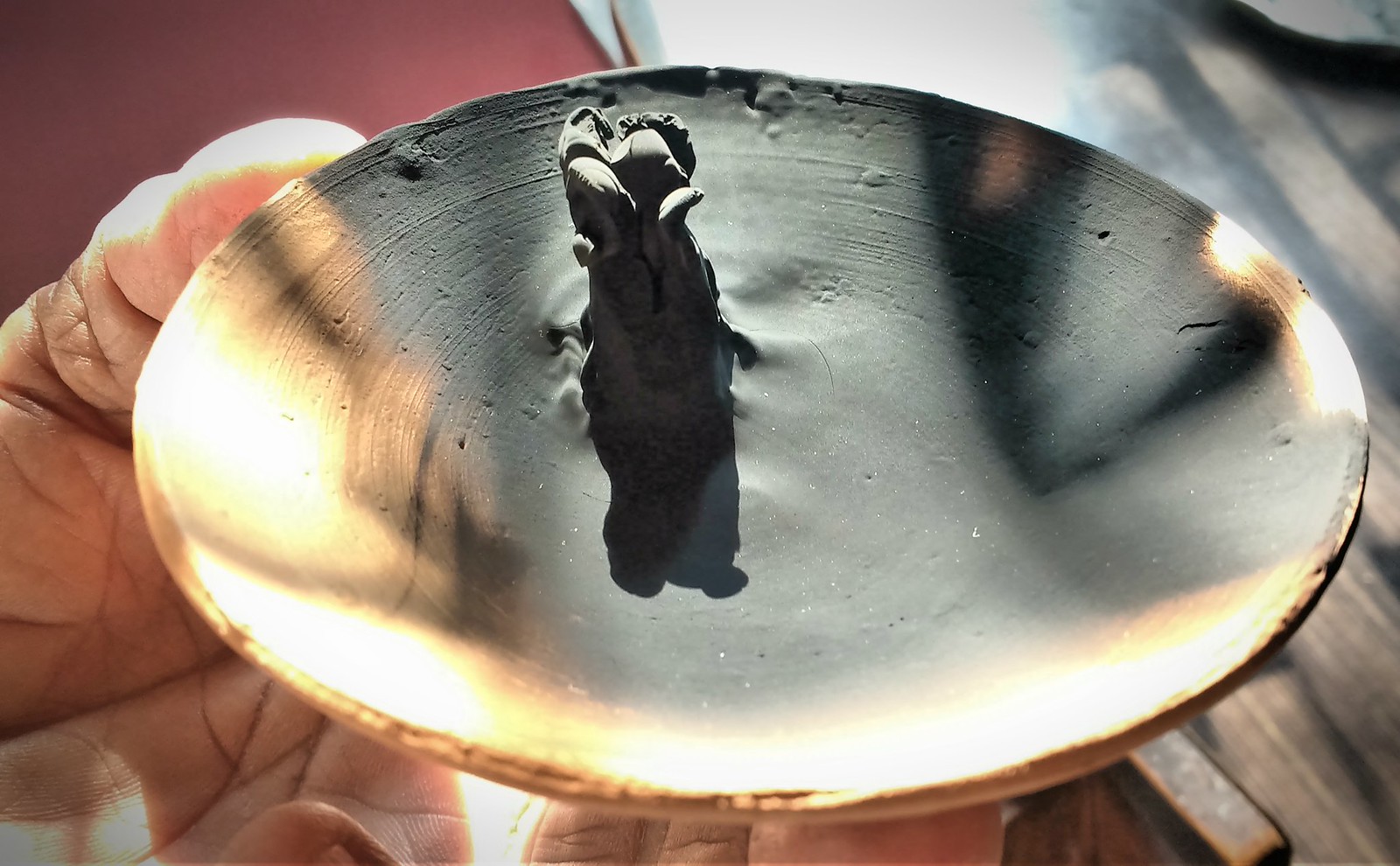
The next morning, I saw our own kajal, ready to be used.

Kajal
The soot collected overnight, a.k.a kajal

This is post #13 in this year’s NaBloPoMo, or as Ra calls it Nano Poblano

NaBloPoMo = National Blog Posting Month = Thirty straight days of blogging
Categories
Stories

Resilience


It is not the beauty of a building you should look at; its the construction of the foundation that will stand the test of time.

–David Allan Coe

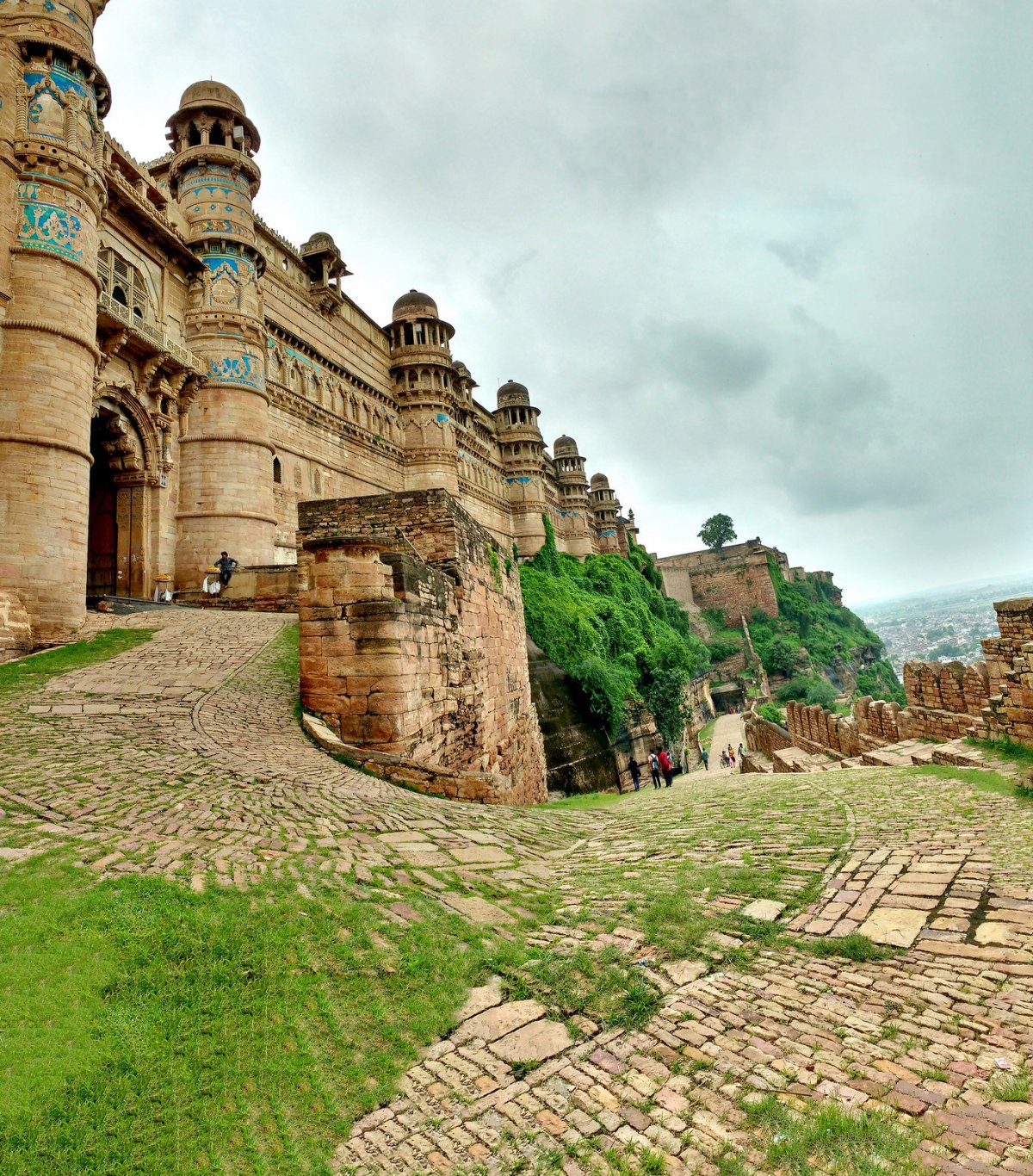
The Gwalior Fort, constructed atop a hill, is a mammoth structure. Legends say its construction began in the 3rd Century, while historical accounts put it anywhere between the 8th and 14th Century. This Fort has seen numerous rulers and severe onslaughts across the centuries and withstood all that has been thrown at it.

As with many of the places we have visited, it is extremely difficult to paint a true picture of the scale of the structure. I could write about the long trek to the top, and the sweeping views of the city, but the closest that I can get to explaining it, is to point to the size of the people in this (incomplete) picture below.

A long way to the top
The entrance of Gwalior Fort

Photo taken with a Moto G3, edited with Image Composite Editor and Befunky. Click/tap to enter my Flickr Photostream


This is post #12 in this year’s NaBloPoMo, or as Ra calls it Nano Poblano

NaBloPoMo = National Blog Posting Month = Thirty straight days of blogging
Categories
Stories

The White Palace


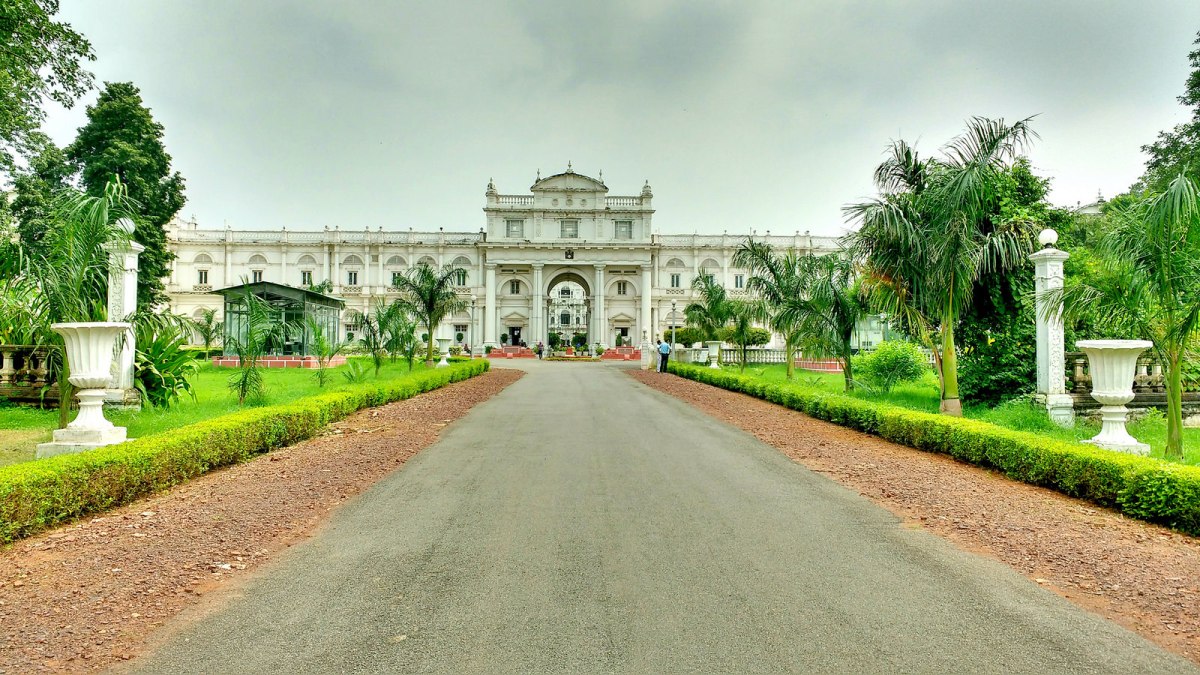
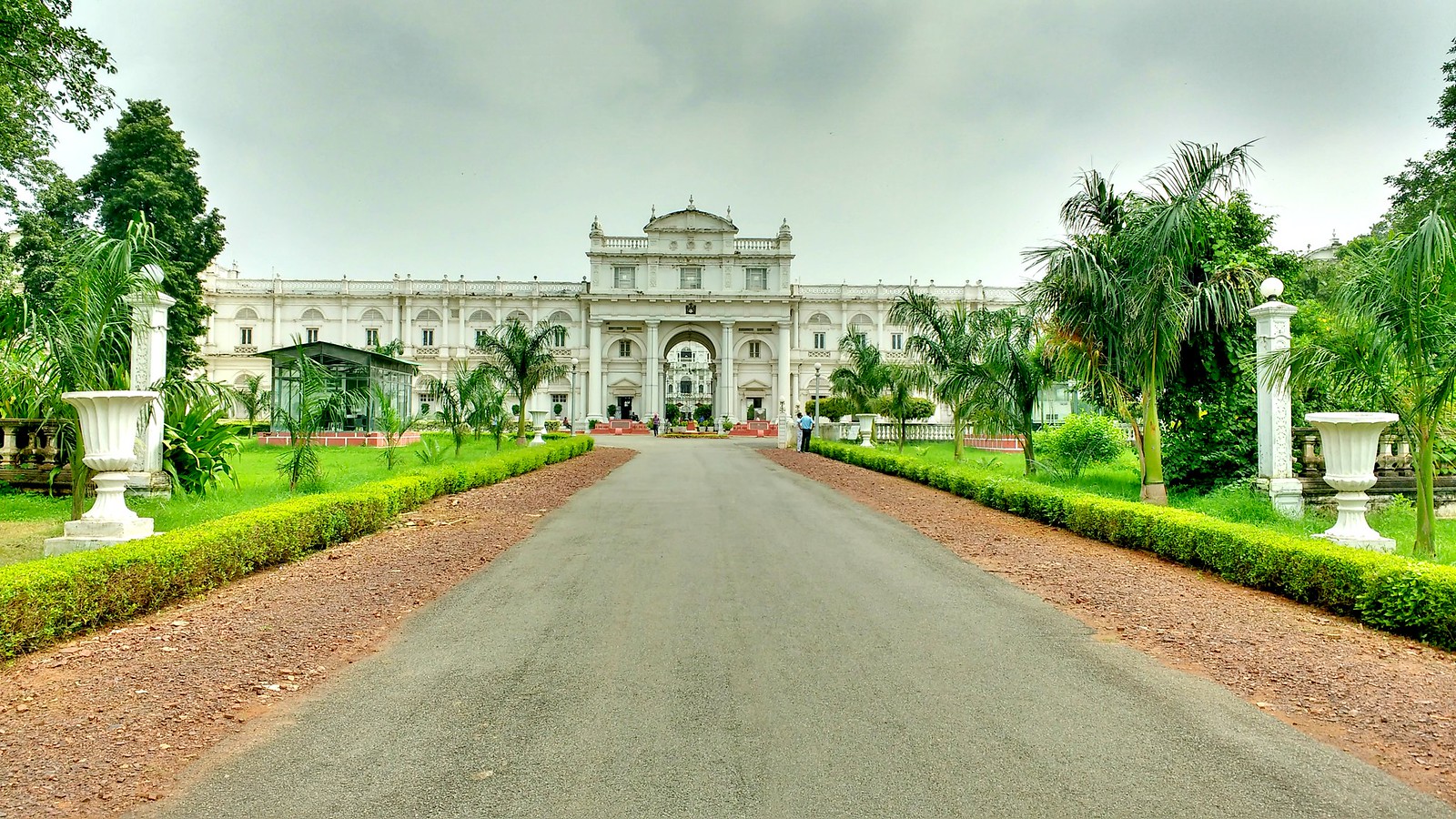
The Jai Vilas Palace in Gwalior combines three European architectural styles—the first storey is Tuscan, the second Italian-Doric and the third Corinthian.

There is an eclectic collection of items housed inside the museum, which can be visited by the public. One section still serves as the residence of the heirs of this Palace.

We weren’t allowed to carry bags inside (there is a provision of a locker), and strangely, we weren’t allowed to carry umbrellas inside either. While the museum itself is entirely indoor, to exit the Palace, one must pass through the central lawn. As luck would have it, it began pouring just before we were about to complete our tour.

If you plan to visit this Palace in Gwalior, make sure you have sufficient time—we spent over two hours (excluding the rain delay), as there is much to see. And if you are short on time, pace yourself to keep the maximum time for the last section—the opulent Durbar Hall. We had read about the extravagant decor and seen pictures of the massive chandeliers. But it was only when we saw the hall that the reality of its grandeur hit us.

In our limited exposure to exotic places, some places leave a lasting impression, some of romance, others of awe. The Jai Vilas Palace, even with all its magnificence, left a somewhat cold and distant feeling. It’s hard to tell why – perhaps it’s the excessive indulgences; or the exclusively European architecture; or perhaps it was the weather; or just maybe, the contrast between the lifestyles of the common people, and that of their representatives, that is so blatantly visible to the casual observer.

Jai Vilas Palace
Jai Vilas Palace, house of the Scindias. The imposing structure and all its extravagance is visible right from the entrance.

Photo taken with Moto G3. Click/tap to enter my Flickr Photostream.


This is post #11 in this year’s NaBloPoMo, or as Ra calls it Nano Poblano

NaBloPoMo = National Blog Posting Month = Thirty straight days of blogging

Categories
Musings

Circular Dependency


On a hot and sultry Sunday, I step out to go to the market. It seems like it’s been a long time since I’ve seen the local roads. Perhaps it has. In the daily hustle and rush to the workplace, subtle things go unnoticed.

Of course the roads are nothing subtle really. One misstep, and the pothole can trip you. It would probably by fair to call it an obstacle course. I wonder if professional athletes train on the by-lanes of Delhi.

But today is different.

Between me and the market, stands a bright, black strip of tar.

I never thought the sight of roads would be so delightful. Like a weary traveller in a desert, I rush towards, what is possibly, a mirage.

I take a step, and my shoes grip the road. The tar has not yet dried out. I can hardly believe that after so many years, we have smooth road. I walk along, sceptical of it all. A while later, I let down my guard, and begin enjoying every moment of the sticky grip the road had to offer.

But thankfully, it doesn’t take long for me to return to reality.

Towards the side of the road, there is a patch of road which has not received the fresh coat of tar. It looks absolutely dry, and almost perfectly circular. It is almost as if it was deliberately left out, just to prove that the road is, indeed, new.

This circular patch presents itself every few metres, like milestones—only much more frequently.

Strangely, I feel reassured. A new road was too good to be true anyway.

* * *

Can only go up from here
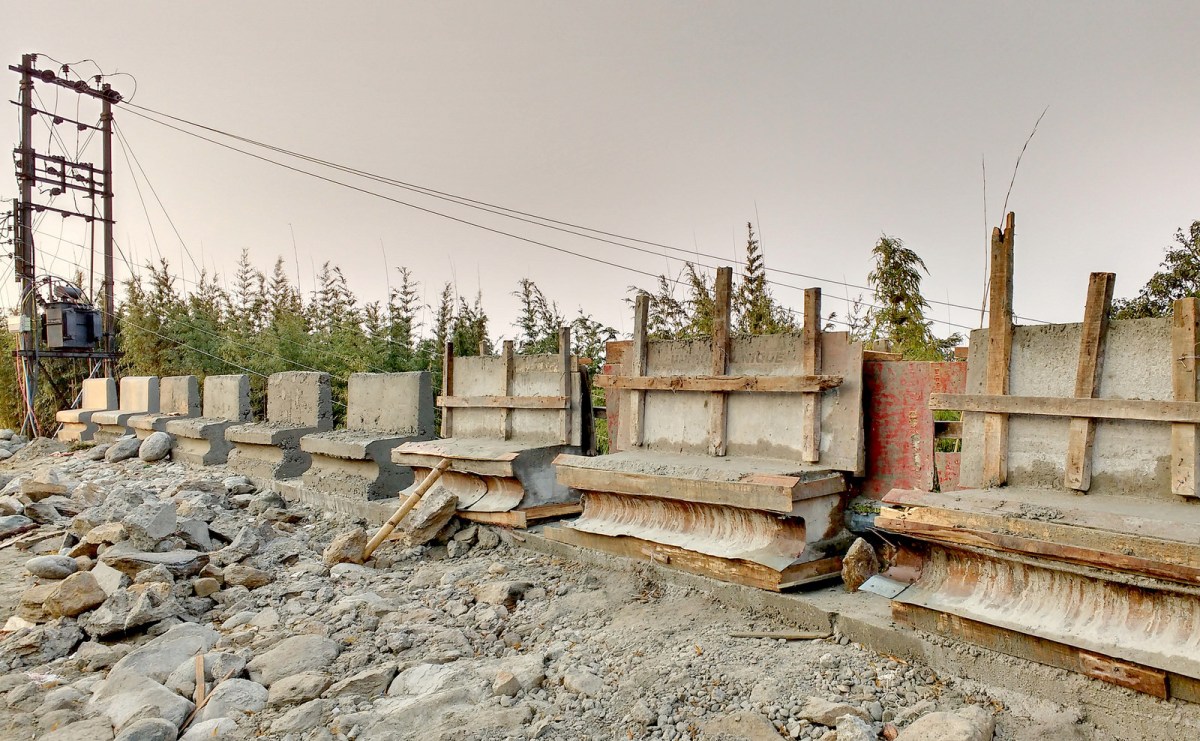
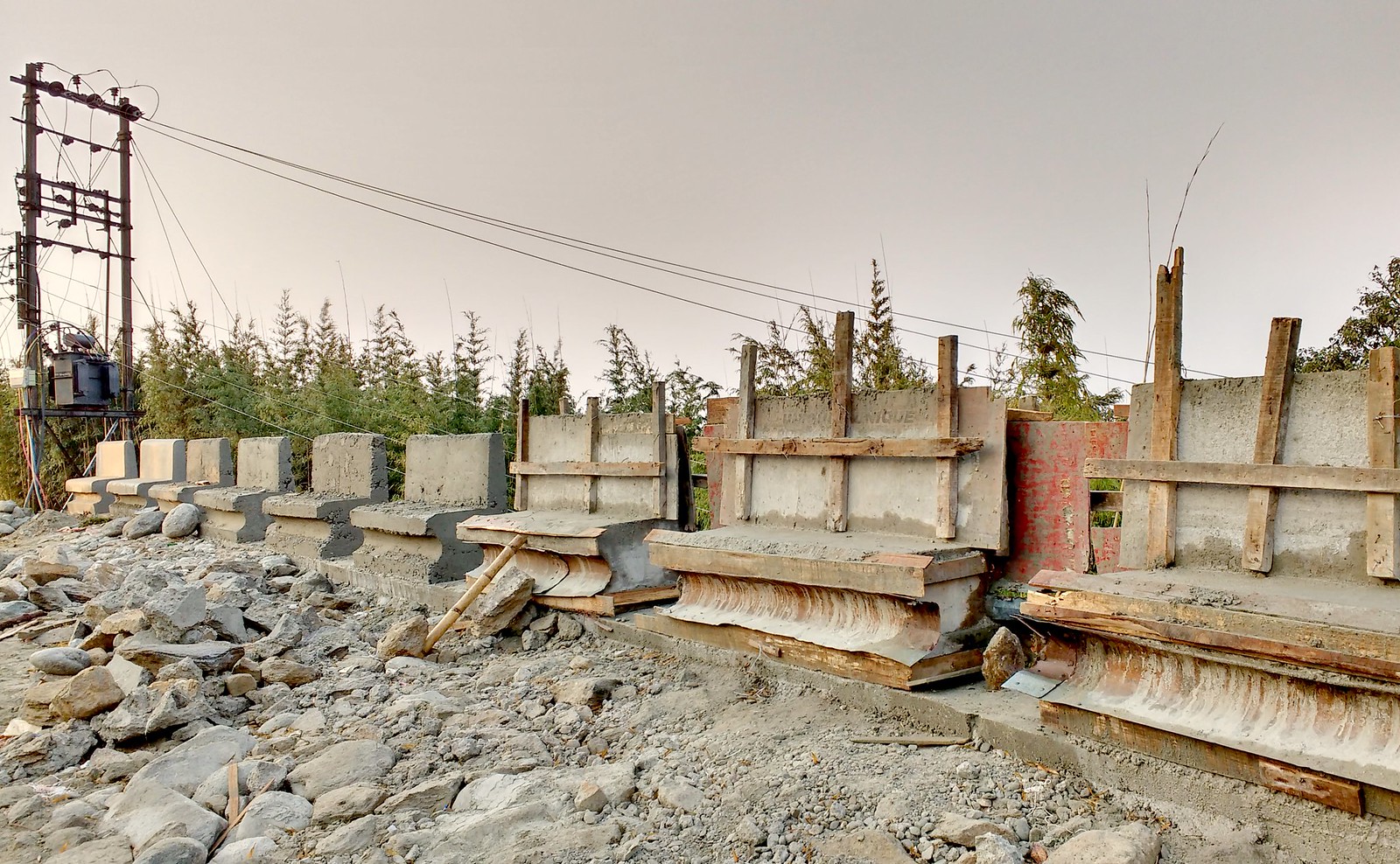
Benches in various stages of construction on Tiger Hill. Considering this is a UNESCO World Heritage site, the place was in shambles when we visited. On a positive note, it can only go up from here!

I’ve pretty much wasted my free time today listening to old Shania Twain songs. I have a bunch of ideas I’ve been wanting to write about. But today, all I want to do is listen to songs by Shania Twain.

Going through the drafts of my blog, I unearthed this post — written 3 years ago, but never published. Quite like the pot holes of our streets, my blog swallowed this one whole! Oh, well, it’s on lazy, slightly confusing days, like today, that a draft comes in handy.

So who are you listening to today?


Photo taken with Moto G3. Click/tap to enter my Flickr Photostream.


This is post #10 in this year’s NaBloPoMo, or as Ra calls it Nano Poblano

NaBloPoMo = National Blog Posting Month = Thirty straight days of blogging
Categories
Miscellaneous

Temporary


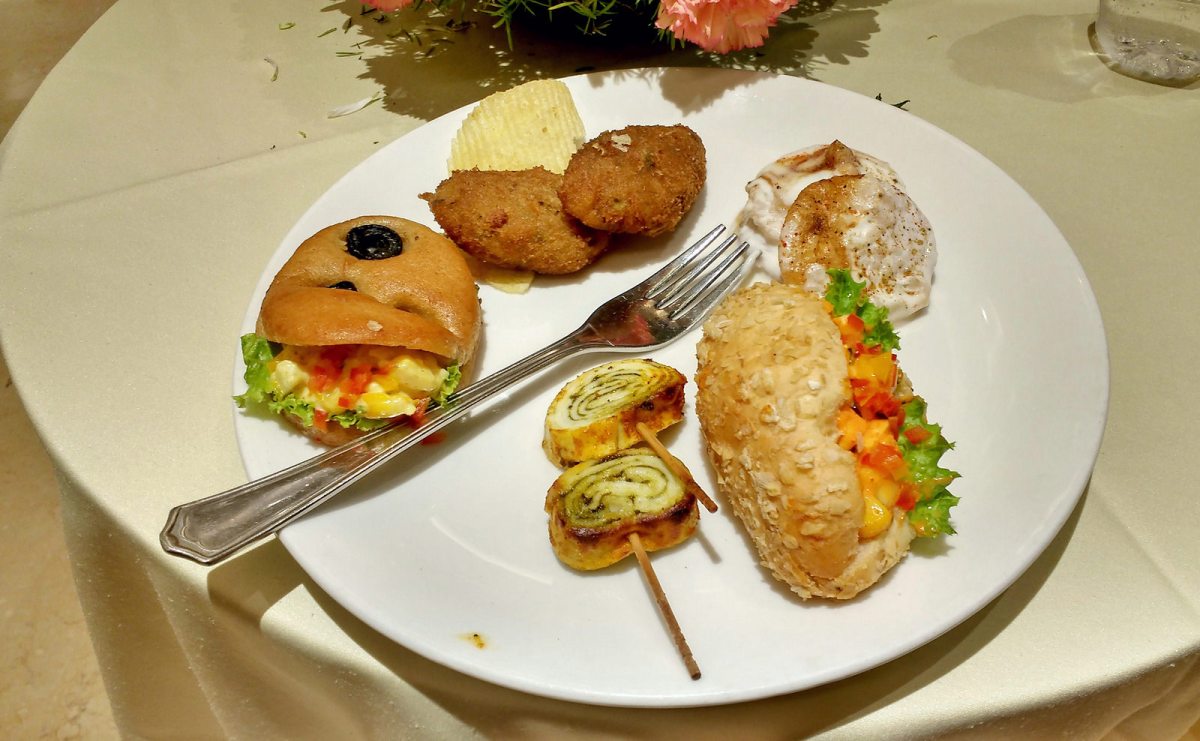
Yes, I am guilty. Guilty of taking photographs of beautiful looking food. A lot of people find that irritating. I have been on that side of the fence too. I have often found myself judging others Oh, just stop this! Shut the camera and enjoy the food in front of you!

But now, show me beautiful looking food, and my fingers just can’t help themselves. Food is as much an art form, as it is a necessity for survival. And when a chef puts in her heart and soul into presenting her work, it shouldn’t be recklessly devoured without admiring it first.

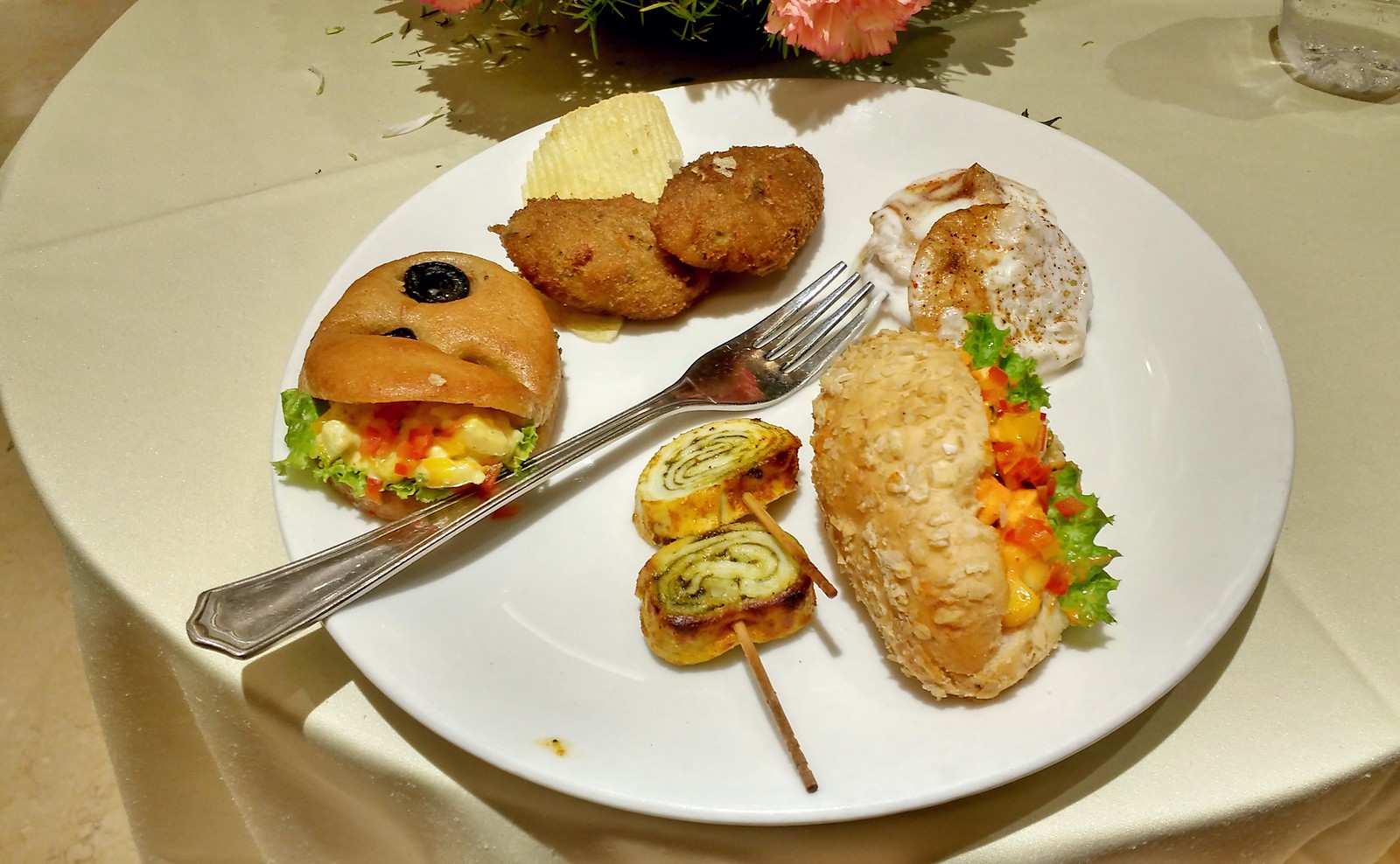
Savoury Snacks
An assorted selection of savoury snacks at the India Habitat Centre. Needless to say, it didn’t last long

There was this one other time I took a picture of something I liked. I’d posted it for a similar photo challenge some time back. That one disappeared even before I took the picture.


In response to this week’s Photo Challenge: Temporary


Photo taken with Moto G3. Click/tap to enter my Flickr Photostream.


This is post #9 in this year’s NaBloPoMo, or as Ra calls it Nano Poblano

NaBloPoMo = National Blog Posting Month = Thirty straight days of blogging
Categories
Stories

Sweet and sour


Quick, what’s the first thing that comes to your mind when I say the word: Jalebi

If you’ve grown up in India, sometime in the 90’s, then let me describe this for you.

A sulking boy, his head sunk low, marches into a railway station. He throws his bag on to the bench and perches himself, continuing to frown. He tells an ‘uncle’ that he has decided to run away from home because everyone scolds him. But then, when he finds out that there are hot jalebis being made at home, his eyes light up, and he decides to abandon his plans of running away (just for another 20 years, that is!)

Come on, you know what I’m talking about. Let’s say that together now,
Jalebi!

Here’s the iconic ad (in Hindi) for a not-so-healthy cooking oil, to refresh some old memories.

Jalebis are sweet orange bundles of pure sin—zero nutrition, and complete addiction. So I can understand why it is simple for people to fall in love with them. What I don’t understand though, is why they are almost universally prepared by the neighbourhood halwais (confectioners) only during the evenings. As I would find out, years later, this wasn’t as universal a truth, as I thought it to be.

* * *

We reached Allahabad in the morning, and my stomach was grumbling a little. “You want to get some breakfast? Let me treat you to the local speciality here.” It was our second trip to my in-laws’ house, about a month after our wedding—a new family, a new town, a completely new culture. I was expecting a very special something that would blow my mind. And blow my mind, it did!

“You know how jalebis are made only in the evenings in Delhi? Well, in these parts of the world, you won’t find jalebis in the evening. They’re made exclusively in the mornings. And they’re had for breakfast, with dahi (curd/yogurt).”

Say what?

In my world, curd was meant to be had as is, as a cool refreshing dish; as a dip with savoury paranthas; as a main course with rice (thayir sadam, yum!); or as a dessert in mishti doi or lassi. But sour curd with jalebi? It just didn’t sound right. The mental picture of the two together, ruined both dishes for me. Sitting at a table at a local halwai, though, I saw several customers enjoying their jalebi dipped in curd.

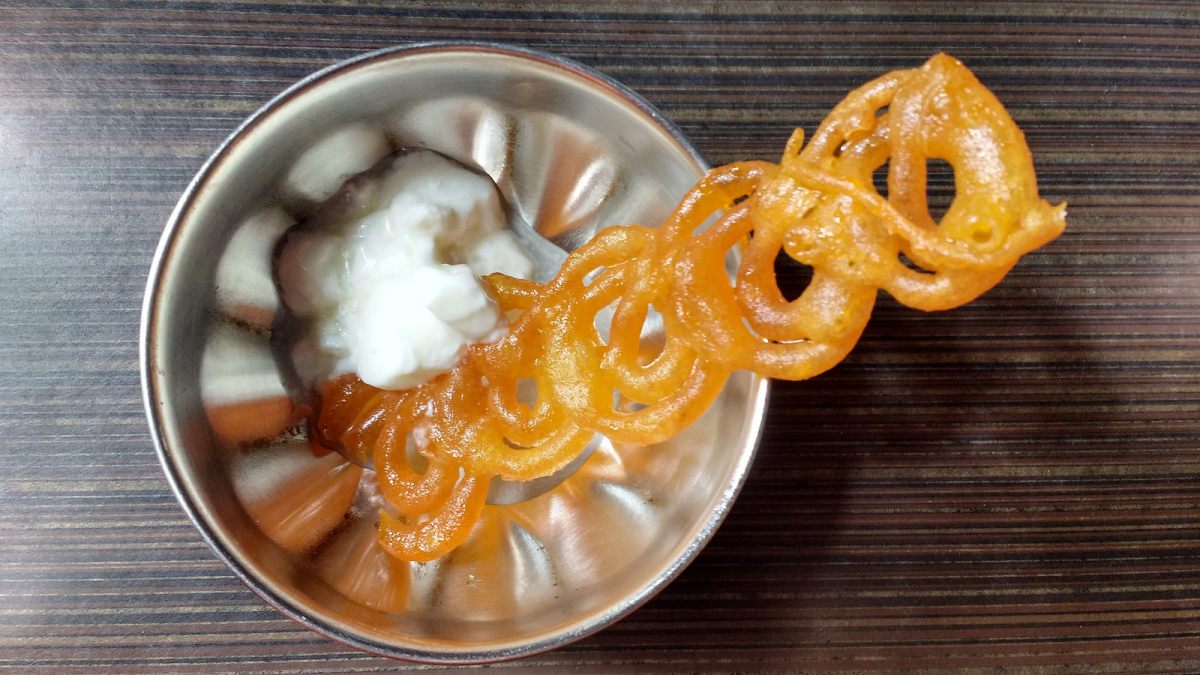
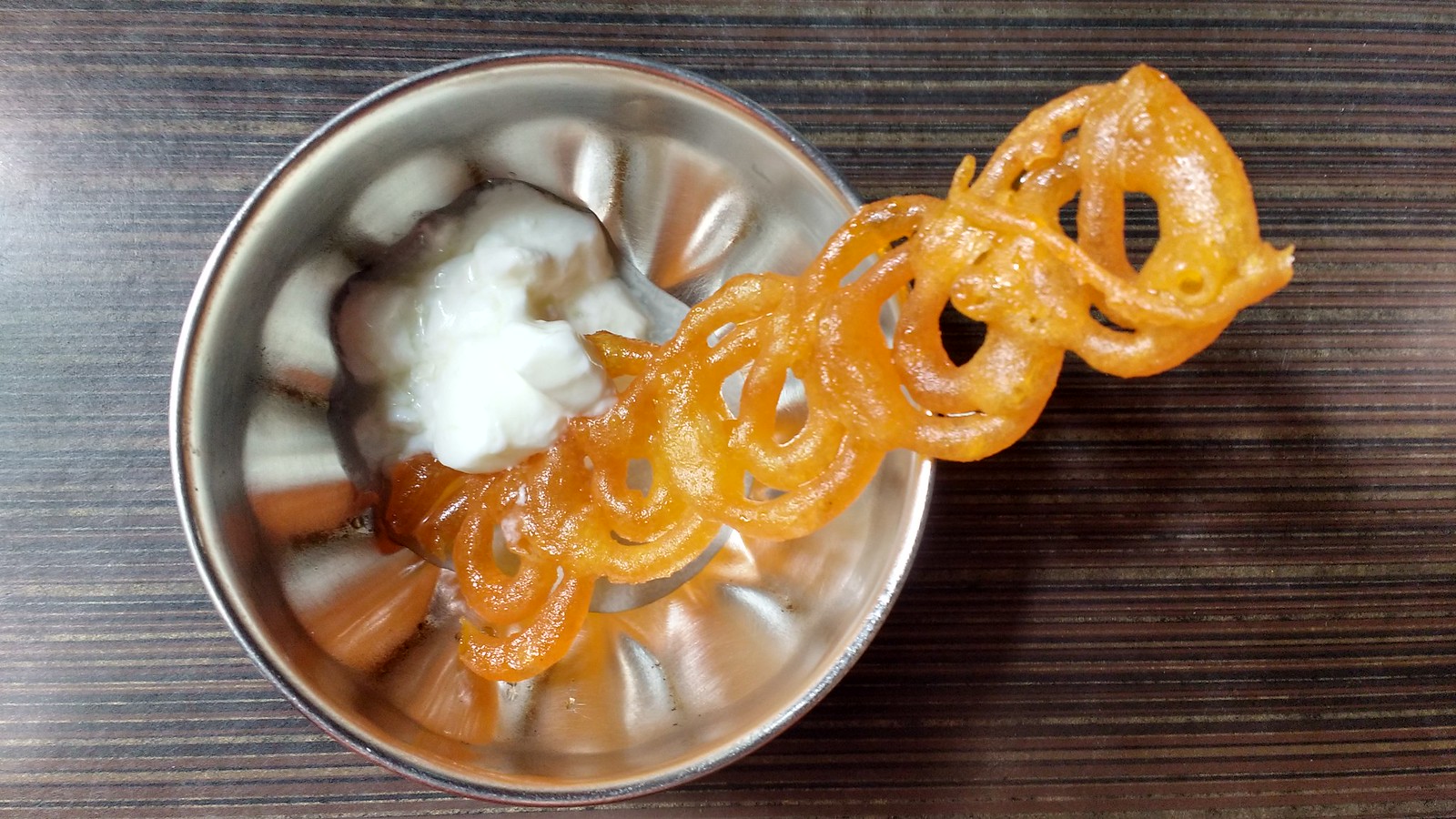
Eventually, I tried it too. The point is, apparently, to lessen the sweetness of jalebis with dahi. So that you increase your capacity to eat more jalebis (yay, for cholesterol and sugar!) I get the logic. But the taste, I suppose, is an acquired one. Even after several attempts, I always end up relishing them separately.

Dahi Jalebi

I had often wondered how people could eat jalebis with rabri (sweet condensed milk). Oh, how the mere thought of that much sweet hurt! But try as I might, dahi with jalebi will be more of a mystery to me.

So which foods do you find difficult to understand?


Photo taken with Moto G3. Click/tap to enter my Flickr Photostream.


This is post #8 in this year’s NaBloPoMo, or as Ra calls it Nano Poblano

NaBloPoMo = National Blog Posting Month = Thirty straight days of blogging
Categories
Stories

Mario’s legacy


Mario de Miranda was a celebrated Goan artist, illustrator and cartoonist. He began his career in the Times of India in 1953. He passed away in December 2011, and was posthumously awarded the Padma Vibhushan (India’s second highest civilian honour) in 2012.

There are four galleries dedicated to his art viz. Panjim, Porvorim, Calangute and Mumbai.

Having spent two full days in Calangute, with the Gallery just over a kilometre of where we stayed, we felt it would be quite an injustice, not to visit. And so, with barely an hour left for our departure, we decided to make a dash towards the Gallery.

Mario's Gallery
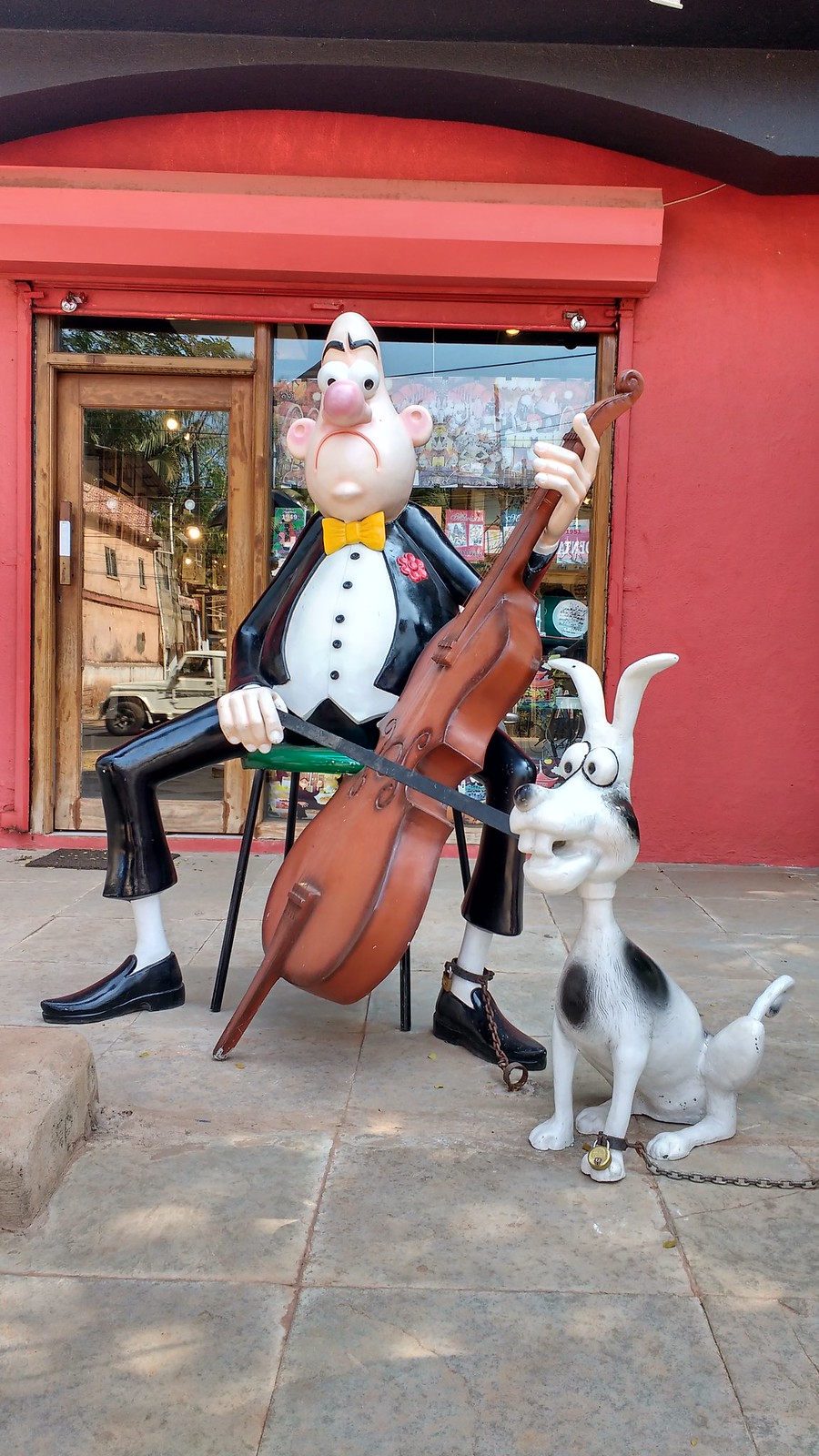
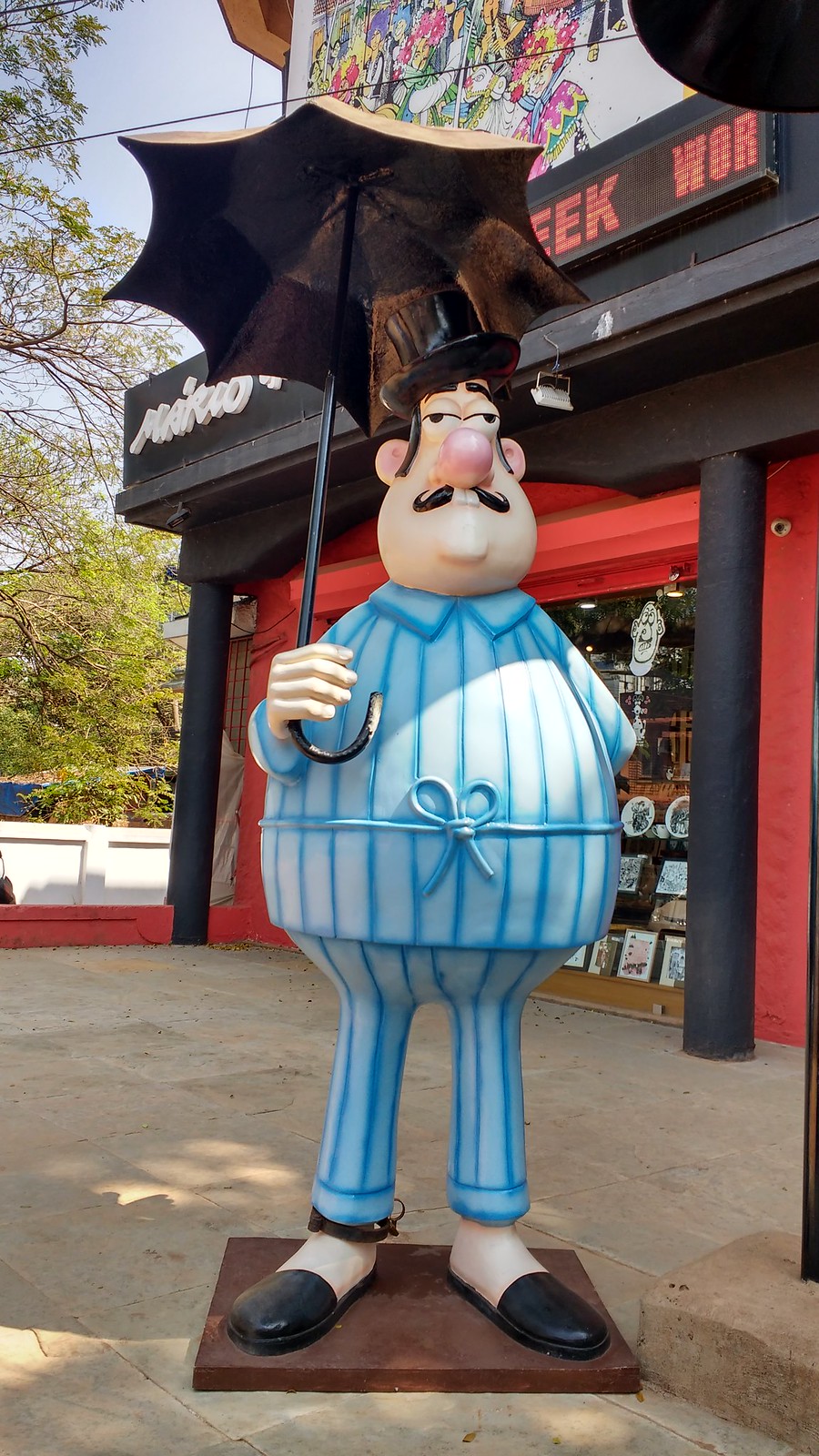
Mario’s character welcomes us at the porch
Hello
Hello, it’s quite sunny here. Maybe you’d like to step inside

At the Gallery, we were treated to a mouthwatering array of everyday objects adorned with cartoons.

Souveneirs with a difference
Souvenirs on sale
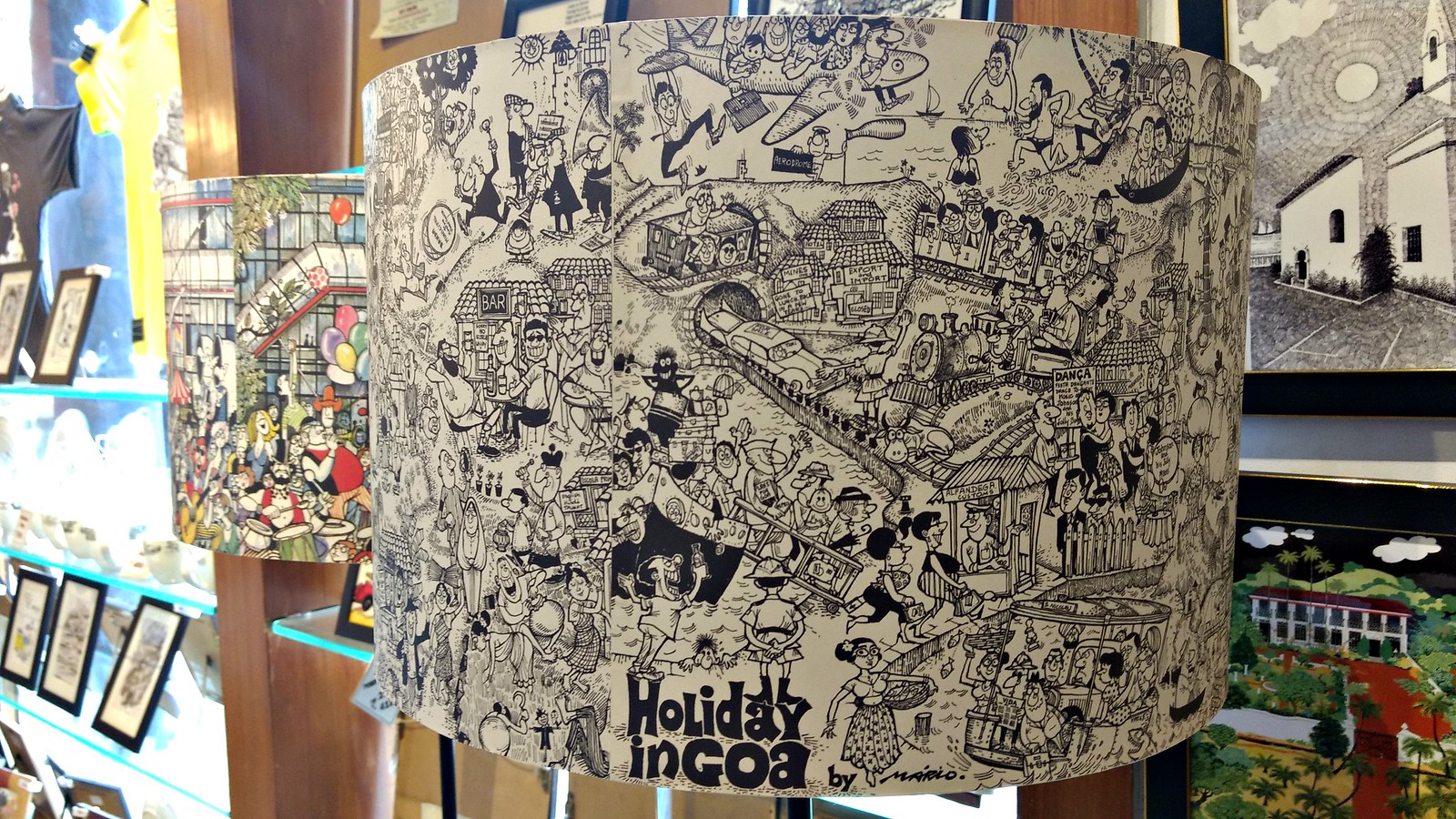
Mario's legacy
Lampshade with Mario’s cartoons

While most people associate Goa with cashews and feni, we found the gallery to be a treasure trove of very unique souvenirs.


Photos taken with a Moto G3 and Moto G4. Click/tap to enter my Flickr Photostream.


This is post #7 in this year’s NaBloPoMo, or as Ra calls it Nano Poblano

NaBloPoMo = National Blog Posting Month = Thirty straight days of blogging
Categories
Musings

Stop


I read a blog post today that, at first, irritated me. I typed out a comment, pointing out that the article had a sectarian and elitist outlook. Then I stopped myself.

I stopped because I felt it would be useless. I have come to believe that certain thoughts are ingrained in our sub conscious, and any change in opinion can only be brought from within — a realisation, you may say — and not from preaching.

The author had written about not understanding a different culture, and still criticised it as being backward.

I wanted to write that making such assumptions without even understanding why things are the way they are, was not fair, but I stopped myself.

I stopped because I saw myself making assumptions about the author’s motives. I did not know what the author saw that made them make the observations that they did.

I stopped because I was doing that very same thing that I had set out to make ‘right’.

And that is what I learnt today.

That silence isn’t necessarily a bad reaction to negative thoughts. And, perhaps, that’s what we need in today’s hyper-reactive world of 140 characters (or 280), that jumps to conclusions based on partial information, and can’t wait to throw in a comment.

Sometimes, we just need to stop.


This is post #6 in this year’s NaBloPoMo, or as Ra calls it Nano Poblano

NaBloPoMo = National Blog Posting Month = Thirty straight days of blogging
Categories
Miscellaneous

Sunset at Monsoon Palace


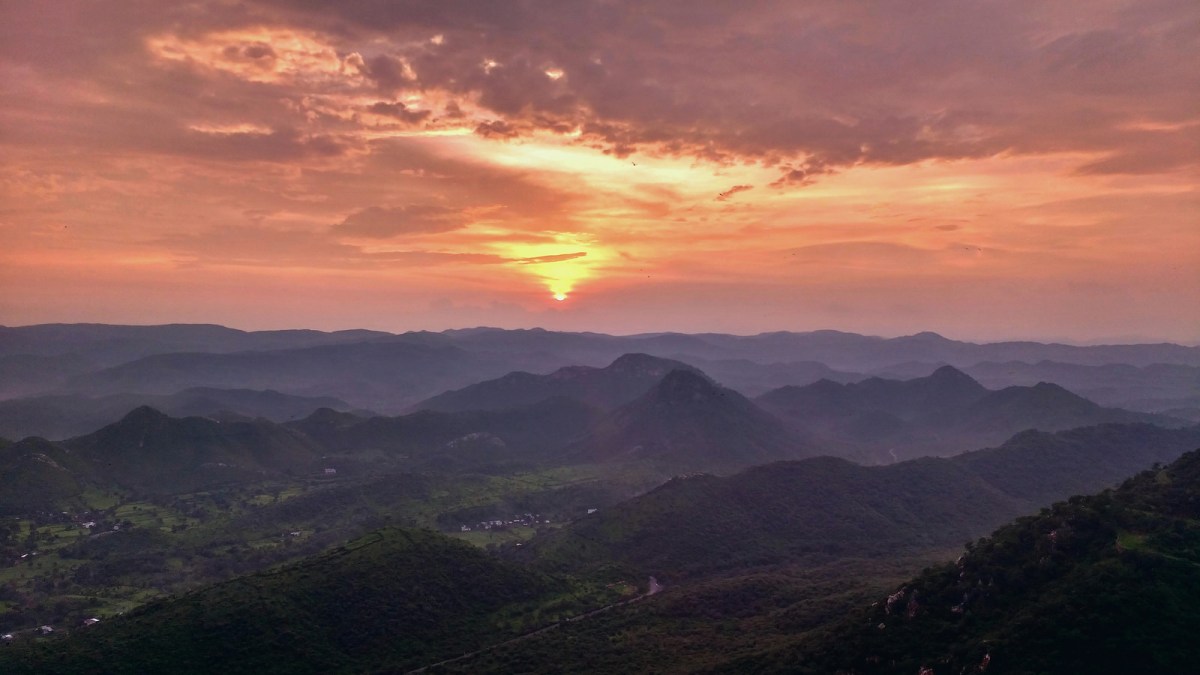
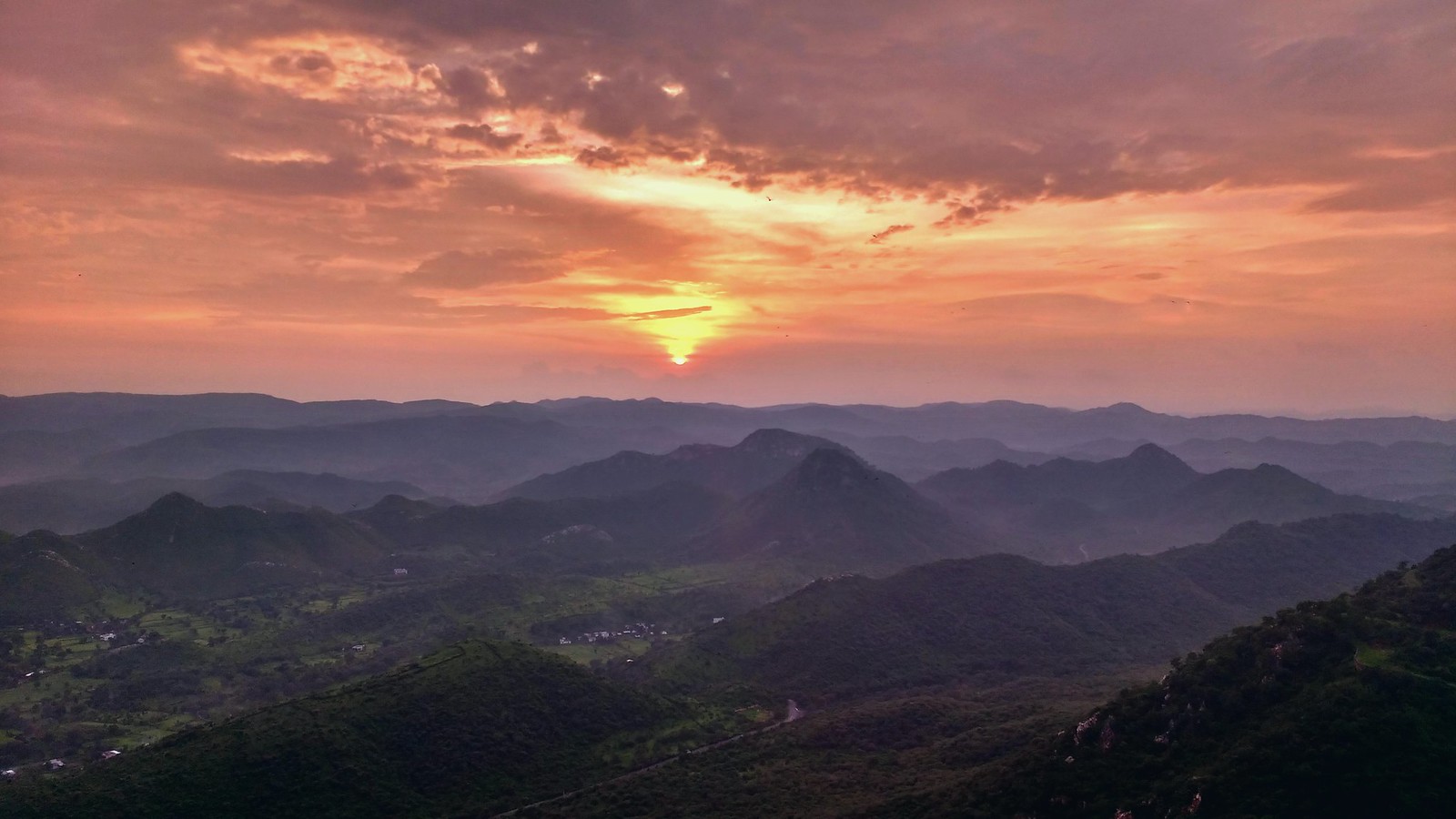
As promised yesterday, here’s the view we saw atop the Monsoon Palace, Udaipur, Rajasthan.

Sunset at Monsoon Palace

Like I said, neither my words, nor my pictures could do justice to what we saw. This must suffice for now.


Photo taken with a Moto G3, edited Befunky. Click/tap to enter my Flickr Photostream


This is post #5 in this year’s NaBloPoMo, or as Ra calls it Nano Poblano

NaBloPoMo = National Blog Posting Month = Thirty straight days of blogging