We’re in November! The year is fast ending. Now where did this year go? For those who know me, it’s been one heck of a roller coaster the past couple of years. And given all that’s going on right now, it would be madness to even think about participating in, what the blogosphere calls, the Nanos. So I’m not thinking about it. I’m jumping right in. If I can manage it, hurrah! And if I can’t, well, that’s okay too.
How about you? Are you going to blog every single day in the month of November? Are you planning to write a novel? Are you crazy enough to do both?! Let me know 🙂
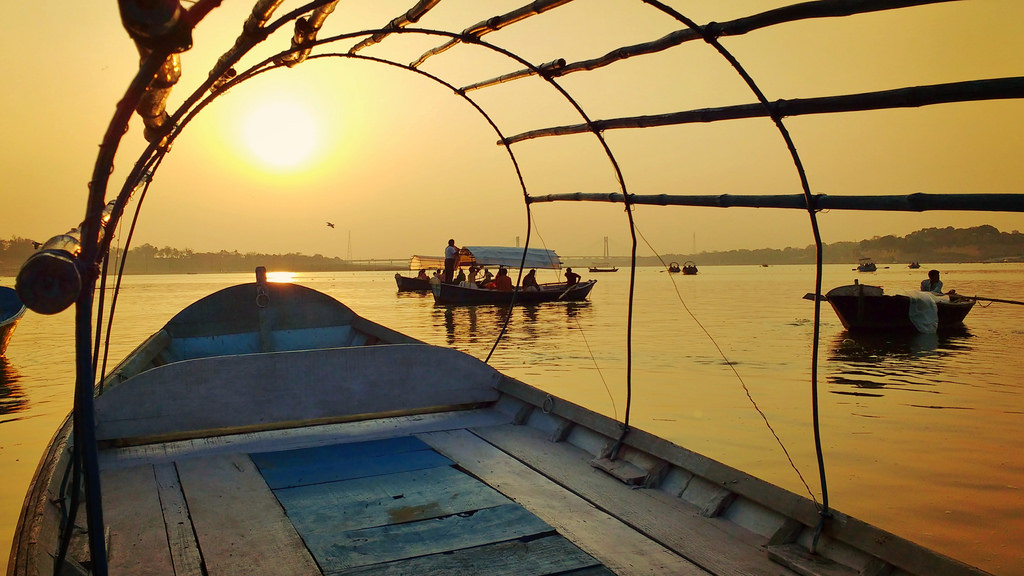
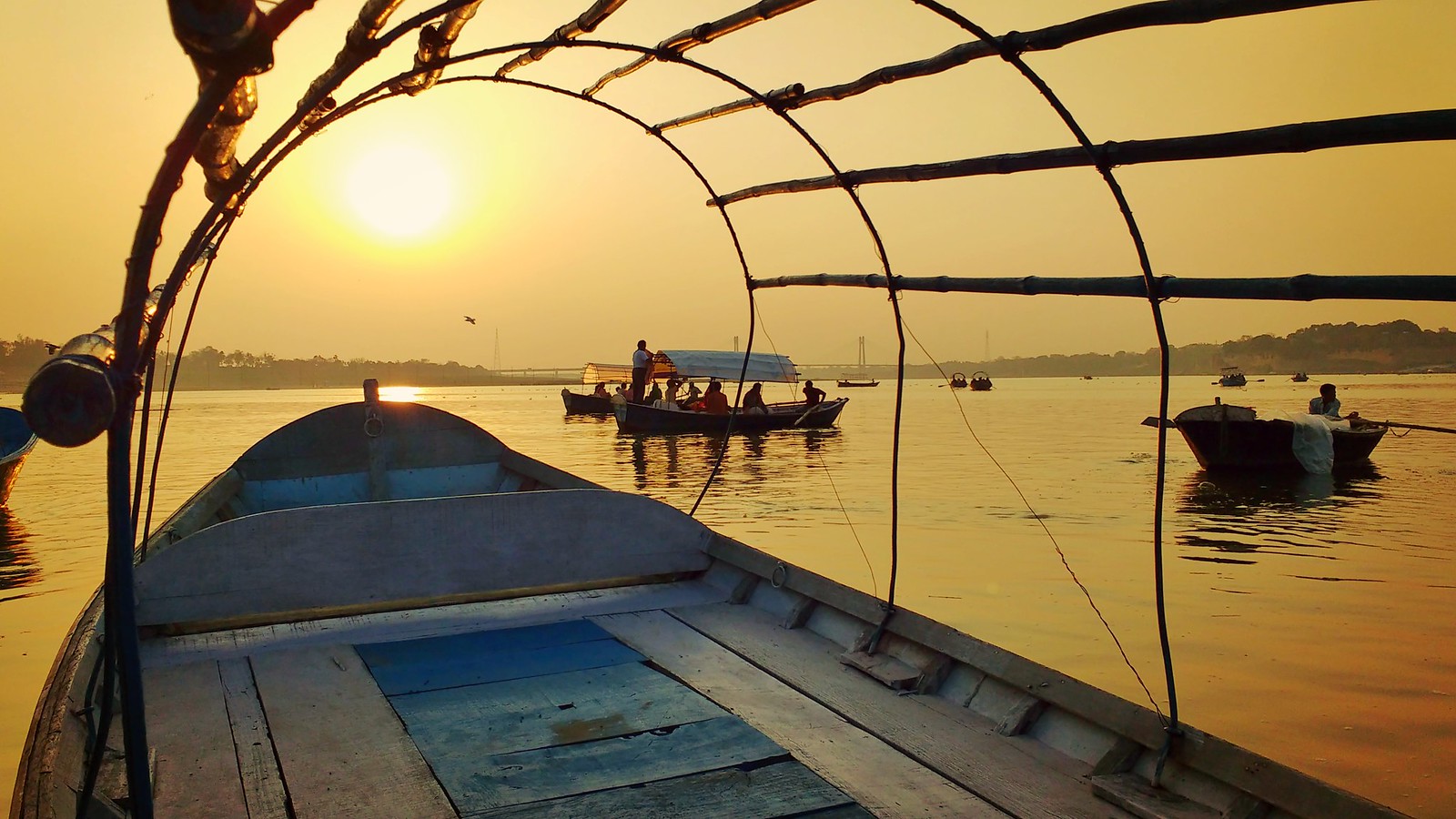
I had previous written about our experience on the boat ride towards Sangam and the jolly boatman who thought we were out to steal his job! This is a picture of the boat on which we sailed. We reached Sangam—the confluence of the holy rivers Ganga, Yamuna and Saraswati—at Sunset, and it was breathtakingly beautiful!
As we were stepping out of the hotel room, we saw a tall, broad man peering through the viewfinder of a DSLR. The SUV behind him was open and the valet placed our bags in the boot.
As we closed the door, the driver kept his camera on the front passenger seat and hopped in. He had a small goatee and wore an earring. His black leather jacket and slim fit jeans completed his look. Like almost all the SUV drivers we had interacted with on the mountains around the river Teesta, he looked like a rock star.
“My name is Mahesh,” he announced in a jovial voice as soon as he closed his door. “So you’re headed to Darjeeling, eh? How was Gangtok?” His laid back manner appeared as if he had known us for a long time. And we eased into a conversation without any hesitation.
“It’s absolutely beautiful! So much to see. So clean. And people are so friendly. We’re already planning our next trip here!” It had rained for three days and there was not one camouflaged puddle, and the roads were free from slush and filth. The hospitality we had received at the hotel was outstanding, and we didn’t really want to leave.
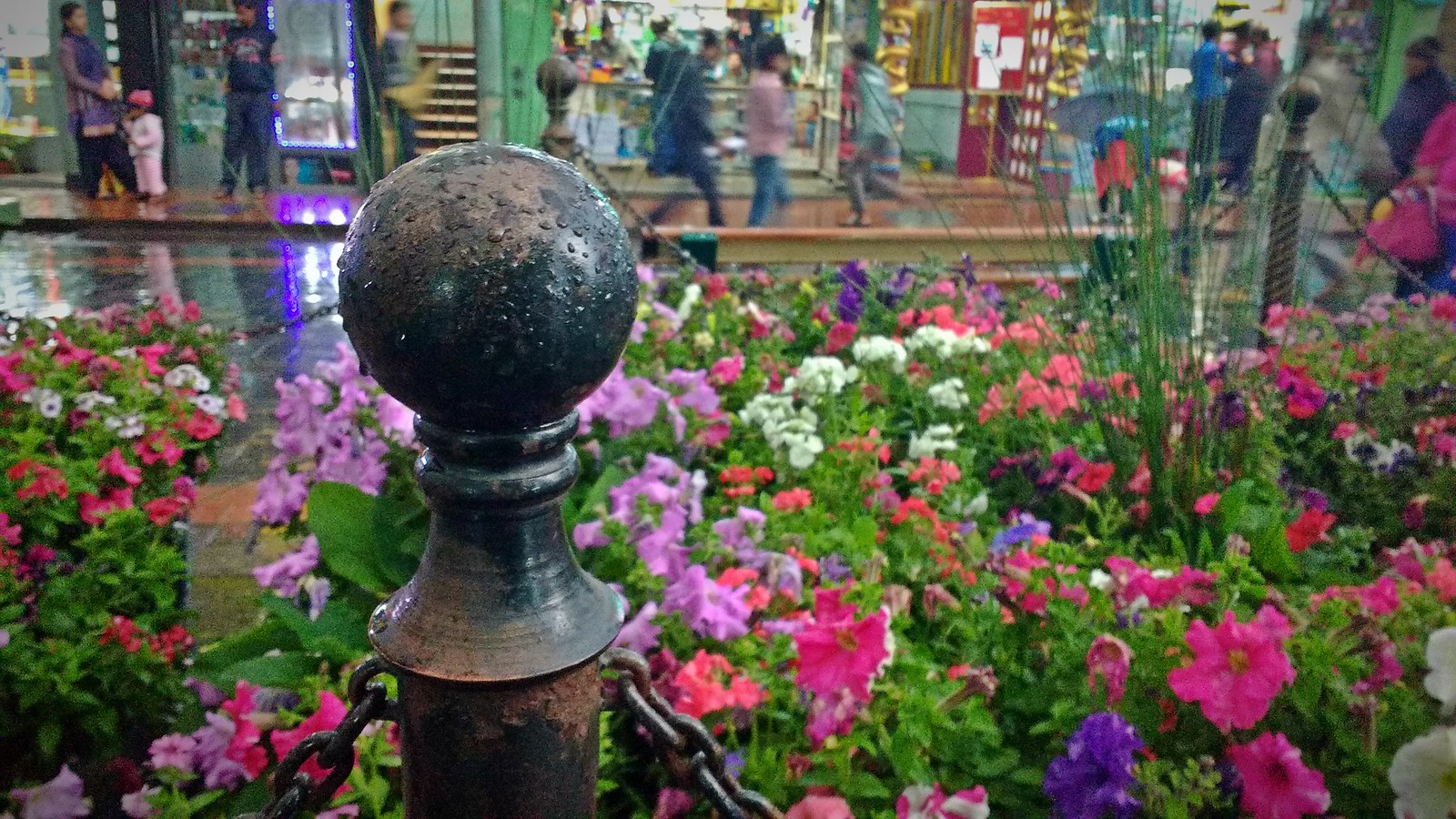
MG Marg in the rain
“Yes, I love Gangtok,” said Mahesh. “Every time I come here I like to take pictures. You’ll see a huge difference between Gangtok and Darjeeling. That’s such a dirty place.”
As we made our way along the narrow, winding roads, we approached a fork—one road led steeply uphill, while the other continued downhill. Wedged in the middle of the fork was an SUV. The driver had apparently taken a wrong turn uphill, and was backing down slowly. Cars had begun piling on all sides. And something miraculous happened—everyone waited patiently as the driver reversed, moved forward, turned a little, and reversed again to repeat these mini movements for maneuvering the tricky slope.
We told Mahesh how amazed we were by the orderly conduct of the drivers in Gangtok. In the Delhi-NCR region, people honk even if the traffic signal is red! And here, people waited silently for what seemed like an eternity for the driver to course-correct. That done, we proceeded downhill.
“There is very good enforcement of law here. People don’t go breaking rules.” Mahesh was clearly happy in Sikkim. “I come to Gangtok every now and then. But one day I will come here only to take pictures. I want to photograph the traffic ladies here. And want to compare and contrast them with police in Bengal.”
As Mahesh was speaking aloud his artistic dreams, the scenery outside took a beautiful turn. Beside the road, a shallow stream was flowing on a bed of hundreds of smooth pebbles, with hills all around. We had got used to the natural beauty of Sikkim by now, but it appeared that there was no way for us to document it through the windows of a moving vehicle. As if reading our minds, Mahesh slowed down. “You can take the picture now! See, I want you take as many pictures as you can. I want, that when you go home and you see these pictures, you will remember me!”
The turning where the road splits three ways. A chance photograph taken from our moving car.
We continued smoothly, when Mahesh parked the car to the side of the road beside a huge boulder. He paused, looked outside his window, and quite abruptly, grabbed his camera and hopped out without a word. Puzzled, we looked at each other, and then tried to follow his movements. A short distance behind us, Mahesh was straining his eyes and looking up. He peered into the viewfinder of his camera while we kept wondering what it was he was looking at. He came back and placed his gear on the passenger seat and we resumed our journey. “There was a vulture’s nest up there on top of the boulder. I thought I saw two baby vultures there. But couldn’t get a decent photograph.” If there was a hint of disappointment in his tone, it went away in a few minutes.
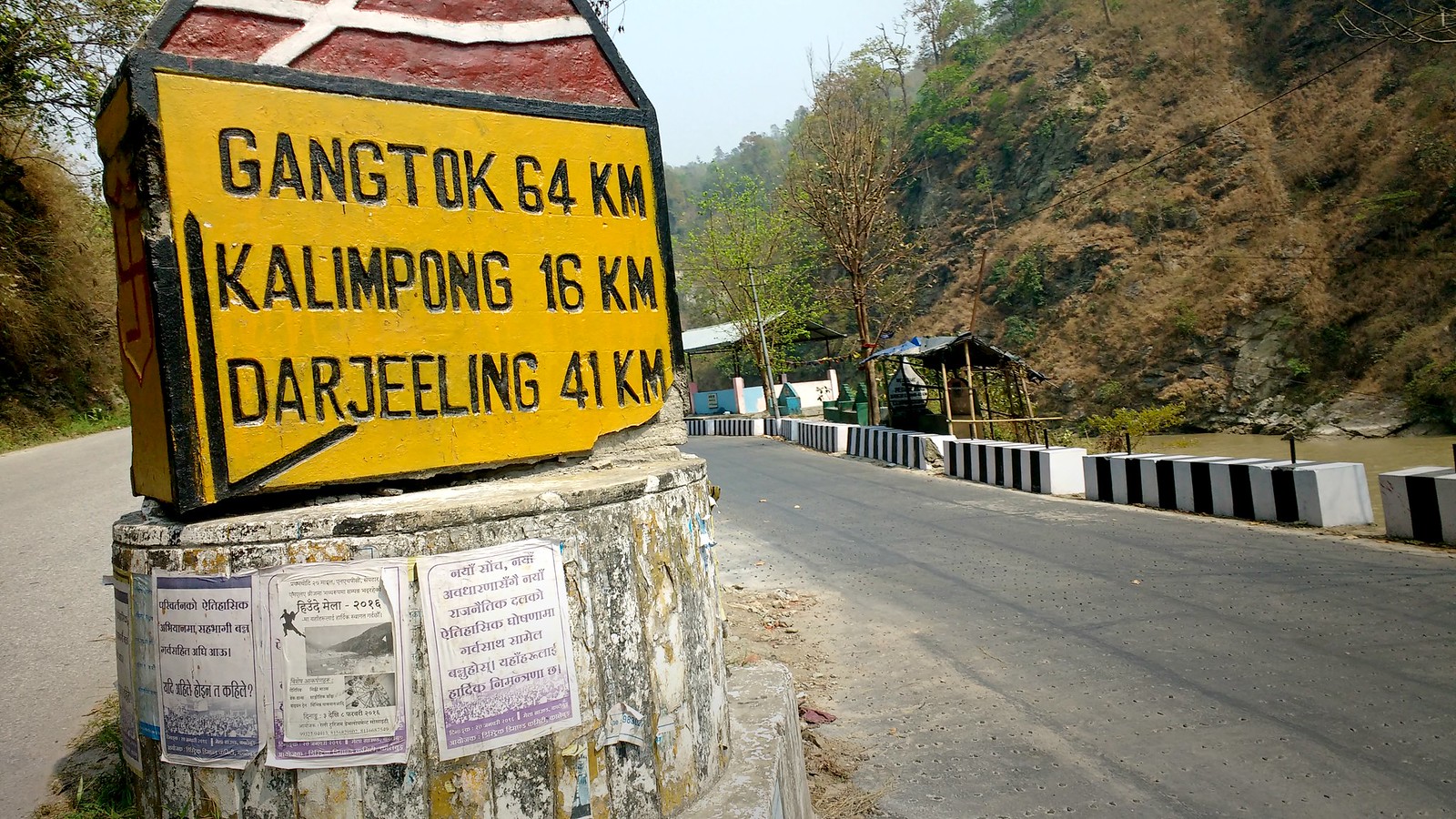
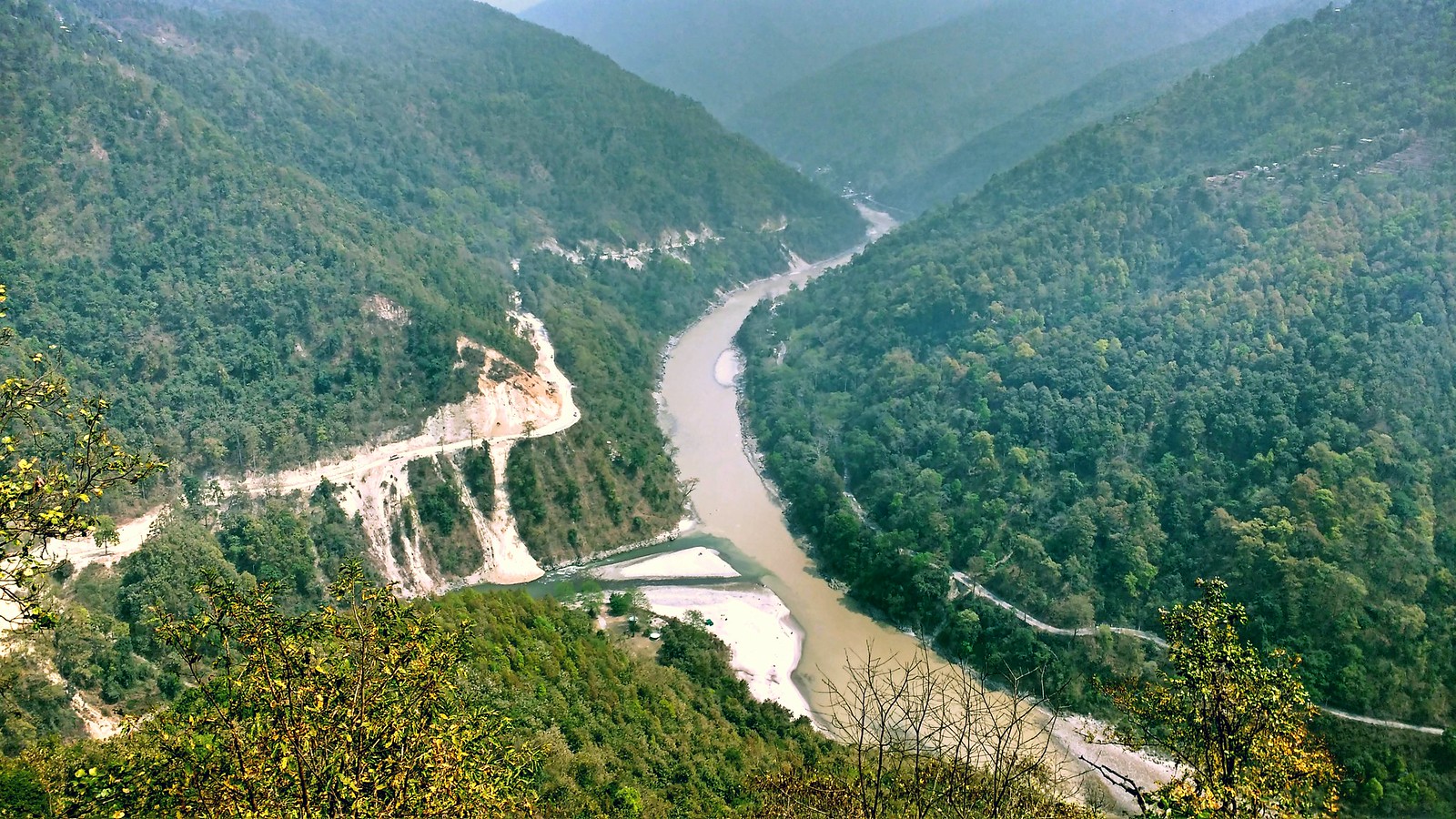
Our next stop was at the ‘Lovers Meet’ viewpoint, from where one could see the confluence of the rivers Rangeet and Teesta. Mahesh asked us to soak in the view and take our time—something, that we later realised, no one had said throughout any of our road trips.
Lovers Meet
Once we had crossed the viewpoint, Darjeeling was not very far.
“Welcome to Darjeeling! I hope you enjoy your stay here. It won’t be as nice as Gangtok, you’ll see. But I hope you have a good time.” As we finished unloading our bags at the entrance of the hotel in Darjeeling, Mahesh’s phone rang, perhaps a relation had called. Still chatting on the phone, he nodded his head in acknowledgement of our small goodbye and reversed the vehicle to begin his ride back home.
Our scenic journey over that week had many exotic destinations and experiences that we would remember for months, if not years to come. And looking back, we now realise how important the role of our drivers was in our journey.
Throughout our trip, we had travelled with many drivers, some for transfers, and some for sightseeing. None of them were particularly remarkable, and stuck strictly to their jobs. For them, it was about getting us from point A to point B, as per the itinerary. While our driver in Gangtok had allowed us a small extension of our sightseeing time to accommodate our slow pace of exploration, the drivers in Darjeeling would keep calling us and telling us to hurry up. Towards the end of our trip, though, one driver left a lasting impact on both of us.
We had left Darjeeling to spend a day in Kalimpong, a town where my father had spent some part of his childhood. It seemed like our driver didn’t want to drive and tried to talk us out of visiting an old monastery by saying that all monasteries looked the same! We got him to take us there, albeit grudgingly, by arguing that it was included in our itinerary, and no, they weren’t all the same to us.
As we were making our way to the hotel after completing our sightseeing, I noticed a sign board.
“Hill top!” I squealed with delight. “That is where my grandfather used to live! Could we stop for a few minutes, please. I just want to have a look at that house.” The light was fading fast, and we had to leave the next day. If we had a shot at laying our eyes on the old house I had heard so much about, this was it. “That’s not part of the package!” retorted the driver and continued onward.
That’s not part of the package. It was simple, and as inconsequential to him, as that. But to me, those words stung. It took a while to get over it, and we both vowed never to take packaged tours after that.
We returned to Delhi the next day, our cameras and phones full of pictures and videos. We told our friends stories of beautiful buildings, clean marketplaces and the blank foggy vistas that hid Kanchenjunga from us throughout. We praised the hospitality of each of the Summit hotels we stayed in, the colourful strings of prayer flags and the scenic routes we travelled. We shared our disappointment of missing the Kanchenjunga, and the little joys of travelling with one very interesting driver who took us from Gangtok to Darjeeling.
It was a pity we didn’t take down Mahesh’s number, nor did we take any pictures with him. But what we do have is the memory of the road trip we shared. Every time you look at these pictures, you will remember me, he had said. He was wrong. We remember Mahesh even without looking at the pictures.
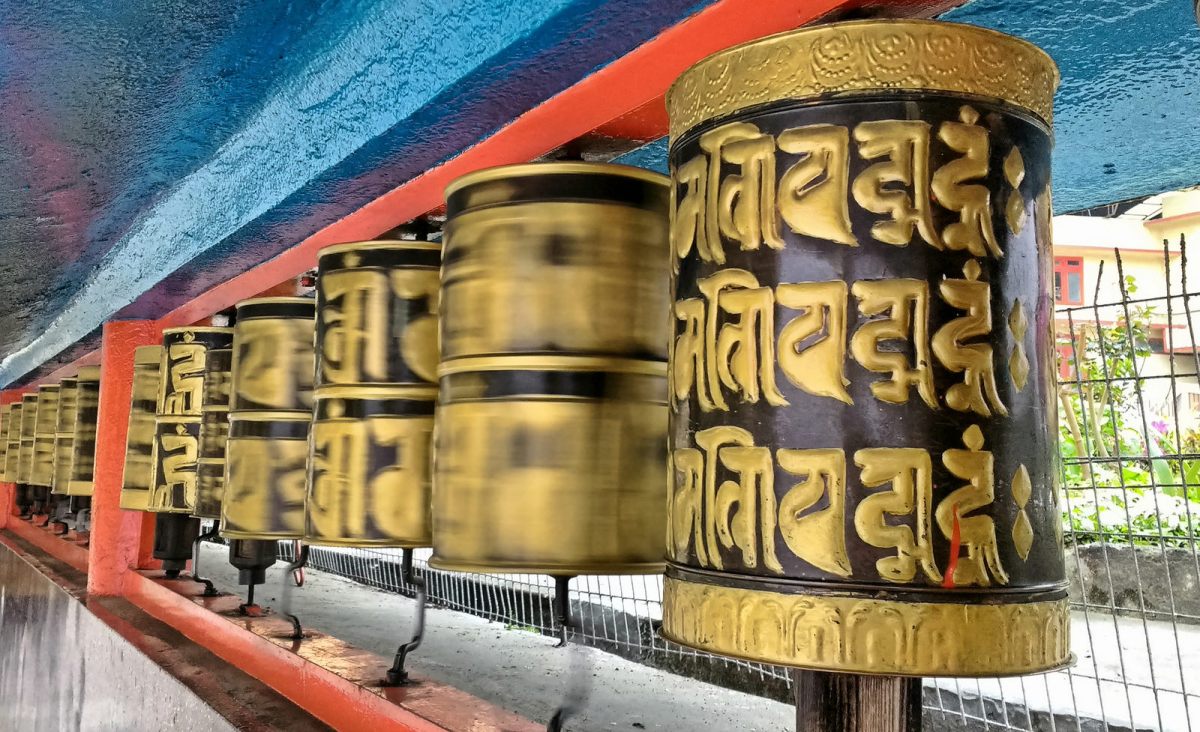
Spinning prayer wheels at a monastery in Gangtok
Tagging the images in this post for this week’s weekly photo challenge for their curves! Here’s my previous entry for the challenge: Lamps in the sun
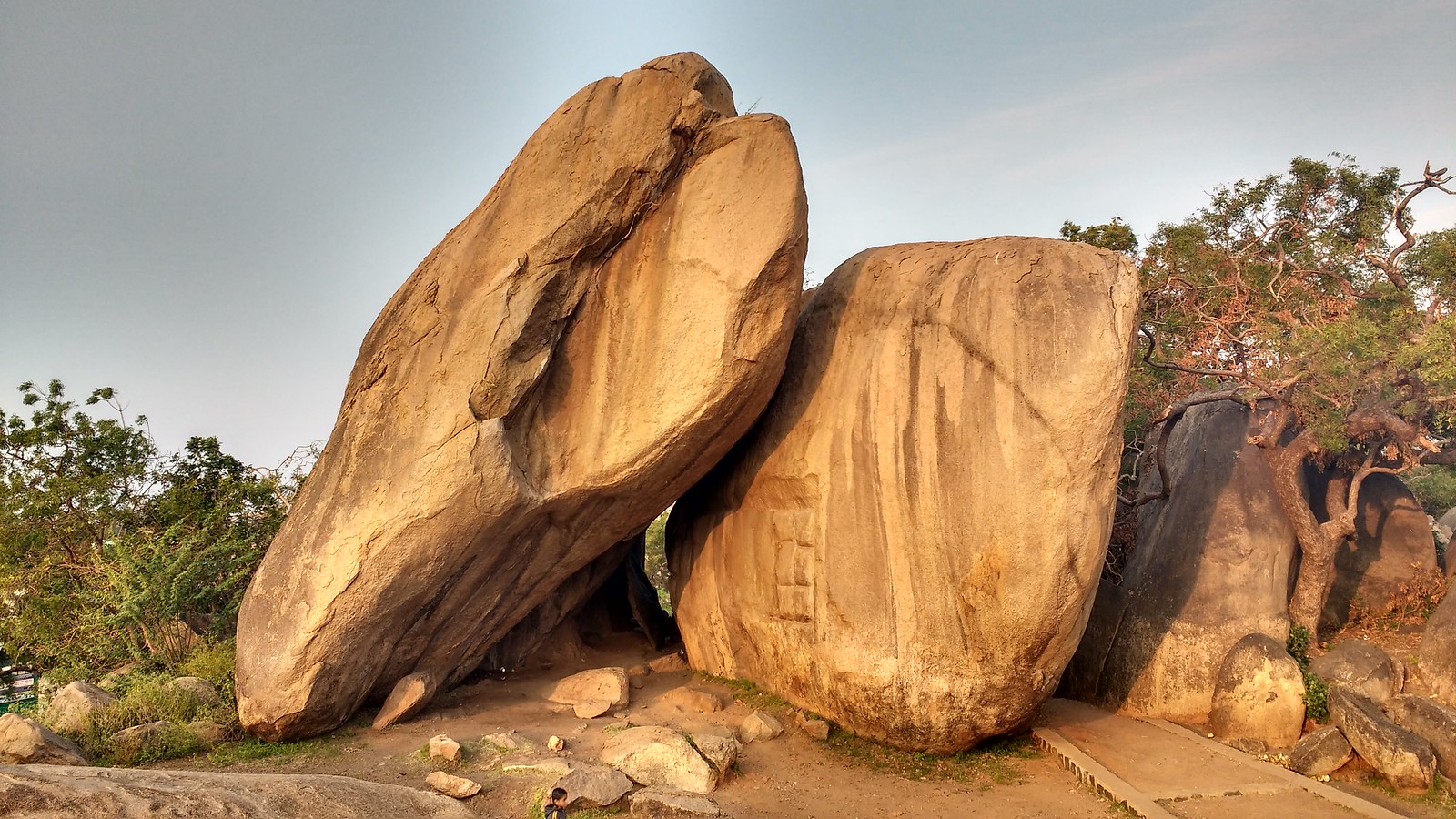
During our day trip to Mahabalipuram last winter, we reached ‘Krishna’s butter ball’ around that magical time when everything touched by sunlight gets a shower of gold dust—including these huge boulders that stood silently admiring the profile of the more popular attractions nearby.
To get an idea of it’s scale, there’s a little child who managed to sneak into the view, and of course, those trees look quite dwarfed!
Photo taken with Motorola Moto G3. Click / tap on the image to enter my Flickr photostream.
In response to the Daily Post’s Weekly Photo Challenge: show just how big, or little, the world can seem.
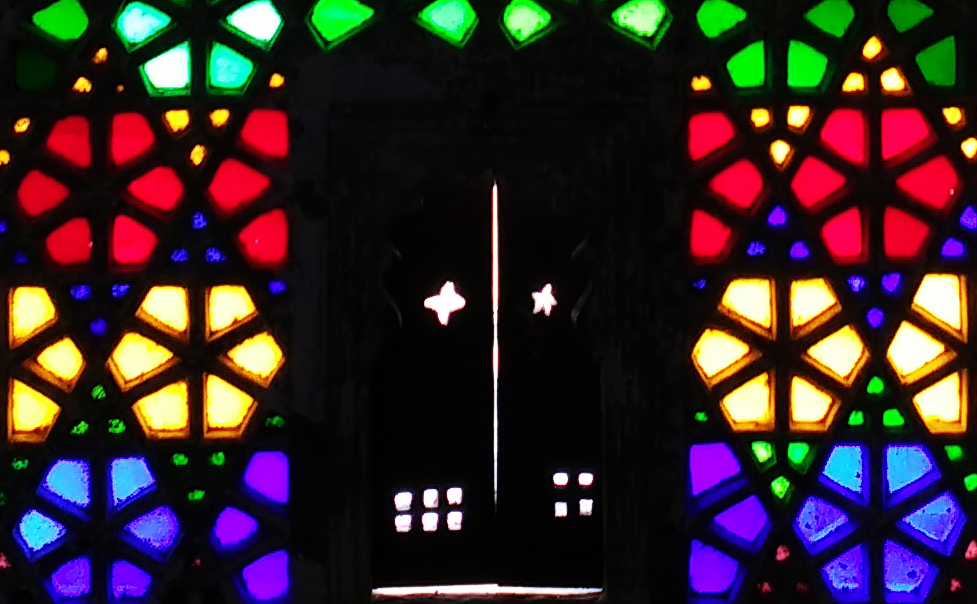
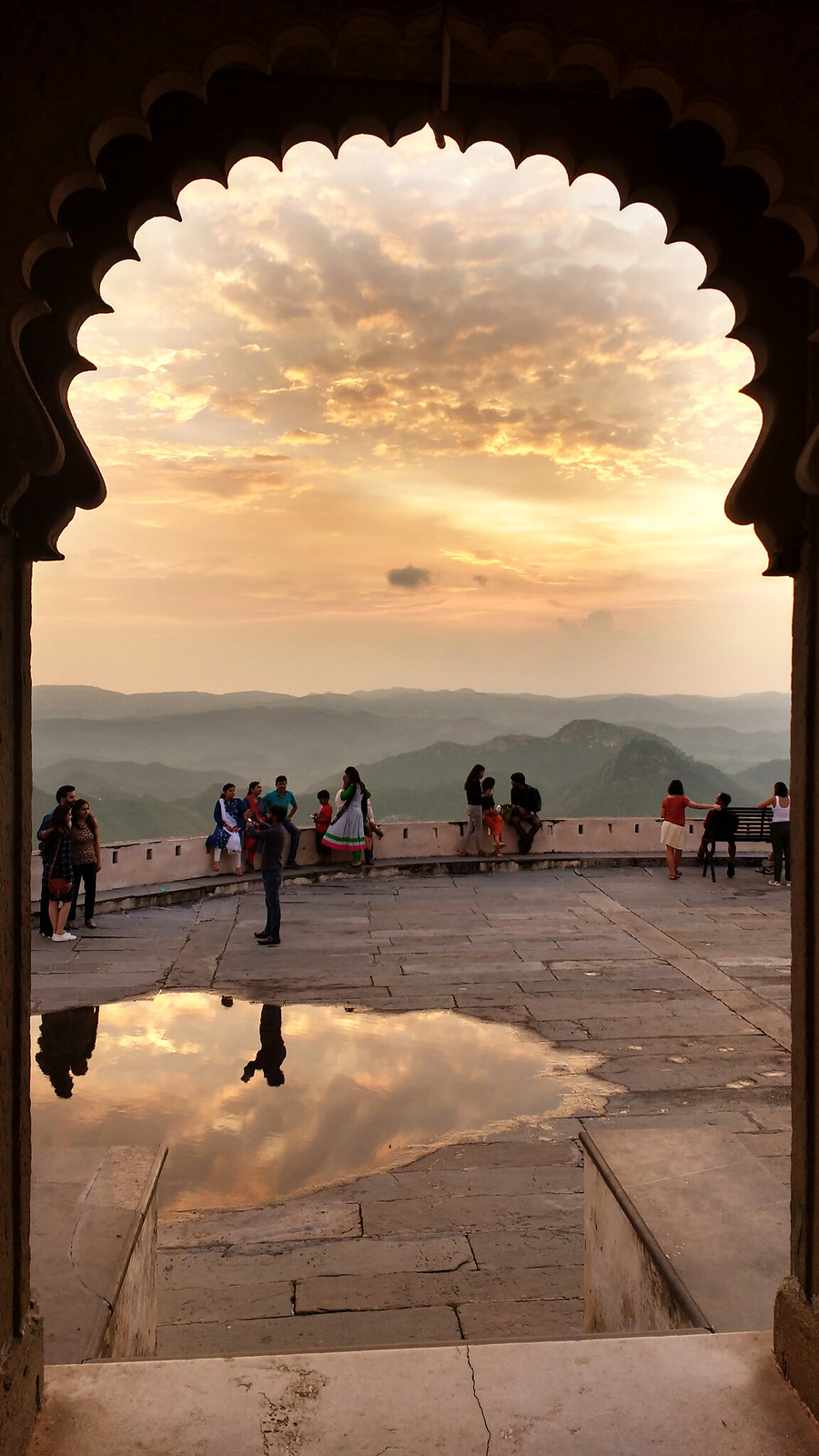
A prominent feature of Rajasthani architecture are the windows with their characteristic floral silhouette. When visiting monuments in the region, it is hard to resist the temptation of framing the magnificent views with the window. Ah, what a feeling it must have been, living in those palaces!
Alas, for women, not a very good one. The queens and princesses had their share of riches and maids and all luxuries that a royal household could provide. But freedom? Trapped in a tower, looking out of the window was the only freedom they had. Called jharokhas, the beautiful latticed windows were built to allow women to look at the world outside, without themselves being seen.
Here is one such window at Bagore ki Haveli, Udaipur. I wonder what must be visible through those tiny windows within the main window.
So this week, when the Daily Post asked us to show windows, I felt cheated. But considering what it must have been like for the women who looked out of these tiny windows, I don’t have any reason to complain.
I wanted to write about the stereotypical portrayal of Rajasthan – a traditionally attired instrumentalist, strumming his Ravanhatta and playing Raag Maand and perhaps the most popular, and misinterpreted Rajasthani folk song “Kesariya Balam”. But I’ll shut up this one time, and sit with the Rajput royals and look out for the monsoon clouds atop Sajjangarh in Udaipur.
In response to the Daily Post’s Weekly Photo Challenge: Layered – explore the interplay of texture and depth.
As we scouted hotels near Lake Picchola, we were caught between conflicting traveller reviews—those that spoke of magical lake views, and others that complained of poor hygiene and stench. Considering that we were traveling to a city with lots of water, during monsoon, we decided to keep ourselves away from Lal Ghat.
We browsed through OYO rooms and zeroed in on the cryptic “OYO Homes 062 Fatehsagar Lake”. For reasons better known to OYO, the website does not provide the exact name of the hotel or the location without a confirmed booking!*
After confirming our booking, we looked for reviews of the property. There weren’t as many ratings of the house as compared to the other hotels, but all of them positive. Well, we would find out for ourselves.
Our flight landed in Udaipur half an hour before time; the air was cool, much cooler than the muggy national capital we had left behind; the scenic Aravalli range surrounded us throughout the drive to the city—a beautiful start to our trip.
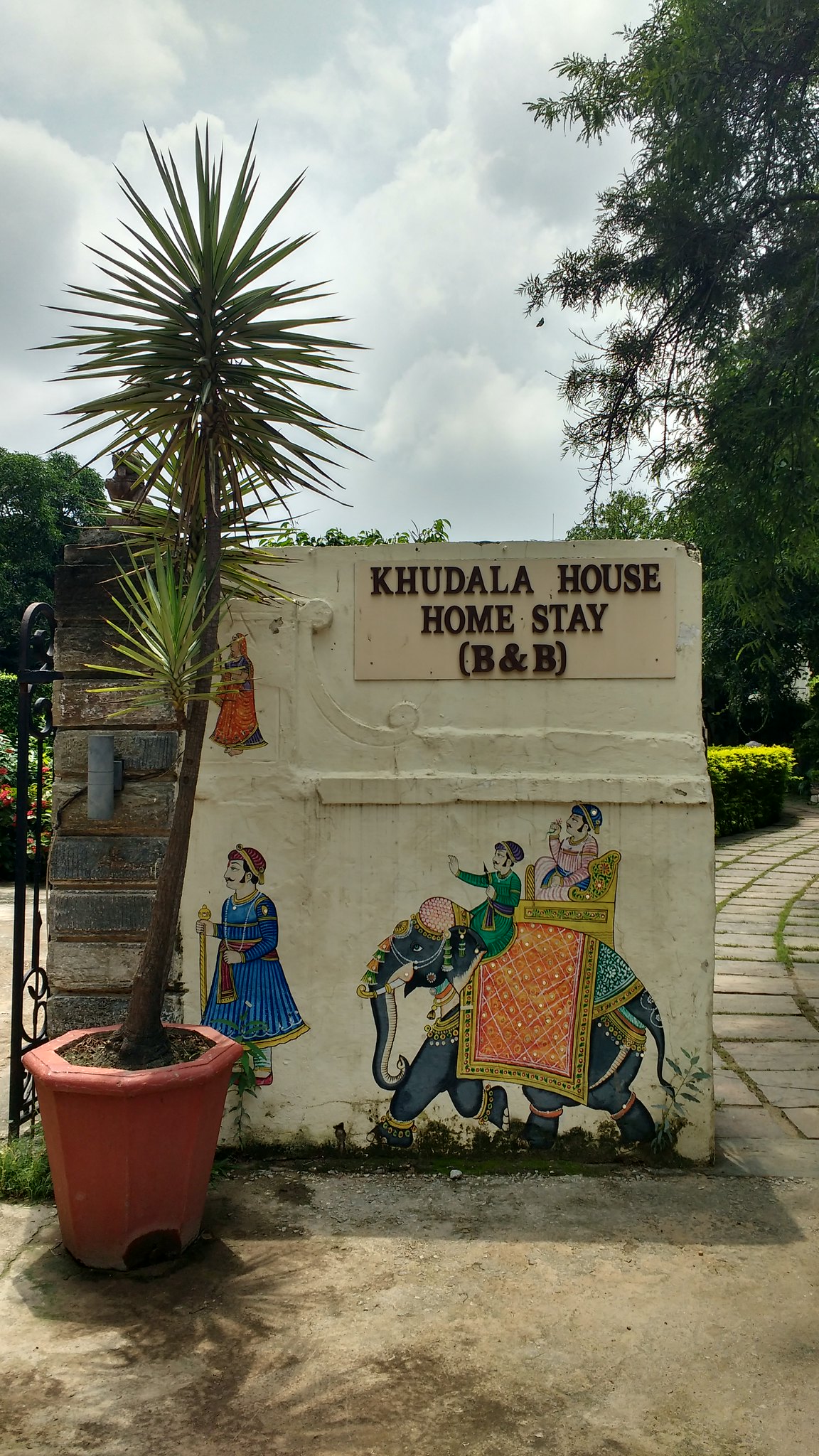
Our talkative cabbie, Chetan, seemed to know a lot of touristy information on Udaipur—as did all the other rickshaw drivers we rode with. One would think they were all getting paid to promote tourism! None of them, however, had heard of Khudala House. So, we followed the map and gave directions. When we were near our destination, we caught sight of water for the first time—and what a beauty she was! As our eyes feasted on the beautifully blue Fateh Sagar Lake, growing ever wider in front of us, the GPS lady quietly said, “turn left, and you will arrive at your destination.”
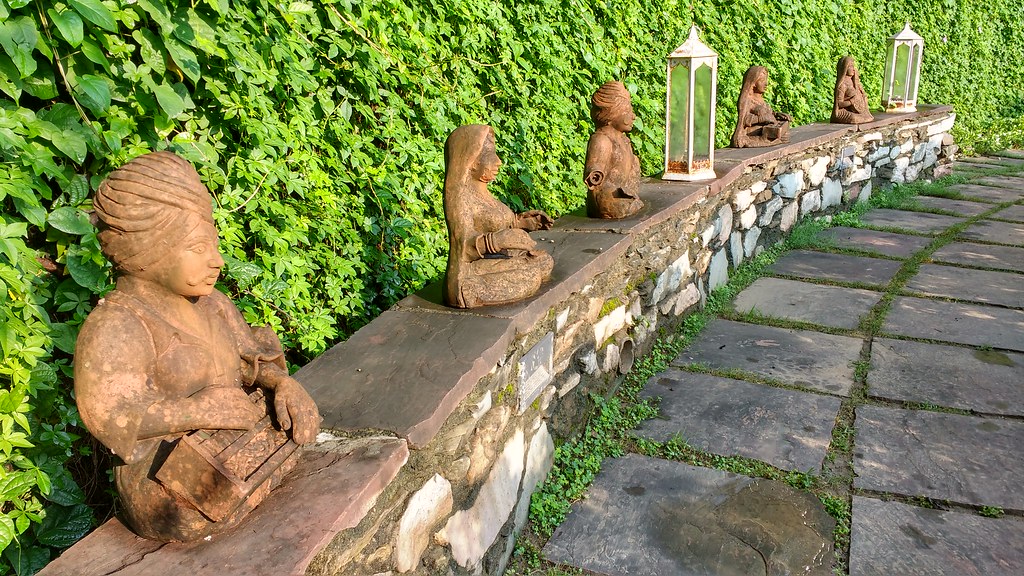
We hopped off our cab and walked around the driveway. The property may not have had a lake view, but it was royally beautiful. Walking to the right, we were greeted by a row of statues posing against a great green leafy wall.
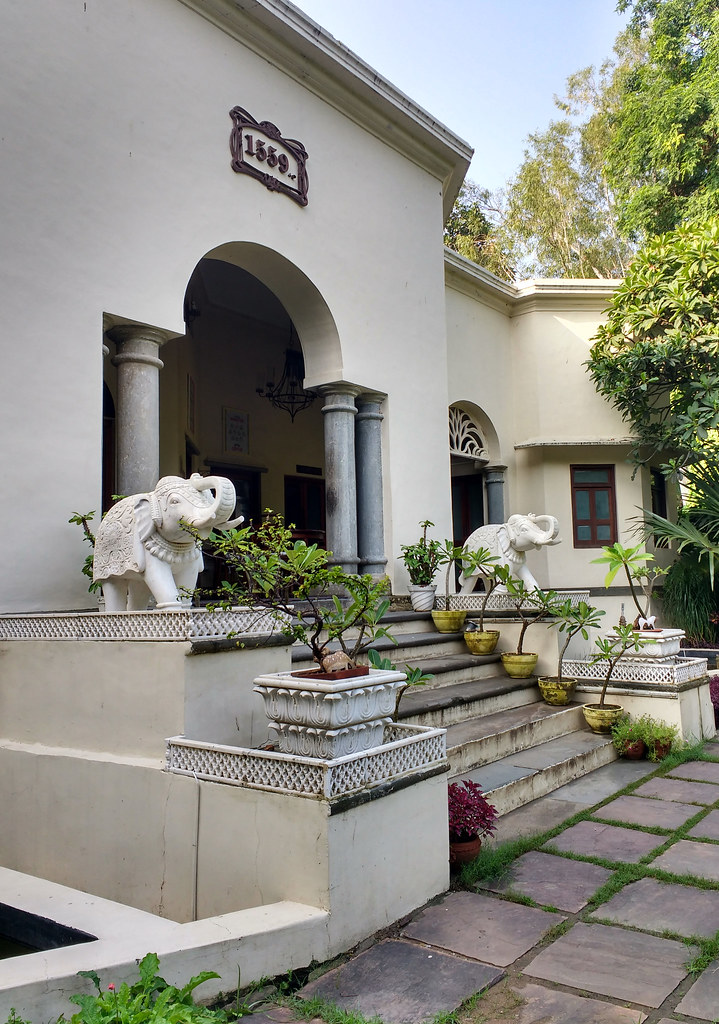
And behind the lawn was the grand entrance to the house.
Our host, Mr. Dhanajai Singh, later informed us that the house was built in 1941 by his grandfather. About 35 years ago, his father, and present owner Capt. Jaiveer Singh added more rooms. The majestic original structure has now been leased to the restaurant 1559AD.
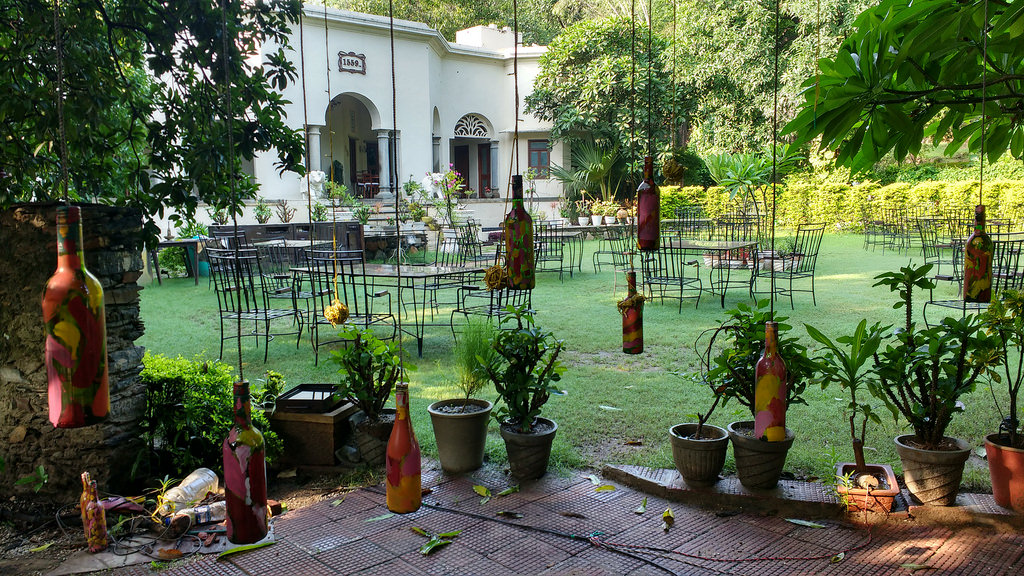
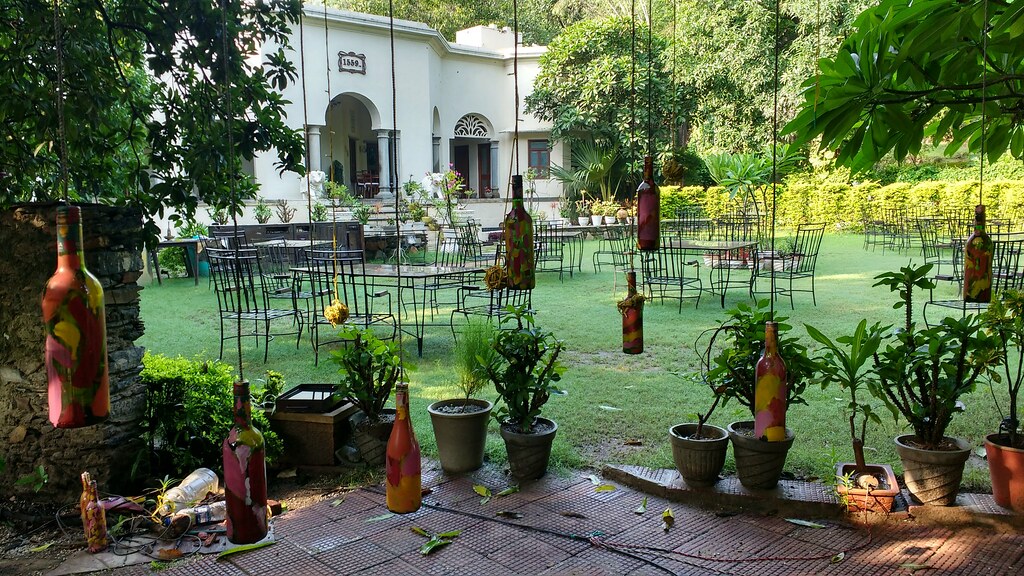
We walked back to the front gate and towards the newer, smaller (relatively speaking, of course) building on left of the driveway. A loose curtain of painted bottles and a stone wall decorated with divine statues marked the division between the old and new.
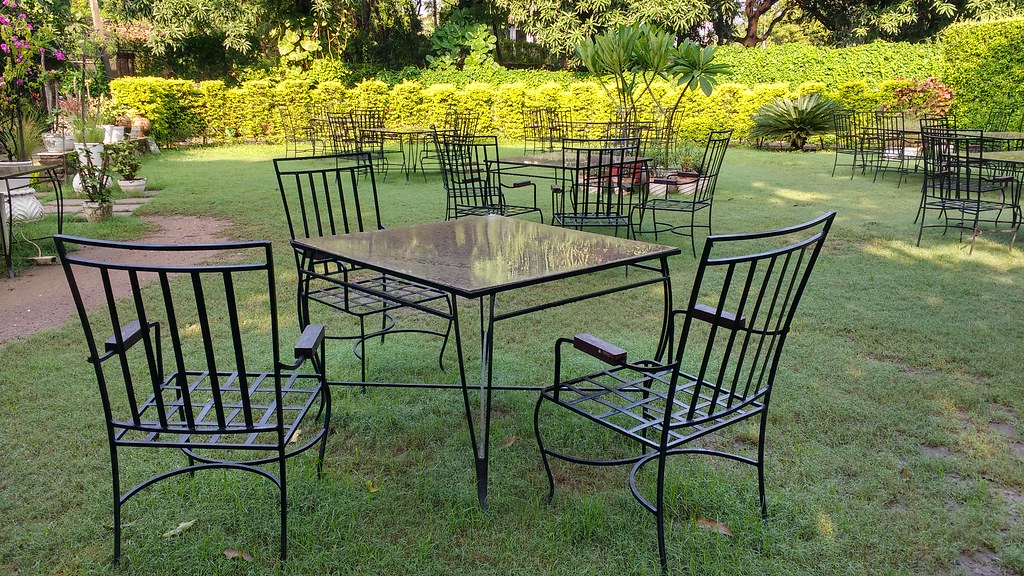
Here too, the visual delight continued. A beautiful lawn outlined by balsams in full bloom and surrounded by dozens of bonsais.
Fresh after a spell of rain, the lawn awaits company
Our host graciously allowed us a complimentary early check-in and gave us very helpful tips on sightseeing in Udaipur, including the recommendation of a morning walk at Fateh Sagar, and advice of exploring the Old City on foot.
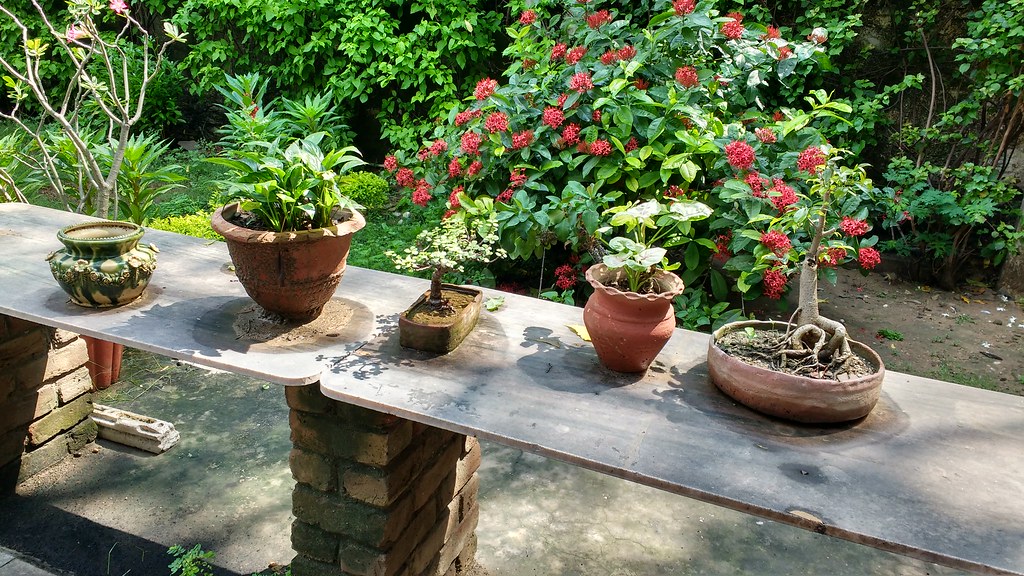
A few of the many leafy occupants of the house
Our room was spacious and included a big bathroom, a dressing room and our own backyard! We ate home-cooked breakfast in a common dining room filled with interesting objects and memorabilia. Abhay, the soft-spoken housekeeper who single-handedly looks after all the rooms, took care of all our requirements. And then there was Bully, the boxer, whose droopy eyes looked at us curiously (I heard him bark only once). The owners were very warm; and sans the presence of impersonal staff and eerie hallways that are characteristic of hotels, we felt at ease during our stay.
The restaurant 1559AD is as beautiful inside as it is outdoors. We were too busy admiring the ambience and relishing the food to take any pictures (actually, we had left our phones behind in our room next door, and regretted it!)
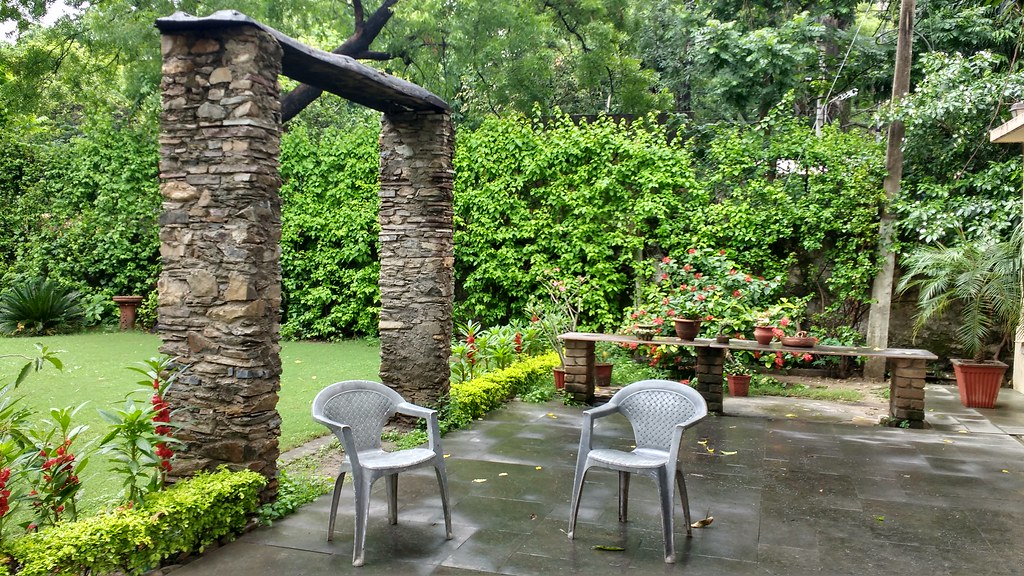
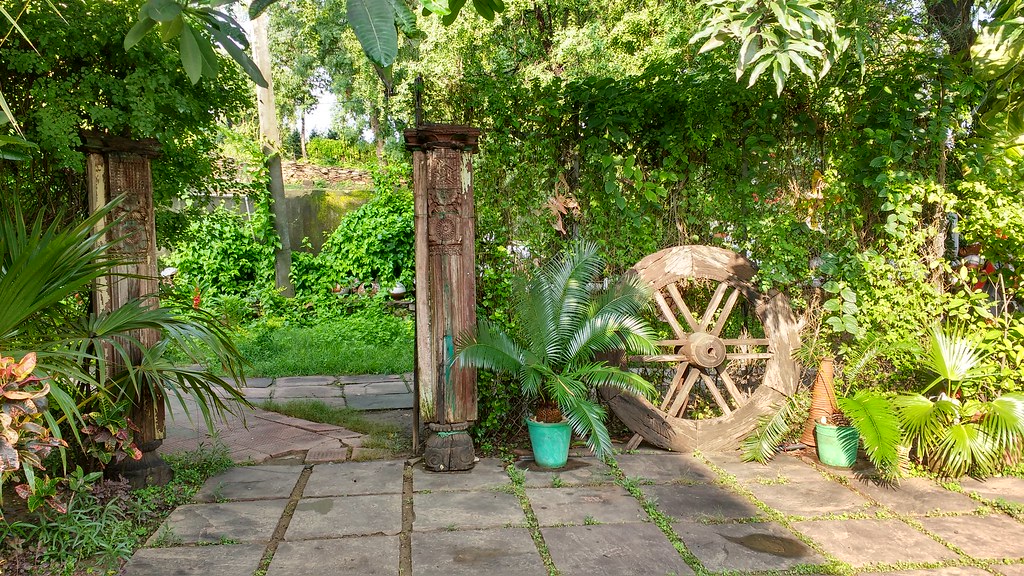
Path leading to the back
Rickshaw drivers did not know where Khudala House was. So we had to use nearby landmarks to explain where we were staying. Once we came to the T-point in front of Fateh Sagar, we told our driver, “turn left, and its right there!” “Yeh to 1559AD hai,” (this is 1559AD) our driver said. “You should told me this before.”
During the three days we spent in Udaipur, we were mostly tourists. But at the end of the day, we came home.
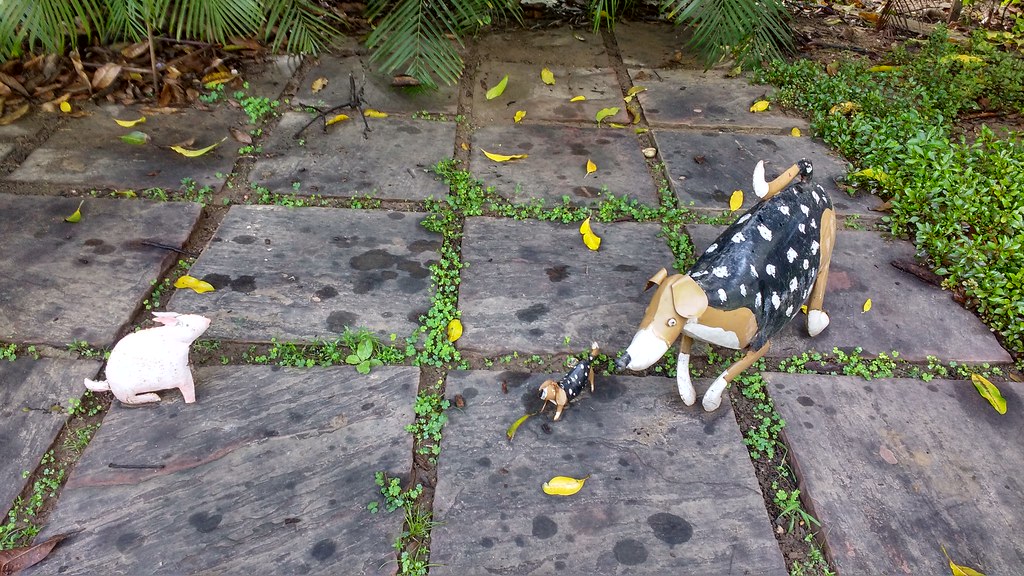
Playing around
* When I did a new search a little while back, our comfy homestay’s name was very much mentioned—though there were other properties with cryptic names. I don’t know if this hiding of names is a random thing. Any ideas why OYO does this? If you know anyone there, could you ask them to change this?
Photos taken with Motorola Moto G3. Click / tap on the image to enter my Flickr photostream.
Of Udaipur’s many lakes, the Fateh Sagar takes pride of place. While lake Picchola has the exotic lake palaces, Fateh Sagar retains the beautiful backdrop of the Aravalli hills.
“Well, you’re on vacation, but if you are early risers, I recommend taking a walk along Fateh Sagar. The roads are closed for vehicles till 8 am for morning walkers,” our host Dhananjai at Khudala House advised us.
I remembered reading about the beauty of sunrise at Fateh Sagar on an online travel forum. And so, on a Sunday morning, we set our alarm for 5:30 am, unlocked the House’s front door and sneaked out.
A few minutes later, we crossed the barricades to enter a walker’s paradise—the lake on one side; a rock-cut wall providing shade from the heat of the sun, on the other. We joined hundreds of locals walking briskly along the cordoned section of the road.
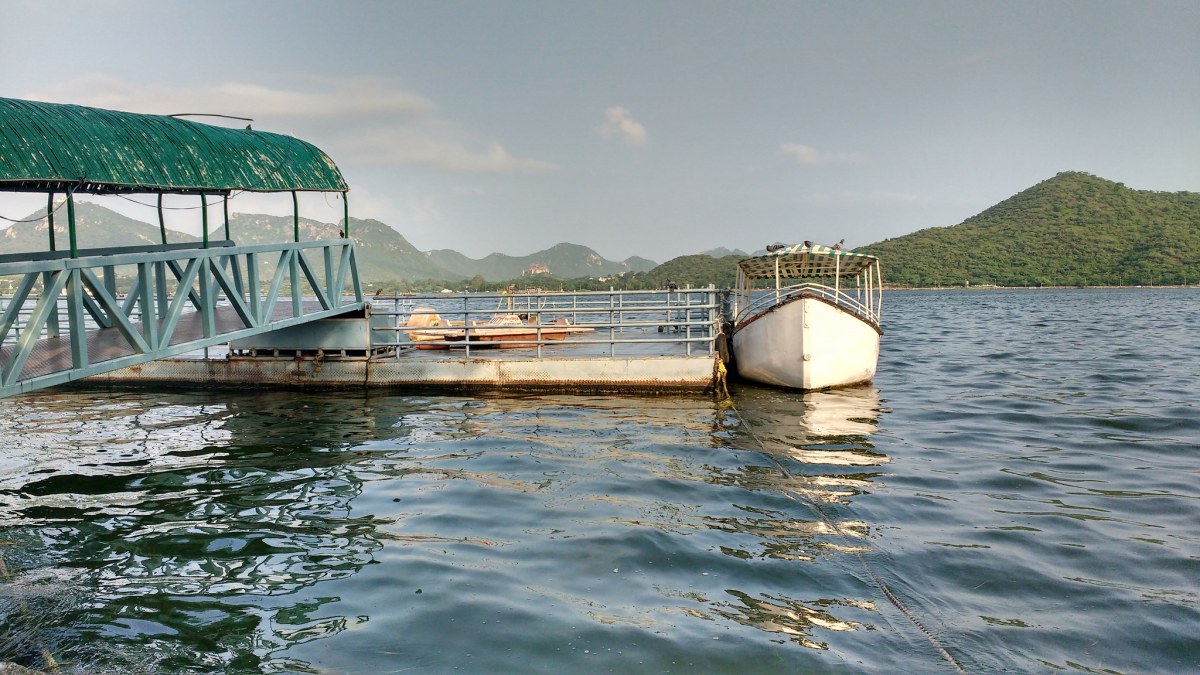
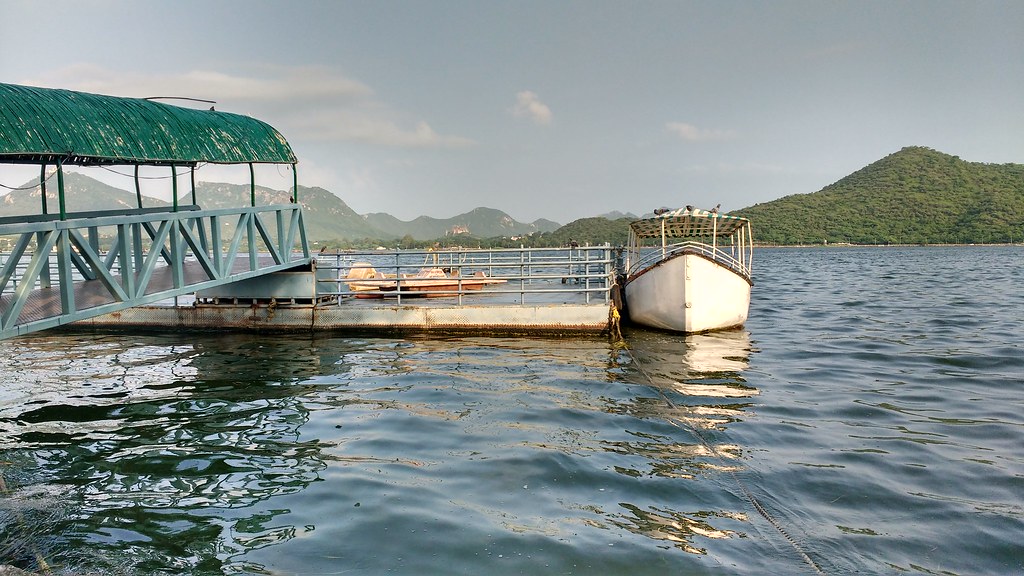
We walked leisurely, admiring the still boats basking in the golden light of the rising sun, the soft rustling of the gentle waves, the cool atmosphere, the seemingly endless hills washed green by the monsoon rains and the clean environs.
Awaiting duties
It had poured heavily over the past two days—a kind of rain that would have brought Delhi NCR to its knees. And yet, the streets of Udaipur were devoid of waterlogging. Even Fateh Sagar’s water level remained constant.
When we first came to the city, our hearts were set on lake Picchola, having been enamoured by its ghat and the surrounding architecture. Making our way from the airport, our talkative cabbie Chetan had said, “You come to Udaipur, the main lake is Fateh Sagar. The boating is good here too, and reasonable. Picchola is okay… famous for the palace. But the real beauty is in Fateh Sagar. It is 20 kms if you want to go all around it.” At the time, we dismissed his words, but as the winding roads revealed the breadth of the lake and the distant hills, we understood what he meant.
Over an hour into our walk, there still was no sign of the sun. But what was that? The sound of water. A waterfall? Noone mentioned a waterfall in these parts.
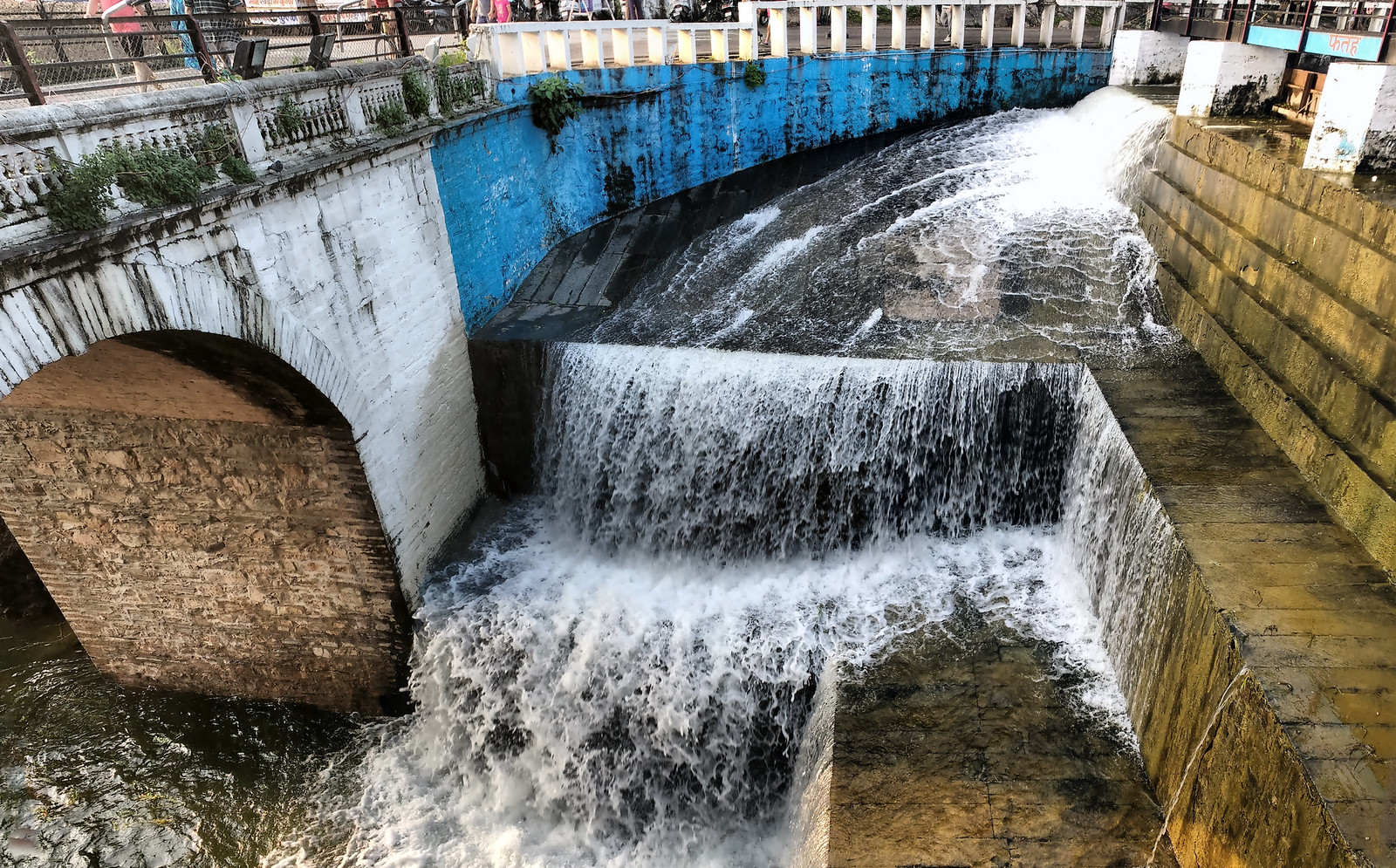
We reached the end of the cordoned section, and there she was, not-so-quietly going about her job of making sure the water doesn’t spill out into the roads. I’m not sure what this structure is called—a sort of dam, I suppose, to control the level of water.
Fateh Sagar lake overflows into the Aravalli hills
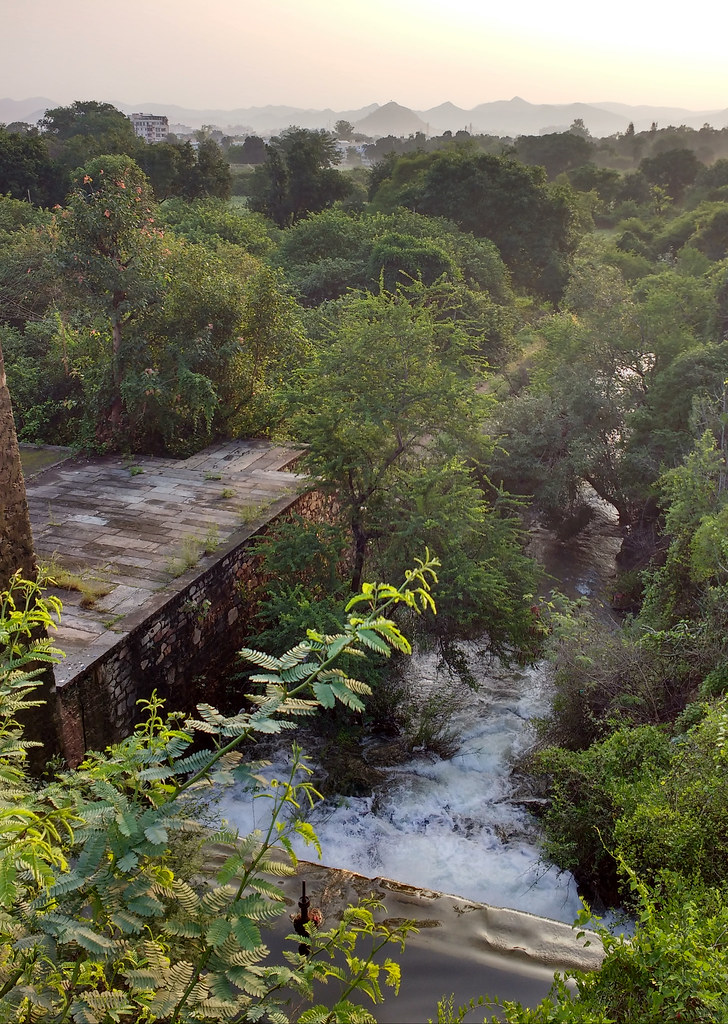
Nearby, a middle aged man with a mesh paddle was busy cleaning the lake—the ‘filth’ mostly comprised of leaves. Standing on the bridge, we soaked in the misty spray of the ‘waterfall’ and watched the calm water of Fateh Sagar spill out into the bushes on the other side.
The tank is overflowing!
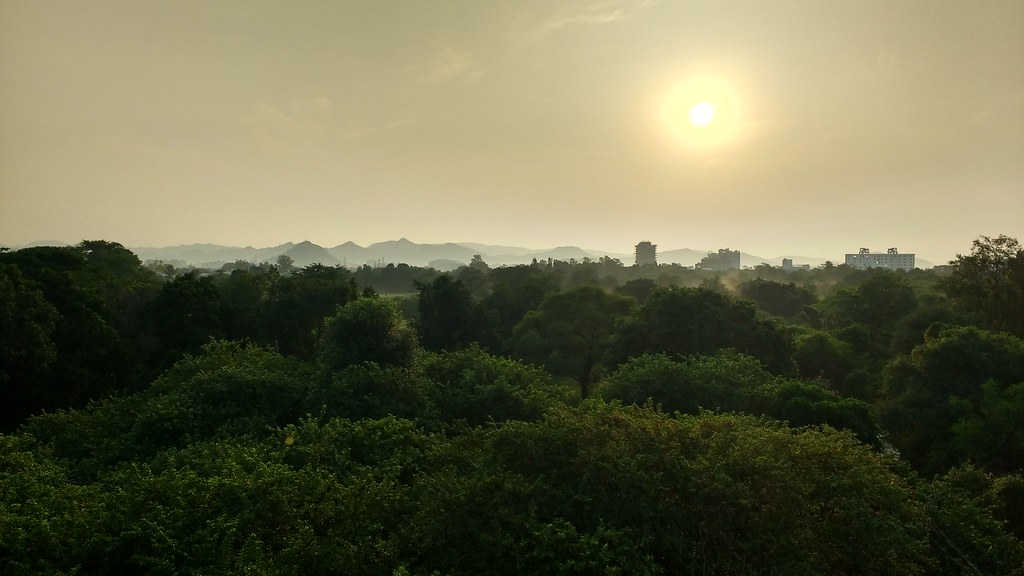
And behind the bushes, we saw our sun—already up, waiting for us. We wondered if this was the viewpoint that we were supposed to have reached an hour earlier. If you happen to visit Fateh Sagar for the sunrise, perhaps you could shed some light on this matter. On the other hand, if, like us, you get caught up along the way admiring pretty much everything and miss the sun rising from behind the hills, here’s our takeaway:
The sunrise isn’t a view. It’s an experience.
Sunrise at Fateh Sagar
In response to the Daily Post’s Weekly Photo Challenge: share with us the structure of something typically overlooked.
Photos taken with Motorola Moto G3. Click / tap on the image to enter my Flickr photostream.
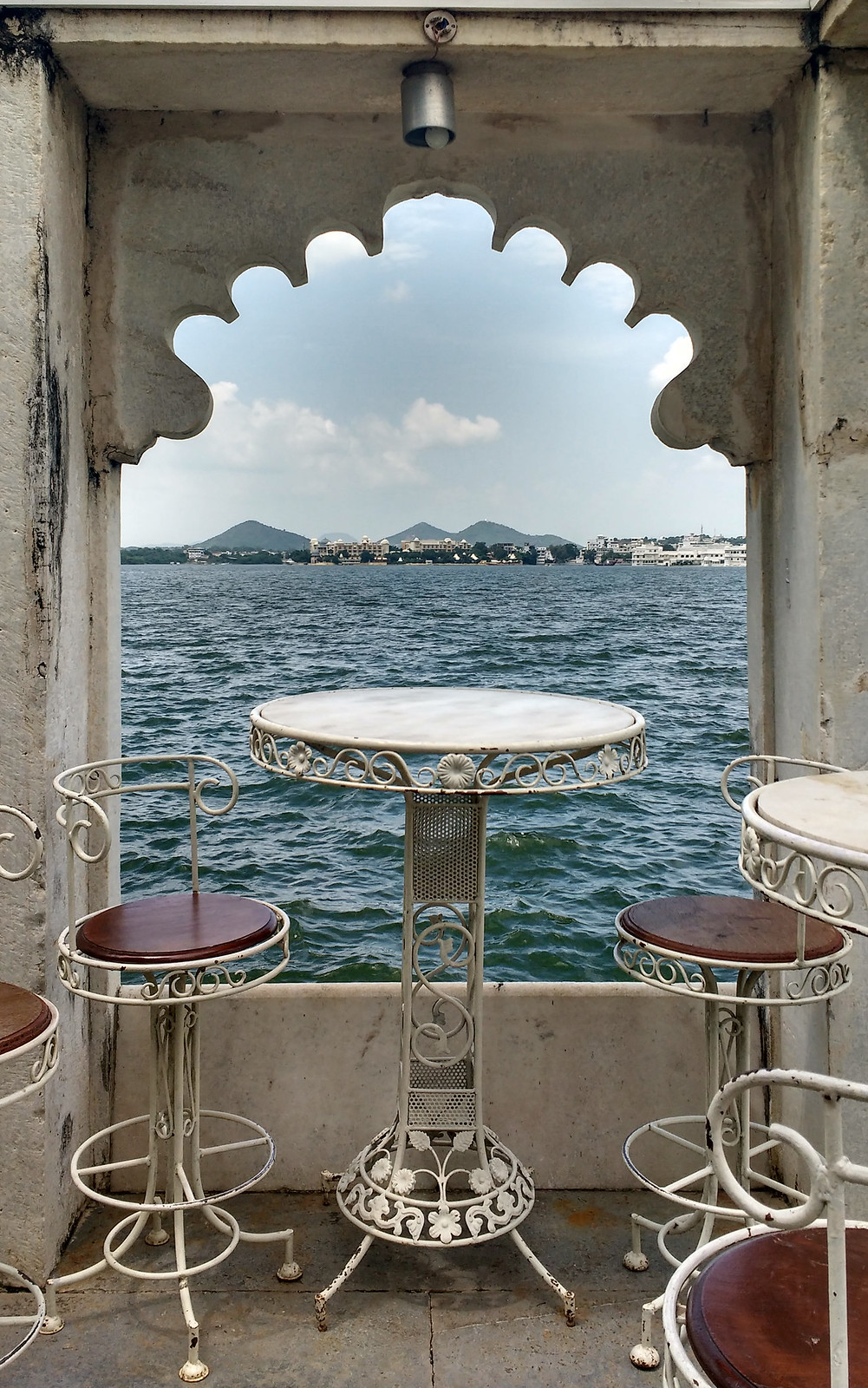
A cool breeze, clouds playing hide and seek with the sun, the sound of waves to one side, and the interiors of a palace on the other, a panoramic view of palaces and havelis and the backdrop of Aravalli hills – perfect, no?
The corner tables at Jag Niwas Island Palace, Udaipur
In response to the Weekly Photo Challenge: What kinds of images and emotions do corners evoke in you?
“Oh, that’s nothing. Just some old ruins,” he replied in a laid back tone, that could only be described as Goan.
The Churches of Old Goa are staple tourist fare. And like diligent tourists, we paid a visit to the most famous of them all – the Basilica of Bom Jesus and the adjoining Se Cathedral. Both sites had ingredients one would expect from a medieval church – massive in size, walls engraved, high ceilings housing intricate chandeliers and a presence that makes you speak in whispers, lest anyone else hears. With the sea of humans, though, the churches were reduced to fancy backgrounds for selfie enthusiasts – even with signboards and staff members explicitly asking people not to take pictures with people in them.
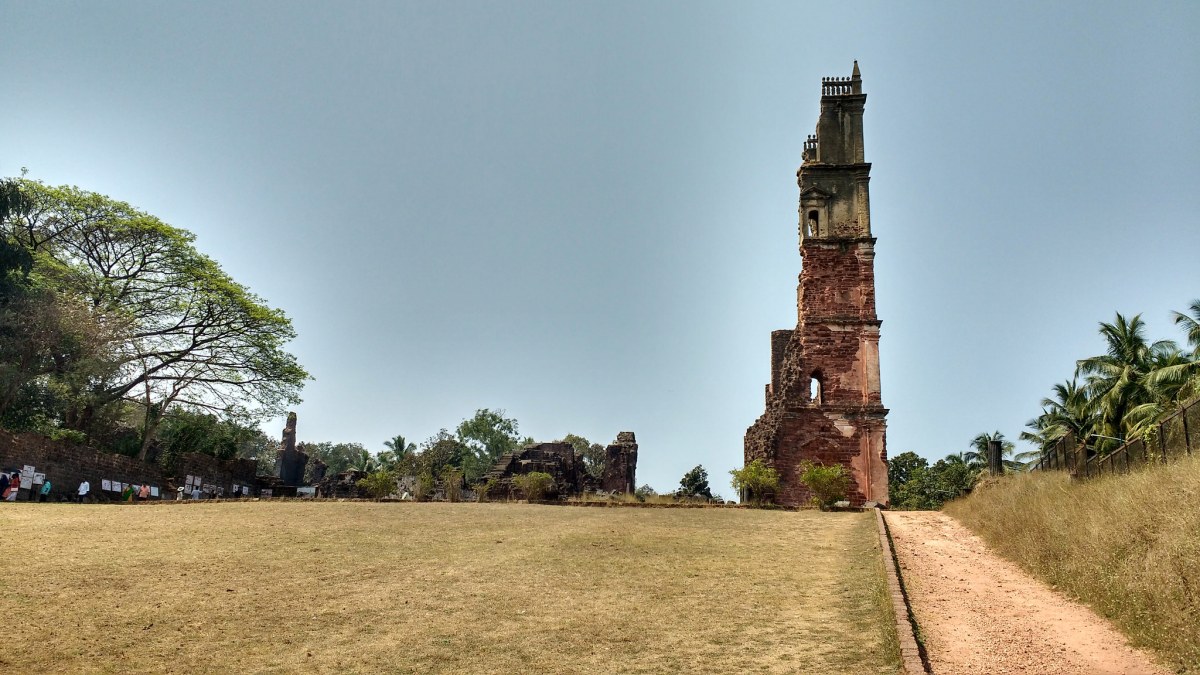
Making our way out of Se Cathedral, I noticed a lean brick tower in the distance.
As we made our way around the streets of Old Goa, the tower became taller, and then hid behind some trees.
The cab driver looked in the rear mirror. “There really is nothing there. Just ruins.”
I looked at my fellow travellers hoping for at least one of them to share my eagerness to visit that lonely tower.
After a few minutes the driver asked, “You want to go there? We can make a short stop.”
As soon as we reached, I jumped out of the car with a new friend. With others waiting, our instructions were clear. Go there, take a few pictures and head back as soon as possible!
Up close, the tower revealed itself to be just a fraction of what it must have been a few centuries ago. There was a large open space in front, and a large hall just behind it. At its fullest, it may have been much grander than the more illustrious buildings we had just visited.
‘Ruins of St. Augustine Complex’ read the signboard on one of the large stone bricks. Built in 1602 and abandoned in 1835, this church collapsed within the next few years. The silence of the space seemed to speak about its neglect and the lost grandeur.
Amid the spectacular ruins, not all seemed gloomy, though. A few pillars along the side of the fence spoke of survival even as the rest of the land stood barren.
I longed to spend more time within the hall behind the tower, but felt contented that I had the opportunity to visit. I grabbed my pictures and hurried back to the cab.
Built on raised ground, this fragment of a tower is visible from as far away as Se Cathedral
Overlooking the fallen pillars
Up close
Standing tall, this pillar attempts to defy the destruction around it
Back home, on digging around the web, I came across an interesting story surrounding the Church. In Hunting for a Georgian queen in Goa Srinath Perur writes about a martyred Queen, and the search for a missing relic that continued into the 21st century.
And a bonus bit of trivia – the eerie song, Gumnaam hai koi was filmed at the ruins.
***
In response to the Daily Post’s Weekly Photo Challenge: what is guaranteed to distract you? What is your “Ooh, shiny!”?





 Musings of an eccentric mind