Earlier today, we visited Kashmere Gate. About a kilometer from the historical site is an old Tibetan refugee settlement. Within the settlement is a Tibetan monastery, and a thriving market, popularly known as the Monastery market. Our main agenda today was to visit this market. Despite the peak rush hour—Sunday afternoon—we managed to explore the shops and lightened our wallets a bit (okay, make that a lot!)
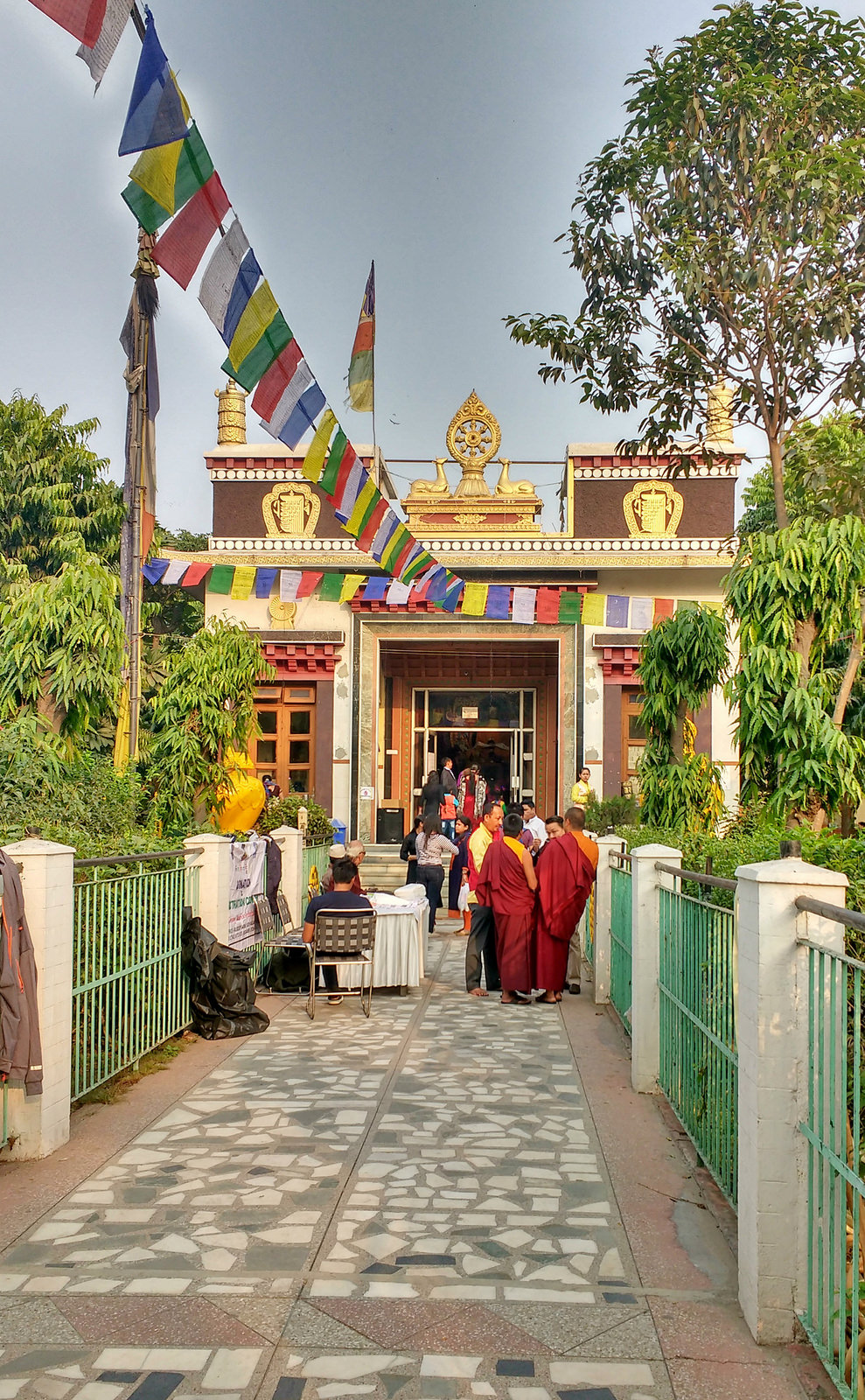
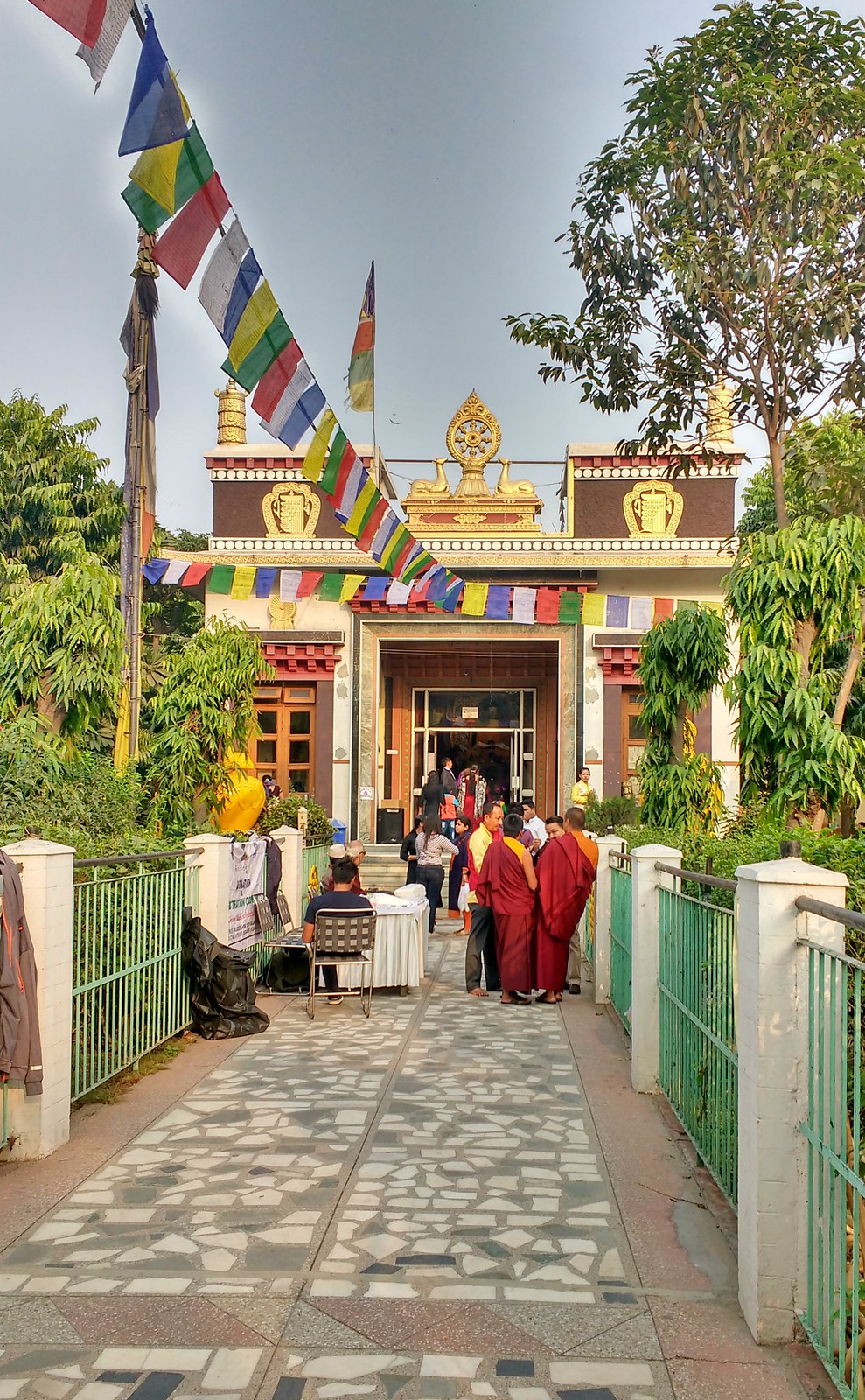
My real aim today, though, was to visit the Monastery. The Tibetan Monastery has been on my wishlist of places to visit for almost two years now. Despite having lived for over two decades in this city, I had no idea of its existence, until early last year, when I asked a Buddhist colleague of mine where she went to pray.
Having come all the way to the market, we made a quick stop at the Monastery. It may not be as large or grand as the ones in the traditionally more popular Buddhist cities, but it was every bit spiritual.
We admired the seated Golden Buddha, and for a change, we took no photos of the interiors. There were many devotees, several of whom were dressed in traditional attire; and we felt it would be insensitive to behave like crazy tourists. We turned to leave, when a middle aged gentleman stopped us. “Have you taken the prasad (sacred offering)?” he asked us. And then quickly went inside and brought our two cloth bags and gave them to us.
We asked if it was a special day. Indeed, it was. It was the third, and last day of an annual fast, and an auspicious day, that we had happened to visit. Lucky coincidence, or divine intervention? I’ll leave that question alone; the world works in mysterious ways.
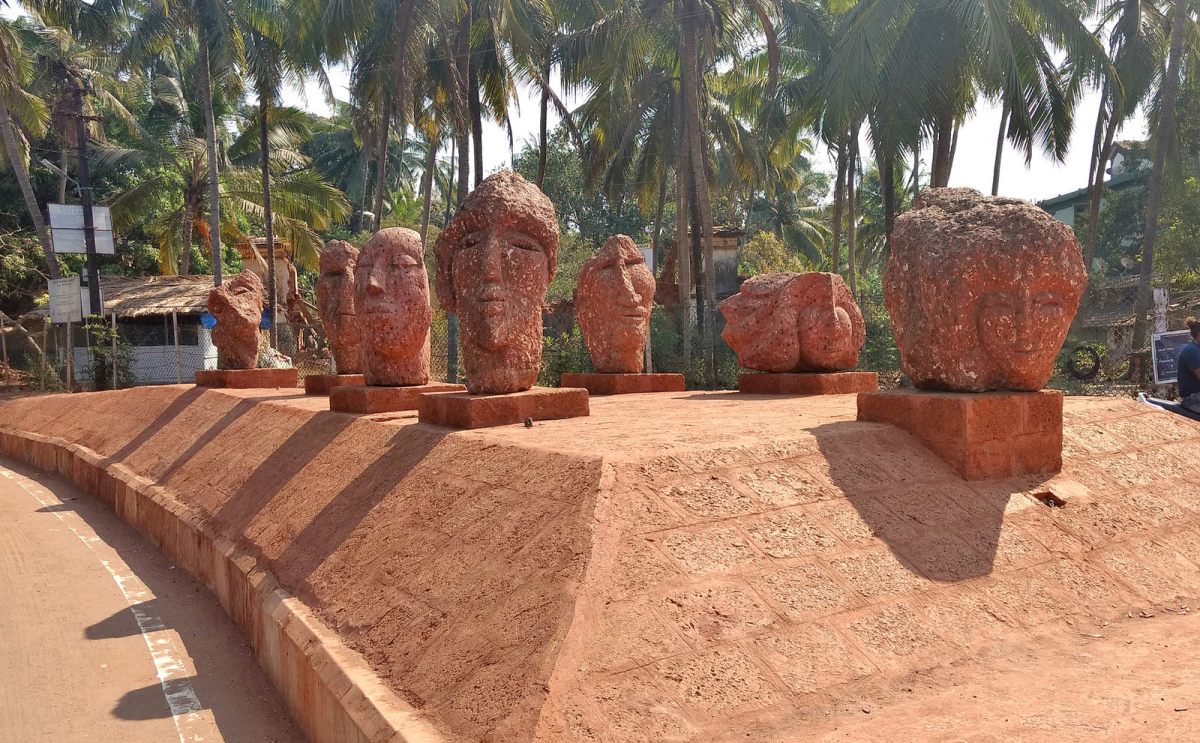
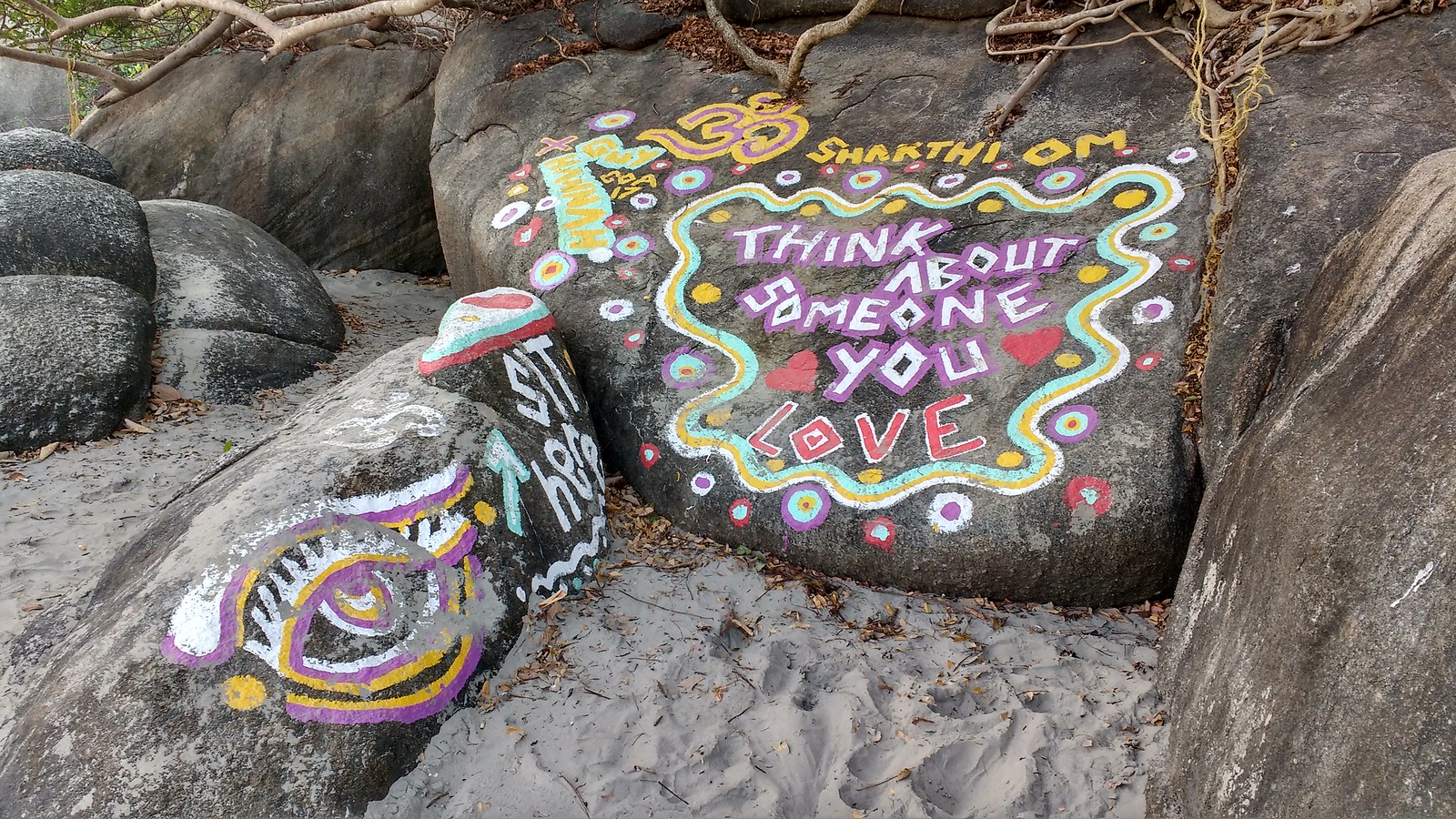
Perhaps it was the influence of Mario, or the general laid back ‘hippie’ culture that is now synonymous with Goa, that encouraged art to spill on to its streets — from graffiti on the rocks, to sculptures at street crossings.
“I don’t think we’ll be able to catch the dance show. They’ll probably cancel it with this much of rain.” Sitting on a bench around a tree in the courtyard of the City Palace, two umbrellas and the narrow roof above us couldn’t prevent us from getting wet.
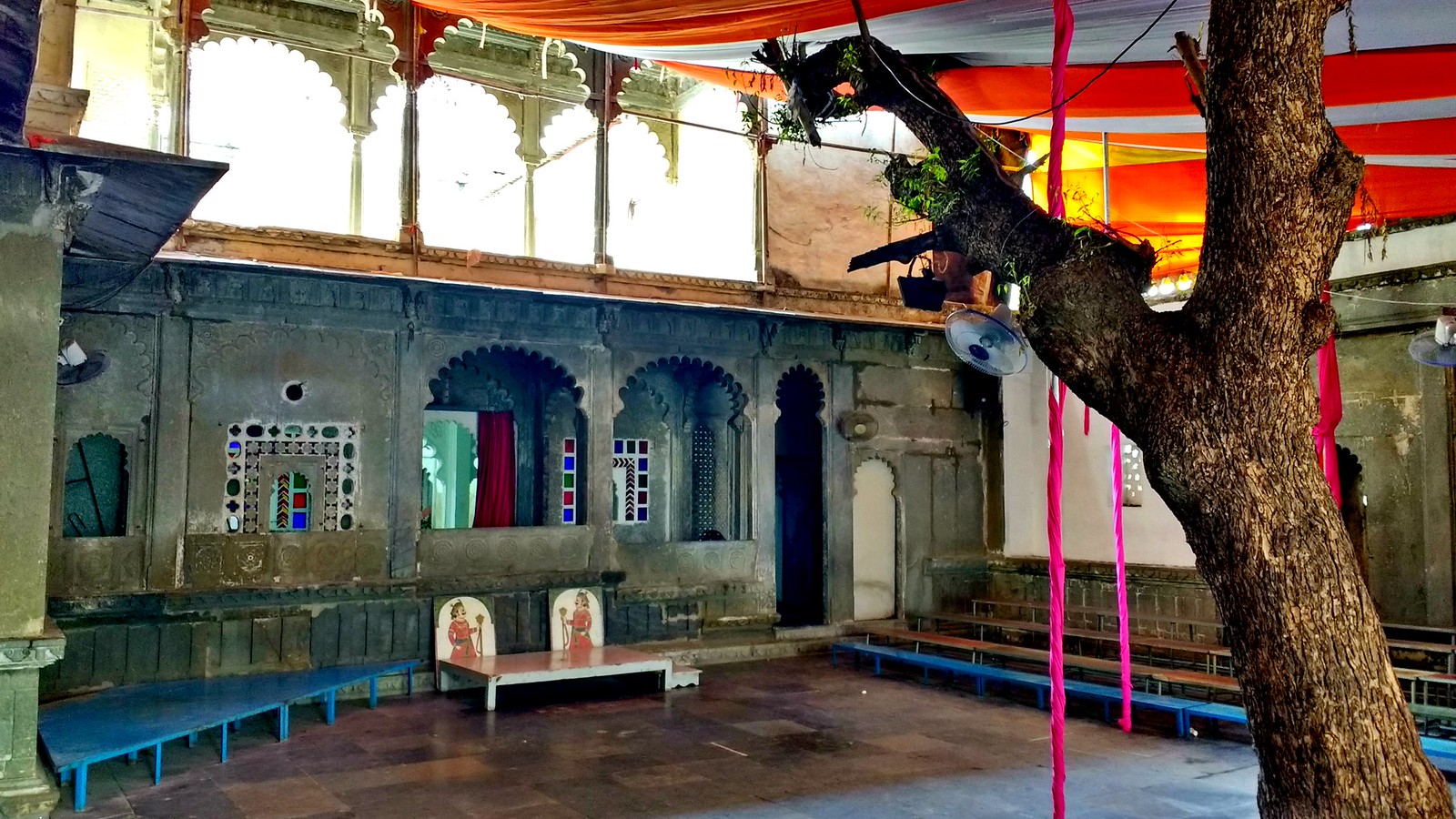
Earlier that day we had visited Bagore ki haveli and had seen the venue of the cultural program conducted every evening—an openair theatre assembled in the courtyard of the heritage building with a shamiana for a roof.
The Stage
Eventually, the clouds decided to pause the shower. We left the Palace and walked towards Gangaur Ghat. We stopped for coffee and a cinnamon roll at one of the cafes to recharge our (and my phone’s) batteries and then walked over to the haveli.
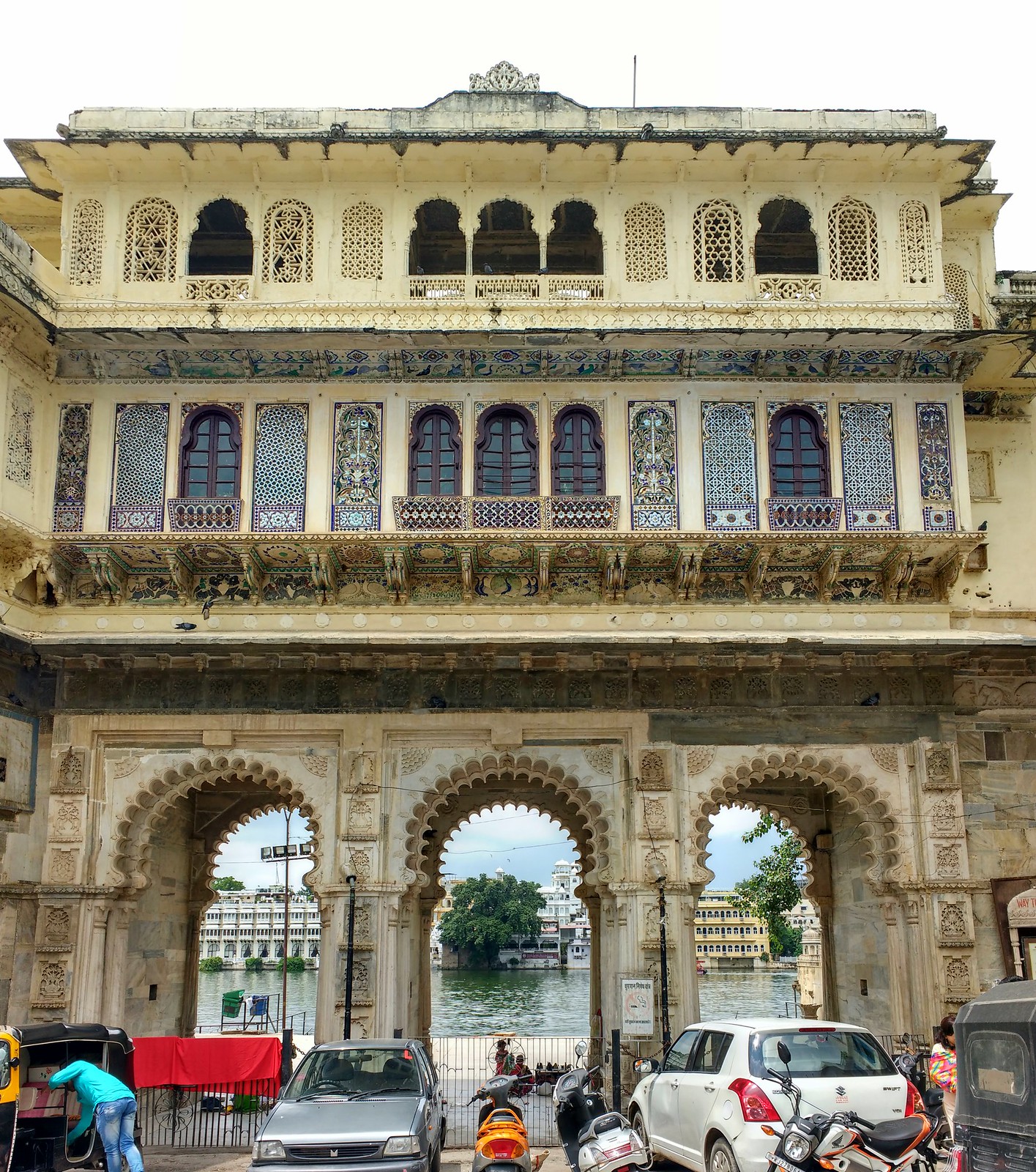
Tripolia—three tiered gate of Bagore ki haveli. Just beyond the gate is Gangaur Ghat
We looked at the ominous clouds and asked the guard about the program. “Oh! Don’t worry about the rain! We have all the provisions here. The show is definitely on.”
We bought our tickets as soon as the counter opened and then proceeded towards the theatre. The key to getting a good seat is being the first to enter. We weren’t the first, so the best we could manage was the second row at the mattresses laid out in front of the stage, barely a few feet from the stage.
7 pm. The musicians began performing the rather cliched Rajasthani folk song ‘Kesariya balam’. Soon after, the emcee walked out and welcomed the audience. The stage was ready for some very colourful peformances. First up, Chari dance.
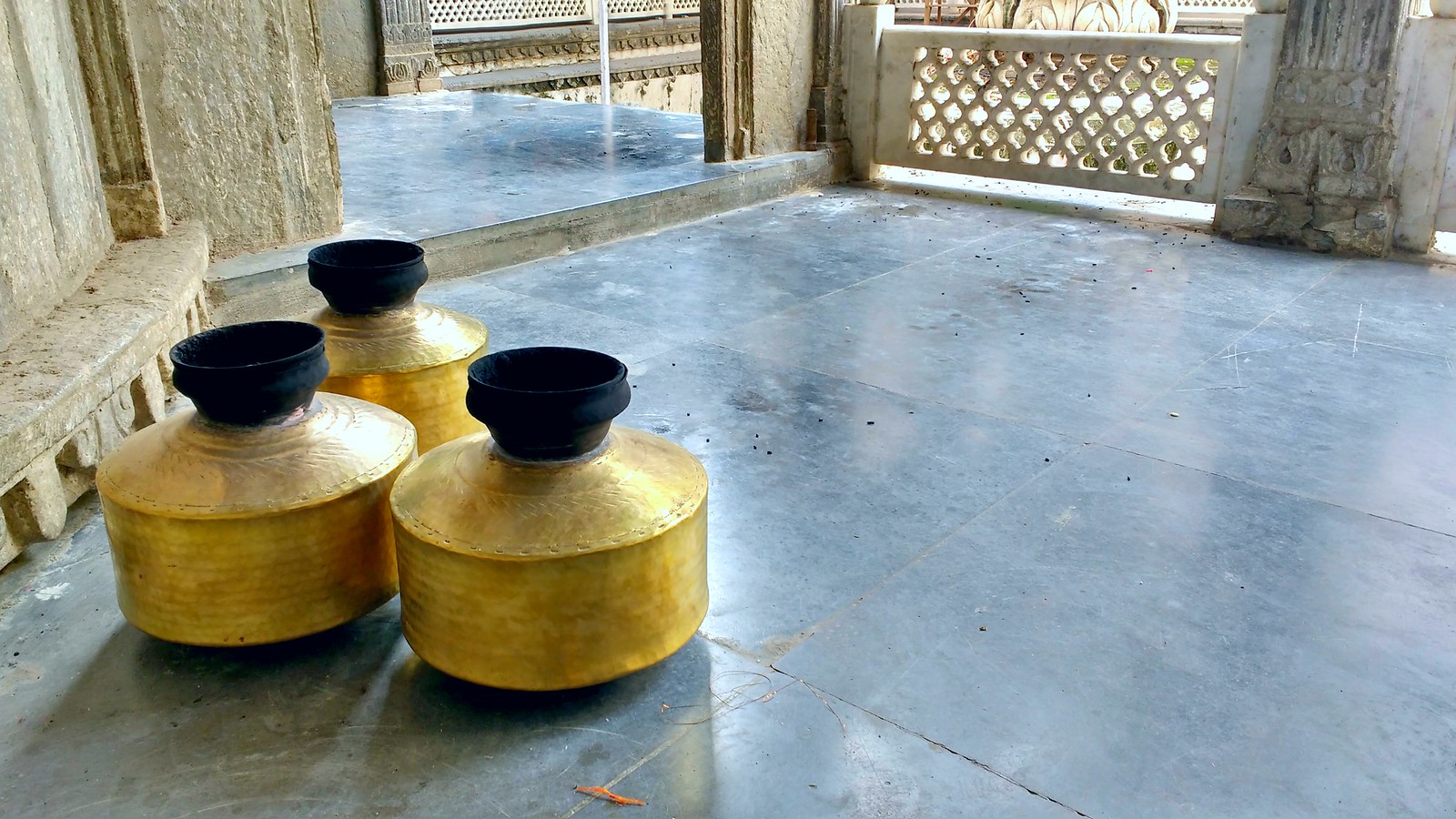
Chari dance is a folk dance performed traditionally by ladies from the Gujjar community of Rajasthan. Living in the desert, ladies often travelled for miles to collect water in a ‘chari’. It is the celebration of this ritual of collecting water that is depicted in this folk dance.
The ‘Chari’ waiting to be lit for the programme
Just as the emcee finished explaining the significance of the dance, the show began—on the stage in front of us, and from the heavens above.
In walked the ladies, dressed in colourful traditional attire, balancing pots of fire on their heads. Down came the shower of raindrops, applauding their entrance. The shamiana held up rather well.
The ladies clapped and swayed, moved around in circles and spun more times than my head could count. Out they walked to thunderous applause, drowned under the sound of the downpour.
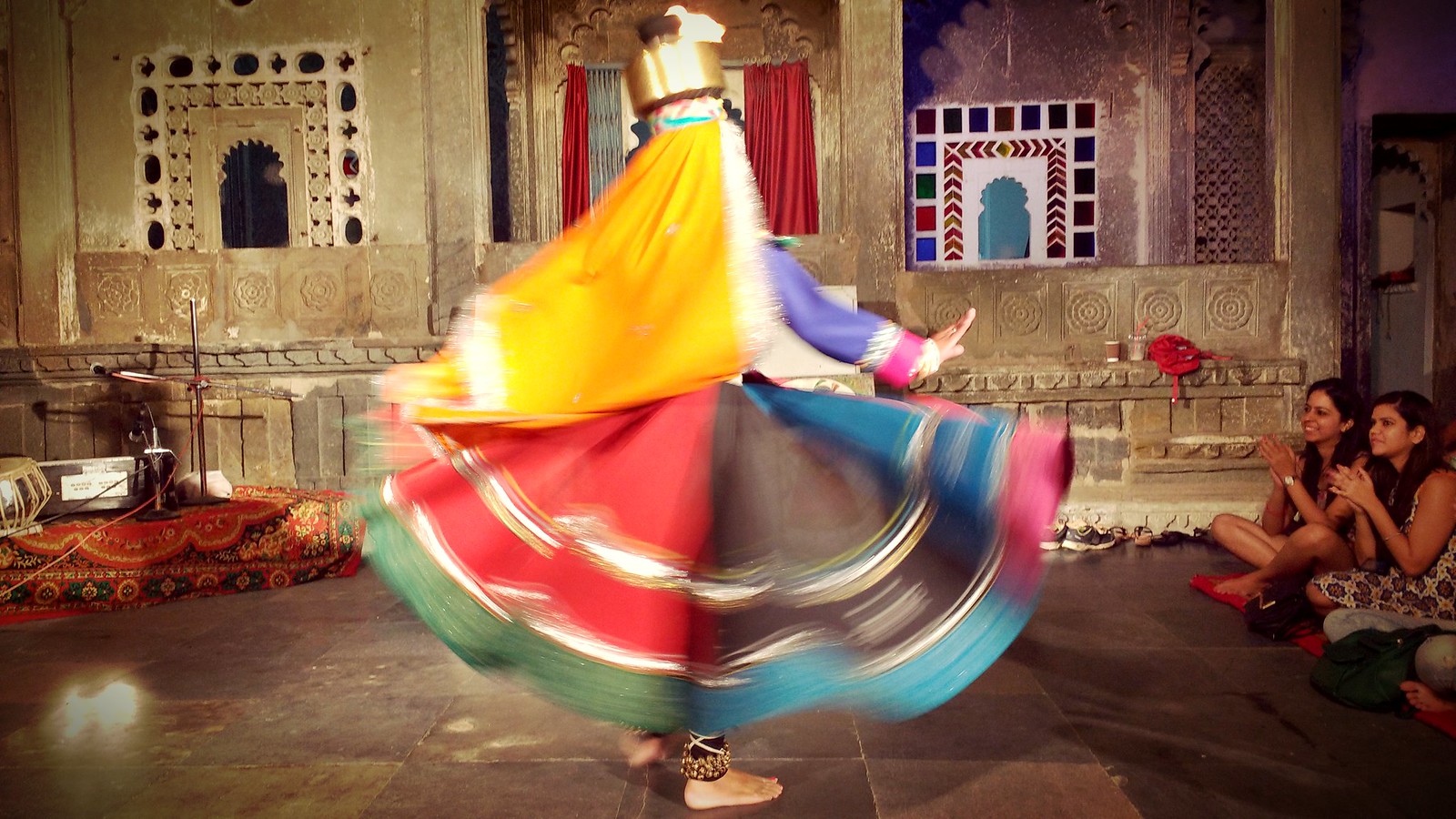
Spinning with a pot of fire on her head!
There were more dances, followed by the puppet show. Traditionally, it is the puppets who take centre stage, and the puppeteer stays behind a screen. But at this show, the puppeteer takes centre stage, revealing his craft.
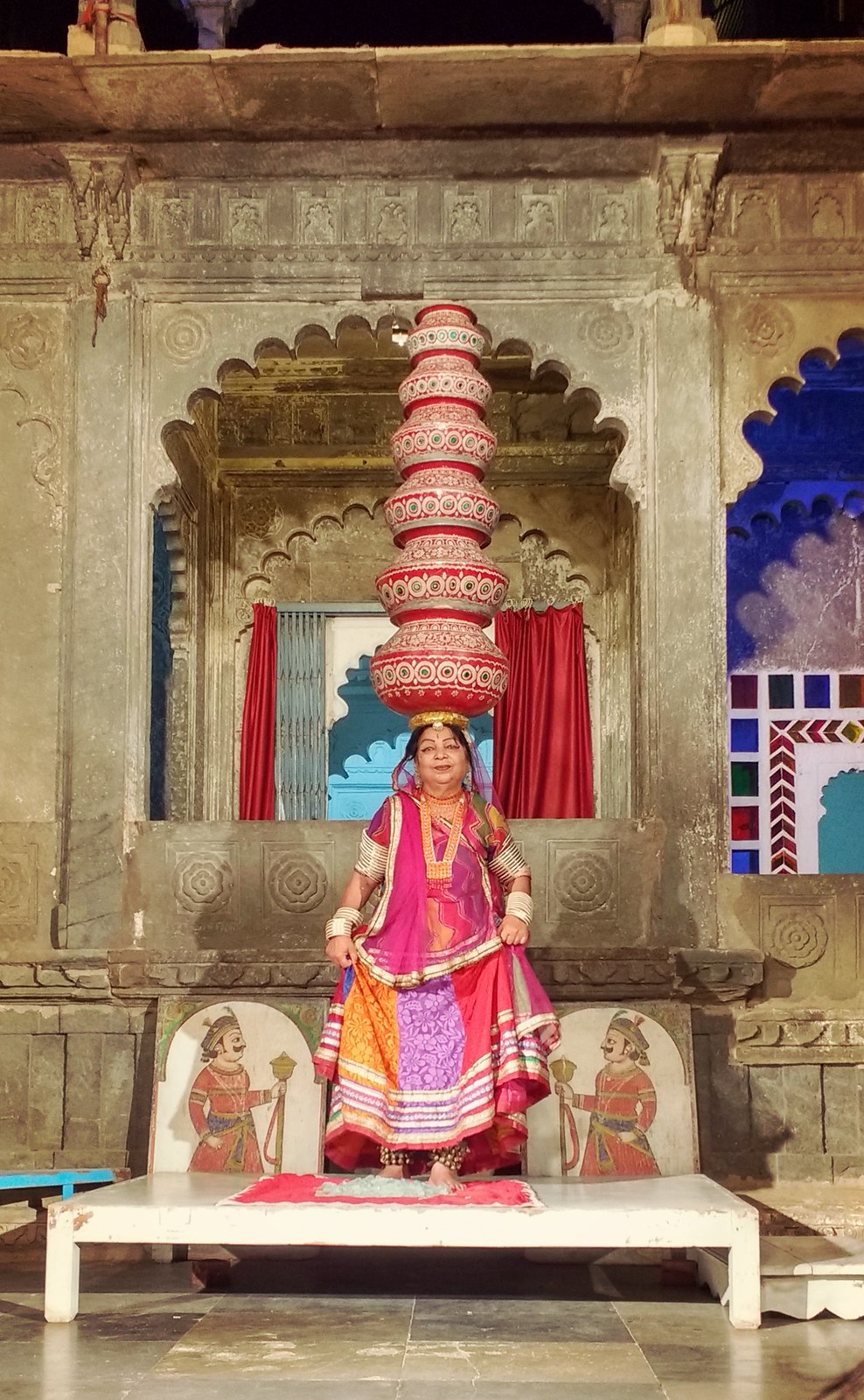
The most thrilling performance came, quite fittingly at the end. A lady entered, balancing two pots on her head. Dancing gracefully, she made her way to the table kept at the back of the stage. She placed her hand on the raised floor behind the table, and then placed her palm on her forehead—a salutation to the stage.
She climbed up the table, still balancing the pots. And sat down. She bent forward, and picked up a kerchief placed on the table, with her lips.
The crowd applauded.
She climbed down, an assistant came and placed more pots on her head. In the meanwhile, another assistant unrolled a cloth package on the table. Out came shards of glass. She went back to the stage. She made the saluting gesture, and climbed above the table again.
We may have been seated on the floor, but we felt edgy. More than once my hands clutched my face. If the pots on the head and the shards of glass were not enough, the shamiana overhead was threatening to give way under the weight of the rain. A few drops of water were beginning to trickle down.
We all gasped in silence. I was too nervous to take any more pictures, my palms pressed against each other, in front of my face, praying with the dancer, as she walked on the table and began thumping her feet on the glass.
We all collectively heaved a sigh of relief and applauded for the marvelous performance.
The assistant climbed up a chair, and we assumed it was to help her unload. But no. There were more pots coming.
Eight! The crowd cheered, and the applause didn’t stop. Nine! We all went crazy.
And then the musicians began singing that classic song, “Dama dum mast kalandar”. Ten! The crowd went wild. We were certain the cheers of the crowd could be heard a few blocks away—we knew because we had heard the loud cheers of the audience the day before!
As the emcee walked out to wrap up the show, the crowd still applauding the performance, he announced something even more bewildering. The lady who had just captured our imagination was a ripe seventy years old!
If you visit Udaipur, be sure to catch the cultural show, and please buy the tickets for the camera. Most of the arts on display are on the verge of extinction, and the proceeds of the tickets are the only way these arts can be sustained.
Mylapore is to Chennai, as Chandini Chowk is to Delhi. One of the oldest residential areas of Chennai, Mylapore is home to a colourful bazaar as well as a number of temples. Last year, we decided to explore this area on foot.
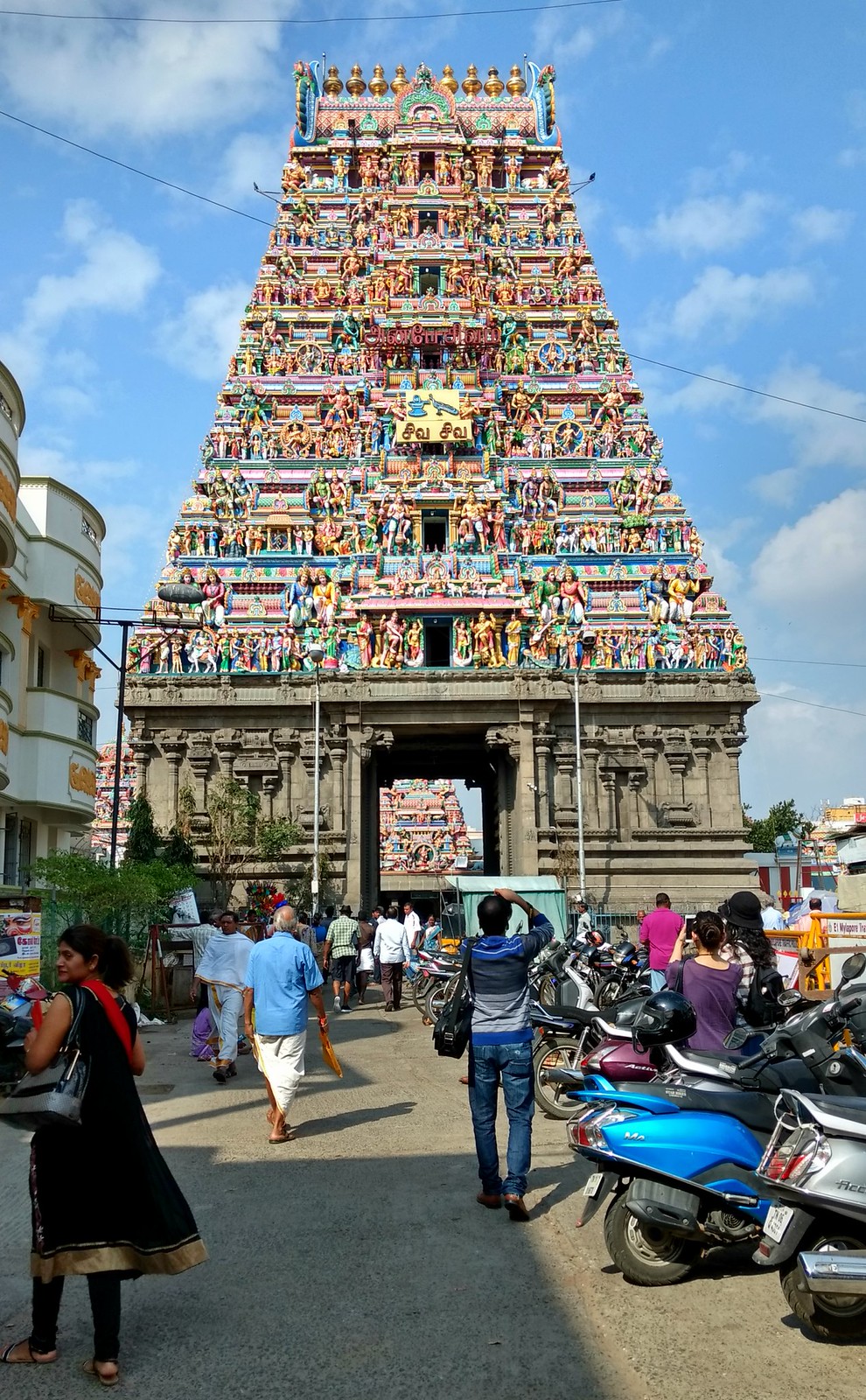
We began our journey at the Kapaleeshwarar Kovil.
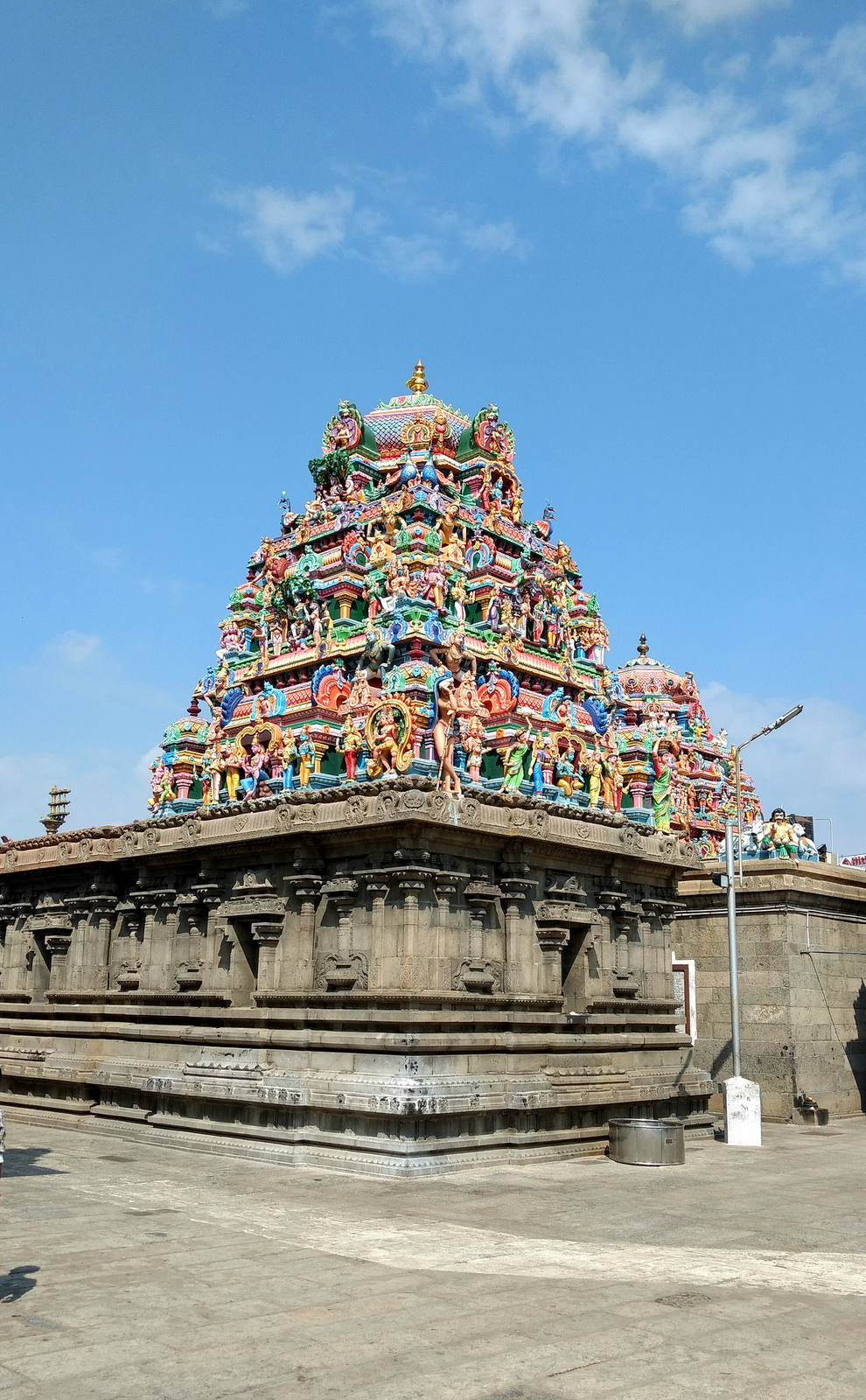
Of the numerous beautiful temples of Tamil Nadu, the Kapaleeshwarar temple in Mylapore, Chennai is one of my favourites. The detailed sculptures on the gopurams, the elaborate kolams on the floor, and the peaceful ambience of the temple always leave me spellbound.
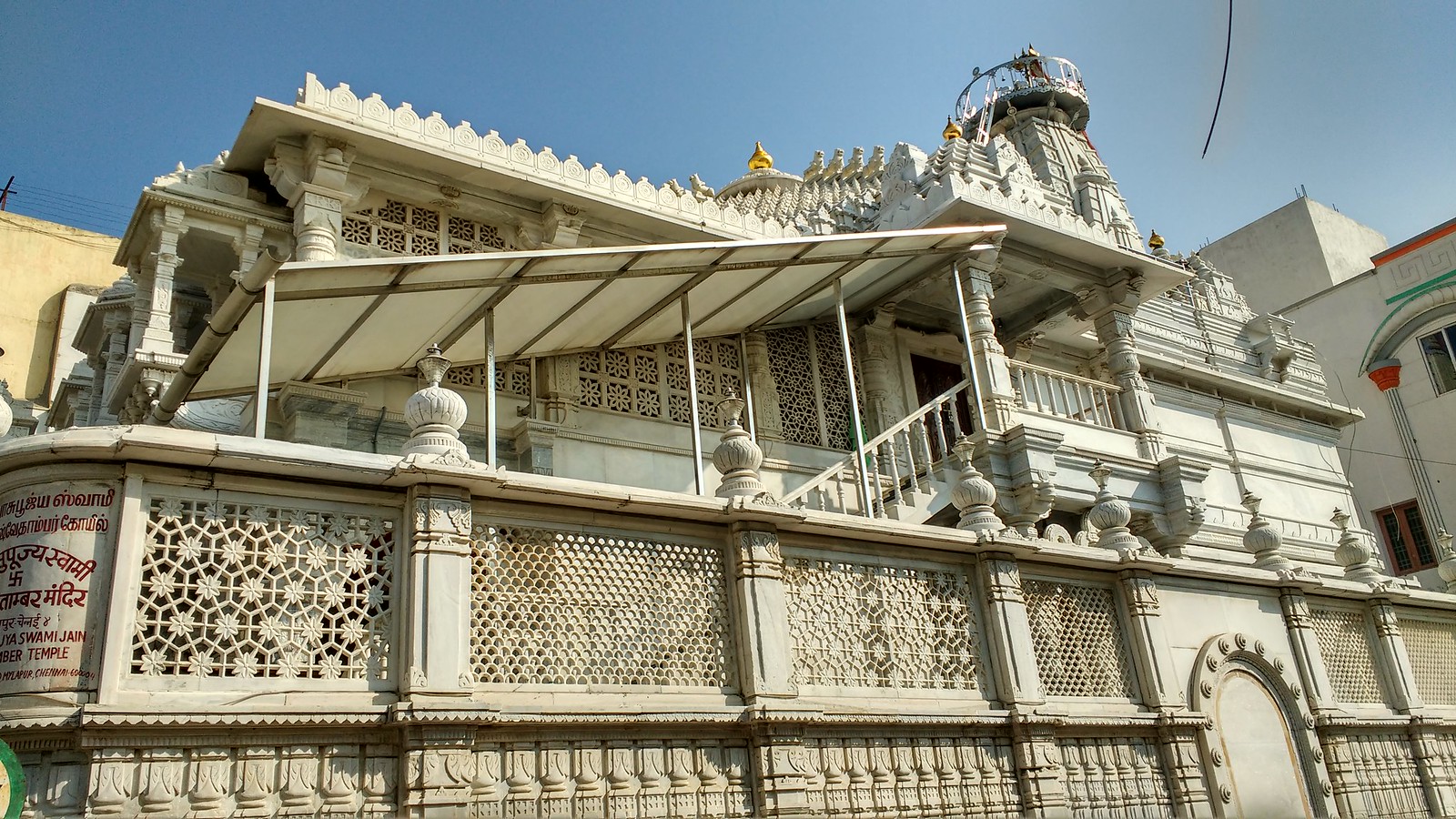
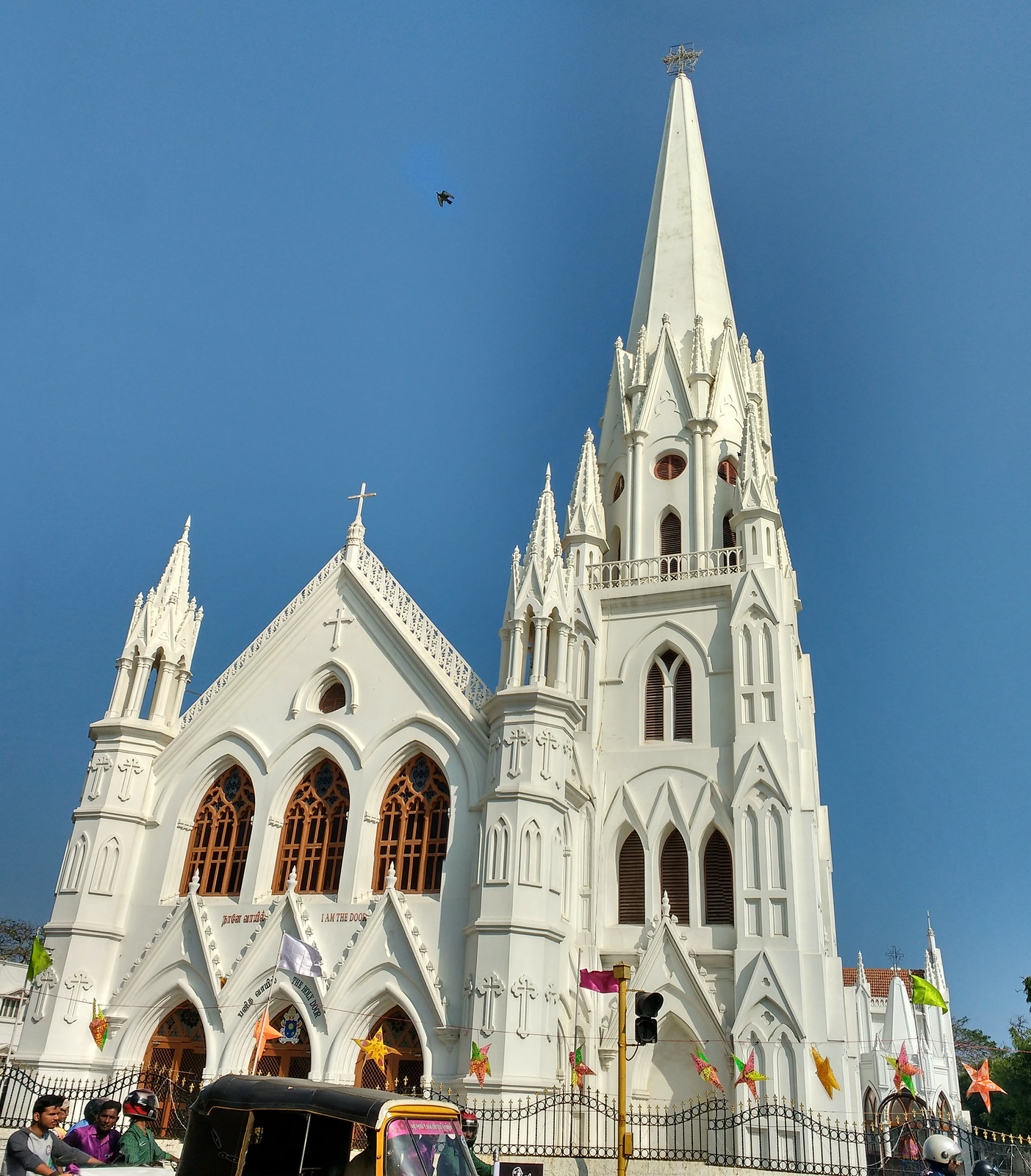
We then walked towards Santhome Basilica. On the way, we saw a beautiful Jain temple.
The temple was closed, so we continued walking.
Being Christmas time, the Church was decorated with colourful linen and stars.
San Thome Basilica was built in the 16th century by Portuguese explorers, after demolishing the original Kapaleeshwarar Temple which stood on the grounds.
There is a small museum next to the Church which has architectural remains from older constructions, including some distinctly Dravidian motifs. Strangely, the plaques on the exhibit attribute it to the Church, even when the stone sculpture is clearly distinct from the rest of building materials on display.
Our next stop was the Marina Beach Lighthouse.
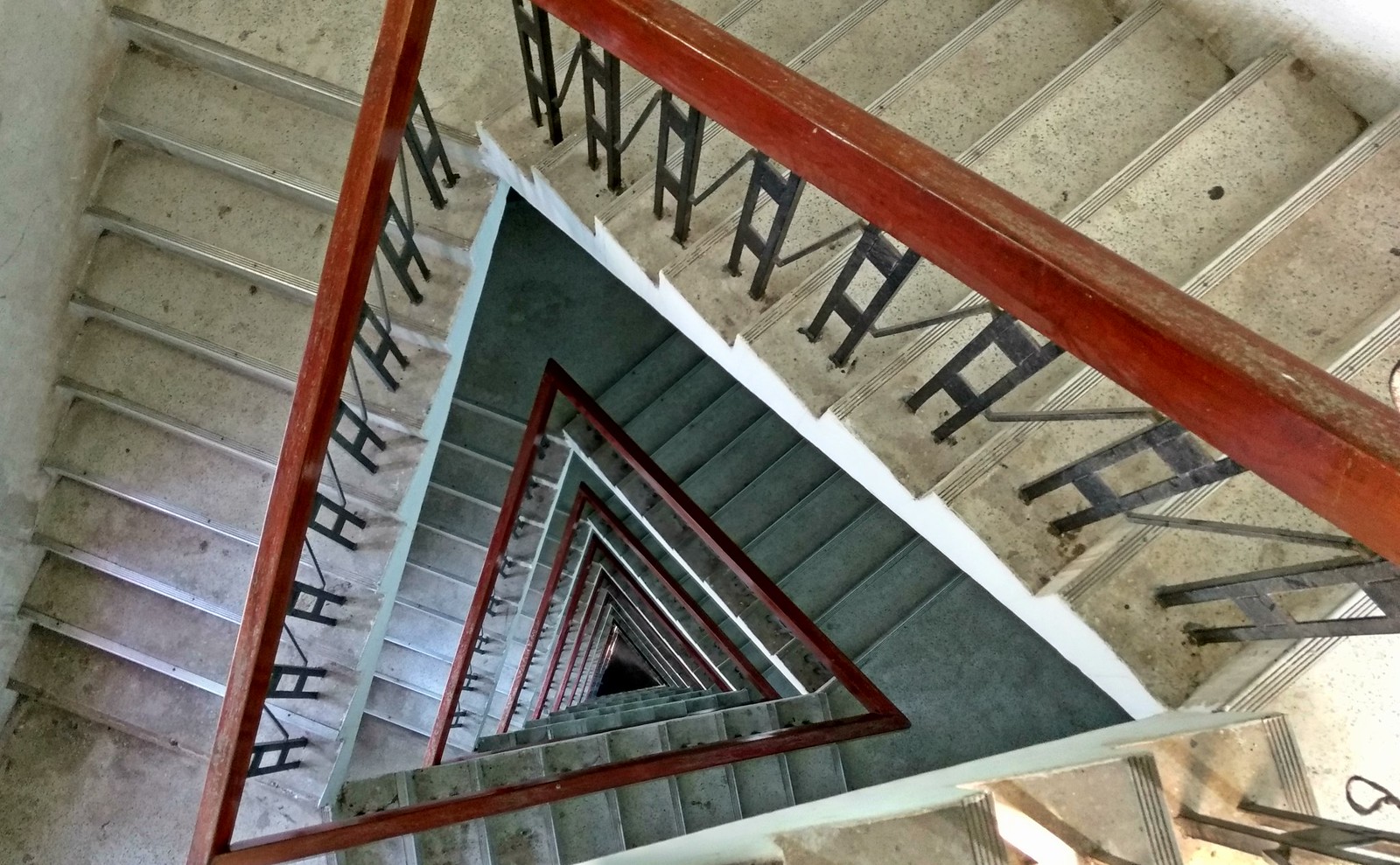
No, we didn’t have to climb all the way up. But it sure was interesting to look down the flight of stairs!
The viewing area at the top of the lighthouse is quite narrow, and it was quite crowded. Nevertheless, the view was amazing!
With the sweeping panoramic views of the beach done, we decided to walk towards the sea.
Sadly, the state of this world-famous beach was not as beautiful as its surroundings. Nearer the sea, the beach looked more like a dump yard than a space to relax in. The only solace, for us, was the sounds of the sea – the waves caressing the sand and filth with equal warmth. Humanity may attempt to seek redemption and forgiveness through spiritual and religious pursuits, but isn’t it ironical how that concept of cleanliness, that is the holiest of them all, is still some distance away?*
Our route map:
* I don’t mean to pick on Chennai. In fact, it is a relatively cleaner city, as compared to many of its northern counterparts (especially the temples).
This is post #14 in this year’s NaBloPoMo, or as Ra calls it Nano Poblano
NaBloPoMo = National Blog Posting Month = Thirty straight days of blogging
It is not the beauty of a building you should look at; its the construction of the foundation that will stand the test of time.
–David Allan Coe
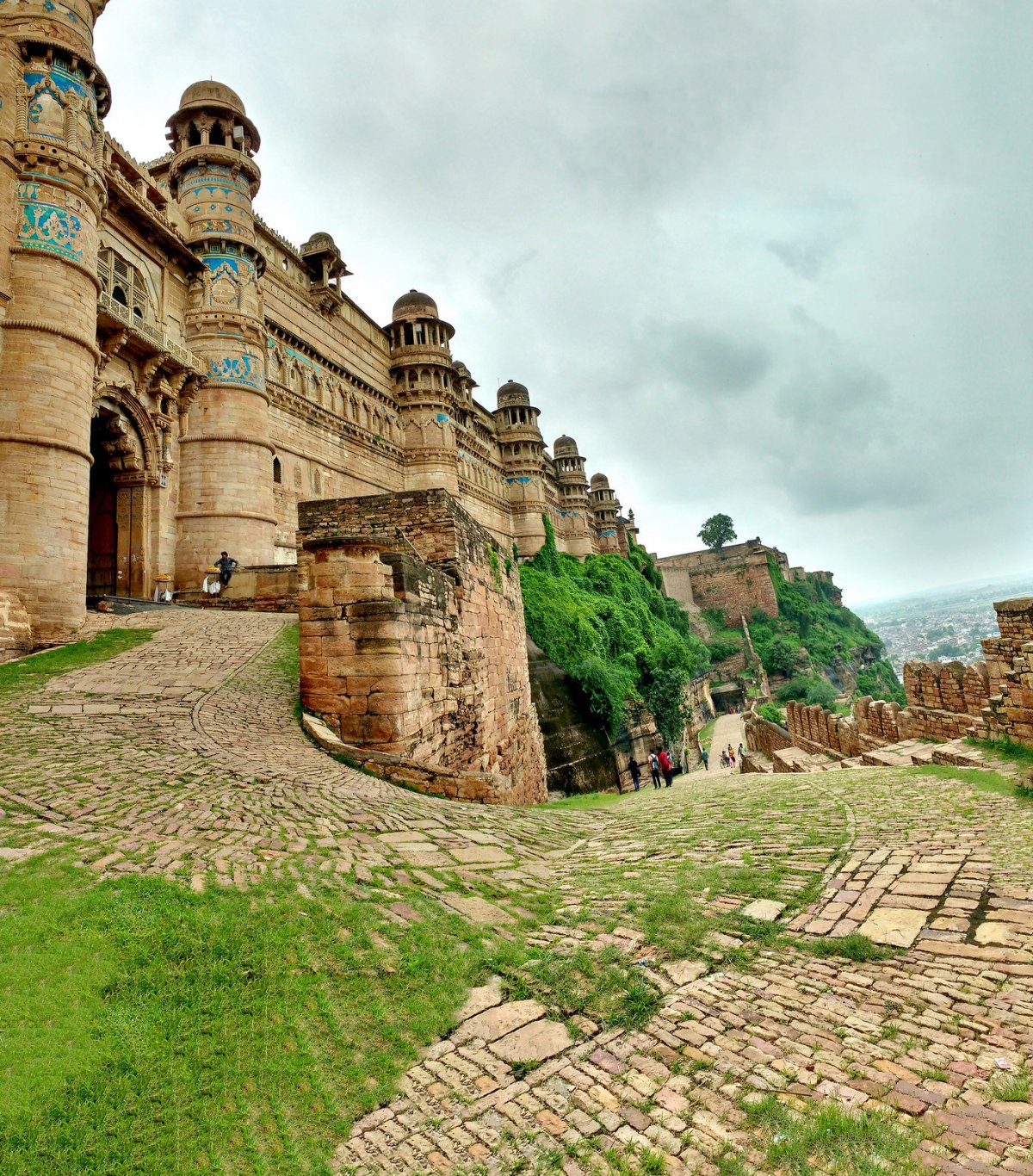
The Gwalior Fort, constructed atop a hill, is a mammoth structure. Legends say its construction began in the 3rd Century, while historical accounts put it anywhere between the 8th and 14th Century. This Fort has seen numerous rulers and severe onslaughts across the centuries and withstood all that has been thrown at it.
As with many of the places we have visited, it is extremely difficult to paint a true picture of the scale of the structure. I could write about the long trek to the top, and the sweeping views of the city, but the closest that I can get to explaining it, is to point to the size of the people in this (incomplete) picture below.
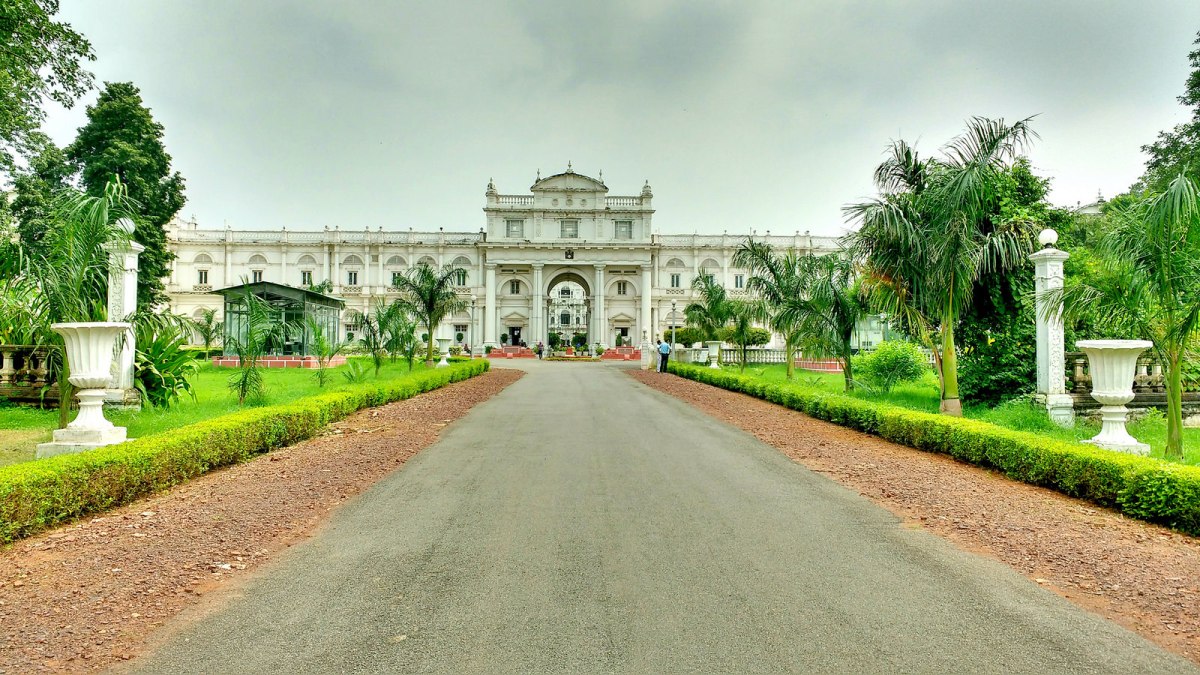
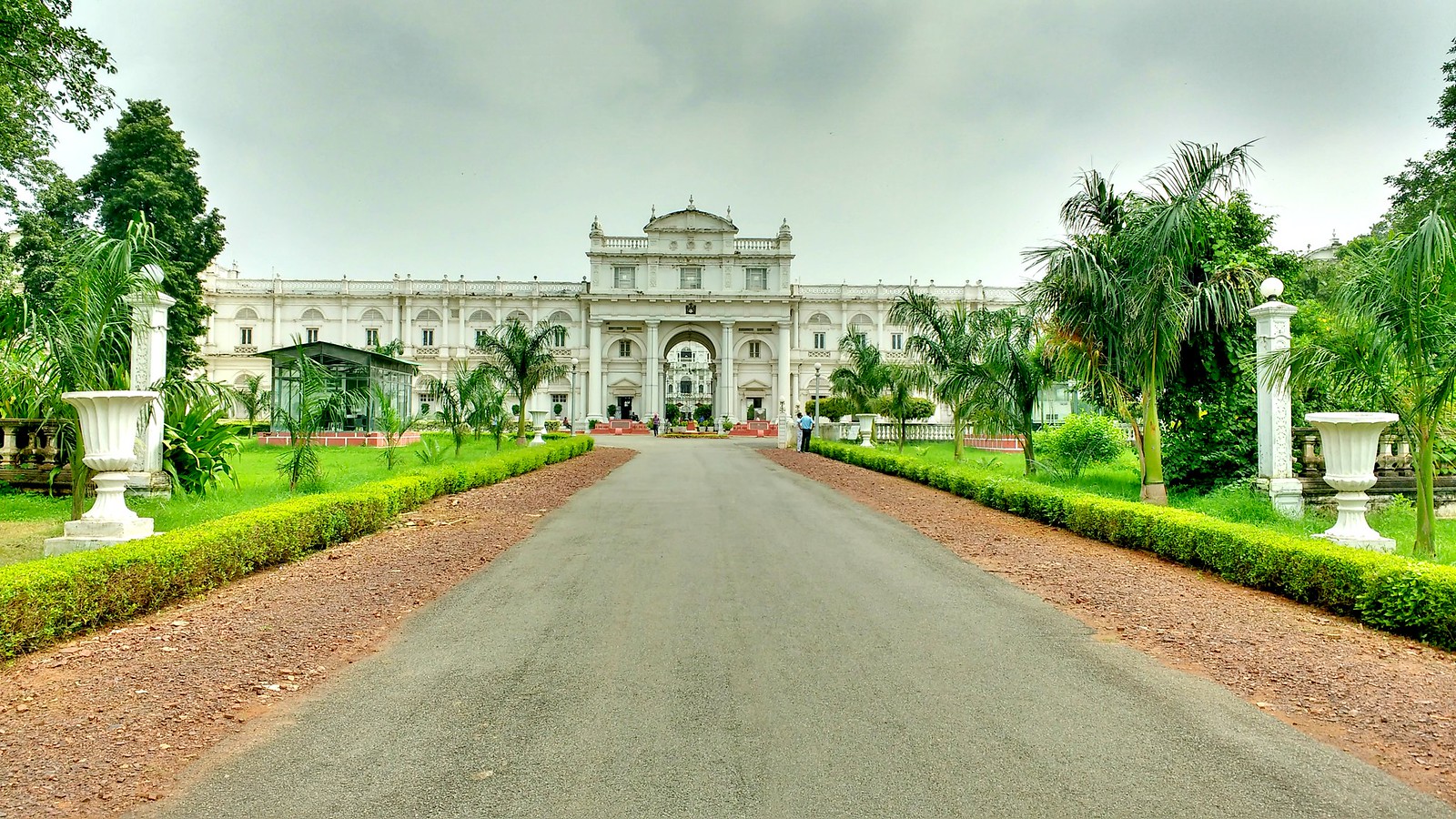
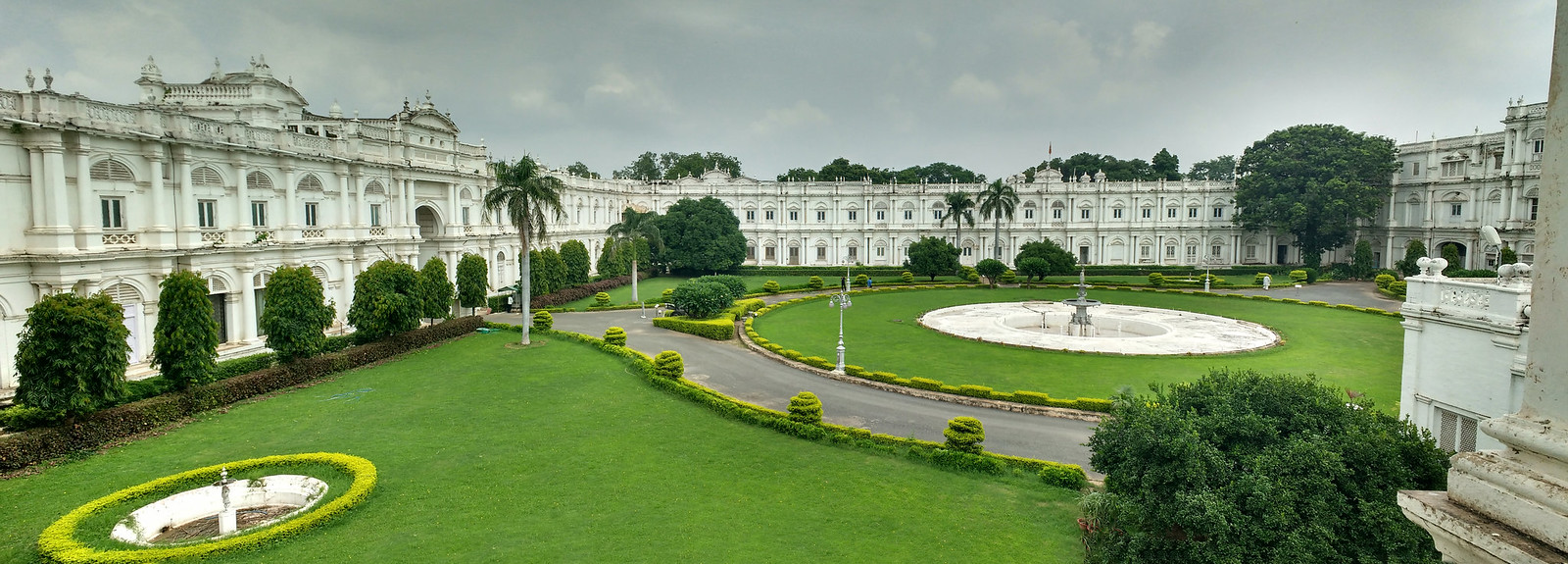
The Jai Vilas Palace in Gwalior combines three European architectural styles—the first storey is Tuscan, the second Italian-Doric and the third Corinthian.
There is an eclectic collection of items housed inside the museum, which can be visited by the public. One section still serves as the residence of the heirs of this Palace.
We weren’t allowed to carry bags inside (there is a provision of a locker), and strangely, we weren’t allowed to carry umbrellas inside either. While the museum itself is entirely indoor, to exit the Palace, one must pass through the central lawn. As luck would have it, it began pouring just before we were about to complete our tour.
If you plan to visit this Palace in Gwalior, make sure you have sufficient time—we spent over two hours (excluding the rain delay), as there is much to see. And if you are short on time, pace yourself to keep the maximum time for the last section—the opulent Durbar Hall. We had read about the extravagant decor and seen pictures of the massive chandeliers. But it was only when we saw the hall that the reality of its grandeur hit us.
In our limited exposure to exotic places, some places leave a lasting impression, some of romance, others of awe. The Jai Vilas Palace, even with all its magnificence, left a somewhat cold and distant feeling. It’s hard to tell why – perhaps it’s the excessive indulgences; or the exclusively European architecture; or perhaps it was the weather; or just maybe, the contrast between the lifestyles of the common people, and that of their representatives, that is so blatantly visible to the casual observer.
Jai Vilas Palace, house of the Scindias. The imposing structure and all its extravagance is visible right from the entrance.
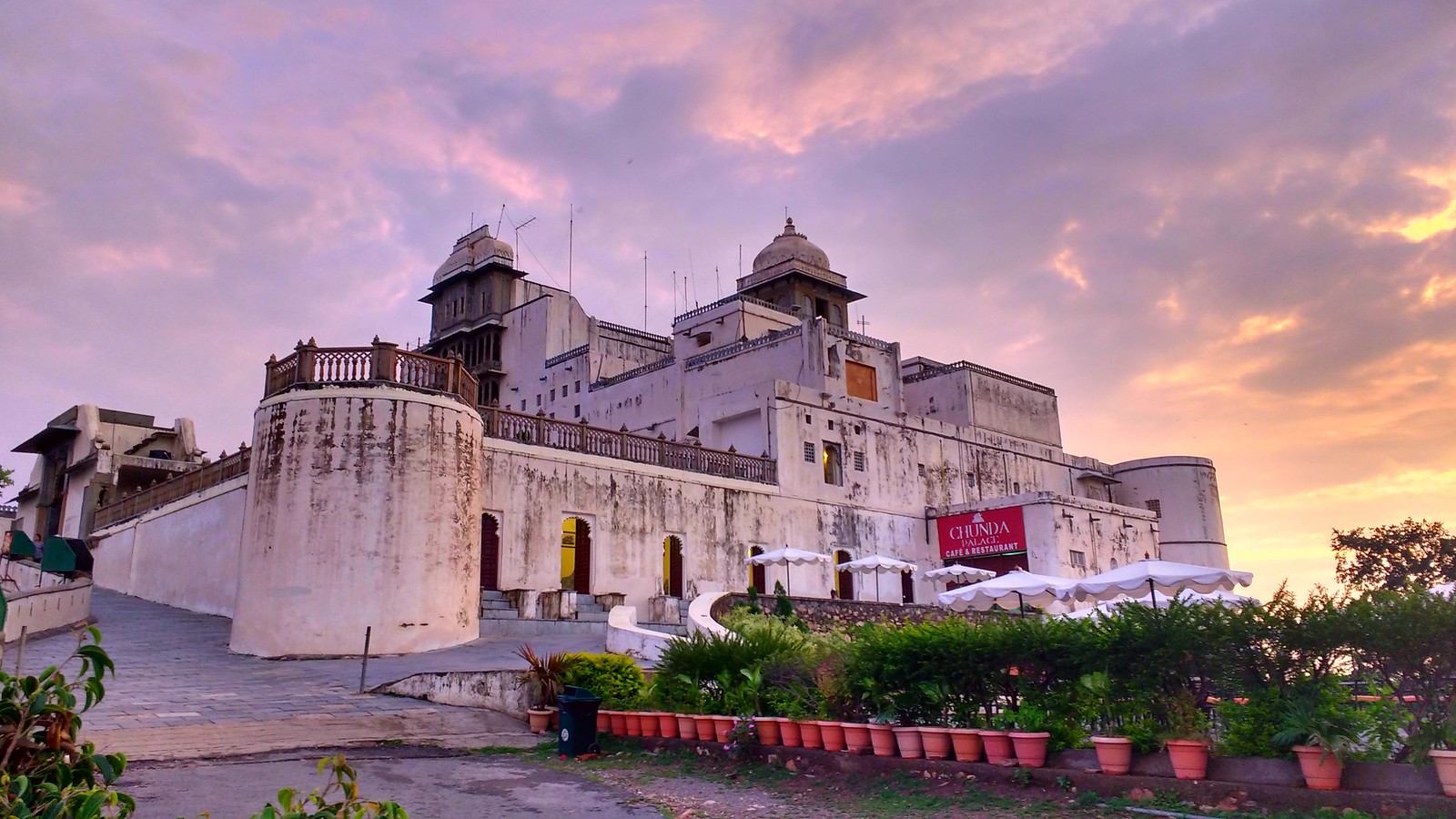
Researching for our trip to Udaipur, we had heard and read about the amazing views of the Aravalli hills from the Monsoon Palace, especially at sunset. The Monsoon Palace was constructed specifically for the purposes of observing the monsoon clouds—and what better time to visit the Palace than in the monsoon!
It had poured heavily the day we reached Udaipur, and it appeared that the heavens above would deny us our visit to this Palace. Amazingly enough, the rain stopped in the early evening, and we headed out to catch the setting sun under a rather overcast sky.
From what we had read in the travel reviews, it was a long trek uphill, and not much upstairs, apart from a neglected building; that one must carry food and water, as there were no food stalls; and keep them safe as there were lots of monkeys who would snatch away your food. And so we went, fully prepared with snacks and water, tucked in a canvas bag, secured safely with the modern miracle called a zip.
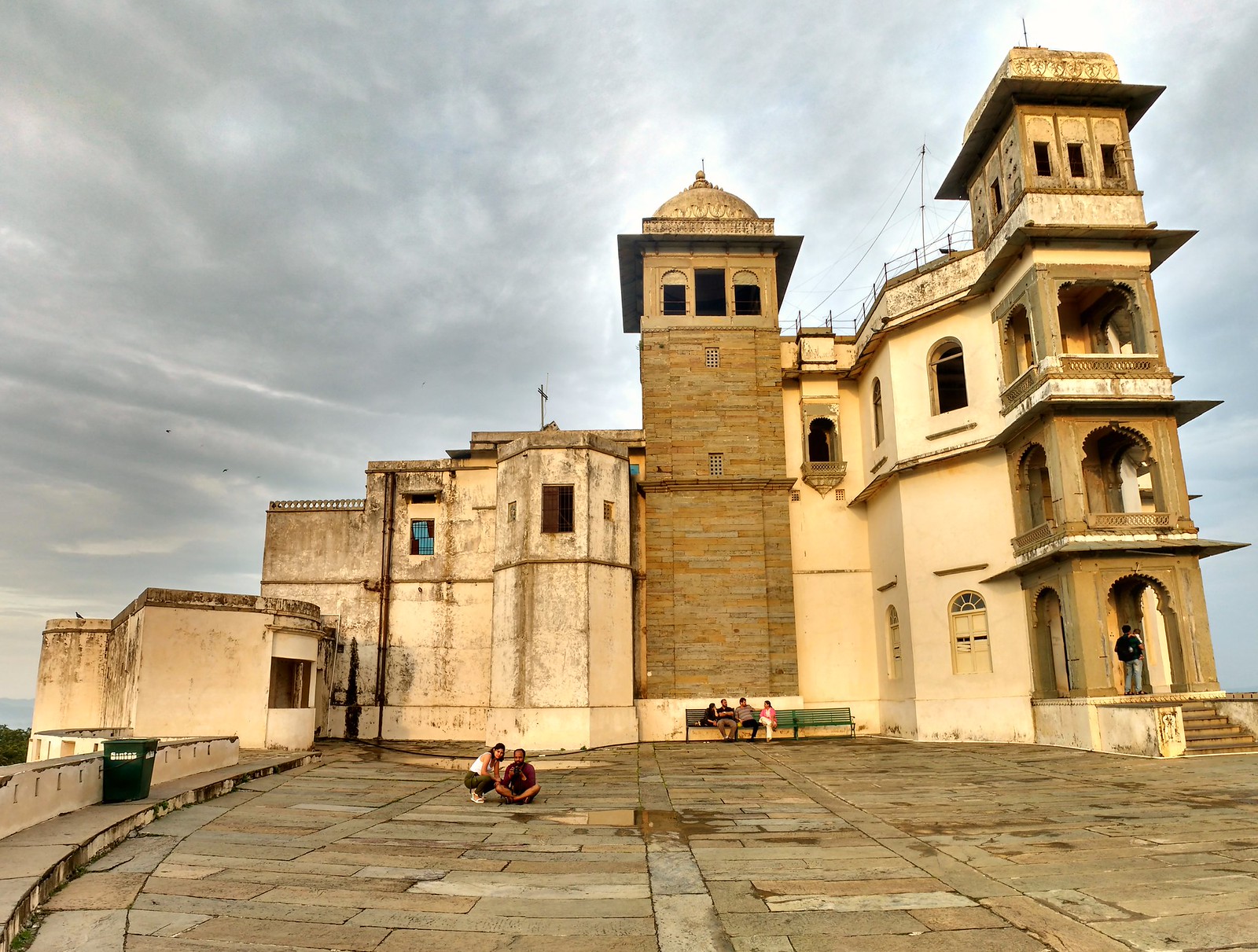
Atop the Monsoon Palace
It turns out, either this place hasn’t been reviewed by travellers for a while, or I ended up reading every old one!
So I’m going to attempt to set it right, by debunking all the myths (and adding one observation) about the Palace.
The building didn’t really look neglected or decaying.
There is a restaurant there.
There are also public water dispensers (as with most other monuments)
There are no monkeys (except for one big Langoor, that had probably been hired to keep the red ones away)
There are lots of multi-legged insects. Not dozens or scores or hundreds, there were literally thousands of centipedes/caterpillars/millipedes (I have no idea which of those they were) on the stone steps and walls—possibly due to the rains.
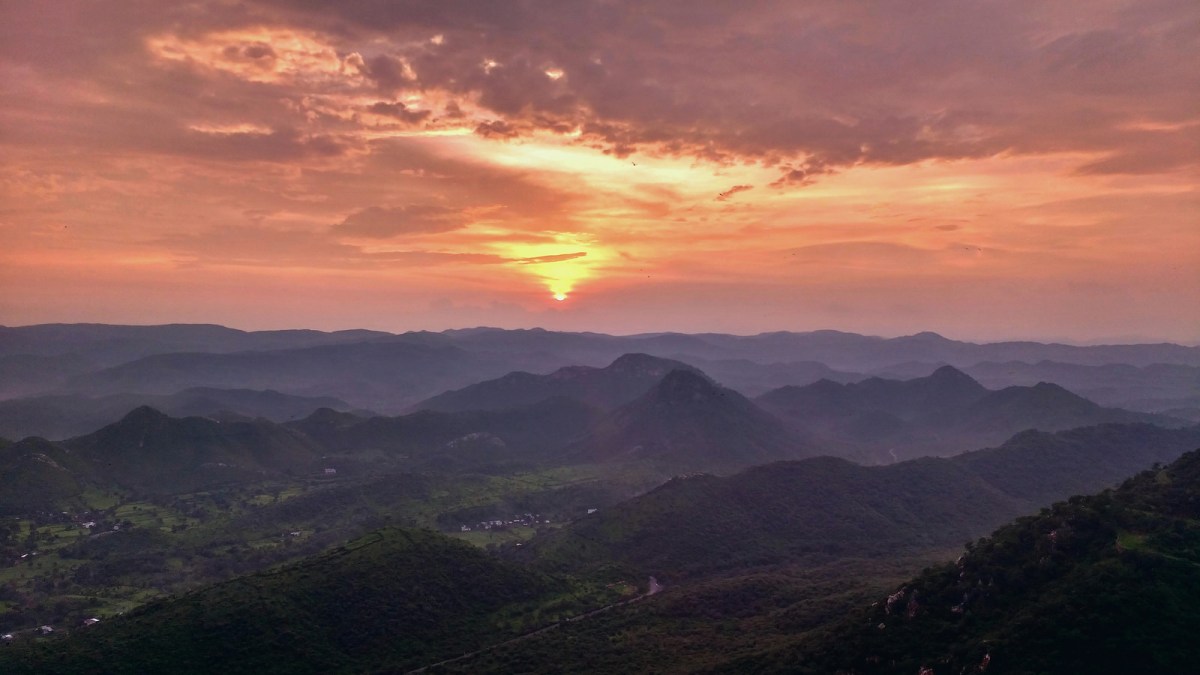
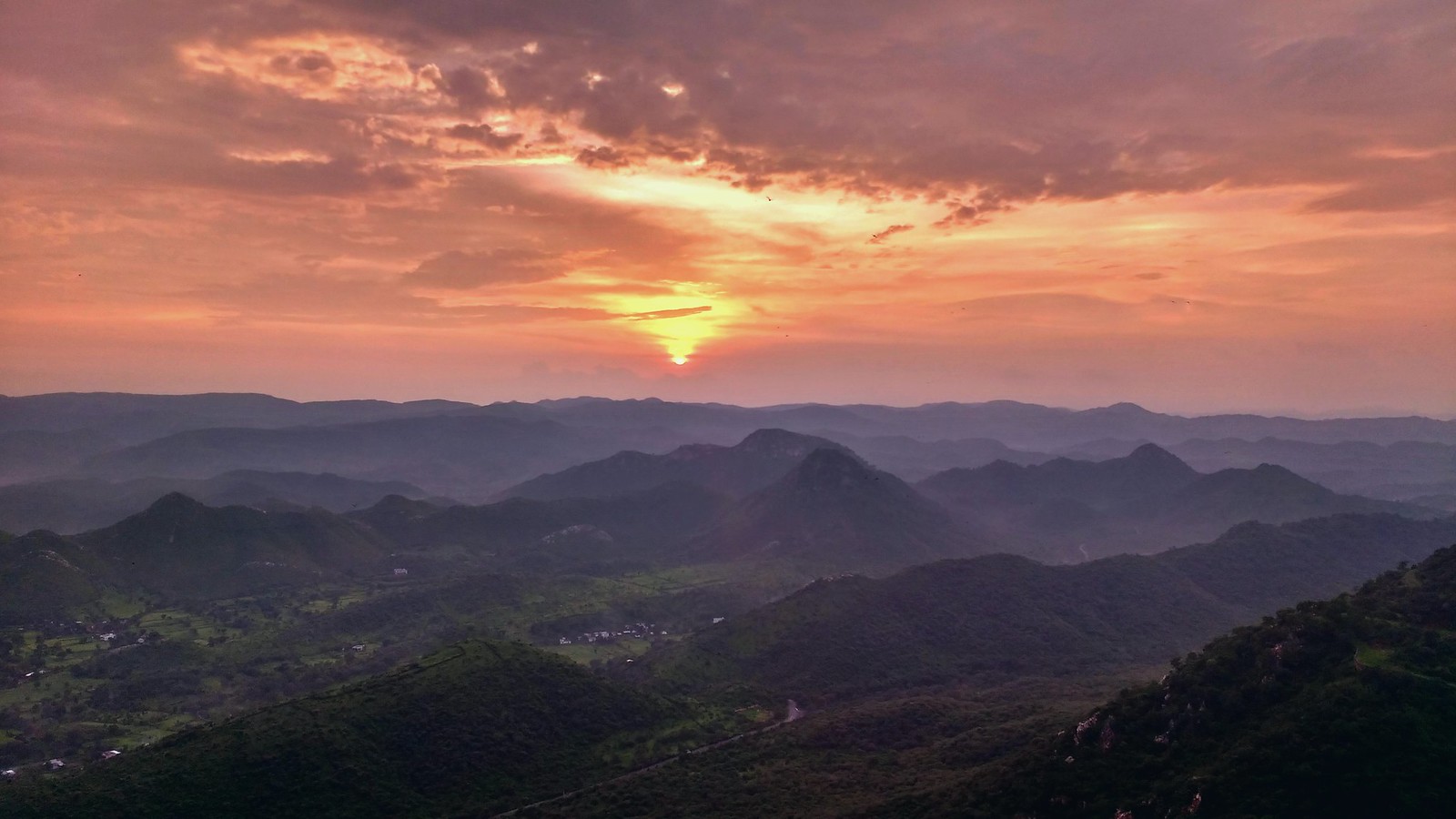
What each of the travel reviewers did get right, though, were the views. To quote one reviewer, “the views are to die for”.
Such was the breathtaking view of the Aravalli hills at sunset, that neither my words, nor my pictures could do justice to it.
We spent a couple of hours drenched in the golden hues of the sun, and as grateful as we were to be in presence of such magnificence, there was one greedy thought still lurking within, “if it weren’t so overcast!” Oh well. 🙂
So what were the great views, that captivated us, you ask? I’ll leave that hanging for one more day.
We had had a rather strange morning. Waking up at 3:30 am, to be stuck in a traffic jam around 5 am, and then racing against the sunrise to get to the top of Tiger Hill. We missed the famous golden Kanchenjunga due to bad weather, but took away some interesting memories nonetheless.
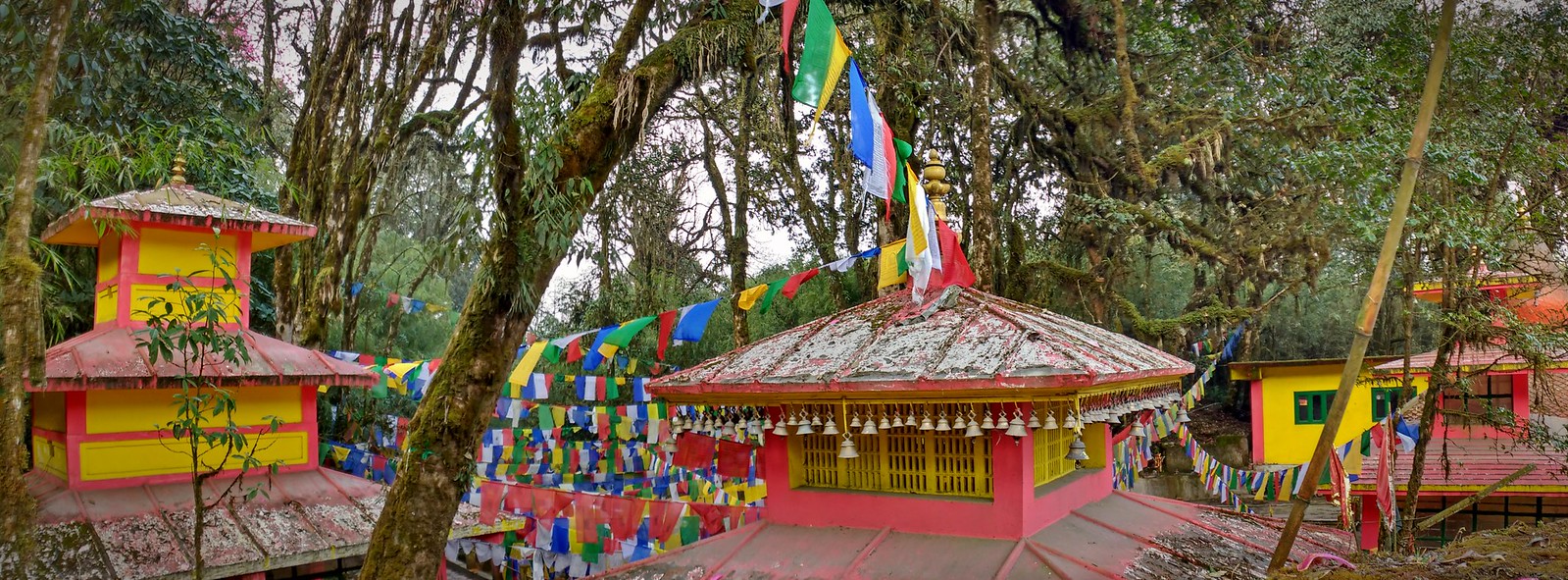
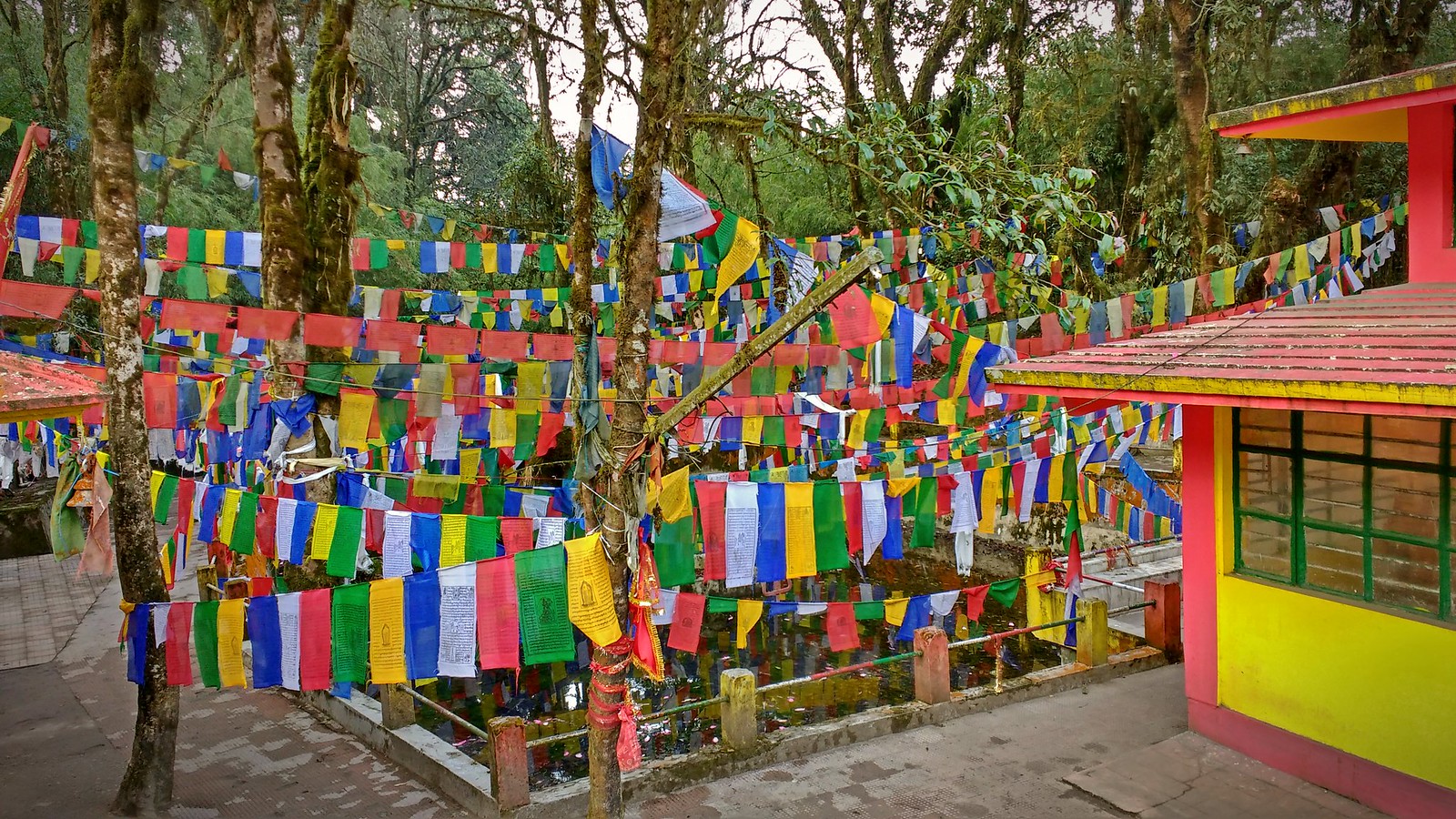
We are extremely slow travellers. And on that foggy morning, we were the last of the tourists to slowly descend the hill, soaking in every inch of the natural beauty and scores of colourful flags. Somewhere along the path, lay a beautiful temple with more strings of flags than any other place we’d seen.
Temple towards the base of Tiger hill.
It was also very quiet, ignored by all the tourists scrambling to get into their cars to visit the next item on their list of places to see. We wondered why this one was missing on anyone’s itinerary.
Our own ‘package’ didn’t include this, and with our driver asking us to hurry up, all we could manage were a few quick photographs from the outside.
I did a quick search on Google, and sadly, could not find the name of this temple; there weren’t any tourist brochures or itineraries that mention this place. I’m not sure if visitors are permitted to enter (they must be, if there are so many flags here!) If they are, and if you have the time, perhaps you could add this to your list. If you’ve visited the temple, I would love to hear your story.
Travelling during the Indian monsoon is tricky. Apart from the dangers of landslides and floods, there is the danger of being trapped inside a cold hotel when it is pouring outside. Fortunately, we are not crazy enough to venture towards perilous terrains or poorly administered areas.
Our first monsoon vacation was to Gwalior last year, during the Independence day weekend. I’d assumed that the rains would keep people away. We couldn’t be further from the truth. And I’d assumed that the monuments would be fresh and clean after a wash. I can’t quite comment on that. But that didn’t stop us from being mesmerized.
In the city, with the high rise buildings, its hard to lay our eyes on one continuous skyline. In fact, we sometimes give up on our chances of seeing it. And that is where smaller towns come to our starved senses’ rescue, especially during the monsoon. The massive and magnificent structures we visited were made all the more beautiful in the backdrop of the most amazing expansive skies.
Sure, we did get caught in the rain. We had to cancel our plan of visiting other places because there was a huge downpour while we were inside Jai Vilas Palace. But when you’re marooned in a Palace, it’s really not that bad!
This year, too we planned a vacation for the same weekend—but because there were so many more like-minded travelers, we couldn’t get tickets! So we did something that we felt was smart—we travelled a couple of weeks later, when most of the city tourists would be away (and we secretly hoped that hotel prices would be slightly cheaper; they weren’t). We also hoped that the impact of monsoon rains would be lesser. But when we checked the weather predictions, we were made well aware of the risk we were taking.
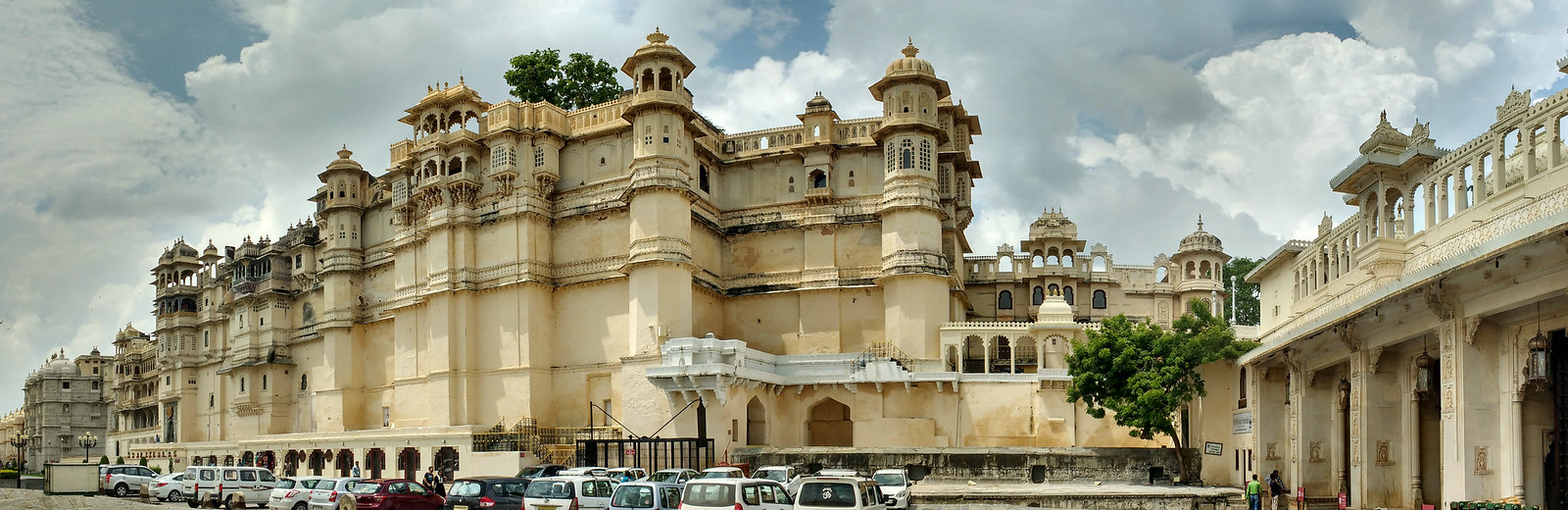
Day one in Udaipur, saw us marooned inside our home. But we did manage a visit to the Monsoon Palace. On day two, we literally headed for the hill to avoid getting wet in the rain, and just managed to make it inside the City Palace, before the downpour began. And like the year before, we found ourselves marooned in yet another palace!
So what’s our take on travelling during the Indian monsoon? Well, the weather is going to be cloudy, with a chance of great views!
Yup, these pictures were taken with a phone 😉 These are panoramas stitched together from individual pictures taken with a Moto G3. Click/tap to view my Flickr photostream.
Hat tip to R. Karthik photography for recommending the software used to stitch the pictures. Check out his review here.
This is post #2 in this year’s NaBloPoMo, or as Ra calls it Nano Poblano
NaBloPoMo = National Blog Posting Month = Thirty straight days of blogging












 Musings of an eccentric mind