
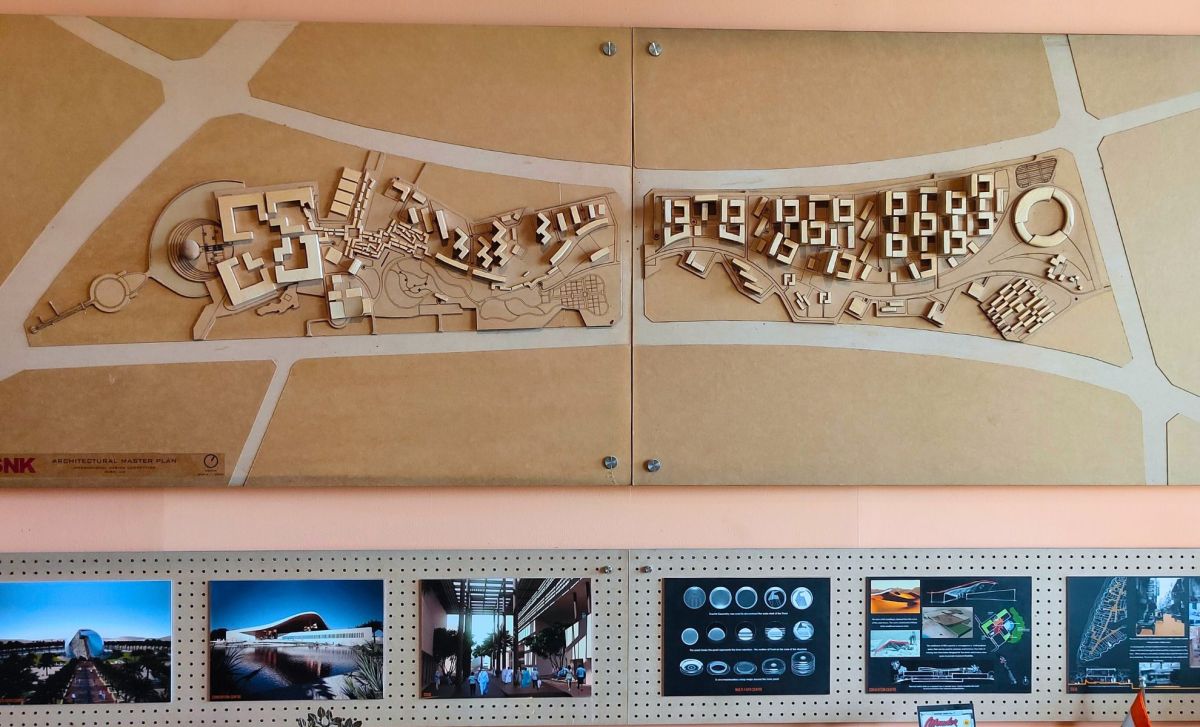
For the past few years we’ve been looking to buy a home, and we’ve looked at numerous fancy flyers by builders. But nothing has ever caught our imagination. Year after year, all we’ve seen are towers of concrete, embellished with heat-trapping glass. These so-called modern constructions conveniently ignore the realities of climate change. The prospective home buyers are effectively going to live in ovens, necessitating the use of air conditioning, further compounding the problem.
We love open, airy spaces with ample natural light, and yet, these townships pack houses like sardines. Projects these days claim to include rainwater harvesting, just to hop on the green bandwagon. But few even venture close to recycling grey water from kitchen sinks. With every house invariably keeping RO water purifiers, it makes sense to collect the waste water from these appliances for sanitation use. There is also immense opportunity to use rooftops for solar energy. None of these ideas are earth-shattering. Indeed, many of them have been implemented in other parts of the country. But the big builders of Delhi-NCR seem to lack inspiration to truly innovate.
If only they’d hired (or taken inspiration from) the architects of the calibre featured in the Samatva pavilion of IAADB23.
The Sustainable Eco-Literate Architect

The pioneer of mud architecture, Revathi Kamath wrote in her treatise on the sustainable eco-literate architect:
The architectural mind needs to be aware of the mathematics of complexity and geometries of nature—Mandelbrot sets, Julia sets, Berkhoff’s bagel, Koch curves, Buddhist and Hindu Mandalas—the list is constantly growing. The immense beauty that is latent in the use of these conceptual tools needs to be appreciated and replace the simplistic dogmas of the “cleanlineists,” the functional packaging of commercial space in boxes, the squares and rectangles on Vaastu and Feng-Shui pandits, layouts of military camps and cantonments, imperial palaces, administrative centres and corporate parks.”
Humanity must seek inspiration from nature and build to sustain, instead of merely using and dumping resources indiscriminately.
Take Kankana Narayan Dev, for example. Hailing from Assam, the architect takes inspiration from traditional, sustainable methods of construction in her work.
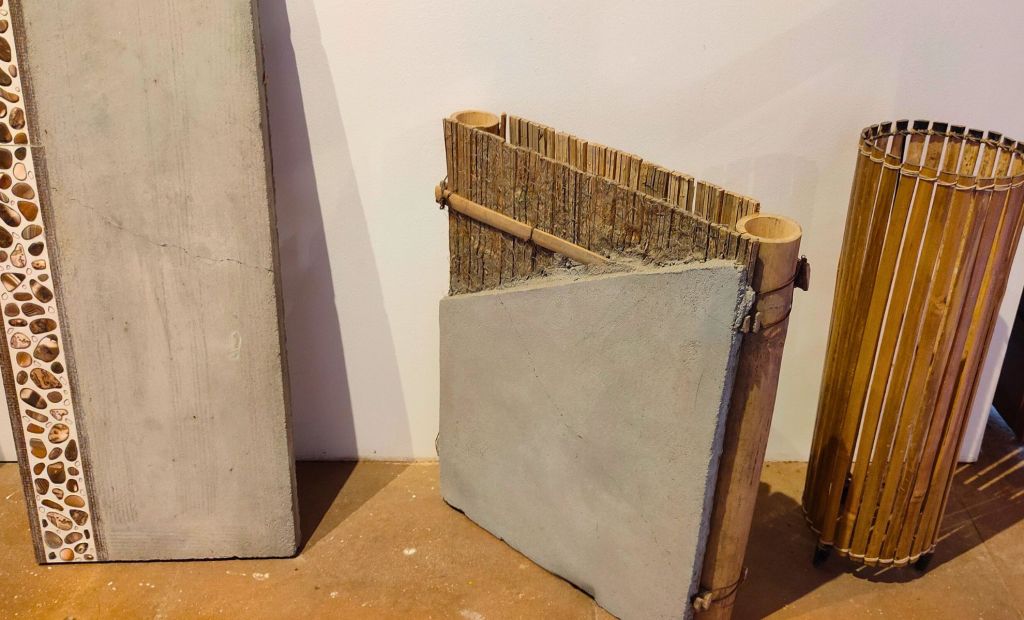
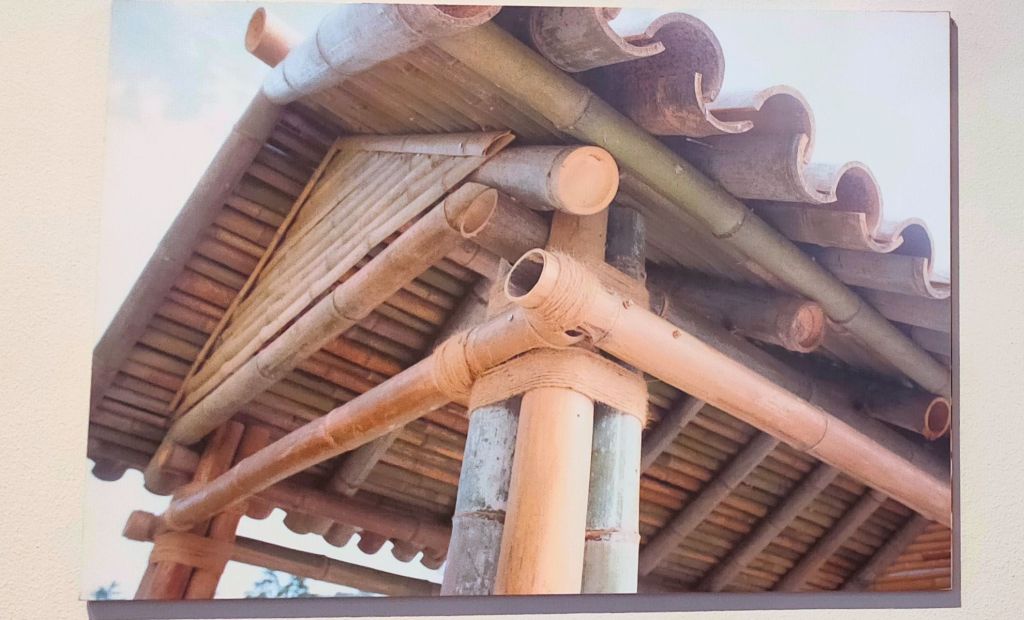
While Kankana works primarily with bamboo, Goa-based Tallulah D’Silva‘s material of choice is mud.
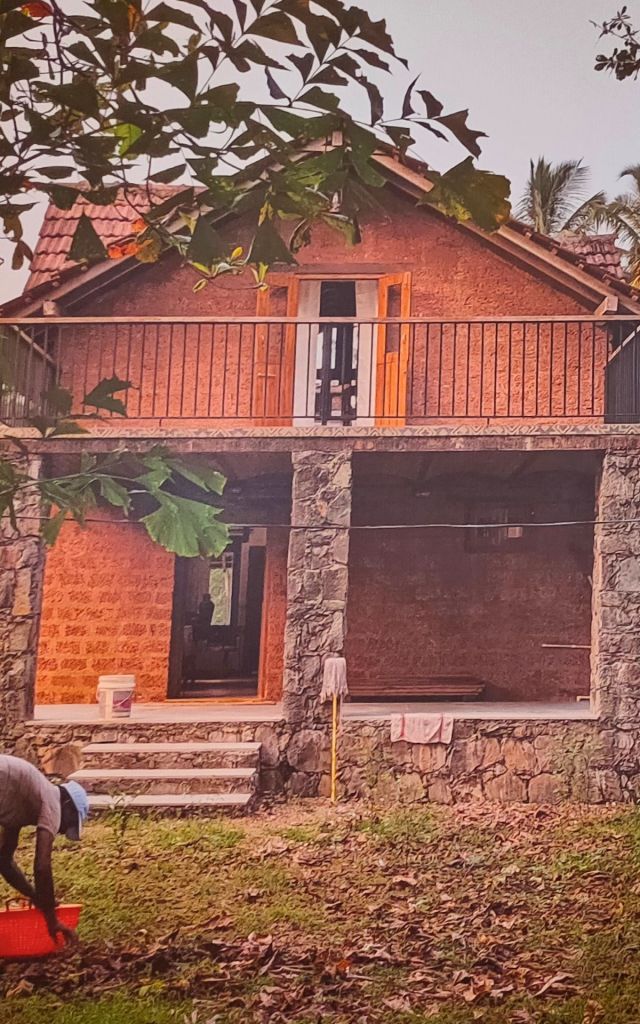
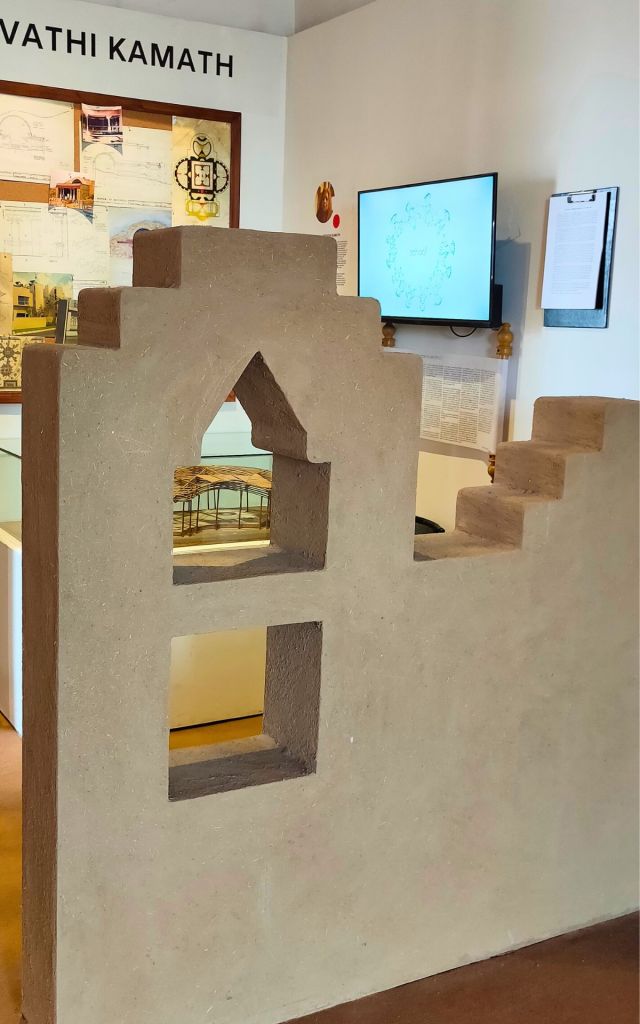
Sustainability wasn’t the only theme of Samatva. So was social inclusion and designing with empathy—something commercial builders could learn from.
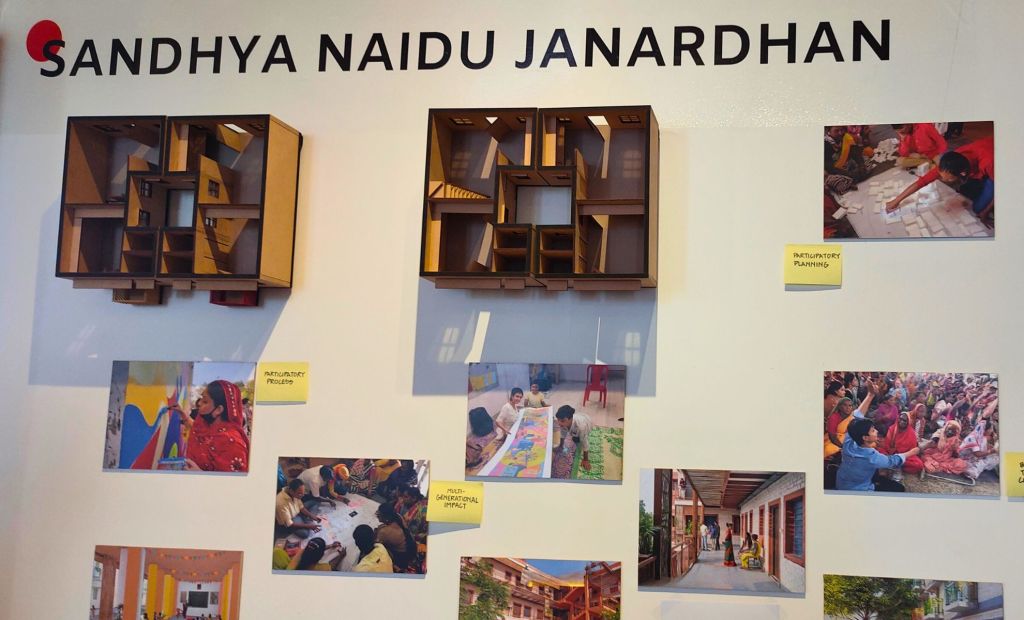
One project that caught my eye was Sandhya Naidu Janardhan’s slum redevelopment work.
Building With Empathy
While on our home hunting spree, we visited dozens of construction sites. We sat in lavish sales offices, browsed through glossy brochures, walked inside heavily decorated sample flats and watched the brokers point at realistic scaled model of the buildings. The sheer amount of marketing glitter around these projects was mind-boggling.
But when you’re redeveloping a slum, it’s not as glamourous. You likely won’t have access to the kinds of resources the builders have. It would have been easy for Sandhya to have just drawn some cookie-cutter plans and got them approved without anyone batting an eyelid. But she chose to involve the community in her design process. The hallmark of a good designer is to understand the needs of the user—in this case, the people who would eventually live in the spaces she’d design.
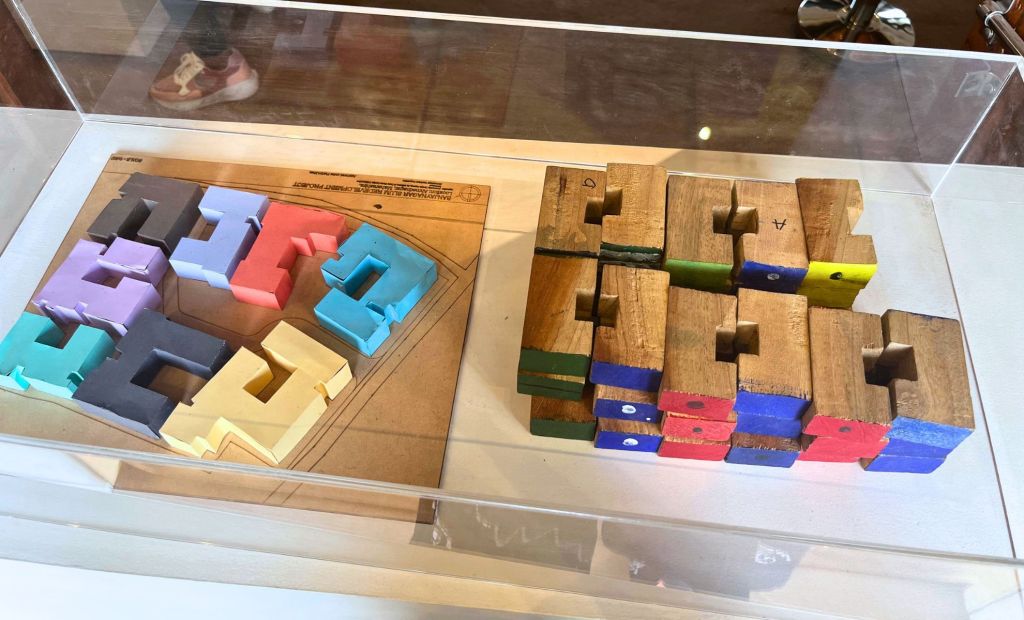
By far my favourite exhibit was the small models made with paper and wooden blocks. Proof that one doesn’t need fancy photorealistic models to communicate a vision. What is needed, though, is the willingness to perform sound user research.
Would any big construction company ever care for their customers as much? We’re yet to find one that does.
The image at the top is a display from Somaya Sampat, formerly Somaya & Kalappa Consultants (SNK), at the Samatva Pavilion of IAADB23.
This post is a part of a long-ish series on the India Art, Architecture and Design Biennale 2023.








 Musings of an eccentric mind