Categories
Stories

The locked house


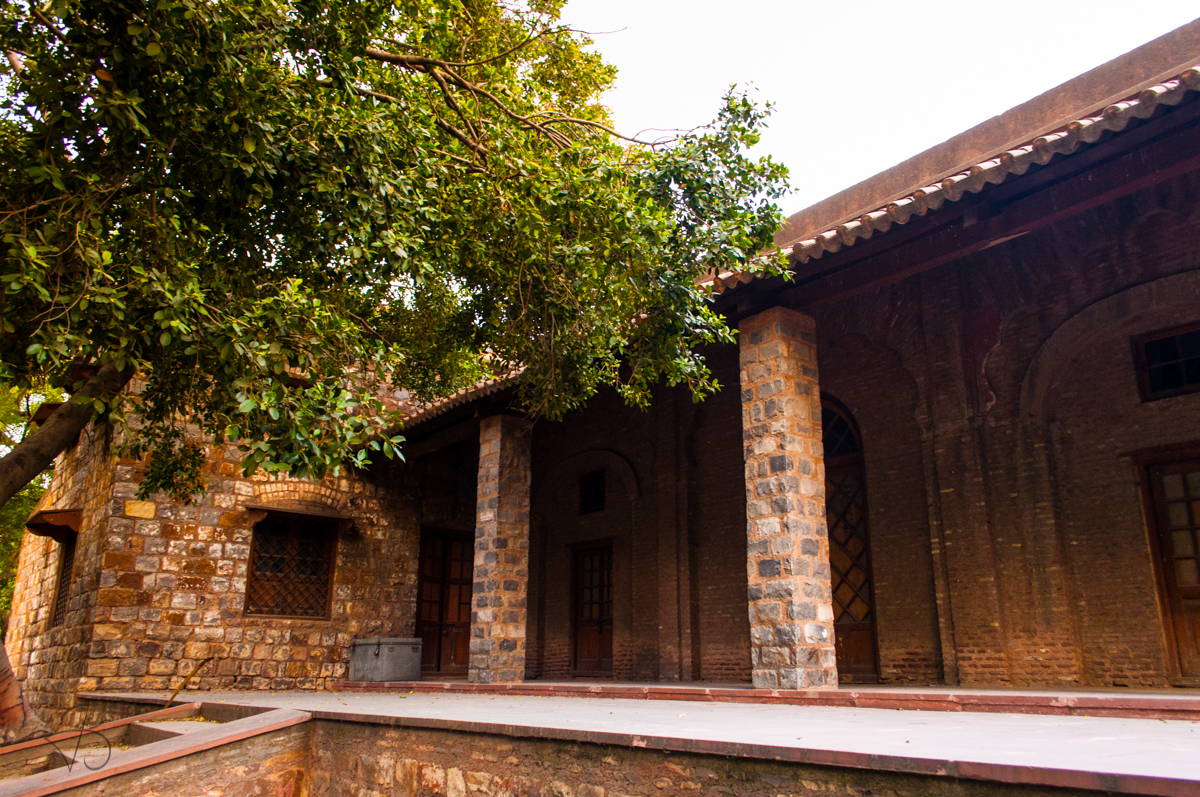
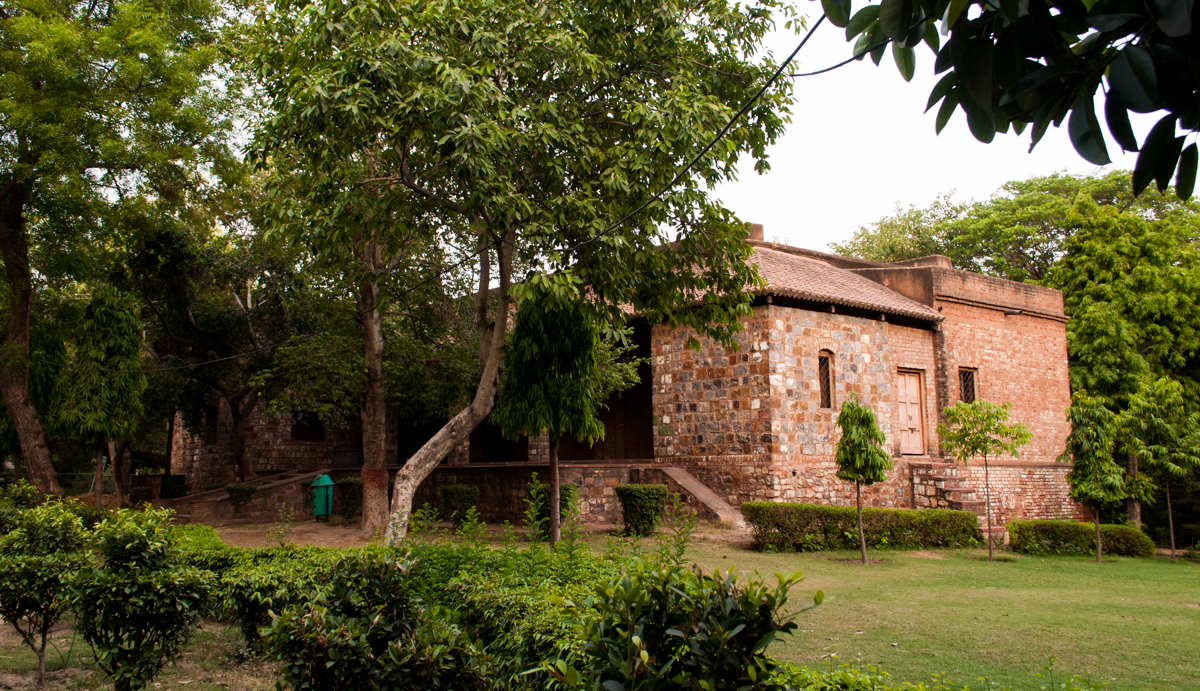
Colonial Building

A Colonial building in a Mughal Garden Complex, living amid ruins of the Revolt of 1857, locked and forgotten, except by park officials and evening joggers.

For whom was it built? Why is it locked away? What lies behind those red stone walls?


nanopoblano2015lightThis is post #3 in this year’s NaBloPoMo, or as Ra calls it Nano Poblano

NaBloPoMo = National Blog Posting Month = Thirty straight days of blogging

Thanks a bunch to all the cheering peppers who have been tweeting and liking posts across WordPress 🙂

Categories
Hobbies

WPC – From Every Angle: Spiral Staircase


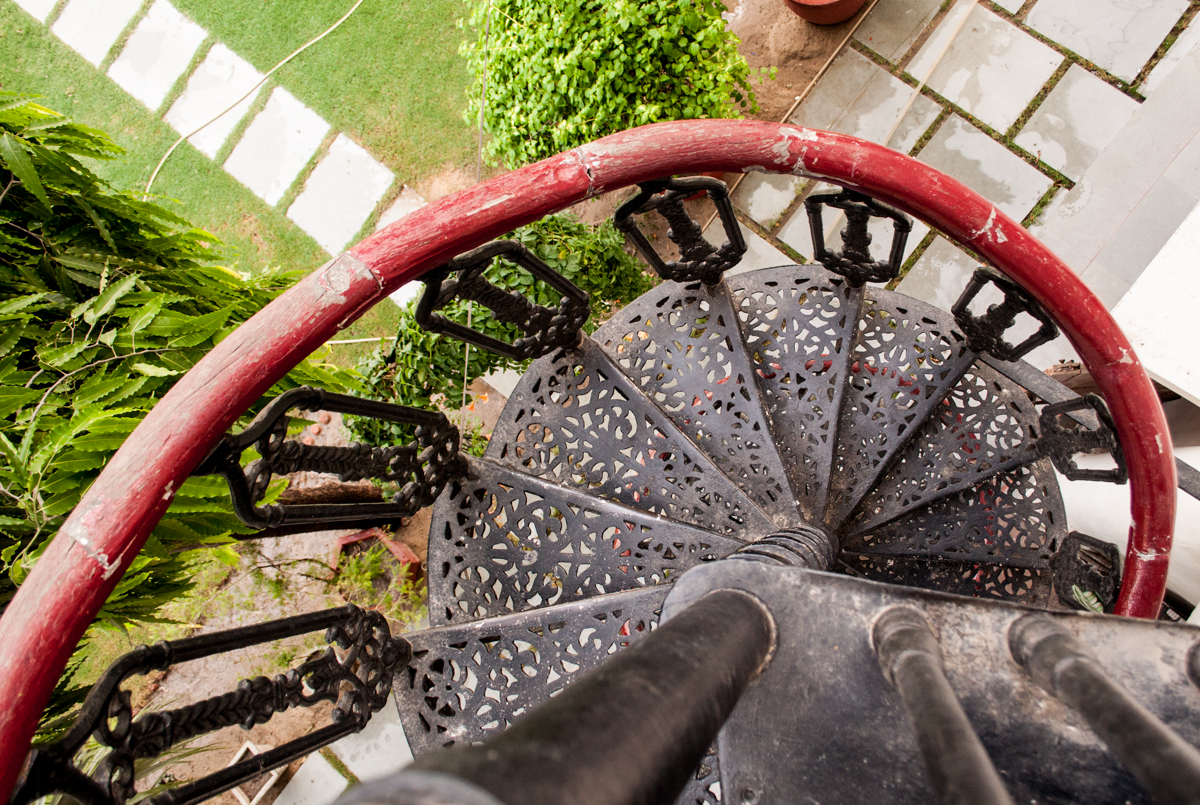
A few months back, we paid a visit to an old bungalow in Old Delhi, and I couldn’t take my camera off this beautiful spiral staircase!

And here’s yet another angle beneath my feet.

Many thanks to the kind landlady for tolerating this shutter-bug 🙂

More angles of everything under the sun over at the Daily Post Weekly Photo Challenge: From Every Angle

Categories
Poetry

The Earth Beneath


Cracks on the skin
Resisting a throat parched

Dense eyelashes
Streaming rivers of life

The internal inferno
And tremors of rage.

Does such great power
Lie beneath my feet?

‘Tis such privilege
Upon which I stand.

‘Tis such divinity
Due to which I live.


Spiral beneath my feet
Spiral beneath my feet – staircase in an old bungalow in Delhi

This post was inspired by this week’s photo challenge by the Daily Post

Categories
Stories

Broken


My grandmother often says that of the several artistic abilities our family possesses, the ability to throw, is the one that we need the most! At our home, when things break, our instinctive reaction is that of fixing them. So for this week’s photo challenge, broken, I had quite a few options at home! Except, of course, they had mostly been fixed, or have become something else. For instance, the beads from several broken bracelets and necklaces have now become a gypsy-style garland. And all the broken seashells from our collections have now become a decorative wall hanging.

* * *

We were in Old Delhi to meet relatives and decided to explore Qudsia Bagh in the evening. Clean jogging tracks surrounded by palm trees and Laburnums in full bloom, the park was a sight for sore eyes and sun-drained explorers like us. Large pots of water and benches with bird feed attracted birds by the dozen.

“What are you waiting for? Take out the camera!” It took me a little while to react. My brother nudged me as I stared at a kite sitting atop the earthen pot. Before I could take a clean shot, it flew above us and onto a tree branch. Another one swooped down and flew low, before joining its friend on the branch. They didn’t seem to mind the people around them — little children swinging on monkey bars and groups of evening walkers.

We continued walking, and it wasn’t long before we spotted a wall behind a few trees. An old building! After several months, we discovered something old in Delhi. An entrance gate of some sort, with a staircase on the side leading up to the roof; an old locked up lodge that seemed appropriate for some mystery novel; and a mosque under renovation — we hopped from one building to another, trying to cover as much ground as possible in the little time we had left in the day. But with daylight fading and our stomachs grumbling, we had to head back.

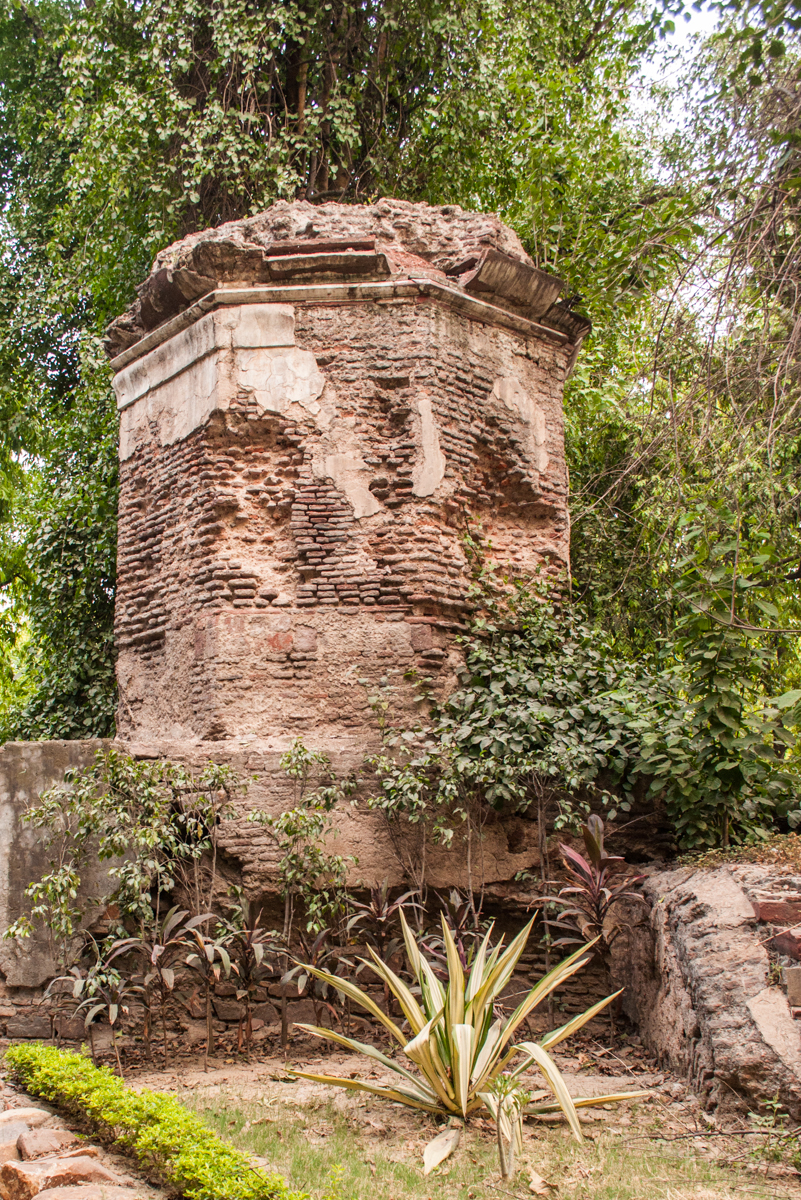
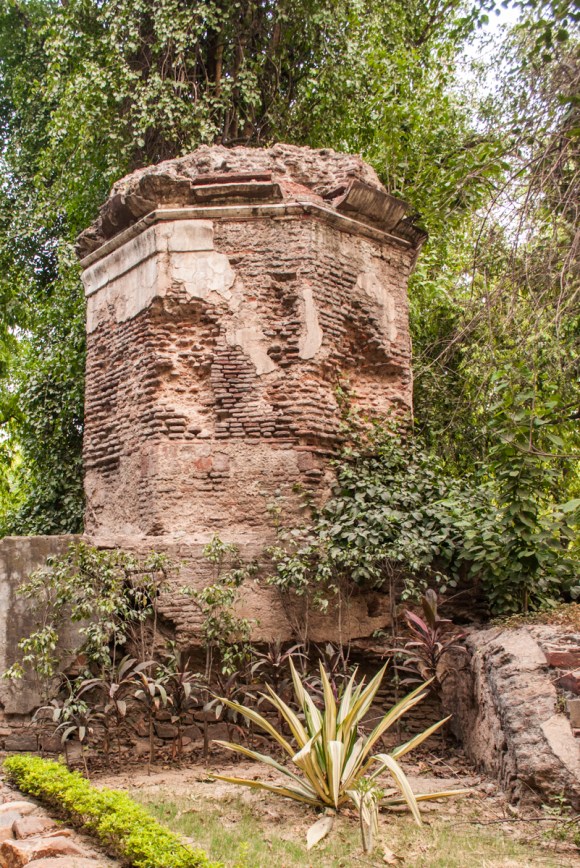
As we were returning, I noticed this minaret-like structure. It turned out to be at the exact same place we saw the kites earlier. In our excitement of seeing the kites, I’d missed this one entirely.

Minaret at Qudsia Bagh

I clicked a few more photographs of the park just as a peacock came out for its evening walk.

We may go and visit Qudsia Bagh again. We might climb the gate, inspect that old house more closely, and perhaps, find more treasures.


From Wikipedia: Qudsia Bagh is an 18th-century garden complex and palace located in Old Delhi, India. Constructed in 1748 for Qudsia Begum, this complex was largely destroyed during the Indian rebellion of 1857.

For more broken images, visit the Daily Post’s Weekly Photo Challenge: Broken

Categories
Musings

Vote’s up!


This week’s Daily Post Photo Challenge is Scale. Today, the Capital of India went to polls. My vote—a small drop in the big ocean of voters—is my interpretation of the challenge.


On my way back home after work, a colleague asked me whom I was going to vote for. I thought for a little while, and replied “I don’t know.” And to be honest, I wasn’t sure even at the time I actually pressed the button.

Voted

In the run up to the Delhi Elections, several thoughts—all disconnected, but deeply disturbing—have been going around in my head. Facts and perceptions created by different media, rampant hypocrisy and boot-licking…

One party has ruled for decades and divided the country ruthlessly, making hideous amount of money at the expense of taxpayer’s money. And the other party which has replaced it, drips with arrogance and testosterone (not to mention more criminals).

Indian politics is brutal, and severely patriarchal. Those who work for the welfare of the people often end up being penalised. A Chief Minister who transformed Delhi and was re-elected twice, became a sacrificial lamb as her own party let her down miserably. The mismanagement of the head of the Organising Committee of the Commonwealth Games was entirely forgotten, as a certain bureaucrat singled out the CM for a smear campaign. In case I haven’t said it before, the Commonwealth Games in 2010 were a huge success—those who focus on scams probably never saw the Opening Ceremony, nor attended any sporting event of the Games. And Delhi is just about as unsafe, as any other part of the country. It’s just that other places don’t get so much media attention. After a 49-day stint, the muffler man hopefully realised that making tall claims and staging protests against corruption is one thing, running a Government is quite another.

Two thousand kilometres away, a similar story unfolded. Within a few months of emerging as the third largest party in the general elections, the party head was handed out an exemplary punishment, effectively ending her political career. Scams and scandals of Members of Parliament of the previous Government, of course, have been completely forgotten.

While the Congress is still living in a son-inherits-father’s-throne mentality, the royal son-in-law’s shady businesses are blindly ignored (anyone else noticing a pattern here?). The BJP, on the other hand, is trying to paint a false reality by glossing over women empowerment to please the American President. Their Chief Ministerial candidate admittedly commands a superstar presence. At least she used to. But by exploiting her popularity for political mileage, her image has probably taken a dip, and I only wonder if she is going to become another sacrificial lamb.

In such a scenario, is there anyone worth voting for? The enthusiasm with which Delhi voted 14 months ago faded by the time the General Elections came. A glimmer of hope vanished within months. And today, it seems, Delhi is back to its old ways, with voters becoming indifferent.

With these thoughts in my head, I went out to vote. Neither this blog post, nor my opinion is probably going to make much of a difference to anyone. And my vote is definitely not going to change Indian politics… But a tiny part of me (0.000001% to be precise) has a little bit of hope. A hope that the collective power of votes may shift attitudes. Whether or not that happens, we will soon find out.

Update: It turns out, I was quite wrong about voter indifference. The people of Delhi came out in large numbers to vote. More than 8.9 million people voted—the largest number of Delhiites to have ever voted for any election in Delhi. And the verdict was an unprecedented sweep by a party wielding a broom!

Disclaimer: The views expressed here are entirely personal. I am not affiliated to any political party, nor is this post intended to spread any form of hatred directed towards any one person/party.

Further reading:
Meet India’s newly elected
Sheila Dixit’s letter to PM
Women’s political representation lagging in India

Categories
Stories

Happy Independence Day


Connaught place, now named Rajiv Chowk, was constructed by the British around the same time other structures including the Rashtrapati Bhawan and the Parliament building were being constructed. Together, these structures were a symbol of Imperialism. It was a show of strength for the colonists, and many people were displaced to make way for the construction.

However, soon after the completion of buildings, the second World War broke out, followed by the Indian Independence movement.

Today, CP, as it is fondly called, is a hub of commercial activity and a favourite hang-out place for thousands of people, including yours truly. 

Last month, on a cool cloudy day, I went to meet a friend at CP. The breeze was strong and little drops of monsoon rain were beginning to fall. We looked at the center of the circle. 

Flying high overshadowing the past, and looking over our shoulders, the Indian tricolour was at its finest.

Wishing you a very Happy Independence Day.

Jai Hind!

Categories
Miscellaneous

Visual Treat


A little while back, I visited the food court at HUDA City Centre Metro Station.

Now I’m not very fond of fancy restaurants. I usually end up buying corn on the cob from a street vendor. But when my stomach groaned, I reluctantly entered the newly opened food court.

It didn’t take long for me to get a snack. A keen eye behind the counter of petooz noticed a hungry customer and helped me decide my order. But more than the snack (which was delicious), I liked the colourful illustration on the wall of the street food stall.

A hat-tip to the artist Arif Hussain. From the Red Fort and Qutab Minar to a foul mouthed auto-rickshaw* driver and the Metro line, the illustration captures the big landmarks and the quirks of New Delhi. If you happen to find yourself at the HUDA City Centre Metro station, be sure to check out the food court, whether you are hungry or not.

More photographs at Sasi Menon Design’s FaceBook Page:

* also known as a tuk-tuk

Categories
Stories

Well Hidden


It was in the first week of March, late in the afternoon. Winter was receding and the weather was just perfect for going monument hunting.

Before leaving, we ran a quick search on the internet. A map in hand, we got off at the Qutab Minar Metro station and walked along the road. After about fifteen minutes, we entered a small opening.

It’s called a park. But we soon realised we were in a jungle.

landmark
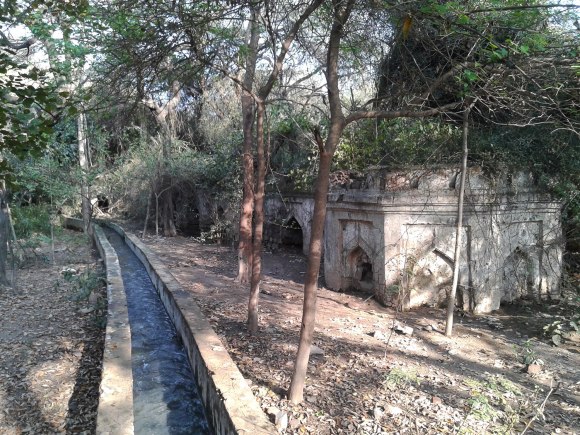
The water ‘stream’ which served as our landmark

We tried to figure out where we were on the map. We turned the map around, trying to align it with the shadows, to get a sense of which direction to head towards. As it turned out, we were poor map readers. We took different paths, each one giving us different leads, and none of them making any presence on the map.

Along each dust road, we saw broken and crumbling remains of the past, surrounded by the filth of ‘modern’ day. The old ruins told us we were somewhere – but not exactly where. After taking three different roads, and ending up at the same water stream, I folded the map and put it inside my pocket.

We asked some locals for directions. Some of them gave us a vague direction in which to go. One lady pointed out that we had entered the wrong gate, and that the proper entrance was ahead along the main road. There was, however, a way through the village. We had come too far inside. If we were to turn back, it would only be to return another day.

A middle-aged gentleman gave us two sets of directions; the one he recommended, was longer and clean, through the main road; the other was shorter and filthy, through the village. We gambled on the shorter one. We had already walked a lot, and since we were wearing shoes, we didn’t think filth would be much of a problem. If only we knew better.

crumbling
Was this a garbage dumping ground 4 centuries ago?

We walked along the narrow, steep village roads and crossed a stretch of rotting garbage. But it was a foul-smelling stretch of pigs, which made us run as fast as we could. We continued on the path, wondering what else was in store. As per the directions, we had to take another turn. There were trees all around and we still couldn’t figure out where we were. We decided between ourselves, that if we did not find anything in the next 5 minutes, we’d look for the way out.

And then, just after turning, we saw a stone signboard.

wall
The wall, well hidden; the security guard stands out like a sore thumb

Almost an hour after entering the jungle, we stood facing a stone wall. We walked around and climbed up the stairs.

Rajon ki baoli, read the stone sign.  The mason’s stepwell. We had reached what we had come looking for. Tired wanderers, the thirst of our eyes was finally quenched with the sight of the well.

For those of you who have a little better sense of direction, hopefully this map will help. Clearly, we didn’t do our homework properly. To view the interactive map on Google Maps, click here. For better photographs, ask Wiki

How to reach Rajon ki baoli
How to get a good workout
Categories
Miscellaneous

I did my part!


image

Categories
Hobbies Stories

The Sultan’s Cave


Delhi is often described as a graveyard, due to the vast number of Tombs that are spread across the city. Most of them look alike, but some stand out.

A small sign along the main road indicated the path towards our destination. It was a narrow dust road, with trees on either side. We walked a short distance before hitting a fork in the road. Short shrubs, open fields, and grazing goats in front of us, city buildings and afternoon traffic behind. But there was no hint of a historical monument in sight.

We asked the man standing next to the goats, where we could find Sultan Ghari. He paused for a while, and then asked us if we wanted to visit the Dargah. We nodded, and he pointed towards the road on the right.

The tomb is a revered place for devotees of both Hindu and Muslim religious communities of the nearby villages of Mahipalpur and Rangpur since they consider the tomb as the dargah of a saintly ‘peer’; a visit to the tomb is more or less mandatory for newlyweds from these two villages. – Wikipedia

These words made me curious…

It wasn’t very far, but hidden behind the trees, the building seemed to magically appear out of nowhere. And the moment we first saw it, we were surprised. It did not look like a tomb at all. In fact, had we not known it was a tomb, we would have assumed it to be a fortress.

Sultan Ghari was built by Iltutmish, for his eldest son Nasiru’d-Din Mahmud – Raziya Sultan’s brother. It was the first Islamic mausoleum built in India.

Considering how old it was, it was beautifully preserved, and looked like it was built just yesterday. We bought our tickets – five rupees each – and climbed up. We were asked to take off our footwear before entering the stone courtyard.

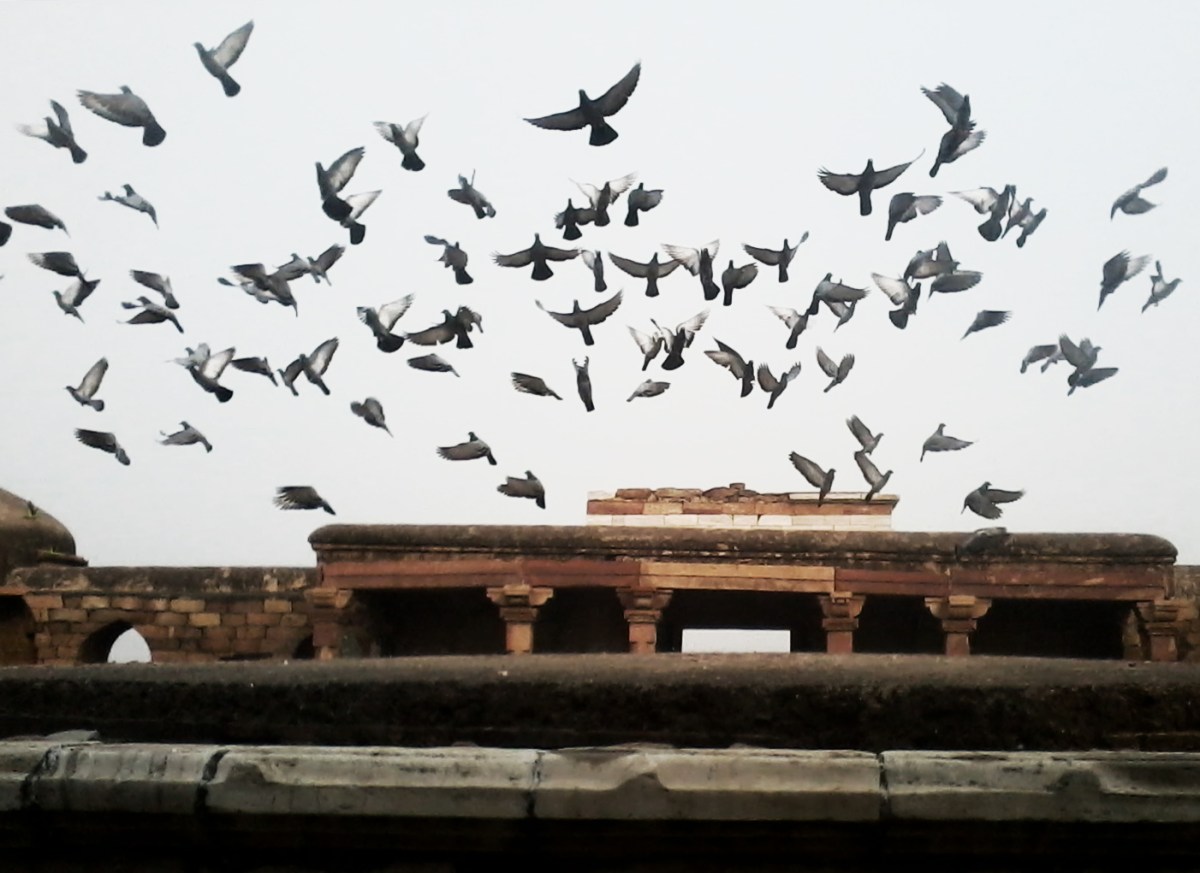
In the centre of the courtyard was a huge octagonal platform, on top of which dozens of pigeons were feasting on seeds. The walls of the fortress had huge ‘windows’. One of the walls had a narrow, steep, open staircase. Standing atop the wall, we caught a bird’s-eye view of the city, as well as ruins from another time.

The actual grave of the prince was beneath the fortress. On one side of the central platform, a small opening lead downstairs to a small chamber. Lit only by oil lamps, it was extremely dark. We felt our way around and stepped down the stairs cautiously. The air was heavy with incense.

A green chadar was spread on the ground, and bataashas were kept next to it – symbols of both Islamic and Hindu faiths.

There was complete silence inside the chamber. So silent, the two of us spoke to each other in hushed tones. While the world boils and burns, fueled by religious animosity, it is places like these that provide hope that peace will one day prevail.

Back outside, we climbed up the stairs along the wall, to get a birds-eye view of the whole complex, as well as the surrounding ruins.

Here are some photographs of Sultan Ghari.

With the main purpose of our visit achieved, we had decided to have a little fun with the pigeons. I must say the pigeons were extremely cooperative, and willingly flew away the moment one of us went near them!

PS. Apologies for the poor quality of images…