Categories
Stories

The Drum House


If you’ve seen Hindi movies or plays set in the Mughal era, then you’ve heard that familiar refrain, “Azeem o Shaan Shehenshah…” An announcer describing the arrival of royalty.

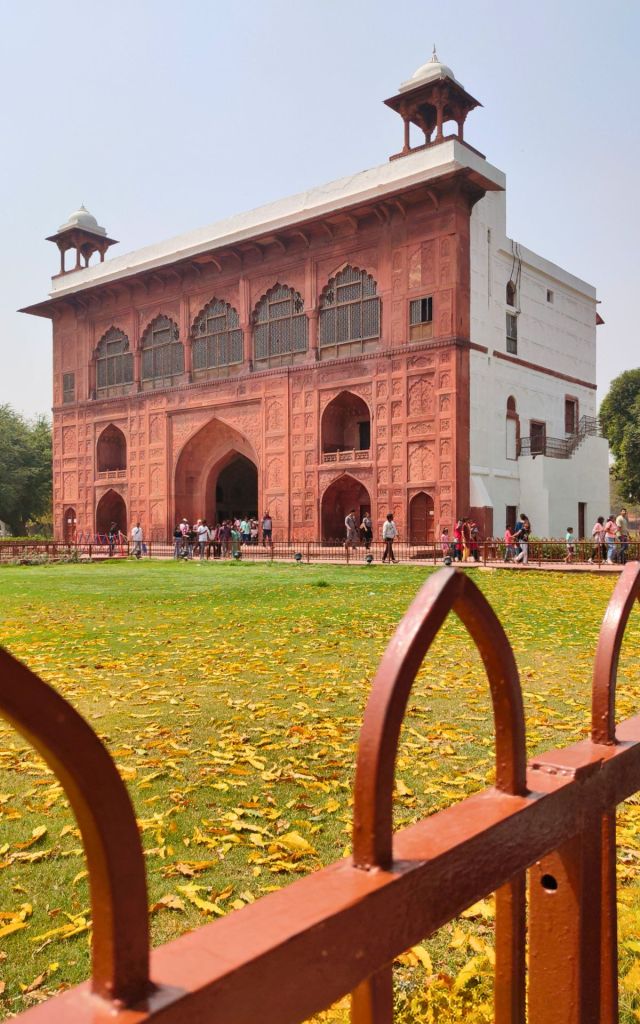
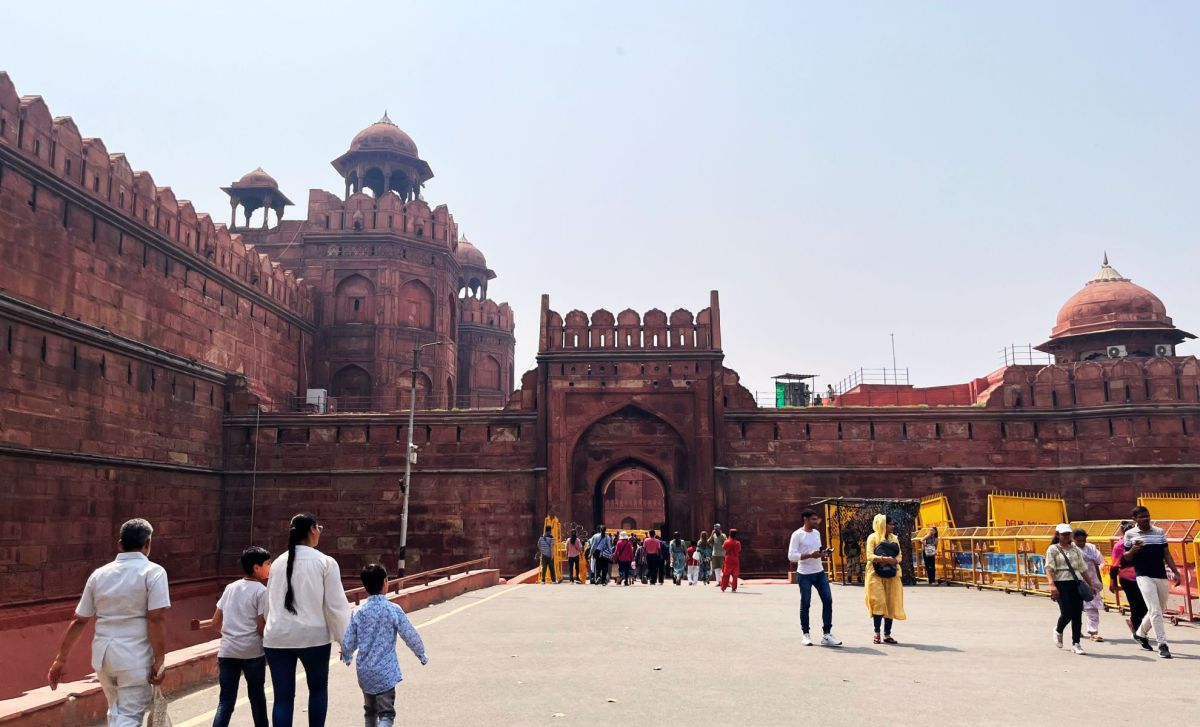
At the Red Fort in Shahjahanabad (Old Delhi), musicians would make announcements from the Naubat Khana, or Naqqar Khana (Drum House), letting the public know that the Emperor or a royal dignitary had arrived.

Announcements were a tiny part of the musicians’ job description. The Mughals were great patrons of art, and musicians would perform five times a day at chosen hours.

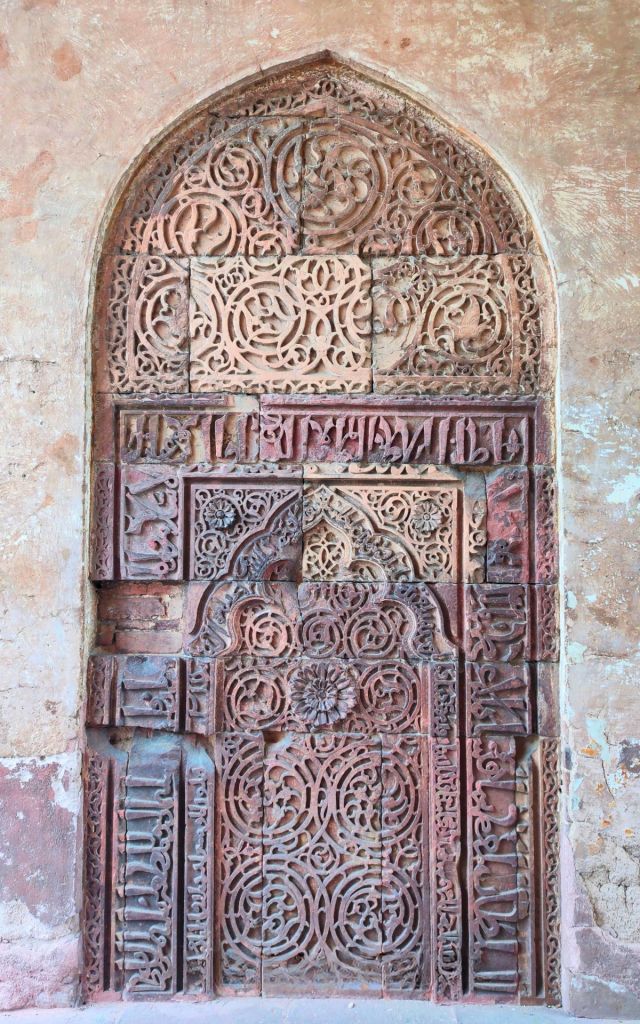
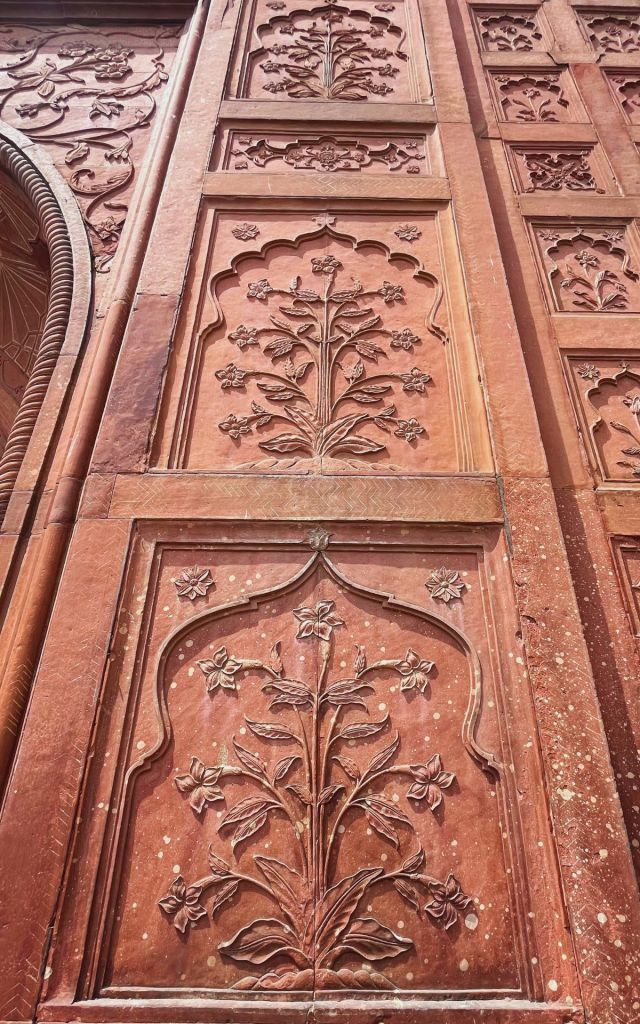
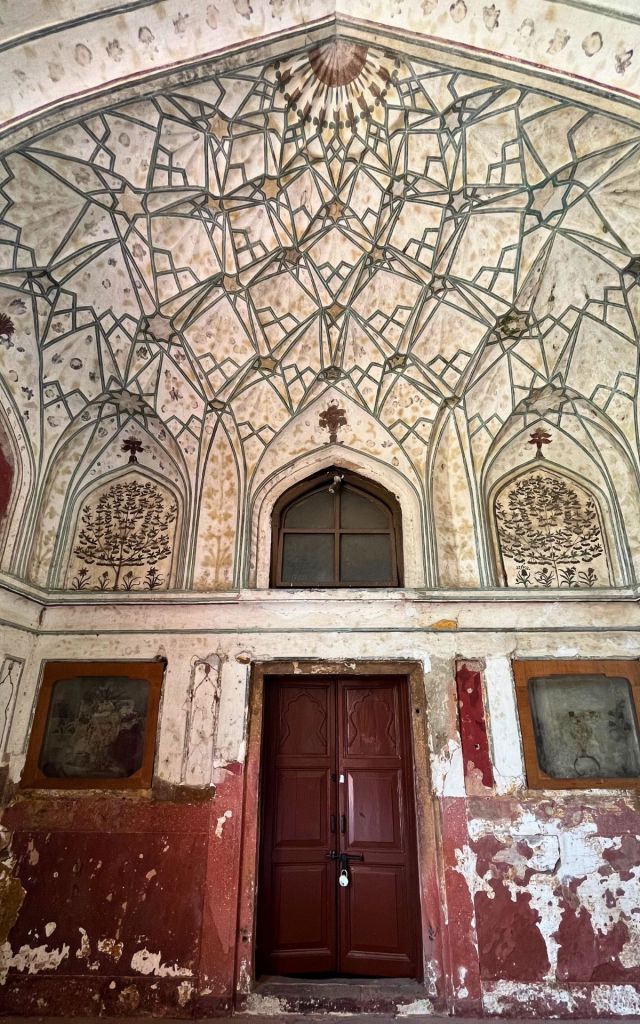
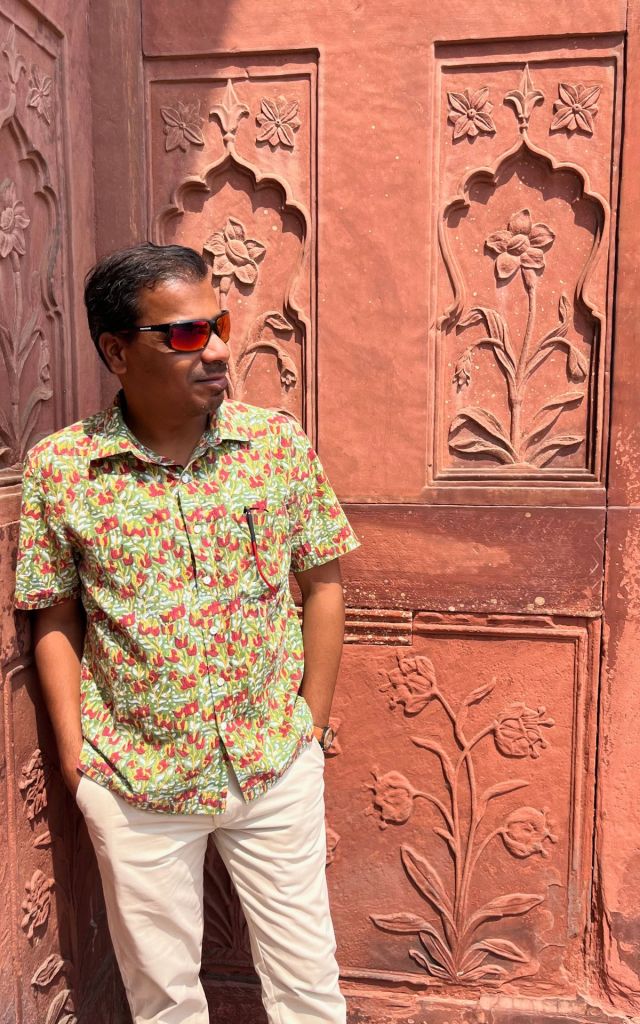
As is apt for any hall that houses artists, the Naqqar Khana is elaborately decorated. Unlike Islamic architecture in other parts of the world where motifs are strictly geometrical, Mughal architecture heavily incorporated natural themes, particularly flowers, in addition to traditional calligraphy.

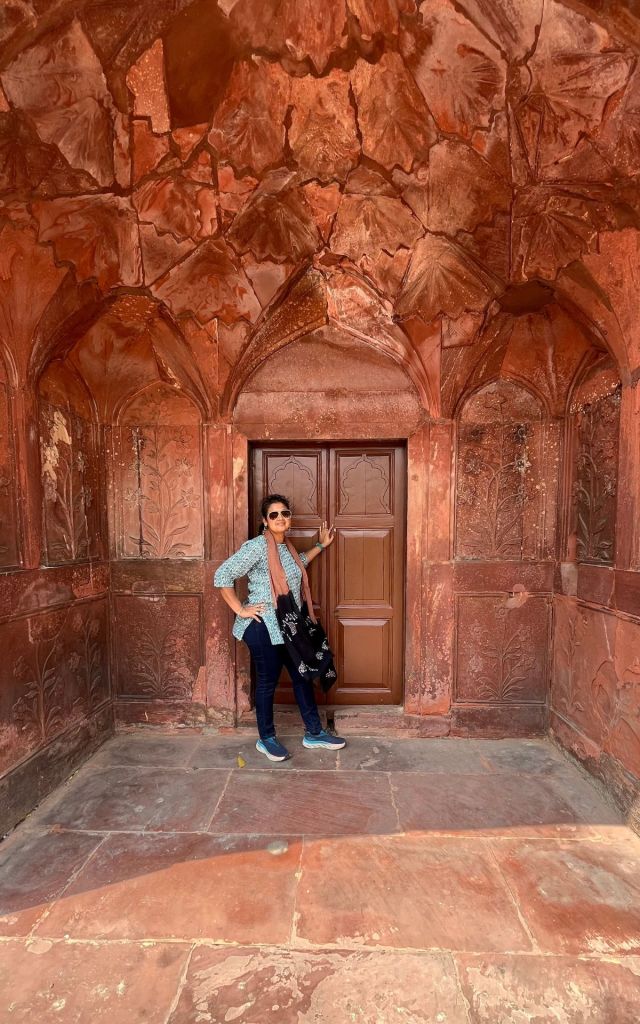
Here’s a closer look at the intricate details of the Naubat Khana at Red Fort.

Categories
Stories

The Bathtub Clams


Vinodeni had her task cut out. 30 minutes. Her newest clients didn’t have a moment more to spare. She shed her soft-spoken veneer and turned into the Willy Wonka of the Aquarium. “Okay! We have a short time, so I’ll prioritize and guide you through the most important exhibits.” She said, in an excited voice.

“Do you eat seafood?” Him, yes. Me, no. “Oh, no worries! I was asking because we’ll see some of the tastiest fish the Andamans have on offer. But hopefully, you’ll still enjoy it.”

The Aquarium next to the Aberdeen jetty is a small, likely under-funded museum dedicated to the marine life around the Andaman and Nicobar Islands. It wasn’t on our planned itinerary. But seeing that it was right next to our lunch place, and still had 30 minutes before closing time, we figured, why not? It was, after all, our last day at Port Blair.

We were welcomed into the otherwise dull-looking compound by a gigantic skeleton, displayed proudly to entice the casual onlooker. The entry to the main exhibits was through a small door. But first, we had to buy our tickets. And it was at the ticket counter, that my eyes lit up. Even if we didn’t go inside, my day was made. For by the ticket counter was the mythical creature my father told me about when I was a kid. But we had our tickets, and twenty five minutes to race through it all.

And that’s when we met Vinodeni, our museum guide.

Perhaps the word aquarium wasn’t an appropriate one. The inside of the museum looked more like a chemistry lab than a lively underwater showcase. Rows of shelves, stacked top to bottom with preserved specimens of marine life, each several years old. Vinodeni lamented the loss of some specimens during the tsunami, as she continued to show some not-so-appetising seafood in chemical filled jars.

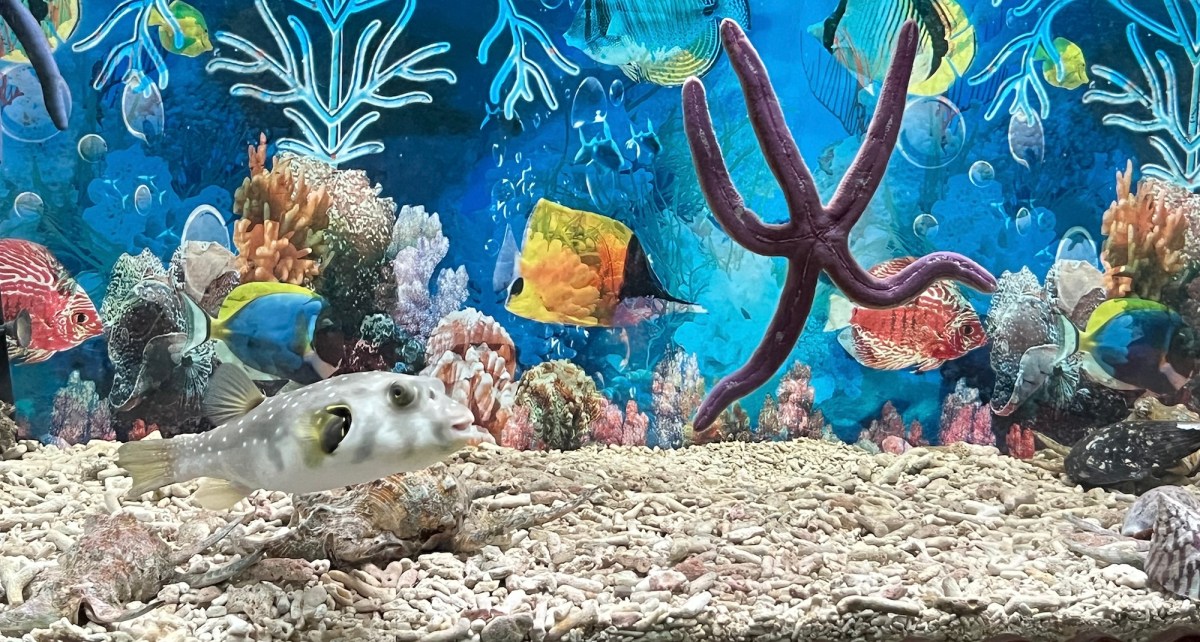
Next up, the living exhibits. Vinodeni requested us to keep the flash of our cameras off, so as to not disturb the marine wildlife. The rooms were dimly lit, presumably to mimic the sea lighting, but the tanks themselves had artificial lights and bright colourful backgrounds.

A fish and a starfish compete for attention on a busy background.

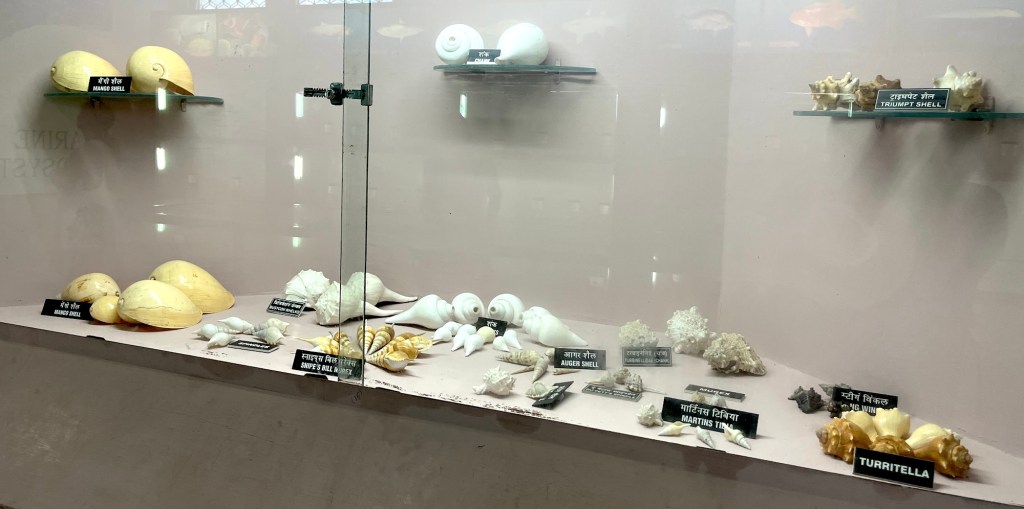
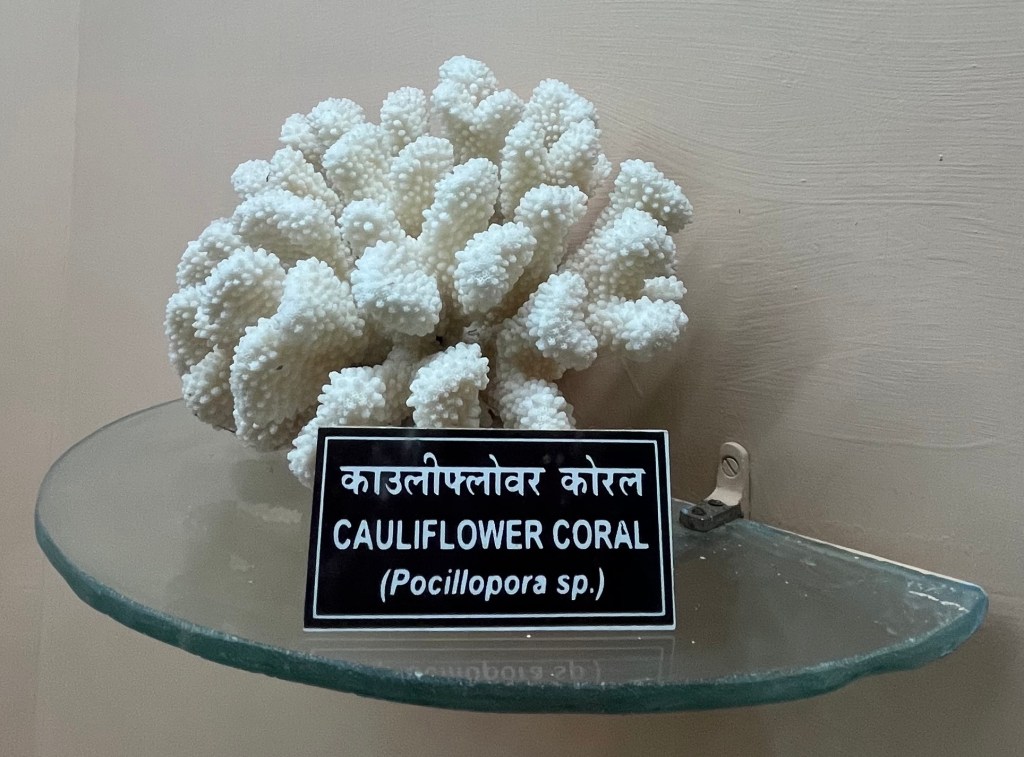
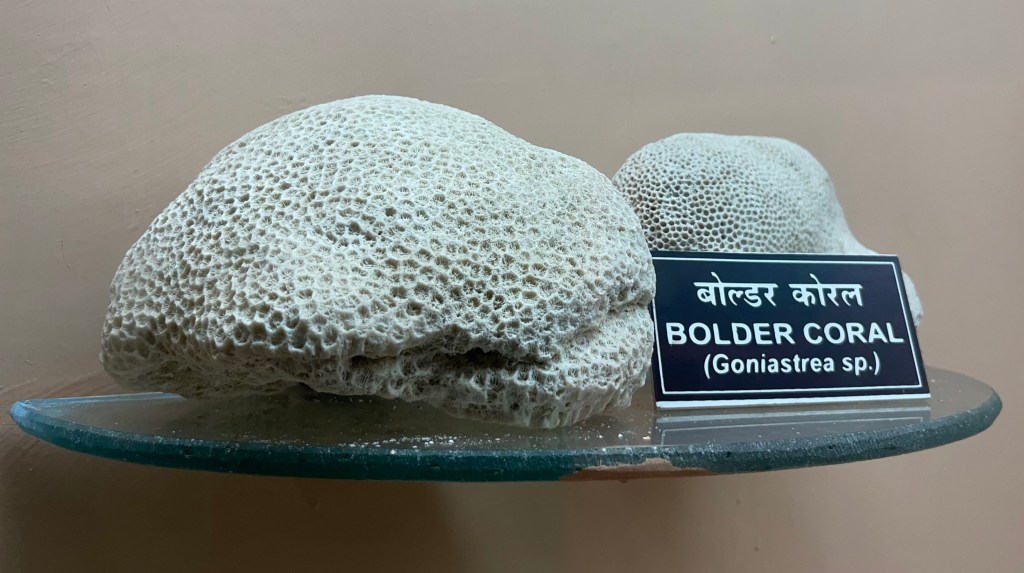
The fishes were beautiful, of course. But the exhibits I was most interested in were the seashells and corals.

I’ve been beach combing from the first time I visited the sandy beaches of Chennai. I’d admired my grandmother’s collection of small, pretty, colourful bones sorted neatly by type and displayed in fancy bowls. My mother’s collection had much larger ones, in various shades of brown. But it was my father’s collection that awed me the most. Almost entirely white and massive, these were deep sea creatures on our mantlepiece.

Several thousand kilometres away from home, in a dingy room, there they were, familiar faces. Now, thanks to the museum, I could give them names.

Vinodeni told us about how these exquisite creatures are now critically endangered. They’d been pulled out from their habitat and traded for their beauty. And now, there are too few of them in the wild. I flinched a little as she continued, “they don’t belong in our homes.” She then reaffirmed what we’d learned just a few days earlier—that even the abandoned seashells on the beach are reused by other creatures.

Vinodeni probably realised that I felt a little guilty, so she changed her tone a little and told us that those who acquired them in the past weren’t aware of what would happen. But now, the Government is trying to fix things.

It is now illegal to trade some varieties of shells. And the airport strictly screens baggage to catch anyone taking seashells and corals out of the archipelago.

Lunch time was creeping up, and mindful of the closing time, Vinodeni ushered us to the exit. “There is one more exhibit that you must see, but you’ll need to step outside in the sun for that.” We obliged. She took us towards the giant skeleton at the entrance of the museum. “This here, is a full skeleton of a Sperm Whale.” She then rattled off a quick set of facts about the creature, including why it was named thus. The way Vinodeni spoke made it abundantly clear that she was passionate about marine life.

With our tour over, we continued to chat for a while. I asked here where she was from, and she said she was from Port Blair. Her ancestors were from Tamil Nadu, but since she was born and brought up there, she considered the Andamans her home. “Wouldn’t you agree?” she asked me. After all, I too had grown up in Delhi, and though my roots lay in Madurai and Thanjavur, I was certainly more of a North Indian.

And perhaps that’s one reason why seashells excited me so much. It was that North Indian kid that was so enamoured by marine life so far away from where she grew up. Which is why I was excited by just standing next to the ticket counter. My seafaring father had told me about the fantastical creatures that lived deep in the ocean, especially the seashells the size of bathtubs. And seeing the Giant Clams in person was a dream come true.

The Giant Clam—almost the size of a bathtub. This pretty much sums up why I’ve always wanted to visit Port Blair. Throwback to when a little girl’s dream came true.

Our trip to the Andaman Islands left a deep impact on me, particularly my relationship with seashells. I still adore them, and proudly display our collection at home. But ever since that trip, I’m mindful to not pick any more. They’re someone’s home, and they deserve to be used for that purpose for as long as possible.

Categories
Stories

The Temple Voice


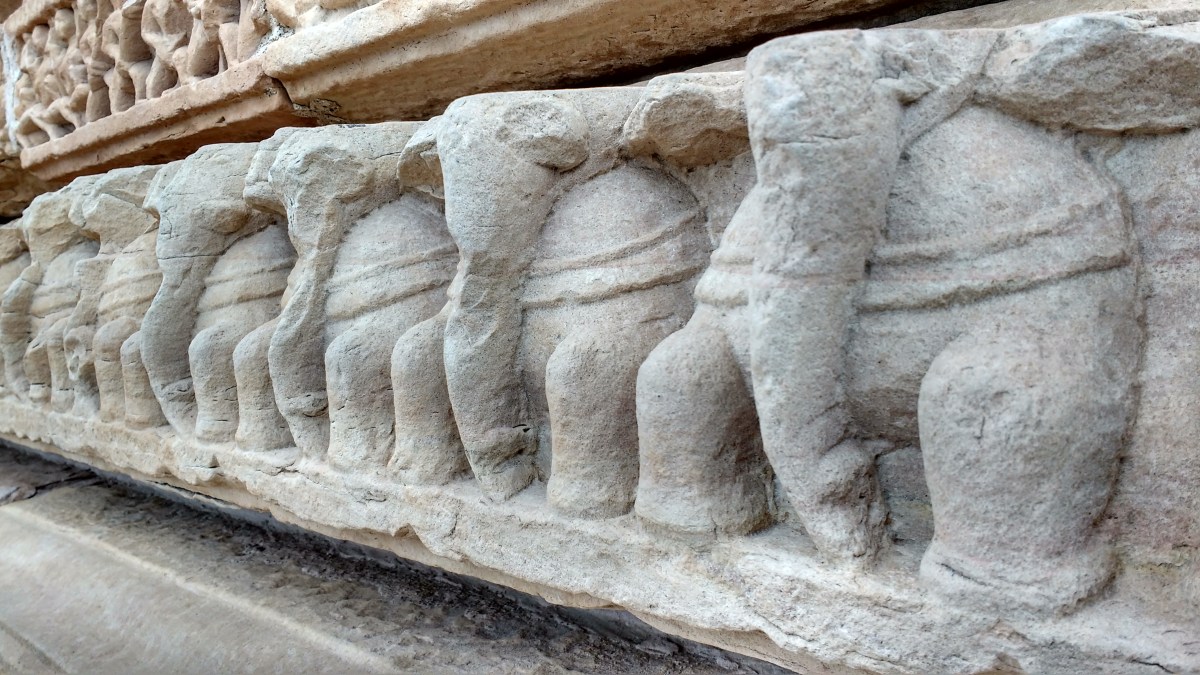
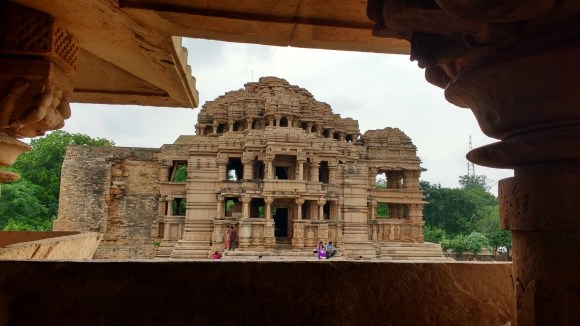
The elaborate sculptures adorning the temples in the Gwalior Fort are too many to count and too beautiful to describe. Many have been weathered by the strong wind. The many kings who fought, captured, and lost the Fort seem to have left the temples untouched.

That they have very strange names takes nothing away from their beauty. The “saas” is big, bod and stands proudly, imposing her might on anyone who dares think contrary to her wishes.

The “Saas” as seen from the “Bahu,” Gwalior Fort Complex, Madhya Pradesh, India.

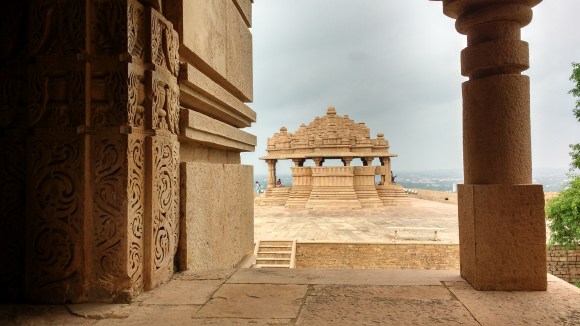
The “bahu” stands at a distance, more towards the edge of a cliff and doesn’t care for attention.

The “Bahu” from the point of view of “Saas,” Gwalior Fort Complex, Madhya Pradesh, India.

Inside the large temple, one gets the feeling of being engulfed by Sahasrabahu, the one with a thousand hands—hands that are dancing, playing music, worshipping, meditating.

Who was the guardian deity of these temples? No one can tell for sure. There are conflicting tales about Shiva and Vishnu. Some claim that these are Jain temples.

Folklore says that the ruling king dedicated the large central structure to his mother, an ardent devotee of Lord Vishnu. The smaller temple was to pacify the king’s wife—a Shaivite.

Tourists take pictures, climb over the walls, and walk precariously along the beams that form the triangles overhead. But few venture close to the sanctum sanctorum.

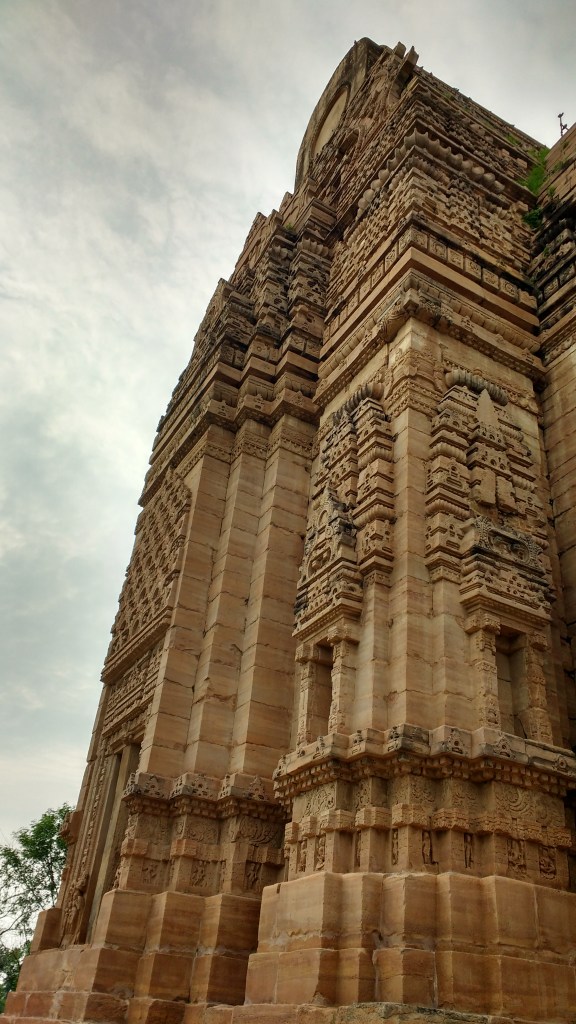
Teli Ka Mandir, Gwalior Fort Complex, Madhya Pradesh, India.

A short distance away, the Teli ka Mandir stands tall. If the building could speak, I might have said, “I am Dravidian.” As I was imagining the walls speaking to me, a man hurried out from inside the temple, cursing under his breath. He looked livid and frantically looked around so he could vent his rage. When he found someone who looked like a caretaker, he let him have it.

“This is a temple! Why are people wearing shoes and trampling all over? Have you stepped inside? It reeks of bat filth.”

“Such a fine architectural monument and you are letting it go to waste. Is this the devotion this was built for?”

The man’s lament fell on deaf ears. The caretaker gave an indifferent glance. “It is no longer in use, sir,” he said, and walked away.

The sanctum sanctorum of all three magnificent temples were dark portals. Beauty graced all the walls outside and inside the halls leading to the small room meant to be the throne of the presiding deity.

If the walls could speak, they might have been as indifferent to our presence as the caretaker was to their plight. With their structure reduced to architectural candy, and the real purpose long given for bats to live in, there was no longer anything left to say.


Still salvaging old work from the archives, I discovered this story’s handwritten draft from May 2017. This too, is a part of the ebook The Speaking Rock. If the pictures are grainy, it’s because they’re from a phone camera from 2016.

I was both proud and awestruck by my phone camera’s prowess back then. It pales in comparison to what my phone can do now. And digital technology today still doesn’t match up to film camera clarity. But grainy footage notwithstanding, it reminds me of some wonderful memories we made almost nine years ago. Isn’t that what pictures are for?

Categories
Stories

The Eternal Smile


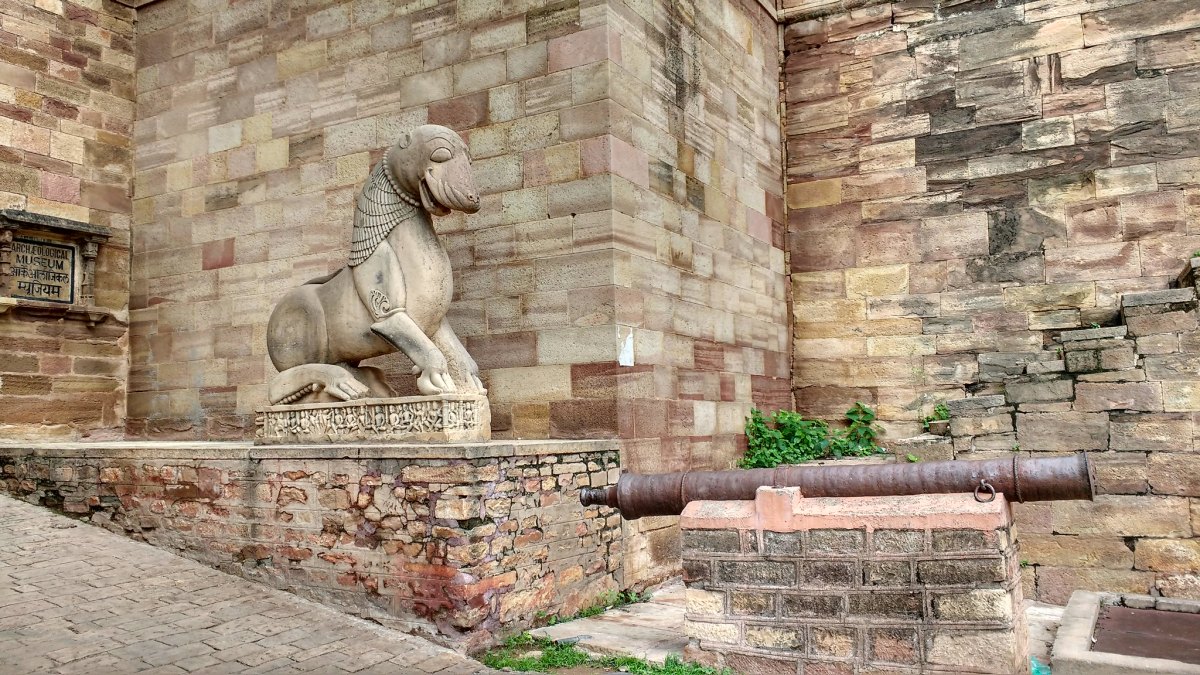
We walked past the stony gaze of the lions guarding the giant entrance. Fresh monsoon grass peered from beneath the sandstone tiles. The wings of the Fort kept a keen watch from above. The ninth Queen of Raja Maan Singh surely must have been special to get this much attention.

We walked on what was the front porch of the Gurjari Mahal and trekked up a steep path leading to the Palace. To our right was a well-manicured lawn. And to the left, a steep rocky path that seemed to lead nowhere.

The Palace had a short and narrow flight of stairs that led to a beautiful courtyard. Intricately carved stone statues of God and Goddesses here, pieces of floral patterned pillars and walls there.

The word museum was, perhaps, not very appealing to most tourists. Even those who strolled in didn’t stay long. The cool breeze only enhanced the peaceful ambiance of the courtyard.

“Do you have a ticket for your camera?” A portly man asked as we began freezing moments for our album.

We showed our ticket.

“Well, then please use only one—either your phone or the camera. Please!” Beneath his small smile, the request was firm.

I put away my phone and smiled sheepishly. Half expecting the man to run back into his administrative chamber after we had complied with his request, we turned to continue our exploration.

“Oh but first you must come and see the Salabhanjika!”

The Salabhanjika is the museum’s prized possession—a miniature statue that epitomizes femininity. We had read about the sculpture being guarded closely and were under the impression that we’d need special permissions to see her. So when the gentleman invited us to take a look, we happily accepted.

We followed him to his office. A small dark room furnished with a simple desk and a few plastic chairs. The medieval walls were covered with yellowing photographs and newspaper clippings about the sculpture. Behind the desk was a cell. Deep inside behind steel bars, stood the small, smiling Salabhanjika.

“She’s called the Indian Monalisa!” His voice was filled with pride at being the guardian of a rare sculpture. Like many of the exquisite sculptures that we’ve now become accustomed to seeing, Salabhanjika was breathtaking.

“When she was first found, she looked like this,” he said, pointing towards a grainy print stuck on the wall. “Her head was found later and was fully intact, so we could piece her together. We were lucky.”

“Look at her carefully. The more you look at her, the more she’ll smile back at you! Look at her from any direction and she’ll look towards you.”

We looked again. And she did, indeed, appear to be smiling more than before.

“Please take a picture. Go on, go closer. Make sure you switch off the flash!”

We leaned in, the lens of our camera wedged between the steel bars. Click!

“She’s been insured for five crores!” our host could hardly contain his excitement.

Five crore rupees. The Monalisa is insured for a hundred million dollars.

Salabhanjika’s smile grew wider.

I wondered, if she had been discovered before the Monalisa, would Leonardo Da Vinci’s painting be called the Italian Salabhanjika?

She stood there silently. Still smiling, and letting the question remain unanswered.


Salabhanjika is a Sanskrit word meaning ‘breaking a branch of a sala tree’. There are many intricate sculptures of Salabhanjika in Hoysala and Bednur. But the one in Gwalior is reportedly the only one that smiles.


This story is part of my digital book, The Speaking Rock.

Originally written in 2017, the ebook was published on the Juggernaut platform. 

For those who aren’t aware, Juggernaut was a publishing platform that claimed to democratise publishing. It’s slogan, “You don’t need to know anyone to get published.” It provided writers access to publishing tools and a marketplace where readers could connect with writers directly. The Speaking Rock was one of three ebooks I had published with them. My story Free Bird also won a short story contest and was featured in their anthology collection.

I loved that platform, even from a design perspective. I even wrote a glowing review on Design Tuesdays.

Unfortunately, the platform soon introduced a paywall and put my stories behind a paywall (without offering any royalties). And thereafter, the platform disappeared altogether, taking my work with it, leaving me hanging high and dry. I felt betrayed. I felt bitter. I kicked myself for being naive. Of course, their business model wouldn’t pay their bills.

For a good three years, the site just showed an ugly “under construction” message. No way to get in touch with them. No way to retrieve my work. I had made peace with the fact that I’d lost my stories—until a few days ago, when I found a draft on Google Docs that had one of the stories. And when I saw the draft of the Eternal Smile sitting right under my nose on WordPress, I almost cried.

Funnily, when I opened Juggernaut’s website today, I found that it was no longer under construction. (The internet archive’s Wayback Machine reveals that the site was still down as recently as 5 days ago!)

There is no mention of a writer’s platform, and no way for any one to log in and retrieve their work. Today, the website is just like another publishing site that displays influencers and popular media icons who’ve published with them. So much for democratising publishing!

As for me, I’m happy that I can finally share Salabhanjika’s smile with you. I’m still looking for that photograph we took. I’m sure it’s there somewhere in our virtual closet.

Categories
Stories

Good Vibrations


It was my first visit to Dubai, and I wasn’t handling the timezone difference very well. On most days, I found myself waking up at 4 am.

Tossing and turning around in the soft hotel bed, try as I might, I couldn’t sleep. Fortunately, the hotel was walking distance from the Jumeirah beach. If I was going to be groggy during the meeting hours, I may as well enjoy some time with the waves. So I strolled up to the beach every morning and watched the waves crash on to the silent shore, waiting for the sun to rise.

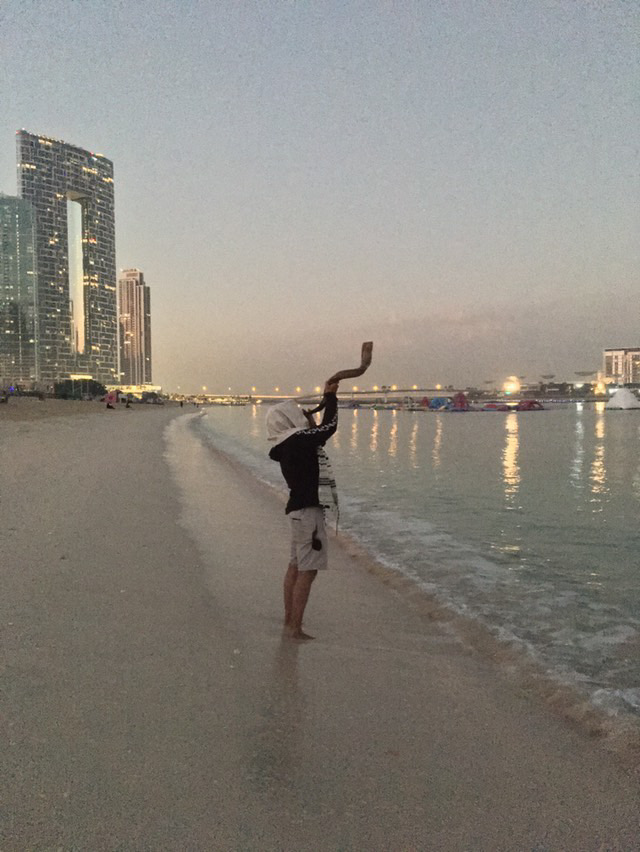
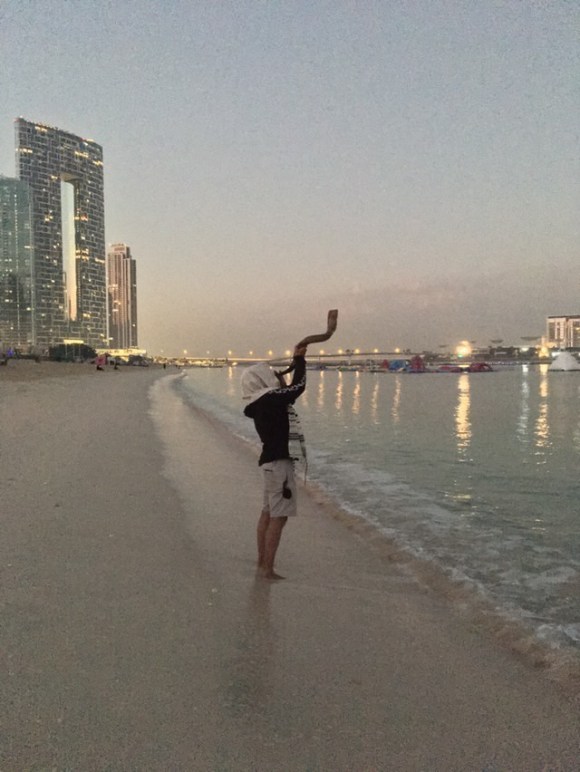
On one of the mornings, I heard someone play music. It wasn’t hard to locate the source. Still dark, I could make out the outline of a man, his head covered and in his hands a giant horn-like instrument. I sounded something like a bugle, but not quite.
Vernon playing the Shofar at Jumeirah. Picture taken with permission.

I waited for him to finish his piece and mustered up the courage to talk to him. “Where are you from,” I asked. “India,” he responded.

It took me a while to recover from the surprise revelation. “So am I! Where from? And what are you doing here?” I rattled off the questions in quick succession.

He told me his name was Vernon, and he was from Mumbai. By profession, he was a personal trainer.

His client was sleeping that morning, and he decided to extend his stay at the shore.

He then explained to me the significance of the instrument he was playing. The Shofar is an Israeli wind instrument. He played it early morning by the beach, before beginning his day.

Vernon explained a few verses from the Bible and how the instrument was his path to spiritual cleansing. We continued to speak about vibrations and how everything in nature is connected to different types of “waves”.

When the sun had come up fully, he took leave. I lingered around at the beach a little while, reflecting on our conversation.

“There are no accidents,” he said. “If my client wasn’t asleep, I’d have left a long time ago. God wanted me to play for you.”

Categories
Stories

The seed of the Andaman dream


It was a huge garage—at least to me. The ceilings were high. Despite the old pale blue Premier Padmini and a bicycle, there was enough space for aluminium trunks—the quintessential Rajai boxes that most families owned back then—some painted black, and all of them with a serial number. My mother had cut out the dates from a calendar and pasted them on the boxes, so we knew how many we had. It made life easier for a family that had to move every few years. Years later, it was this small labeling tip that helped us as we moved from our first apartment.

As a child, I was obsessed with seashells. As was my mother and her mother. Hoarding runs in the family. And it was for these seashells that I was rummaging through the garage. I’d caught wind of a treasure of shells, and I was determined to find it. One of these boxes had to have them.

At last, I found them. Out came one large clam—the size of my palm. And another, this one with layers. And they grew bigger, two of them so large that I could carry only one with both my hands. What on earth were these huge clams doing inside a dusty, cob-web-covered dark corner? And what’s that? Coral! My heart sank when I saw that some of them had cement stuck in them. Maybe it’ll come off with some cleaning, I reassured myself.

Looking back, I can only imagine what it must have been like to move a fully furnished household across the country with 2 small children in tow. The two of us struggled when we moved with our spartan belongings within the city. But at the time, I was livid. How could these precious items be so neglected?

Back inside the house with my haul, I set about cleaning them as best as I could. The dust eventually came off to reveal the creamy skeleton. The cement stayed. Maybe time will wear down the cement. After all, they do eventually peel off from our walls.

As my father saw me lugging around my new playthings, he quietly slipped in a little fact. You know, in the deep sea, there are seashells the size of bathtubs. I saw a faint twinkle in his eyes. Seashell hoarding wasn’t just a part of the ladies in the house.

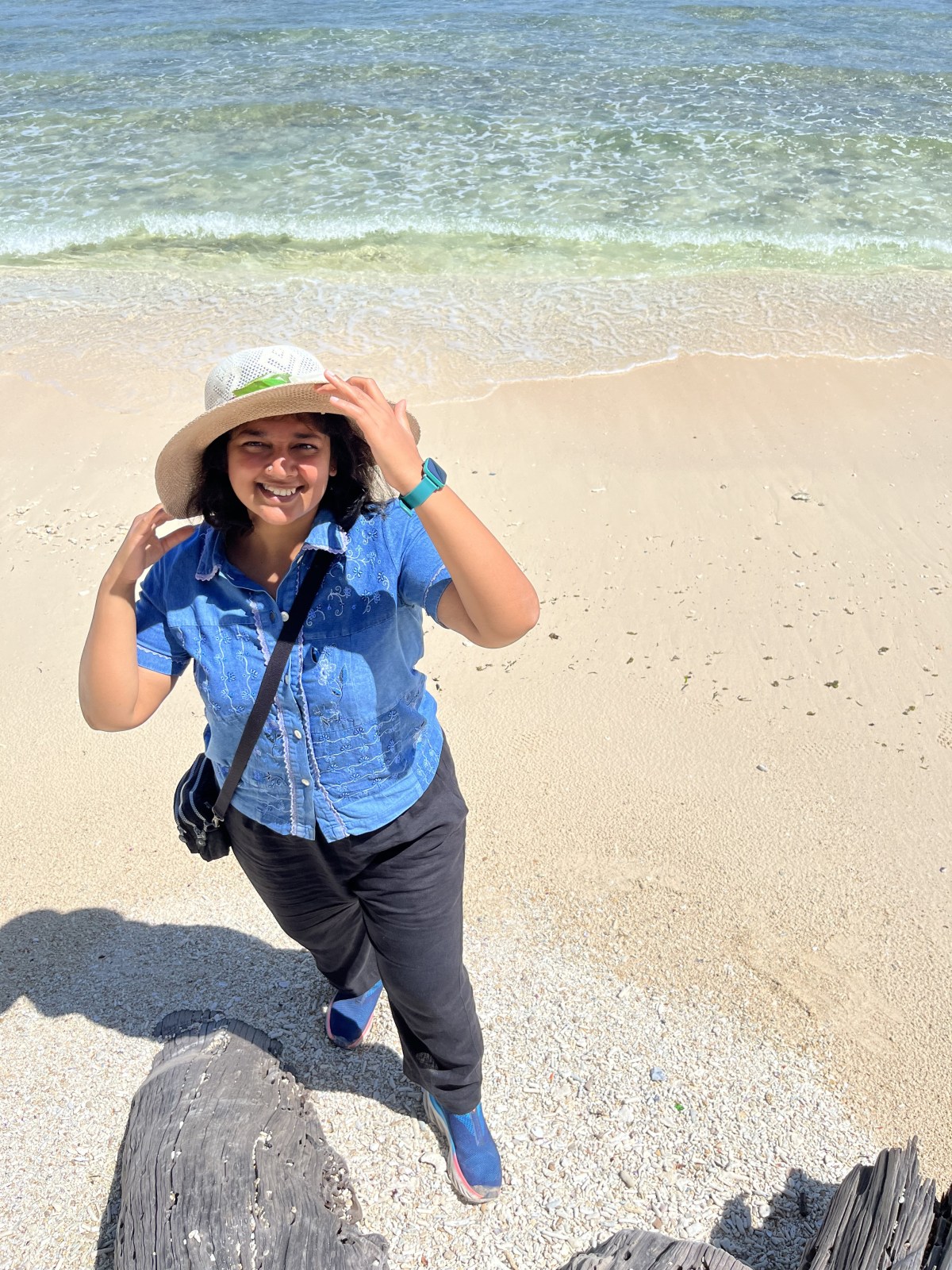
Those clam shells and corals still sit in my parents’ house, displayed on a shelf. And with them, a dream that one day, I’d see those bathtub-sized shells.

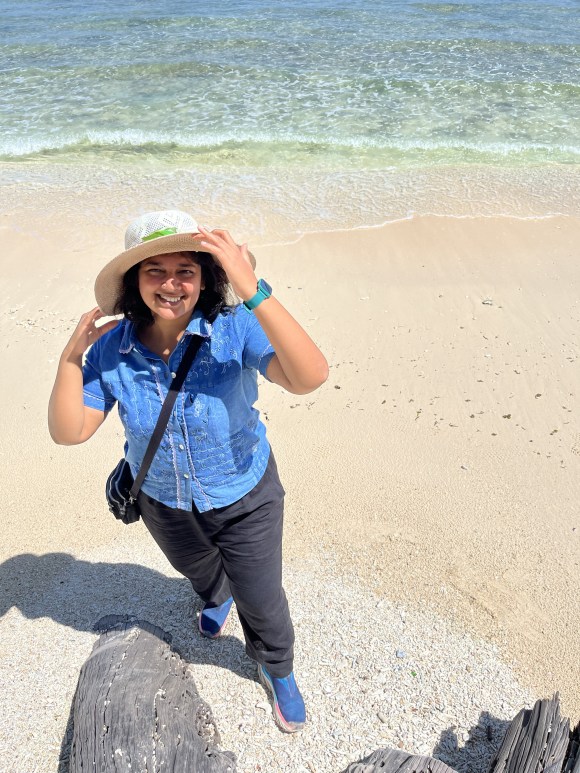
Standing in coral paradise
Categories
Miscellaneous

The Floating Palace


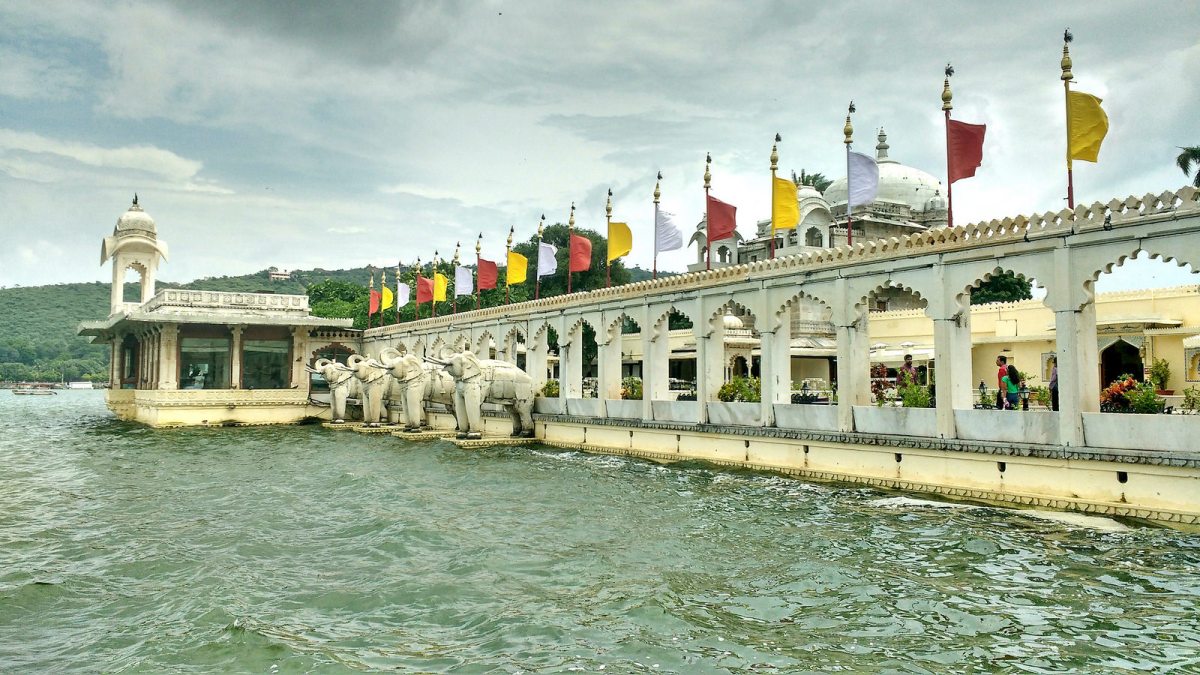
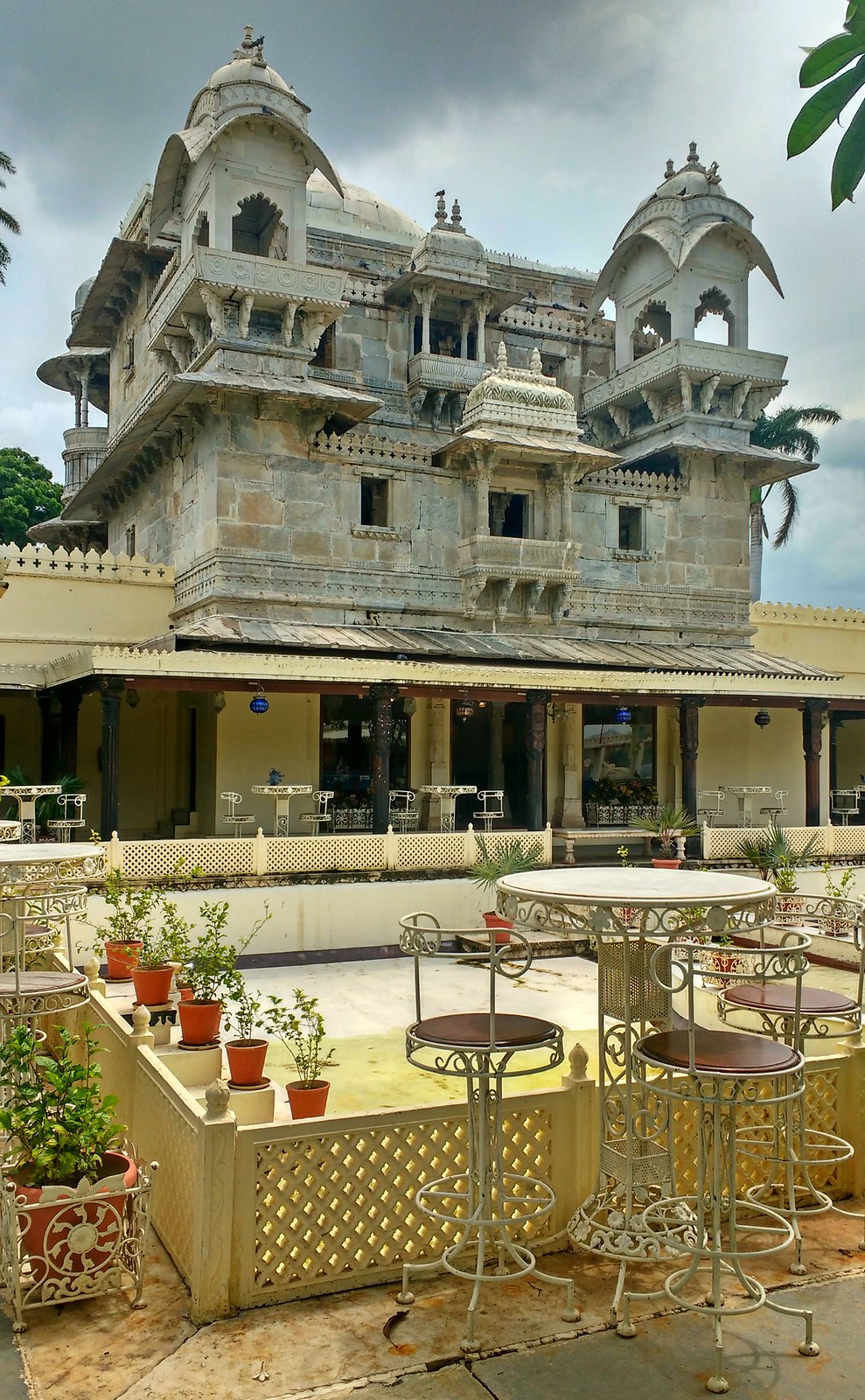
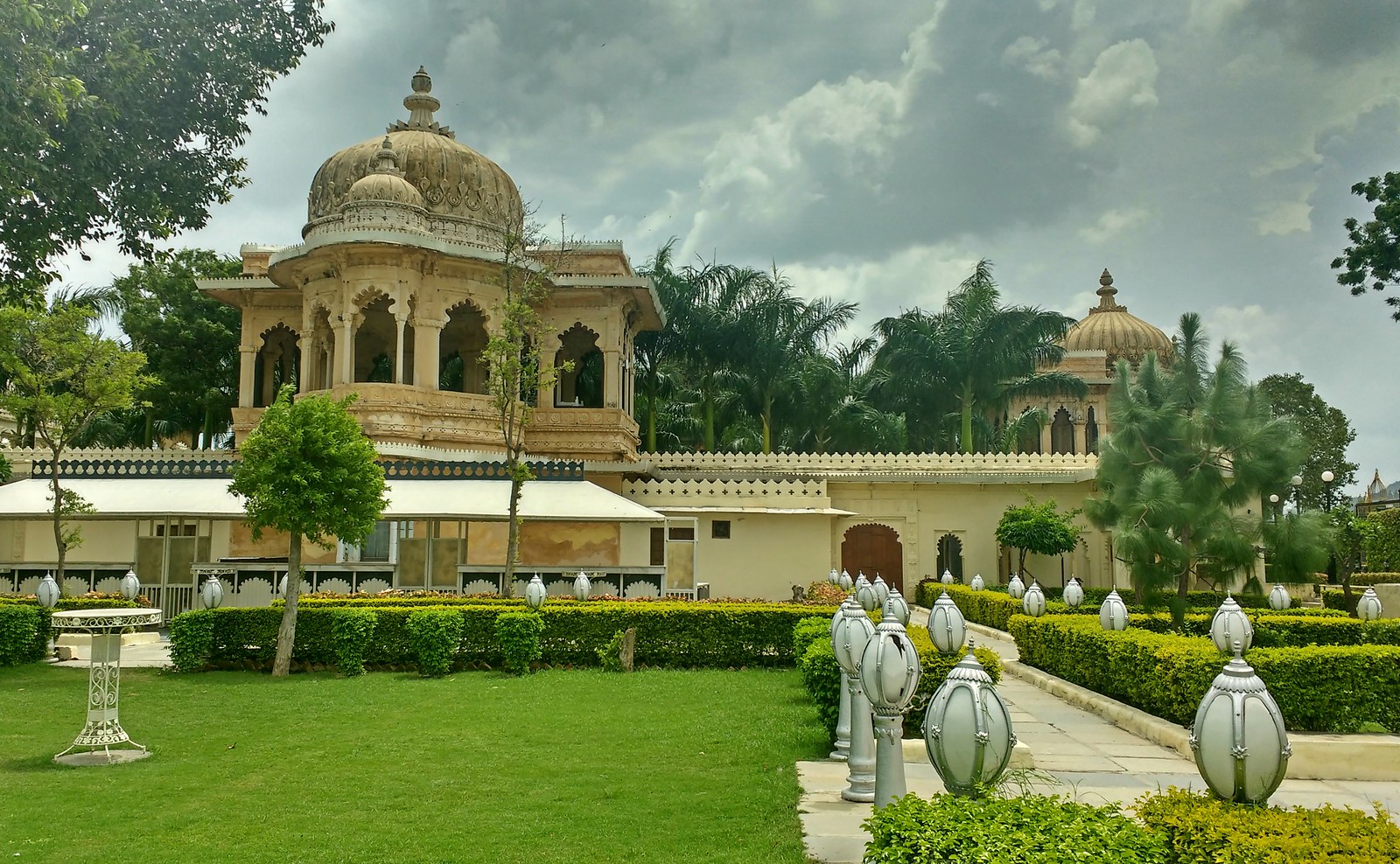
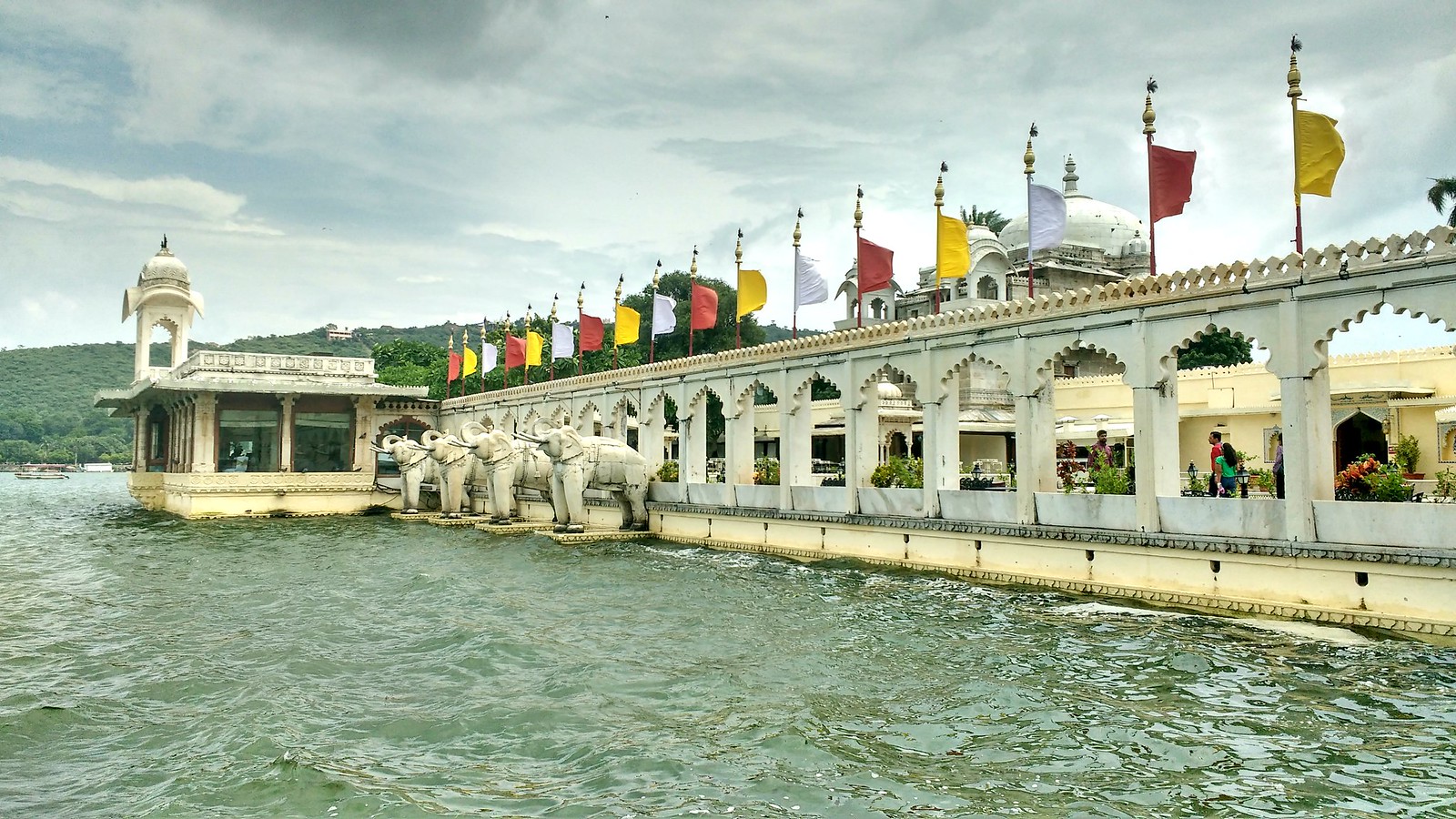
Udaipur is often called the Venice of the the east. I haven’t visited Venice, but I’d still prefer it to be called the Udaipur of the west! I’ll let the pictures of the Jag Niwas Palace at Lake Pichola do the rest of the talking:

A portion of Jag Niwas Palace
Against the most beautiful blue skies

The Island Palace
The central tower

Jag Niwas Island
The lawns

The Floating Palace
The boundary walls


More photo stories from Udaipur


This is post #28 in this year’s NaBloPoMo, or as Ra calls it Nano Poblano

NaBloPoMo = National Blog Posting Month = Thirty straight days of blogging


Follow along on other social channels:
FacebookInstagramMediumTwitterGoogle PlusFlickr

Categories
Miscellaneous

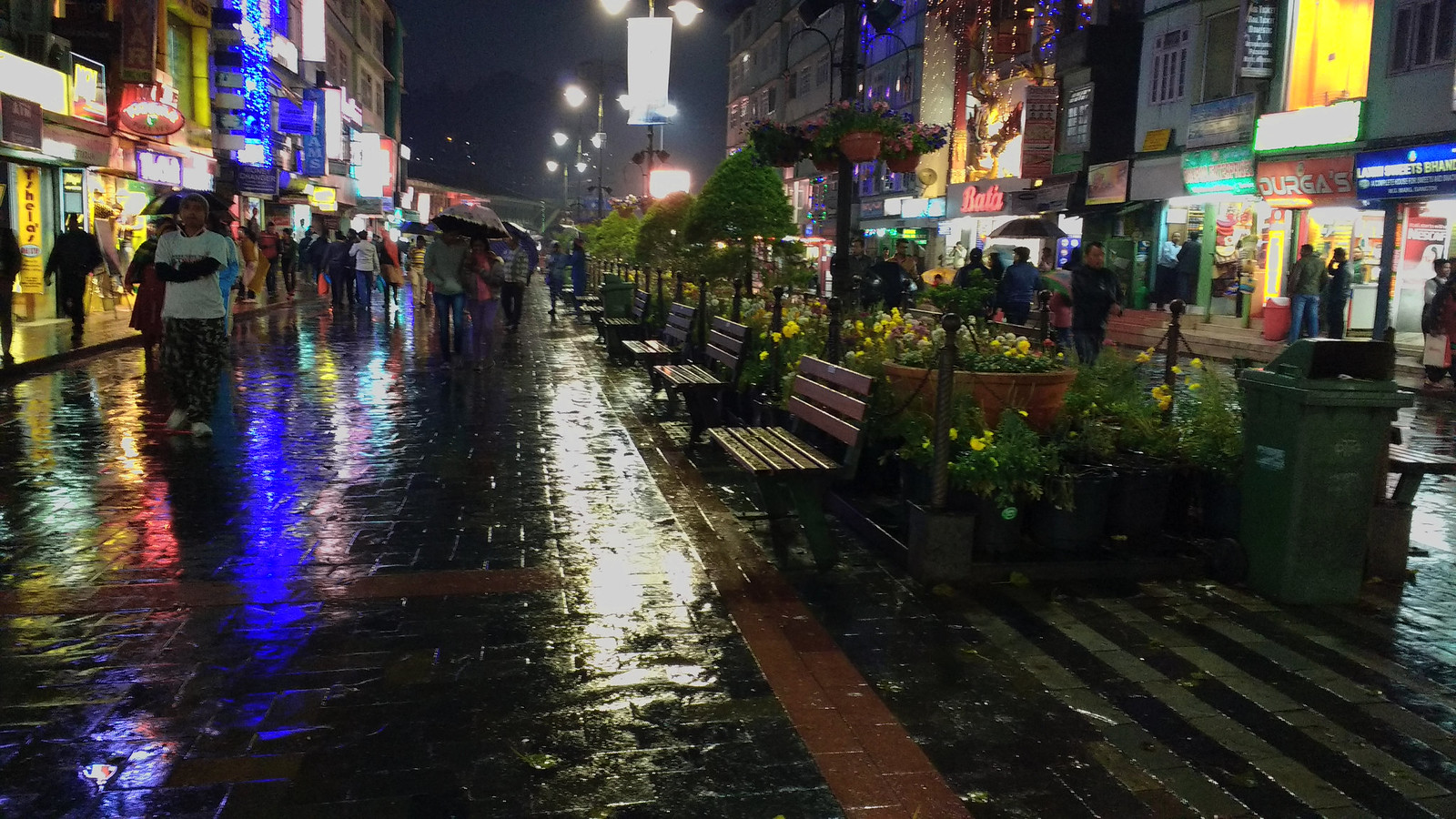
MG Marg at night


One of the things that we found particularly nice about Gangtok, was how clean the city was—despite the extreme weather, the huge influx of tourists, and the logistical challenges of a mountainous terrain.

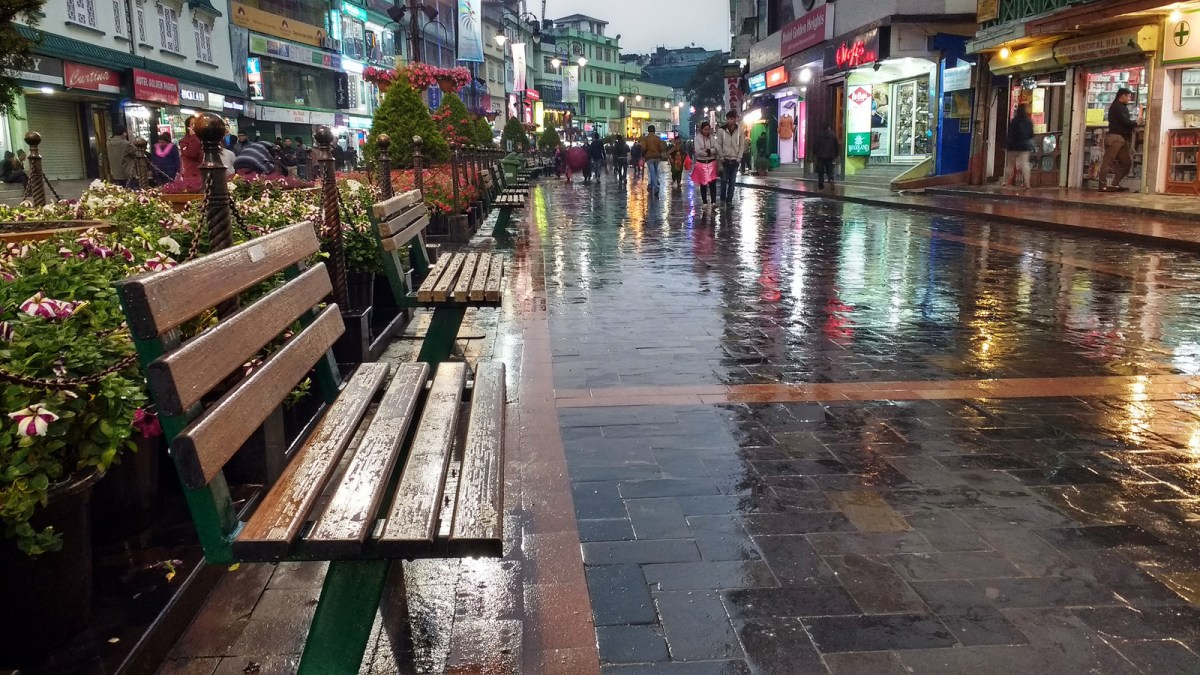
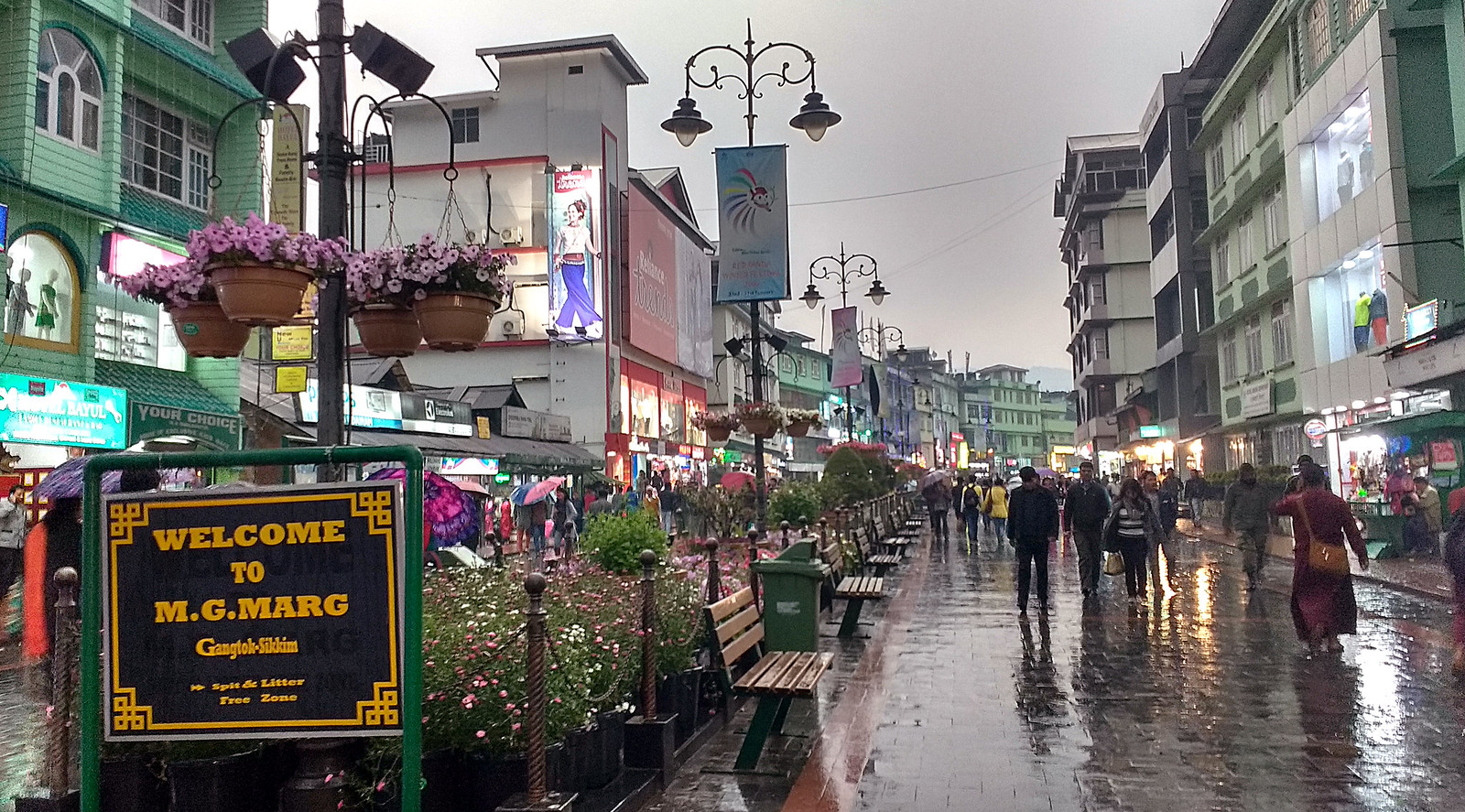
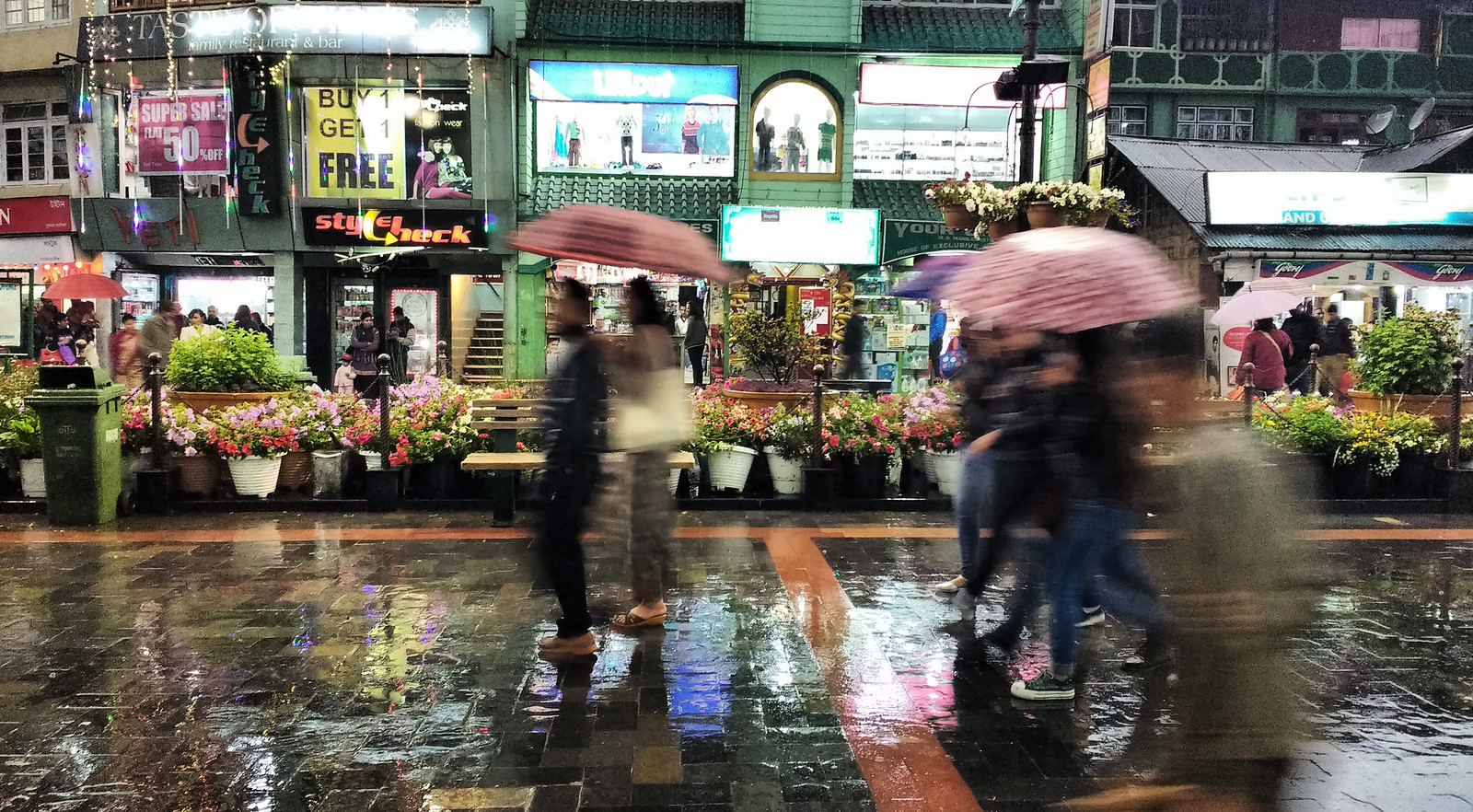
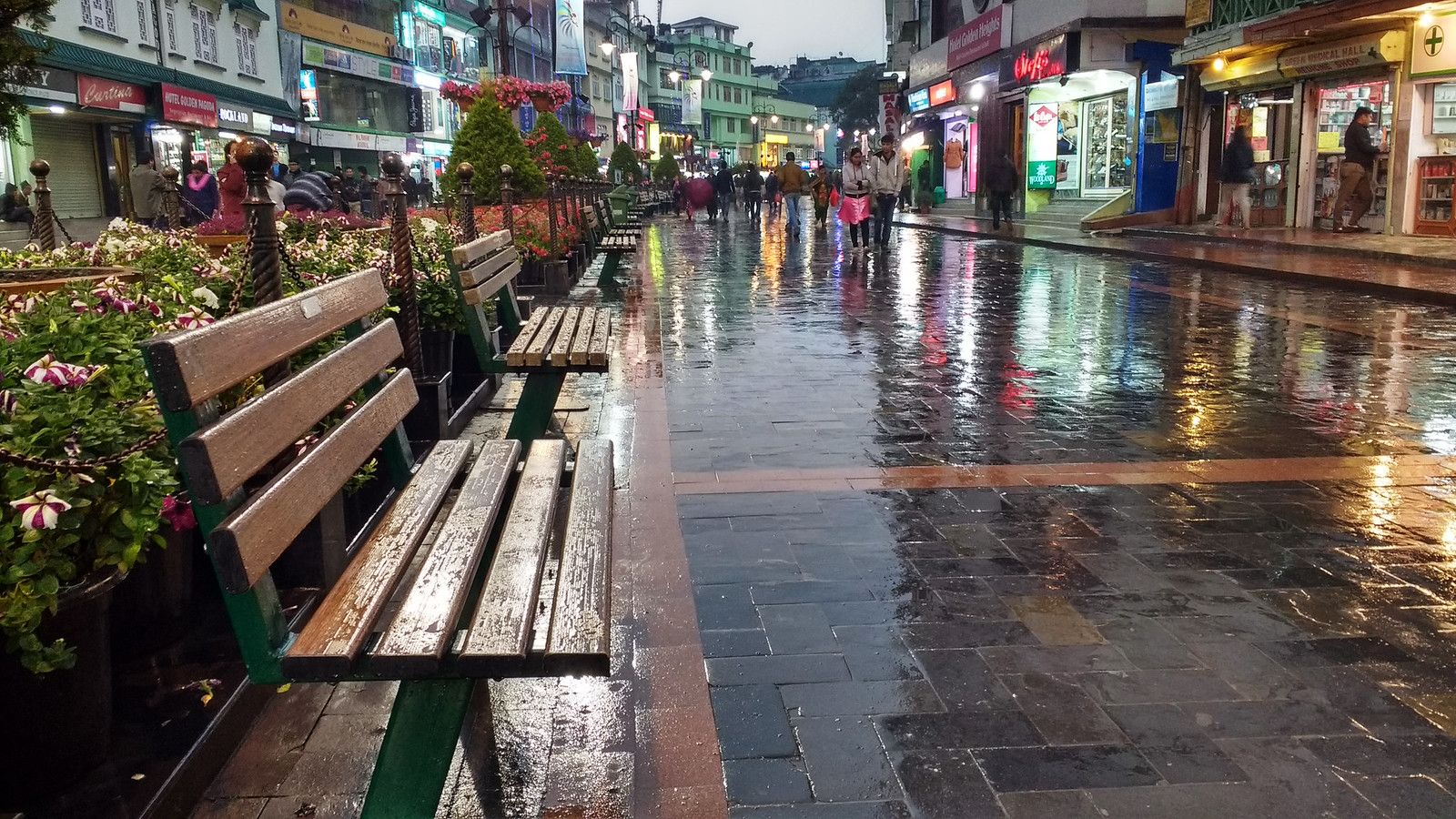
In the three days we spent, the constant rain may have dampened our hopes of seeing the snow-capped Himalayas, but the stone paths of MG Marg raised them up, and how! In the light pitter patter of the rain, the smooth tiled paths transformed into a beautiful kaleidoscope, reflecting the colourful lights of the shops on either side.

Here’s a sampler:

MG Road, Gangtok
Welcome to MG Marg

Benches in the rain
Benches waiting for company

Gangtok at night
Vibrant nightfall

MG Road in the rain
Shopping


In response to this week’s Photo Challenge: Transformation
This is post #26 in this year’s NaBloPoMo, or as Ra calls it Nano Poblano

NaBloPoMo = National Blog Posting Month = Thirty straight days of blogging


Follow along on other social channels:
FacebookInstagramMediumTwitterGoogle PlusFlickr


Categories
Miscellaneous

Waiting in the cold


It’s still early winter and there are some brave ones roaming the streets around without woollens. But we’re not taking any chances. As I write this post, sitting snugly in the warm blanket, my mind wanders to our freezing experience in Sikkim last year.

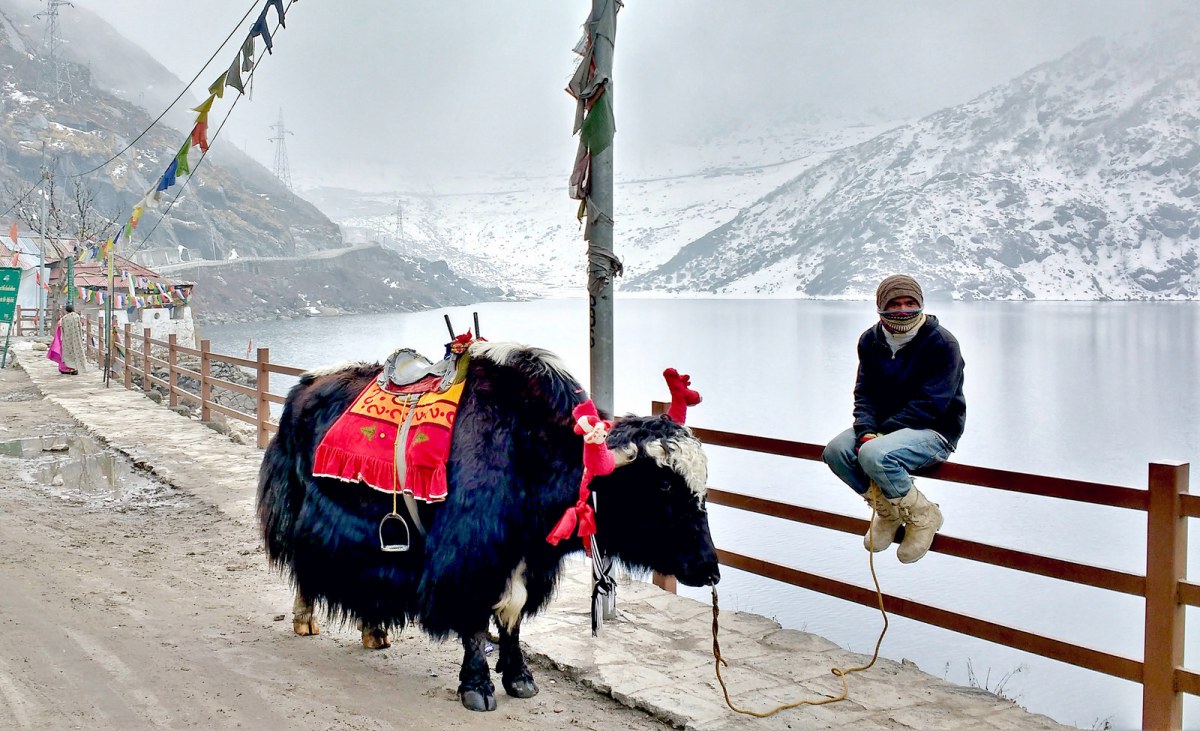
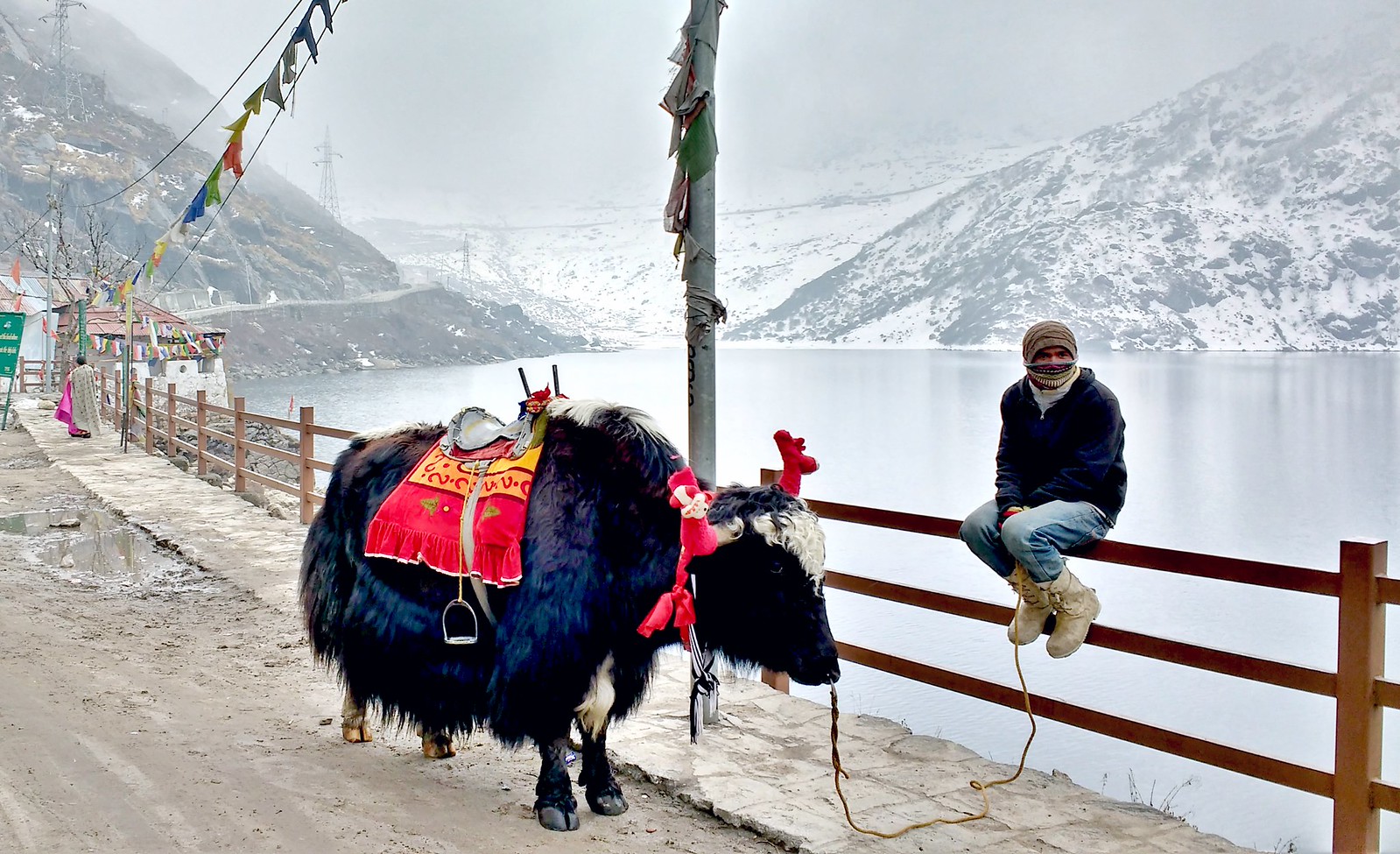
At the Tsomgo lake in Sikkim, we rented extra woollens and boots to help combat the extreme mountain weather. We had three layers of jackets on, but our feet were virtually freezing inside the boots. The yaks, though, were pretty cool and comfortable standing barefoot. Brrr!

Waiting in the cold
A yak owner waits for tourists, who will be allowed to sit on the yak and pose for photographs—for a fee, of course!


This is post #24 in this year’s NaBloPoMo, or as Ra calls it Nano Poblano

NaBloPoMo = National Blog Posting Month = Thirty straight days of blogging


Follow me on other social channels:
FacebookInstagramMediumTwitterGoogle PlusFlickr

Categories
Stories

The haveli next door


Lal ghat is perhaps the most tourist-y area of Udaipur, filled with havelis-turned hotels. Most of the hotels and cafes in the areas now boast of roof-top dining, and we explored as many as we could. One particular one, though, stood out. Jaiwana haveli was highly rated on Trip Advisor, and we headed straight there after our visit to the Monsoon Palace.

“Is the roof-top cafe open?” I asked at the reception. “Yes, it is! And if you’d like to use the washroom, then it’s on the ground floor—there isn’t any upstairs!” The man at the reception smiled and answered. We thanked him and then climbed up the narrow and steep staircase to the open-air dining area. It was around eight o’clock,and it appears that we were the early birds that night. The tables were all empty, and we took the best seat in the house—the corner table, with a splendid view of Lake Pichola and its illuminated islands. We picked our menu, and then immersed ourselves in the soft sounds of the waves of the lake and pleasant rain washed air. We could see portions of the City Palace in front of us, and all the heritage hotels—which were once palaces—on the opposite side of the ghat. Below us, were a few anchored boats, and other rooftop cafes, and way off in the distance, was the hill we had just visited. And then, out of nowhere, came a loud noise, startling us.

We looked around. There was an elderly lady seated behind us, and having recognized our searching glances, she offered an answer. “That’s the cultural program at Bagore ki haveli. It takes place every evening.” In the darkness of the candle-lit night, we couldn’t see her face clearly, but something in her voice sounded gentle and elegant. We continued to talk, and asked her about the other items on our list of things to do, and how might we plan them.

Shortly after, our delicious dinner arrived, and we noticed the lady giving instructions to some of the waiters. That’s when we realised, she was probably part of the management of the hotel, if not the owner.

The staff treated us so beautifully, it was hard to believe, especially after the harrowing time we had experienced at another famous tourist destination (more on that in a separate post). They thanked us multiple times and asked us to review them on Trip Advisor. This sweet hospitality, we later realised was common to all the cafes we visited. We made a mental note of the service, and decided that we’d visit again.

As we were winding up, other tourists began trickling in, and the moment we got up, one staff member placed a placard on our table. It was marked “Reserved”.

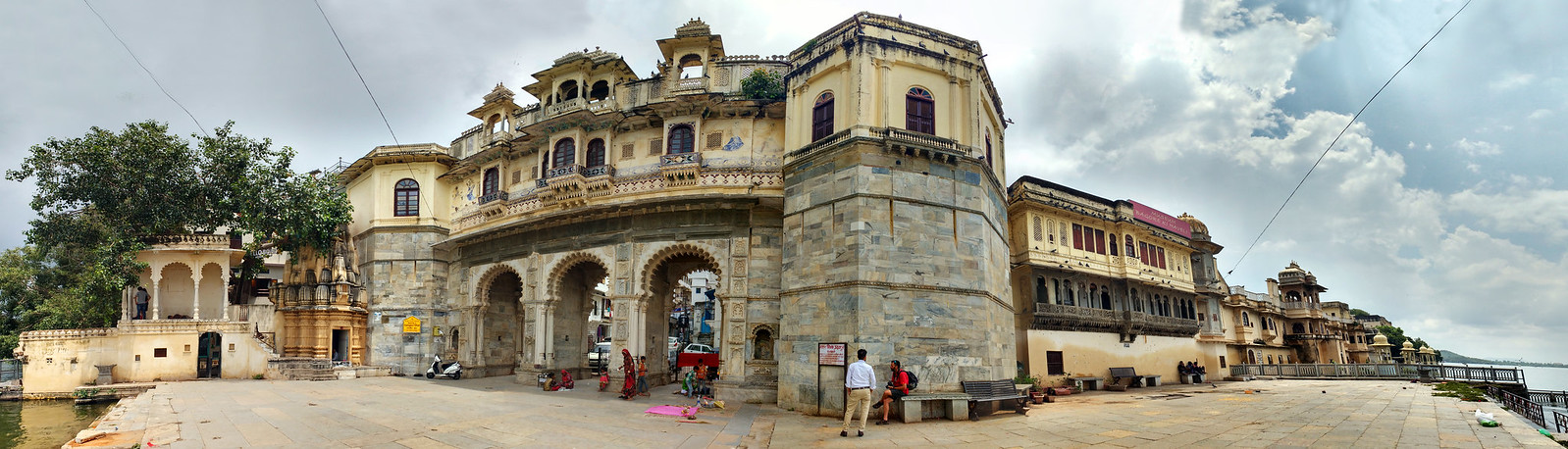
Bagore ki haveli Panorama
Bagore ki haveli with Tripolia gate, along Gangaur ghat

Before we visited Udaipur, our itinerary included the sound and light show at City Palace. Having heard the cheers of the crowd, and the recommendation by the lady at Jaiwana haveli, we decided to skip that and attend the cultural programme instead—a decision we are very thankful for!

The next morning, we visited the museum at Bagore ki haveli, and returned in the evening for the cultural show.

While my phone wasn’t able to capture the beautiful ambience atop Jaiwana at night, here are some pictures atop the haveli next door—Bagore.

Lake Pichola Panorama
Panoramic view of Lake Pichola atop Bagore ki haveli

View from a window of Bagore ki haveli
View from one of the windows of the haveli

The Chhatri in water
The chhatri in the water


Photos taken with a Moto G3. Click/tap to enter my Flickr Photostream


This is post #22 in this year’s NaBloPoMo, or as Ra calls it Nano Poblano

NaBloPoMo = National Blog Posting Month = Thirty straight days of blogging