
Categories
Hobbies Musings

I’ve Been Around the “W”


I’ve been speaking English my whole life. But it wasn’t until recently that I realised that I cannot pronounce the letter “w.”

The ghost of YouTube algorithms once suggested a short video from a Vietnamese woman who now lives in Germany. Uyen Ninh‘s videos poke fun at the cultural differences between Germans and Vietnamese, and through her perspective, I’ve learned that Indians and Vietnamese have a lot in common.

Scrolling through the comments section of the videos, I learnt that people and cultures around the world have remarkably similar belief systems.

It was in one of these videos that I heard her German partner exclaim, “I cannot pronounce ‘W’!” As with most of her videos, I scrolled through the comments section. Many people agreed, and understood that non-English speakers pronounced the first syllable of “Valley” like “Wallet”. And that’s when I realised I couldn’t tell the difference.

A Medley of Languages

At home, my grandmother spoke to me in Tamil. So whatever little Tamil I now know is thanks to her. My parents alternated between Tamil and English. And growing up in Delhi Cantonment, I was surrounded by people who spoke English fluently. Hindi, however, was a very different ball game. I struggled terribly and couldn’t wait till I reached the ninth grade, when I was allowed to drop Hindi from my curriculum and elect Sanskrit as my second language. In a TamBrahm household, Sanskrit is much easier than Hindi!

Eventually, though, I had to move out of this bubble. What my school couldn’t teach me, interacting with (and getting married!) outside my community, did. My only regret is not knowing my own mother tongue Tamil very well, especially reading and writing. So whenever someone in a family WhatsApp group types in Tamil, I try my best to read it—it takes forever, but that’s about the only way to stay connected to my roots.

I find Uyen’s playful skits on living with cultural differences extremely relatable. Everyday decisions like what to eat, what to wear, how to talk and how to celebrate festivals becomes tricky. However, Uyen reminds me that my struggles are tiny compared to hers!

Let’s get back to the “W” that Uyen’s German partner couldn’t pronounce. I did what anyone else would do and searched online. Here’s what an AI generated response told me:

The key difference between the sounds represented by “v” and “w” lies in their articulation: “v” is a voiced labiodental fricative (bottom lip lightly touches top teeth), while “w” is a voiced bilabial approximant (lips rounded and slightly protruded). 

I stared hard at this explanation, and tried to say ‘V’ and ‘W’ a few times. Wait. How does one say ‘w’? When we learn the English alphabet, w is pronounced “double u.” How on earth are we to know how to pronounce it? So I tried a few words that started with ‘w’. I tried listening to the sounds on the internet, but they sounded the same as ‘v’! So, I gave up. As long as the person I was talking with knew what I was saying, how did it matter whether my lip touched my tooth or not!

The key here is that these letters sounded the same to me, but not to a native speaker. This is perhaps how most of the world feels when they hear sounds like ‘zh’ that are exclusive to Malayalam and Tamil (well, technically, it’s Tamizh). My husband tries hard to learn the sound, but he eventually ends up saying ‘ra’ instead. For reference, here’s what it sounds like:

Each language has its idiosyncrasies. A family of languages tends to share some similarities. But what if your native language is entirely different from someone else’s?

Someone who understands Hindi will probably be able to grasp 20-30% of Bengali or Punjabi, since they originate from Sanskrit. Tamizh, a Dravidian language is said to have completely different roots.

That Tamizh and Hindi have very little in common is something I can attest to. Hindi was (and still is) hard. The grammar and the script is completely different from English and Tamizh.

Learning a New Language

A little under a year ago, I began learning Spanish on Duolingo, quite by accident. One of my clients told me Duolingo had a great onboarding experience, and so, out of curiosity, I signed up. The app made learning Spanish fun, and I got hooked. As of today, I’m on a 332 day streak. What can I say, that owl is persuasive!

What’s more, I found Spanish fairly easy. For starters, the script is the same as English. The only difference lies in the accents that I’m still trying to figure out. But unlike English, it is phonetic, so pronunciation is a breeze. And the best part, no need to worry about w, or even k!

English, Hindi and Tamizh have very different grammar rules and scripts. Each also has different sets of sounds, not found in the other language, giving a multilingual person like me an edge while learning a new language. Apart from sounds, it also offers a broader vocabulary to refer to, to form connections.

Many English words are the same in Spanish, with the addition of suffixes. For example:

  • Usually becomes ususalmente, normally becomes normalmente.
  • Fantastic is fantastico, perfect becomes perfecto, rapid becomes rapido.

As for inanimate objects having a gender, that’s there in Hindi too. In fact, some words in Spanish are nearly identical to Hindi/Sanskrit, including the gender:

  • Table (English) = Mesa (Spanish) = Mez (Hindi)
  • Shirt (English) = Camisa (Spanish) = Kamiz
  • Room (English) = Sala (Spanish) = Shala (Sanskrit/Hindi)
  • Orange (English) = Naranja (Spanish) = Naranga (Sanskrit)

And, I recently found out the word for rice (arroz) comes from the Tamil word arisi.

The Spanish consonant ñ exists in Sanskrit/Hindi and Tamil.

I’m sure if we dig further there will be other similarities.

Finding Common Ground

There is a lot of ongoing debate about which language is older, Sanskrit or Tamizh. As this fascinating video from Storytrails points out, that question is often seen from an ideological lens.

When it comes to culture, everyone wants to be the oldest! It seems to be some sort of ego-massage to claim that something came first. But honestly, who cares? If anything, a language that’s extremely old is likely dead. That we speak English—a language that has constantly evolved and incorporated words from several languages is proof that to be relevant, it must work. The idea of language is, after all, to communicate.

Language and culture cannot exist in isolation. If we must go back in time, then we must also go back to a time when people exchanged and adopted ideas. The similarities we find today between different cultures is because of ancient trade. Ironically, in a globalised world we’re increasingly becoming resistant to such evolution.

A few months ago, we visited Mexico and I tried to practice some words at the resort we stayed in. The locals were extremely appreciative of the effort I was putting in and encourage me to speak. It turned out, many of them were learning English on Duolingo too!

It will be quite a while before I can get truly fluent in Spanish—that would need real world practice, but for now, I am happy discovering the surprising similarities between languages and cultures around the world. (Apparently there is a lot of similarity between Tamil and Korean!)
Categories
Stories

Indian Ink


Growing up in a newly liberalised India, I watched a lot of American sitcoms. Most shows were reruns of old seasons. The exception being the last season of Friends which aired only a day after the US release. It was through these shows that I learned to associate tattoos with a certain persona. And that persona was not remotely Indian or tribal.

It was only after I left the bubble of the community in which I grew up, that I learnt how tattoos were commonplace in rural areas of the country—especially family names and religious symbols like ॐ (aum). But it wasn’t as glamorous as the tattoos I saw on foreigners.

A few years ago, I learned about the Māori practice of Tā moko through a wonderful (and particularly rage-inducing) podcast titled Stuff the British Stole. Tā moko tattoos looked beautiful. That they held deep meaning and weren’t just superficial marks to look cool, made them even more majestic. No wonder the tattoo artist was considered sacred.

It’s funny how I was more aware of tattoo practices outside India than our own. Fortunately, that changed recently, during the India Art, Architecture and Design Biennale 2023.

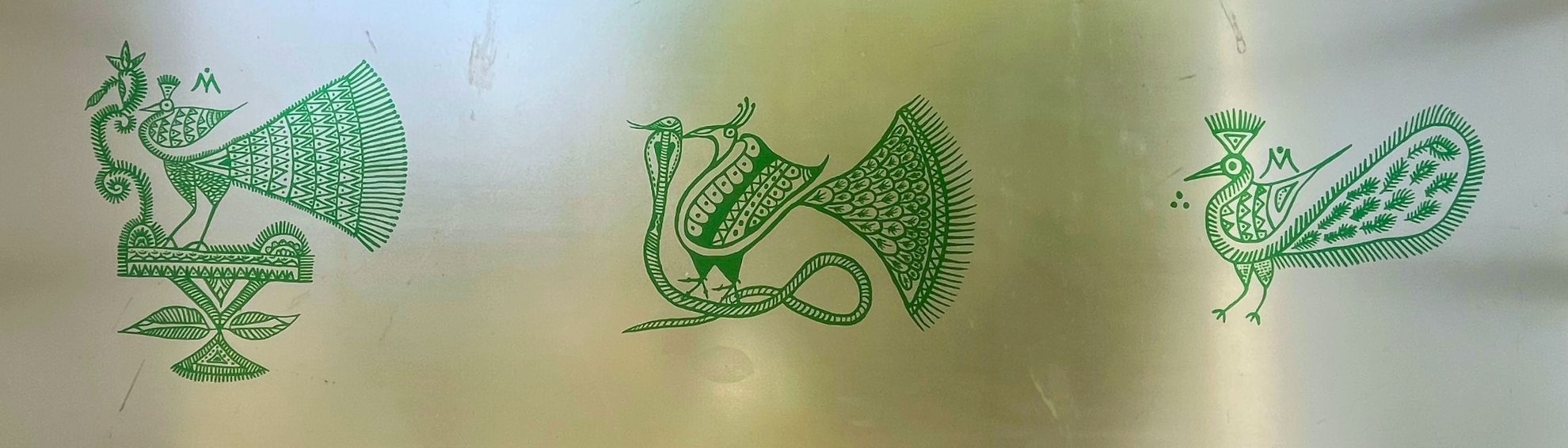
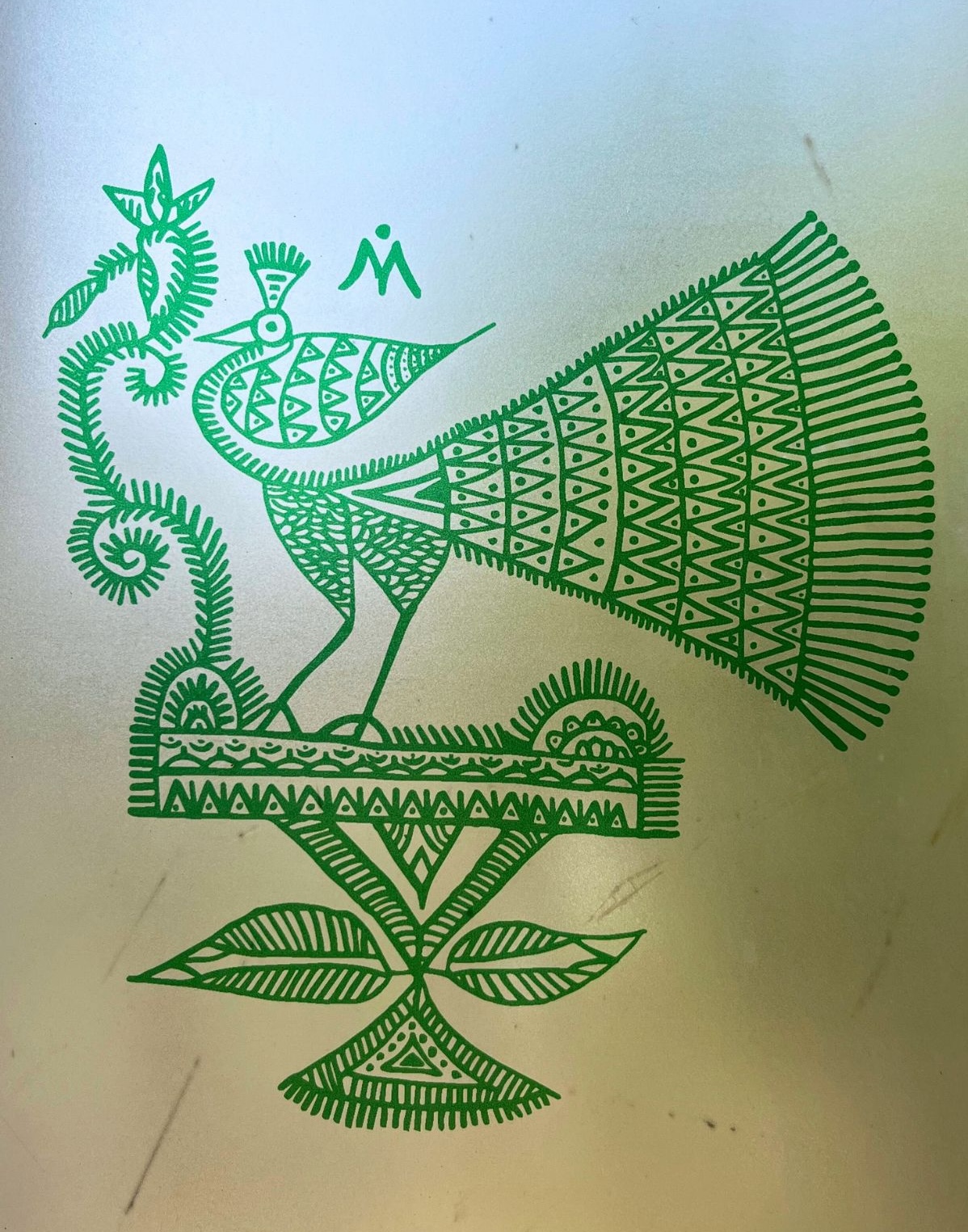
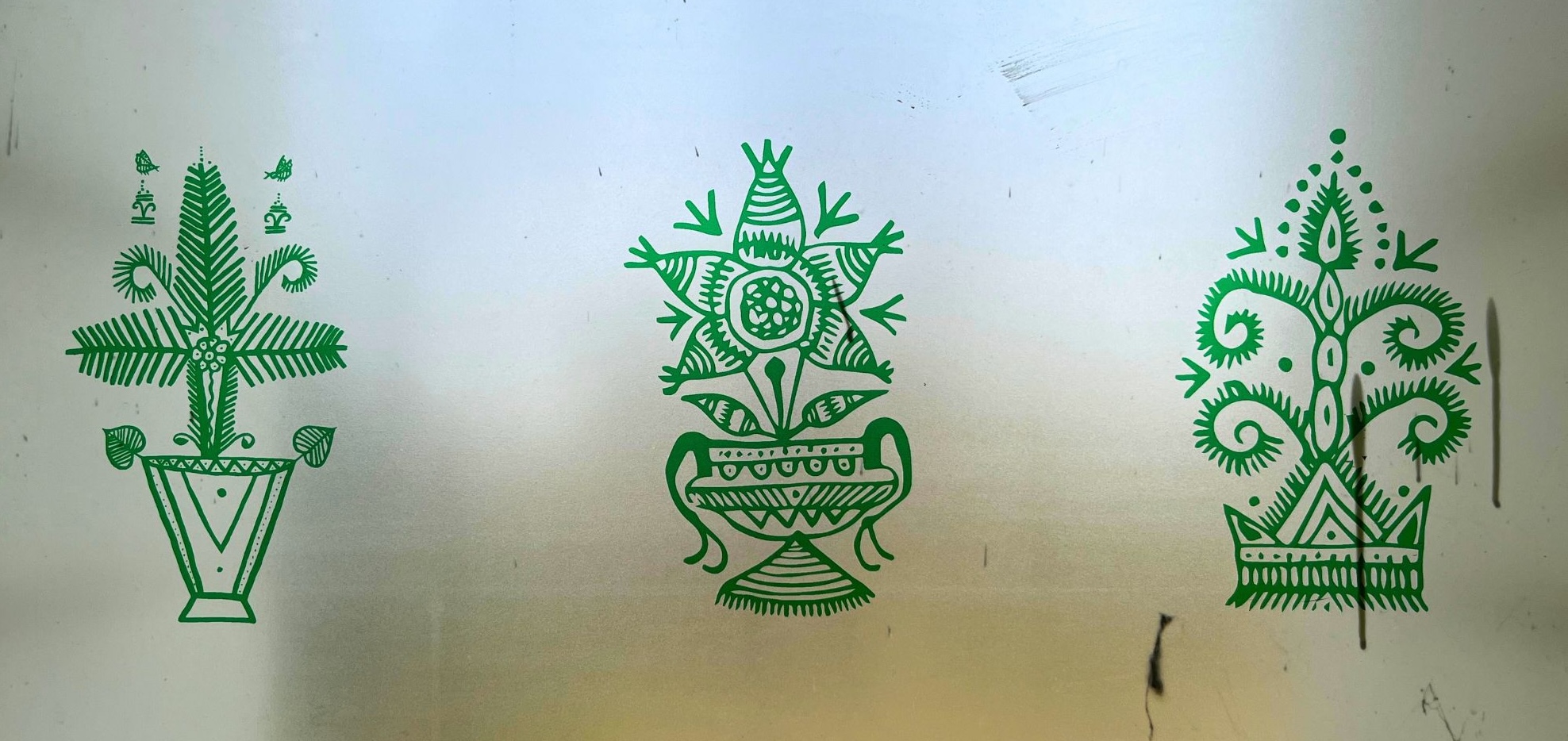
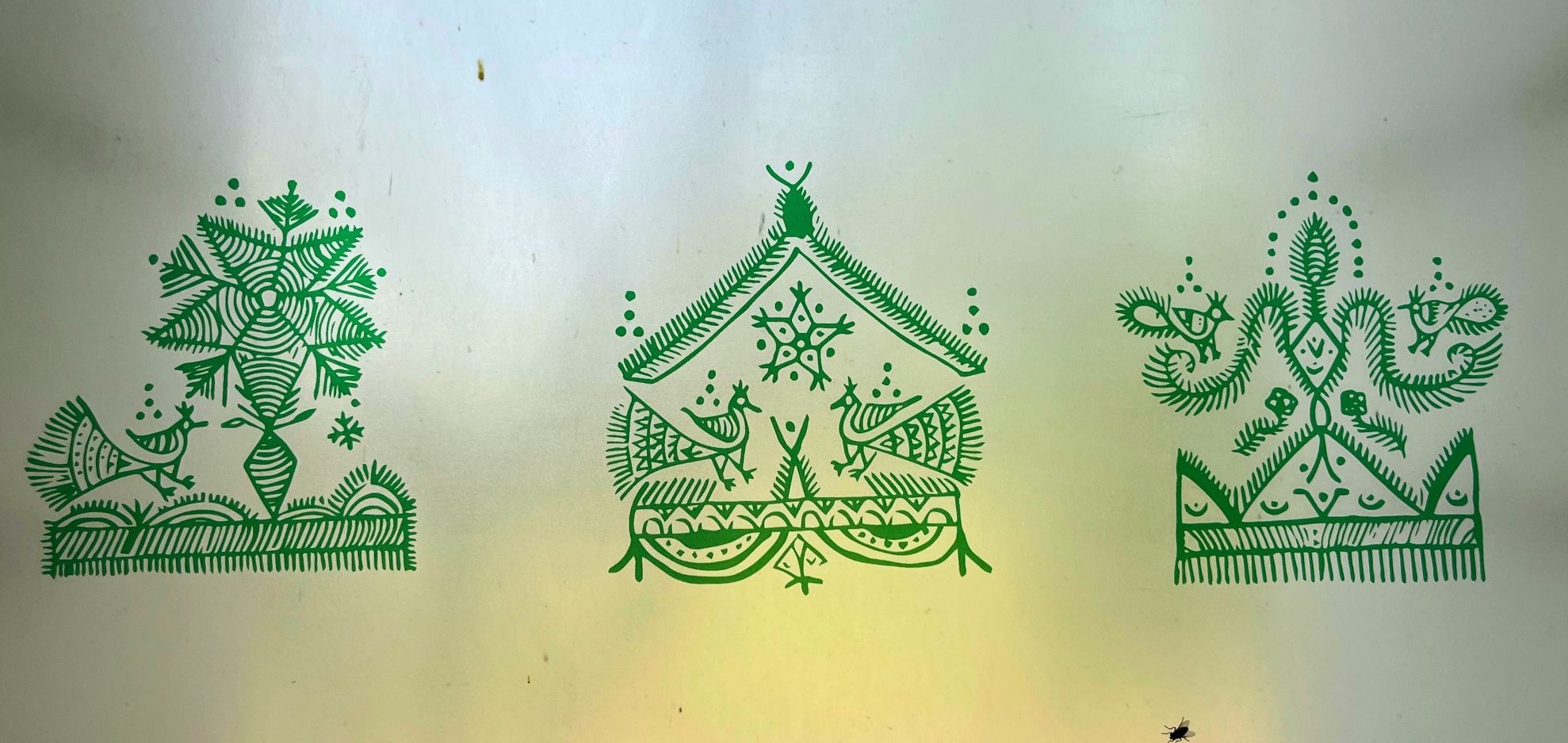
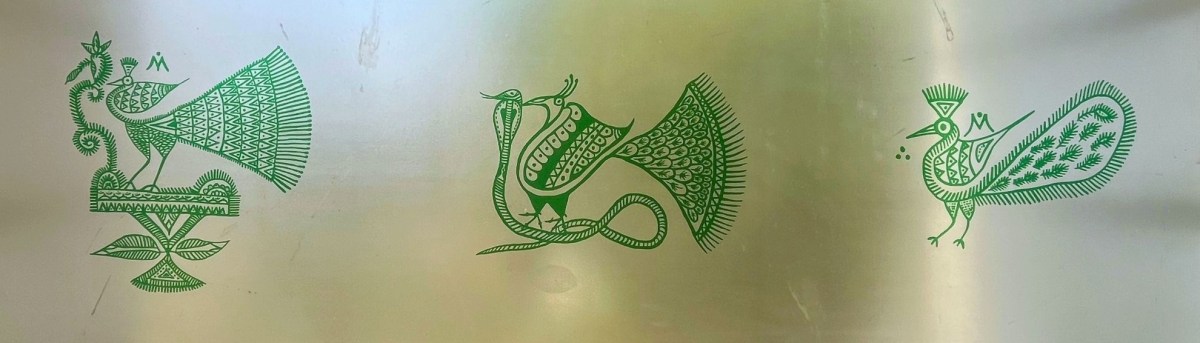
Much like the Polynesian countries where tattooing different parts of the body holds meaning, tribes in central India too ink themselves with meaningful patterns and motifs.

Godna: Digging into Tradition

Godna is popular in tribal societies, particularly in the areas of Rajanandgaon and Surguja, Chattisgarh, Dindori, Madhya Pradesh and Madhubani in the Mithila region of Bihar.

My investigation into Godna led me to this short film by Shivam Vichare that shows the materials and motifs popularly used in the Baiga tribe in Dindori.

Using kajal (soot collected by burning herbal oil) and needles, ladies mark their bodies at various stages of life. Girls from the community must have their foreheads tattooed as preteens to be accepted into the tribe. Tattoos on the chest are made post marriage and childbirth.

Mangala Devi explains the meaning of some of the motifs—a form of prayer for the individual and family’s wellbeing. One pattern for the chest represents the beehive. Just as the beehive is dripping with honey, so may the home be full of nectar. Diyas on the knees signify light in their lives. And the bull’s eye is for the wellbeing of the cattle, so that they may plough the fields.

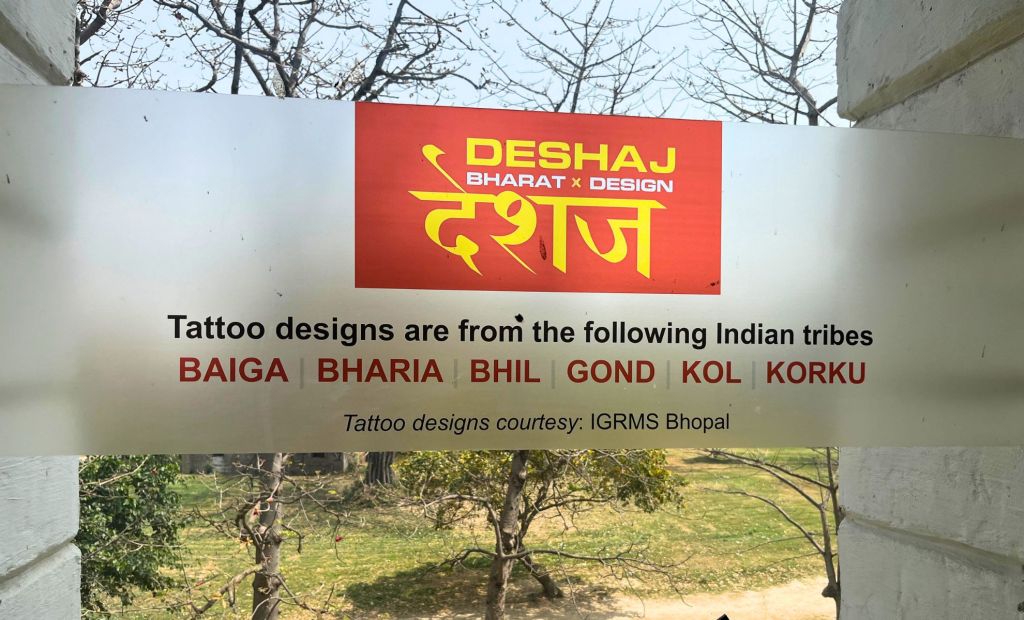
Like the Baiga Tribe, the Bharia, Bhil, Gond, Kol and Korku tribes hail from central India—home to some of the world’s oldest prehistoric cave paintings.

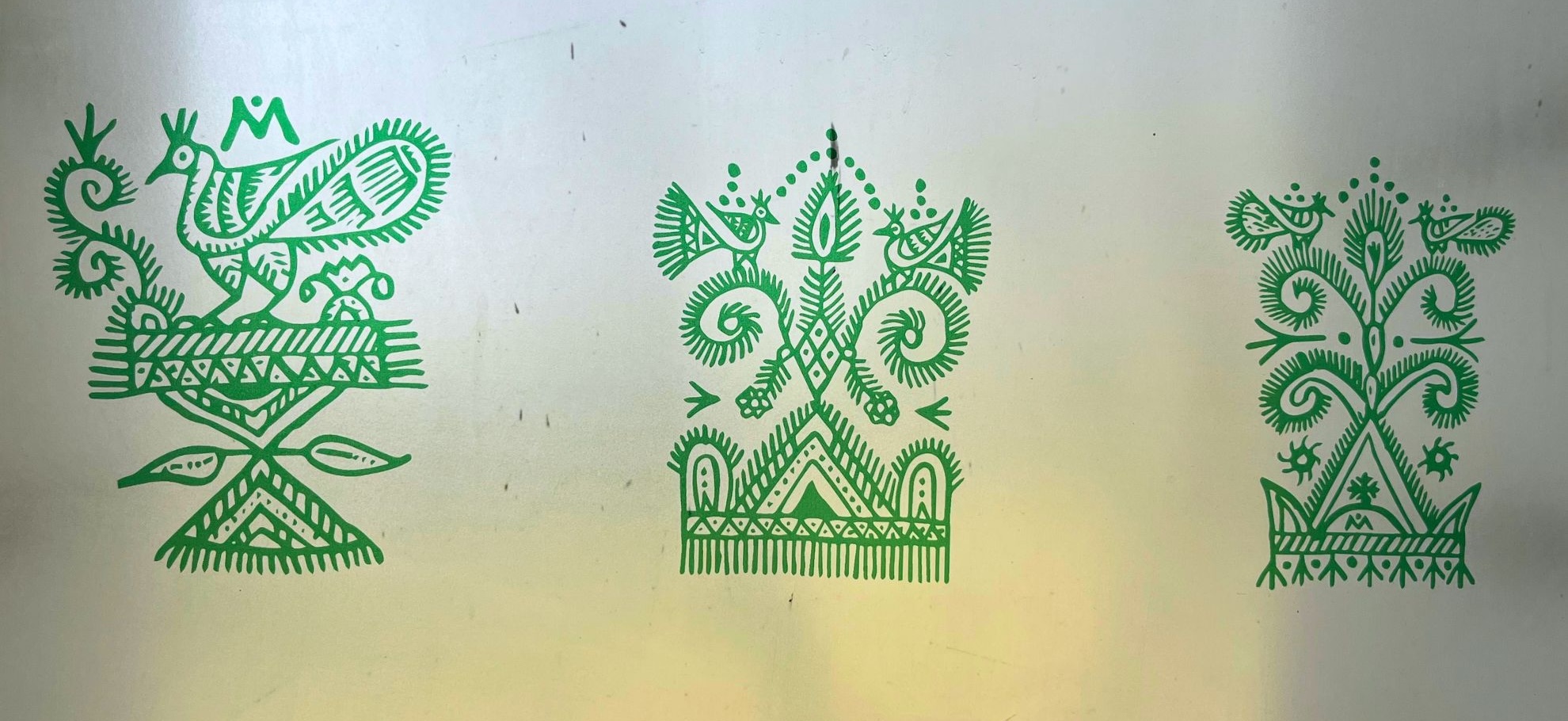
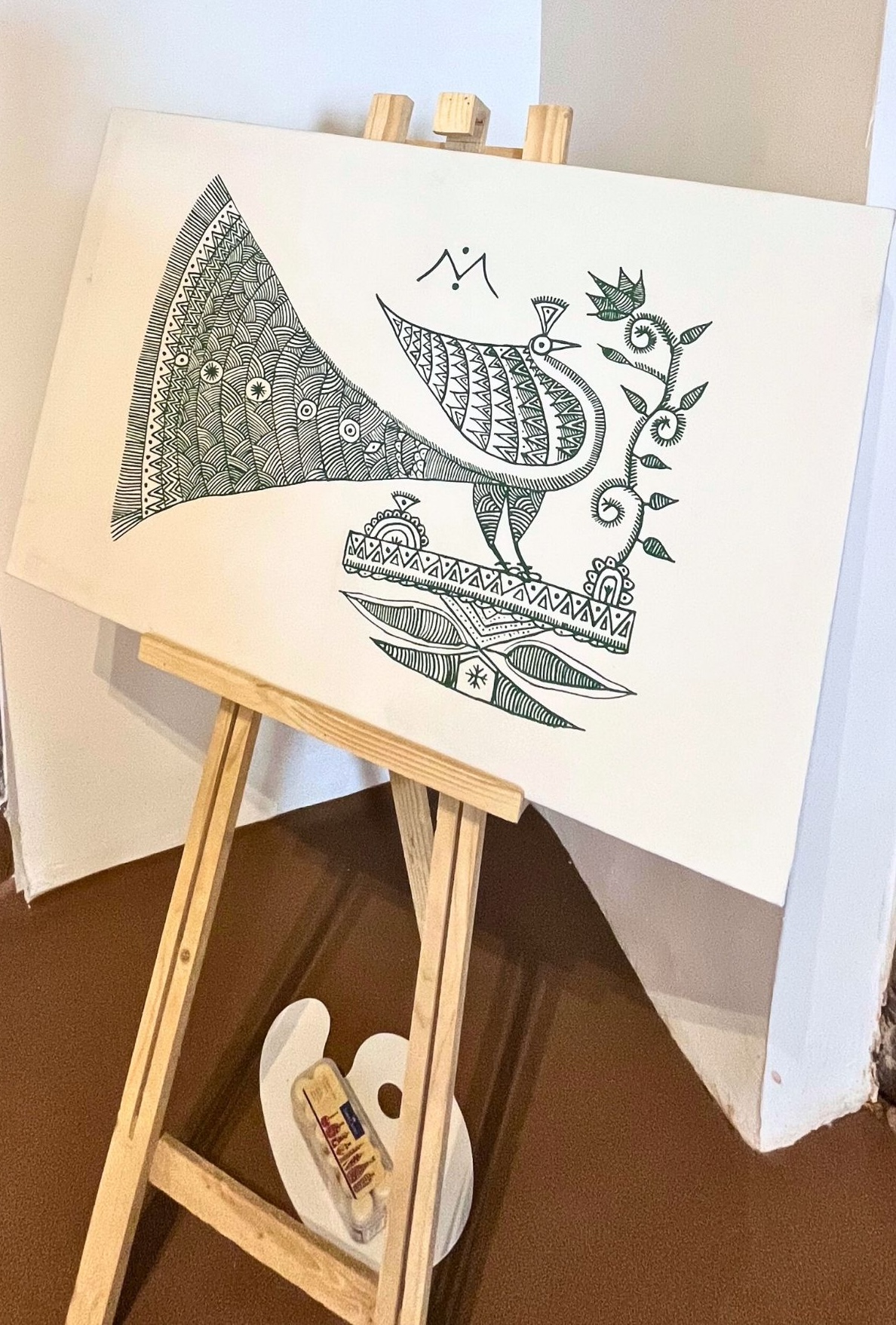
Many of the motifs used in Godna and other folk art are elements from nature. Expressed in simple line art, these symbols were created by the earliest graphic designers.

On display at the Biennale were some patterns from the collection of Indira Gandhi Rashtriya Manav Sangrahalaya (also referred to as the National Museum of Humankind, or Museum of Man and Culture) in Bhopal.

I don’t fancy myself ever having the courage to get permanently inked, but these patterns are beautiful and definitely worth ogling over. Enjoy!

Categories
Stories

The Drum House


If you’ve seen Hindi movies or plays set in the Mughal era, then you’ve heard that familiar refrain, “Azeem o Shaan Shehenshah…” An announcer describing the arrival of royalty.

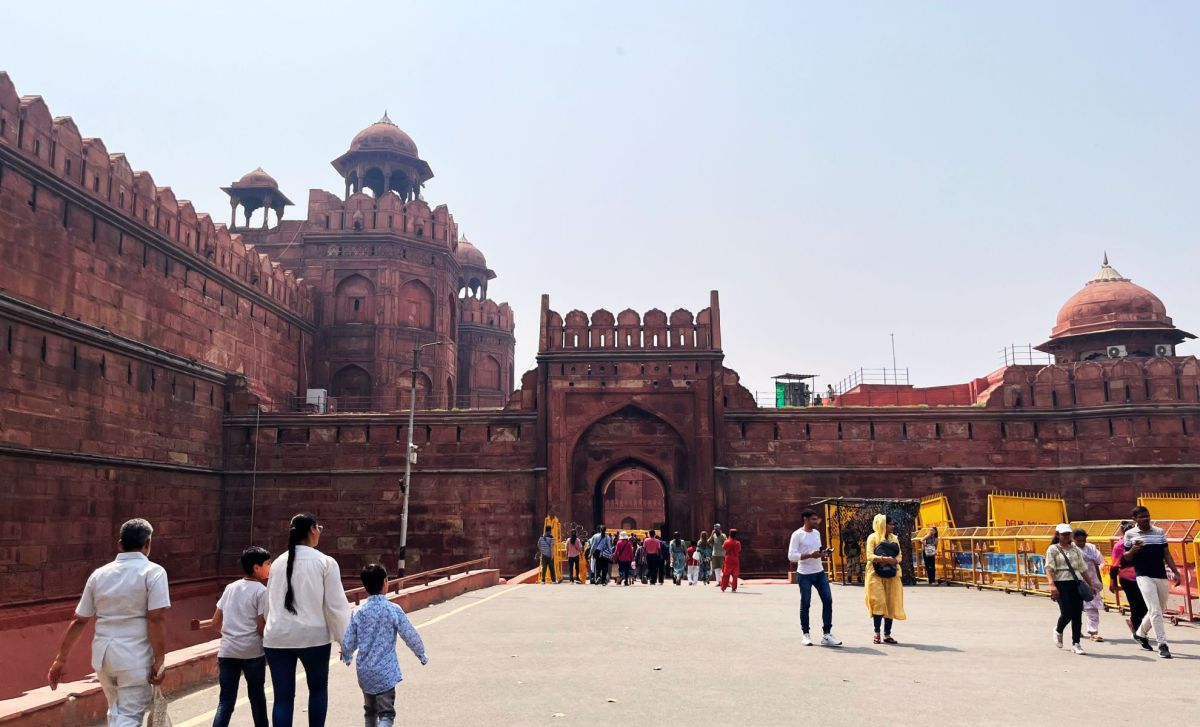
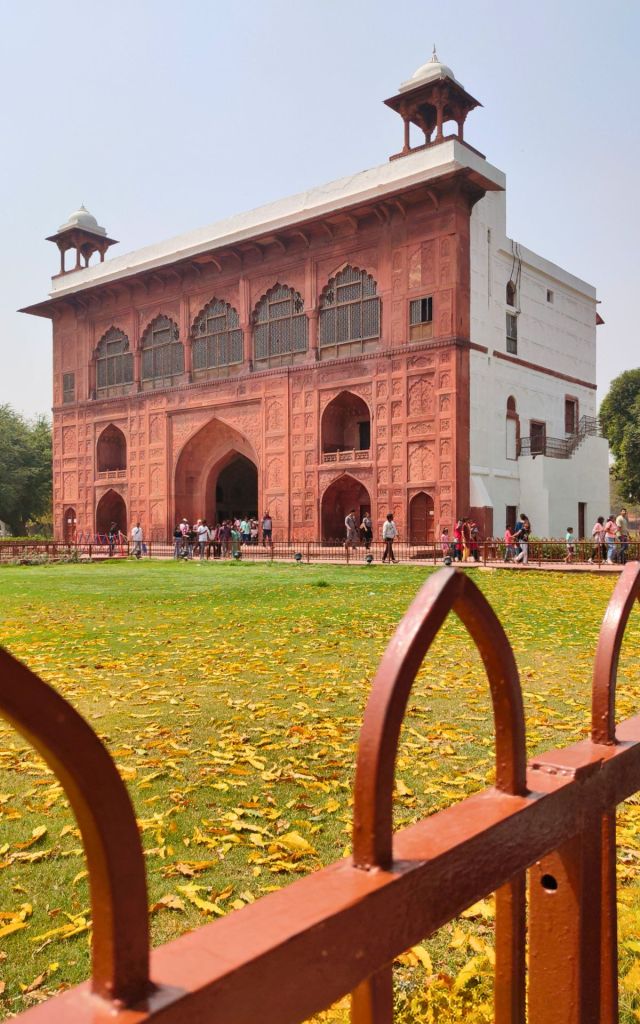
At the Red Fort in Shahjahanabad (Old Delhi), musicians would make announcements from the Naubat Khana, or Naqqar Khana (Drum House), letting the public know that the Emperor or a royal dignitary had arrived.

Announcements were a tiny part of the musicians’ job description. The Mughals were great patrons of art, and musicians would perform five times a day at chosen hours.

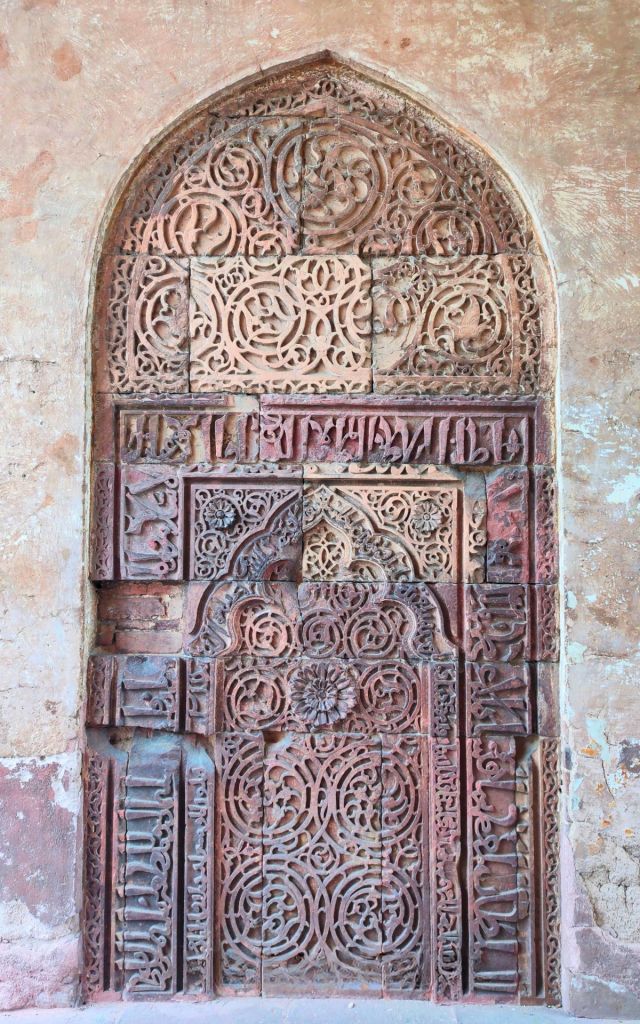
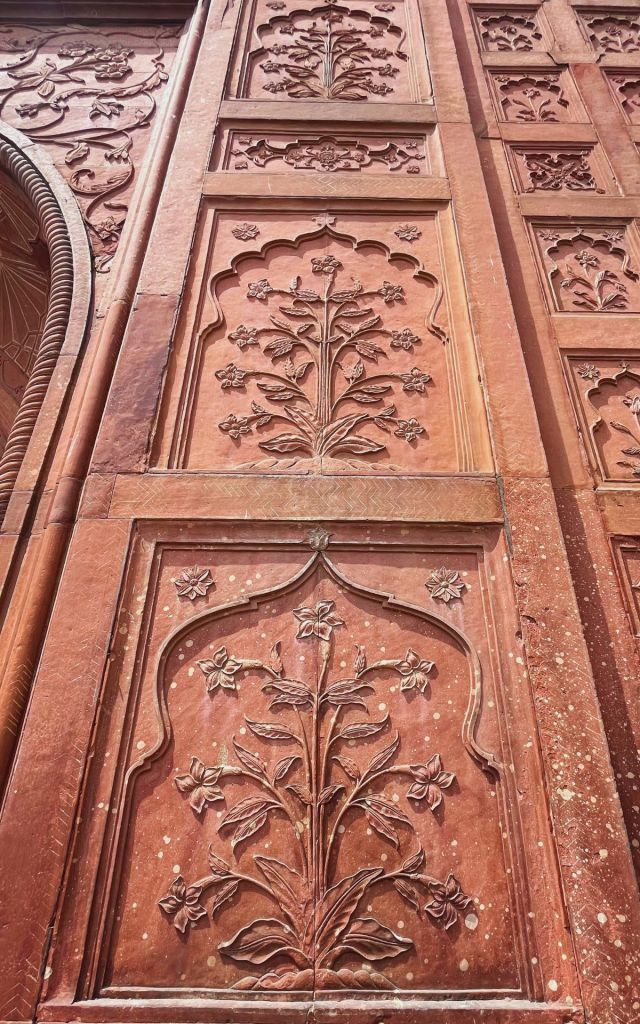
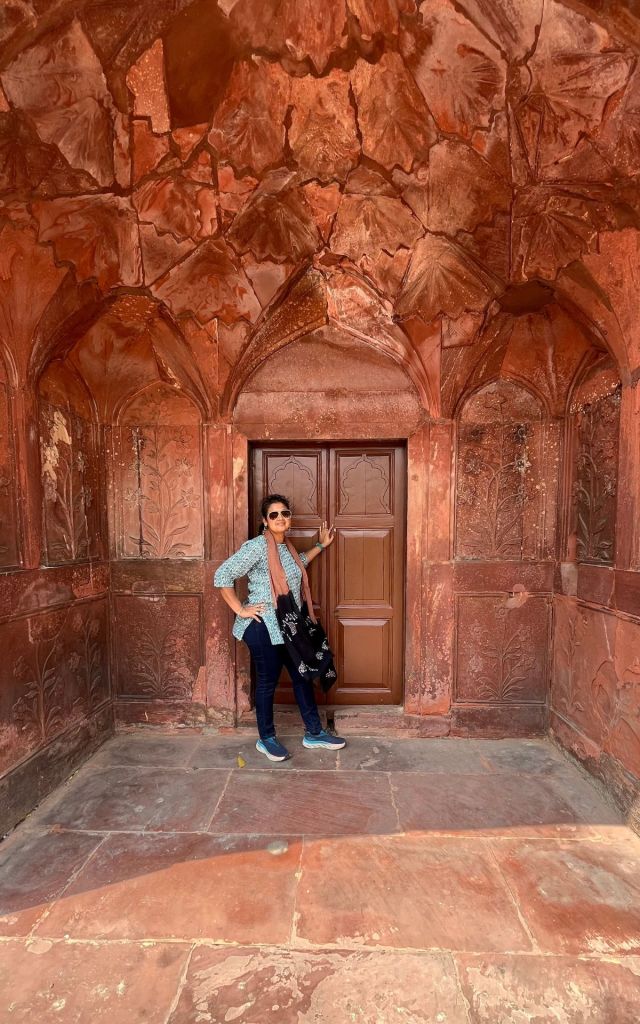
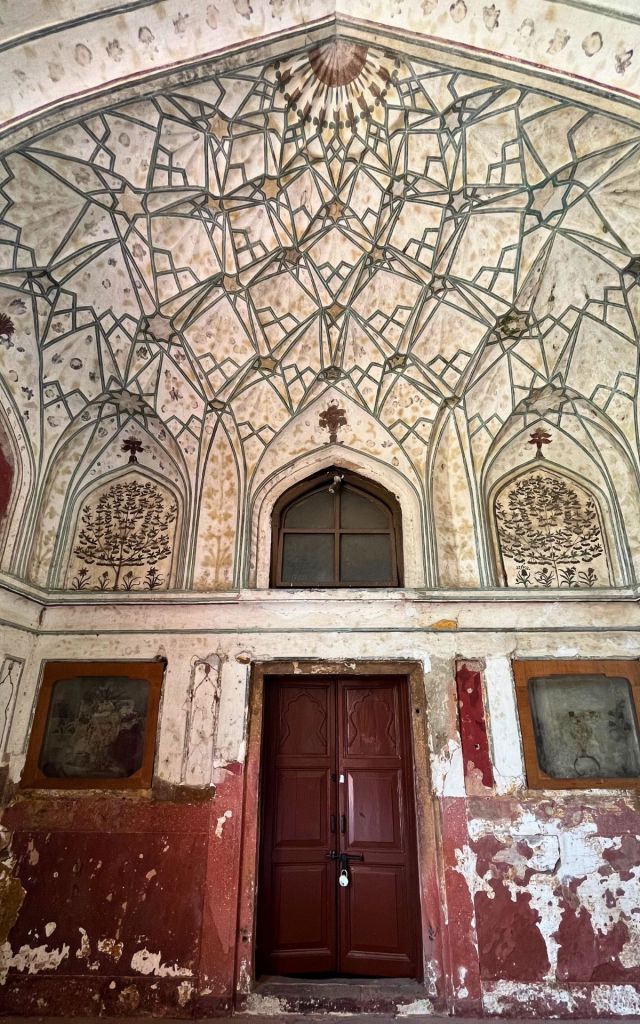
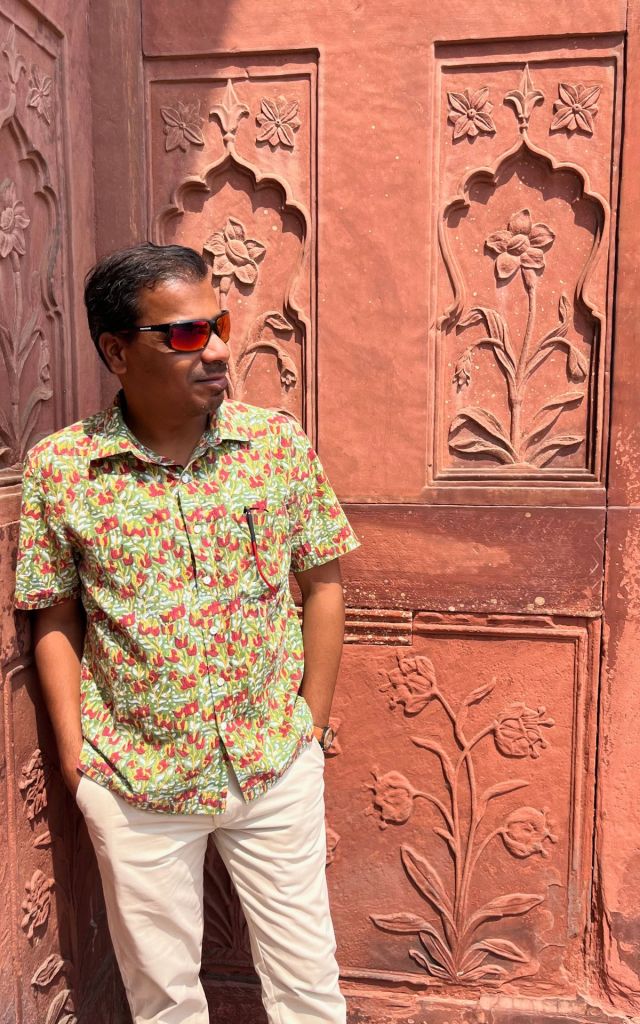
As is apt for any hall that houses artists, the Naqqar Khana is elaborately decorated. Unlike Islamic architecture in other parts of the world where motifs are strictly geometrical, Mughal architecture heavily incorporated natural themes, particularly flowers, in addition to traditional calligraphy.

Here’s a closer look at the intricate details of the Naubat Khana at Red Fort.

Categories
Stories

The Temple Voice


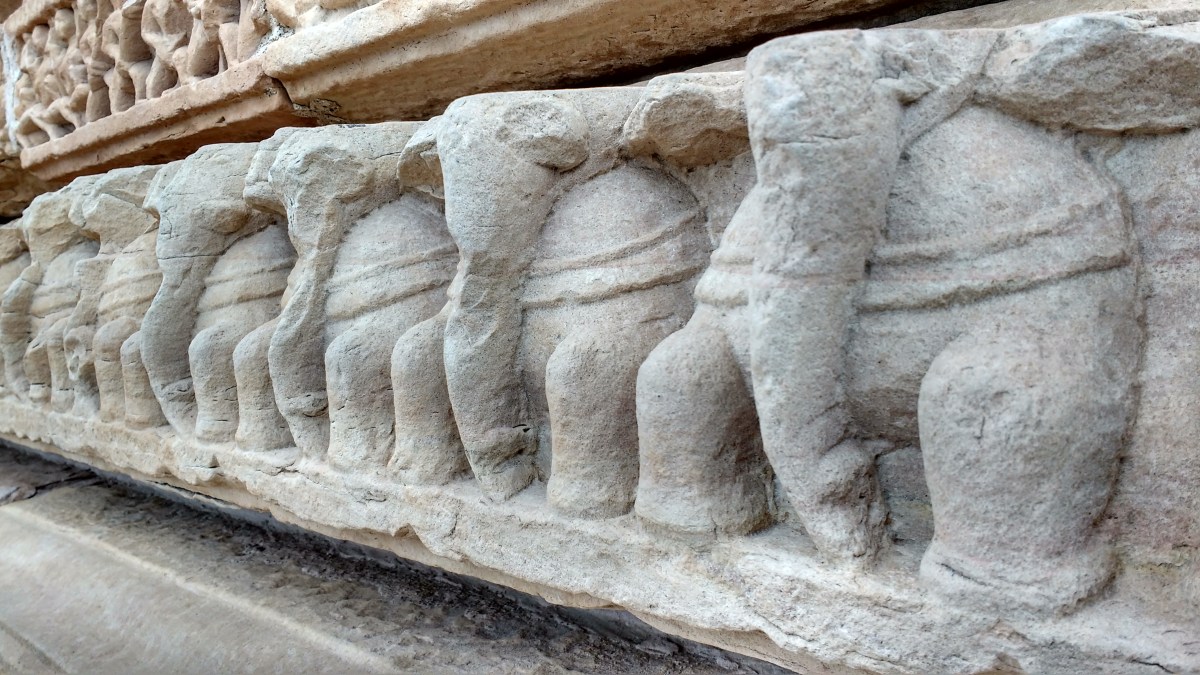
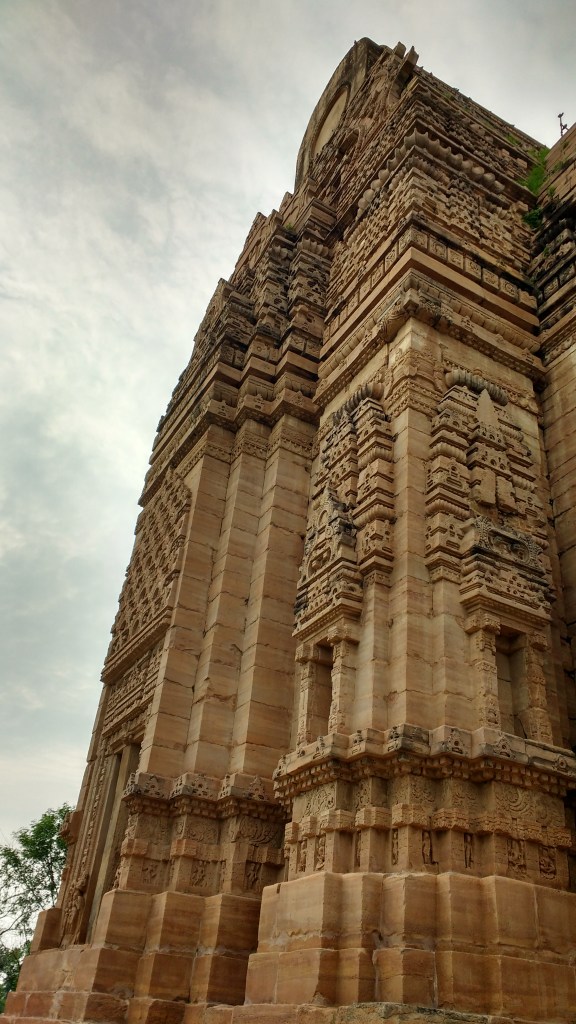
The elaborate sculptures adorning the temples in the Gwalior Fort are too many to count and too beautiful to describe. Many have been weathered by the strong wind. The many kings who fought, captured, and lost the Fort seem to have left the temples untouched.

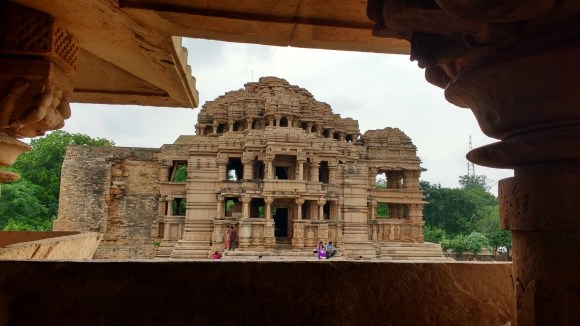
That they have very strange names takes nothing away from their beauty. The “saas” is big, bod and stands proudly, imposing her might on anyone who dares think contrary to her wishes.

The “Saas” as seen from the “Bahu,” Gwalior Fort Complex, Madhya Pradesh, India.

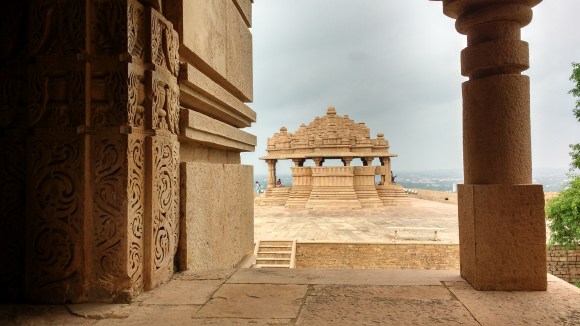
The “bahu” stands at a distance, more towards the edge of a cliff and doesn’t care for attention.

The “Bahu” from the point of view of “Saas,” Gwalior Fort Complex, Madhya Pradesh, India.

Inside the large temple, one gets the feeling of being engulfed by Sahasrabahu, the one with a thousand hands—hands that are dancing, playing music, worshipping, meditating.

Who was the guardian deity of these temples? No one can tell for sure. There are conflicting tales about Shiva and Vishnu. Some claim that these are Jain temples.

Folklore says that the ruling king dedicated the large central structure to his mother, an ardent devotee of Lord Vishnu. The smaller temple was to pacify the king’s wife—a Shaivite.

Tourists take pictures, climb over the walls, and walk precariously along the beams that form the triangles overhead. But few venture close to the sanctum sanctorum.

Teli Ka Mandir, Gwalior Fort Complex, Madhya Pradesh, India.

A short distance away, the Teli ka Mandir stands tall. If the building could speak, I might have said, “I am Dravidian.” As I was imagining the walls speaking to me, a man hurried out from inside the temple, cursing under his breath. He looked livid and frantically looked around so he could vent his rage. When he found someone who looked like a caretaker, he let him have it.

“This is a temple! Why are people wearing shoes and trampling all over? Have you stepped inside? It reeks of bat filth.”

“Such a fine architectural monument and you are letting it go to waste. Is this the devotion this was built for?”

The man’s lament fell on deaf ears. The caretaker gave an indifferent glance. “It is no longer in use, sir,” he said, and walked away.

The sanctum sanctorum of all three magnificent temples were dark portals. Beauty graced all the walls outside and inside the halls leading to the small room meant to be the throne of the presiding deity.

If the walls could speak, they might have been as indifferent to our presence as the caretaker was to their plight. With their structure reduced to architectural candy, and the real purpose long given for bats to live in, there was no longer anything left to say.


Still salvaging old work from the archives, I discovered this story’s handwritten draft from May 2017. This too, is a part of the ebook The Speaking Rock. If the pictures are grainy, it’s because they’re from a phone camera from 2016.

I was both proud and awestruck by my phone camera’s prowess back then. It pales in comparison to what my phone can do now. And digital technology today still doesn’t match up to film camera clarity. But grainy footage notwithstanding, it reminds me of some wonderful memories we made almost nine years ago. Isn’t that what pictures are for?

Categories
Stories

The Unsung Hero


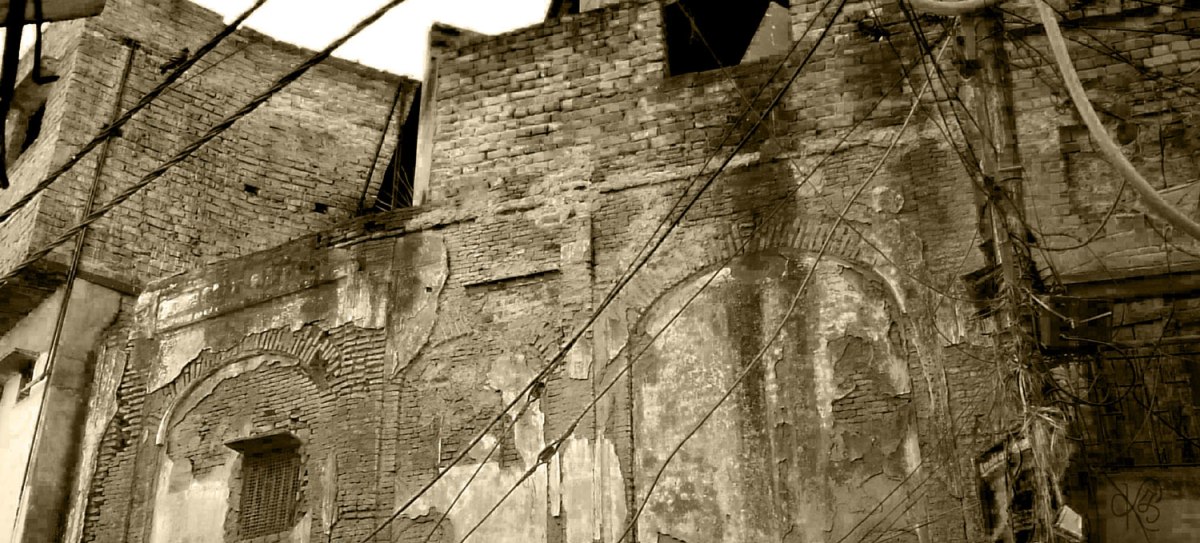
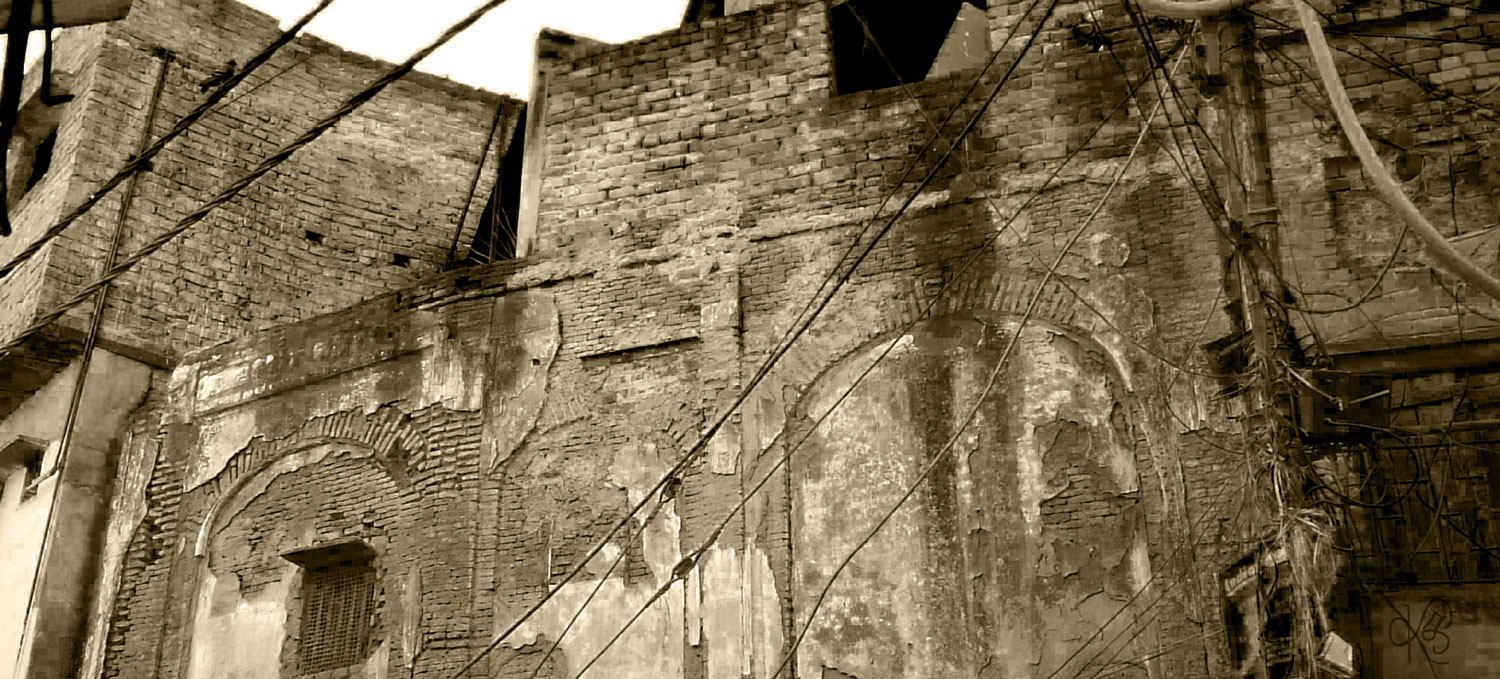
Crumbling Haveli
Crumbling Haveli

The city of Delhi is often referred to, as a burial ground – of emperors and nobles, princes and princesses, saints and warriors. After visiting a few tombs, one gets the feeling that all the tombs are alike. That might be true for most, but there are exceptions.

This past week, I tagged along with a group of heritage-hunters, and headed towards Chandini Chowk. A friendly local offered to guide us through the uneven paths, deep within the bazaar. We went down narrow and dark lanes, past crumbling havelis and butcher shops, and even hopped over a sleeping goat! We approached a sharp turn in the path, which revealed perhaps the smallest, and the saddest tomb in Delhi.

The only three women who were ever elected to the throne in the Mohammedan East, reigned in the thirteenth century.
– Lane-Poole

Raziya Sultan was the daughter of Iltutmish*, and the only woman to have ruled over Delhi. Her father had chosen Raziya as his successor to the throne. This was obviously not welcomed by her brother, as well as the majority of noblemen.

Iltutmish claimed that his daughter was better than many sons. And it did not take long for the citizens of the kingdom, to realise this. Raziya was appointed ruler by the common people.

Sultan Raziya was a great monarch. She was wise, just, and generous, a benefactor to her kingdom, a dispenser of justice, the protector of her subjects, and the leader of her armies. She was endowed with all the qualities befitting a king, but she was not born a man, and for that reason, in the estimation of men, all these virtues were worthless.
– Minhajas-Siraj

Raziya Sultan’s tenure as a ruler was a short one. A female monarch, appointed by common people did not go down well with the establishment. The fact that she showed her face in public, and was tolerant towards the Hindus, made her case weaker. She was assassinated after three years at the throne.

There is a conflict, regarding the actual site where she was buried. Claims include Chandini Chowk in Old Delhi, Siwan in Haryana, and Tonk in Rajasthan. The site at Chandini Chowk, was a jungle during the reign of Raziya Sultan, and there is no engraving to identify the souls resting there. A part of the mausoleum has been converted to a mosque.

Raziya was a person born well ahead of her time. Unfortunately, her story is overshadowed by others who came after her. A hero for all ages, may her soul rest in peace.

*  *  *

* Iltutmish (alternate spelling Altamish) Full name : Shams-ud-din Iltutmish

The third ruler in the Slave Dynasty. The first was Qutb-ud-din Aibak, and the second, Aram Shah. The Slave (Mamluk) Dynasty was the first of five unrelated dynasties to rule over Delhi, in what is referred to, as Delhi Sultanate.

Sources and suggested reading:

Razia Sultan Was Far Better Than Her Brothers – Sunday Guardian
Chapter 5 – Raziya, The Mohammedan Empress of India, History of India – Volume 5 – The Mohammedan Period as Described by its Own Historians – Edited by A. V. Williams Jackson (Selected from the works of late Sir Henry Miers Elliot)

The Daily Post asks readers to write about their heros. I have paid a tribute to Unniyarcha before. Raziya Sultan is my answer to The Daily Post’s prompt.

Categories
Hobbies Stories

The Good People Of Kotla


Long long ago, when I didn’t have a blog page, I just recorded the random thoughts that came to my mind in separate files on the computer. I wrote this little journal entry on the 22nd day of the month of May in the year 2010. It is in relation to the video about the monuments around Kotla Mubarakpur.

I was working on a short film about the little known monuments around kotla mubarakpur. The narration had been finalised and all that was required was to go for the photo shoot.One of the monuments that was to be covered was that of the Tomb of Mubarak Shah.

I had done a little research about how to get there. And all that I could find were a few photographs, and the location on the satellite image of the area. I could not find any information about the occupant of the tomb, except his name.

A week ago, I had gone hunting for the monument with a friend of mine. I feared going there all alone, knowing that it was a medieval village, and there were very narrow gullies. We asked for directions from some locals, and after a long time, finally managed to locate it. An elderly gentlemen, who gave us the precise direction to the tomb, asked us rather suspiciously why we wanted to go there. We just replied that we wanted to see it. It was rather awkward.

When we reached the tomb, we found it fenced up and locked. We were expecting it. Entry to the tomb was sealed. The village buildings were barely a few feet from the monument. The monument cut a rather sorry picture. It belonged to one of the rulers of Delhi during the fifteenth century. And it was languishing in the middle of some obscure village, with even the locals not bothered about it.

Today, I had to go there again, with my brother, for the actual shoot. We left early in the morning, in order to avoid the scorching summer sun. I felt rather lazy and was beginning to regret the idea.

But we had set out, and the work had to be done. I traced back my steps and to my relief, we managed to reach the monument without asking any one for directions. A horrible stench and open drains greeted us. My brother pulled out his camera and began taking some shots at a very close range.

Anyone with a rather fancy camera is bound to attract attention. And some shop keepers were leaning out of their windows. After a while, a few men surrounded my brother and began questioning him. He answered them in his usual calm and friendly manner. We had come there to see the monument, and were clicking photographs for personal reasons.

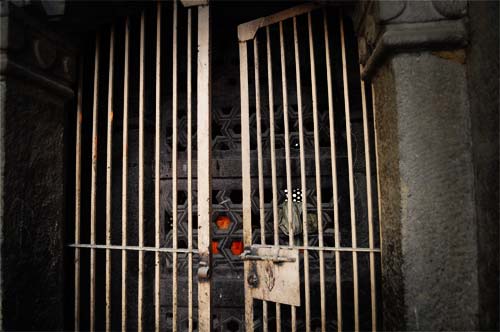
His answers seemed to be sufficient for them to relax around him. For, a few seconds later, a middle aged gentleman passed by and told me that it was the tomb of Mubarak Shah and said that we could enter it through the gate on the other side. We reached the gate and I climbed up the ramp in front of the locked gate. I looked at my brother and told him we could enter it. He joined me, and then we realised that it was locked.

Gates Unlocked
Gates Unlocked (Photo by R. Karthik)

By this time, a lot of eyes were fixed on us. And just as we were turning back, a youth walked up carrying a set of keys. He opened the lock on the outer fence and entered the tomb. An observer shouted light-heartedly, “yeh yahaan ka maalik hai!” (He is the owner of this building).

He asked us to take off our shoes and we entered the tomb’s premises. It was then we realised, that we were probably the only outsiders to have set foot in this tomb. A very special privilege indeed. The caretaker then allowed us to enter the main burial area.

When we entered, we were awestruck. There were six tombs inside the tomb – not just one. They were covered with half burnt incense sticks and sweets. There was a broken street lamp fitted on to one of the walls lighting up the interiors. The inscriptions on the walls were well preserved and it was rather peaceful being inside. We took as many photographs as we could and exited the gate, thanking the care taker for his generosity.

As we were leaving, a local called out to the caretaker. “Upar bhi le jaao inhe” (take them upstairs as well).

My brother asked the caretaker, if there was a way to go upstairs as well. We had been around the circumference of the tomb and not noticed any staircase.

Once again the care taker unlocked the gate and ushered us inside. He told us not to take off our shoes and we followed him to another gate. It led to a hidden staircase to the roof. The stone staircase was steep, dark, narrow, and smelling of rotting flesh. With difficulty, we climbed up and reached the terrace. The main gumbad was surrounded by many chattris. I stood there chatting with one of the locals, sharing whatever little knowledge I had about the monument as well as the surrounding tombs, while my brother went around the terrace.

Once we had exited the premises, we spoke to some more locals who were still very suspicious. They told us how officials from ASI would just come there, give some false promises, and leave. The locals had taken it upon themselves to protect the monument.

It was amazing how, just a week ago, I had formed a rather negative opinion about the tomb – how it was lying completely neglected. And today, I had a completely different perspective. Some hospitable locals had granted us access to the monument that few could get. They had taken care of the monument that no one had bothered about.

We left the village and the stench behind us, still unable to believe our luck.

Back home, I edited my script for the film. To the concluding lines, I added, “Though these monuments are over 500 years old, there are no wide-eyed tourists gazing in awe at their magnificence. They might have suffered the ignorance of officials, but they have stood the test of time and survived with a little help from the locals of this enigmatic city called Delhi”

The video that I had been working on, had a roller-coaster of a journey and after almost a whole year, I am relieved to say that I’ve finally managed to complete it! The video has been uploaded to youtube:

Photograph by R. Karthik