
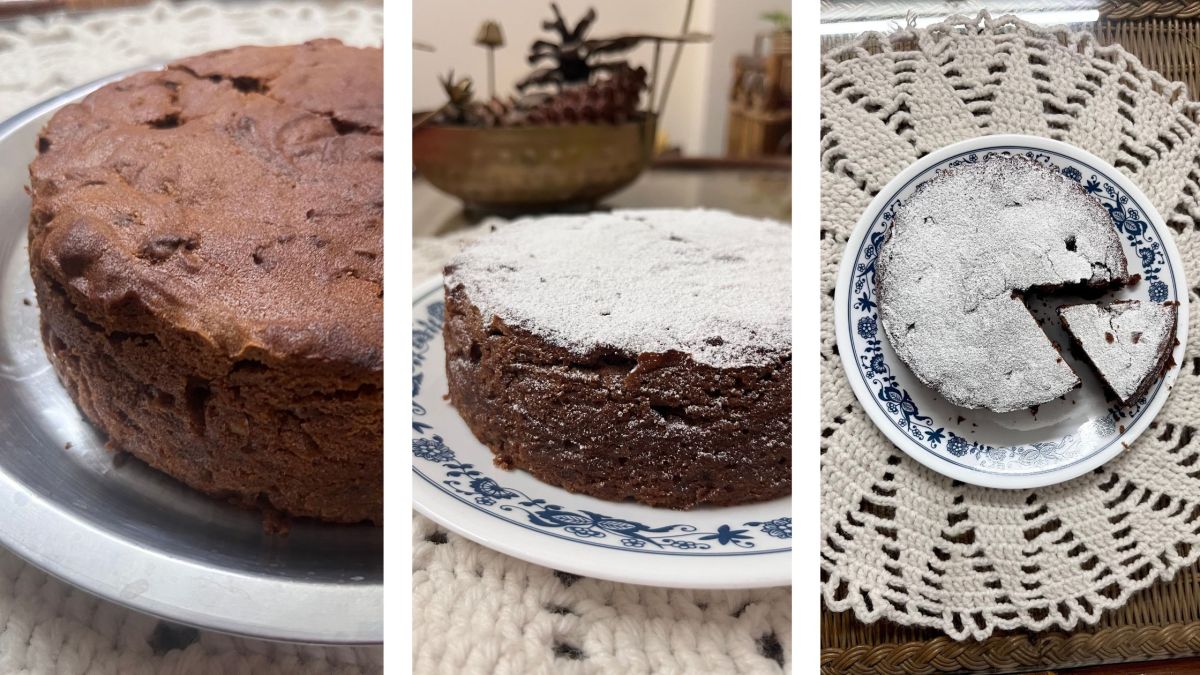
We’ve always hacked our way into baking a cake. We didn’t have an oven and I was trying to avoid using refined flour. So, our experiments in cake-baking have been mixed, often ad-libbing and freestyling the ingredients. I learned the hard way that not all recipes were that flexible. So, this time, I decided to follow a recipe that I’ve wanted to try for a long time—the traditional Christmas Cake.
We had a new air fryer and I decided to cave in and use refined flour and white sugar. It’s still eggless, though!
I’ve tried this recipe twice now, and the second time, I substituted half of the refined flour with whole wheat flour. This second cake was a bit more crumbly and we could taste the flour, so, the next time, we’ll try substituting less than half of the refined flour.
For my convenience, I wrote down the ingredient list separately, divided into different parts that I needed to mix separately, so that I wasn’t staring at one long list!
Part 1: Make the Kishmish Merry
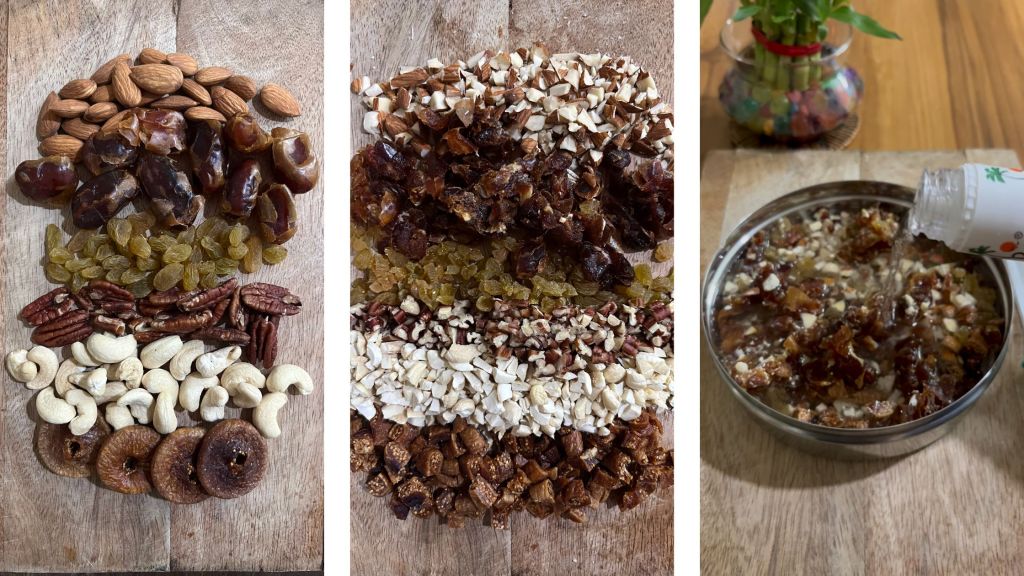
Cashews, Walnuts, Raisins, Almonds, Dates, Figs… Chop whatever dry fruits you have available and soak them in rum (or ornge juice) for a few days.
Store in an airtight container in the fridge if you’re soaking these for more than 2 days.
Part 2: Whisk the Creamy Ingredients
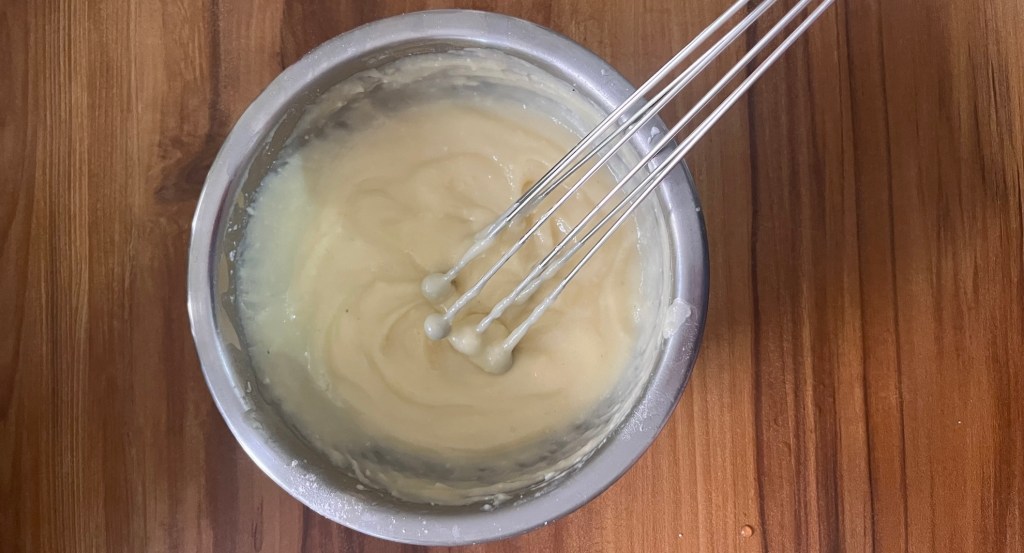
- 1 cup Powdered Sugar
- 1/2 cup Butter
- 1/3 cup Curd
Time-Saving Tip: If the butter is hard, use a hot water “bath” to soften it. You can do this right at the beginning and while you wait for the butter to melt, you can gather the rest of the ingredients.
Part 3: Sift the Spicy Ingredients
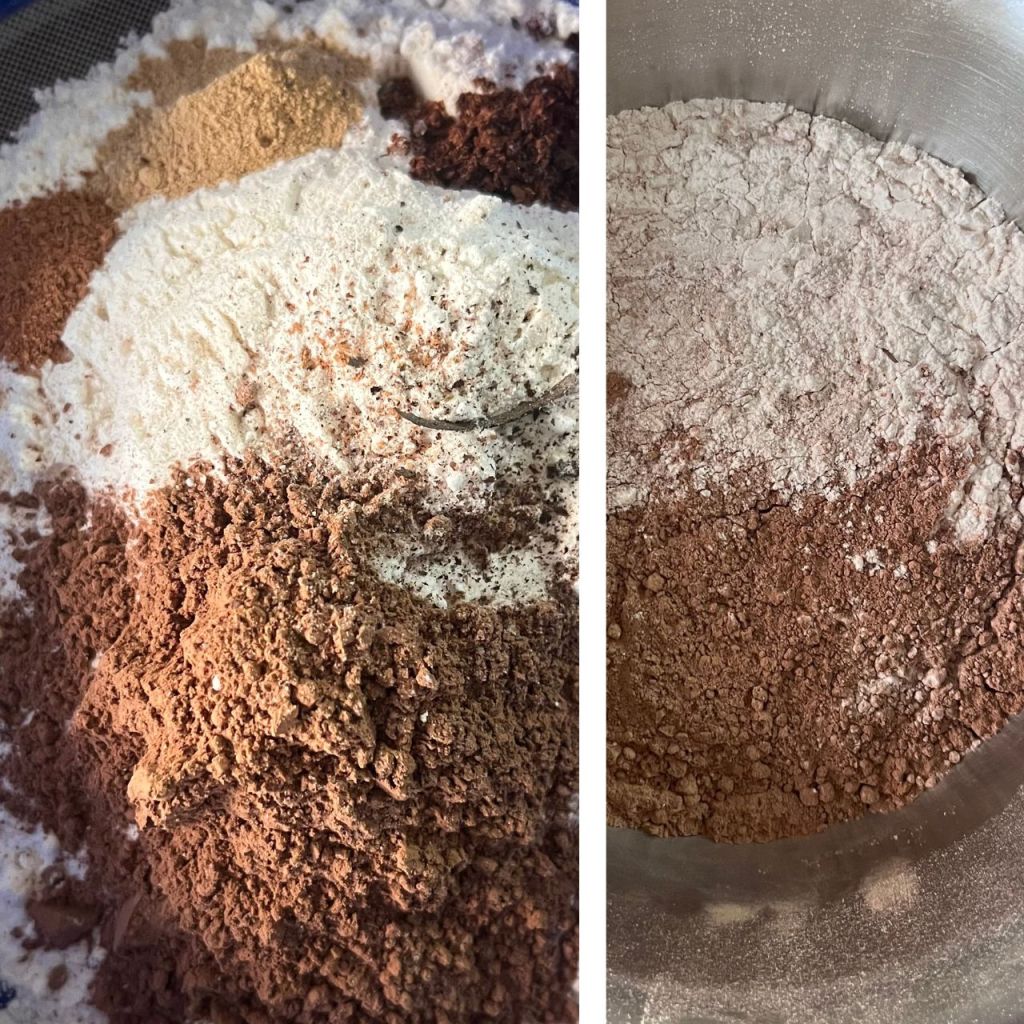
- 1 cup Flour (Maida)*
- 3/4 tsp Baking Powder
- 1/4 tsp Baking Soda
- 1/4 tsp Salt
- 1 1/2 tbsp Cocoa Powder
- 1/4 tsp Ginger Powder (Saunth)
- 1/4 tsp Clove Powder
- 1/4 tsp Cinnamon Powder
- 1/8 tsp Nutmeg Powder
* For a slightly healthier version, you could experiment with about 20-30% of wholewheat flour instead of just refined flour. But at your own risk!
Part 4: Prepare the Curdled Milk
Adding vinegar to milk will split the milk. I’m still not sure if we should let it sit for a long time, so I do this at the end, lest I have any lumps of paneer in the cake!
- 1/3 cup Milk
- 1 tsp Vanilla Essence
- 1 tsp Vinegar
Part 5: Let’s Get Everything Together!
Now that the ingredients are ready, we can prepare the cake tin and preheat the baking apparatus of choice (a home-style pressure cooker, a covered saucepan, an air fryer or an oven).
Grease the pan and line it with butter paper.
Note to self: Do not keep it inside the oven!
- Mix the sifted dry ingredients (part 3) with the creamy stuff (part 2)
- Add in the curdled milk (part 4) gradually.
- Add the merry fruits (part 1)
- Pour into the prepared cake tin. Tap a few times, and then place it inside the baking apparatus.
- Wait.
The time to cook varies depending on the temperature. I used an air fryer at 150 degrees C for 40 minutes.
If you’re using a hacked makeshift oven, then you may not be able to control the temperature, so keep a close eye so that the cake doesn’t get burnt or stay undercooked—I’m guilty of both!
Use a knife to check for doneness.
I had some extra powdered sugar left over, so I sieved it over the cake to give it a snowy look. But it will taste delicious even without that.
Enjoy!
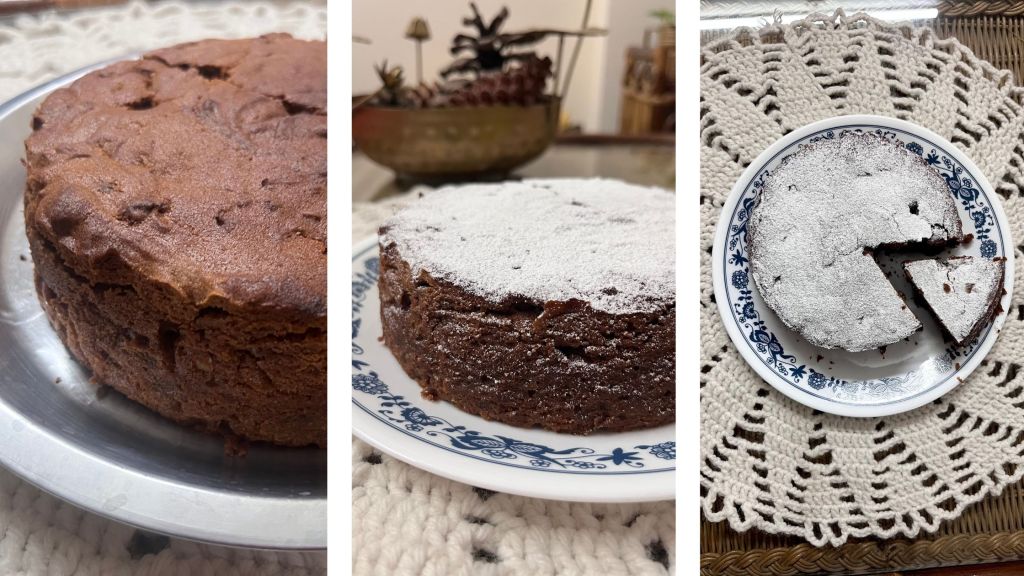
How To Get the Measurements Right
The one thing I’ve learned through my little baking experience is that measurements matter! So, I followed the measurements of everything to the “T”.
The ingredients can broadly be categorised into two heads:
- The flavours: We can play with the flavours of the cake and freestyle them to taste. These include dry fruits, cocoa, spices and vanilla essence.
- The cake base: The wrong proportion of these ingredients can ruin the cake, and so these are absolutely non-negotiable. The flour, milk, curd, sugar and butter along with what I call the “baking potion”—the things that make the cake fluffy! The baking potion includes baking powder, baking soda, salt and vinegar.
Since I didn’t have any proper measuring equipment, I used a tiny medicine measuring cup to first figure out the capacity of the different bowls and glasses we had and used those utensils that best matched the following capacities:
- 1 cup = 240 ml
- 1/2 cup = 120 ml
- 1/3 cup = 80 ml
The Inspiration
This recipe isn’t mine. It is adapted from recipes I found online, and modified to suit what we had available. Here is the original recipe from where I borrowed the measurements and ingredient list:




 Musings of an eccentric mind