Packaging cartons collapsed into sheets line the lofts in our apartment—set aside for that dreaded day when we’ll eventually have to move out. Little nooks and corners stare at me. Some of the empty spaces immediately scream at us, “Look at how much space is wasted!”
Living in a rented apartment, we have little control over what modifications we can make. Certainly, with the way rents are rising, we wouldn’t spend our money revamping someone else’s home! But that doesn’t stop us from dreaming.
We snap pictures of ideas we like and save Instagram posts related to sustainable home improvement. Whether we’ll ever use them is anybody’s guess!
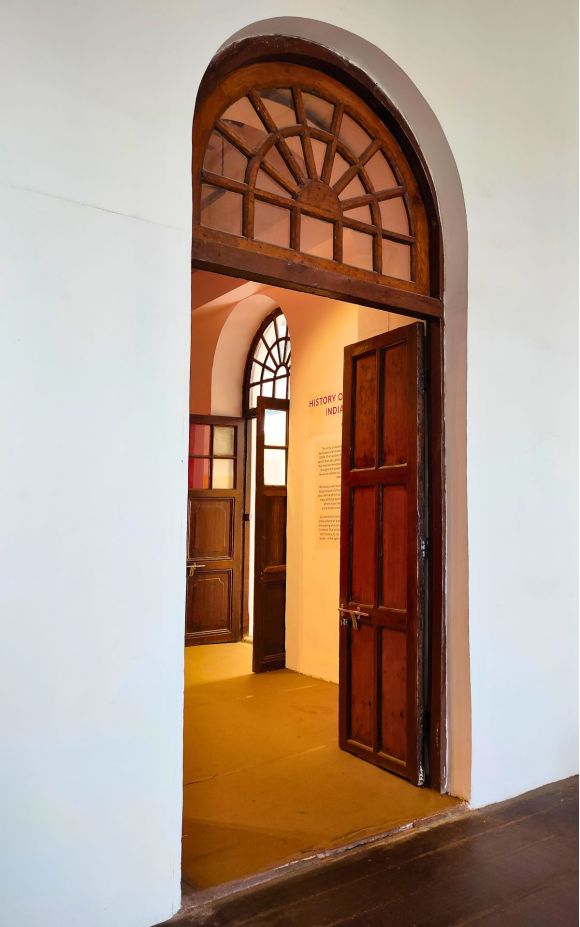
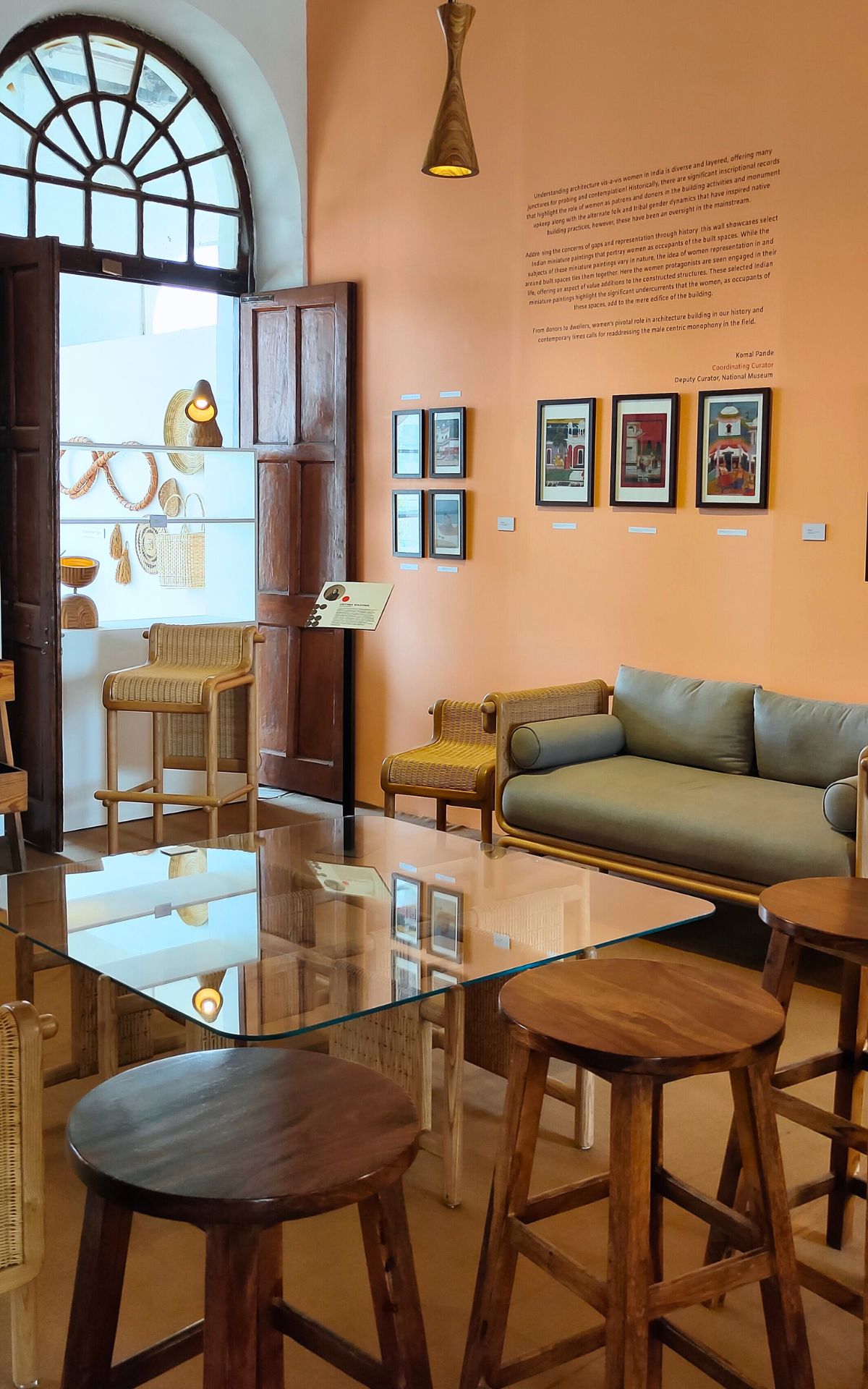
The Samatva pavilion at the India Art Architecture and Design Biennale 2023 was one such inspirational visual feast. On the outside, the pavilion was a stony medieval building. The entrances to the rooms within seemed to have been renovated in colonial-style arched doorways. But the exhibits within had a warm, welcoming feel.
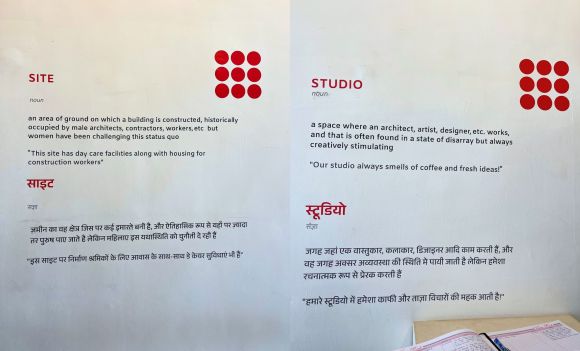
Of the entire exhibition, spanning 7 pavilions, Samatva was the one that was the most intentionally designed, explaining to the layperson what the terms mean.
Site: an area of ground on which a building is constructed, historically occupied by male architects, contractors, workers, etc. but women have neem challenging this status quo.
“This side has day care facilities along with housing for construction workers.”
Studio: a space where an architect, artist, designer, etc. works, and that is often found in a state of disarray but always creatively stimulating.
“Our studio always smells of coffee and fresh ideas!”
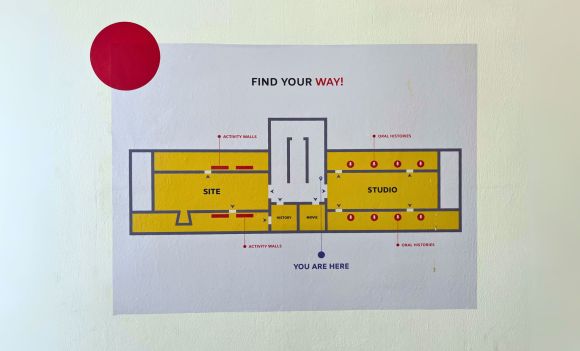
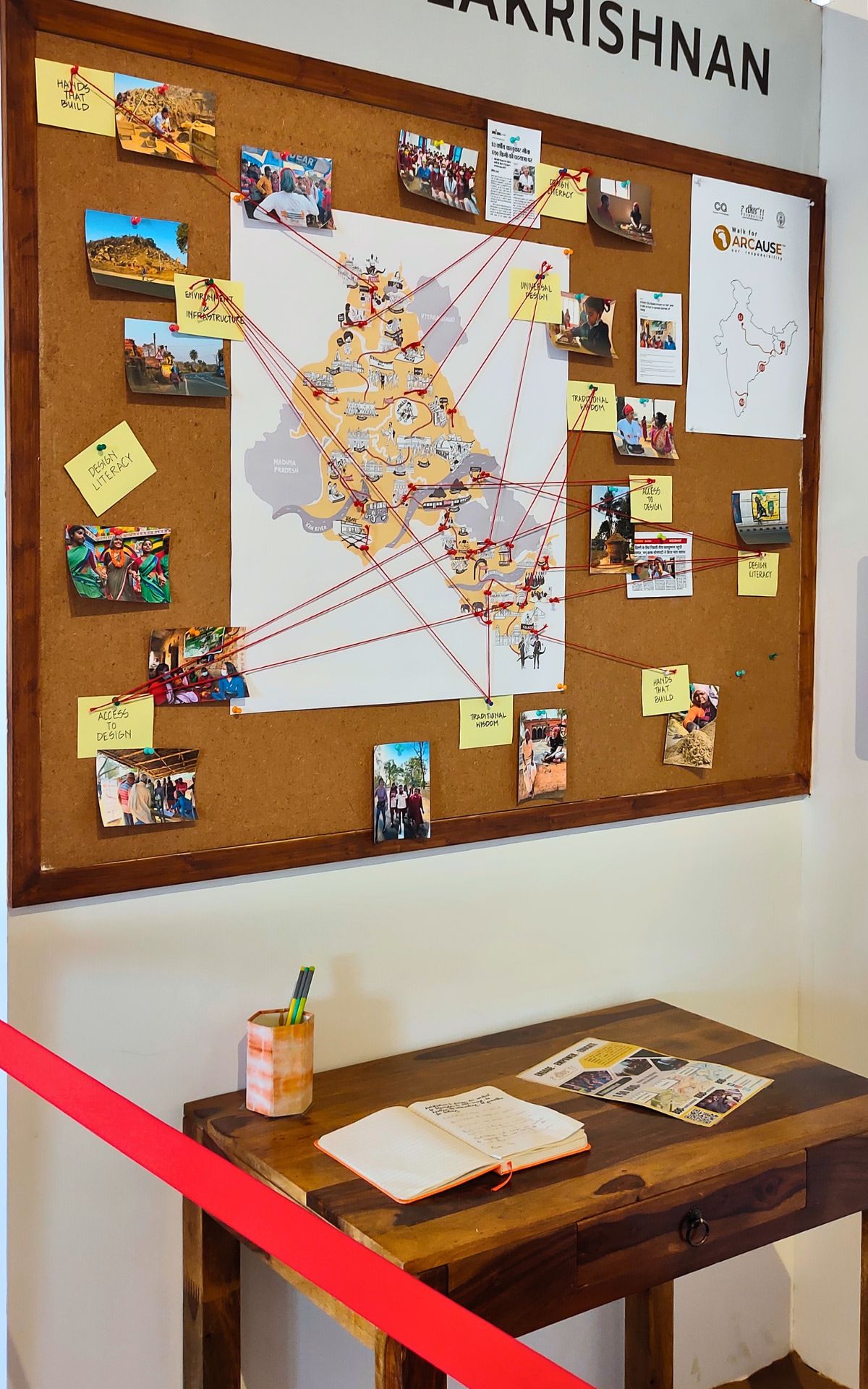
And yes, of course, there was a map!
Binding all the exhibits was a common design element—the red dot.
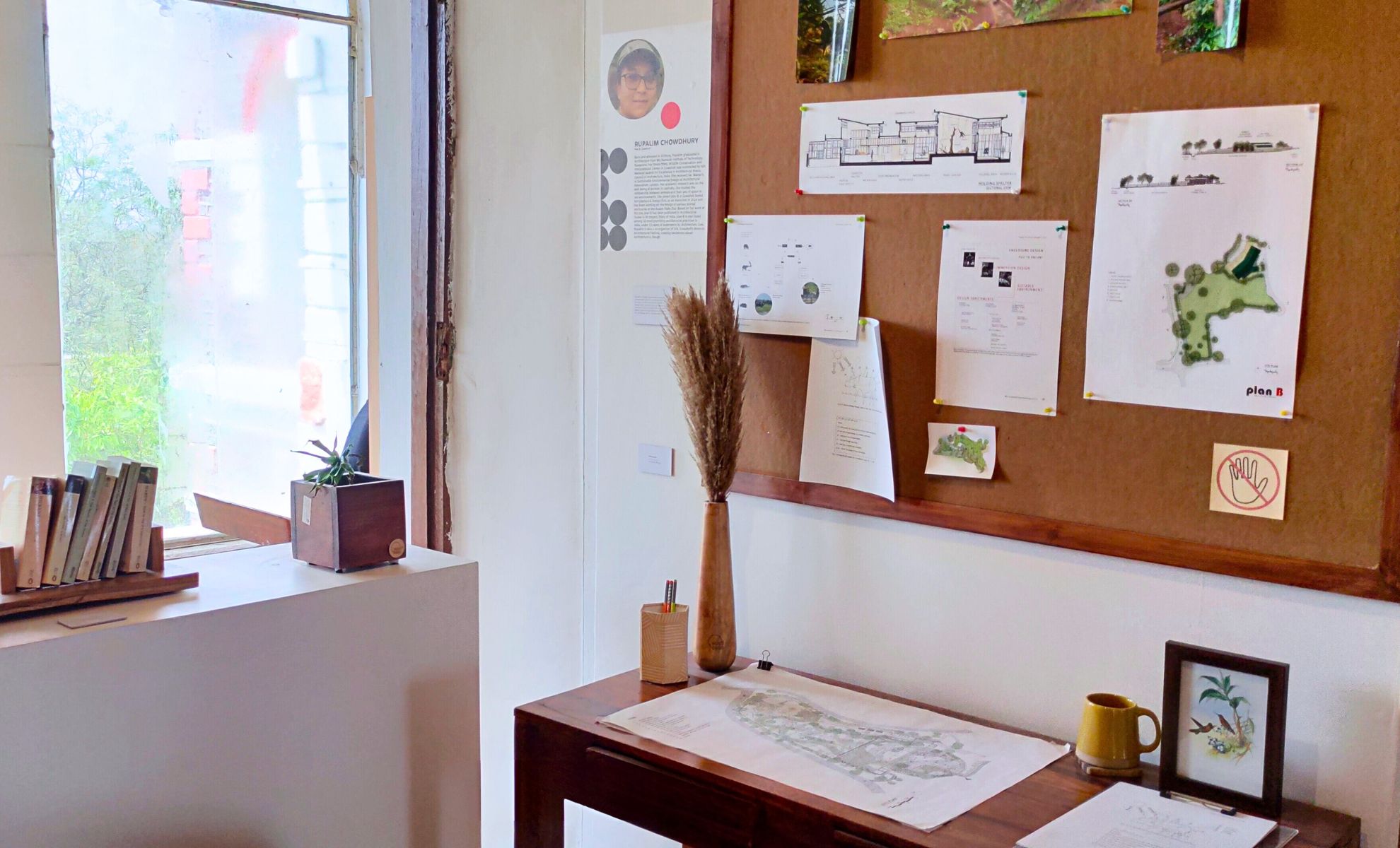
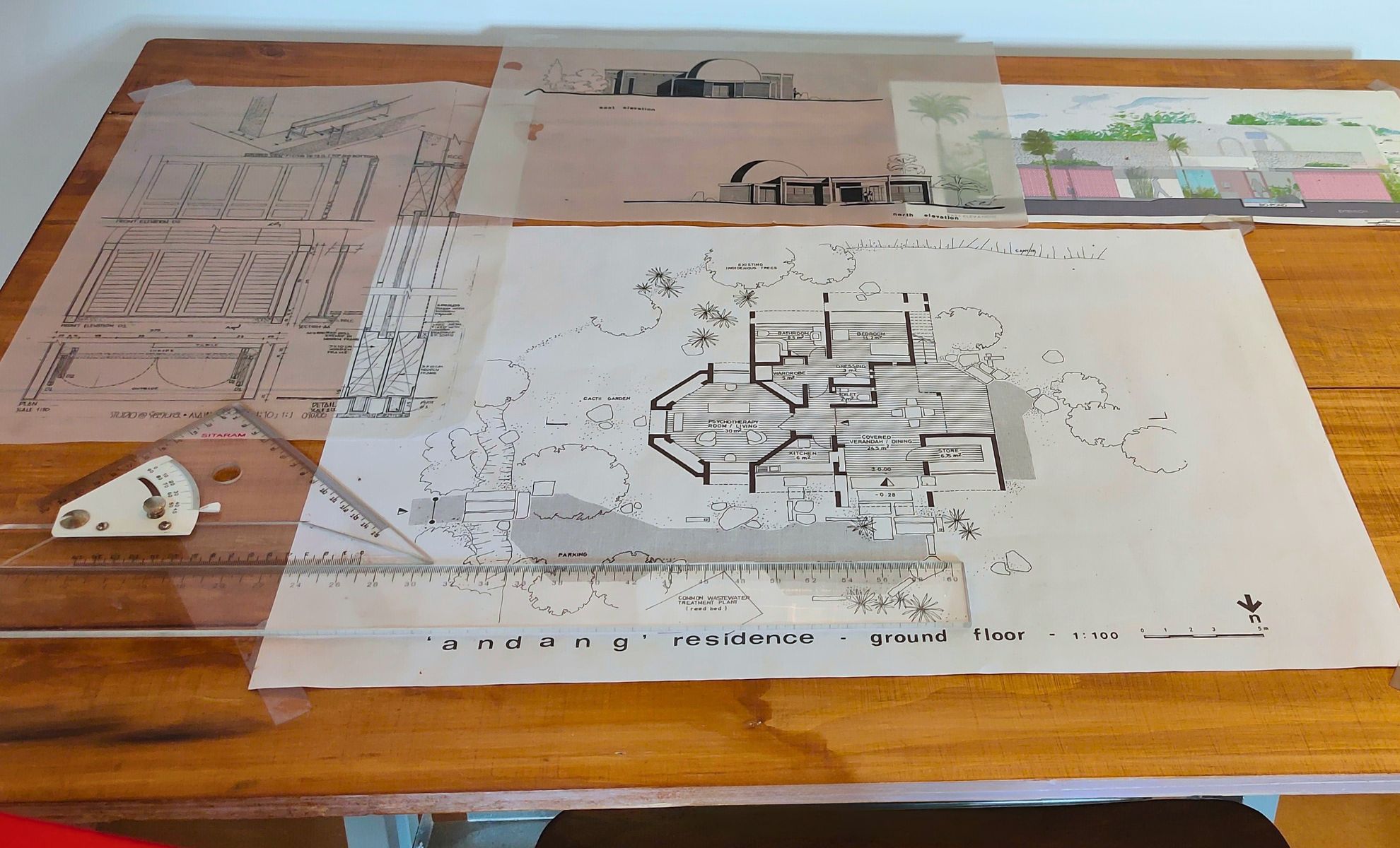
We saw aesthetically set up studio spaces with glimpses of architectural work-in-progress. Intentionally messy, but true to their word, stimulating.
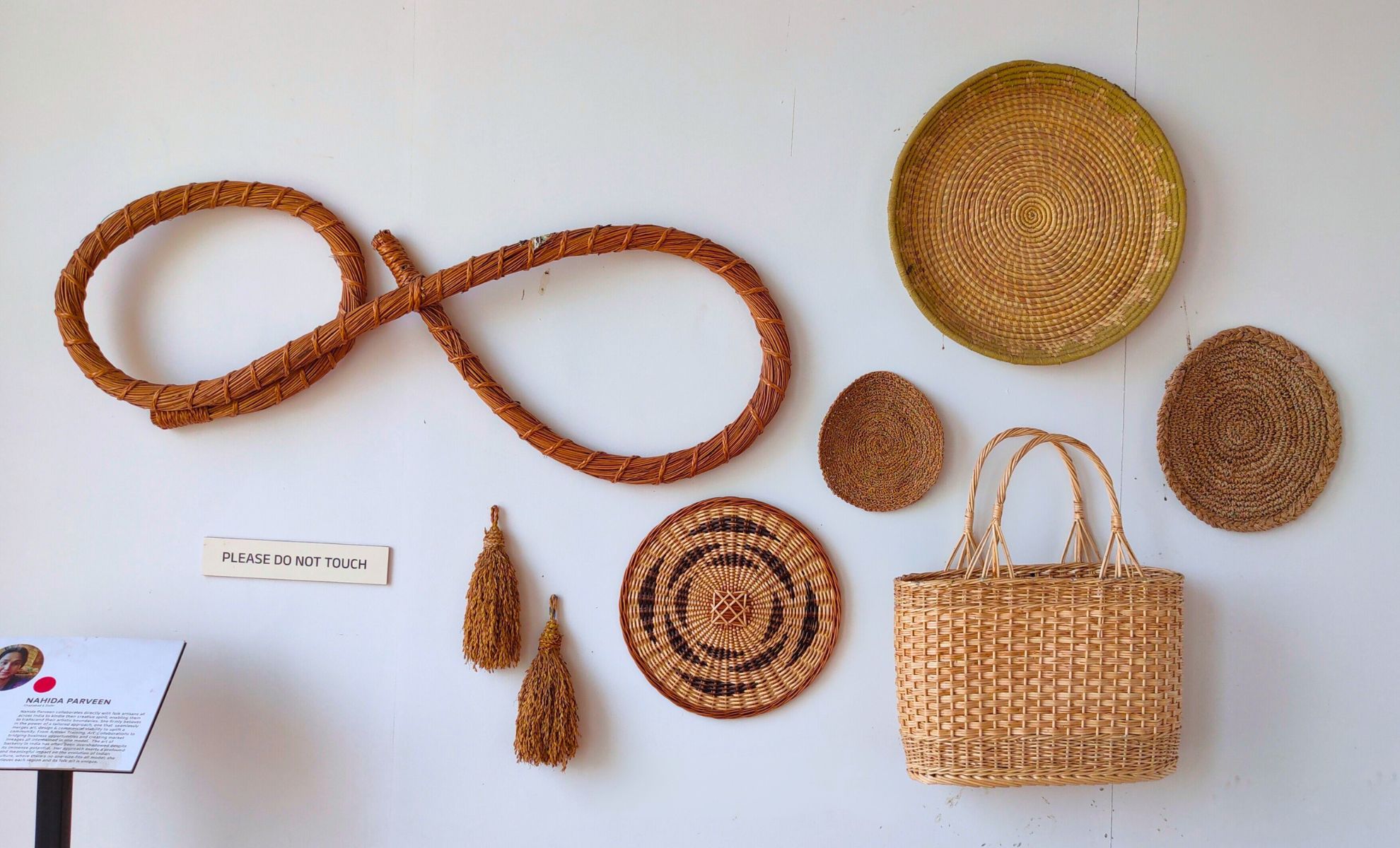
Below are some pictures we saved for later.
Hopefully, one day we’ll have a space we can call our own—when we can finally free up some loft space and get rid of those packaging cartons. A time when we can drill nails into the walls and put up all our artwork (and the two guitars we now have).
Will we find these pictures when we need them? Only time will tell!
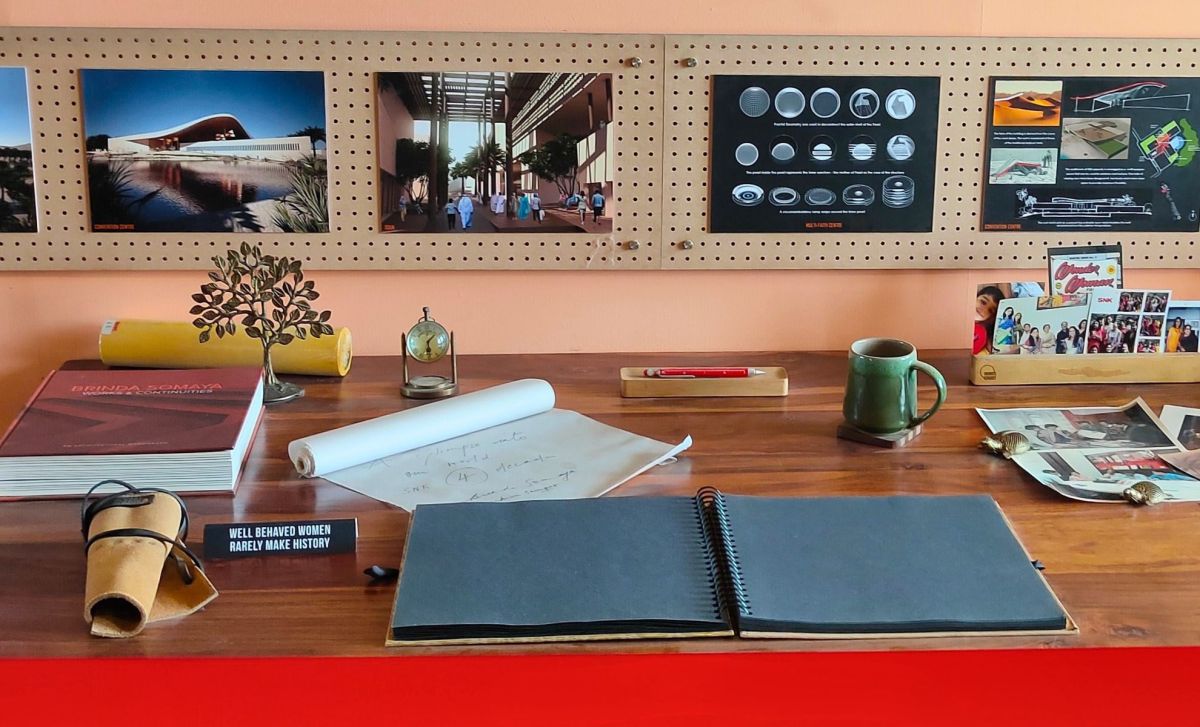
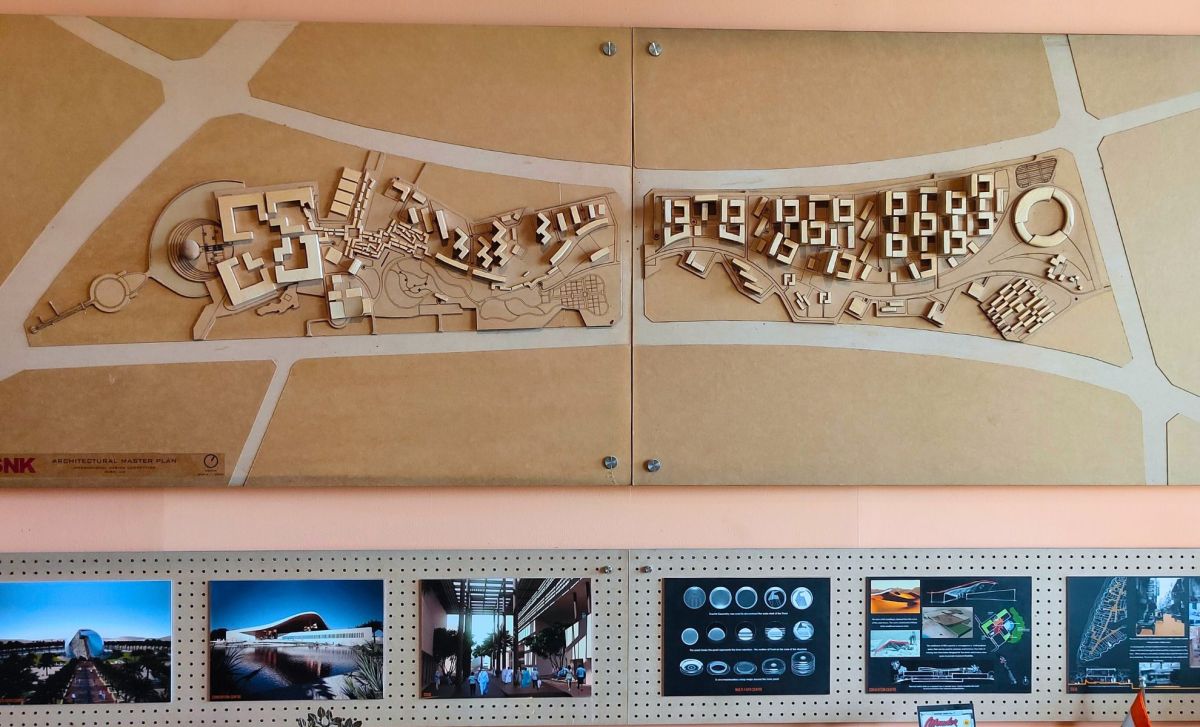
3D architectural site plan as a wall display from Somaya Sampat's Studio
For the past few years we’ve been looking to buy a home, and we’ve looked at numerous fancy flyers by builders. But nothing has ever caught our imagination. Year after year, all we’ve seen are towers of concrete, embellished with heat-trapping glass. These so-called modern constructions conveniently ignore the realities of climate change. The prospective home buyers are effectively going to live in ovens, necessitating the use of air conditioning, further compounding the problem.
We love open, airy spaces with ample natural light, and yet, these townships pack houses like sardines. Projects these days claim to include rainwater harvesting, just to hop on the green bandwagon. But few even venture close to recycling grey water from kitchen sinks. With every house invariably keeping RO water purifiers, it makes sense to collect the waste water from these appliances for sanitation use. There is also immense opportunity to use rooftops for solar energy. None of these ideas are earth-shattering. Indeed, many of them have been implemented in other parts of the country. But the big builders of Delhi-NCR seem to lack inspiration to truly innovate.
If only they’d hired (or taken inspiration from) the architects of the calibre featured in the Samatva pavilion of IAADB23.
The Sustainable Eco-Literate Architect
Revathi Kamath’s treatise on the sustainable eco-literate architect.
The pioneer of mud architecture, Revathi Kamath wrote in her treatise on the sustainable eco-literate architect:
The architectural mind needs to be aware of the mathematics of complexity and geometries of nature—Mandelbrot sets, Julia sets, Berkhoff’s bagel, Koch curves, Buddhist and Hindu Mandalas—the list is constantly growing. The immense beauty that is latent in the use of these conceptual tools needs to be appreciated and replace the simplistic dogmas of the “cleanlineists,” the functional packaging of commercial space in boxes, the squares and rectangles on Vaastu and Feng-Shui pandits, layouts of military camps and cantonments, imperial palaces, administrative centres and corporate parks.”
Humanity must seek inspiration from nature and build to sustain, instead of merely using and dumping resources indiscriminately.
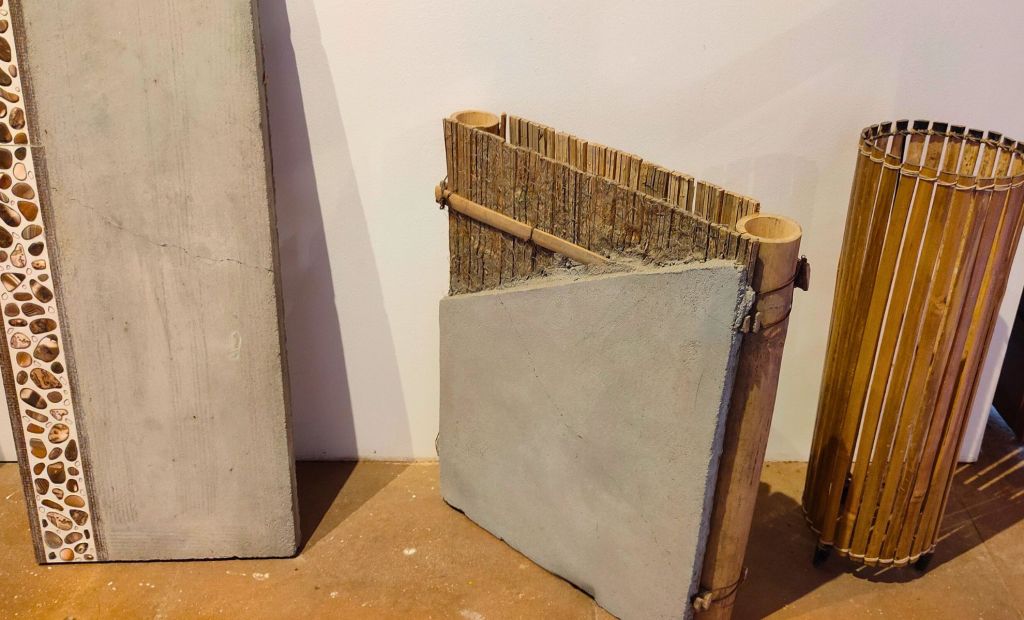
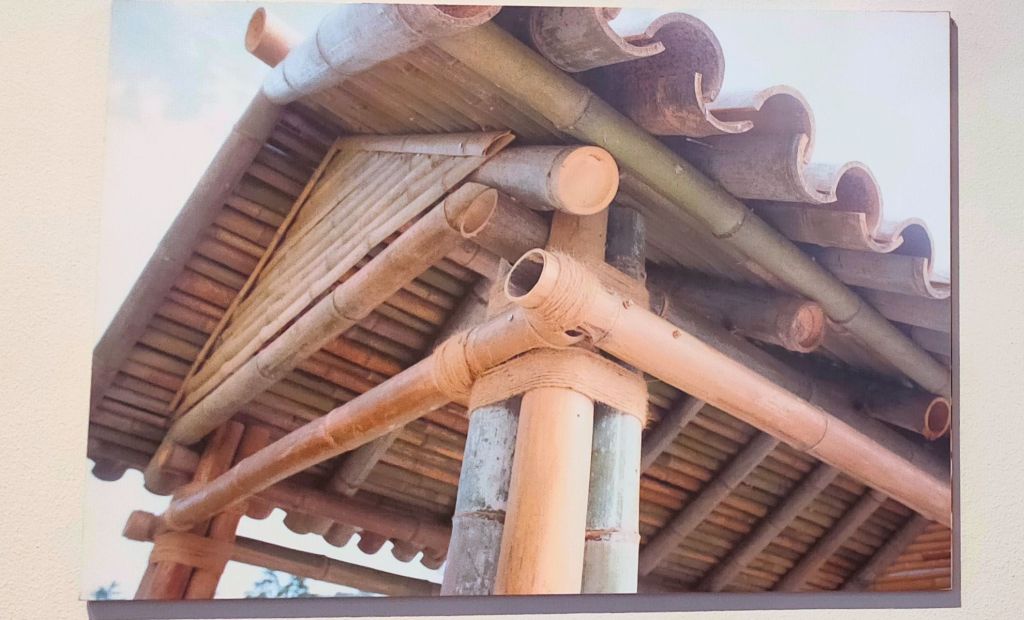
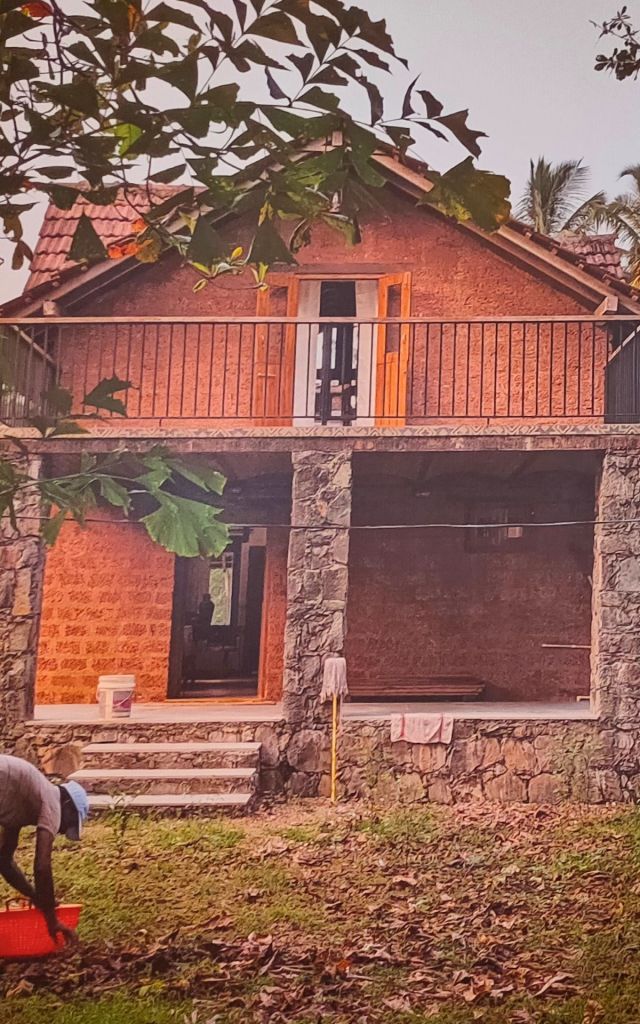
Take Kankana Narayan Dev, for example. Hailing from Assam, the architect takes inspiration from traditional, sustainable methods of construction in her work.
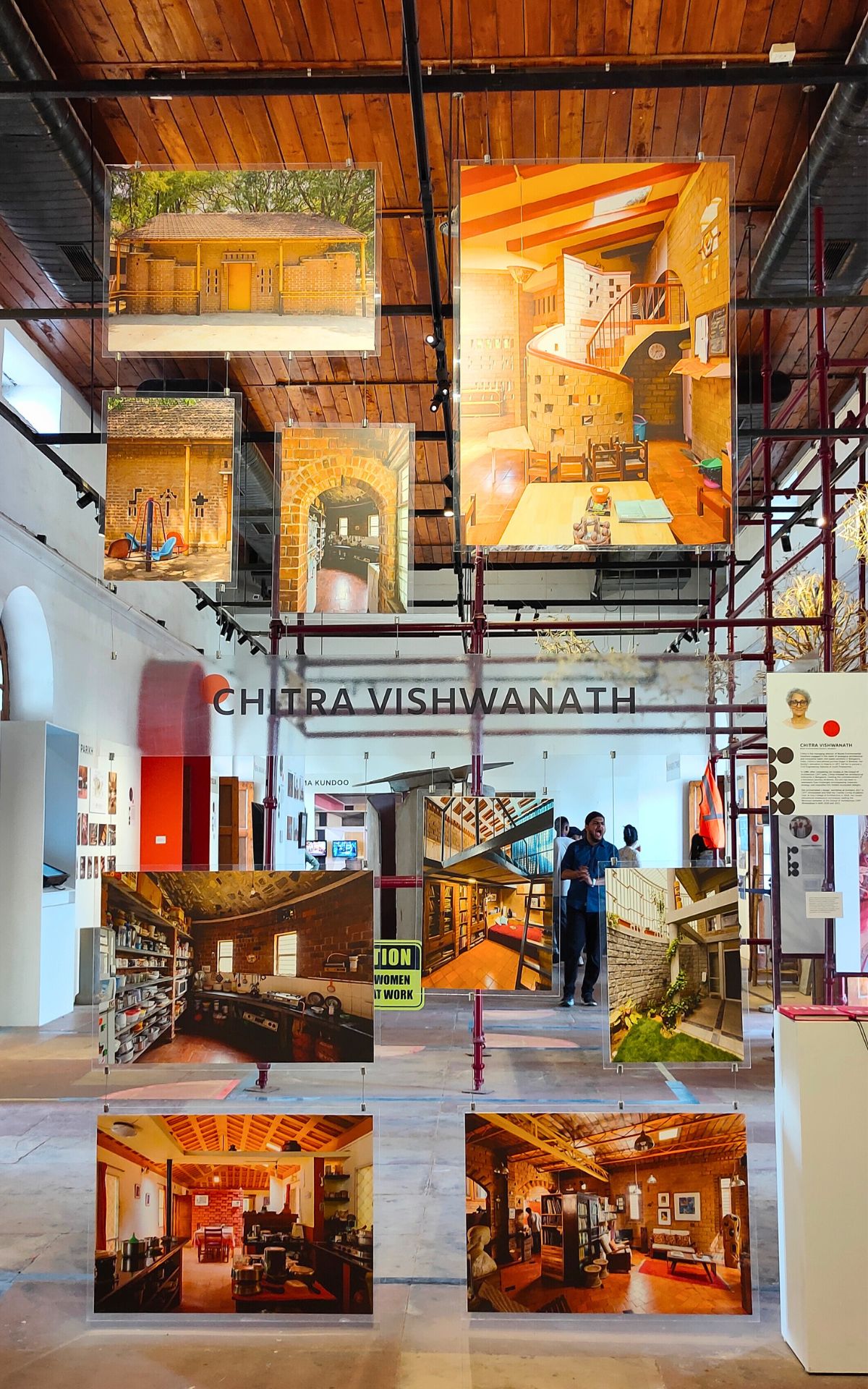
Furniture and building blocks that incorporate bamboo.One of Kangana’s homes made with bamboo.
While Kankana works primarily with bamboo, Goa-based Tallulah D’Silva‘s material of choice is mud.
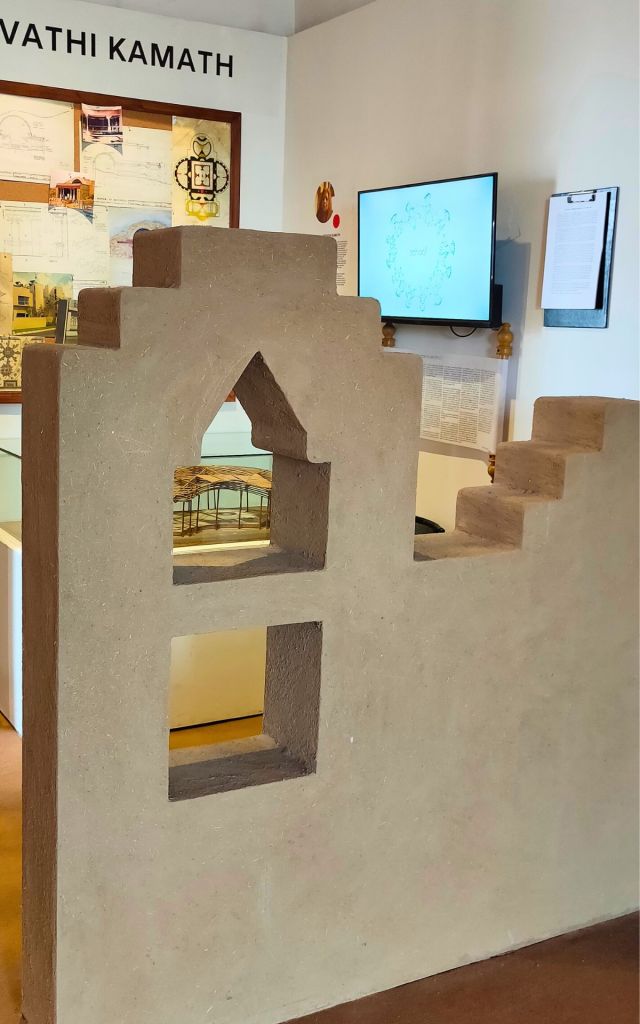
Tallulah D’Silva’s homestay that incorporates mud for constructionRevathi Kamath’s studio featuring a hand-crafted mud wall.
Sustainability wasn’t the only theme of Samatva. So was social inclusion and designing with empathy—something commercial builders could learn from.
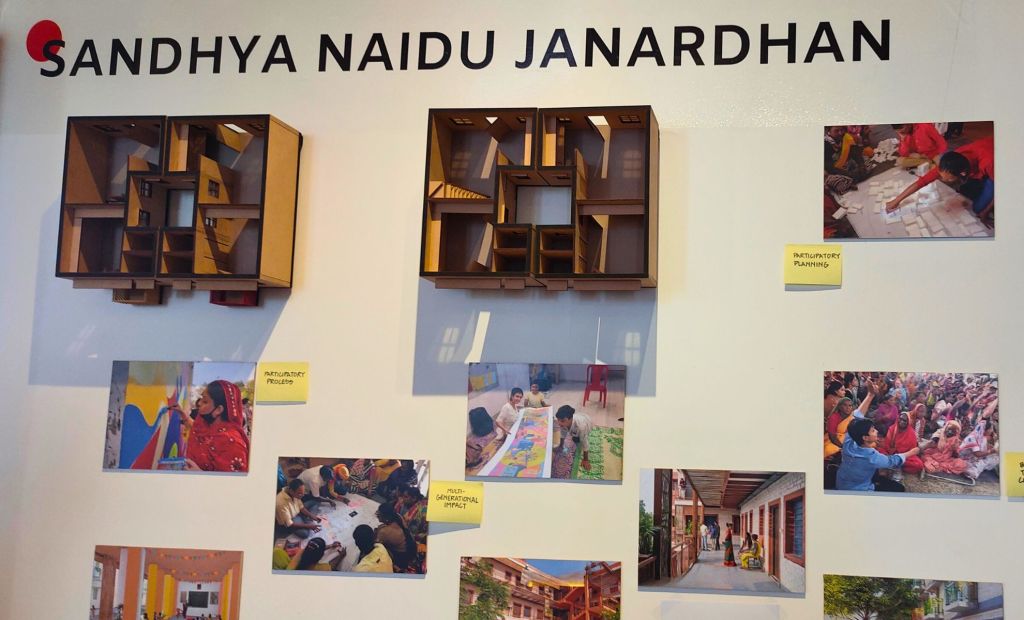
One project that caught my eye was Sandhya Naidu Janardhan’s slum redevelopment work.
Building With Empathy
Sandhya Naidu Janardhan’s design process while working on slum redevelopment.
While on our home hunting spree, we visited dozens of construction sites. We sat in lavish sales offices, browsed through glossy brochures, walked inside heavily decorated sample flats and watched the brokers point at realistic scaled model of the buildings. The sheer amount of marketing glitter around these projects was mind-boggling.
But when you’re redeveloping a slum, it’s not as glamourous. You likely won’t have access to the kinds of resources the builders have. It would have been easy for Sandhya to have just drawn some cookie-cutter plans and got them approved without anyone batting an eyelid. But she chose to involve the community in her design process. The hallmark of a good designer is to understand the needs of the user—in this case, the people who would eventually live in the spaces she’d design.
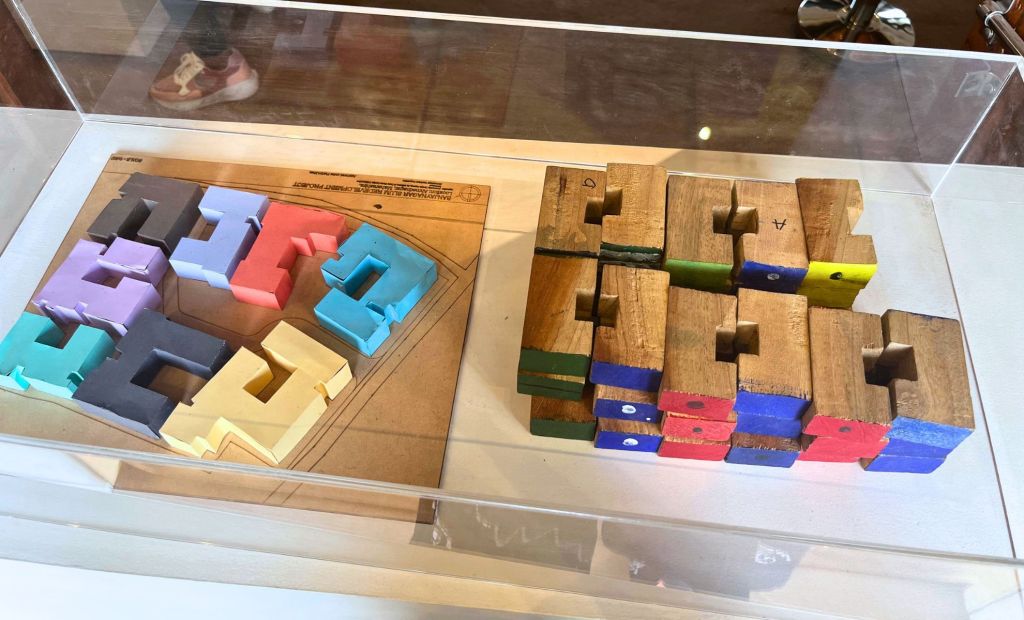
Low fidelity models made with paper and wooden blocks.
By far my favourite exhibit was the small models made with paper and wooden blocks. Proof that one doesn’t need fancy photorealistic models to communicate a vision. What is needed, though, is the willingness to perform sound user research.
Would any big construction company ever care for their customers as much? We’re yet to find one that does.
The image at the top is a display from Somaya Sampat, formerly Somaya & Kalappa Consultants (SNK), at the Samatva Pavilion of IAADB23.
India’s cultural history dates back to prehistoric days. Yet, when it comes to design, the world seems to consider Europe as the centre for excellence.
The India Art, Architecture and Design Biennale 2023 (IAADB23) was a welcome initiative by the Ministry of Culture to show the world (and more importantly, to Indians) what they’ve ignored (or perhaps wilfully tried to destroy, almost succeeding at it).
The initiative captured public imagination. From quirky installations to mind-blowing paintings, and from replicas of temples to modern art, there was something for everyone.
The Red Fort, with its sprawling lawns and numerous barracks was an appropriate choice. To house the cultural history of a nation as rich and diverse as Bhaarat, would have taken nothing short of a small army.
The entire showcase was divided into seven pavilions, each with appropriately beautiful names:
Pravesh (Doors of India), Rite of Passage.
Bagh-e-Bahar (Gardens of India), Gardens as universe.
Sampravah (Baolis of India), Confluence of Communities.
Sthapatya (Temples of India), Antifragile Alogrithm.
Vismaya (Architectural Wonders of Independent India), Creative Crossovers.
Deshaj (Indigenous Design), Bharat x Design.
Samatva (Women in Architecture and Design), Shaping the Built.
While the installations at Vismaya and Pravesh made it to Instagram reels, Deshaj was the one that I was looking forward to. But the pavilion that ultimately had the biggest impact on me was Samatva.
Samatva: Shaping the Built
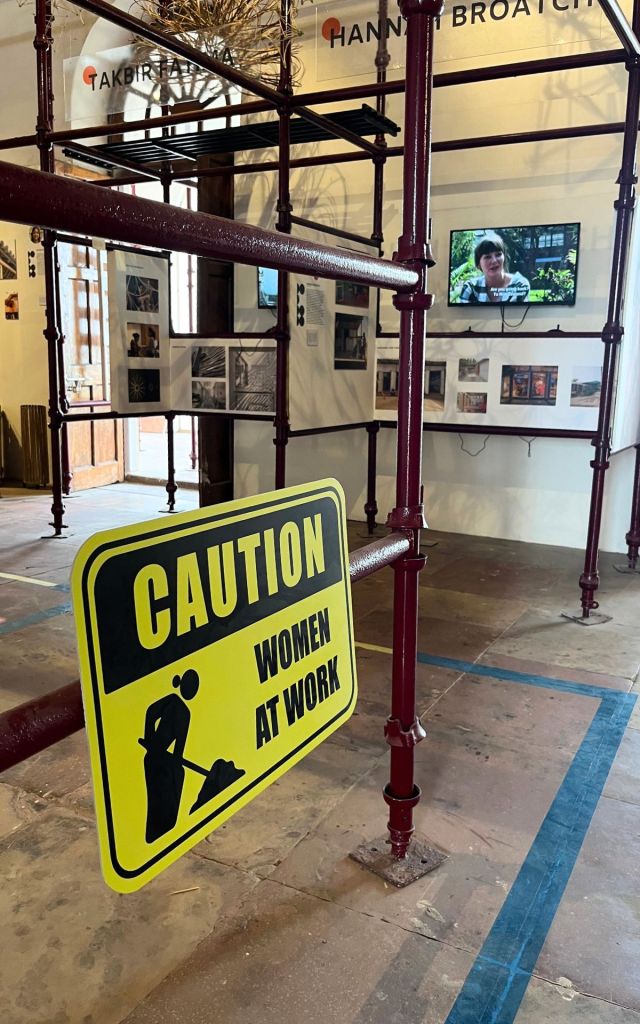
Inside the Smartva pavilion, a signboard reads, “Caution: Women at Work.”
Curator Swati Janu introduced Samatva thus:
The root of the word Samatva (Sanskrit: समत्व) is sama (सम) meaning ‘equal’ which forms the essence of this exhibition and the reason why we showcase women architects here.
Historically and even today women have not been given the same opportunities and recognition as men in the fields of design, architecture and planning, be it in pursuing the profession or being widely published or invited to speak at panels.
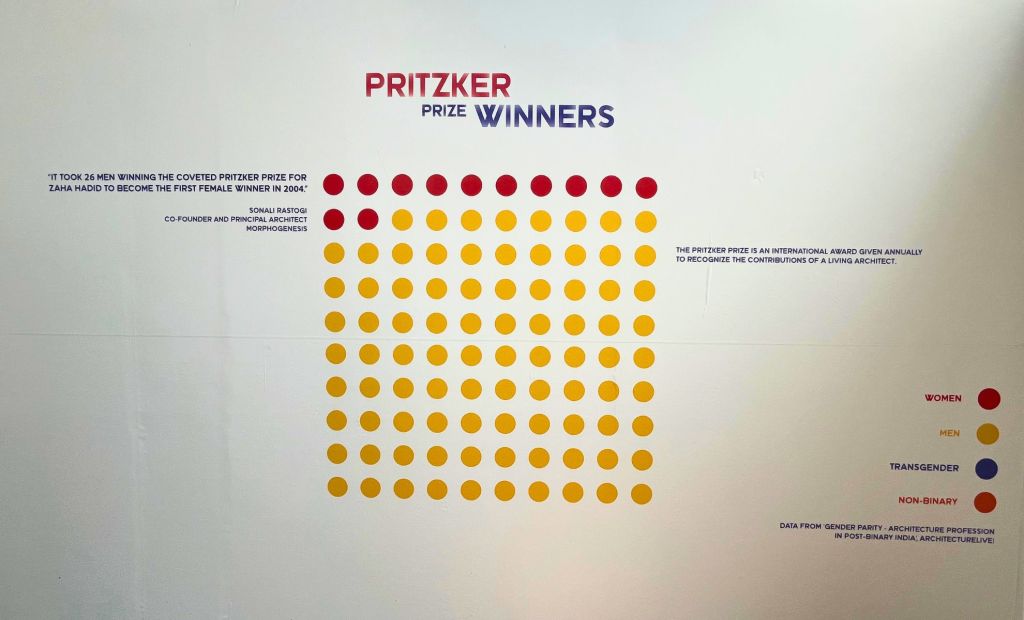
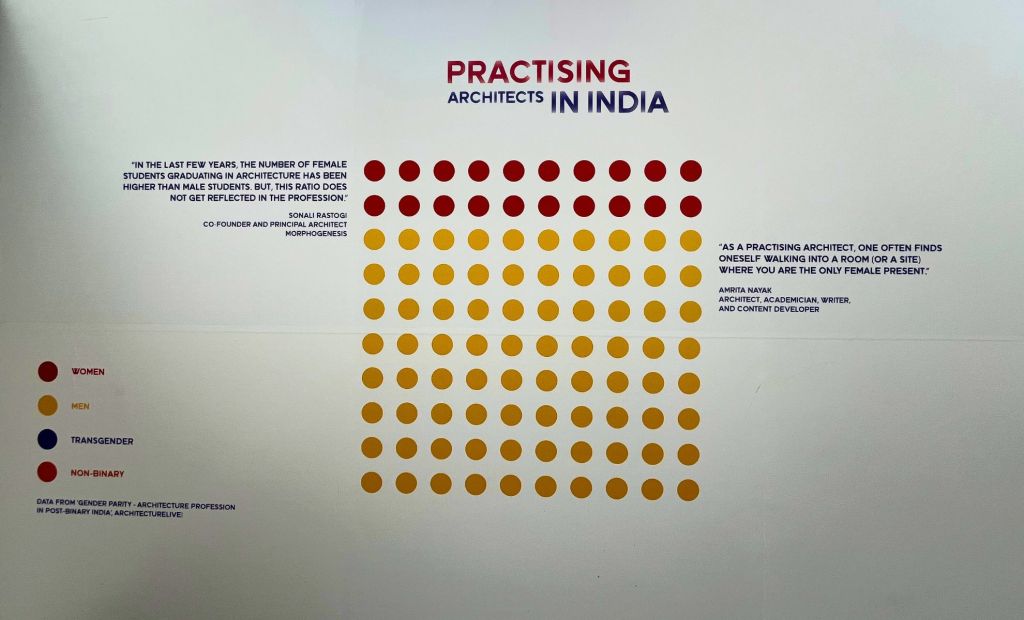
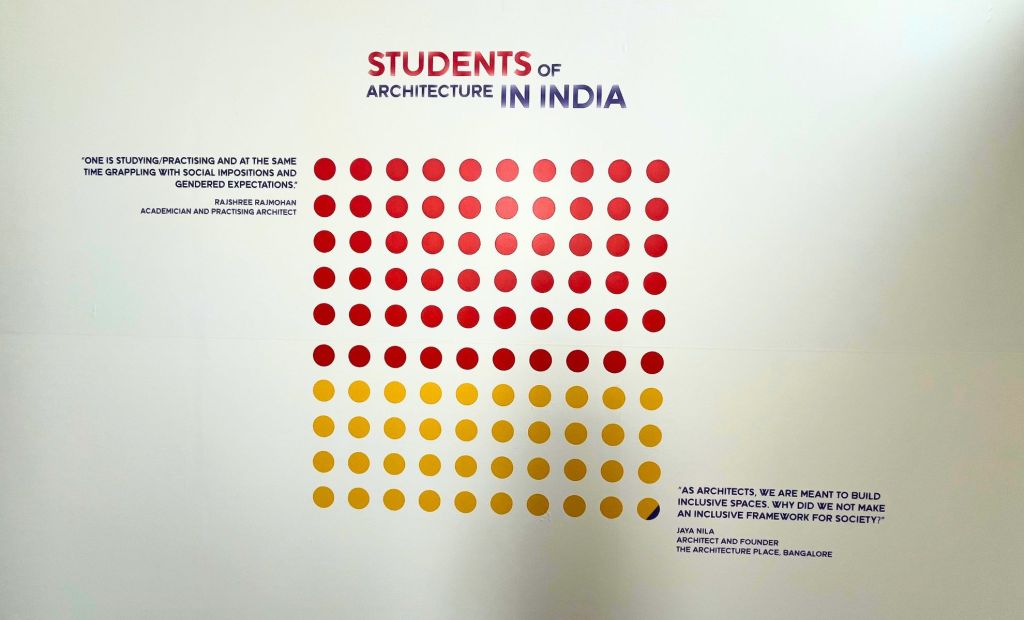
Even before we entered the pavilion, we saw these graphics reminding us about the poor representation of women in architecture.
The information visualisation nerd in me, however, couldn’t help but appreciate how beautifully well the information was presented. Using nothing but coloured dots, the series of graphics showed the gap in gender participation in architecture. Yellow dots represented men, while red ones represented women. The saddest visualisation was entirely yellow.
Since 1972, there hasn’t been a single non-male president of Council of Architecture.
As architect Amrita Nayak puts it, “Often women have to work harder to be ‘listened to’ by senior leadership, in comparison to men with similar expertise or experience.”
I have been fortunate to have been heard in my work environment. But Amrita’s experience is all too familiar in a social setting.
The picture gets somewhat better when it comes to recognition of women in architecture, with 12 red dots against 88 yellow ones. The Pritzker Prize is an international award given annually to recognise the contributions of a living architect.
“It took 26 men winning the coveted Pritzker Prize for Zaha Hadid to become the first female winner in 2004.” – Sonali Rastogi, Co-Founder and Principal Architect, Morphogenesis
One reason why so few women have been awarded the prize is because there are fewer women who practice. 20 red dots to 80 yellow ones.
Beside the visual, another eerily relatable observation by Amrita reads, “As a practising architect, one often finds oneself walking into a room (or a site) where you are the only female present.”
“As architects, we are meant to build inclusive spaces. Why did we not make an inclusive framework for society?”
– Jaya Nila, Architect and Founder, The Architecture Place, Bengaluru
Amongst this sea of yellow dots, one visual represents hope. On the graphic for the number of students of architecture in India, the sixty red dots outnumber the yellow ones—a fraction short of forty. A tiny fraction of blue comes in too, to represent the transgender section of society.
However, as academician and architect Rajshree Rajmohan points out, “One is studying/practising and at the same time grappling with social impositions and gendered expectations.”
Equanimity is a concept that is rooted in Indian culture, but centuries of colonialism slowly eroded it. But hope springs eternal, and there are some signs of revival. We have a long way to go to rediscover our roots and I hope initiatives like IAADB don’t get restricted to quirky social media shorts but spark genuine conversations around design in Bhaarat.
This is the first of what will likely be a long series of posts dedicated to IAADB23, as I have just stumbled upon the treasure of memories in my digital archives. Stay tuned for more!
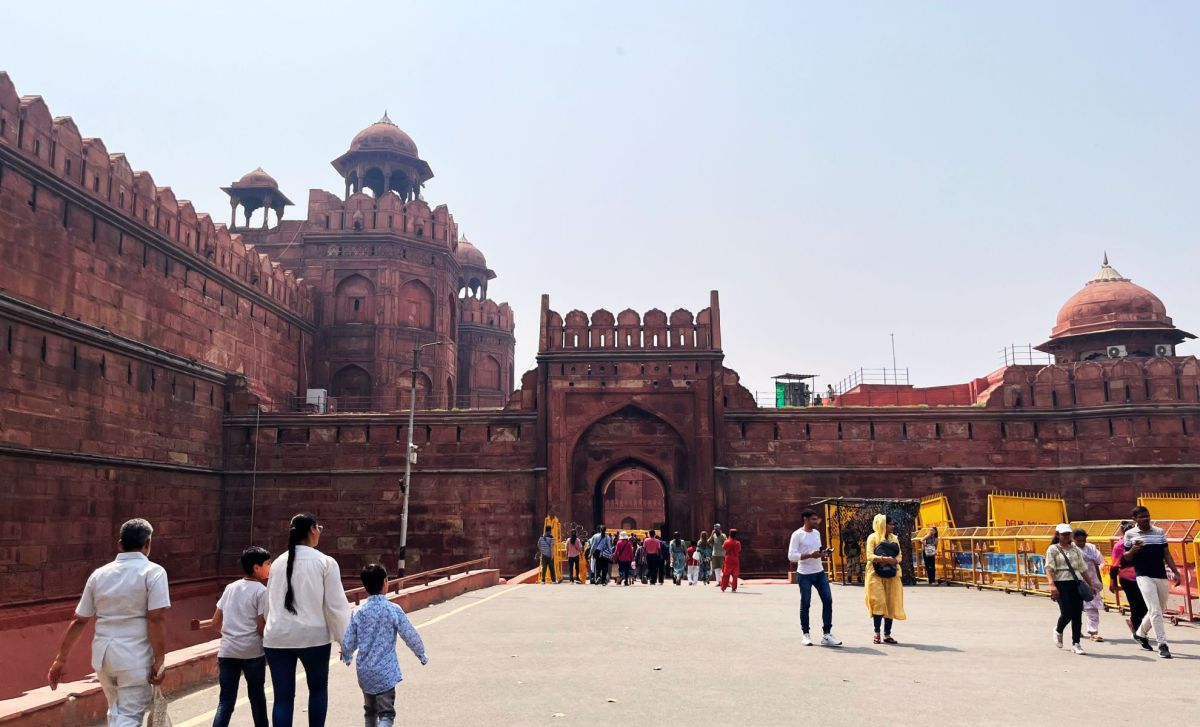
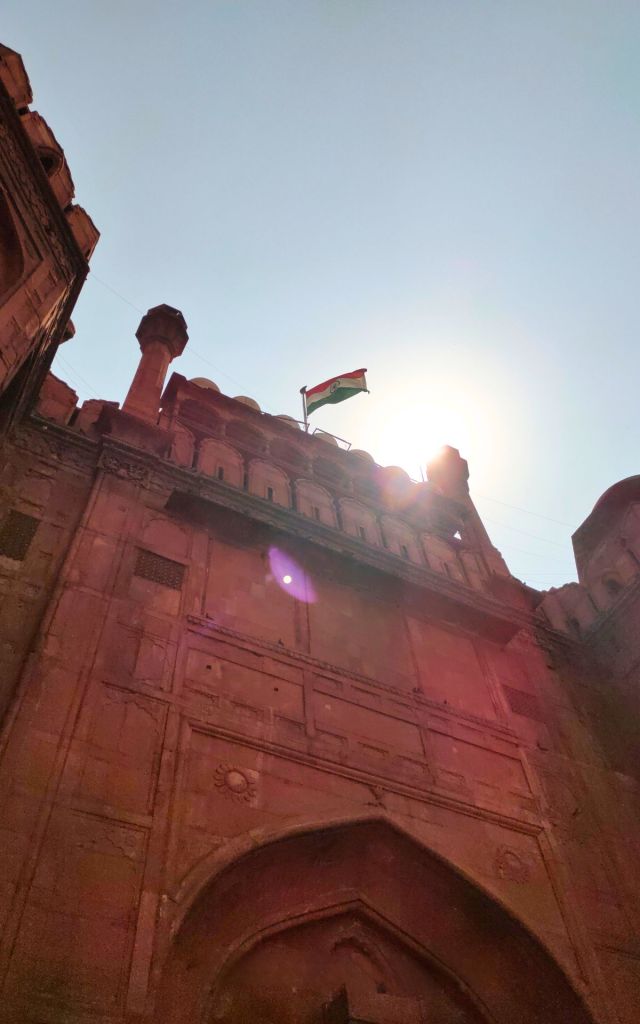
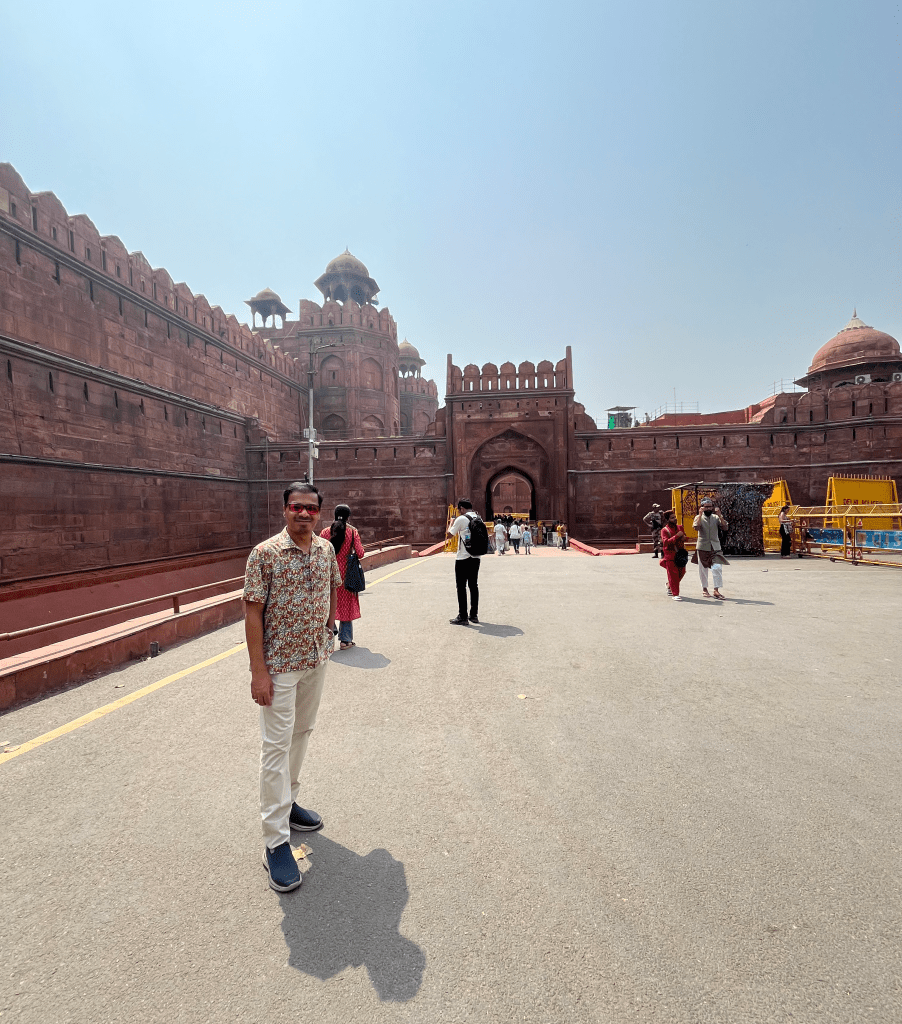
Entrance to the Red Fort, Shahjahanabad, Old Delhi, India.
If you’ve seen Hindi movies or plays set in the Mughal era, then you’ve heard that familiar refrain, “Azeem o Shaan Shehenshah…” An announcer describing the arrival of royalty.
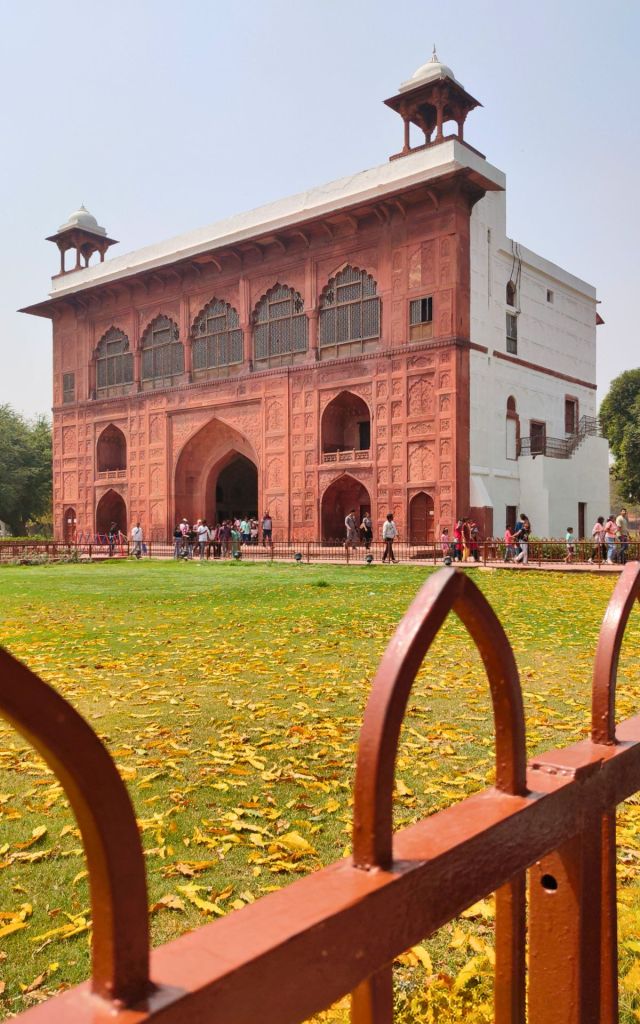
At the Red Fort in Shahjahanabad (Old Delhi), musicians would make announcements from the Naubat Khana, or Naqqar Khana (Drum House), letting the public know that the Emperor or a royal dignitary had arrived.
Announcements were a tiny part of the musicians’ job description. The Mughals were great patrons of art, and musicians would perform five times a day at chosen hours.
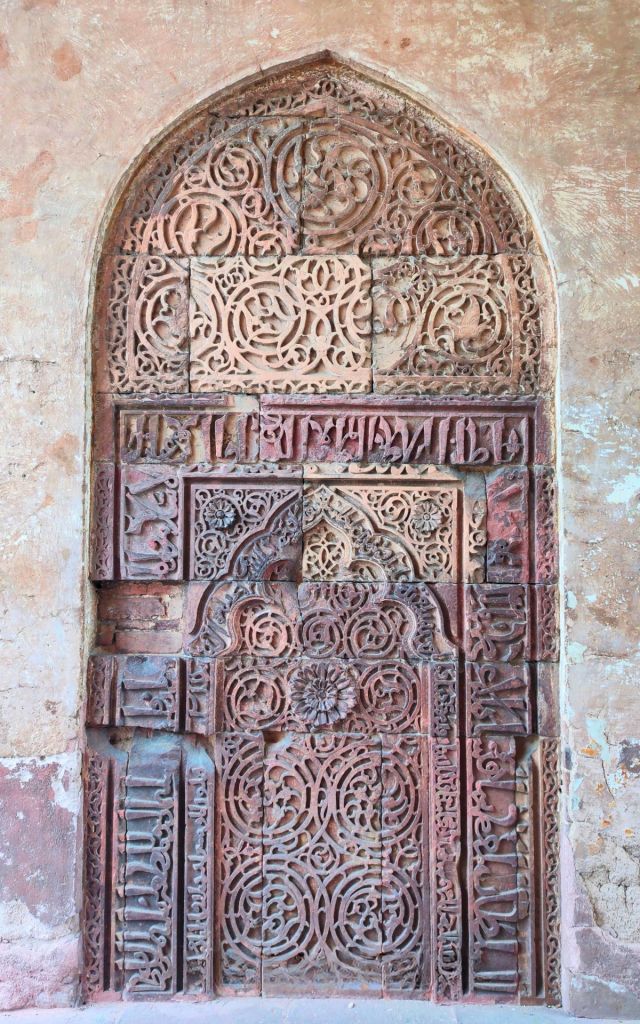
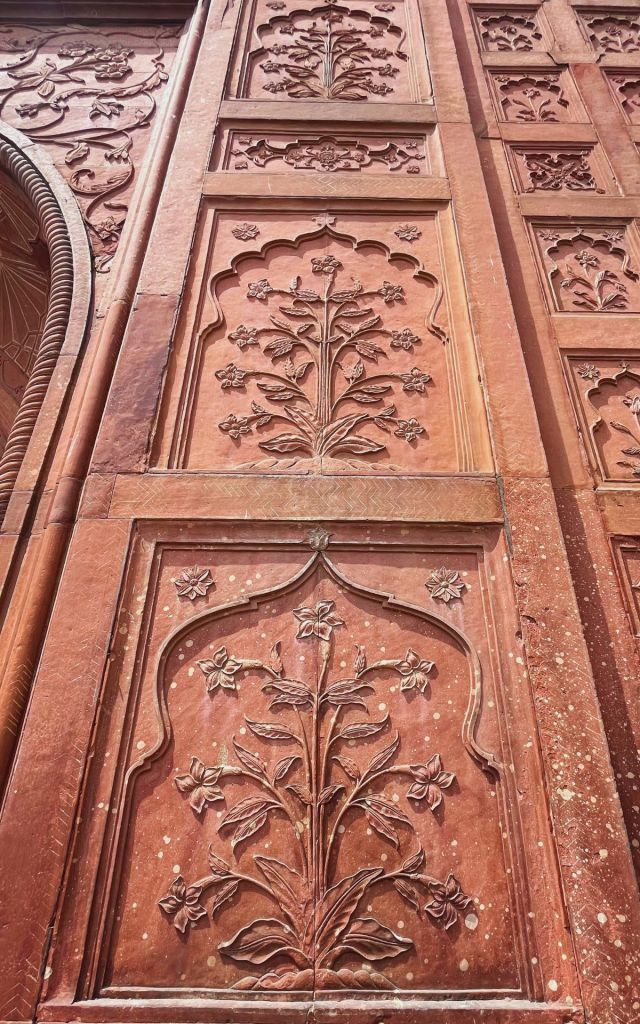
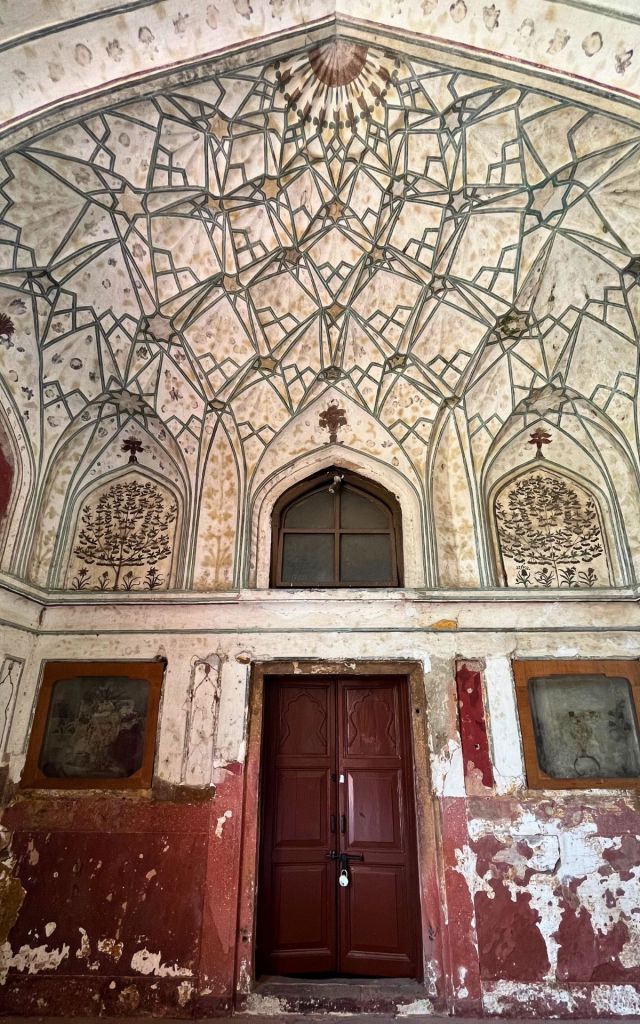
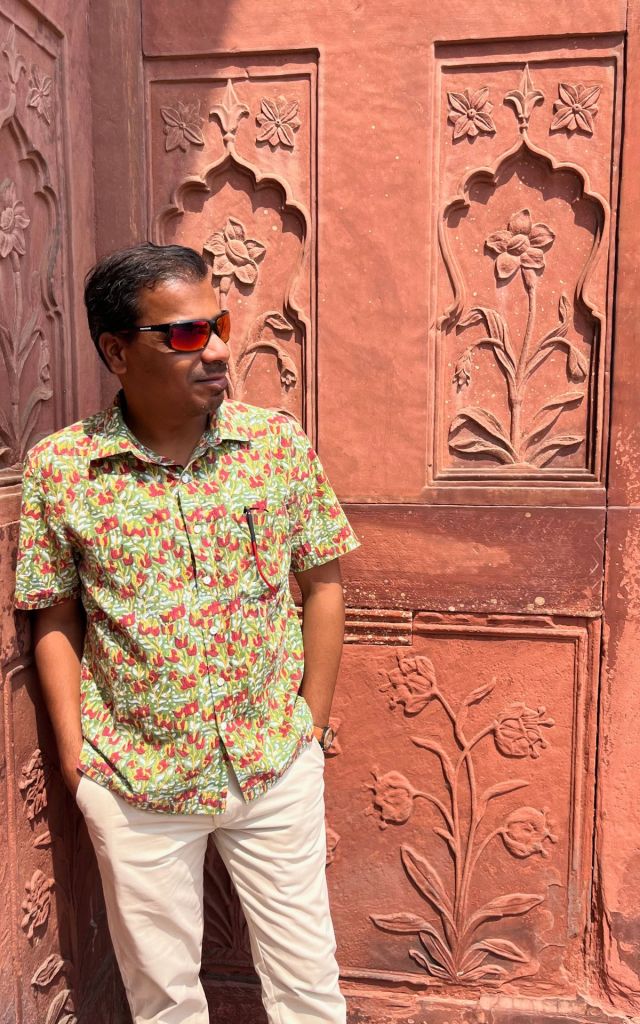
As is apt for any hall that houses artists, the Naqqar Khana is elaborately decorated. Unlike Islamic architecture in other parts of the world where motifs are strictly geometrical, Mughal architecture heavily incorporated natural themes, particularly flowers, in addition to traditional calligraphy.
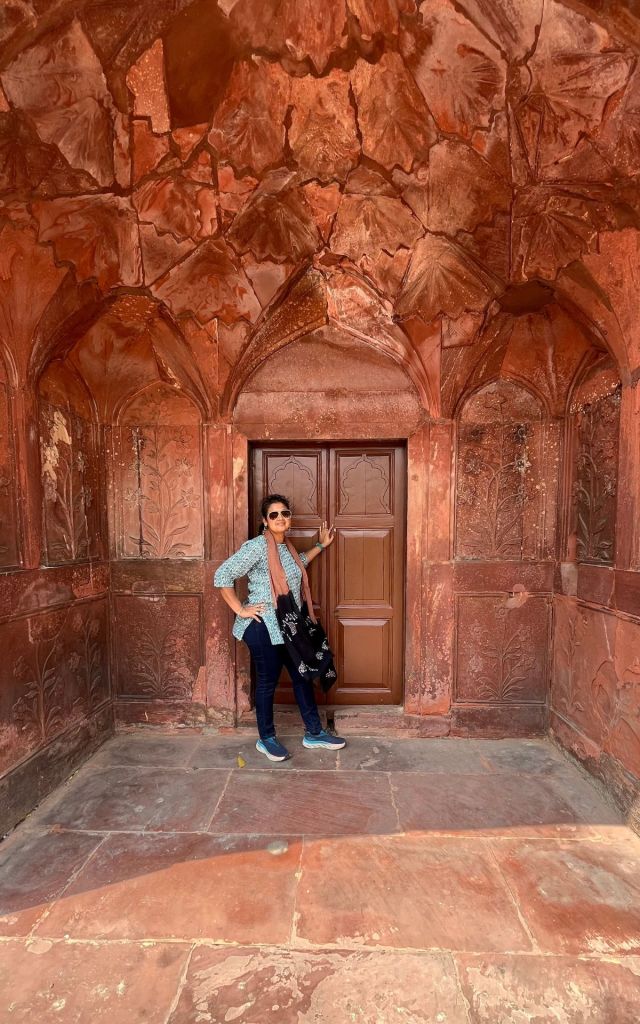
Here’s a closer look at the intricate details of the Naubat Khana at Red Fort.
The Naubat Khana or the Naqqar Khana inside the Red Fort, Old Delhi, India.
My only memories of the Red Fort are from school trips. And while India Gate, Qutub Minar and the Baha’i temple made quite an impression, I couldn’t quite remember anything about the Red Fort. Except that there was a very crowded market at the entrance that was a nightmare to get through.
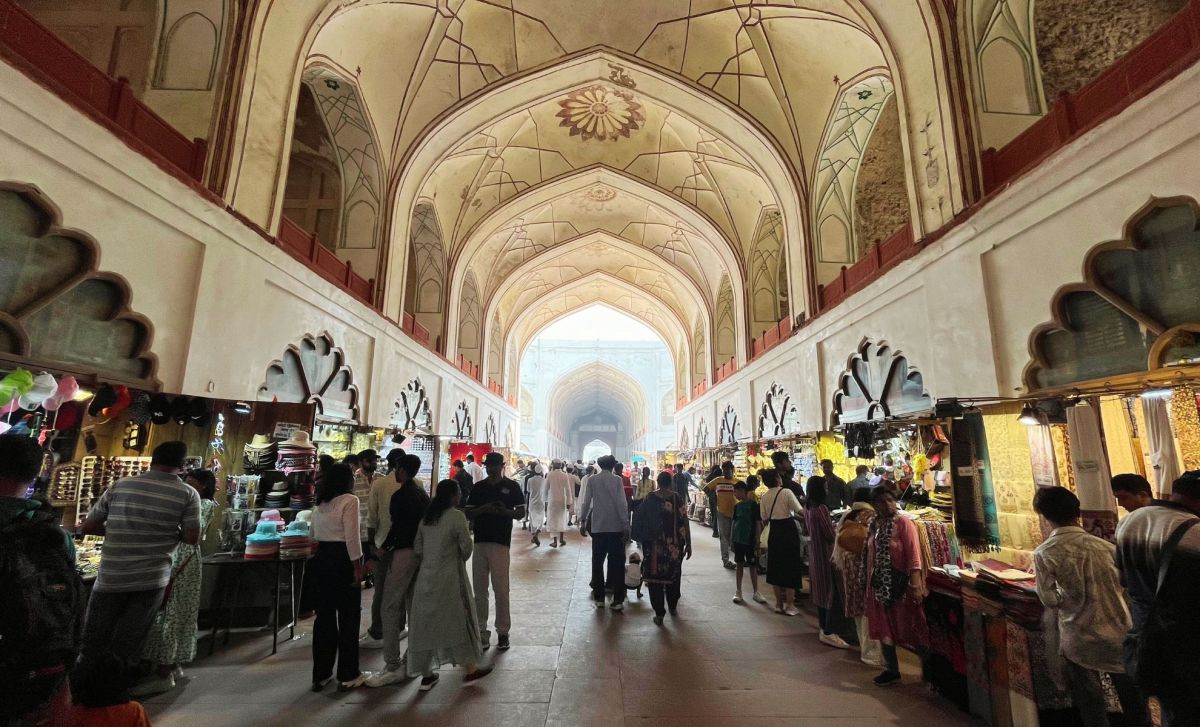
The Fort looked plain, barren and empty. A mere shell, in comparison to the mighty and rich forts of Rajasthan. The only exciting part of the monument: the bazaar!
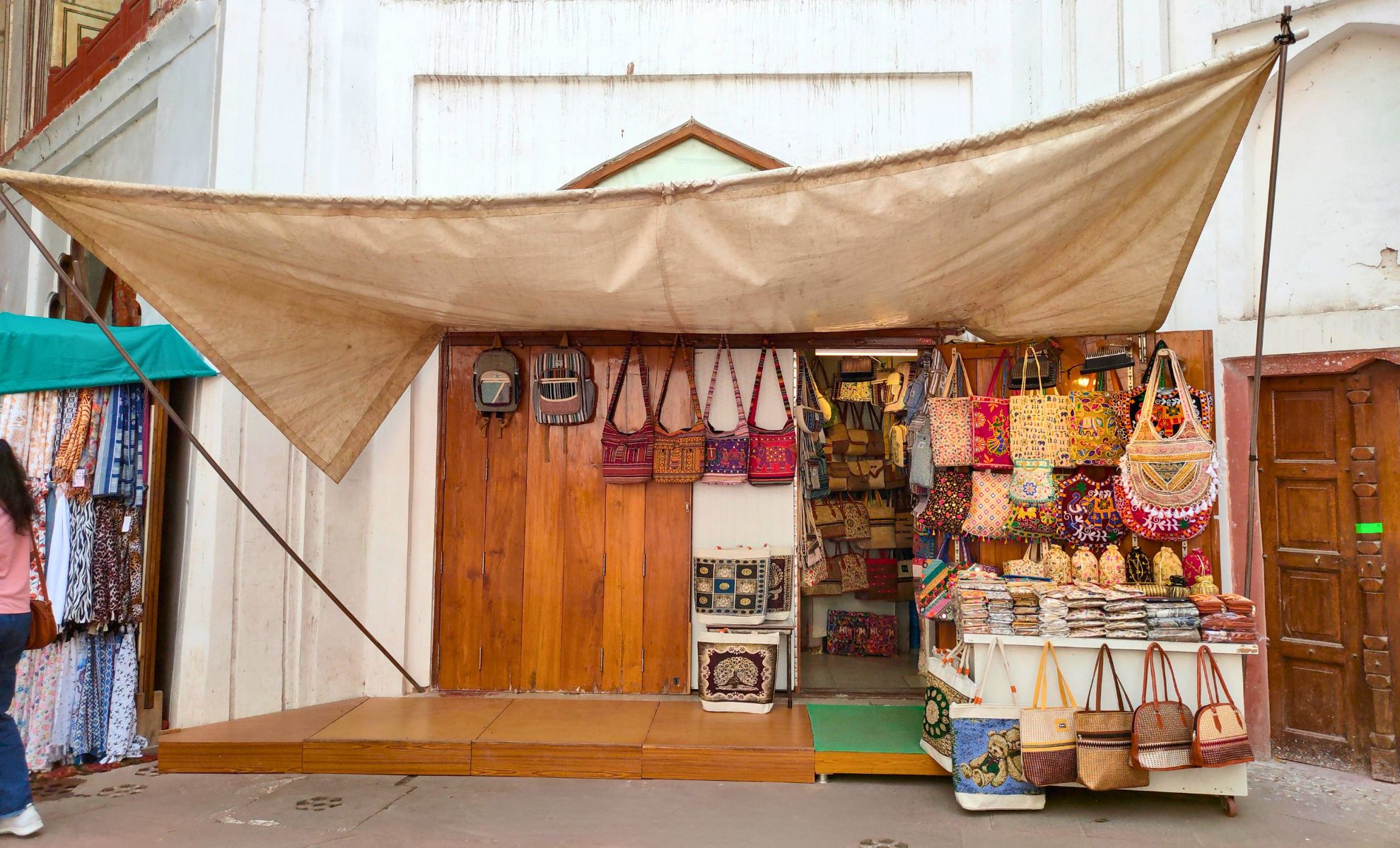
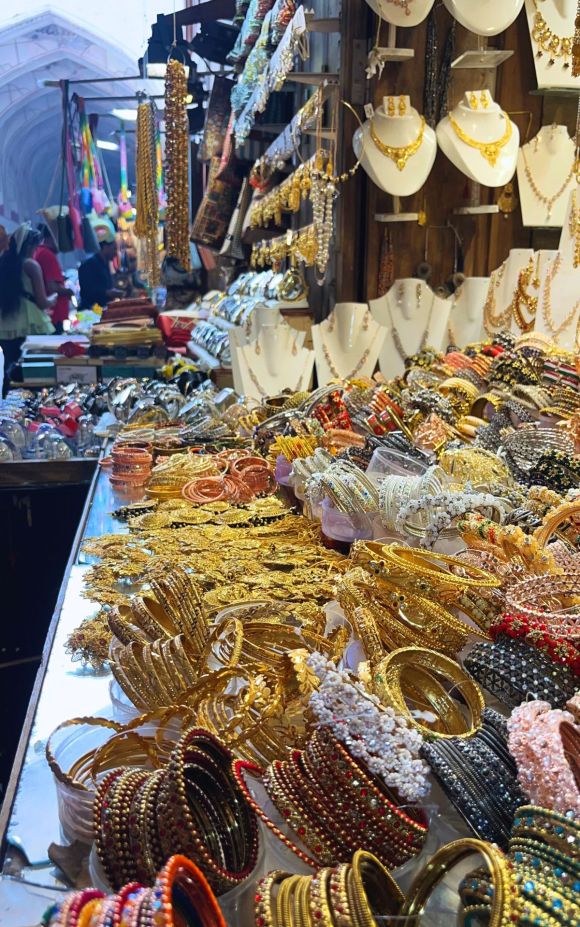
Called Chhatta chowk (translation: covered bazar), the 17th century market had the typical souvenir stalls. Glittering jewellery and carved statues, fridge magnets and stoles. Each shop full of shoppers examining the items with keen eyes.
As we moved closer towards one of the shops, a long line of school students crossed our path. Holding hands and forming a file to ensure no one gets lost. None of them was one bit interested in the wares.
As we waited for the students to cross, my thoughts went back to our school trip. It was boring and tedious for us, but it must have been a hundred times worse for our guardians—the teachers who accompanied us on those trips.
Originally posted on Instagram on 1 April 2024, this post is part of a series where I attempt to reverse social media—to reclaim my life from other platforms.
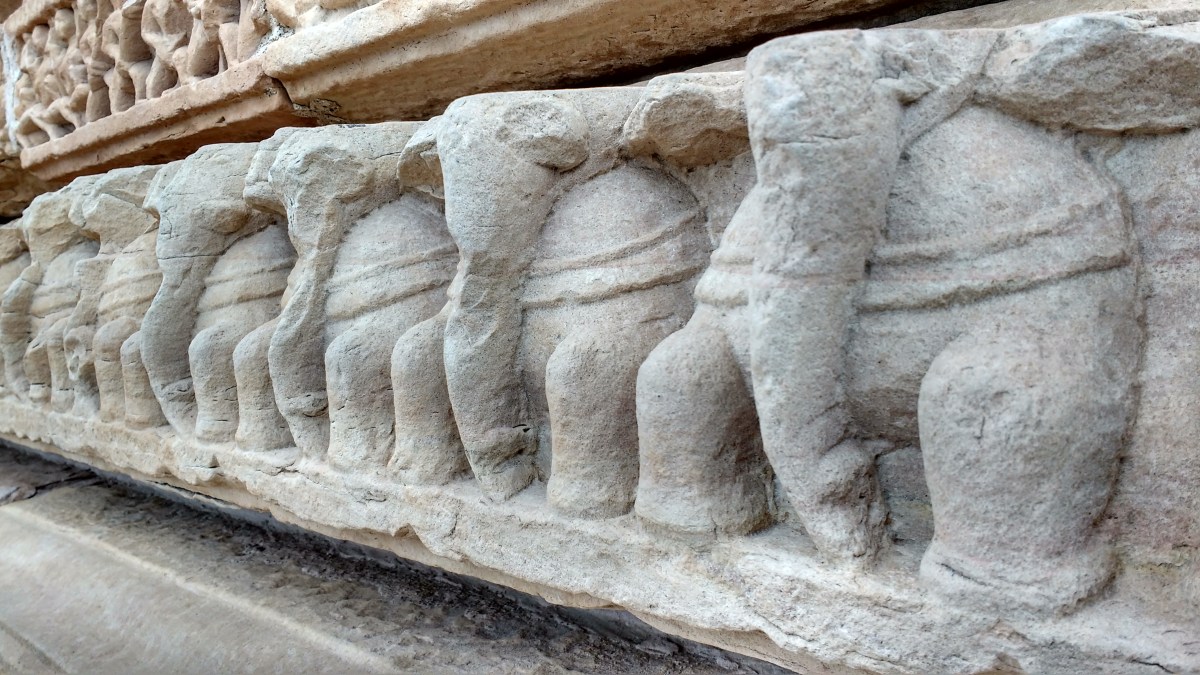
Close-up of the sculptures on the walls, Gwalior Fort Complex, Madhya Pradesh, India.
The elaborate sculptures adorning the temples in the Gwalior Fort are too many to count and too beautiful to describe. Many have been weathered by the strong wind. The many kings who fought, captured, and lost the Fort seem to have left the temples untouched.
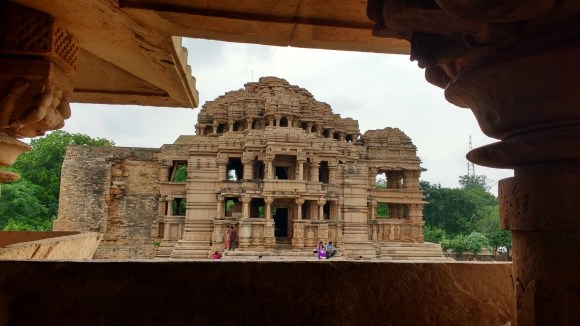
That they have very strange names takes nothing away from their beauty. The “saas” is big, bod and stands proudly, imposing her might on anyone who dares think contrary to her wishes.
The “Saas” as seen from the “Bahu,” Gwalior Fort Complex, Madhya Pradesh, India.
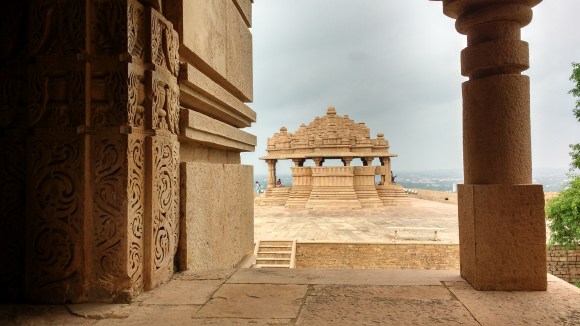
The “bahu” stands at a distance, more towards the edge of a cliff and doesn’t care for attention.
The “Bahu” from the point of view of “Saas,” Gwalior Fort Complex, Madhya Pradesh, India.
Inside the large temple, one gets the feeling of being engulfed by Sahasrabahu, the one with a thousand hands—hands that are dancing, playing music, worshipping, meditating.
Who was the guardian deity of these temples? No one can tell for sure. There are conflicting tales about Shiva and Vishnu. Some claim that these are Jain temples.
Folklore says that the ruling king dedicated the large central structure to his mother, an ardent devotee of Lord Vishnu. The smaller temple was to pacify the king’s wife—a Shaivite.
Tourists take pictures, climb over the walls, and walk precariously along the beams that form the triangles overhead. But few venture close to the sanctum sanctorum.
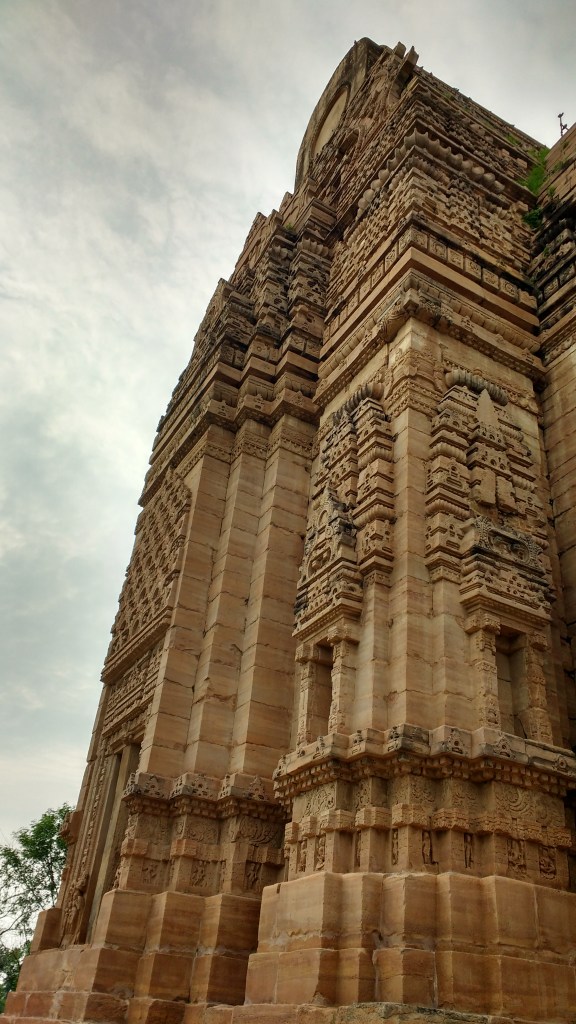
Teli Ka Mandir, Gwalior Fort Complex, Madhya Pradesh, India.
A short distance away, the Teli ka Mandir stands tall. If the building could speak, I might have said, “I am Dravidian.” As I was imagining the walls speaking to me, a man hurried out from inside the temple, cursing under his breath. He looked livid and frantically looked around so he could vent his rage. When he found someone who looked like a caretaker, he let him have it.
“This is a temple! Why are people wearing shoes and trampling all over? Have you stepped inside? It reeks of bat filth.”
“Such a fine architectural monument and you are letting it go to waste. Is this the devotion this was built for?”
The man’s lament fell on deaf ears. The caretaker gave an indifferent glance. “It is no longer in use, sir,” he said, and walked away.
The sanctum sanctorum of all three magnificent temples were dark portals. Beauty graced all the walls outside and inside the halls leading to the small room meant to be the throne of the presiding deity.
If the walls could speak, they might have been as indifferent to our presence as the caretaker was to their plight. With their structure reduced to architectural candy, and the real purpose long given for bats to live in, there was no longer anything left to say.
Still salvaging old work from the archives, I discovered this story’s handwritten draft from May 2017. This too, is a part of the ebook The Speaking Rock. If the pictures are grainy, it’s because they’re from a phone camera from 2016.
I was both proud and awestruck by my phone camera’s prowess back then. It pales in comparison to what my phone can do now. And digital technology today still doesn’t match up to film camera clarity. But grainy footage notwithstanding, it reminds me of some wonderful memories we made almost nine years ago. Isn’t that what pictures are for?
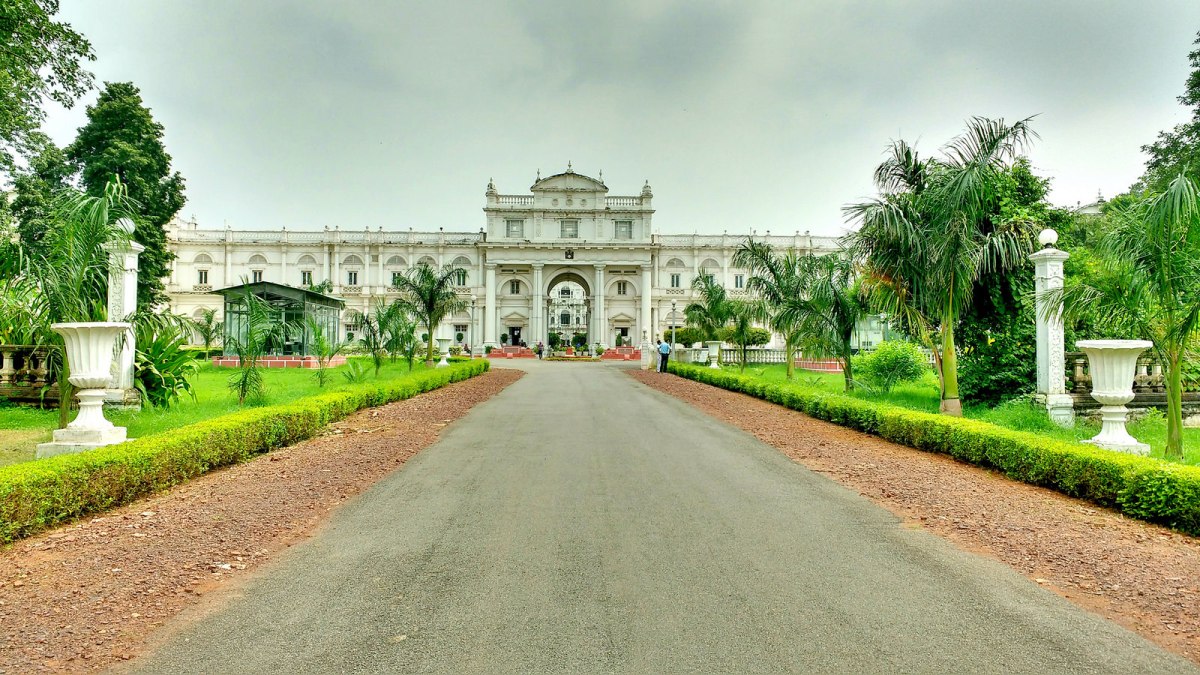
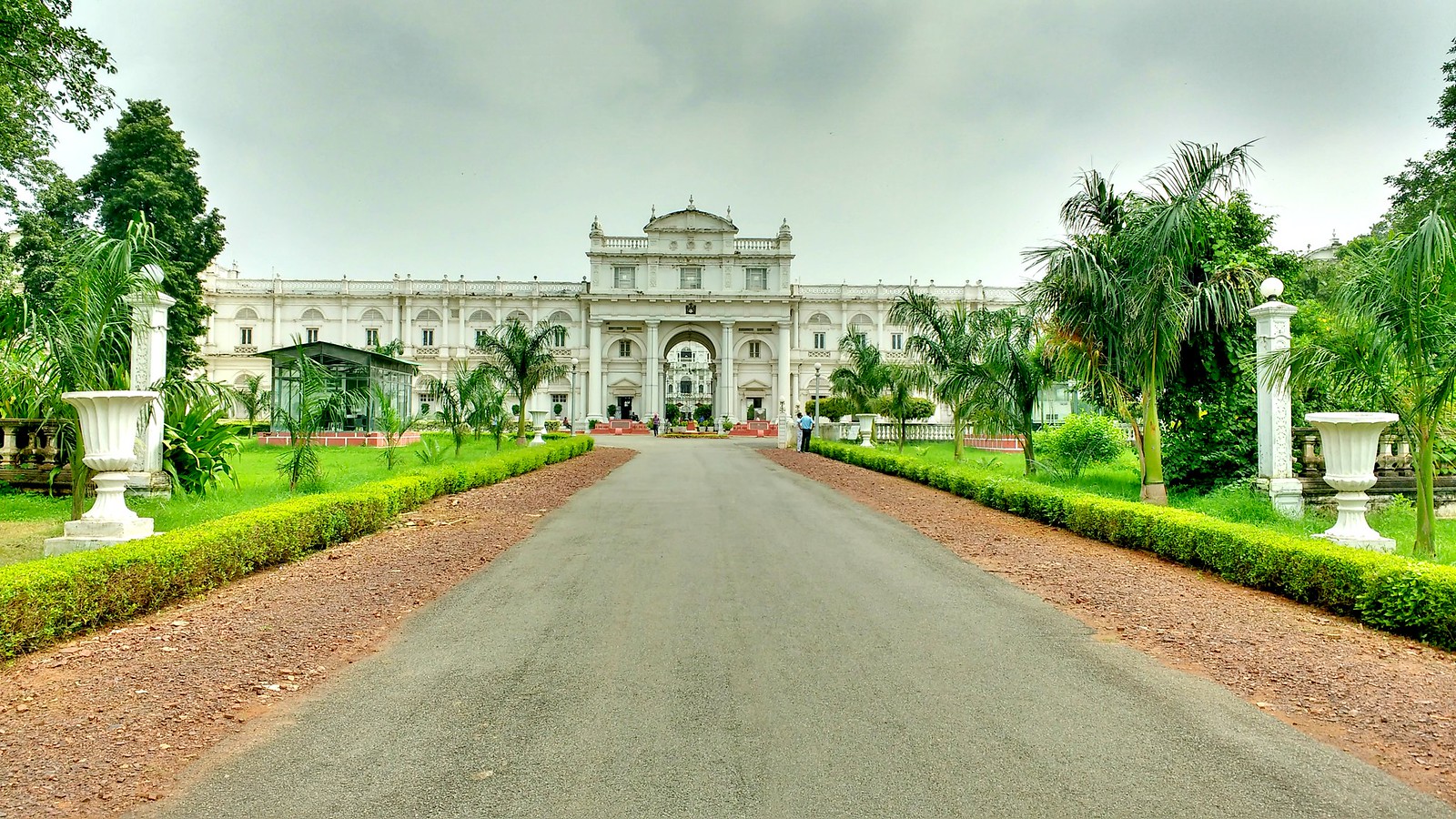
The Jai Vilas Palace in Gwalior combines three European architectural styles—the first storey is Tuscan, the second Italian-Doric and the third Corinthian.
There is an eclectic collection of items housed inside the museum, which can be visited by the public. One section still serves as the residence of the heirs of this Palace.
We weren’t allowed to carry bags inside (there is a provision of a locker), and strangely, we weren’t allowed to carry umbrellas inside either. While the museum itself is entirely indoor, to exit the Palace, one must pass through the central lawn. As luck would have it, it began pouring just before we were about to complete our tour.
If you plan to visit this Palace in Gwalior, make sure you have sufficient time—we spent over two hours (excluding the rain delay), as there is much to see. And if you are short on time, pace yourself to keep the maximum time for the last section—the opulent Durbar Hall. We had read about the extravagant decor and seen pictures of the massive chandeliers. But it was only when we saw the hall that the reality of its grandeur hit us.
In our limited exposure to exotic places, some places leave a lasting impression, some of romance, others of awe. The Jai Vilas Palace, even with all its magnificence, left a somewhat cold and distant feeling. It’s hard to tell why – perhaps it’s the excessive indulgences; or the exclusively European architecture; or perhaps it was the weather; or just maybe, the contrast between the lifestyles of the common people, and that of their representatives, that is so blatantly visible to the casual observer.
Jai Vilas Palace, house of the Scindias. The imposing structure and all its extravagance is visible right from the entrance.
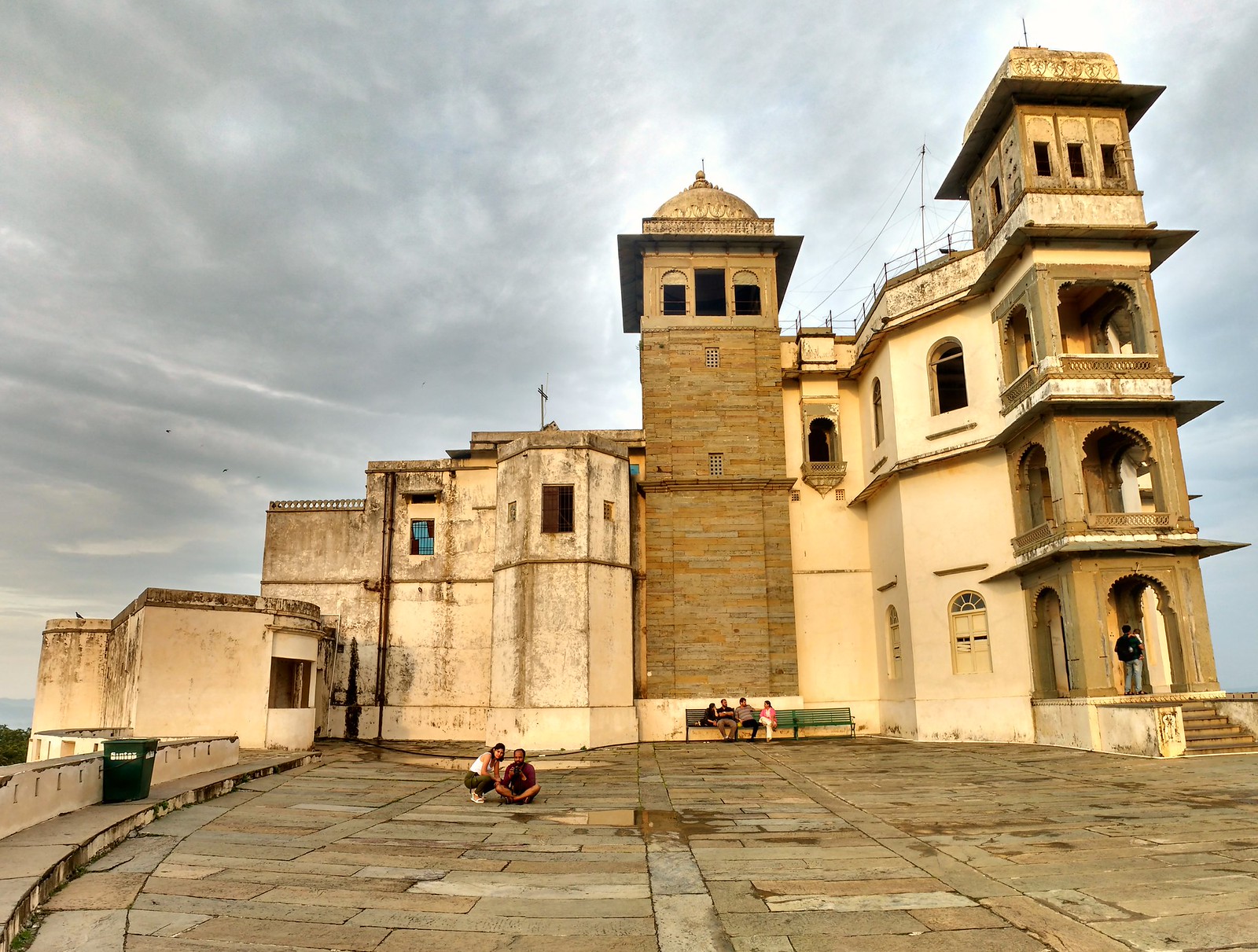
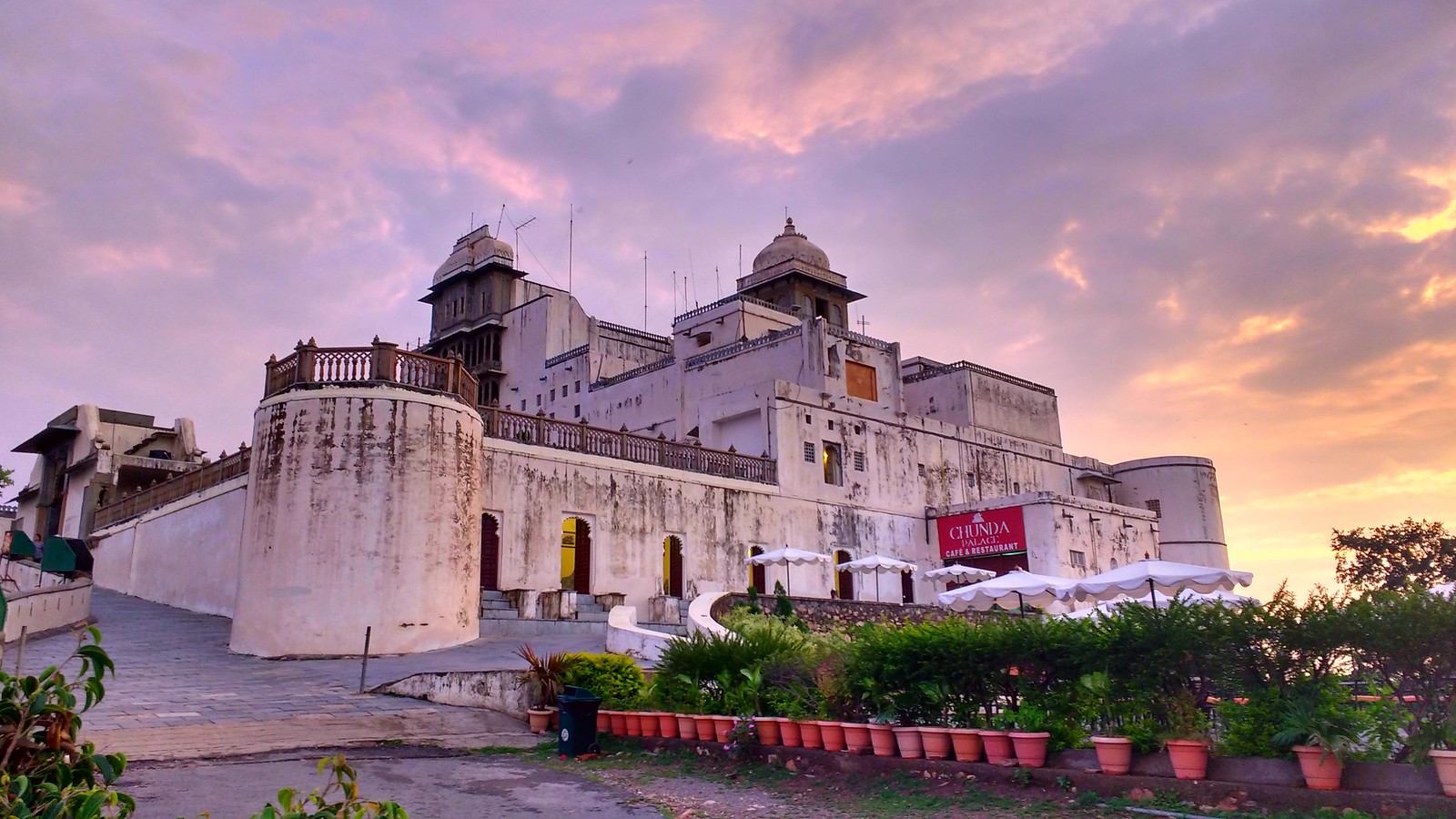
Researching for our trip to Udaipur, we had heard and read about the amazing views of the Aravalli hills from the Monsoon Palace, especially at sunset. The Monsoon Palace was constructed specifically for the purposes of observing the monsoon clouds—and what better time to visit the Palace than in the monsoon!
It had poured heavily the day we reached Udaipur, and it appeared that the heavens above would deny us our visit to this Palace. Amazingly enough, the rain stopped in the early evening, and we headed out to catch the setting sun under a rather overcast sky.
From what we had read in the travel reviews, it was a long trek uphill, and not much upstairs, apart from a neglected building; that one must carry food and water, as there were no food stalls; and keep them safe as there were lots of monkeys who would snatch away your food. And so we went, fully prepared with snacks and water, tucked in a canvas bag, secured safely with the modern miracle called a zip.
Atop the Monsoon Palace
It turns out, either this place hasn’t been reviewed by travellers for a while, or I ended up reading every old one!
So I’m going to attempt to set it right, by debunking all the myths (and adding one observation) about the Palace.
The building didn’t really look neglected or decaying.
There is a restaurant there.
There are also public water dispensers (as with most other monuments)
There are no monkeys (except for one big Langoor, that had probably been hired to keep the red ones away)
There are lots of multi-legged insects. Not dozens or scores or hundreds, there were literally thousands of centipedes/caterpillars/millipedes (I have no idea which of those they were) on the stone steps and walls—possibly due to the rains.
What each of the travel reviewers did get right, though, were the views. To quote one reviewer, “the views are to die for”.
Such was the breathtaking view of the Aravalli hills at sunset, that neither my words, nor my pictures could do justice to it.
We spent a couple of hours drenched in the golden hues of the sun, and as grateful as we were to be in presence of such magnificence, there was one greedy thought still lurking within, “if it weren’t so overcast!” Oh well. 🙂
So what were the great views, that captivated us, you ask? I’ll leave that hanging for one more day.
A prominent feature of Rajasthani architecture are the windows with their characteristic floral silhouette. When visiting monuments in the region, it is hard to resist the temptation of framing the magnificent views with the window. Ah, what a feeling it must have been, living in those palaces!
Alas, for women, not a very good one. The queens and princesses had their share of riches and maids and all luxuries that a royal household could provide. But freedom? Trapped in a tower, looking out of the window was the only freedom they had. Called jharokhas, the beautiful latticed windows were built to allow women to look at the world outside, without themselves being seen.
Here is one such window at Bagore ki Haveli, Udaipur. I wonder what must be visible through those tiny windows within the main window.
So this week, when the Daily Post asked us to show windows, I felt cheated. But considering what it must have been like for the women who looked out of these tiny windows, I don’t have any reason to complain.
One of the major attractions in Gwalior is the Saas-Bahu ka Mandir. In Hindi, saas translates to mother-in-law and bahu is the daughter-in-law.
The strange name is believed to be a convenient short form for sahasrabahu – meaning thousand arms. The two temples in the complex are covered with beautiful, intricate carvings of geometric patterns, animal motifs and dancing figures. Some claim that one temple is for Lord Vishnu, while the other is for Lord Shiva. There is also some confusion as to whether they are Hindu temples at all. What is widely agreed to, is that the larger one is definitely the saas, and the smaller one, the bahu!
This photograph of the smaller temple was taken inside the larger temple.
If you intend visiting, be sure you have enough battery and memory to click pictures. We know we didn’t stop with one 😉
To see how bloggers across the blogosphere are framing their points of view, check out this week’s Photo Challenge





 Musings of an eccentric mind