Walking on the streets of Delhi in the morning, there is a cloud of dust in the distance.
I am on my way to office. A few drivers are wiping away the last few drops of water off the cars. The owners will be out in a few minutes–the early birds who want to beat the office rush.
As I walk towards the dusty path, the outline of a broom wielding person emerges.
Swoosh!
A kerchief over his mouth, a swafa around his neck—beads of sweat, if any, have been hidden under filth.
As I approach, he stops. He waits for me to pass, and then continues to clean up the mess created by fellow humans the day before.
Since the time I can remember, workers like these have worked tirelessly to keep the streets clean. I don’t know who employs them. We’ve not paid them for their services—unless one of them comes to collect bakshish or chanda after Holi and Diwali.
A car passes by me. An empty bag of chips comes flying out. Further ahead, a man casually spits on the road.
We’re supposed to be on a mission to clean up the country. I wonder what these sweepers who’ve been cleaning this urban city for years would have to say about this mission.
Here’s wishing you a happy and colourful Holi!
We’ll set aside a few Gujiyas for our cleaning staff when they clean up after our festivities tomorrow morning.
In our quest to capture virtual memories, we've built physical spaces to be Instagrammable.
How do you do it?
How do you manage to read all those tweets, post comments on YouTube, react to Instagram stories, finish the long reads on Medium and WordPress and catch up with emails? All while having a day job, socialising with friends, managing a decent workout and being up to date with current affairs and pop-culture.
I know I can’t.
I was a very, very late adopter of social media, primarily because I felt it was meant for lesser mortals, those who indulged in gossip. The narcissist that I am, I didn’t quite care about what other people did around me. I only wanted to write and share my thoughts to as wide an audience as I could.
I sceptically joined Facebook in mid 2013. And it wasn’t till 2017 that I joined Instagram. These occasions were so significant, that I wrote blog posts to confess about these mis-adventures. The only reason I have a Twitter account (I don’t care what they call it now, but I refuse to call it by any other name) is because my employer demanded I create one. Without that coercion, I would probably not have created it in 2014.
Then there’s LinkedIn, Flickr, Pinterest, YouTube, Behance… the list is far, far too long.
Over the years, I have tried to keep up with these services in patches and failed. I wonder how other people do it. And it bothers me that I am so digitally incompetent. I am everywhere, and yet, nowhere. At any given point of time, I can keep up with only one service. Everyone else is active everywhere.
When I think about all the different services that aim to ‘connect’ us in the world, all I see is this relentless barrage of information, and how miserable it makes me feel.
One More Thing
In 2019, I tried an experiment. I called it, the “Reverse Social Media.” I wanted to stop using social media, and instead focus on creating a community. I’d send out emails to people so that we could start one-on-one conversations. Needless to say, that experiment failed. I had ended up creating yet another digital footprint that I couldn’t manage. If you’re interested, you can find the archives of this experiment on Design Tuesdays.
In these first two decades of the twenty-first century, a certain Mr. Jobs made a catchphrase his own. “One more thing…” he’d say, at the end of his keynote, and announce something new. Steve Jobs’ characteristic style of delivering keynotes even has a name: Stevenote!
A side note: To me, those words will always belong to Uncle from Jackie Chan Adventures. The series aired during a time when information wasn’t as free-flowing as it is today, and when tech was only for geeks. What use was a business presentation to a teenager? So please allow me to indulge myself with TV memories from the early 2000s.
Source: Imgur
With the newsletters, I had created Uncle’s one more thing. More recently, that one more thing is Threads, from Meta. Sure, I’ve ‘created’ the ghost account, but it holds no meaning for me. To me, it’s just another username that’s gathering virtual dust.
The Digital Cobwebs
Remember the old days when we had hard disks and had backups of folders and backups of backups? Ah, those were simpler times. Those hard disks are gathering dust in a shelf somewhere.
Our digital clutter, on the other hand, is invisible, but several times worse. This digital clutter that we’ve chosen to create haunts me. Over the past few years, I’ve lost very close loved ones. But their profiles show up in recommendation feeds on social media. I don’t want to tell these behemoth companies that those are my dead relatives. The large tech companies have no business knowing this private information. But, at the same time, I don’t want their click-hungry algorithms to be so insensitive.
In my curiosity to explore the internet, I wonder how far my own footprint has landed. Who has my email address? Which database has a username attached to me?
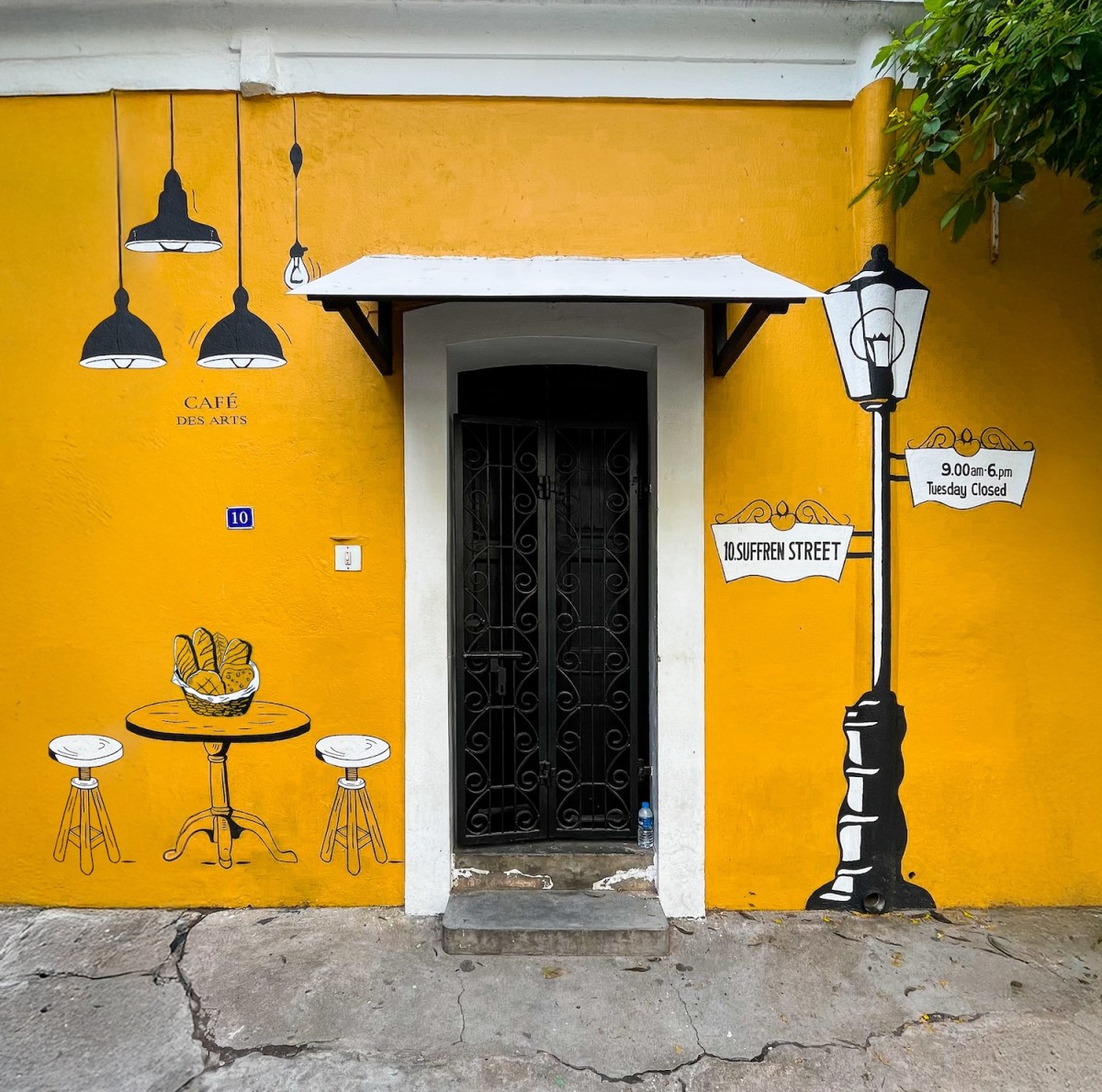
In our quest to share virtual memories, we’ve built physical spaces to be Instagrammable. How many people would have half-squatted to “sit” on the painted chairs on this pretty yellow wall? Guilty as charged. Location: Puducherry, India
Worse still are the chains I’ve tied around myself. Those accounts that I do know about, I find it hard to let go. It was easy to delete my Facebook (now Meta) account over three years ago. But Twitter is giving me a hard time. Not because I use it. I don’t. But because once I delete the account, my username will be available for use by someone else. And I shudder to think someone else will take on my identity. So much for me championing reuse and recycle.
There’s so much digital waste we’ve generated. All that waste is sitting on some server. Consuming electricity. Generating heat. And consuming more electricity to cool down. Every little piece of digital information I leave unattended reeks of a hypocritical sustainability advocate.
The Way Forward
I don’t have an easy answer to this mess. In this virtual chaos we’ve created, it’s a daily struggle to decide what to keep and what to discard. Which memories to hold on to, and which to let go.
A couple of months ago, out of sheer frustration, I embarked on a virtual housekeeping project. The task looked insurmountable, but I had to begin somewhere.
So, I looked for low-hanging fruits. I located those physical hard disks. I thought to myself, if I haven’t needed it in the last ten years, I won’t need it again. First, I transferred them to my Dropbox folder, so that everything was in one place, and then I began reviewing them.
So many duplicate photographs. Old portfolio files that I was once proud of, but now find ghastly. And those legacy file formats that I can neither open, nor have had the need to edit. I began hitting the delete key.
As Dropbox later informed me, I had deleted about 15000 files in the span of a week. It was a statistic I didn’t know I needed to hear. And it was so cathartic.
This was just the tip of the iceberg. There are several more files and photographs to go through. I’ve hit pause on that activity because, as I’ve now learned, I can’t focus on one thing constantly. Plus, frustration and adrenaline can fuel such binge-deleting sprees for only so long. But I hope to pick it up in patches.
My current project is to clear up the cobwebs of my blog drafts. Several of my last few posts have indeed been 3 – 4 year old drafts (this one included!) I’m still only 10% in, but seeing some virtual dust being cleaned up is helping me mentally.
I don’t know how far I’ll get. But I’m going to try. It’s a marathon, not a sprint. And the only way to tackle it is to take it one thing at a time.
On an unrelated note, how would you like me to narrate these stories via a podcast?
An astrophysicist, a Vedic scholar and an earthworm walk into a room.
Before I complete the story, here’s a question for you:
Do you believe in a higher power? A celestial being that’s constantly keeping a watch over us?
I used to, but now, I believe that we delude ourselves into thinking the universe cares about us. Stars don’t align for us. They just go about their lives, and we simply get caught in their world. We are, but mere cogs in their grand scheme.
Men In Black Movie ending sequence where the universe is revealed to be a marble in the hands of an alien.
The moon revolves around the earth, and it sways our mighty oceans with its movement. We, too, are just bags of warm water. Surely, the moon must have some impact on us. We get life-sustaining energy from the sun. And it’s such a long way from home. Surely, other stars must have their secret powers.
Ancient Indian astrologers had probably cracked some of the codes of the universe. But like much of our wisdom in other disciplines, it has been tossed out in our English-medium world that’s out to make some money off our ignorance.
What I lost in ancient wisdom, an American TV personality packaged into a shareable quote:
The four most common chemically active elements in the universe—hydrogen, oxygen, carbon, and nitrogen—are the four most common elements of life on Earth. We are not simply in the universe. The universe is in us.
This quote reminded of two types of universes: the more observable physical one, and the abstract, spiritual one that’s hidden within.
The Observable Universe: My Compost Pile
I started composting some seven years ago, and it has been the most rewarding, meditative experience. Composting gave me a glimpse into an entire self-sustaining ecosystem. At times, I felt like God, overseeing a world, controlling what goes in, and when it’s ready to harvest. But most of the time, it made me realise that we too are tiny insects in the compost pile of a higher force. We’re all transient creatures taking part in a grand spectacle called nature.
My compost pile is made up of organic material. The brown stuff has a lot of Carbon, the green stuff is rich in Nitrogen, and since kitchen waste tends to have a lot of water content, the other two components of Hydrogen and Oxygen complete the quartet. With each harvest, I see the universe in action.
I took whatever I learned and turned it into a small online workshop. Here’s a recording of a session done during the initial pandemic lockdown. I hope you enjoy.
The Hidden Universe Within: Aham Brahmasmi
The Brihadaranyaka Upanishad, one of the first Upanishads dated to 7th century BC, has a popular phrase, Aham Brahmasmi. It translates to “I am the Brahman.” The Brahman here is an abstract concept that may be interpreted as being the universal truth, cosmic energy, perhaps even God.
Side Note: This Brahman is not to be confused with the caste, which is pronounced differently. One’s caste is defined by one’s profession—and is neither discriminatory not hereditary. But that’s a different misconception to be dealt with by more learned scholars.
Aham Brahmasmi is a phrase that’s close to my heart because it instills a feeling of being complete, without relying on any external validation for our existence. We hold immense potential within us. If we channel it well enough, we can accomplish anything.
I love this Mahavakya (phrase) so much, that I even have a ring with the phrase written in Devanagari calligraphy.
So what happened to our astrophysicist, Vedic scholar and the earthworm? The two humans spent the whole time arguing over who was right, while the earthworm just chewed its way around the room till there was nothing left except life-sustaining matter.
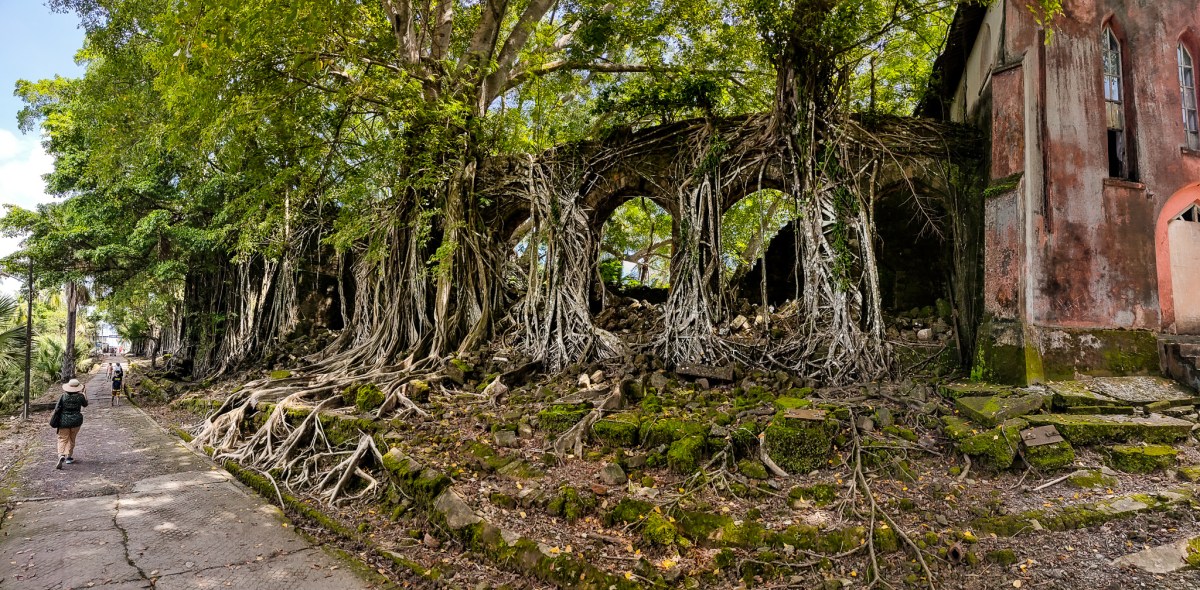
The featured image at the top is of Netaji Subhash Chandra Bose Island, where nature has reclaimed man-made buildings, creating the most stunning root displays. Location: Andaman and Nicobar Islands, India.
I envy folks who can just walk into any flea market slipper store and walk away with pretty, glittery foot embellishments.
When it comes to fancy footwear, my feet don’t always cooperate. I have larger than average feet, and a dangerous corn under one of them, that will burn a hole through the most well-crafted shoe, if I find one my size, that is. So, when I do get something that looks good on me, I keep it for as long as I can. The cheaper the better, because my corn couldn’t care less about how expensive the footwear is.
Growing up in a middle class household, we always found ways to repair stuff that was broken instead of buying replacements. Things were expensive, and what we had, was worth repairing because they were built to last. And it was relatively easy to find people willing to fix things, each with their own niche.
Many of these folks had their dedicated street homes. Some would roam around residential areas hawking their services in the most creative ways. There was a person who specialised in pressure cookers, another for sewing machines. One roaming man had a super specialisation for zippers.
This morning, I opened by shoe cupboard to see a pair of cheap glittery slippers I bought several years ago. It had seen many a mochi*. If you looked closely, you could see at least three sets of stitches on the sides of the sole. But viewed from the top, which is hopefully how people will notice my feet, it looked gorgeous. One of the toe straps, though, had given way.
My slippers looked questioningly. “Is it time yet? Are you finally going to replace me?” I won’t lie, I have looked for new footwear, but nothing has caught my fancy.
Nowadays, however, nothing is built to last. After all, if everyone had durable items, who’d buy the next thing a company wants to sell? But the number of people willing to fix things is also shrinking—it’s not a high paying venture.
I looked into at my soles, and went in search for a local mochi. Despite all this fast fashion, there are still a few of these around. Hopefully, I’d find one who knew how to get the job done. And a mochi I did find.
Sitting on the side of the road, underneath a large tree, he had a bunch of tools and some shoes spread out in front of him. His shirt had eaten much dust from the passing cars. His hands weren’t in a much better condition. How else would the hands of someone who handled other peoples shoes for a living look like?
“How much for fixing these,” I asked him.
“Twenty rupees for this one… and eighty for that one. A hundred total.”
A hundred rupees for fixing two slippers. I scanned the QR code in front of his shop and showed him the transaction. I was amazed at how someone could survive on such income. I was happy I could reuse my slippers for a bit longer at a tiny cost. But what surprised me most was the big smile on the mochi’s face once I’d made the payment. He seemed to be genuinely happy to render his services.
In mid-2020, while the world was going through an upheaval, I got the opportunity of a lifetime: to turn my passion for writing into a profession. It was a dream come true: combining my love for writing and teaching with my experience in UX design. At the Interaction Design Foundation, I met and worked with some of the most brilliant minds from across the globe. I had opportunities to travel and grow professionally, eventually leading the editorial team.
In three and a half years I grew and changed as an individual. It was the most fulfilling role I’ve had in my life and for that, I will forever be grateful. But it came with a cost.
Some people say that we must not mix passion with profession. We might lose both! Others say that we must be in love with our work so that we don’t actually “work”. I realized that there was another angle to this debate. In my case, I was so much in love with my job, that I lost myself in it. I spent such a long time doing what I love for someone else, that I was too exhausted to work on the stories I wanted to write for myself. I adopted the brand’s voice and lost my own.
Before I knew it, my body started to hurt.
Fortunately, or rather, unfortunately, I could see where I was heading. It had been close to eight years, but memories started haunting me. It was a different time, a different company, but the pain was eerily similar.
I used to struggle with lower back pain. Most days it would be okay. And then every now and then it would flare up. And when it did, it made my life a living nightmare. I couldn’t sit, stand, walk, or even lie down without jolting.
I went to several doctors and popped all kinds of pills. Everything seemed to work for a while. And then, everything stopped working. I continued soldiering through the pain.
I was practically second in command in the company. I couldn’t take too many days off.
My family pleaded with me to leave my job. Angry and in tears, I fought with them. I stood my ground. To them, I was stubborn. In reality, I was scared.
Our society places a premium on being employed. Our worth and the respect we command are based on what we do in life. The last thing I wanted to be was a housewife. Housewife: that word is so demeaning that we now use different synonyms to make it sound like we appreciate that role: a homemaker, family manager, home engineer. But call it what you will, it is subtly associated with someone who doesn’t earn money or have status in public life. Since my childhood, I was conditioned to believe that choosing not to work was synonymous with being useless. The ultimate humiliation.
I needed to work, not for the money, but for my self-esteem.
Meanwhile, my attacks were getting more frequent. There were days when I couldn’t get out of bed. I began missing important meetings. It got to a point where I felt I might be fired. So, I finally took the most difficult decision of my life. I told myself to quit.
Quitting a job without another in hand and with no financial safety net isn’t easy. I had no choice. I needed to fix myself.
Understanding my predicament, my employer suggested that I take a break, and use this opportunity to start a freelance career. “Take a month off. We can work out a part-time contract. We’ll be your first clients.”
Perhaps it was that reassurance that I’d still have something to come back to, that helped me relax a little. I tied as many loose ends as I could, handed over my work and signed the offboarding documents. I still remember that metro ride home. My body writhed in agony every time the train stopped. My colleagues pitied my plight.
The first few days of my unemployment, however, had a profound impact. To my surprise, I felt like a big weight was off my shoulders. More importantly, I realized that being employed wasn’t the sole purpose of life. Contrary to what I expected, I even enjoyed being at home. “You look happy,” my uncle remarked when he saw me shortly after my newfound freedom.
I also learned that patriarchy—that thing that I always complained about—was helping me. When I met an ex-colleague a month later, he remarked, “You can afford to quit because you’re a woman. No one would say anything to you. I wish I could also quit my job.”
I am not going to defend patriarchy. But I can better explain feminism. It is not about men being subservient to women as revenge for centuries of oppression. It’s about men and women both being allowed to live their lives the way they’d like to, without having to live up to certain expectations from society or being judged for their life choices and circumstances.
Workplace dynamics aren’t built for everyone. And I realized that the work environment I was in, wasn’t built for me. I didn’t form any meaningful friendships at work. The office was in a basement, devoid of sunlight. While I learned a lot and did meaningful work, at the end of the day, it didn’t pay as well as a corporate job would’ve paid me. I wished I had quit sooner.
If I hadn’t quit, I wouldn’t have become a freelancer. I began working remotely much before the world discovered it. Money wasn’t regular, but that didn’t matter. I was a master of my time and priorities. I regained my health and felt physically and mentally fit.
I had the capacity to work on side projects that mattered to me—like online workshops in storytelling and composting! I vowed to not work full-time again.
That vow, however, didn’t last long. Three years later, I randomly applied for the role of writer at the Interaction Design Foundation and turned out to be a perfect fit.
Fast forward three more years. My backaches were coming back, and this time, they were bringing more mysterious friends with them. My body was showing signs of unrest. I had to act fast before it turned out to be an all-out revolution like my last full-time gig.
I’d quit once before. It should’ve been easy to take that plunge again. But like the last time, I fought with my family and lingered on. This time, for very different reasons. I loved my job, the people, and well, the paycheck. This was the organization that made me realize my worth. Money sometimes acts like a golden noose. The string is always in our hand, and money makes us pull it tighter around our neck.
I debated hard with myself for several months. Eventually, I decided to pull the plug again. And like last time, it was only after I left that I realised why it was important for me to have done that. I had sacrificed my voice for someone else, and it would take several months for me to regain the courage to write again.
Sometimes it seems the universe sends us messages. Perhaps more likely, we’re looking for help and our subconscious mind shows us the way.
I’ve come to believe that we often don’t communicate well enough with ourselves. We usually have the answers to many of our problems. We just don’t hear it well. So when we see something that seems to be the answer to our problems, it’s indeed our mind pointing us in the right direction—we are actively seeking the answer in our environment.
There are times when I can’t decide between two alternatives, and I try to let a coin toss make the decision for me. If we are truly indifferent to the choices, a coin toss wouldn’t matter. But if we favour one outcome over the other, the coin toss will reveal the one we actually want. I’ve often ended up ignoring the coin toss because I immediately felt disappointed with the way the coin landed!
The TV series Big Bang Theory turns this idea into a gag in an episode where Sheldon decides to leave all trivial life decisions to a roll of the dice. During lunch, his dice tells him to eat corn succotash. When his friend asks him what he’s thinking about, he promptly answers hamburger!
Over the past few months, I’ve stumbled upon a few unsolicited pieces of advice—things that I didn’t know I needed to hear. Here are two that stuck with me:
The most powerful word you can say to yourself is “yet.”
I saw this advice in The Medium’s Newsletter’s issue #172.
At the beginning of the year, I set myself a few unwritten goals—unwritten because I’m superstitious. I didn’t achieve them, but that doesn’t mean I didn’t try or make any progress on them. Adding the word “yet” to those goals reminds me that just because the year is coming to an end doesn’t mean I’m not closer to them.
Replace “What if” questions with “Even if” Statements
This advice on how to talk to ourselves was in issue #184.
It helps to change the narrative. As much as online content pushes us to think the world is ending or that we’re not moving along as fast as every other person is, our lives aren’t the same as others. We cannot be held ransom to timelines and expectations, even if we set them ourselves. Most of us are bad estimators. Life is unpredictable. And humans are highly adaptable. There’s always another way out.
There’s a common theme behind these bits of unsolicited wisdom. I’ve been very hard on myself. Perhaps you have too? Being constantly surrounded by data, news and updates about what others are doing can make one feel inadequate. These messages seem to be telling me to forgive myself.
I may not have that tangible thing to share, yet. I may not be able to share them by 31st December, and that’s okay.
What if I don’t complete that project I started? Even if I don’t complete that project, I can take a few more days to finish it. Or if it isn’t working, I can hand it over to someone more capable of completing it.
What pieces of unsolicited useful advice have you stumbled upon?
My cab driver replied, when I asked him if we were on the right route. The criss-crossed, perfectly planned, roads of Lutyens Delhi all looked the same to me. And their names — the names of kings and their ministers — that we struggled to memorise in our social studies class in school. It was a struggle then. And it continues to be a struggle, all these years later, to distinguish between the roads named after them.
But my cab driver had circled these roads for several years. And he knew them well. He also noticed something.
“You see these trees here?”
Lutyens Delhi has beautiful tree-lined roads.
“Yes, that’s what I love about this part of town,” I said.
“They’re tamarind trees. And never once, have I seen flowers or fruits on them,” said the cabbie.
And his explanation was simple. It’s because the trees are surrounded by politicians.
I try not to talk about politics with cab drivers. But that comment on the tamarind trees helped me open up about my opinions, and through the rest of the journey, we continued our conversation around modern politics, agreeing with each other’s assessment of how low Indian politics was.
“You must show them music.”
We were visiting my aunt in Bengaluru. She has a lovely garden, filled with bonsais and orchids. And her betel-leaf plant, has no rival anywhere on this planet — in its appearance, and taste!
She was sharing the secrets to her green thumb. They are very sensitive, she said. And they love music. Don’t play them the same music every time. Mix it up, rock music, Bollywood, bhajans… Keep them happy, she said.
I love pine cones.
Ever since I first saw them as a little kid, when my father took us for a vacation, I have been fascinated by them. We’d picked up a couple that we found on the ground during that vacation, and I hadn’t had the joy of picking up another.
So when I saw a pine tree in the college, I was excited. But during the three years I spent there, it never bloomed.
I continued to visit the college, as part of the Alumni Association, for the next several years. Every time I visited the college, I’d look up, only to find needles. No cones.
And then, one day, I saw them. Several of them.
“This pine tree has cones in it!”
I jumped for joy, as a teacher and a couple of students looked at me. I can’t say for sure, but it’s likely, that they were amused by my childlike behaviour and my explanation. I told them:
This tree is happy! This tree is responding to the energy around it. Truth be told, when we were in college, this place was dead. No energy, and a lot of negativity. But now, it is so lively. There is so much energy around here. And now this tree has cones in it!
“This tree was planted when I joined this college,” replied the amused teacher. “It’s twenty-five years old. Back then, I didn’t think it would even survive this weather,” he added.
“Well, if we didn’t kill it, maybe our lot wasn’t that bad, then?”
Back in college, I went with a friend of mine, to a debate being held in another campus.
We located the room in which the debate was to be conducted, and then waited, as the participants trickled in. The room was large, the ceilings high. Perhaps, it could have comfortably seated a hundred people. Multiple doors and large windows on either side ensured there was good ventilation and ample natural light. On one side of the room, was an open passage, that overlooked a beautiful, large lawn. The other side, also had an open passage, that overlooked an atrium.
The room began filling up, one by one. There were, perhaps, thirty students, in all, when I began to feel a little uneasy.
It was early winter. There was that wonderful Delhi-winter sunshine around us. The room was large, and people, fewer than half capacity. And yet, I felt suffocated. I couldn’t understand why.
“Oh, we’re not participating. We’re just here to see,” I don’t recall which one of us replied to the participant’s question.
“Oh, no wonder you look so relaxed!” she replied.
And that’s when it struck me. That uneasy feeling wasn’t within me. It was in the air.
The collective tension was being spread by the participants, that, being an objective observer, I had experienced externally, as opposed to internally.
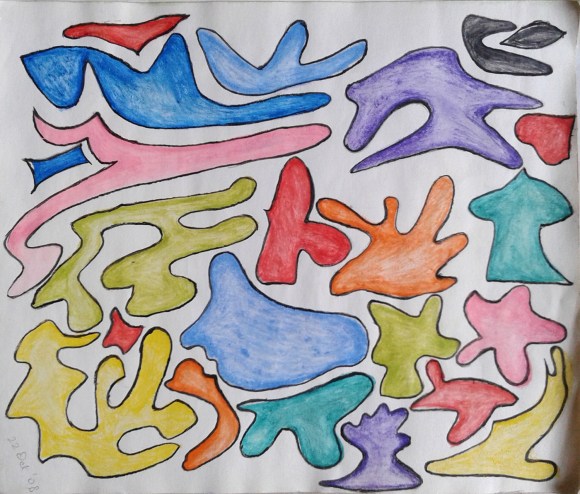
The deluge – pencil sketch drawn many years ago
They say, that man’s best friend is a dog. I believe, that humanity’s best friend is practically everything under the sun, except another human being.
Plants and animals can understand human energy, better than other humans. And that’s because humans have that one ability — no, handicap — that other creatures don’t have — telling lies. We lie to others. And we lie to ourselves. And we spend a lifetime on this planet just trying to figure out the truth about ourselves. For some, that truth comes through reading, or speaking with close family and friends. For others, it comes through art. Humans invented psychology to help figure out the human mind. And science, to explain energy. And for anything that couldn’t be explained by either, there was religion.
While we are still figuring out ourselves, plants and animals can see right through us. They don’t speak our language. They don’t need to. They just sense.
We are all bundles of energy. We reflect light, and produce sound. We feed off energy. And we disseminate energy.
Vitamin D is known as the sunshine vitamin, because it is produced by the body with the help of sunlight. Sunshine, is also associated with happiness. Perhaps that is why tropical countries tend to be depicted by photographers through smiling portraits. Because even in poverty, the sunlight makes people happy. Sunlight is energy — quite literally.
I once read that looking at flowers, first thing in the morning, makes us feel good. Plants that get ample sunlight, convert the light energy into beautiful flowers. Those flowers are a manifestation of energy.
Those flowers are happy, and we feed off their energy.
And when we feel happy, we spread that energy.
All these disjointed memories, and energy that binds them, came to me after I shared a painting “A Ray of Hope”.
We’re all bundles of energy. We helped create the current pandemic. And we can all feel the after-effects of it. Perhaps for the first time in history, the entire world, is sensing the same type of energy — fear, helplessness, uncertainty, and hope.
Let’s turn this pandemic into an opportunity. To spread positivity. And treat nature — plants and animals with respect. We feed off their energy. We disseminate energy back to them. And the cycle repeats.
The tiny bulb burned itself out. And so did her friends. But the night was far darker than all of them combined.
“Oh what’s the point?” they sighed.
“But that IS the point,” said the divine light.
“Darkness will always exist. In the skies above and in lost souls below. It is your duty to burn as brightly as you can, so that even in darkness, the world can navigate.”
The night is long and bitter and it has only begun.
Shine. Shine as bright as you can. Till darkness gives up.
Sometimes life can be frustrating: Perhaps a loved one is unwell. Perhaps your own health is troubling you. Perhaps you miss old friends. Perhaps your manager spoke in an unjust manner… The list of things that can rattle us is endless.
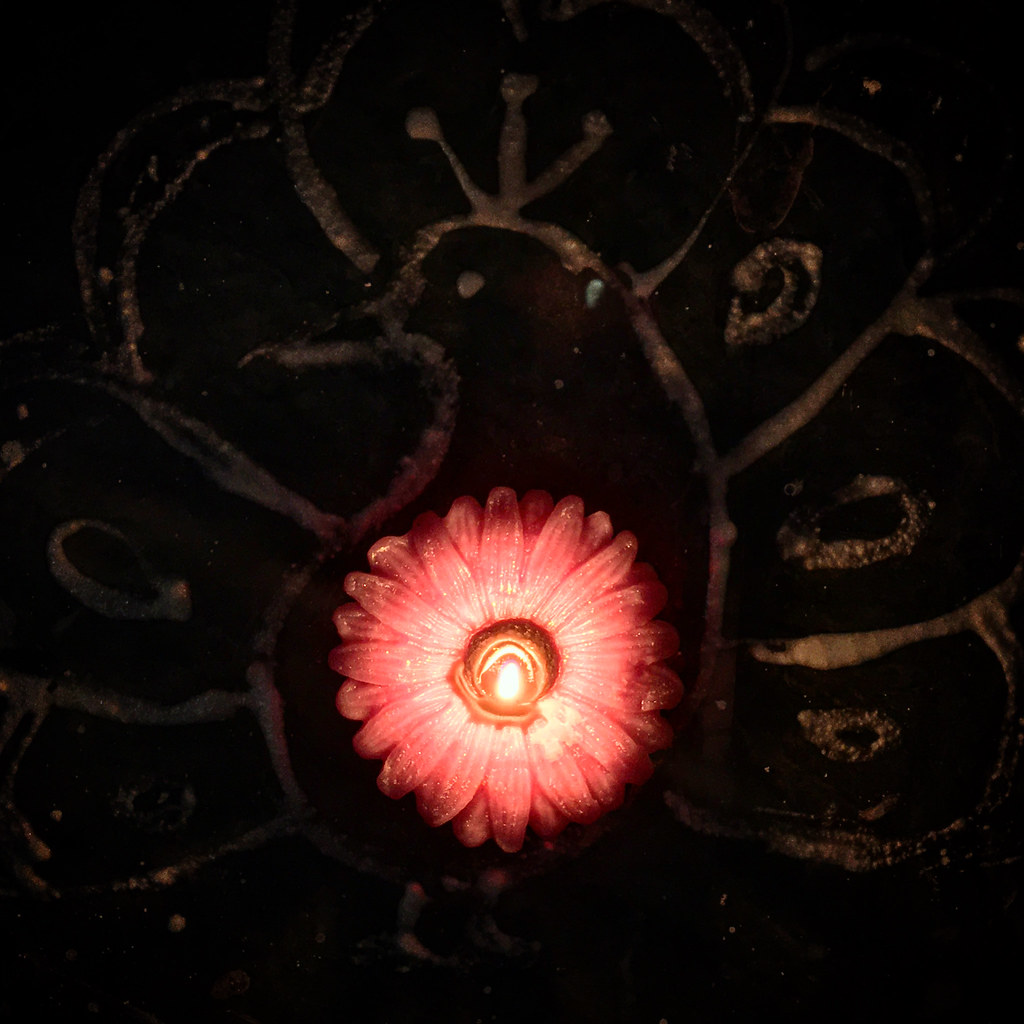
It had been one such frustrating evening, not long ago. Being the night of Kaarthigai Deepam, I tried to put the day behind and hastily set out to make a kolam. It didn’t turn out too well, making me feel even worse. And then I lit a beautiful wax candle. Suddenly, everything seemed to be alright.
There’s something about a flickering flame — be it from an oil lamp, a wax candle, and to certain extent, fairy lights — that brings us happiness. Perhaps that’s why we light lamps at places of worship.
This post is inspired by two posts on Instagram, separated by time and context, and yet connected by light.
One of the strongest memories of my childhood is that of AM Radio. It would begin playing on the ancient transistor even before I woke up. Sanskrit mantras recited by M.S. Subbulakshmi, followed by the railway timetable, and finally, news in Sanskrit that would end with a few beeps. The last of the beeps would be longer than the first few — the clock had struck 7 AM.
I’m not sure if the order of the programs is right. There’s no way for me to verify either. We don’t listen to radio anymore, unless we’re in a car — and even in a car, it’s FM, or a USB stick, or internet radio that’s streaming from a smartphone — not AM.
Back then, on Sundays, the radio played Vishnu Sahasranama Stotram — the thousand names of Lord Vishnu. Towards the end of the half-hour long recitation, is a conversation between Goddess Parvati and Lord Vishnu. The Goddess asks, dear Lord, what might a lay person do, in order to pray to you. Not everyone can possibly recite all the thousand names every day. Is there a shortcut to this? And the Lord obliges. He says, repeat this one verse three times, and it is equivalent to reciting all the names. I am paraphrasing, of course.
I learnt this one specific verse very early in my life — long before I learnt about its significance. I learnt it because every single Sunday, at precisely the moment that this verse was recited, I would wake up. One could say, I learnt it by accident, or divine intervention, or coincidence — I leave it to you, to decide, which of these is more accurate.
I don’t think I am very religious — certainly not to the extent my parents or grandparents are. I don’t perform the elaborate pujas that my mother performs. Nor can I recite any of the Sahasranamams the way my grandparents can. But religion does interest me.
True to the stereotypes of TamBrahms, as children, our summer vacations were spent touring temples. We were taught Sanskrit shlokas (couplets / verses), that I can still recall. I was also taught how to perform a basic neyvedyam (sacred offering). I pride myself in knowing what little I do. And I wish to learn the proper neyvedyam that my mom performs on special occasions. Hopefully, one day, I will be able to perform one of those with the camphor flame… But I digress.
What I am trying to say is, I am religious enough to take the shortcut of reciting one verse three times, as opposed to 108 verses.
Over the past few years, I have realised that being religious and being spiritual are not the same thing. Religion, is the path towards spirituality. And spirituality, is the path towards peace of mind. I came to this realisation when, a year into our marriage, Atul began playing a playlist of bhajans.
Knowing him for as long as I did — he who who wasn’t particularly interested in going to temples or explicitly praying — he was playing bhajans.
He wasn’t listening to the lyrics of these songs, he said. The melody just made him feel relaxed. It gave him the peace of mind that is so essential in today’s rage-infused society.
This inclination towards peace of mind, came up again, when he insisted that we visit the temple I frequented. It wasn’t that he did not like visiting temples at all, he said; he just had not found such peace of mind in the ones he had visited before.
Atul is not an atheist. He is spiritual. I began appreciating his world-view, when he said this: I don’t need to go to a temple, or speak a certain language, to speak with my God. And that was also the essence of the verse in Vishnu Sahasranama Stotram — you don’t have to say all the 108 verses. Just one, repeated thrice, was enough. The Lord himself, was giving a shortcut.
Over the past few months, I have begun my own morning ritual — somewhat similar to what my parents did back then. What used to play as clock-work, every morning on AM radio, now plays on an online streaming service, as soon as I wake up (let’s just say, the morning is a spectrum).
As one wise man said to me, language and form shouldn’t come in the way of spirituality and peace of mind. Hence, I will not share my morning invocation playlist with you.
What I will share, though, is another feel-good playlist that focuses on spirituality and peace. Here it goes:
1. Ma Rewa
Band: Indian Ocean Album: Kandisa Year: 2000 Language: Local dialect of Hindi
It was during last year’s Indian Ocean Concert (in picture) that I first heard Ma Rewa. I swayed and clapped and danced on this number. It was only later, that I saw the lyrics.
Rewa is another name for the river Narmada. And life-sustaining, as all rivers are, Rewa is called Ma – mother. This song praises the holy river, and apparently, was used as a protest song by the Narmada Bachao Andolan (save the river Narmada). There is enough feminism and rebellion in this to become my week-day alarm.
Growing up, this song, and all the songs by the duo (Leslie Lewis and Hariharan) hit the sweet spot for us, bringing together classical music and English pop. We were such big fans, our parents bought two cassettes(!) of their albums — the only band accorded that multi-cassette honour.
3. Kandisa
Band: Indian Ocean Album: Kandisa Year: 2000 Language: Aramaic-East Syriac
This song is familiar. I’ve heard this, yes… Alam Alam Alam… I fished out my memories. “It’s Kandisa,” said Eeshta. And just like that, I rediscovered Indian Ocean. There’s a chance you’ve heard it before too. You can thank me later. Also, this my week-end alarm.
4. Madho
Band: Faridkot Album: Ek Year: 2011 Language: Local dialect of Hindi
“You now owe me some songs!” This was the message Sunaina sent, after sharing the album by Faridkot. If it weren’t for her, I probably wouldn’t have known about this beautiful album.
From where I sat in the office, I was within earshot of everyone in the office (and yes, I could see folks, before they could see me). I’d asked her for the songs after hearing them on her work-station — on loop. Haal-e-dil and Banjaare were her favourites, I think. I liked them too. Eventually, though, my favourite became, Madho. The song is about a devotee, who wants Krishna to come and help her cross the river on her boat.
5. Tajdar-e-Haram
Singer: Atif Aslam Album: Coke Studio Season 8 Year: 2015 Language: Urdu
Because no playlist of melodious music can be complete without Coke Studio. I’ll admit, I am no fan of Atif Aslam’s music (based on the songs sung for Hindi Cinema / Bollywood). But this one is an absolute gem!
6. Gurus of Peace
Singers: A.R. Rahman, Nusrat Fateh Ali Khan Album: Vande Mataram Year: 1997 Language: Hindi, Urdu, English
The stage is set at the school assembly ground. On the left side of the ground is the administrative block. On the right are classrooms for primary students. Connecting these two blocks are two bridges on the first and second floor levels, running behind the centre stage. The music begins playing, and the performers enter. As they begin performing their choreographed moves in perfect sync, more dancers enter in front, and below the main stage. Others stream in from behind the audience. And more fill in the bridges above the stage. This was the first block-buster musical I had seen — long before Kingdom of Dreams was even dreamt of.
The song, Gurus of Peace; the dancers, students handpicked from the primary, middle and senior secondary classes; the occasion, the school annual day; and the audience, an awe-struck set of students, and some very proud parents.
I was in school when this song was released, and it became an instant hit. Perhaps, because it cut across all faiths and cultures; or maybe, because it shattered stereotypes of Sikh musicians, the topics that rock music could cover and the format in which Sufi could be performed; or maybe, just maybe, it resonated with teenagers trying to figure out their identity. “Bulla, ki jaana, mai kaun hoon” (Bulla! I know not, who I am).
This is one of very few songs that I remember seeing. Apart from its deep philosophy, what has endured through all these years is the visualisation of the song.
There are a number of versions of this song on YouTube. The official version is live in concert. There is another version with better audio quality and lyrics. But I’d rather show you the original music video (you can check out the better audio later).
For the rest of the songs, check out the playlist on Gaana here: Playlist for Peace.
PS: I know there are only male singers in the playlist. I’d love to hear more female voices in this space — if you know any, I’d love to listen to them. In the meanwhile, I have my morning invocation, dominated by M.S…
PPS: Happy Thanksgiving everyone. Here’s wishing for a peaceful dinner, and world 🙂
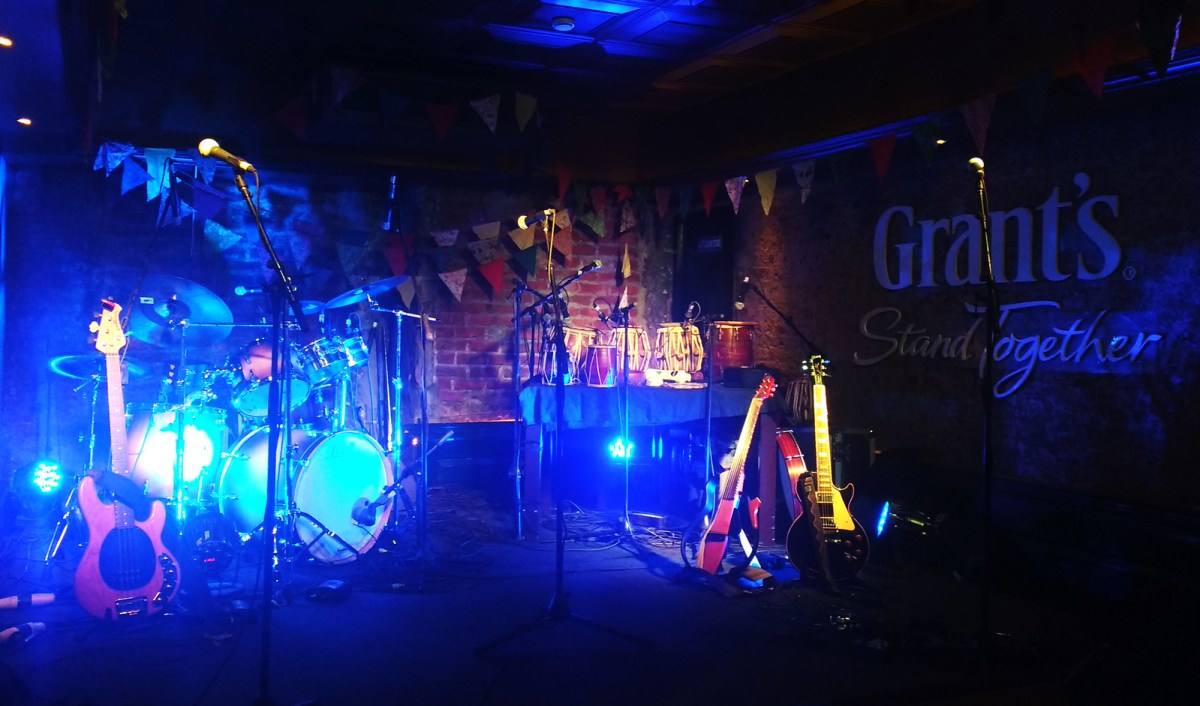
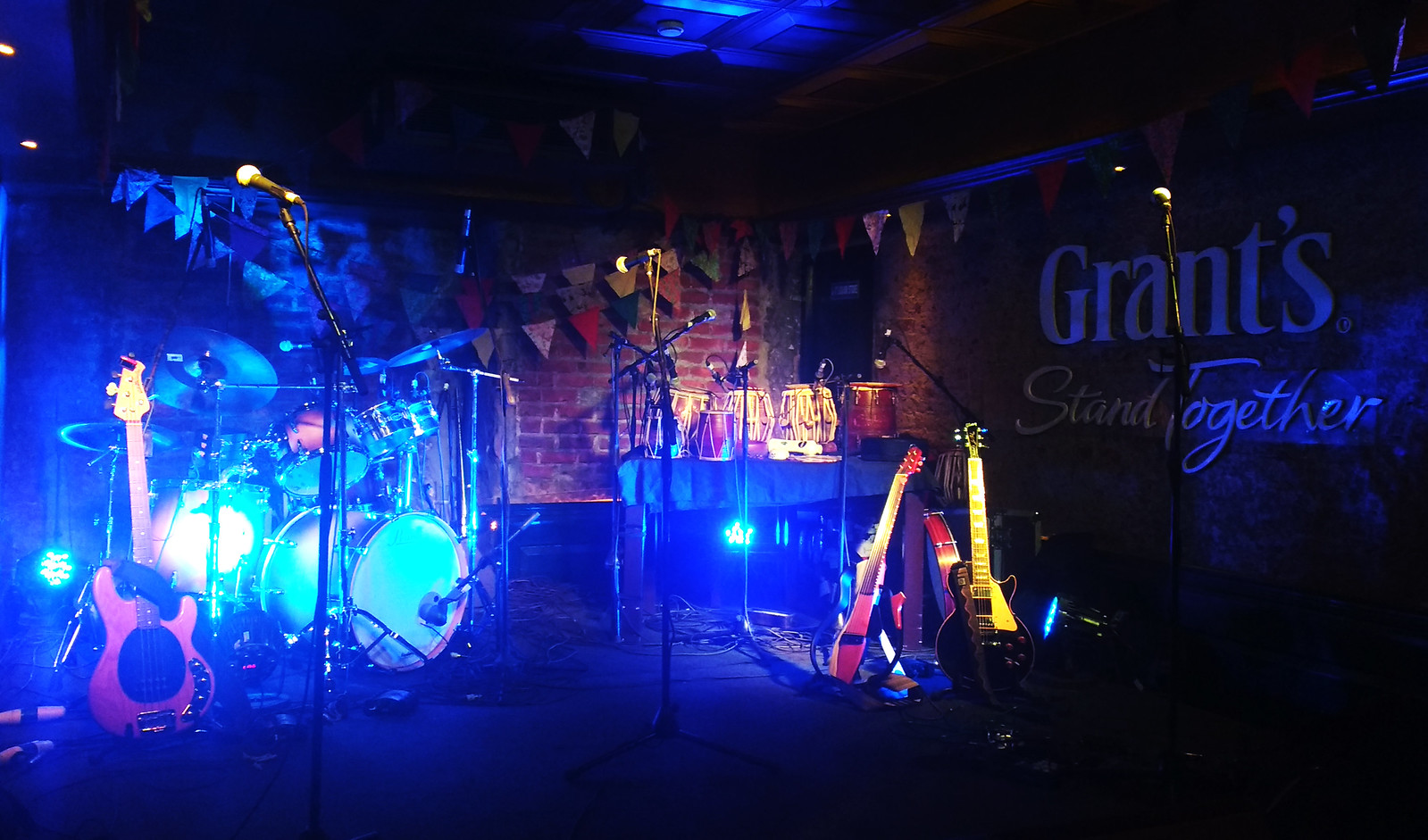
Featured Image: The stage for Indian Ocean’s concert on 23 November 2018. Here’s the story about that concert: Behind the Sounds.
As I make my way to the main road outside our home, I take a quick look at my watch.
Quarter to eight.
Dang! No time to walk.
It’s a Saturday morning. I should be lazing under the fan, pressing snooze on my alarm for the fifteenth time. But no time for wishful thinking.
There’s an auto rickshaw on the other side of the road. There’s not much traffic. I cross over as quickly as possible.
“Metro station!”
The driver nods and we don’t speak a word till he’s reached the station. Thoughts of the big day ahead, how ill prepared I feel, and the pressure I had been under for the past two weeks begin to overwhelm me.
I mumble a robotic thank you as the driver returns the change.
At the station entrance, I dump my bag on the x-ray machine and nervously glance at the train timings.
My sandals are slippery. I skid my way to the frisking area.
The lady with the metal detector looks at me and throws me off guard.
“Ma’am!” She squeals with delight.
“You are looking so amazing!” Her smile is big and genuine.
For an instant, my mind goes blank.
Oh my! Thank you so much! That is so very nice of you! You know, I was under so much stress. And I feel so much more relaxed now. You just made my day…
That’s what I want to say. I want to go on and on and pour my heart out to her.
But my throat is dry. I just about manage to blurt out a thank you, and a rehearsed “how are you?”
For what I lack in words, I try to make up by returning her wide infectious smile.
She says she is is fine, and I rush to collect my belongings.
I run down the stairs, as fast as my sandals allow. But I am late. The train doors close and it leaves the platform.
Sigh! Missed by a whisker.
The next train is 5 minutes away. I sit on the bench, take out my phone and stare at the smiling reflection on the black screen.
* * *
In the mad world where we are constantly running, racing against a faster, invisible opponent, towards an infinite goal, when was the last time someone smiled at you while doing their job?
More importantly, when was the last time you smiled for yourself?
Who made your day in the recent past? Whose day did you make?







 Musings of an eccentric mind