Categories
Stories

The Temple Voice


The elaborate sculptures adorning the temples in the Gwalior Fort are too many to count and too beautiful to describe. Many have been weathered by the strong wind. The many kings who fought, captured, and lost the Fort seem to have left the temples untouched.

That they have very strange names takes nothing away from their beauty. The “saas” is big, bod and stands proudly, imposing her might on anyone who dares think contrary to her wishes.
The “Saas” as seen from the “Bahu,” Gwalior Fort Complex, Madhya Pradesh, India.

The “bahu” stands at a distance, more towards the edge of a cliff and doesn’t care for attention.
The “Bahu” from the point of view of “Saas,” Gwalior Fort Complex, Madhya Pradesh, India.

Inside the large temple, one gets the feeling of being engulfed by Sahasrabahu, the one with a thousand handsโ€”hands that are dancing, playing music, worshipping, meditating.

Who was the guardian deity of these temples? No one can tell for sure. There are conflicting tales about Shiva and Vishnu. Some claim that these are Jain temples.

Folklore says that the ruling king dedicated the large central structure to his mother, an ardent devotee of Lord Vishnu. The smaller temple was to pacify the king’s wifeโ€”a Shaivite.

Tourists take pictures, climb over the walls, and walk precariously along the beams that form the triangles overhead. But few venture close to the sanctum sanctorum.
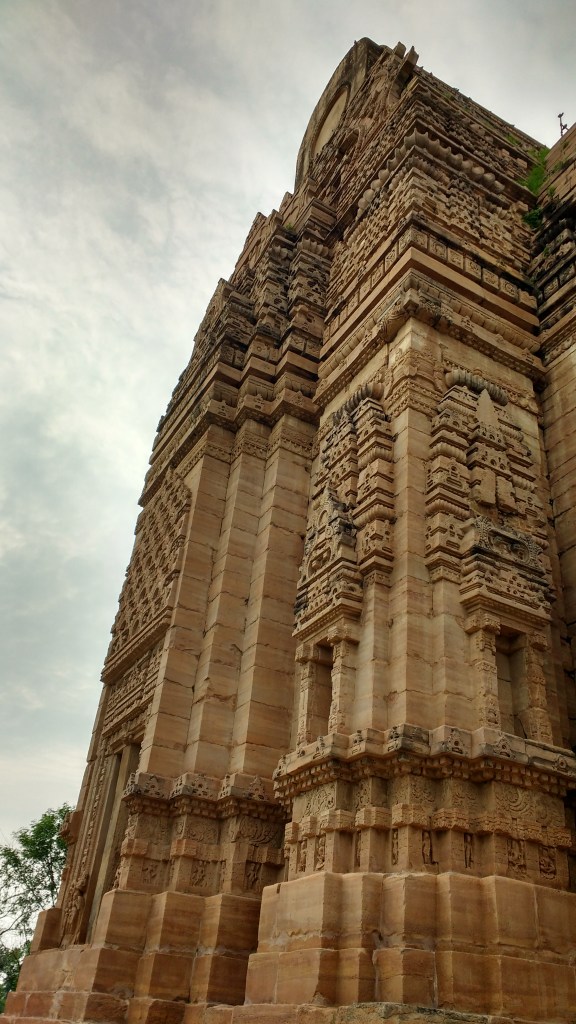
Teli Ka Mandir, Gwalior Fort Complex, Madhya Pradesh, India.

A short distance away, the Teli ka Mandir stands tall. If the building could speak, I might have said, “I am Dravidian.” As I was imagining the walls speaking to me, a man hurried out from inside the temple, cursing under his breath. He looked livid and frantically looked around so he could vent his rage. When he found someone who looked like a caretaker, he let him have it.

“This is a temple! Why are people wearing shoes and trampling all over? Have you stepped inside? It reeks of bat filth.”

“Such a fine architectural monument and you are letting it go to waste. Is this the devotion this was built for?”

The man’s lament fell on deaf ears. The caretaker gave an indifferent glance. “It is no longer in use, sir,” he said, and walked away.

The sanctum sanctorum of all three magnificent temples were dark portals. Beauty graced all the walls outside and inside the halls leading to the small room meant to be the throne of the presiding deity.

If the walls could speak, they might have been as indifferent to our presence as the caretaker was to their plight. With their structure reduced to architectural candy, and the real purpose long given for bats to live in, there was no longer anything left to say.


Still salvaging old work from the archives, I discovered this story’s handwritten draft from May 2017. This too, is a part of the ebook The Speaking Rock. If the pictures are grainy, it’s because they’re from a phone camera from 2016.

I was both proud and awestruck by my phone camera’s prowess back then. It pales in comparison to what my phone can do now. And digital technology today still doesn’t match up to film camera clarity. But grainy footage notwithstanding, it reminds me of some wonderful memories we made almost nine years ago. Isn’t that what pictures are for?
Categories
Stories

The Eternal Smile


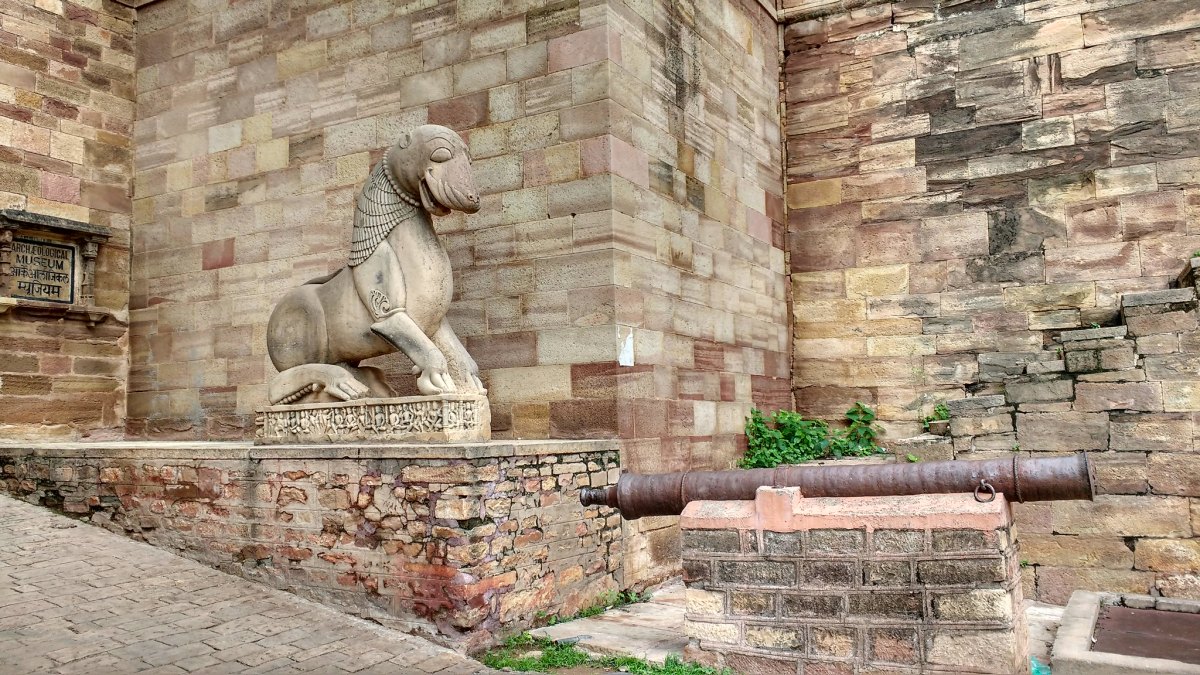
We walked past the stony gaze of the lions guarding the giant entrance. Fresh monsoon grass peered from beneath the sandstone tiles. The wings of the Fort kept a keen watch from above. The ninth Queen of Raja Maan Singh surely must have been special to get this much attention.

We walked on what was the front porch of the Gurjari Mahal and trekked up a steep path leading to the Palace. To our right was a well-manicured lawn. And to the left, a steep rocky path that seemed to lead nowhere.

The Palace had a short and narrow flight of stairs that led to a beautiful courtyard. Intricately carved stone statues of God and Goddesses here, pieces of floral patterned pillars and walls there.

The word museum was, perhaps, not very appealing to most tourists. Even those who strolled in didn’t stay long. The cool breeze only enhanced the peaceful ambiance of the courtyard.

“Do you have a ticket for your camera?” A portly man asked as we began freezing moments for our album.

We showed our ticket.

“Well, then please use only oneโ€”either your phone or the camera. Please!” Beneath his small smile, the request was firm.

I put away my phone and smiled sheepishly. Half expecting the man to run back into his administrative chamber after we had complied with his request, we turned to continue our exploration.

“Oh but first you must come and see the Salabhanjika!”

The Salabhanjika is the museum’s prized possessionโ€”a miniature statue that epitomizes femininity. We had read about the sculpture being guarded closely and were under the impression that we’d need special permissions to see her. So when the gentleman invited us to take a look, we happily accepted.

We followed him to his office. A small dark room furnished with a simple desk and a few plastic chairs. The medieval walls were covered with yellowing photographs and newspaper clippings about the sculpture. Behind the desk was a cell. Deep inside behind steel bars, stood the small, smiling Salabhanjika.

“She’s called the Indian Monalisa!” His voice was filled with pride at being the guardian of a rare sculpture. Like many of the exquisite sculptures that we’ve now become accustomed to seeing, Salabhanjika was breathtaking.

“When she was first found, she looked like this,” he said, pointing towards a grainy print stuck on the wall. “Her head was found later and was fully intact, so we could piece her together. We were lucky.”

“Look at her carefully. The more you look at her, the more she’ll smile back at you! Look at her from any direction and she’ll look towards you.”

We looked again. And she did, indeed, appear to be smiling more than before.

“Please take a picture. Go on, go closer. Make sure you switch off the flash!”

We leaned in, the lens of our camera wedged between the steel bars. Click!

“She’s been insured for five crores!” our host could hardly contain his excitement.

Five crore rupees. The Monalisa is insured for a hundred million dollars.

Salabhanjika’s smile grew wider.

I wondered, if she had been discovered before the Monalisa, would Leonardo Da Vinci’s painting be called the Italian Salabhanjika?

She stood there silently. Still smiling, and letting the question remain unanswered.


Salabhanjika is a Sanskrit word meaning ‘breaking a branch of a sala tree’. There are many intricate sculptures of Salabhanjika in Hoysala and Bednur. But the one in Gwalior is reportedly the only one that smiles.


This story is part of my digital book, The Speaking Rock.

Originally written in 2017, the ebook was published on the Juggernaut platform. 

For those who aren’t aware, Juggernaut was a publishing platform that claimed to democratise publishing. It’s slogan, “You don’t need to know anyone to get published.” It provided writers access to publishing tools and a marketplace where readers could connect with writers directly. The Speaking Rock was one of three ebooks I had published with them. My story Free Bird also won a short story contest and was featured in their anthology collection.

I loved that platform, even from a design perspective. I even wrote a glowing review on Design Tuesdays.

Unfortunately, the platform soon introduced a paywall and put my stories behind a paywall (without offering any royalties). And thereafter, the platform disappeared altogether, taking my work with it, leaving me hanging high and dry. I felt betrayed. I felt bitter. I kicked myself for being naive. Of course, their business model wouldn’t pay their bills.

For a good three years, the site just showed an ugly “under construction” message. No way to get in touch with them. No way to retrieve my work. I had made peace with the fact that I’d lost my storiesโ€”until a few days ago, when I found a draft on Google Docs that had one of the stories. And when I saw the draft of the Eternal Smile sitting right under my nose on WordPress, I almost cried.

Funnily, when I opened Juggernaut’s website today, I found that it was no longer under construction. (The internet archive’s Wayback Machine reveals that the site was still down as recently as 5 days ago!)

There is no mention of a writer’s platform, and no way for any one to log in and retrieve their work. Today, the website is just like another publishing site that displays influencers and popular media icons who’ve published with them. So much for democratising publishing!

As for me, I’m happy that I can finally share Salabhanjika’s smile with you. I’m still looking for that photograph we took. I’m sure it’s there somewhere in our virtual closet.

Categories
Stories

Resilience


It is not the beauty of a building you should look at; its the construction of the foundation that will stand the test of time.

โ€“David Allan Coe

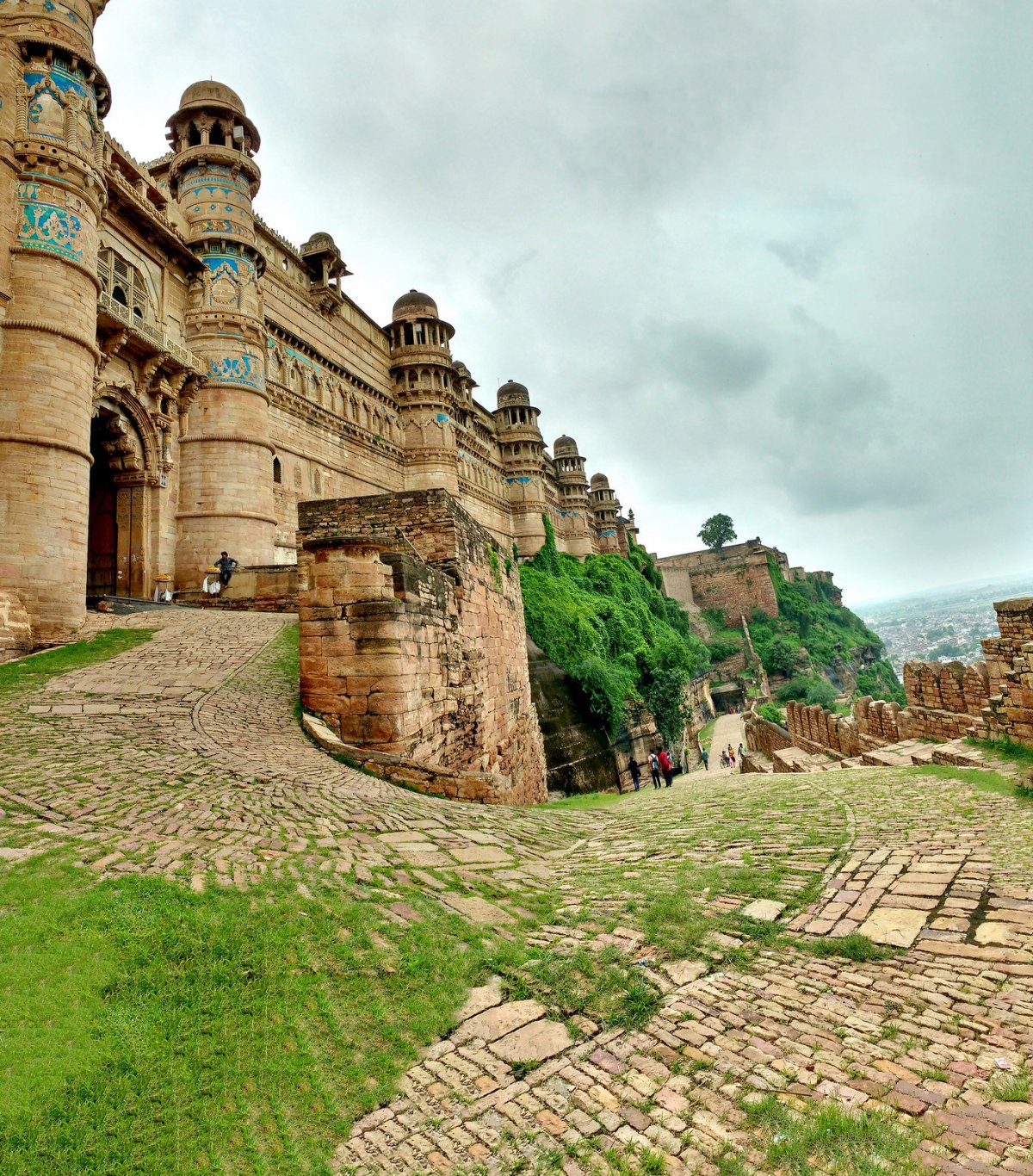
The Gwalior Fort, constructed atop a hill, is a mammoth structure. Legends say its construction began in the 3rd Century, while historical accounts put it anywhere between the 8th and 14th Century. This Fort has seen numerous rulers and severe onslaughts across the centuries and withstood all that has been thrown at it.

As with many of the places we have visited, it is extremely difficult to paint a true picture of the scale of the structure. I could write about the long trek to the top, and the sweeping views of the city, but the closest that I can get to explaining it, is to point to the size of the people in this (incomplete) picture below.

A long way to the top
The entrance of Gwalior Fort

Photo taken with a Moto G3, edited with Image Composite Editor and Befunky. Click/tap to enter my Flickr Photostream


This is post #12 in this yearโ€™s NaBloPoMo, or as Ra calls it Nano Poblano

NaBloPoMo = National Blog Posting Month = Thirty straight days of blogging

Categories
Stories

The White Palace


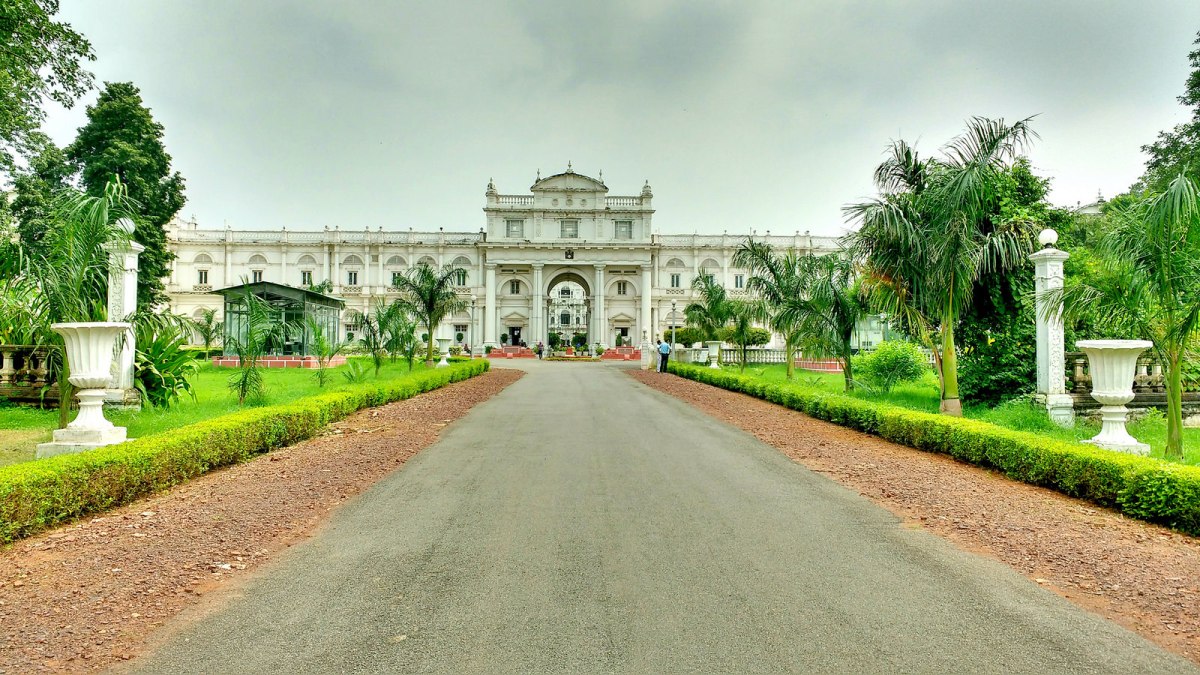
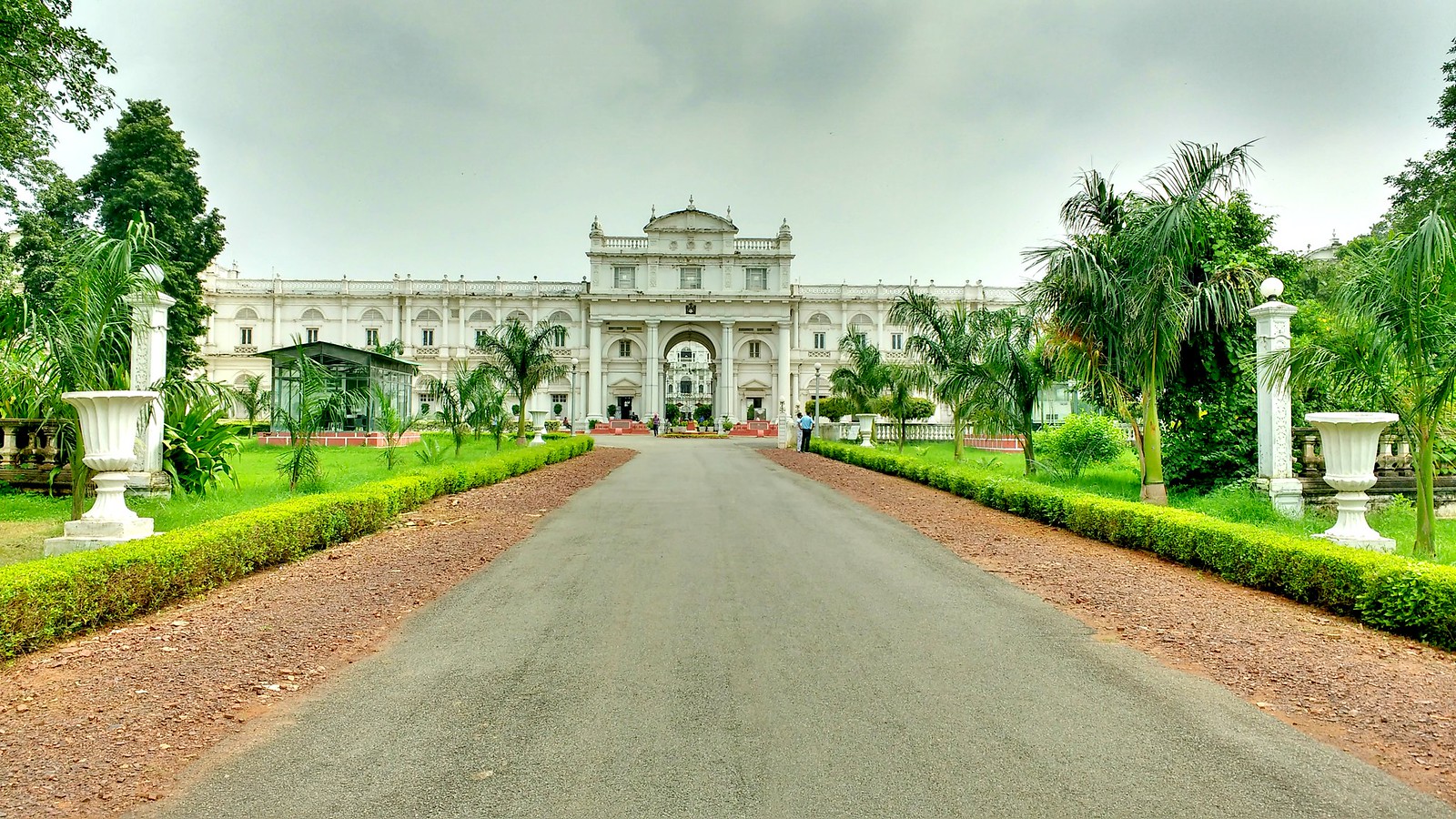
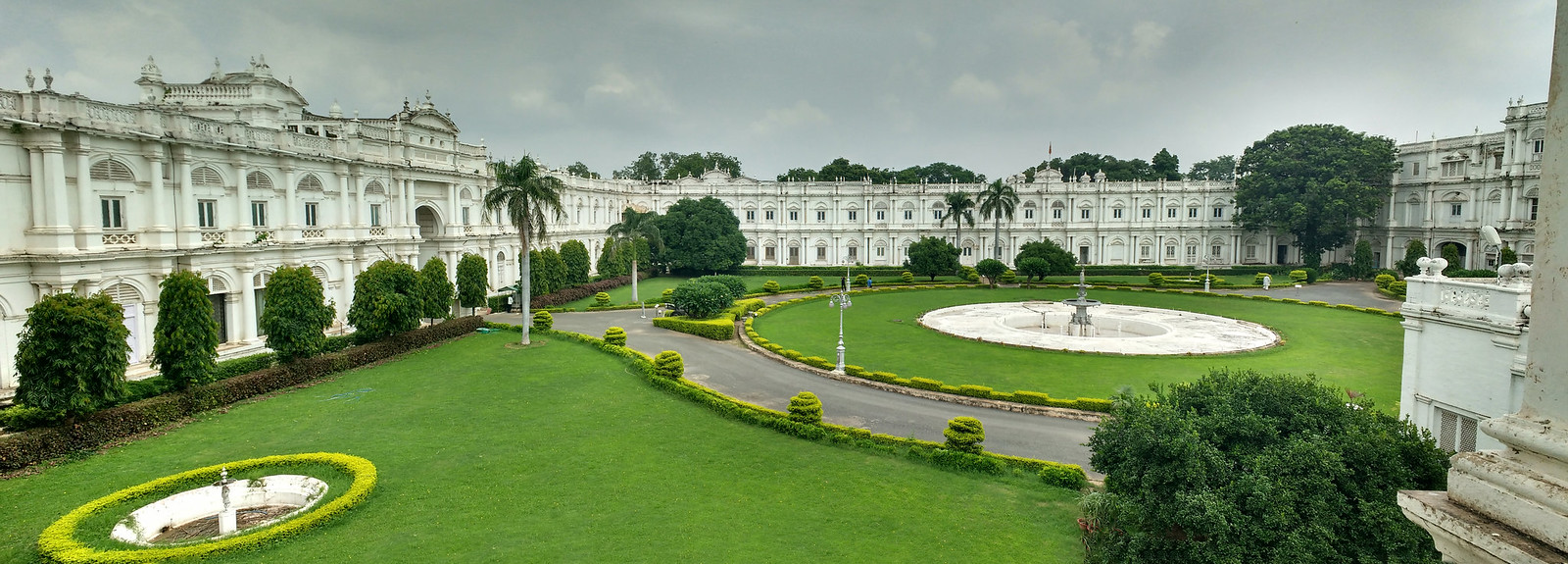
The Jai Vilas Palace in Gwalior combines three European architectural stylesโ€”the first storey is Tuscan, the second Italian-Doric and the third Corinthian.

There is an eclectic collection of items housed inside the museum, which can be visited by the public. One section still serves as the residence of the heirs of this Palace.

We weren’t allowed to carry bags inside (there is a provision of a locker), and strangely, we weren’t allowed to carry umbrellas inside either. While the museum itself is entirely indoor, to exit the Palace, one must pass through the central lawn. As luck would have it, it began pouring just before we were about to complete our tour.

If you plan to visit this Palace in Gwalior, make sure you have sufficient timeโ€”we spent over two hours (excluding the rain delay), as there is much to see. And if you are short on time, pace yourself to keep the maximum time for the last sectionโ€”the opulent Durbar Hall. We had read about the extravagant decor and seen pictures of the massive chandeliers. But it was only when we saw the hall that the reality of its grandeur hit us.

In our limited exposure to exotic places, some places leave a lasting impression, some of romance, others of awe. The Jai Vilas Palace, even with all its magnificence, left a somewhat cold and distant feeling. It’s hard to tell why – perhaps it’s the excessive indulgences; or the exclusively European architecture; or perhaps it was the weather; or just maybe, the contrast between the lifestyles of the common people, and that of their representatives, that is so blatantly visible to the casual observer.

Jai Vilas Palace
Jai Vilas Palace, house of the Scindias. The imposing structure and all its extravagance is visible right from the entrance.


Photo taken with Moto G3. Click/tap to enter my Flickr Photostream.


This is post #11 in this yearโ€™s NaBloPoMo, or as Ra calls it Nano Poblano

NaBloPoMo = National Blog Posting Month = Thirty straight days of blogging

Categories
Stories

Marooned in Palace(s)


Travelling during the Indian monsoon is tricky. Apart from the dangers of landslides and floods, there is the danger of being trapped inside a cold hotel when it is pouring outside. Fortunately, we are not crazy enough to venture towards perilous terrains or poorly administered areas.

Our first monsoon vacation was to Gwalior last year, during the Independence day weekend. I’d assumed that the rains would keep people away. We couldn’t be further from the truth. And I’d assumed that the monuments would be fresh and clean after a wash. I can’t quite comment on that. But that didn’t stop us from being mesmerized.

In the city, with the high rise buildings, its hard to lay our eyes on one continuous skyline. In fact, we sometimes give up on our chances of seeing it. And that is where smaller towns come to our starved senses’ rescue, especially during the monsoon. The massive and magnificent structures we visited were made all the more beautiful in the backdrop of the most amazing expansive skies.

Sure, we did get caught in the rain. We had to cancel our plan of visiting other places because there was a huge downpour while we were inside Jai Vilas Palace. But when you’re marooned in a Palace, it’s really not that bad!

Jai Vilas Palace
Inside the Jai Vilas Palace. The magnificent green lawns in the centre of the Tuscan-styled buildings under a very overcast sky. The downpour began shortly after this image was taken

This year, too we planned a vacation for the same weekendโ€”but because there were so many more like-minded travelers, we couldn’t get tickets! So we did something that we felt was smartโ€”we travelled a couple of weeks later, when most of the city tourists would be away (and we secretly hoped that hotel prices would be slightly cheaper; they weren’t). We also hoped that the impact of monsoon rains would be lesser. But when we checked the weather predictions, we were made well aware of the risk we were taking.

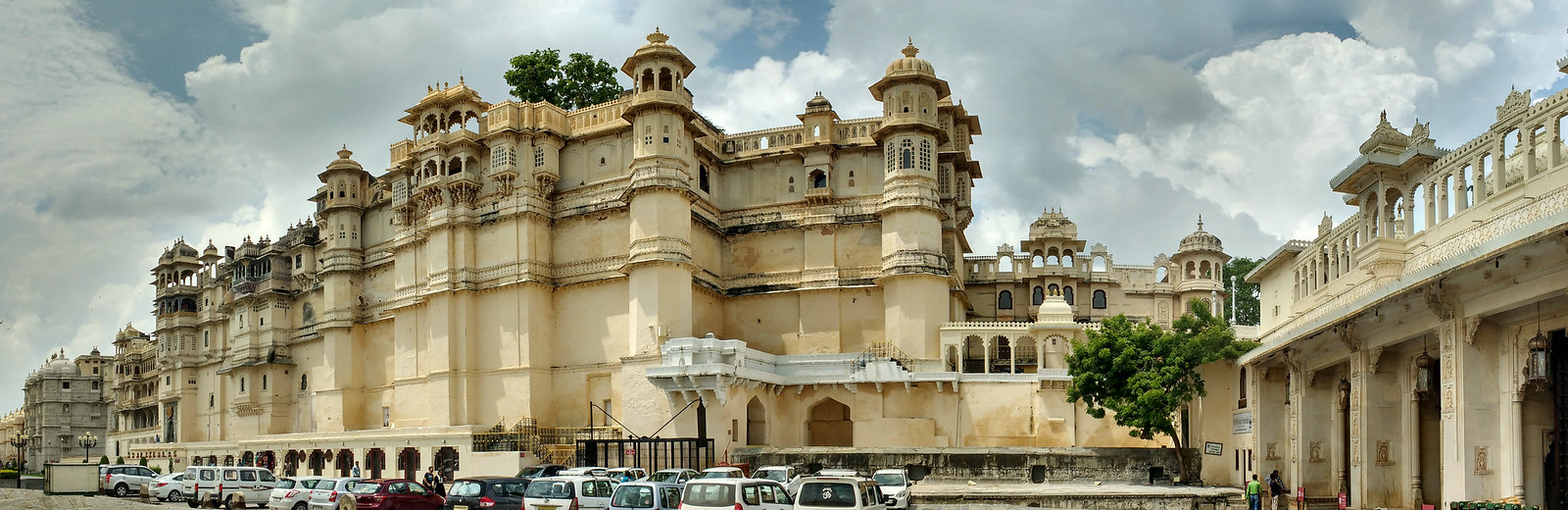
Day one in Udaipur, saw us marooned inside our home. But we did manage a visit to the Monsoon Palace. On day two, we literally headed for the hill to avoid getting wet in the rain, and just managed to make it inside the City Palace, before the downpour began. And like the year before, we found ourselves marooned in yet another palace!

City Palace, Udaipur
Outside the City Palace. We were fortunate to see the Palace on two daysโ€”once when it was pouring, and the next day (day three), when the sun finally came out

So what’s our take on travelling during the Indian monsoon? Well, the weather is going to be cloudy, with a chance of great views!


Yup, these pictures were taken with a phone ๐Ÿ˜‰ These are panoramas stitched together from individual pictures taken with a Moto G3. Click/tap to view my Flickr photostream.

Hat tip to R. Karthik photography for recommending the software used to stitch the pictures. Check out his review here.


This is post #2 in this yearโ€™s NaBloPoMo, or as Ra calls it Nano Poblano

NaBloPoMo = National Blog Posting Month = Thirty straight days of blogging

Categories
Stories

Framing the in-laws!


the bahu from the point of view of saas
The bahu, from the point of view of saas

One of the major attractions in Gwalior is the Saas-Bahu ka Mandir. In Hindi, saas translates to mother-in-law and bahu is the daughter-in-law.

The strange name is believed to be a convenient short form for sahasrabahu – meaning thousand arms. The two temples in the complex are covered with beautiful, intricate carvings of geometric patterns, animal motifs and dancing figures. Some claim that one temple is for Lord Vishnu, while the other is for Lord Shiva. There is also some confusion as to whether they are Hindu temples at all. What is widely agreed to, is that the larger one is definitely the saas, and the smaller one, the bahu!

This photograph of the smaller temple was taken inside the larger temple.

If you intend visiting, be sure you have enough battery and memory to click pictures. We know we didn’t stop with one ๐Ÿ˜‰


To see how bloggers across the blogosphere are framing their points of view, check out this week’s Photo Challenge