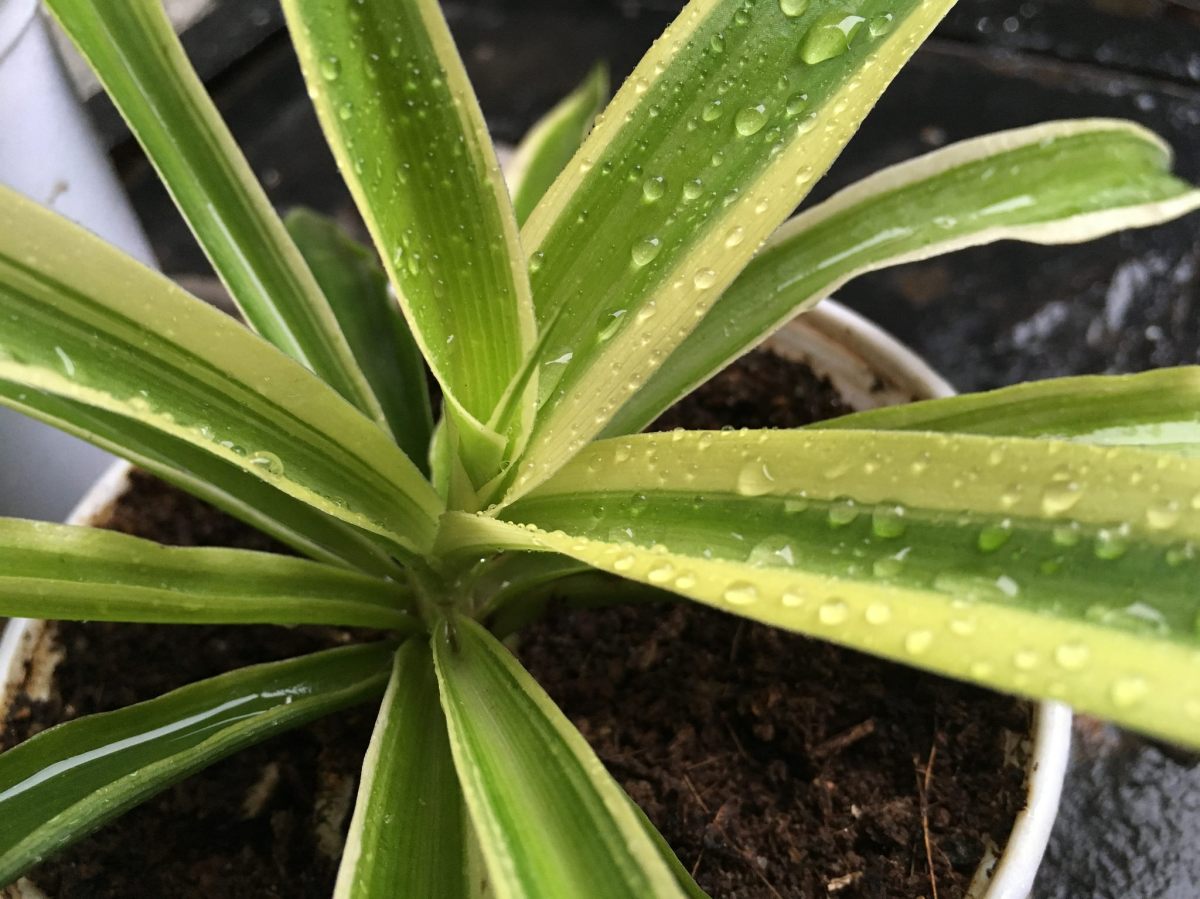
The curry tree—a plant, actually—with its slender stem and a head full of leaves, swings wildly in circles as the wind howls ominously.
Hardly able to stay firm, the plant tries its best to lend support to the young saplings at its feet—a variety of Marigold, I think. They cling to the curry tree-plant for dear life as the sky turns grey: not with the sweet-scented rain-bearing clouds, but with dust.
Not far, a polythene bag rises up in the background of tall, barren buildings. 5 storeys, 6… 7… 8… and out of sight.
This may not be a cloudburst or a hurricane or a tornado or anything life-threatening—unless, of course, there is dust in your eyes or flying sheets of lightweight construction material are rushing towards you.
But it’s sad, and a perfect manifestation of a broken heart.
Stay strong my curry tree-plant. The Marigolds need you.
Wind: 26 kmph. Temp: 38 deg C. Humidity: 15%
Another long forgotten draft finally finds its way to light! I wrote this sometime in March 2021, on a particularly tumultuous day, not just for my curry tree-plant, but for me. I was shaken by some events in my professional life. I refrained from publishing it because it triggered a painful memory.
They say time is a healer. And with the distance of time, I can now recognise that memory more objectively. It was one of those events that shaped who I am today. It shook the naïveté out of me. Well, some part of it anyway! By moving past this memory, hopefully I’ll regain a part of me again.
My old curry tree-plant. It stayed with us a good four years or so. It survived the storms, but unfortunately didn’t survive one extended vacation we took. We’ve not been able to grow another curry plant since.
I envy folks who can just walk into any flea market slipper store and walk away with pretty, glittery foot embellishments.
When it comes to fancy footwear, my feet don’t always cooperate. I have larger than average feet, and a dangerous corn under one of them, that will burn a hole through the most well-crafted shoe, if I find one my size, that is. So, when I do get something that looks good on me, I keep it for as long as I can. The cheaper the better, because my corn couldn’t care less about how expensive the footwear is.
Growing up in a middle class household, we always found ways to repair stuff that was broken instead of buying replacements. Things were expensive, and what we had, was worth repairing because they were built to last. And it was relatively easy to find people willing to fix things, each with their own niche.
Many of these folks had their dedicated street homes. Some would roam around residential areas hawking their services in the most creative ways. There was a person who specialised in pressure cookers, another for sewing machines. One roaming man had a super specialisation for zippers.
This morning, I opened by shoe cupboard to see a pair of cheap glittery slippers I bought several years ago. It had seen many a mochi*. If you looked closely, you could see at least three sets of stitches on the sides of the sole. But viewed from the top, which is hopefully how people will notice my feet, it looked gorgeous. One of the toe straps, though, had given way.
My slippers looked questioningly. “Is it time yet? Are you finally going to replace me?” I won’t lie, I have looked for new footwear, but nothing has caught my fancy.
Nowadays, however, nothing is built to last. After all, if everyone had durable items, who’d buy the next thing a company wants to sell? But the number of people willing to fix things is also shrinking—it’s not a high paying venture.
I looked into at my soles, and went in search for a local mochi. Despite all this fast fashion, there are still a few of these around. Hopefully, I’d find one who knew how to get the job done. And a mochi I did find.
Sitting on the side of the road, underneath a large tree, he had a bunch of tools and some shoes spread out in front of him. His shirt had eaten much dust from the passing cars. His hands weren’t in a much better condition. How else would the hands of someone who handled other peoples shoes for a living look like?
“How much for fixing these,” I asked him.
“Twenty rupees for this one… and eighty for that one. A hundred total.”
A hundred rupees for fixing two slippers. I scanned the QR code in front of his shop and showed him the transaction. I was amazed at how someone could survive on such income. I was happy I could reuse my slippers for a bit longer at a tiny cost. But what surprised me most was the big smile on the mochi’s face once I’d made the payment. He seemed to be genuinely happy to render his services.
Sejal stared at her phone. She’d half-typed out the name… S . H . I … and there was his face on the top left corner of the search results.
His broad face, looking in front. A small smile that sometimes made him look shy and reserved. Those who knew him well, however, recognised the spark in his eyes. Shy he was. And that was the best disguise for his mischievous pranks.
Sejal had been angry. She wanted to lash out at Shivansh. But seeing his face, she sighed. No matter how hard she tried, she couldn’t bring herself to confront him. Damn, he always got away with everything.
She scrolled through the chat history. A series of greetings. Happy Diwali. Happy New Year. Happy Holi. Year after year. With nothing in between. Here again was Diwali. She’d been sending out a picture to all her contacts. Just as everyone had mindlessly forwarded the canned greetings.
For Shivansh, perhaps she could type something out, instead of sending one of the hundreds of images she’d received from others. Perhaps a proper text message would elicit a typed response on the other end.
“Wishing you and your family a prosperous Deepavali.”
As she typed, her eyes glanced at this name at the top. He was online! Perfect. She added a few emojis and sent the message.
Sure enough, he immediately reacted to the message with a prayer emoji.
Sejal wondered if she should send something to begin a conversation. A simple, “Long time! How’ve you been?” There was a time when he would call her up and share what he was up to. She’d never bothered to check in on him. But he always did. And she loved that. She knew he cared for her. She did too. He must have known that. Otherwise he wouldn’t have called. Then why would he suddenly become this distant?
She felt her forehead wrinkle. “Well, he was the one who had neglected their friendship.” Sejal thought. “He should be the one to initiate the conversation.” She lifted her thumb from the phone and stared at that hollow greeting and that little symbol showing that Shivansh had acknowledged the message.
He was still online. Surely busy seeing other messages. It was a busy day. And then, as if to answer her wishes, three dots started bobbing up and down. Shivansh was typing. Her hopes went up. He wasn’t just going to forward a greeting to her after all.
The dots moved up and down for several minutes. Perhaps he finally wanted to reconnect and make up for lost time. Maybe he was struggling to start the conversation and was trying different combinations of messages.
Sejal waited patiently. At length, the dots finally stopped dancing. Shivansh had sent the message.
“Thank you, wishing you and your family the same.”
Sejal paused. She then left a prayer emoji on the message and set her phone down.
It was a huge garage—at least to me. The ceilings were high. Despite the old pale blue Premier Padmini and a bicycle, there was enough space for aluminium trunks—the quintessential Rajai boxes that most families owned back then—some painted black, and all of them with a serial number. My mother had cut out the dates from a calendar and pasted them on the boxes, so we knew how many we had. It made life easier for a family that had to move every few years. Years later, it was this small labeling tip that helped us as we moved from our first apartment.
As a child, I was obsessed with seashells. As was my mother and her mother. Hoarding runs in the family. And it was for these seashells that I was rummaging through the garage. I’d caught wind of a treasure of shells, and I was determined to find it. One of these boxes had to have them.
At last, I found them. Out came one large clam—the size of my palm. And another, this one with layers. And they grew bigger, two of them so large that I could carry only one with both my hands. What on earth were these huge clams doing inside a dusty, cob-web-covered dark corner? And what’s that? Coral! My heart sank when I saw that some of them had cement stuck in them. Maybe it’ll come off with some cleaning, I reassured myself.
Looking back, I can only imagine what it must have been like to move a fully furnished household across the country with 2 small children in tow. The two of us struggled when we moved with our spartan belongings within the city. But at the time, I was livid. How could these precious items be so neglected?
Back inside the house with my haul, I set about cleaning them as best as I could. The dust eventually came off to reveal the creamy skeleton. The cement stayed. Maybe time will wear down the cement. After all, they do eventually peel off from our walls.
As my father saw me lugging around my new playthings, he quietly slipped in a little fact. You know, in the deep sea, there are seashells the size of bathtubs. I saw a faint twinkle in his eyes. Seashell hoarding wasn’t just a part of the ladies in the house.
Those clam shells and corals still sit in my parents’ house, displayed on a shelf. And with them, a dream that one day, I’d see those bathtub-sized shells.
My cab driver replied, when I asked him if we were on the right route. The criss-crossed, perfectly planned, roads of Lutyens Delhi all looked the same to me. And their names — the names of kings and their ministers — that we struggled to memorise in our social studies class in school. It was a struggle then. And it continues to be a struggle, all these years later, to distinguish between the roads named after them.
But my cab driver had circled these roads for several years. And he knew them well. He also noticed something.
“You see these trees here?”
Lutyens Delhi has beautiful tree-lined roads.
“Yes, that’s what I love about this part of town,” I said.
“They’re tamarind trees. And never once, have I seen flowers or fruits on them,” said the cabbie.
And his explanation was simple. It’s because the trees are surrounded by politicians.
I try not to talk about politics with cab drivers. But that comment on the tamarind trees helped me open up about my opinions, and through the rest of the journey, we continued our conversation around modern politics, agreeing with each other’s assessment of how low Indian politics was.
“You must show them music.”
We were visiting my aunt in Bengaluru. She has a lovely garden, filled with bonsais and orchids. And her betel-leaf plant, has no rival anywhere on this planet — in its appearance, and taste!
She was sharing the secrets to her green thumb. They are very sensitive, she said. And they love music. Don’t play them the same music every time. Mix it up, rock music, Bollywood, bhajans… Keep them happy, she said.
I love pine cones.
Ever since I first saw them as a little kid, when my father took us for a vacation, I have been fascinated by them. We’d picked up a couple that we found on the ground during that vacation, and I hadn’t had the joy of picking up another.
So when I saw a pine tree in the college, I was excited. But during the three years I spent there, it never bloomed.
I continued to visit the college, as part of the Alumni Association, for the next several years. Every time I visited the college, I’d look up, only to find needles. No cones.
And then, one day, I saw them. Several of them.
“This pine tree has cones in it!”
I jumped for joy, as a teacher and a couple of students looked at me. I can’t say for sure, but it’s likely, that they were amused by my childlike behaviour and my explanation. I told them:
This tree is happy! This tree is responding to the energy around it. Truth be told, when we were in college, this place was dead. No energy, and a lot of negativity. But now, it is so lively. There is so much energy around here. And now this tree has cones in it!
“This tree was planted when I joined this college,” replied the amused teacher. “It’s twenty-five years old. Back then, I didn’t think it would even survive this weather,” he added.
“Well, if we didn’t kill it, maybe our lot wasn’t that bad, then?”
Back in college, I went with a friend of mine, to a debate being held in another campus.
We located the room in which the debate was to be conducted, and then waited, as the participants trickled in. The room was large, the ceilings high. Perhaps, it could have comfortably seated a hundred people. Multiple doors and large windows on either side ensured there was good ventilation and ample natural light. On one side of the room, was an open passage, that overlooked a beautiful, large lawn. The other side, also had an open passage, that overlooked an atrium.
The room began filling up, one by one. There were, perhaps, thirty students, in all, when I began to feel a little uneasy.
It was early winter. There was that wonderful Delhi-winter sunshine around us. The room was large, and people, fewer than half capacity. And yet, I felt suffocated. I couldn’t understand why.
“Oh, we’re not participating. We’re just here to see,” I don’t recall which one of us replied to the participant’s question.
“Oh, no wonder you look so relaxed!” she replied.
And that’s when it struck me. That uneasy feeling wasn’t within me. It was in the air.
The collective tension was being spread by the participants, that, being an objective observer, I had experienced externally, as opposed to internally.
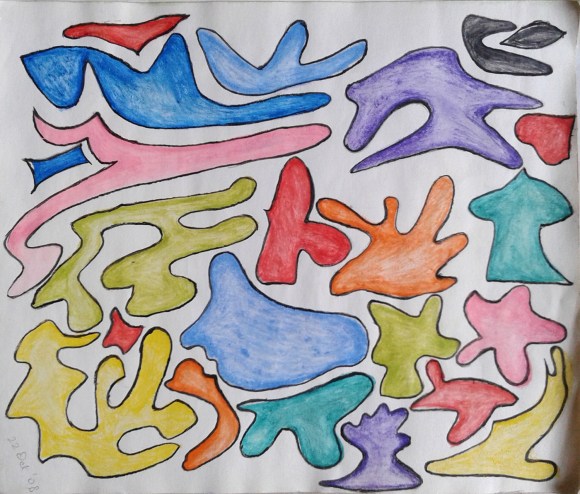
The deluge – pencil sketch drawn many years ago
They say, that man’s best friend is a dog. I believe, that humanity’s best friend is practically everything under the sun, except another human being.
Plants and animals can understand human energy, better than other humans. And that’s because humans have that one ability — no, handicap — that other creatures don’t have — telling lies. We lie to others. And we lie to ourselves. And we spend a lifetime on this planet just trying to figure out the truth about ourselves. For some, that truth comes through reading, or speaking with close family and friends. For others, it comes through art. Humans invented psychology to help figure out the human mind. And science, to explain energy. And for anything that couldn’t be explained by either, there was religion.
While we are still figuring out ourselves, plants and animals can see right through us. They don’t speak our language. They don’t need to. They just sense.
We are all bundles of energy. We reflect light, and produce sound. We feed off energy. And we disseminate energy.
Vitamin D is known as the sunshine vitamin, because it is produced by the body with the help of sunlight. Sunshine, is also associated with happiness. Perhaps that is why tropical countries tend to be depicted by photographers through smiling portraits. Because even in poverty, the sunlight makes people happy. Sunlight is energy — quite literally.
I once read that looking at flowers, first thing in the morning, makes us feel good. Plants that get ample sunlight, convert the light energy into beautiful flowers. Those flowers are a manifestation of energy.
Those flowers are happy, and we feed off their energy.
And when we feel happy, we spread that energy.
All these disjointed memories, and energy that binds them, came to me after I shared a painting “A Ray of Hope”.
We’re all bundles of energy. We helped create the current pandemic. And we can all feel the after-effects of it. Perhaps for the first time in history, the entire world, is sensing the same type of energy — fear, helplessness, uncertainty, and hope.
Let’s turn this pandemic into an opportunity. To spread positivity. And treat nature — plants and animals with respect. We feed off their energy. We disseminate energy back to them. And the cycle repeats.
Picture any coming-of-age movie with bratty teenagers making life miserable for their teacher. That was math class in my school.
My math teacher in senior high school was a brilliant teacher. Gentle, patient, knowledgeable, and effortlessly simplified complex concepts for those of us who were terrible in mathematics. His only flaw, was that he was a Tamilian, with a dark complexion, and a very thick accent. For a majority of my classmates, he was great fodder for bullying. They openly mocked his accent, and laughed in class. There weren’t any repercussions on their education — they had tuitions after school to make up for that.
Being a fellow Tamilian, I could understand his frustration. And that motivated me to be that one person in class that he could call a student. The other teachers were treated with more respect (or perhaps, fear), but student disinterest in studies, was blatantly clear.
In college, the atmosphere was completely opposite. Unlike school, the students had their independence. And the teachers — highly accomplished academics — were indifferent to them. Students didn’t dare disturb classes. But if they were disinterested, they’d just leave. Here too, private tuitions were the safety net.
In both my school and college, I stubbornly refused to take these supplementary classes. Some of the reasons included: my firm belief that extra tuitions were for ‘dumbos’ who couldn’t study on their own; my stubbornness in sticking to that judgement even as the ‘intelligent’ ones folded in; and my unwillingness in spending exorbitant amounts in fees when the same (sometimes better) education was already being paid for (that too at a subsidised rate).
It was these beliefs, that pushed me to ask questions in class, to seek clarifications on things I struggled to grasp. At first, I felt stupid. But my egotistical self that refused outside help, gave me no choice. Between feeling publicly stupid, and privately admitting I needed help, apparently, I preferred the former.
And so I asked questions. Even as I felt I was being stupid.
It was after one Accounts class in school. One of my classmates came up to me to seek clarification on a topic that had been introduced that day. I had asked the same question in class, just moments earlier.
It was then, that I realised, that by asking questions, I wasn’t being stupid. I was asking the questions everyone wanted to ask, but for some reason didn’t.
Ego, stubbornness, being judgemental, aren’t traits I, or anyone, would be proud of. By no means am I advocating it. These very traits have hurt me very badly. In the years since, I have tried to let go of my ego — it’s a work-in-progress, and I think I have made a fair amount of progress.
I have learnt that there is no shame in asking for help. It is wrong to label people as ‘dumb’. And it is naive (even, dangerous) to judge people based on my unfounded notions.
But for compelling me learn to teach myself, and brazenly ask questions in uncomfortable environments — abilities that have helped me immensely in my work as a user experience designer — I am thankful to that adolescent, egotistical, judgemental self.
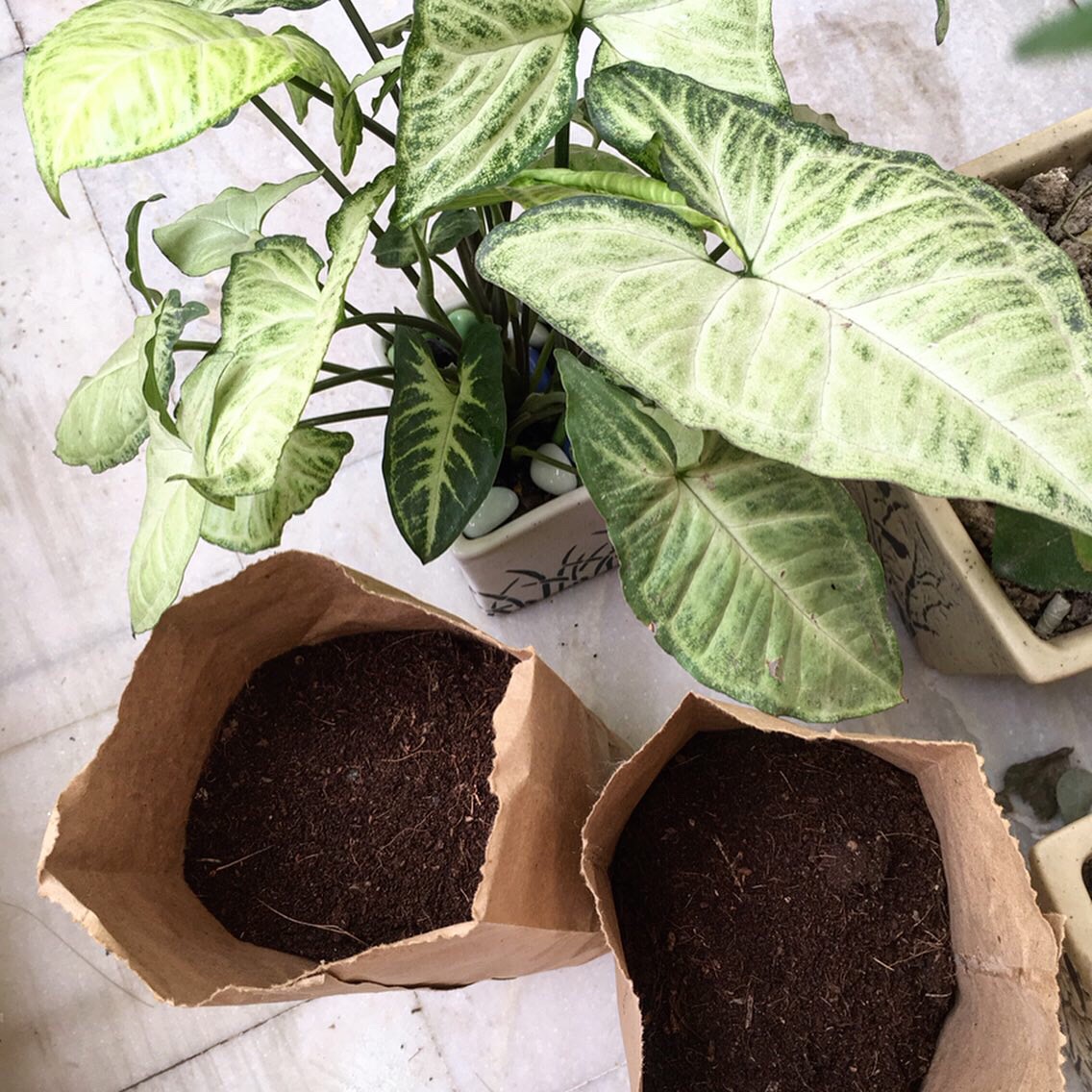
I watched my father-in-law poke a few holes into the bag with the screwdriver. He left it in the corner, and turned around to find me in a happy daze.
Here I was fretting about the lack of an actual ground. ‘One can’t possibly compost without a hole in the ground,’ I thought to myself. And there he was, coolly collecting all the kitchen waste into a plastic bag to make a compost bag in our tiny apartment balcony.
After my in-laws returned to their home, we continued to add kitchen waste to this make-shift compost bag, excited about harvesting compost.
But something wasn’t quite right.
For starters, it smelt bad. Very, very bad.
And it was super soggy – dripping brown smelly liquid wherever we kept it.
And then there were the maggots. Lots of them.
I was sure that I wanted to compost waste, and was determined to do so. But was it to be as yucky as this? Neither of us had any idea. And so we shot the question out into the electrical void – the internet.
The internet informed us what was going wrong. The short answer: our compost was out of ‘balance’ and had too much moisture*.
To solve our immediate composting crisis, we added shredded newspaper, and left the bag slightly open, in the furthest corner of our balcony. Next step: we decided to get a proper composter.
Fast-forward a couple of months, and we welcomed our Kambha.
The Kambha is a terracotta composter made by a Bengaluru based NGO, Daily Dump. There really isn’t much to it: three earthen pots with holes on the sides. While the top two had a rope mesh at the bottom, the third one was closed at the bottom. They stacked up neatly. I marvelled at the simplicity of its design.
We watched the instructional video and transferred our (now utterly disgusting) waste and added some of the ‘remix’ material supplied by the organisation. The ‘remix’ material and the terracotta absorbed the excess moisture, and within a couple of days the compost stopped smelling.
As I learnt soon enough, the compost pile is as much a living organism as you and me. Needing a well balanced diet, breathing in oxygen, and exhaling carbon dioxide. And if it is malnourished or there is something wrong with its digestion, it emits a foul smell.
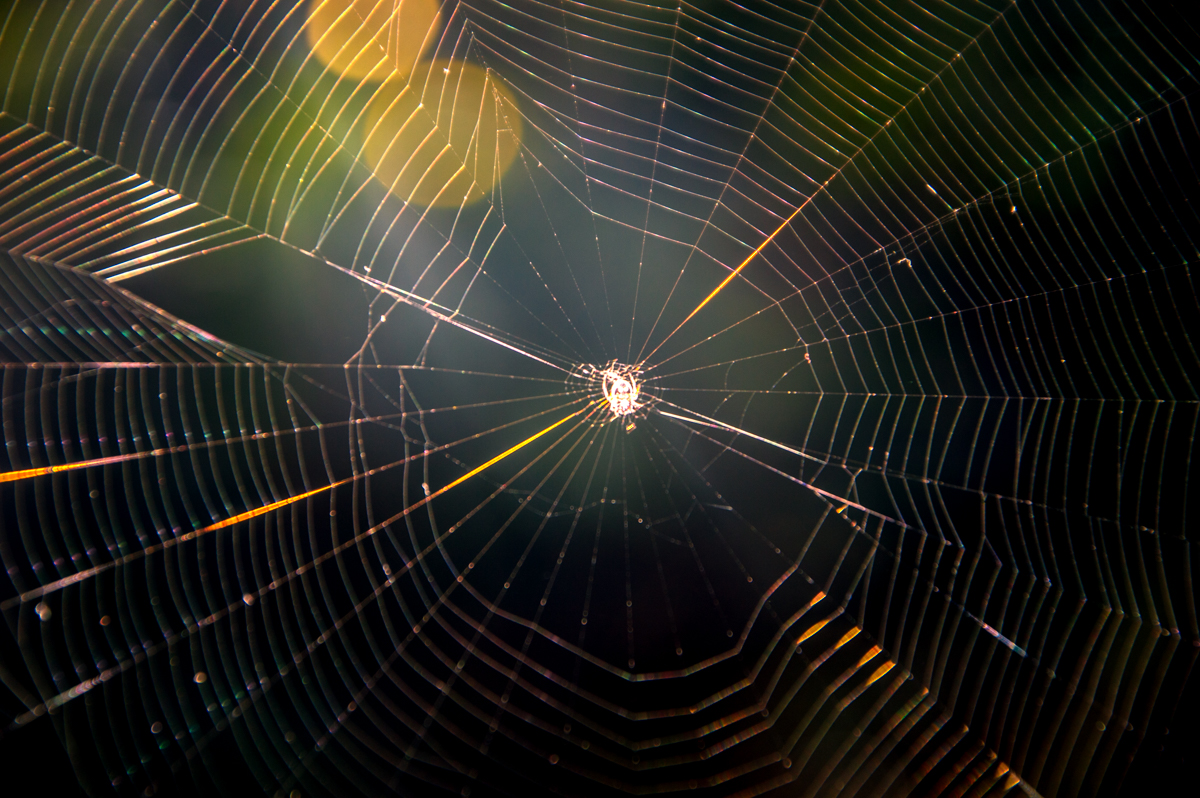
As for the maggots, they stopped bothering me. The composter was now a self enclosed eco-system. The compost pile was its earth. And a host of creatures grazed on its lands. With the plastic bag out of the way, the air around the compost became more breathable, and the fruit flies joined the maggots. Soon the land sprung shoots of large fungi, and even a sapling here and there. And the fungus gnats appeared. The maggots slowly reduced in number, as the competition for food grew. And then came the spiders – the top of the food chain, preying upon the insects.
All the while the kitchen waste continued to reduce. What was first green, yellow and purple slowly turned a rich, dark brown colour, and it smelt sweet – like Mother Nature.
Minha stood in front of me. Surrounded by her parents, and standing close to her baby brother’s pram, she waited in anticipation for the writer who had written her favourite story. In her arms was a colourful hard-bound book, eagerly waiting for Mussourie’s most famous resident to sign it for her. She held it close to her, as if she wanted to hug every word within its pages.
She wasn’t alone.
When we arrived at the book shop, an hour ahead of scheduled time, the queue was already 15 people long. It was the Saturday before Easter, and the hill-town was brimming with tourists from all over the country, and the world.
“We were planning to return to Delhi by 10 this morning,” said Minha’s mother. “But this little one was quite insistent upon meeting Ruskin Bond. And so, here we are.”
“If we wouldn’t have lingered on at the restaurant for the second parantha, we’d have been at the beginning of the queue,” Minha’s father playfully teased her.
“Minha read this story, The Cherry Tree. And in it, she read that Ruskin Bond lives in Mussourie. She’s been wanting to meet him ever since.”
Ruskin Bond planted his Cherry Tree several decades ago. As it grew, it delighted him. He shared his delight with his readers, and they loved every word of it. His words delighted me. And they continue to delight young readers like Minha.
In that little girl standing in front of me, I saw a reflection of myself. I must have been about her age too, when I harboured the dream of meeting Mr. Bond, because of those lines in every book I read, “He now lives with his adopted family in Landour, Mussourie.”
But my reflection ended at precisely 3:30 pm, just as a vehicle pulled up beside us. Even as Minha’s mother excitedly pulled out her phone to snap a close-up picture of the writer now amidst us, I stood dumbstruck.
He waved and acknowledged his fans and then disappeared into the bookshop. Minha had the biggest smile on her face, as she peered into her mother’s phone. Her mother, in turn looked at me with excitement, and then exclaimed, “Oh come on! Don’t cry, yaar!”
Tears rolling down my cheeks, I tried to hide my face from the young girl. “Keep it together, there’s a little girl in front of you – what will she think,” I repeatedly told myself. Minha smiled innocently, but something told me she wasn’t judging me. And I silently thanked her for it.
Within a few short minutes, my twenty-year old wait ended.
“I remember this… It’s one of the earlier covers.”
In Mr. Bond’s hands was my favourite book – which had been in our house ever since I can remember.
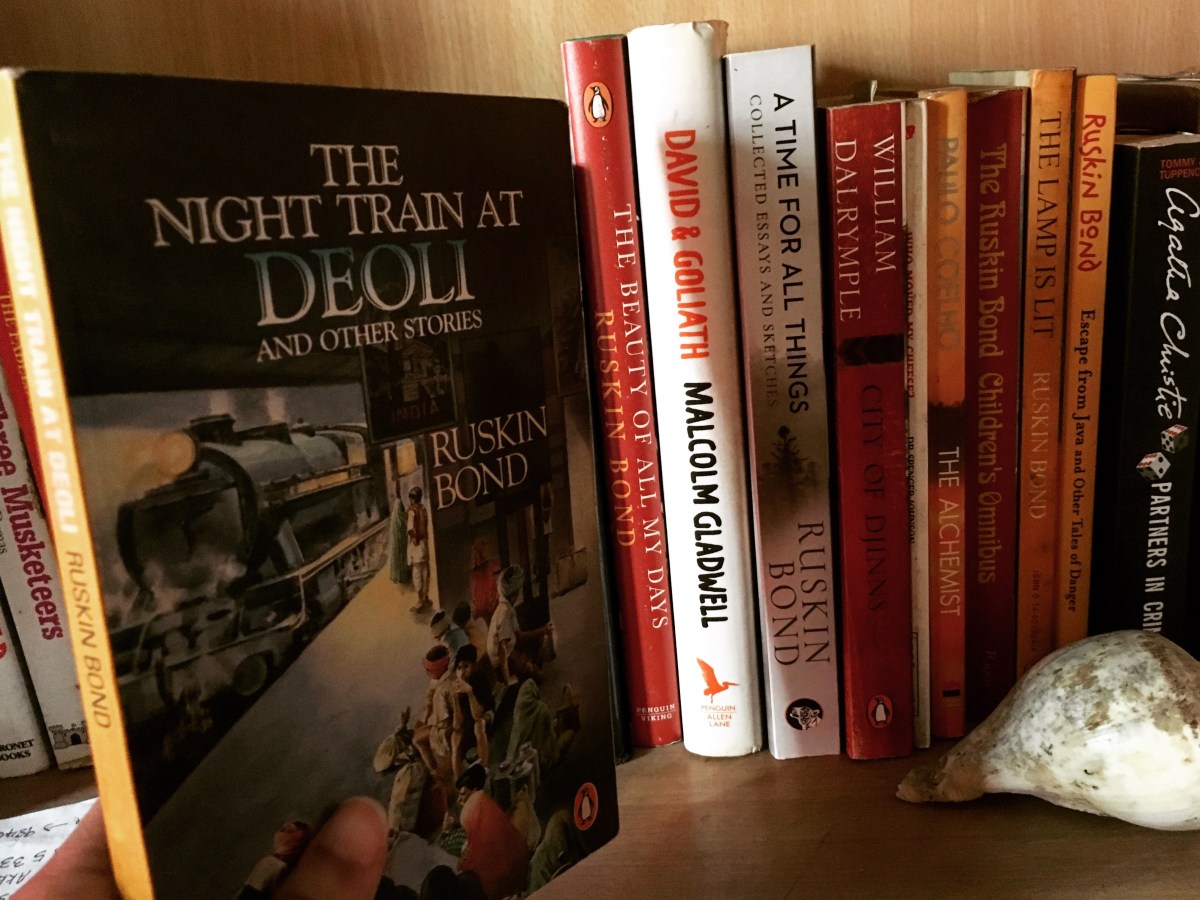
For over twenty years, it has been my dream to meet Mr. Ruskin Bond, to tell him how much his writing has meant to me; how I read and reread the stories in the book “The night train at Deoli”.
And yet, when the time came to express my sheer joy and excitement at meeting my hero, I struggled to contain my tears. I simultaneously smiled and choked. Eventually I stammered the words, “this book is as old as I am.”
Mr. Bond held the book; my book; my family’s book; his book. He recognised the old cover and said, “You have preserved it well.”
After he had signed the book, I meekly placed the other old book I had brought with me: The Children’s Omnibus. It was one of the first books I asked my parents to buy for me, when I was about 10 years old. And I remember the sequence of events surrounding that purchase: the Scholastic mail order form, choosing the books, the anticipation, and receiving the books in class.
Mr. Bond pointed to his portrait on the yellowing cover of the book and said, “I was much slimmer then!” And then we burst out laughing. I felt a little bit at ease.
There was a long queue of fans waiting to get their turn. I couldn’t hog his time for long. Mr. Bond returned the signed books and said, “I can’t initial or write messages…” I would like to believe he wanted to write me a comforting message. I’ll never know.
That night I cried my heart out. And continue to cry every time I think about it – even now. I cannot explain these fits of crying – except perhaps as an indication of immeasurable joy, that is too much to comprehend without being overwhelmed.
But I also wonder, are these tears of regret? The things I wish I had spoken about – how much I adored his stories; how much his style of writing influenced me; how, like him, I loved nature, and walking, and collecting feathers and stones and coins and seashells… instead I stammered and stuttered.
Today, as Mr. Bond turns eighty five years young, he is launching yet another book. The whole town will, no doubt, be there to wish him. I wonder, if I were there today, would I be able express my gratitude to him? Highly unlikely.
“Mommy, mommy!” The little bug ran towards her mother.
“I’m not going foraging!” she cried.
“Budku! What have you told Chitkoo now?”
Budku chuckled to himself and flew swiftly away from his mother.
“Mommy! Budku says there are spiders out there! And they chase gnats into their silk traps! Is it true?”
Mommy bug let out a deep sigh. Budku had always been mischievous. But this time, he had been partially right.
“Come here, sweetie… don’t think too much about it… It’s too early to be thinking about foraging.”
Chitkoo hugged her mother and calmed down.
Mommy bug glared at Budku as he peeped from behind the fungus, even as she kept Chitkoo close to her. There were spiders, yes. But Chitkoo was in deeper danger at home than out there. Just yesterday she had spotted a web close to their home. It was Budku’s first day learning to fly, and he’d had quite the adventure.
“Out there, is a wonderland, my dear.” Mommy bug said softly.
“In a few days you’ll be ready to start flying on your own. And it will be fun. There are peels of fruits and vegetables all over the ground. And there are fungi. So many different types than the ones near our home. And there are seeds too. They are much harder to forage, but they are the ones that have the most goodness – the reward is worth the effort.”
“Yeah, and there are fruit flies,” added Budku. Mommy bug’s glare had had its effect. Budku changed his tone.
“They’re just the cutest – brown and round, floating slowly. You’ll really get along very well with them.”
“What about spiders?” Chitkoo asked, without looking around.
Mommy bug sighed. “Yes, dear. There are spiders,” she replied.
“But they are fewer than us gnats and flies. And they can’t fly. No! They crawl and spin webs, but we have wings and we can fly. Budku was chased by one today. And he was so scared. But he flew away. And you will learn to navigate the alleys.”
Mommy bug didn’t dare tell Chitkoo about how close Budku was to being spider-meal. But Chitkoo would have to fend for herself. Spiders weren’t the only threat.
Chitkoo looked up and caught her mother’s glare. She turned around to see her brother sitting next to the fungus. He loved fungus, and was always nibbling at it. But today he just sat there, too scared of his mother to even look at the white goodie.
Above the ground, the other gnats and flies were busy going about their foraging, when the heavens above opened up. “Giant alert! Giant alert!”
Bright light filled the the sky, and it began raining. The gnats and flies flew, as far apart as they could. The spiders ran for their lives. The giants were notorious for squishing the spiders, purely for game, it seemed. They sure didn’t eat the spiders.
It was all over in a few minutes. As it always did. The rains were always heavy, and buried the slower flies and gnats. But once the sky closed back, it was a feast. A fresh pile of food, and the spiders away for some time.
“Why can’t I have green fingers?” I asked my unsuspecting friend, one day.
“It seems everything I plant just refuses to grow. Everyone in my family has green thumbs. Why am I not able to grow even the easiest of plants?”
“Oh, is that all?” said my friend. “Don’t worry. One day, you and I will sit together and draw a big green thumb!”
I eventually married my reassuring friend. And sure enough, we began growing a few plants, most of which survived! One of my wishes had been fulfilled. But in my heart, I knew there was only one way my garden could be complete. If only we had a real garden.
A real garden, to me, was what my grandmother had at their house on the outskirts of Chennai – a lawn in the front, with three hibiscus trees, a car shed with a guava tree as a roof. Papaya on one side of the house, bananas on the other. The mango and lemon trees were in the backyard. There was even a pineapple plant, and two coconut palms – my father had brought coconut sprouts all the way from the Andaman Islands. There were numerous flowering plants and cacti too.
Almost every time that we’d visit, we’d carry a pineapple, mango, coconut or some lemons back home. Once, I saw my grandfather climb up a tall stool to harvest a bunch of bananas, while I stood nervously on the ground praying for his safety.
Having lived in apartments all my life, I had made peace with the fact that we probably wouldn’t be able to have that sort of an area for growing plants. But the one thing that completed the garden, was a compost pile.
At a very early age, we were initiated into composting by my grandmother. There was always a separate bin for kitchen waste, which she’d dump into the pit in the backyard, near the fence.
Back home, my mother did what she could, to use the kitchen waste for the flowerpots – the coffee grounds and tea leaves almost always ended up going to the flowerpots in the balcony. And that was the closest, I thought, that we could get to reusing kitchen waste. Up until recently, that is.
“What are you doing?” I asked my father-in-law. He looked mischievously at me, and picked up the screw driver from the kitchen.
My father-in-law, I found out soon after I got married, loved plants. Our garden was minuscule compared to his large terrace garden. And when he first saw the small take-out containers I had re-purposed into planters, he remarked. “They need a bigger area to grow roots! These are too small!”
Perhaps he saw potential in the garden, or recognised our shared love for plants – he quickly warmed up to the idea of a small garden. He procured a few more plants and helped grow the garden – even helping me repurpose more food containers!
It wasn’t unusual for him to tinker around with the plants. But on this particular day, he busied himself with something new.







 Musings of an eccentric mind