Categories
Musings

Finding Joy in Digital Decluttering


In the very first company I worked for, I had a colleague who was obsessed with a clean inbox. Only things that need immediate attention should remain in the inbox, he explained to me. The rest should either be archived or deleted. He mercilessly deleted emails even as he spoke. I was shocked.

The Hoarder’s Dilemma

In school, our teacher encouraged us to keep newspaper clippings of things that interested us. It was a fun activity, and I retained those notebooks long after I’d completed my schooling. Recently, as I was clearing out an old shelf, I discovered these notebooks, the newspaper clippings now yellow, and some of them quite amusing. I thanked my younger self for keeping them.

Over the years, I’ve kept things for posterity. Some of them are reminders of good times. Like tickets to the Davis Cup match from 2005, and the tennis ball that a player lobbed into the crowd after winning her match during the Commonwealth Games in 2010.

A tennis ball, along with tickets to a Davis Cup match from 2005 and the Commonwealth Games in 2010.

Then there are mundane, but important things—payment receipts, warranty cards, service contracts…

Every once in a while, we review what we keep and what we discard. Such cleaning is necessary in households where space is finite. The old must make way for the new. What was relevant once may now be better dispatched to the kabaadiwaala (scrap dealer) for recycling.

For sentimental folks like us, this sort of cleaning can become challenging. For example, when I discovered a yellowing piece of paper with some handwritten Tamil script, I couldn’t bring myself to discard it—perhaps it had been written by one of my grandparents. That paper magically made me feel connected with them. I gently blew the dust away from the paper and filed it away.

I did manage to locate some things I could throw away, but not before I took pictures of the items I was discarding.
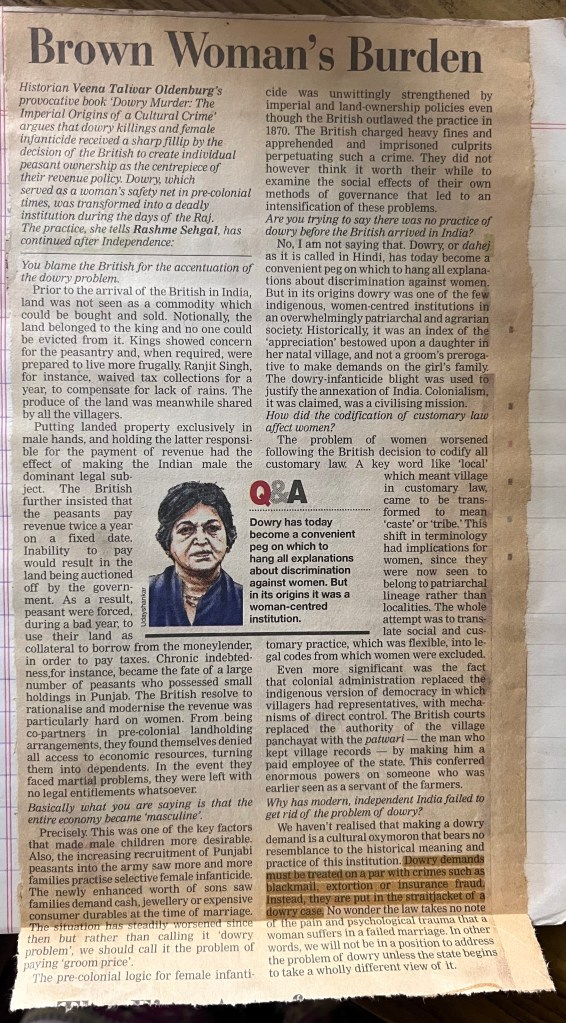
An old newspaper clipping from my school notebook. The article, “Brown Woman’s Burden”, is from The Times of India, dated 30 Jan 2003. If you’re interested, you can read the digital version of this clipping on the TOI website’s archive.

Then: Lost and Found

Back in the day, it was easy to lose things. Photographs, phone numbers, notebooks, drawings, clothes. They could get damaged during relocation, be eaten by insects, or simply be carried away by the wind. We’d feel sad for a while. But then we’d find ways to fill in the void. We could make new memories or connect with mutual friends to catch hold of lost ones. Our minds were as new and fresh as our cupboards.

And then there was the hidden joy of rediscovering items while decluttering.

Now: Never Lost, Never Found

With digital storage, however, things are different. We don’t lose things anymore. Things stay with us forever. And we never go back to look for anything either. Our virtual shelves barely distinguish between the old and the new.

We’re no longer limited to the 36 photographs of a reel. So we take hundreds of them that we otherwise may not have bothered with in another time. Case in point: the picture of the newspaper clipping above. While we occasionally flip past the old physical albums at home, when was the last time any of us looked at our digital photographs from 5 years ago?

Our phone books never get filled, so we don’t migrate to a new one. Thus, we don’t need to weed out irrelevant numbers with the fresh book. Why are there so many people in my contacts list?

We don’t bother with our personal emails. They are far too overwhelming to look into.

We gather virtual items—sometimes consciously, but mostly without paying much attention. They don’t take up physical space in our homes. So our hands aren’t forced into taking action to routinely prune what we own. But they do take up space in some remote server, guzzling electricity to keep our trash alive.

Digital Declutter Mode Activated

Over the past few years, my inbox has been warning me that my space is about to run out. Finally! There is now an incentive to do some digital housekeeping.

Why do I have so much stuff in my inbox? And why should I have to pay to keep all that trash? And so, I began on a slow marathon to actively make space. I recalled how a dozen years ago, my colleague ruthlessly cleaned his work email. And I went to work.

Over the past several months, I’ve been rummaging through my inboxes and taking split-second decisions on what deserves to remain as an archive and what needs to go. I started with the latest emails first. The earlier we take decisions on incoming traffic, the easier it becomes to maintain later on.

Happily, I have now found joy in this activity. Visiting my personal, spam and notification-filled inbox has now become quite a satisfactory pastime. Seeing the number on the notifications badge reduce feels like a game.

Where once, my screentime was dominated by social media algorithms and games, I now spend some swiping left to delete, or discovering interesting reads.

I began with 8000+ unread emails across all my inboxes. Today, I’m looking at less than 500 on the tiny badge on the email app. My ultimate goal is to come down to as few unread emails as possible, deleting them as I finish reading them.

Levelling Up: Discovering A Forgotten Civilisation

Having managed to declutter two lesser-used inboxes, I have now begun exploring the archives to see what else I can clear out. Much like physical decluttering, digging through the archives unearthed curious bits from a bygone era.
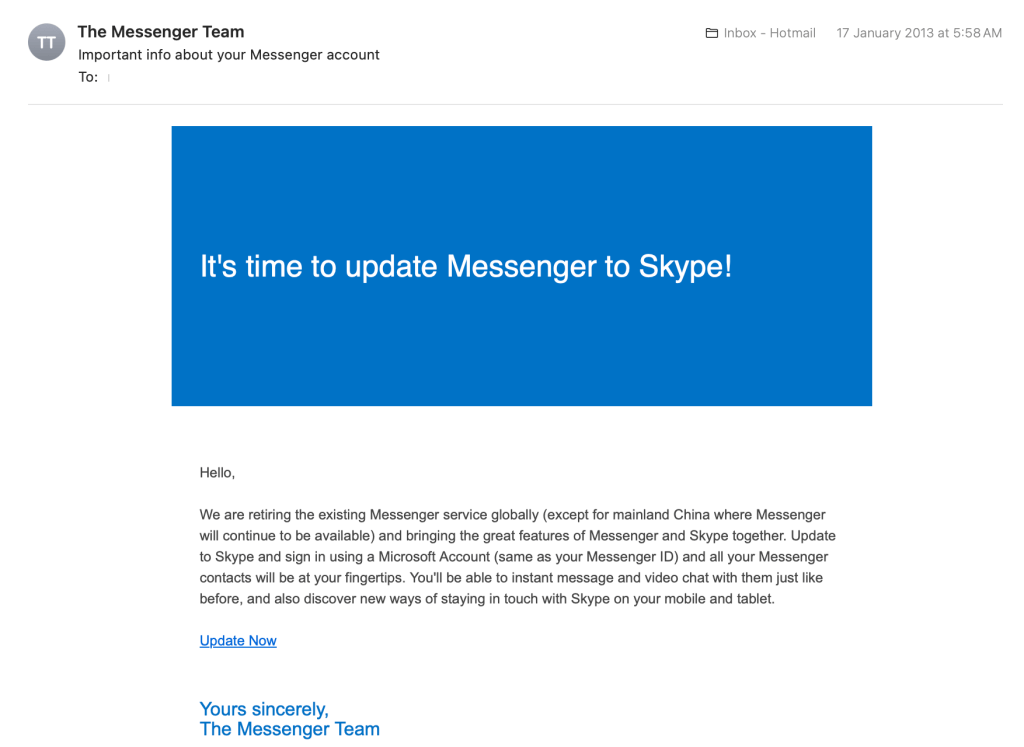
An email notification from Microsoft, encouraging users to switch from Messenger to Skype.

In early 2013, Microsoft sent me an email asking me to upgrade Messenger to Skype! I couldn’t help but smile. A dozen years later, Skype has now been replaced by Teams. It reminded me of the ephemeral nature of the digital world. When digital products can evolve and fade away, why should we hold on to clutter? The verdict on the email: Delete.
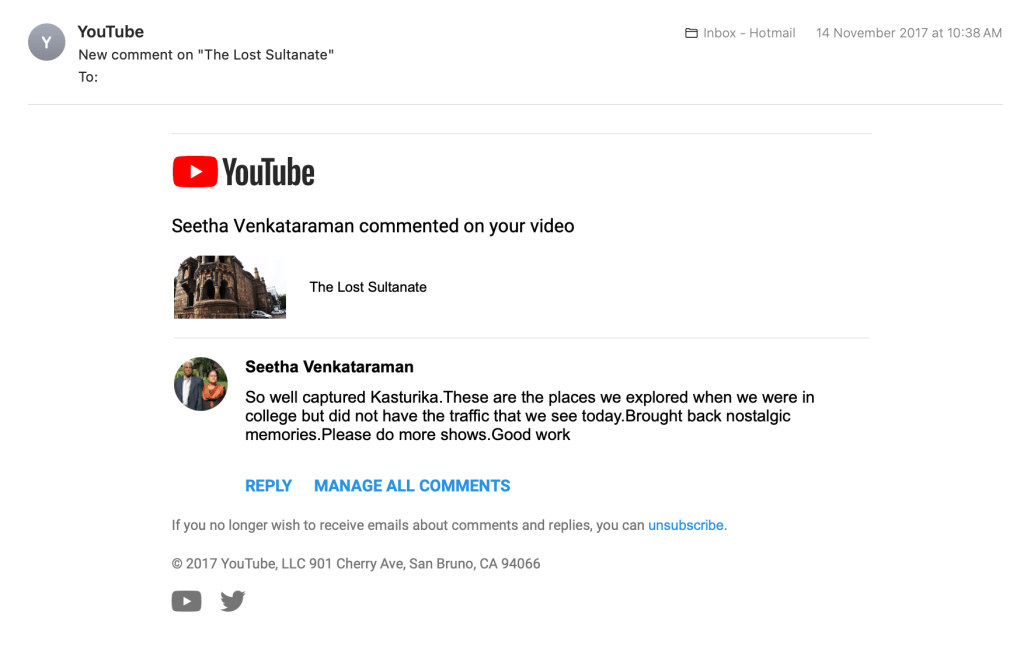
An email notification from YouTube about a new comment.
A comment on YouTube from 2017. The Lost Sultanate was a short documentary I’d made as a student in 2010.

I found a series of emails from YouTube, notifying me about comments on the videos I’d posted. I read and deleted them one by one. Until I stumbled into one from my late aunt. My aunt had been quite enthusiastic about my adventures in digital storytelling, always finding time to read my blog and watch the videos. That comment was a digital remnant of her constant encouragement and a reminder of the void in our lives since her passing. The verdict on this one: Keep.
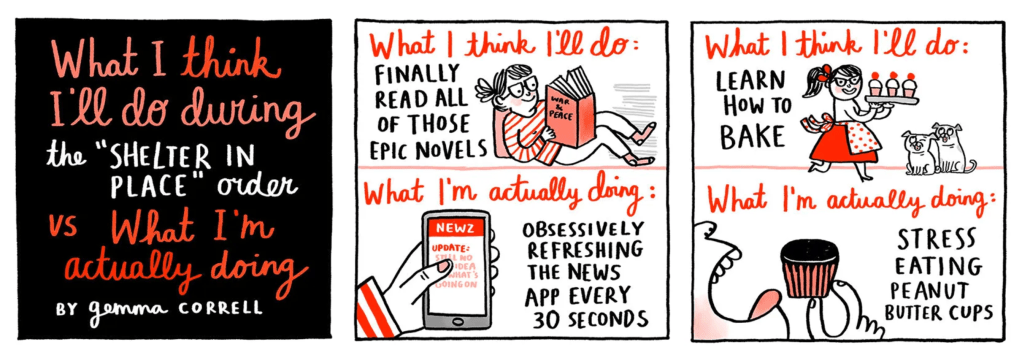
Panel of graphics from a comic strip titled: What I think I'll do during the "Shelter in place" order vs what I'm actually doing. One panel reads: What I think I'll do—Finally read all of those epic novels. What I'm actually doing—Obsessively refreshing the news app every 30 seconds. The second panel reads: What I think I'll do—Learn how to bake. What I'm actually doing—Stress eating peanut butter cups.
A comic strip by Gemma Correll during the initial days of the COVID-19 pandemic. To see the whole panel, visit The Nib’s publication on Medium.

Ever since I began this trip down my archives, I’ve encountered surprises. I rediscovered publications I’d forgotten (like The Nib), and email courses I’d signed up for years ago, but never got around to reading (example: a course from the now non-existent InVision).

My inbox feels like a wonderland again. Every trip feels like an adventure. What other surprises hide inside my archives? I can’t wait to (re)discover.


You can watch the documentary, The Lost Sultanate, on YouTube.

I wrote about the struggles of making the video, The Lost Sultanate in Getting the monkey off my back.

Categories
Musings

The Language Wars


When we were in school, we were taught 2 languages till the fifth grade. Those were English and Hindi.

In middle school, from sixth to eighth, we were introduced to a third language—Sanskrit. In the ninth and tenth grade, we were allowed to choose between the second and third languages, so that we only had two, and in the eleventh and twelfth grade, we were left with just one—the medium of instruction, English.

Coming from a Tambrahm family, I struggled with Hindi. So when the time came to choose, I picked Sanskrit. Sanskrit had logic and made sense. Hindi was just too arbitrary and if you weren’t a native speaker, it was virtually impossible to grasp. Besides, I was waking up to MS Subbulakshmi’s renditions every Sunday. At least I could now start to understand what it was that I was listening to.

A few of my peers switched schools during that time and I learned that the fancy schools offered French and Spanish instead of Sanskrit.

Years later, during a casual conversation with a colleague, the topic of languages came up. I mentioned something along the lines of how unpatriotic it was for those schools to not teach Sanskrit, and instead, teach a foreign language.

My colleague calmly replied, that if he had that choice, he’d also get his daughters to learn a foreign language. I stared at him in horror. And he said, it’s just practical. What use is Sanskrit to anyone?

It took some time, but it finally dawned on me, how near-sighted I was. I felt betrayed that someone would call Sanskrit a useless language. But my ideologically-coloured vision had missed the point entirely.

The Sanskrit we learned in school was entirely based on rote. Could any of us genuinely hold an impromptu conversation or pick up the Vedas and understand a verse, let alone appreciate the poetry and wisdom? Sanskrit is a beautiful and scientific language. And the literature—the wisdom of ancient scholars and philosophers—written in Sanskrit is phenomenal.

But few people can truly make use of it. Those who’re cleaver, neatly package a few select verses and profit from it—the masses couldn’t be none the wiser. And that’s what made learning Sanskrit useless. It wasn’t the language itself. It was the way it was taught, and the little practicality it offered in a land where people didn’t speak it at all.

Elsewhere in the country, Tamil Nadu has fought tooth and nail to keep Hindi out of its schools on ideological grounds. To a certain extent, I understand where that comes from.

Consider this. All languages are made up of the following:

  • form: the sounds (or alphabets), root words (eg, to write) and different versions of those words (eg wrote, written, writing).
  • content: how those words combine to create sentences (grammar).
  • use: how local usage and context varies from say, formal to casual or the use of metaphors and idioms to communicate ideas.

Side note: Language experts use the terms phonology, morphology, syntax, semantics and pragmatics to describe these. But I’m no language expert so the above components are my understanding/interpretation. I’ll be happy to fix it if I’m wrong. Please let me know in the comments.

On top of these, I’ll add script as the fourth element.

Hindi and Sanskrit share the same script and the same sounds. Since Hindi originated from a mixture of Sanskrit and Persian, many root words are the same. The grammatical rules are somewhat similar as well. Inspite of these commonalities, Sanskrit is hard for someone who knows Hindi!

I know this because in the ninth grade, only a quarter of the students in our school ever elected Sanskrit in the ninth grade, despite Sanskrit being an extremely scoring subject with a much simpler question paper. As I mentioned earlier, the Sanskrit we learned was introductory or juvenile, compared to the more advanced Hindi that students had to tackle in the same grade.

Now consider someone who has to learn a language that doesn’t share anything in common with their native language. New sounds, new script, different grammar. That’s what someone from Tamil Nadu would face when learning Hindi as a third language. It puts students, who are already burdened with a highly competitive environment at a disadvantage. Perhaps, if North Indians chose to teach their children languages that didn’t use the Devnagari script, they’d be more empathetic.

The other ideological reason doing the rounds is the threat to Tamil culture, akin to an invasion by foreigners. I’m perhaps not the best person to weigh in on this argument because I didn’t grow up in Tamil Nadu. But as someone who hasn’t truly felt at home either in the north or the south, I may be in a unique position to offer an objective perspective.

The Imposition Angle

We complain about the British colonising India and nearly destroying us (their contribution to our conflicts is still actively destroying us from within).

The reason English is as common as it is today, is because a handful of foreigners imposed their culture on to the rest of the world. They just went everywhere and stayed, and forced locals to adapt to their ways.

Something similar is happening now, with a lot of migrants moving to the southern states. The southern states offer plenty of opportunities for those seeking work. Every time I visit Chennai, I see more and more North Indians and even Nepalis working in the service industry. Would it be fair to ask the local population to adapt to the migrants?

Indians bend over backwards to learn French and German in search of opportunities. Can we not offer the same courtesy and respect to our fellow brothers and sisters?

Indeed, while many city-dwelling North Indians complain of Tamil being a difficult language, the service industry workers—who hail from small towns and villages—pick up the language fairly well. The white-collared folks manage to get by with English, not even bothering to learn Tamil. On the other hand, I was pleasantly surprised to hear many of service providers in shops and restaurants speak decent Tamil.

On the flip side, just as North Indians barely understand classical Sanskrit literature, I wonder how well do Tamilians understand classical Tamil literature—which is as vast and rich and old as Sanskrit literature. And Hindi or n Hindi, spoken, practical Tamil is very different to the language of the great Sangam Epics and the Thirukkural.

The Diversified Angle

I grew up in a cosmopolitan environment, safely insulated from the politics of religion and caste. That’s a luxury a defense service officer’s (fauji) family gets. A luxury I didn’t know I had, until it was gone.

My school had students from all over the country and from different castes. And none of us knew the difference. But the one thing we did know, was which state we belonged to, and the languages we spoke. Language is a critical aspect of our identity and culture.

There’s a bit of a stereotype about Tamilians and Malayalis being particularly good at maths and science and Bengalis as being good at arts. And none of us good at Hindi! That stereotype did play out a fair bit in our school too.

My struggles with Hindi were shared by others. But that didn’t particularly hurt anyone socially. Perhaps interacting with people from different cultures at a young age gave us a broader perspective. We learned to appreciate each other’s strengths instead of ostracising anyone based on their community. Perhaps there wasn’t a mob or majoritarian mentality because—to borrow an investment advisor’s phrase—we were so well diversified.

I wish everyone in our country had that sort of upbringing. When my father eventually retired from the Navy, reality hit hard. Having grown up in our little bubble, I learned much later that everyone else grew up in their own little bubble—albeit a homogeneous one. My struggles with Hindi today pale in comparison with my struggles with understanding how so many Indians are ignorant and unwilling to accept differences.

Advantage: Multilingual

Language shapes our world view. As some studies suggest, there are communities that simply do not see the certain colours, because no word for it exists in their language. Similarly, I have heard about umami, but I have no idea what it tastes like. MSG is tasteless to me.

Tamil has a particular word called “thuvarppu” (துவர்ப்பு) which considered one of 6 tastes (the others being sweet, salty, sour, bitter and pungent). It translates to “astringent” in English, but I don’t know if the larger word treats astringency as a taste, or as an unpleasant feeling. Until I began writing this post, I didn’t know it had a Hindi equivalent, because no one really uses that phrase.

Research suggests that multilingual children tend to develop better cognitive abilities than monolinguals—and given these other examples of how language shapes our worldview, it makes sense. Multilinguals experience more nuances of the world. This is why teaching multiple languages at a younger age is advocated.

There isn’t much research on whether being trilingual is more beneficial than being just bilingual, but if those school stereotypes showed anything, it was that the multilingual kids tended to be at the top of the class.

There are plenty of trilingual countries, where people are fluent in three languages, and I don’t see one language replacing another—unless it is done so with that specific intent, as the British did. And even then, it’s likely that most of us who are brought up in the English-speaking system probably do not know how to pronounce “W”.

There are allegations that highway signboards have been removing Tamil names and replacing them with Hindi ones. If true, that certainly is colonial.

I don’t know if Hindi or Sanskrit will eventually be taught in Tamil Nadu. Perhaps it will be as juvenile as the Sanskrit that’s taught in the North. But if it is, it might provide Tamilians a greater edge in their professional life.

I certainly attribute my professional success to my multilingual upbringing (as well as sound grounding in classical music, but more on that in another post). I see problems differently and can connect dots that others miss. This has won me clients through word of mouth alone.

I am, today, fairly fluent in Hindi—I dare say, even better than native speakers. I only wish I were as fluent in my native language. Having grown up in the North, interacting with my grandmother in Tamil is the only reason I can now still understand and perhaps even survive in Tamil Nadu. But I wish I’d learned it more formally.

The three language policy gives North Indians an opportunity to learn a third language and broader their children’s horizons.

It gives children of migrants an opportunity to connect with their roots—an opportunity I didn’t have.

The question now is whether North Indians will be willing to take that challenge, or cop out and stick with Sanskrit.


Meanwhile, I’m trying to learn Spanish on Duolingo, and that’s revealed a thing or two about what practical, living languages are about. Read more here.

Categories
Hobbies Musings

I’ve Been Around the “W”


I’ve been speaking English my whole life. But it wasn’t until recently that I realised that I cannot pronounce the letter “w.”

The ghost of YouTube algorithms once suggested a short video from a Vietnamese woman who now lives in Germany. Uyen Ninh‘s videos poke fun at the cultural differences between Germans and Vietnamese, and through her perspective, I’ve learned that Indians and Vietnamese have a lot in common.

Scrolling through the comments section of the videos, I learnt that people and cultures around the world have remarkably similar belief systems.

It was in one of these videos that I heard her German partner exclaim, “I cannot pronounce ‘W’!” As with most of her videos, I scrolled through the comments section. Many people agreed, and understood that non-English speakers pronounced the first syllable of “Valley” like “Wallet”. And that’s when I realised I couldn’t tell the difference.

A Medley of Languages

At home, my grandmother spoke to me in Tamil. So whatever little Tamil I now know is thanks to her. My parents alternated between Tamil and English. And growing up in Delhi Cantonment, I was surrounded by people who spoke English fluently. Hindi, however, was a very different ball game. I struggled terribly and couldn’t wait till I reached the ninth grade, when I was allowed to drop Hindi from my curriculum and elect Sanskrit as my second language. In a TamBrahm household, Sanskrit is much easier than Hindi!

Eventually, though, I had to move out of this bubble. What my school couldn’t teach me, interacting with (and getting married!) outside my community, did. My only regret is not knowing my own mother tongue Tamil very well, especially reading and writing. So whenever someone in a family WhatsApp group types in Tamil, I try my best to read it—it takes forever, but that’s about the only way to stay connected to my roots.

I find Uyen’s playful skits on living with cultural differences extremely relatable. Everyday decisions like what to eat, what to wear, how to talk and how to celebrate festivals becomes tricky. However, Uyen reminds me that my struggles are tiny compared to hers!

Let’s get back to the “W” that Uyen’s German partner couldn’t pronounce. I did what anyone else would do and searched online. Here’s what an AI generated response told me:

The key difference between the sounds represented by “v” and “w” lies in their articulation: “v” is a voiced labiodental fricative (bottom lip lightly touches top teeth), while “w” is a voiced bilabial approximant (lips rounded and slightly protruded). 

I stared hard at this explanation, and tried to say ‘V’ and ‘W’ a few times. Wait. How does one say ‘w’? When we learn the English alphabet, w is pronounced “double u.” How on earth are we to know how to pronounce it? So I tried a few words that started with ‘w’. I tried listening to the sounds on the internet, but they sounded the same as ‘v’! So, I gave up. As long as the person I was talking with knew what I was saying, how did it matter whether my lip touched my tooth or not!

The key here is that these letters sounded the same to me, but not to a native speaker. This is perhaps how most of the world feels when they hear sounds like ‘zh’ that are exclusive to Malayalam and Tamil (well, technically, it’s Tamizh). My husband tries hard to learn the sound, but he eventually ends up saying ‘ra’ instead. For reference, here’s what it sounds like:

Each language has its idiosyncrasies. A family of languages tends to share some similarities. But what if your native language is entirely different from someone else’s?

Someone who understands Hindi will probably be able to grasp 20-30% of Bengali or Punjabi, since they originate from Sanskrit. Tamizh, a Dravidian language is said to have completely different roots.

That Tamizh and Hindi have very little in common is something I can attest to. Hindi was (and still is) hard. The grammar and the script is completely different from English and Tamizh.

Learning a New Language

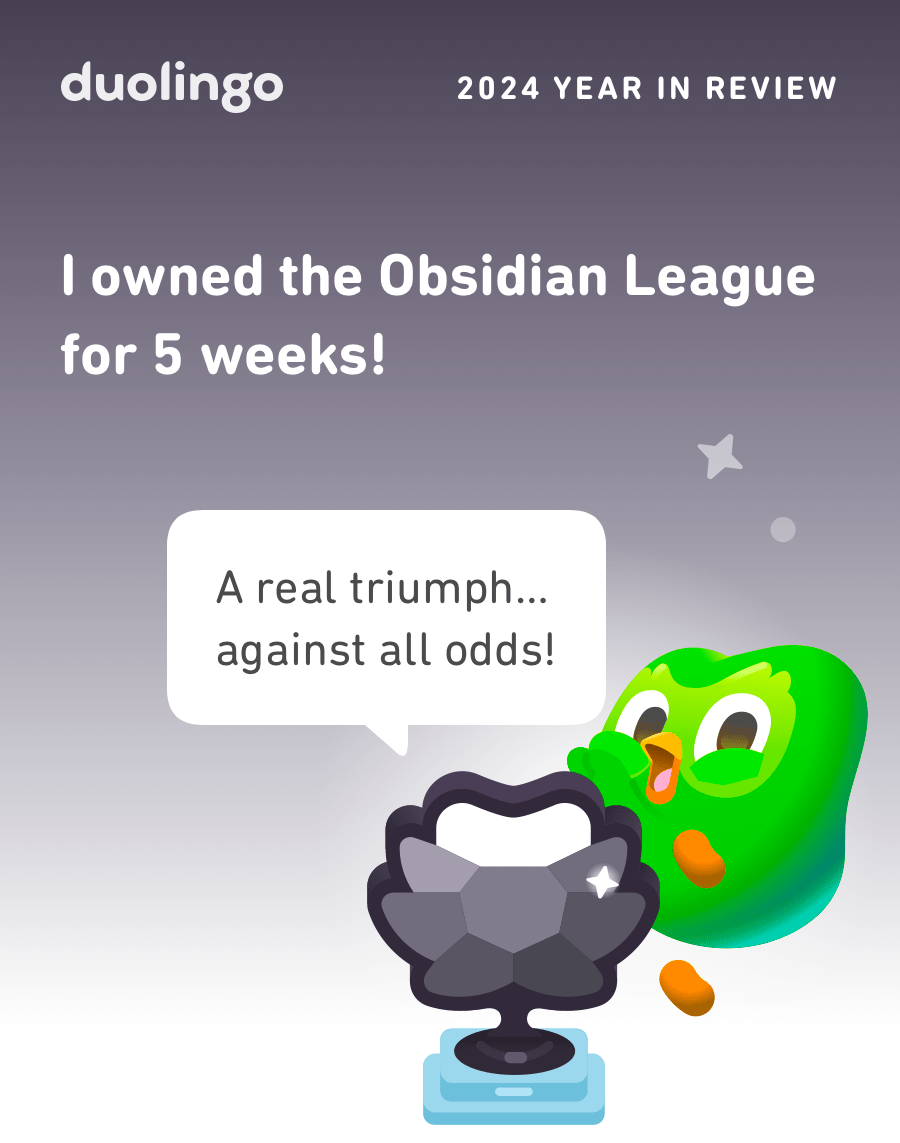
A little under a year ago, I began learning Spanish on Duolingo, quite by accident. One of my clients told me Duolingo had a great onboarding experience, and so, out of curiosity, I signed up. The app made learning Spanish fun, and I got hooked. As of today, I’m on a 332 day streak. What can I say, that owl is persuasive!

What’s more, I found Spanish fairly easy. For starters, the script is the same as English. The only difference lies in the accents that I’m still trying to figure out. But unlike English, it is phonetic, so pronunciation is a breeze. And the best part, no need to worry about w, or even k!

English, Hindi and Tamizh have very different grammar rules and scripts. Each also has different sets of sounds, not found in the other language, giving a multilingual person like me an edge while learning a new language. Apart from sounds, it also offers a broader vocabulary to refer to, to form connections.

Many English words are the same in Spanish, with the addition of suffixes. For example:

  • Usually becomes ususalmente, normally becomes normalmente.
  • Fantastic is fantastico, perfect becomes perfecto, rapid becomes rapido.

As for inanimate objects having a gender, that’s there in Hindi too. In fact, some words in Spanish are nearly identical to Hindi/Sanskrit, including the gender:

  • Table (English) = Mesa (Spanish) = Mez (Hindi)
  • Shirt (English) = Camisa (Spanish) = Kamiz
  • Room (English) = Sala (Spanish) = Shala (Sanskrit/Hindi)
  • Orange (English) = Naranja (Spanish) = Naranga (Sanskrit)

And, I recently found out the word for rice (arroz) comes from the Tamil word arisi.

The Spanish consonant ñ exists in Sanskrit/Hindi and Tamil.

I’m sure if we dig further there will be other similarities.

Finding Common Ground

There is a lot of ongoing debate about which language is older, Sanskrit or Tamizh. As this fascinating video from Storytrails points out, that question is often seen from an ideological lens.

When it comes to culture, everyone wants to be the oldest! It seems to be some sort of ego-massage to claim that something came first. But honestly, who cares? If anything, a language that’s extremely old is likely dead. That we speak English—a language that has constantly evolved and incorporated words from several languages is proof that to be relevant, it must work. The idea of language is, after all, to communicate.

Language and culture cannot exist in isolation. If we must go back in time, then we must also go back to a time when people exchanged and adopted ideas. The similarities we find today between different cultures is because of ancient trade. Ironically, in a globalised world we’re increasingly becoming resistant to such evolution.

A few months ago, we visited Mexico and I tried to practice some words at the resort we stayed in. The locals were extremely appreciative of the effort I was putting in and encourage me to speak. It turned out, many of them were learning English on Duolingo too!

It will be quite a while before I can get truly fluent in Spanish—that would need real world practice, but for now, I am happy discovering the surprising similarities between languages and cultures around the world. (Apparently there is a lot of similarity between Tamil and Korean!)

Categories
Musings

Sweeping Statement


Walking on the streets of Delhi in the morning, there is a cloud of dust in the distance.

I am on my way to office. A few drivers are wiping away the last few drops of water off the cars. The owners will be out in a few minutes–the early birds who want to beat the office rush.

As I walk towards the dusty path, the outline of a broom wielding person emerges.

Swoosh!

A kerchief over his mouth, a swafa around his neck—beads of sweat, if any, have been hidden under filth.

As I approach, he stops. He waits for me to pass, and then continues to clean up the mess created by fellow humans the day before.

Since the time I can remember, workers like these have worked tirelessly to keep the streets clean. I don’t know who employs them. We’ve not paid them for their services—unless one of them comes to collect bakshish or chanda after Holi and Diwali.

A car passes by me. An empty bag of chips comes flying out. Further ahead, a man casually spits on the road.

We’re supposed to be on a mission to clean up the country. I wonder what these sweepers who’ve been cleaning this urban city for years would have to say about this mission.


Here’s wishing you a happy and colourful Holi!

We’ll set aside a few Gujiyas for our cleaning staff when they clean up after our festivities tomorrow morning.

Categories
Musings

One More Thing…


How do you do it?

How do you manage to read all those tweets, post comments on YouTube, react to Instagram stories, finish the long reads on Medium and WordPress and catch up with emails? All while having a day job, socialising with friends, managing a decent workout and being up to date with current affairs and pop-culture.

I know I can’t.

I was a very, very late adopter of social media, primarily because I felt it was meant for lesser mortals, those who indulged in gossip. The narcissist that I am, I didn’t quite care about what other people did around me. I only wanted to write and share my thoughts to as wide an audience as I could.

I sceptically joined Facebook in mid 2013. And it wasn’t till 2017 that I joined Instagram. These occasions were so significant, that I wrote blog posts to confess about these mis-adventures. The only reason I have a Twitter account (I don’t care what they call it now, but I refuse to call it by any other name) is because my employer demanded I create one. Without that coercion, I would probably not have created it in 2014.

Then there’s LinkedIn, Flickr, Pinterest, YouTube, Behance… the list is far, far too long.

Over the years, I have tried to keep up with these services in patches and failed. I wonder how other people do it. And it bothers me that I am so digitally incompetent. I am everywhere, and yet, nowhere. At any given point of time, I can keep up with only one service. Everyone else is active everywhere.

When I think about all the different services that aim to ‘connect’ us in the world, all I see is this relentless barrage of information, and how miserable it makes me feel.

One More Thing

In 2019, I tried an experiment. I called it, the “Reverse Social Media.” I wanted to stop using social media, and instead focus on creating a community. I’d send out emails to people so that we could start one-on-one conversations. Needless to say, that experiment failed. I had ended up creating yet another digital footprint that I couldn’t manage. If you’re interested, you can find the archives of this experiment on Design Tuesdays.

In these first two decades of the twenty-first century, a certain Mr. Jobs made a catchphrase his own. “One more thing…” he’d say, at the end of his keynote, and announce something new. Steve Jobs’ characteristic style of delivering keynotes even has a name: Stevenote!

A side note: To me, those words will always belong to Uncle from Jackie Chan Adventures. The series aired during a time when information wasn’t as free-flowing as it is today, and when tech was only for geeks. What use was a business presentation to a teenager? So please allow me to indulge myself with TV memories from the early 2000s.

Source: Imgur

With the newsletters, I had created Uncle’s one more thing. More recently, that one more thing is Threads, from Meta. Sure, I’ve ‘created’ the ghost account, but it holds no meaning for me. To me, it’s just another username that’s gathering virtual dust.

The Digital Cobwebs

Remember the old days when we had hard disks and had backups of folders and backups of backups? Ah, those were simpler times. Those hard disks are gathering dust in a shelf somewhere.

Our digital clutter, on the other hand, is invisible, but several times worse. This digital clutter that we’ve chosen to create haunts me. Over the past few years, I’ve lost very close loved ones. But their profiles show up in recommendation feeds on social media. I don’t want to tell these behemoth companies that those are my dead relatives. The large tech companies have no business knowing this private information. But, at the same time, I don’t want their click-hungry algorithms to be so insensitive.

In my curiosity to explore the internet, I wonder how far my own footprint has landed. Who has my email address? Which database has a username attached to me?

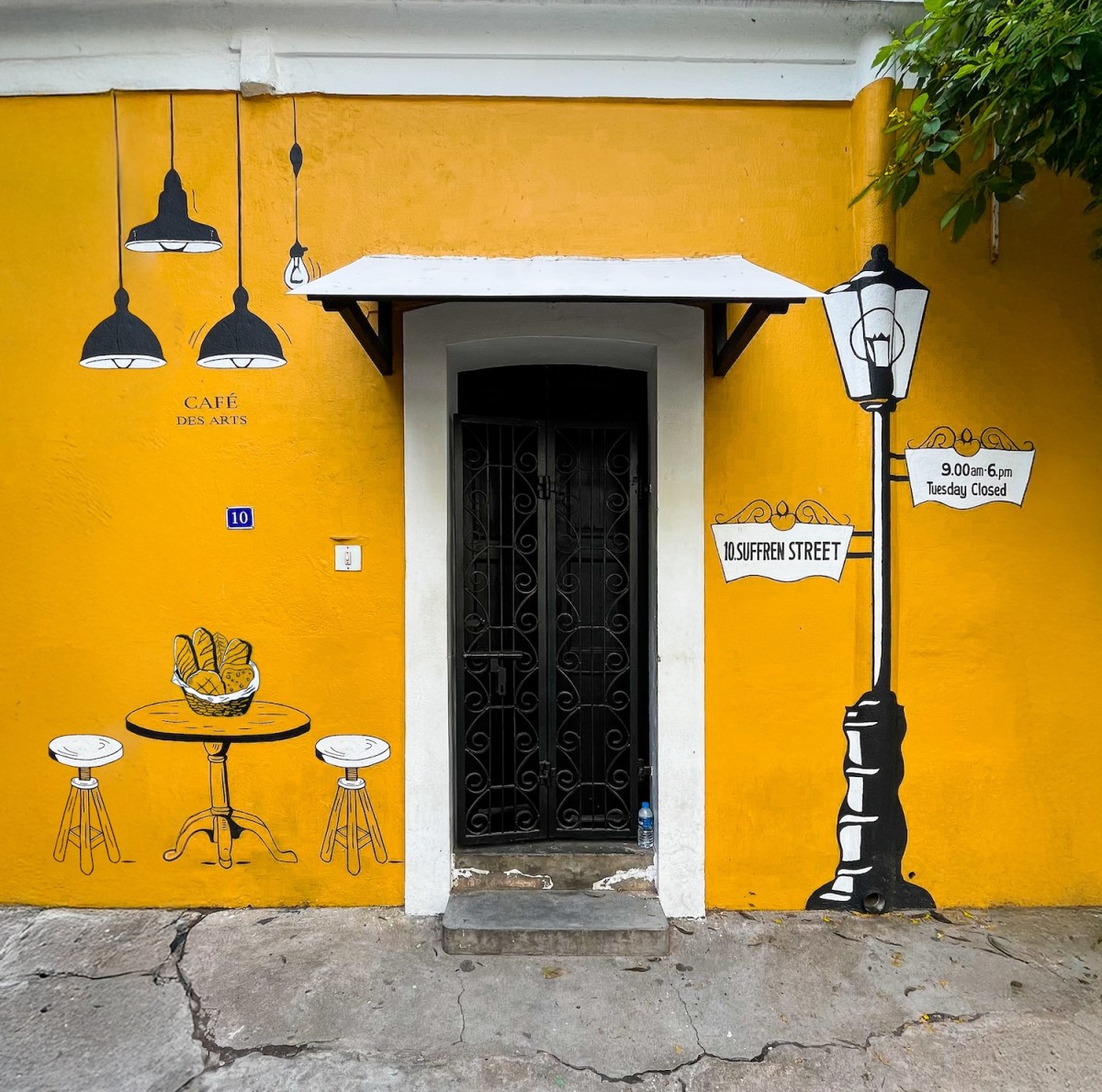
Entrance to a cafe with yellow-coloured walls and black and white murals showing a coffee table and bar stools.
In our quest to share virtual memories, we’ve built physical spaces to be Instagrammable. How many people would have half-squatted to “sit” on the painted chairs on this pretty yellow wall? Guilty as charged. Location: Puducherry, India

Worse still are the chains I’ve tied around myself. Those accounts that I do know about, I find it hard to let go. It was easy to delete my Facebook (now Meta) account over three years ago. But Twitter is giving me a hard time. Not because I use it. I don’t. But because once I delete the account, my username will be available for use by someone else. And I shudder to think someone else will take on my identity. So much for me championing reuse and recycle.

There’s so much digital waste we’ve generated. All that waste is sitting on some server. Consuming electricity. Generating heat. And consuming more electricity to cool down. Every little piece of digital information I leave unattended reeks of a hypocritical sustainability advocate.

The Way Forward

I don’t have an easy answer to this mess. In this virtual chaos we’ve created, it’s a daily struggle to decide what to keep and what to discard. Which memories to hold on to, and which to let go.

A couple of months ago, out of sheer frustration, I embarked on a virtual housekeeping project. The task looked insurmountable, but I had to begin somewhere.

So, I looked for low-hanging fruits. I located those physical hard disks. I thought to myself, if I haven’t needed it in the last ten years, I won’t need it again. First, I transferred them to my Dropbox folder, so that everything was in one place, and then I began reviewing them.

So many duplicate photographs. Old portfolio files that I was once proud of, but now find ghastly. And those legacy file formats that I can neither open, nor have had the need to edit. I began hitting the delete key.

As Dropbox later informed me, I had deleted about 15000 files in the span of a week. It was a statistic I didn’t know I needed to hear. And it was so cathartic.

This was just the tip of the iceberg. There are several more files and photographs to go through. I’ve hit pause on that activity because, as I’ve now learned, I can’t focus on one thing constantly. Plus, frustration and adrenaline can fuel such binge-deleting sprees for only so long. But I hope to pick it up in patches.

My current project is to clear up the cobwebs of my blog drafts. Several of my last few posts have indeed been 3 – 4 year old drafts (this one included!) I’m still only 10% in, but seeing some virtual dust being cleaned up is helping me mentally.

I don’t know how far I’ll get. But I’m going to try. It’s a marathon, not a sprint. And the only way to tackle it is to take it one thing at a time.


On an unrelated note, how would you like me to narrate these stories via a podcast?

Categories
Musings

The Universe in My Palm


An astrophysicist, a Vedic scholar and an earthworm walk into a room.

Before I complete the story, here’s a question for you:

Do you believe in a higher power? A celestial being that’s constantly keeping a watch over us?

I used to, but now, I believe that we delude ourselves into thinking the universe cares about us. Stars don’t align for us. They just go about their lives, and we simply get caught in their world. We are, but mere cogs in their grand scheme.

Men In Black Movie ending sequence where the universe is revealed to be a marble in the hands of an alien.

The moon revolves around the earth, and it sways our mighty oceans with its movement. We, too, are just bags of warm water. Surely, the moon must have some impact on us. We get life-sustaining energy from the sun. And it’s such a long way from home. Surely, other stars must have their secret powers.

Ancient Indian astrologers had probably cracked some of the codes of the universe. But like much of our wisdom in other disciplines, it has been tossed out in our English-medium world that’s out to make some money off our ignorance.

What I lost in ancient wisdom, an American TV personality packaged into a shareable quote:

The four most common chemically active elements in the universe—hydrogen, oxygen, carbon, and nitrogen—are the four most common elements of life on Earth. We are not simply in the universe. The universe is in us.

Neil deGrasse Tyson, Space Chronicles: Facing the Ultimate Frontier

This quote reminded of two types of universes: the more observable physical one, and the abstract, spiritual one that’s hidden within.

The Observable Universe: My Compost Pile

I started composting some seven years ago, and it has been the most rewarding, meditative experience. Composting gave me a glimpse into an entire self-sustaining ecosystem. At times, I felt like God, overseeing a world, controlling what goes in, and when it’s ready to harvest. But most of the time, it made me realise that we too are tiny insects in the compost pile of a higher force. We’re all transient creatures taking part in a grand spectacle called nature.

My compost pile is made up of organic material. The brown stuff has a lot of Carbon, the green stuff is rich in Nitrogen, and since kitchen waste tends to have a lot of water content, the other two components of Hydrogen and Oxygen complete the quartet. With each harvest, I see the universe in action.

I took whatever I learned and turned it into a small online workshop. Here’s a recording of a session done during the initial pandemic lockdown. I hope you enjoy.

The Hidden Universe Within: Aham Brahmasmi

The Brihadaranyaka Upanishad, one of the first Upanishads dated to 7th century BC, has a popular phrase, Aham Brahmasmi. It translates to “I am the Brahman.” The Brahman here is an abstract concept that may be interpreted as being the universal truth, cosmic energy, perhaps even God.

Side Note: This Brahman is not to be confused with the caste, which is pronounced differently. One’s caste is defined by one’s profession—and is neither discriminatory not hereditary. But that’s a different misconception to be dealt with by more learned scholars.

Aham Brahmasmi is a phrase that’s close to my heart because it instills a feeling of being complete, without relying on any external validation for our existence. We hold immense potential within us. If we channel it well enough, we can accomplish anything.

I love this Mahavakya (phrase) so much, that I even have a ring with the phrase written in Devanagari calligraphy.

So what happened to our astrophysicist, Vedic scholar and the earthworm? The two humans spent the whole time arguing over who was right, while the earthworm just chewed its way around the room till there was nothing left except life-sustaining matter.


The featured image at the top is of Netaji Subhash Chandra Bose Island, where nature has reclaimed man-made buildings, creating the most stunning root displays. Location: Andaman and Nicobar Islands, India.

Categories
Musings

The Regular Crowd


As I was clearing up some old shelves, I discovered some notebooks with hand-written stories and amusing self-pep talks. Among those abandoned drafts was this unfinished parody of Billy Joel’s “The Piano Man.” Enjoy!


It’s nine o’clock on a Saturday,
The regular crowd shuffles in.
There’s a young man sitting next to me
Swiping up, his face making a grin.

He says, “Alexa, can you play me a melody?”
I’m not really sure how it goes.
But it sounded sweet and I knew it complete,
When I wore a baby’s clothes.

Sing us a ding, you’re the smart device.
Sing us a ring tonight.
Well, we’re all in the mood for a notification,
And you’ve got us feelin’ alright.


I thought I’d complete it, adapting the rest of the song words, but as I read the lyrics of the rest of the song, it seemed eerily appropriate. It seems like Billy Joel’s bar is similar to any social media app. What do you think?

Here’s the rest of the song, with only the slightest modifications:

Now John on the app is a friend of mine
He gets me my likes for free
And he’s quick with a joke or to share your post
But there’s some place that he’d rather be
He says, “Bill, I believe this is killing me”
As the smile ran away from his face
“Well, I’m sure that I could be a movie star
If I could get out of this place”

Now Paul is a real estate novelist
Who never had time for a life
And he’s talkin’ with Davy, who’s still in the story
And probably will be for life
And the comedian is practicing politics
As the marketers slowly get drowned
Yes, they’re sharing a reel they call loneliness
But it’s better than scrollin’ alone

It’s a pretty good crowd for a Saturday
And the Faang* gives me a smile
‘Cause he knows that it’s me they’ve been comin’ to see
To forget about life for a while
And the app, it sounds like a carnival
And the microphone smells like a beer
And they sit on the app and put bread in my cap
And say, “Man, what are you doin’ here?”


* FAANG: Facebook, Amazon, Apple, Netflix, and Google

Categories
Musings

Let There Be Light


As I get older, I’m finding myself becoming more cynical. I’m sceptical about everything and am quick to assume hidden selfish motivation behind everything people do and say. I don’t want to be like that.

Just a little while ago, someone upstairs put up fairy lights and hung them so they drop into our balcony. My first reaction when the lights turned on, was, “Uh! There goes my sleep.”

There’s probably a very good reason someone put up lights half a year away from Diwali. A joyous occasion, no doubt. Shouldn’t a neighbour be happy for them? I checked my bitterness. Don’t be that person. After all, wouldn’t I want others to be happy for me, if there was something happy going on in my life?

I stepped into our balcony and looked up. The long strings of light, began a floor above. They were spaced evenly and spanned their balcony from top to bottom. Their home glowed beautifully.

The bunched up balls at the end of each string peeked into our balcony more casually and at varying lengths. The scrunched up, messy balls of lights were as pretty, if not, prettier, than the straight lines above. Our balcony was beautiful, too.

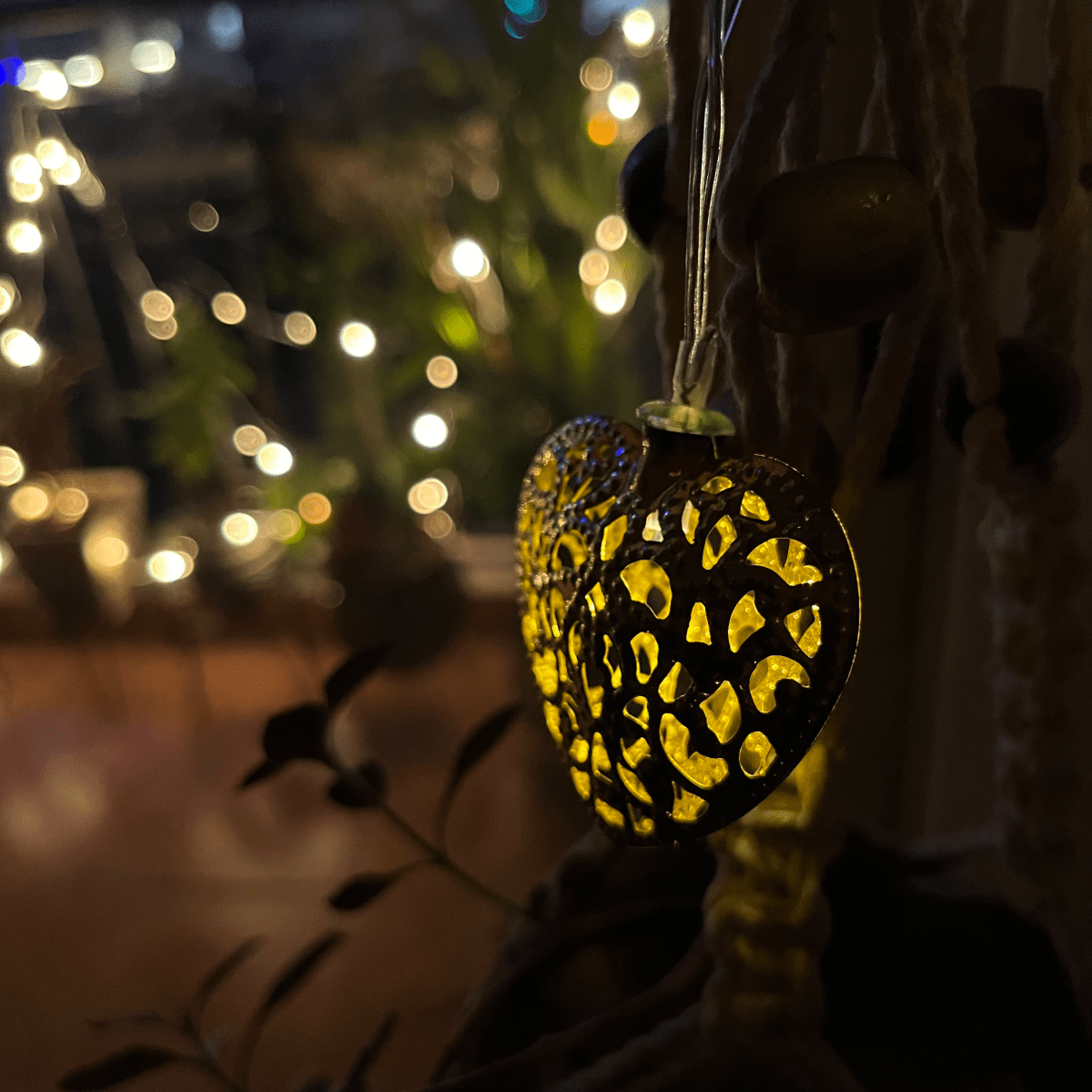
Decorative light in the shape of a heart
Throwback to our illuminated balcony on Diwali in 2022.
Categories
Musings

The Reckoning


In mid-2020, while the world was going through an upheaval, I got the opportunity of a lifetime: to turn my passion for writing into a profession. It was a dream come true: combining my love for writing and teaching with my experience in UX design. At the Interaction Design Foundation, I met and worked with some of the most brilliant minds from across the globe. I had opportunities to travel and grow professionally, eventually leading the editorial team.

In three and a half years I grew and changed as an individual. It was the most fulfilling role I’ve had in my life and for that, I will forever be grateful. But it came with a cost.

Some people say that we must not mix passion with profession. We might lose both! Others say that we must be in love with our work so that we don’t actually “work”. I realized that there was another angle to this debate. In my case, I was so much in love with my job, that I lost myself in it. I spent such a long time doing what I love for someone else, that I was too exhausted to work on the stories I wanted to write for myself. I adopted the brand’s voice and lost my own.

Before I knew it, my body started to hurt.

Fortunately, or rather, unfortunately, I could see where I was heading. It had been close to eight years, but memories started haunting me. It was a different time, a different company, but the pain was eerily similar.

I used to struggle with lower back pain. Most days it would be okay. And then every now and then it would flare up. And when it did, it made my life a living nightmare. I couldn’t sit, stand, walk, or even lie down without jolting.

I went to several doctors and popped all kinds of pills. Everything seemed to work for a while. And then, everything stopped working. I continued soldiering through the pain.

I was practically second in command in the company. I couldn’t take too many days off.

My family pleaded with me to leave my job. Angry and in tears, I fought with them. I stood my ground. To them, I was stubborn. In reality, I was scared.

Our society places a premium on being employed. Our worth and the respect we command are based on what we do in life. The last thing I wanted to be was a housewife. Housewife: that word is so demeaning that we now use different synonyms to make it sound like we appreciate that role: a homemaker, family manager, home engineer. But call it what you will, it is subtly associated with someone who doesn’t earn money or have status in public life. Since my childhood, I was conditioned to believe that choosing not to work was synonymous with being useless. The ultimate humiliation.

I needed to work, not for the money, but for my self-esteem.

Meanwhile, my attacks were getting more frequent. There were days when I couldn’t get out of bed. I began missing important meetings. It got to a point where I felt I might be fired. So, I finally took the most difficult decision of my life. I told myself to quit.

Quitting a job without another in hand and with no financial safety net isn’t easy. I had no choice. I needed to fix myself.

Understanding my predicament, my employer suggested that I take a break, and use this opportunity to start a freelance career. “Take a month off. We can work out a part-time contract. We’ll be your first clients.”

Perhaps it was that reassurance that I’d still have something to come back to, that helped me relax a little. I tied as many loose ends as I could, handed over my work and signed the offboarding documents. I still remember that metro ride home. My body writhed in agony every time the train stopped. My colleagues pitied my plight.

The first few days of my unemployment, however, had a profound impact. To my surprise, I felt like a big weight was off my shoulders. More importantly, I realized that being employed wasn’t the sole purpose of life. Contrary to what I expected, I even enjoyed being at home. “You look happy,” my uncle remarked when he saw me shortly after my newfound freedom.

I also learned that patriarchy—that thing that I always complained about—was helping me. When I met an ex-colleague a month later, he remarked, “You can afford to quit because you’re a woman. No one would say anything to you. I wish I could also quit my job.”

I am not going to defend patriarchy. But I can better explain feminism. It is not about men being subservient to women as revenge for centuries of oppression. It’s about men and women both being allowed to live their lives the way they’d like to, without having to live up to certain expectations from society or being judged for their life choices and circumstances.

Workplace dynamics aren’t built for everyone. And I realized that the work environment I was in, wasn’t built for me. I didn’t form any meaningful friendships at work. The office was in a basement, devoid of sunlight. While I learned a lot and did meaningful work, at the end of the day, it didn’t pay as well as a corporate job would’ve paid me. I wished I had quit sooner.

If I hadn’t quit, I wouldn’t have become a freelancer. I began working remotely much before the world discovered it. Money wasn’t regular, but that didn’t matter. I was a master of my time and priorities. I regained my health and felt physically and mentally fit.

I had the capacity to work on side projects that mattered to me—like online workshops in storytelling and composting! I vowed to not work full-time again.

That vow, however, didn’t last long. Three years later, I randomly applied for the role of writer at the Interaction Design Foundation and turned out to be a perfect fit.

Fast forward three more years. My backaches were coming back, and this time, they were bringing more mysterious friends with them. My body was showing signs of unrest. I had to act fast before it turned out to be an all-out revolution like my last full-time gig.

I’d quit once before. It should’ve been easy to take that plunge again. But like the last time, I fought with my family and lingered on. This time, for very different reasons. I loved my job, the people, and well, the paycheck. This was the organization that made me realize my worth. Money sometimes acts like a golden noose. The string is always in our hand, and money makes us pull it tighter around our neck.

I debated hard with myself for several months. Eventually, I decided to pull the plug again. And like last time, it was only after I left that I realised why it was important for me to have done that. I had sacrificed my voice for someone else, and it would take several months for me to regain the courage to write again.

Related Posts

When life kicks you in the back

Categories
Musings

Unsolicited Wisdom


Sometimes it seems the universe sends us messages. Perhaps more likely, we’re looking for help and our subconscious mind shows us the way.

I’ve come to believe that we often don’t communicate well enough with ourselves. We usually have the answers to many of our problems. We just don’t hear it well. So when we see something that seems to be the answer to our problems, it’s indeed our mind pointing us in the right direction—we are actively seeking the answer in our environment.

There are times when I can’t decide between two alternatives, and I try to let a coin toss make the decision for me. If we are truly indifferent to the choices, a coin toss wouldn’t matter. But if we favour one outcome over the other, the coin toss will reveal the one we actually want. I’ve often ended up ignoring the coin toss because I immediately felt disappointed with the way the coin landed!

The TV series Big Bang Theory turns this idea into a gag in an episode where Sheldon decides to leave all trivial life decisions to a roll of the dice. During lunch, his dice tells him to eat corn succotash. When his friend asks him what he’s thinking about, he promptly answers hamburger!

Over the past few months, I’ve stumbled upon a few unsolicited pieces of advice—things that I didn’t know I needed to hear. Here are two that stuck with me:

The most powerful word you can say to yourself is “yet.”

I saw this advice in The Medium’s Newsletter’s issue #172.

At the beginning of the year, I set myself a few unwritten goals—unwritten because I’m superstitious. I didn’t achieve them, but that doesn’t mean I didn’t try or make any progress on them. Adding the word “yet” to those goals reminds me that just because the year is coming to an end doesn’t mean I’m not closer to them.

Replace “What if” questions with “Even if” Statements

This advice on how to talk to ourselves was in issue #184.

It helps to change the narrative. As much as online content pushes us to think the world is ending or that we’re not moving along as fast as every other person is, our lives aren’t the same as others. We cannot be held ransom to timelines and expectations, even if we set them ourselves. Most of us are bad estimators. Life is unpredictable. And humans are highly adaptable. There’s always another way out.

There’s a common theme behind these bits of unsolicited wisdom. I’ve been very hard on myself. Perhaps you have too? Being constantly surrounded by data, news and updates about what others are doing can make one feel inadequate. These messages seem to be telling me to forgive myself.

  • I may not have that tangible thing to share, yet. I may not be able to share them by 31st December, and that’s okay.
  • What if I don’t complete that project I started? Even if I don’t complete that project, I can take a few more days to finish it. Or if it isn’t working, I can hand it over to someone more capable of completing it.

What pieces of unsolicited useful advice have you stumbled upon?