Categories
Hobbies

Sambaar Podi: Our Family Recipe


I’ve not been very fond of sambaar, especially the ones served in restaurants, which seem to serve something quite ghastly. My husband, on the other hand, loves it.

In traditional TamBrahm households, each meal typically consisted of three courses of rice. Course one, sambaar with rice, course two, rasam with rice, and course three, curd with rice. Every course has its share of accompaniments (poriyals, pachidis, pickles, appalam etc).

That’s all great during wedding festivities, when there’s an army of cooks to prepare (and serve) such elaborate meals. And of course, one must earn the right to enjoy such meals through intense calorie-burning activities.

In our mostly sedentary modern city life, so many courses and elaborate meals are both unnecessary and impractical. My mother adopted a very practical approach: two courses and one vegetable accompaniment. She’d make rasam (which I always preferred over sambaar), and include the lentils in it. Thakkali sambaar (tomato sambaar) we’d always tease her. The second course remained the universally enjoyable thayir saadam (curd-rice).

The Family Sambaar Recipe

I never learned to make rasam or sambaar (or any dish, for that matter) before I got married. It wasn’t for lack of trying on my mother’s part, but rather my rebellion at being forced to learn “womanly” skills to be eligible for marriage. Fortunately for me, I did find the most suitable husband who knows how to cook! So I learned to cook mostly from him and his parents. Unfortunately, he also loves sambaar, and being a North Indian, has no idea how it’s made!

Over the years, I’ve attempted to make sambaar at home with varying degrees of failure. Each time I’d call my mother to ask for her recipe and note it down somewhere, only to misplace it and call her again the next time.

My latest attempt, however, seemed moderately successful. And funnily, it seemed like an absolute breeze, which convinced me to make it more often. So, this time, I’m saving the recipe here for ready reference.

Step 1: The Sambaar Podi

The key to sambaar lies in the powdered spice mixture, aka the podi. Once ground, the batch lasts a surprisingly long time. Given how infrequently I make sambaar, my batch has easily lasted a few years, but I wouldn’t recommend keeping it around for that long!

“Take note of the order of these items and it will be easier to remember the proportions,” my mother advised.

“One of Urad,
Three-quarters of Toor,
Half of Chana daal,
Half the quantity of Chana daal for Pepper, and
Half the quantity of Pepper for Methi.
Take three of Dhania.
Roast everything, cool and grind to a powder.
One spoon of sambaar podi is half this powder and half red chilli powder.”

Sambaar powders available in the market typically include red chilli powder. But my mother’s sambaar powder skips it so that she can reuse the same mix for both rasam and sambaar! In our household, it helps to not add red chillis so that we can tweak the spice level for my in-laws who aren’t comfortable with red chilli powder.

Here’s a detailed table with the proportions and ingredients.

ProportionItem (Tamil)Item (Hindi)Item (English)
3Kotthamalli VithaiSabut DhaniaCoriander seeds
1UlanthuDhuli UradSkinned Black Gram
3/4Thauram paruppuArhar daalSplit Pigeon Pea
1/2Kadalai paruppuChana daalSplit Chickpeas / Bengal Gram
1/4MilaguKaali MirchBlack Pepper
1/8VenthiyamMethiFenugreek

The sambaar podi is as simple as roasting these items till they are aromatic, and then grinding them to a powder. Store for use later.

Step 2: Prep the Elements of Sambaar

The essential elements of sambaar are (for 1 litre):

  • Arhar / Toor daal (3/4 cup)
  • Tamarind water (use 1 medium-sized lemon a reference for the quantity of tamarind)
  • One vegetable (aka the taan). Potatoes, Moringa, Capsicum, Okra, Eggplant, Ash Gourd, Radish. Anything goes. Heck, if you like the restaurant variety, use beans, carrots and onions. Just don’t serve that to me.
  • The spices (1/2 spoon of sambaar podi, 1/2 spoon of red chilli powder, a pinch of asafoetida, a sprig of fresh curry leaves)
  • The Thalippu / Tadka (1/2 spoon mustard seeds, 1-2 dried red chillis)

The key to making sambaar fast is multitasking. Let the multiple gas burners do the heavy lifting by simultaneously doing the following:

  1. Pressure cook the Toor daal with a little turmeric powder.
  2. If the cooker is big enough, you can place the hard vegetables in the same cooker. For soft veggies that cook easily, pressure cooking may be a bit too much. You can add those in later.
  3. Boil the tamarind in water for a bit and let it cool.

With everything already partially cooking, and while you’re waiting for the tamarind water to cool, you’re free to prep any other dish, or perhaps do the dishes, or just take a little nap.

Step 3: Bring Everything Together

  1. Once the tamarind water has cooled enough so that you can touch it, extract the juice/pulp and remove the rind and seeds, if any. Mash with your fingers or use a spoon and a sieve.
  2. To the tamarind water, add the sambaar podi, red chilli powder and a pinch of asafoetida. Boil this solution for a couple of minutes.
  3. If your vegetables haven’t yet been cooked, add them to the tamarind water and cook them.
  4. Once the vegetables are cooked, add the cooked toor daal (with the water). The daal already has turmeric, so no need to add that in.
  5. Add salt.
  6. Pinch/crush fresh curry leaves with your fingers and add them in right at the end.
  7. Finish the sambaar with the sizzling, satisfying sound of the tadka: Heat 1-2 spoons of oil/ghee and add the mustard seeds and dried red chillis. Once the seeds crackle, add them to the sambaar.

And that’s it! Making sambaar involves several components, but proper planning makes it an easy dish to prepare.

Bonus Recipe: Rasam

Rasam is typically a thin, almost clear soup. The steps for a regular rasam are very similar to those of sambaar. The key differences:

  1. Instead of vegetables, we add tomatoes (usually cut into quarters).
  2. Instead of adding red chilli powder, we add black pepper powder and cumin powder. So, along with the sambaar podi, my mother keeps a separate powdered mix of black pepper and cumin.
  3. Instead of using the entire cooked toor daal, use only the water of the daal. That’s the “proper” way. But if rasam is your only protein source, as was the case in our household, just go ahead and add the whole cooked daal and make a thicker rasam.
  4. Instead of curry leaves, use fresh coriander leaves.

Every family has their version of the sambaar and rasam podis. And of course, there are variations of each dish too. Depending on what vegetables go in the sambaar, the recipe changes a little. The most notable one being a special fresh coconut-based bitter gourd sambaar.

Then there’s melagu rasam or milagu tanni (which the British famously appropriated as mulligatawny), which is a spicier variation (and for me, an absolutely soothing one!) There’s also a tamarind-free lemon rasam. Of course, I don’t know how to make any of these, but in my journey to learn our culinary heritage, I’ll hopefully get there soon. Let’s make one recipe at a time.


Categories
Hobbies Musings

I’ve Been Around the “W”


I’ve been speaking English my whole life. But it wasn’t until recently that I realised that I cannot pronounce the letter “w.”

The ghost of YouTube algorithms once suggested a short video from a Vietnamese woman who now lives in Germany. Uyen Ninh‘s videos poke fun at the cultural differences between Germans and Vietnamese, and through her perspective, I’ve learned that Indians and Vietnamese have a lot in common.

Scrolling through the comments section of the videos, I learnt that people and cultures around the world have remarkably similar belief systems.

It was in one of these videos that I heard her German partner exclaim, “I cannot pronounce ‘W’!” As with most of her videos, I scrolled through the comments section. Many people agreed, and understood that non-English speakers pronounced the first syllable of “Valley” like “Wallet”. And that’s when I realised I couldn’t tell the difference.

A Medley of Languages

At home, my grandmother spoke to me in Tamil. So whatever little Tamil I now know is thanks to her. My parents alternated between Tamil and English. And growing up in Delhi Cantonment, I was surrounded by people who spoke English fluently. Hindi, however, was a very different ball game. I struggled terribly and couldn’t wait till I reached the ninth grade, when I was allowed to drop Hindi from my curriculum and elect Sanskrit as my second language. In a TamBrahm household, Sanskrit is much easier than Hindi!

Eventually, though, I had to move out of this bubble. What my school couldn’t teach me, interacting with (and getting married!) outside my community, did. My only regret is not knowing my own mother tongue Tamil very well, especially reading and writing. So whenever someone in a family WhatsApp group types in Tamil, I try my best to read it—it takes forever, but that’s about the only way to stay connected to my roots.

I find Uyen’s playful skits on living with cultural differences extremely relatable. Everyday decisions like what to eat, what to wear, how to talk and how to celebrate festivals becomes tricky. However, Uyen reminds me that my struggles are tiny compared to hers!

Let’s get back to the “W” that Uyen’s German partner couldn’t pronounce. I did what anyone else would do and searched online. Here’s what an AI generated response told me:

The key difference between the sounds represented by “v” and “w” lies in their articulation: “v” is a voiced labiodental fricative (bottom lip lightly touches top teeth), while “w” is a voiced bilabial approximant (lips rounded and slightly protruded). 

I stared hard at this explanation, and tried to say ‘V’ and ‘W’ a few times. Wait. How does one say ‘w’? When we learn the English alphabet, w is pronounced “double u.” How on earth are we to know how to pronounce it? So I tried a few words that started with ‘w’. I tried listening to the sounds on the internet, but they sounded the same as ‘v’! So, I gave up. As long as the person I was talking with knew what I was saying, how did it matter whether my lip touched my tooth or not!

The key here is that these letters sounded the same to me, but not to a native speaker. This is perhaps how most of the world feels when they hear sounds like ‘zh’ that are exclusive to Malayalam and Tamil (well, technically, it’s Tamizh). My husband tries hard to learn the sound, but he eventually ends up saying ‘ra’ instead. For reference, here’s what it sounds like:

Each language has its idiosyncrasies. A family of languages tends to share some similarities. But what if your native language is entirely different from someone else’s?

Someone who understands Hindi will probably be able to grasp 20-30% of Bengali or Punjabi, since they originate from Sanskrit. Tamizh, a Dravidian language is said to have completely different roots.

That Tamizh and Hindi have very little in common is something I can attest to. Hindi was (and still is) hard. The grammar and the script is completely different from English and Tamizh.

Learning a New Language

A little under a year ago, I began learning Spanish on Duolingo, quite by accident. One of my clients told me Duolingo had a great onboarding experience, and so, out of curiosity, I signed up. The app made learning Spanish fun, and I got hooked. As of today, I’m on a 332 day streak. What can I say, that owl is persuasive!

What’s more, I found Spanish fairly easy. For starters, the script is the same as English. The only difference lies in the accents that I’m still trying to figure out. But unlike English, it is phonetic, so pronunciation is a breeze. And the best part, no need to worry about w, or even k!

English, Hindi and Tamizh have very different grammar rules and scripts. Each also has different sets of sounds, not found in the other language, giving a multilingual person like me an edge while learning a new language. Apart from sounds, it also offers a broader vocabulary to refer to, to form connections.

Many English words are the same in Spanish, with the addition of suffixes. For example:

  • Usually becomes ususalmente, normally becomes normalmente.
  • Fantastic is fantastico, perfect becomes perfecto, rapid becomes rapido.

As for inanimate objects having a gender, that’s there in Hindi too. In fact, some words in Spanish are nearly identical to Hindi/Sanskrit, including the gender:

  • Table (English) = Mesa (Spanish) = Mez (Hindi)
  • Shirt (English) = Camisa (Spanish) = Kamiz
  • Room (English) = Sala (Spanish) = Shala (Sanskrit/Hindi)
  • Orange (English) = Naranja (Spanish) = Naranga (Sanskrit)

And, I recently found out the word for rice (arroz) comes from the Tamil word arisi.

The Spanish consonant ñ exists in Sanskrit/Hindi and Tamil.

I’m sure if we dig further there will be other similarities.

Finding Common Ground

There is a lot of ongoing debate about which language is older, Sanskrit or Tamizh. As this fascinating video from Storytrails points out, that question is often seen from an ideological lens.

When it comes to culture, everyone wants to be the oldest! It seems to be some sort of ego-massage to claim that something came first. But honestly, who cares? If anything, a language that’s extremely old is likely dead. That we speak English—a language that has constantly evolved and incorporated words from several languages is proof that to be relevant, it must work. The idea of language is, after all, to communicate.

Language and culture cannot exist in isolation. If we must go back in time, then we must also go back to a time when people exchanged and adopted ideas. The similarities we find today between different cultures is because of ancient trade. Ironically, in a globalised world we’re increasingly becoming resistant to such evolution.

A few months ago, we visited Mexico and I tried to practice some words at the resort we stayed in. The locals were extremely appreciative of the effort I was putting in and encourage me to speak. It turned out, many of them were learning English on Duolingo too!

It will be quite a while before I can get truly fluent in Spanish—that would need real world practice, but for now, I am happy discovering the surprising similarities between languages and cultures around the world. (Apparently there is a lot of similarity between Tamil and Korean!)

Categories
Hobbies

A Merry “Kishmish” Cake


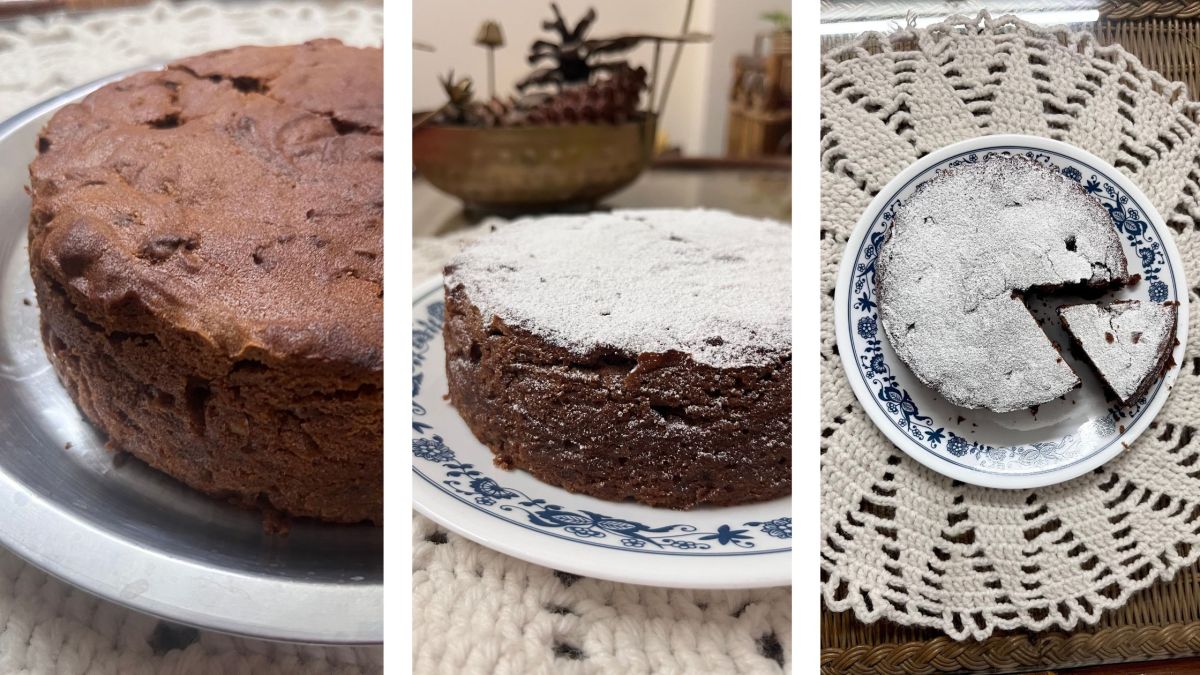
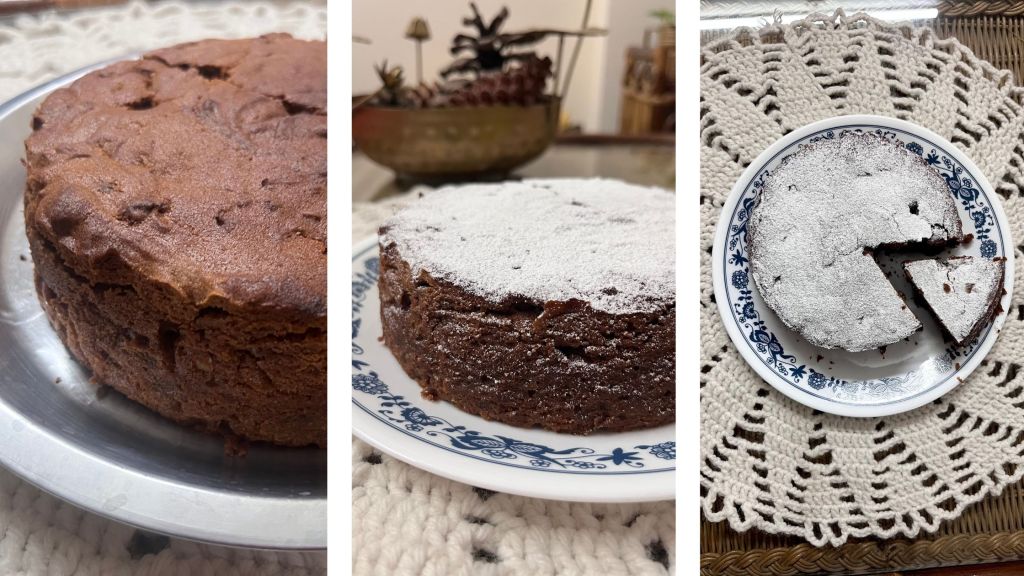
We’ve always hacked our way into baking a cake. We didn’t have an oven and I was trying to avoid using refined flour. So, our experiments in cake-baking have been mixed, often ad-libbing and freestyling the ingredients. I learned the hard way that not all recipes were that flexible. So, this time, I decided to follow a recipe that I’ve wanted to try for a long time—the traditional Christmas Cake.

We had a new air fryer and I decided to cave in and use refined flour and white sugar. It’s still eggless, though!

I’ve tried this recipe twice now, and the second time, I substituted half of the refined flour with whole wheat flour. This second cake was a bit more crumbly and we could taste the flour, so, the next time, we’ll try substituting less than half of the refined flour.

For my convenience, I wrote down the ingredient list separately, divided into different parts that I needed to mix separately, so that I wasn’t staring at one long list!

Part 1: Make the Kishmish Merry

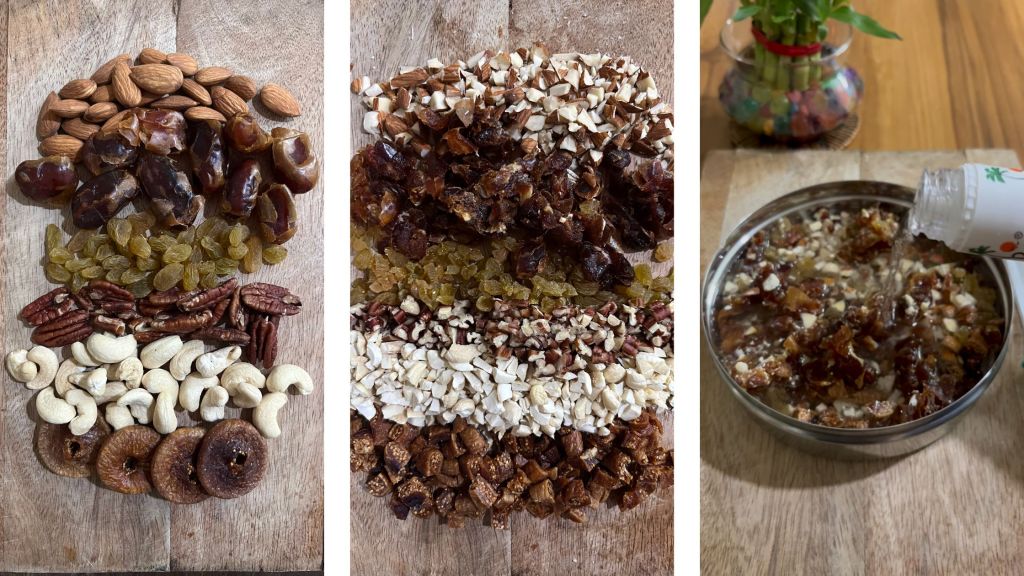
Cashews, Walnuts, Raisins, Almonds, Dates, Figs… Chop whatever dry fruits you have available and soak them in rum (or ornge juice) for a few days.

Store in an airtight container in the fridge if you’re soaking these for more than 2 days.

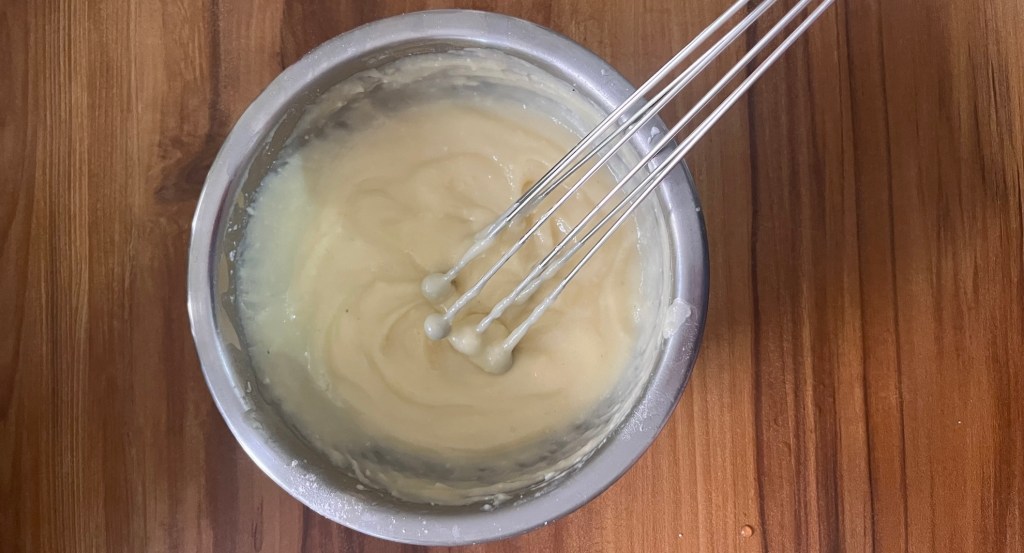
Part 2: Whisk the Creamy Ingredients

  • 1 cup Powdered Sugar
  • 1/2 cup Butter
  • 1/3 cup Curd

Time-Saving Tip: If the butter is hard, use a hot water “bath” to soften it. You can do this right at the beginning and while you wait for the butter to melt, you can gather the rest of the ingredients.

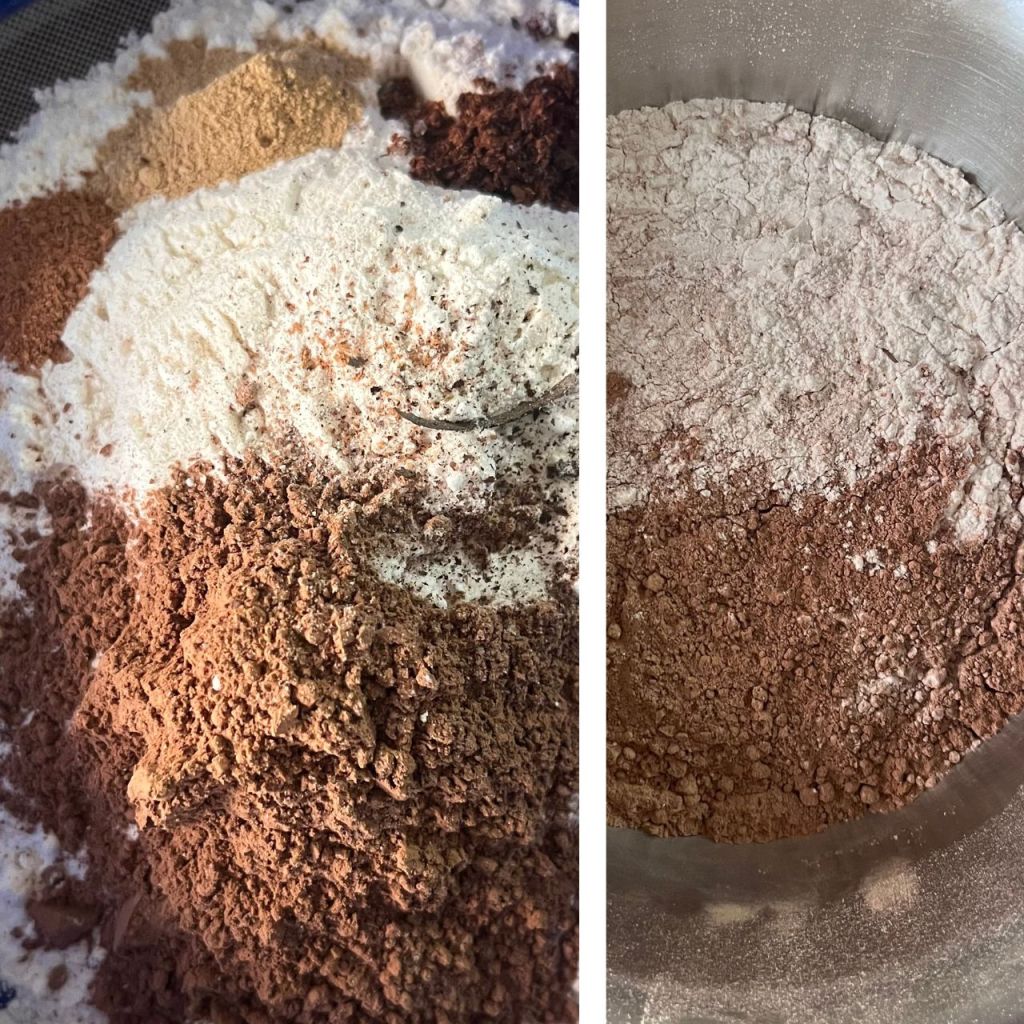
Part 3: Sift the Spicy Ingredients

  • 1 cup Flour (Maida)*
  • 3/4 tsp Baking Powder
  • 1/4 tsp Baking Soda
  • 1/4 tsp Salt
  • 1 1/2 tbsp Cocoa Powder
  • 1/4 tsp Ginger Powder (Saunth)
  • 1/4 tsp Clove Powder
  • 1/4 tsp Cinnamon Powder
  • 1/8 tsp Nutmeg Powder

* For a slightly healthier version, you could experiment with about 20-30% of wholewheat flour instead of just refined flour. But at your own risk!

Part 4: Prepare the Curdled Milk

Adding vinegar to milk will split the milk. I’m still not sure if we should let it sit for a long time, so I do this at the end, lest I have any lumps of paneer in the cake!

  • 1/3 cup Milk
  • 1 tsp Vanilla Essence
  • 1 tsp Vinegar

Part 5: Let’s Get Everything Together!

Now that the ingredients are ready, we can prepare the cake tin and preheat the baking apparatus of choice (a home-style pressure cooker, a covered saucepan, an air fryer or an oven).

Grease the pan and line it with butter paper.

Note to self: Do not keep it inside the oven!

  1. Mix the sifted dry ingredients (part 3) with the creamy stuff (part 2)
  2. Add in the curdled milk (part 4) gradually.
  3. Add the merry fruits (part 1)
  4. Pour into the prepared cake tin. Tap a few times, and then place it inside the baking apparatus.
  5. Wait.

The time to cook varies depending on the temperature. I used an air fryer at 150 degrees C for 40 minutes.

If you’re using a hacked makeshift oven, then you may not be able to control the temperature, so keep a close eye so that the cake doesn’t get burnt or stay undercooked—I’m guilty of both!

Use a knife to check for doneness.

I had some extra powdered sugar left over, so I sieved it over the cake to give it a snowy look. But it will taste delicious even without that.

Enjoy!

How To Get the Measurements Right

The one thing I’ve learned through my little baking experience is that measurements matter! So, I followed the measurements of everything to the “T”.

The ingredients can broadly be categorised into two heads:

  1. The flavours: We can play with the flavours of the cake and freestyle them to taste. These include dry fruits, cocoa, spices and vanilla essence.
  2. The cake base: The wrong proportion of these ingredients can ruin the cake, and so these are absolutely non-negotiable. The flour, milk, curd, sugar and butter along with what I call the “baking potion”—the things that make the cake fluffy! The baking potion includes baking powder, baking soda, salt and vinegar.

Since I didn’t have any proper measuring equipment, I used a tiny medicine measuring cup to first figure out the capacity of the different bowls and glasses we had and used those utensils that best matched the following capacities:

  • 1 cup = 240 ml
  • 1/2 cup = 120 ml
  • 1/3 cup = 80 ml

The Inspiration

This recipe isn’t mine. It is adapted from recipes I found online, and modified to suit what we had available. Here is the original recipe from where I borrowed the measurements and ingredient list:

Previous Cake Experiments

The “Unrefined Cake”

A “Date” With a Cake

Categories
Hobbies

The ‘unrefined’ cake


For over three years now, we’ve tried to keep certain items out of our kitchen — refined flour and refined sugar. Refined flour was easy to keep out. Sugar, is a different matter — because we occasionally make sweet dishes, and guests shouldn’t be forced to drink sugarless tea or coffee. And so, we buy sugar, in the least possible quantity at such times, letting the stock remain in the kitchen cupboard.

A little over a year ago, we added another item to the no-stock list — refined oil. And I’m happy to report, I haven’t missed it at all. We now have a range of oils — mustard, sesame and coconut — to add richness to different dishes. And yes, there is white unsalted butter and homemade ghee.

Now, I love cake. And it seemed difficult to make cake without these three ingredients. I also didn’t have an oven, or a cake tin. My pressure cooker wasn’t big enough for a decent size bowl.

So, I did what everyone these days does — ask the internet. I found some makeshift alternatives for the baking apparatus and tried out a wholewheat recipe for my mother’s 60th birthday. It turned out decent.

There has been a pattern to some of my Instagram food posts — with friends asking for the recipe. And so, going forward, I’m going to start posting some recipes that I’ve tried out — for my friends, and my own future reference — with due credit to the original chefs, of course.

The credit roll

A big part of this recipe is borrowed from a recipe on YouTube by Piya’s Kitchen. I replaced some ingredients and the result was not so bad! I recommend going through the video for the original recipe.

Step 1: Going nuts

  • Chopped dry fruits of your choice (I used cashew, almonds, pecans, raisins and assorted berries)
  • 1/2 tbsp wheat flour

Coat the dry fruits lightly with flour to prevent them from sinking to the bottom and keep aside.

Step 2: Just beat it

  • 1/2 cup butter
  • 1/2 cup jaggery (I used honey — turns out, it gives the cake a richer colour)
  • 1/4 cup curd

Beat the ingredients till they form a smooth mixture and keep aside.

Step 3: Shaken, not stirred

  • 1 cup whole wheat flour
  • 1 tsp baking powder
  • 1/2 tsp baking soda
  • 1/4 tsp salt
  • 1/4 tsp cinnamon powder (or cardamom powder) for flavouring (skip this if using vanilla)

Sieve the dry ingredients together two times to ensure there are no lumps and they are nicely mixed.

Step 4: All mixed up

  • 1/2 cup milk

Fold the dry (step 3) and wet mixture (step 2) and add half of the milk.

If you’re using vanilla for flavouring, add 1 tsp in at this stage.

Add the chopped nut mixture (step 1) and the remaining milk.

Note: When mixing, make sure you stick with one direction; clock-wise or anti-clockwise, your pick — don’t ask me why.

Step 5: Time to bake!

Pre-heat the baking apparatus of your choice as you would normally do for any other cake: oven / pressure cooker / heavy-bottomed pan with lid. I heated a tawa on high flame for ten minutes.

Grease the baking tin (in my case, a saucepan) with butter and dust the greased tin with a little flour.

Pour the batter and tap gently to level the cake.

Garnish with more more nuts.

Place in baking apparatus (I placed the saucepan on the tawa and covered it with a glass lid so that I could see what was going on; and cooked it on low flame)

Cook for 45-50 minutes (or till you get the sweet scent of heaven)

Check if it’s done by inserting toothpick / knife – if it comes out clean, it’s cooked.

Patience, my friend — let it cool.

Transfer to a plate, and then, dig in!

Categories
Hobbies

A ‘date’ with a cake


Baking fascinates me — especially when the aroma of fresh cookies and cakes fills up the home.

Growing up, birthdays were made extra special with home-baked cake. I’d eagerly wait for my mother to whip up the cake batter. When she transferred the batter to the greased cake tin, I’d grow impatient. ‘Why are you being so thorough! Let me have the joy of cleaning that up!” As soon as the mixing bowl left her hands, I’d dip my finger to scrape out every last drop!

Unlike my mother, I have zero knowledge of what goes into baking. It’s the end result that truly matters (and the batter, yes!).

I find it hard to remember the chemicals involved in the process — is that baking soda or cooking powder — what proportion are they to be used and when should they be added, most importantly, what are the chances that the mixture will explode?

Most recipes are handed down generations, and when in doubt, I simply pick up the phone and ask, either my mother, or my mother-in-law; sometimes asking the same questions over and over. Thanks to the internet, I now also have advisors who don’t mind my asking the same questions repeatedly.

With the help of the food blogging community, I have got answers to some questions, such as, “what if I want to bake a cake without eggs… and without refined flour?” and “what if I don’t have an oven, and what if I’m off refined sugar too?” And I think to myself, how did people remember recipes before the internet?

I posted a few pictures of my experiments with different types of cake and some friends asked me for the recipes. This gave me an opportunity to document my own scribbled notes for future reference.

But first, the credit roll

The original recipe for this cake is by the food blogger / YouTuber ‘Hebbar’s Kitchen’. I replaced some of the ingredients with what was available with me, and it worked out just fine!

If you’d like to see a detailed step-by-step process, I recommend visiting the website, or better yet, check out the YouTube video.


And now, here’s my version:

Step 1: Soak ’em up

  • 2 cups of dates, without the seeds
  • 1 cup hot milk

Soak the dates in hot milk for half an hour. In the meanwhile, read ahead, gather up the rest of the ingredients and then soak yourself up under the winter sun.

After half an hour, blend the soaked dates and milk into a fine paste.

Step 2: Going nuts

  • Handful of your favourite dry fruits
  • 1/2 tbsp wheat flour

Coat the dry fruits lightly with flour to prevent them from sinking to the bottom of the batter

Step 3: Just beat it

  • 3/4 cup unsalted butter
  • 1/4 cup curd

Beat the ingredients till they form a smooth mixture

Combine with the date paste from step 1 and mix well

Step 4: Shaken, not stirred

  • 2 cups whole wheat flour
  • 1 tsp baking powder
  • 1/2 tsp cooking / baking soda
  • 1 pinch salt

Sieve all the dry ingredients together

Step 5: All mixed up

  • 1/2 cup milk

Mix the date paste (step 3) with the flour mixture (step 4)

Add milk, mix well

Add the chopped dry fruits (step 2) and mix lightly

Step 6: Time to bake!

  • Pre-heat the baking apparatus of your choice as you would normally do for any other cake for ten minutes.
  • Grease the baking tin with butter and dust the greased tin with a little flour.
  • Pour the batter and tap gently to level the cake.
  • Garnish with more more nuts, as per taste.
  • Place in baking apparatus.
  • Cook for 45-50 minutes (or till you get the sweet scent of heaven).
  • Check if it’s done by inserting toothpick / knife – if it comes out clean, it’s cooked.
  • Patience, my friend – let it cool.
  • Transfer to a plate, and then, dig in!

Coming up in the next post, the very first cake I baked, without an oven or pressure cooker.

Categories
Hobbies Musings Stories

A whole new world


(Continued from “We’ll draw a green thumb”)

I watched my father-in-law poke a few holes into the bag with the screwdriver. He left it in the corner, and turned around to find me in a happy daze.

Here I was fretting about the lack of an actual ground. ‘One can’t possibly compost without a hole in the ground,’ I thought to myself. And there he was, coolly collecting all the kitchen waste into a plastic bag to make a compost bag in our tiny apartment balcony.

After my in-laws returned to their home, we continued to add kitchen waste to this make-shift compost bag, excited about harvesting compost.

But something wasn’t quite right.

For starters, it smelt bad. Very, very bad.

And it was super soggy – dripping brown smelly liquid wherever we kept it.

And then there were the maggots. Lots of them.

I was sure that I wanted to compost waste, and was determined to do so. But was it to be as yucky as this? Neither of us had any idea. And so we shot the question out into the electrical void – the internet.

The internet informed us what was going wrong. The short answer: our compost was out of ‘balance’ and had too much moisture*.

To solve our immediate composting crisis, we added shredded newspaper, and left the bag slightly open, in the furthest corner of our balcony. Next step: we decided to get a proper composter.

Fast-forward a couple of months, and we welcomed our Kambha.

The Kambha is a terracotta composter made by a Bengaluru based NGO, Daily Dump. There really isn’t much to it: three earthen pots with holes on the sides. While the top two had a rope mesh at the bottom, the third one was closed at the bottom. They stacked up neatly. I marvelled at the simplicity of its design.

We watched the instructional video and transferred our (now utterly disgusting) waste and added some of the ‘remix’ material supplied by the organisation. The ‘remix’ material and the terracotta absorbed the excess moisture, and within a couple of days the compost stopped smelling.

As I learnt soon enough, the compost pile is as much a living organism as you and me. Needing a well balanced diet, breathing in oxygen, and exhaling carbon dioxide. And if it is malnourished or there is something wrong with its digestion, it emits a foul smell.

As for the maggots, they stopped bothering me. The composter was now a self enclosed eco-system. The compost pile was its earth. And a host of creatures grazed on its lands. With the plastic bag out of the way, the air around the compost became more breathable, and the fruit flies joined the maggots. Soon the land sprung shoots of large fungi, and even a sapling here and there. And the fungus gnats appeared. The maggots slowly reduced in number, as the competition for food grew. And then came the spiders – the top of the food chain, preying upon the insects.

All the while the kitchen waste continued to reduce. What was first green, yellow and purple slowly turned a rich, dark brown colour, and it smelt sweet – like Mother Nature.


* For the long answer, here’s me explaining the science in an Instagram live:

Categories
Hobbies Stories

“We’ll draw a green thumb”


“Why can’t I have green fingers?” I asked my unsuspecting friend, one day.

“It seems everything I plant just refuses to grow. Everyone in my family has green thumbs. Why am I not able to grow even the easiest of plants?”

“Oh, is that all?” said my friend. “Don’t worry. One day, you and I will sit together and draw a big green thumb!”

I eventually married my reassuring friend. And sure enough, we began growing a few plants, most of which survived! One of my wishes had been fulfilled. But in my heart, I knew there was only one way my garden could be complete. If only we had a real garden.


A real garden, to me, was what my grandmother had at their house on the outskirts of Chennai – a lawn in the front, with three hibiscus trees, a car shed with a guava tree as a roof. Papaya on one side of the house, bananas on the other. The mango and lemon trees were in the backyard. There was even a pineapple plant, and two coconut palms – my father had brought coconut sprouts all the way from the Andaman Islands. There were numerous flowering plants and cacti too.

Almost every time that we’d visit, we’d carry a pineapple, mango, coconut or some lemons back home. Once, I saw my grandfather climb up a tall stool to harvest a bunch of bananas, while I stood nervously on the ground praying for his safety.

Having lived in apartments all my life, I had made peace with the fact that we probably wouldn’t be able to have that sort of an area for growing plants. But the one thing that completed the garden, was a compost pile.

At a very early age, we were initiated into composting by my grandmother. There was always a separate bin for kitchen waste, which she’d dump into the pit in the backyard, near the fence.

Back home, my mother did what she could, to use the kitchen waste for the flowerpots – the coffee grounds and tea leaves almost always ended up going to the flowerpots in the balcony. And that was the closest, I thought, that we could get to reusing kitchen waste. Up until recently, that is.


“What are you doing?” I asked my father-in-law. He looked mischievously at me, and picked up the screw driver from the kitchen.

My father-in-law, I found out soon after I got married, loved plants. Our garden was minuscule compared to his large terrace garden. And when he first saw the small take-out containers I had re-purposed into planters, he remarked. “They need a bigger area to grow roots! These are too small!”

Perhaps he saw potential in the garden, or recognised our shared love for plants – he quickly warmed up to the idea of a small garden. He procured a few more plants and helped grow the garden – even helping me repurpose more food containers!

It wasn’t unusual for him to tinker around with the plants. But on this particular day, he busied himself with something new.

I followed him to our tiny balcony.

“I am making compost,” he declared.

Read part 2: A whole new world

Categories
Hobbies

From jeans to sleeves


I love denim – its casual and cool attitude, texture and multiple shades of blue…  I’ve always wanted to work with the material, but I dreaded even the thought of sewing. So invariably I asked my mom to create things like this beautiful pencil holder.

Last week, I teamed up with my mother-in-law to turn a pair of old jeans into a laptop sleeve.* This was the first time that I took up a stitching project and it was quite the ride. Denim isn’t the easiest material to work with, especially if one has never stitched before—first with cutting open the jeans, then running it through the machine, and the occasional need to reopen messed up stitches. To complicate things, we attached the zip after stitching all other sides—bad idea. It should have been the first thing to be done up.

After we stitched everything up, we realised that the zip would rub against the laptop constantly, and it would be necessary to add some piping inside. Again, a lack of planning. With the multiple stitches bunched up at the corners, we extended our simple project by adding a small patch that doubled up as a pen and zip holder. To finish things up, we tidied up by putting in a few stitches by hand, and then trimmed all the loose threads.

For two-and a half days, we stared at the fabric; measured the laptop and fabric multiple times and drew chalk lines; had mini debates and discussions (no, there were no arguments, thank you); threaded needles; pulled the sewing machine apart to remove knots; lost the thread and threaded the needles again; stitched, reopened the stitches and stitched again; turned the bag inside out and then right side back up; and finally packed the laptop in. Phew!

Today, I am proud to introduce you to our new laptop sleeve!

From jeans to sleeves
Click / tap on the image to view them all on Flickr

This one was made using one leg of the pair of jeans. One down, one more to go 😉


* My mom is super happy I decided to give sewing a try. And now I won’t be able to ask her to take up my sewing ideas. Bummer.

Images taken with Motorola Moto G3 and collage created with Befunky.

Categories
Hobbies

The food channel comes home!


Having spent two nights in a hospital room with a poor WiFi signal, needles piercing my arms and eating some rather bland food, coming home was a heavenly feeling.

The hospital wasn’t all that bad. For starters, atleast we didn’t have to cook, or worry about household chores. Then there was a large TV – a device we have chosen not to include in our house. After all, who needs another screen and another monthly subscription for something we neither have time nor inclination to watch. So there we were in that homely room switching between food and science channels for pretty much all our waking hours. I have to say it had a little bit of an impact on me.

I’m not really a foodie. I know lots of people who are – they know which is the best place to eat in pretty much any part of town; what is the speciality of those food joints; and are even willing to travel a fair distance just to taste that one flavour which has the perfect contrast of textures and smells. For me, all that is Greek and Latin. But after a prolonged exposure to the micro waves of the TV shows, I decided to turn into a chef for a while.

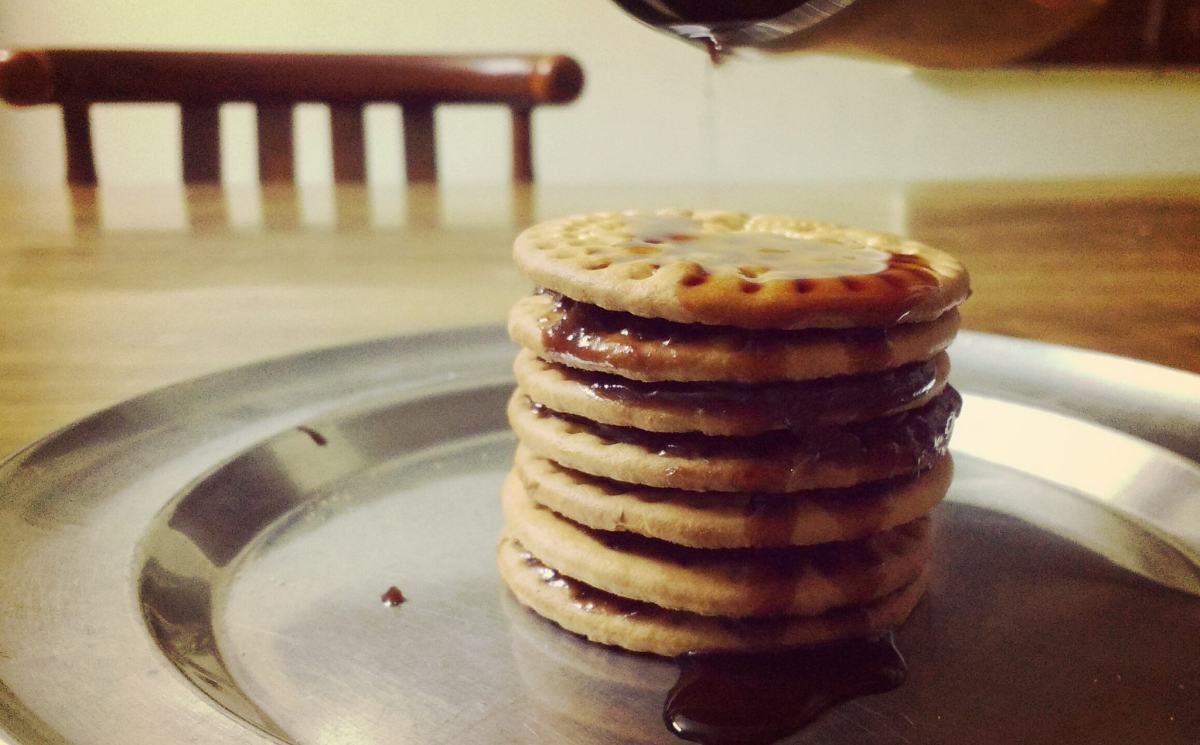
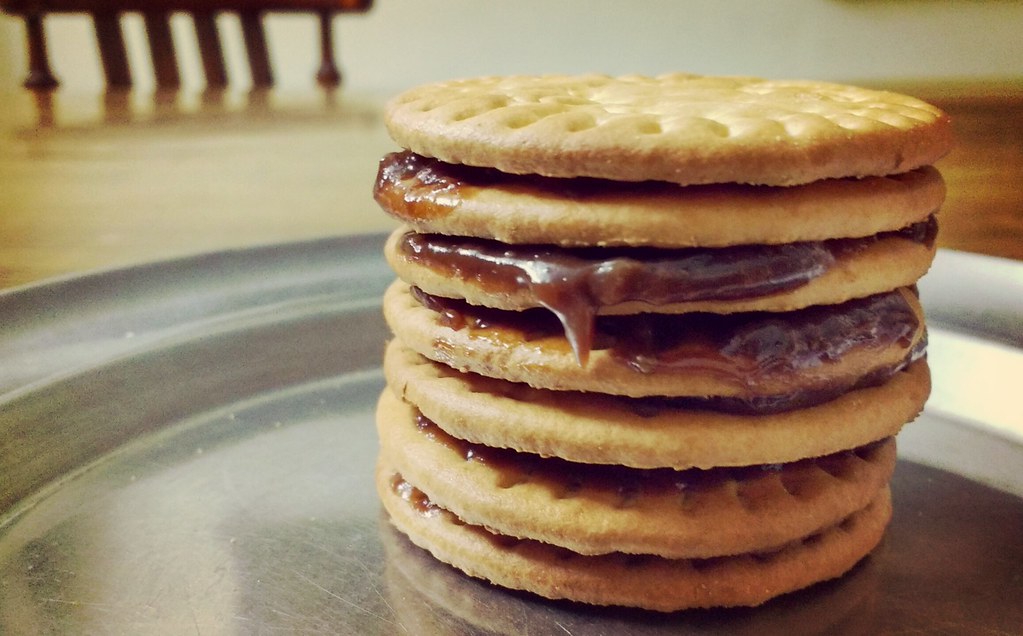
The recipe – a tower of biscuits layered with creamy chocolate and dunked in coffee – was one my mother had been wanting to try out for long.

I took pictures along the way and noted down all the steps – detailing everything a TV chef would likely mention. Taking pictures meant that it took us four times the time it would normally take to make this sweet.

This week, Jen Hooks asked bloggers where their heart is. Right now, it is set on devouring this delicious piece of home-made tower of biscuits!

The tower of biscuits

To see how other bloggers interpreted this week’s photo challenge, head over to the Daily Post.


For those who are interested, here’s the recipe:

  1. Whip some milk cream with chocolate sauce.
  2. Add cornflour and heat the mixture over low flame, stirring constantly, till it thickens into a smooth paste.
  3. Spread the mixture over 6 Marie biscuits and place them one on top of the other.
  4. Cover the tower with an extra biscuit and press lightly.
  5. Pour coffee decoction over the tower, ensuring that the biscuits are fully soaked. Drain the excess coffee and place it in the freezer.
  6. Remove it after about half an hour, or till it becomes stable. It should be soft and have the consistency of cake. Make sure it does not freeze completely, or it will be nearly impossible to eat it!
  7. Serve as is, or sliced.
  8. Consume immediately – we did not keep it to test its shelf life 😉
Categories
Hobbies

H2O


States of H2O
The three states of H2O

View of the snow-capped mountains surrounding the holy glacier at Tsomgo (also called Tsangu or Changu) Lake beneath cloudy skies.

In response to the photo challenge on the Daily Post by Lignum Draco