In the very first company I worked for, I had a colleague who was obsessed with a clean inbox. Only things that need immediate attention should remain in the inbox, he explained to me. The rest should either be archived or deleted. He mercilessly deleted emails even as he spoke. I was shocked.
The Hoarder’s Dilemma
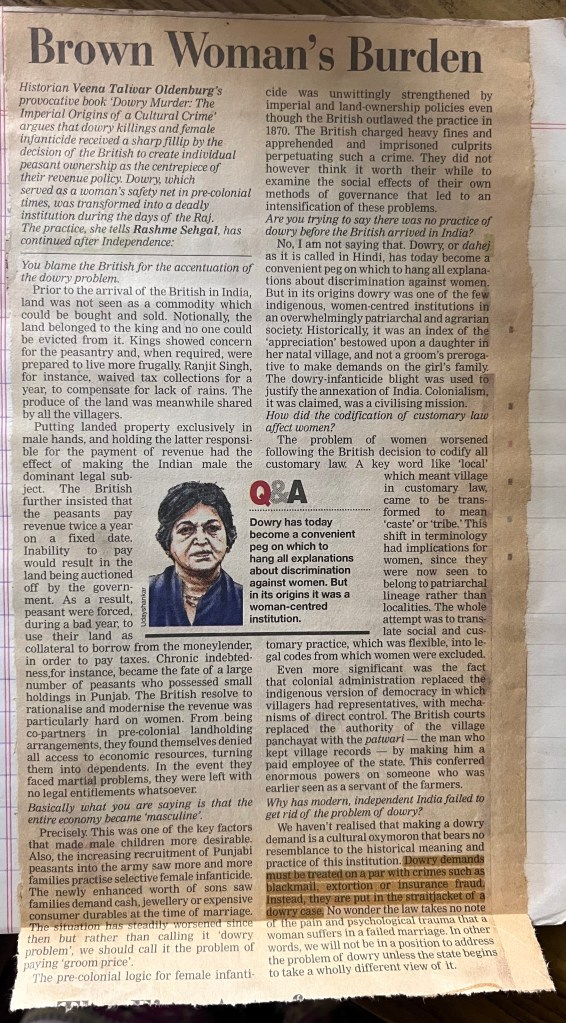
In school, our teacher encouraged us to keep newspaper clippings of things that interested us. It was a fun activity, and I retained those notebooks long after I’d completed my schooling. Recently, as I was clearing out an old shelf, I discovered these notebooks, the newspaper clippings now yellow, and some of them quite amusing. I thanked my younger self for keeping them.
Over the years, I’ve kept things for posterity. Some of them are reminders of good times. Like tickets to the Davis Cup match from 2005, and the tennis ball that a player lobbed into the crowd after winning her match during the Commonwealth Games in 2010.

Then there are mundane, but important things—payment receipts, warranty cards, service contracts…
Every once in a while, we review what we keep and what we discard. Such cleaning is necessary in households where space is finite. The old must make way for the new. What was relevant once may now be better dispatched to the kabaadiwaala (scrap dealer) for recycling.
For sentimental folks like us, this sort of cleaning can become challenging. For example, when I discovered a yellowing piece of paper with some handwritten Tamil script, I couldn’t bring myself to discard it—perhaps it had been written by one of my grandparents. That paper magically made me feel connected with them. I gently blew the dust away from the paper and filed it away.
I did manage to locate some things I could throw away, but not before I took pictures of the items I was discarding.
Then: Lost and Found
Back in the day, it was easy to lose things. Photographs, phone numbers, notebooks, drawings, clothes. They could get damaged during relocation, be eaten by insects, or simply be carried away by the wind. We’d feel sad for a while. But then we’d find ways to fill in the void. We could make new memories or connect with mutual friends to catch hold of lost ones. Our minds were as new and fresh as our cupboards.
And then there was the hidden joy of rediscovering items while decluttering.
Now: Never Lost, Never Found
With digital storage, however, things are different. We don’t lose things anymore. Things stay with us forever. And we never go back to look for anything either. Our virtual shelves barely distinguish between the old and the new.
We’re no longer limited to the 36 photographs of a reel. So we take hundreds of them that we otherwise may not have bothered with in another time. Case in point: the picture of the newspaper clipping above. While we occasionally flip past the old physical albums at home, when was the last time any of us looked at our digital photographs from 5 years ago?
Our phone books never get filled, so we don’t migrate to a new one. Thus, we don’t need to weed out irrelevant numbers with the fresh book. Why are there so many people in my contacts list?
We don’t bother with our personal emails. They are far too overwhelming to look into.
We gather virtual items—sometimes consciously, but mostly without paying much attention. They don’t take up physical space in our homes. So our hands aren’t forced into taking action to routinely prune what we own. But they do take up space in some remote server, guzzling electricity to keep our trash alive.
Digital Declutter Mode Activated
Over the past few years, my inbox has been warning me that my space is about to run out. Finally! There is now an incentive to do some digital housekeeping.
Why do I have so much stuff in my inbox? And why should I have to pay to keep all that trash? And so, I began on a slow marathon to actively make space. I recalled how a dozen years ago, my colleague ruthlessly cleaned his work email. And I went to work.
Over the past several months, I’ve been rummaging through my inboxes and taking split-second decisions on what deserves to remain as an archive and what needs to go. I started with the latest emails first. The earlier we take decisions on incoming traffic, the easier it becomes to maintain later on.
Happily, I have now found joy in this activity. Visiting my personal, spam and notification-filled inbox has now become quite a satisfactory pastime. Seeing the number on the notifications badge reduce feels like a game.
Where once, my screentime was dominated by social media algorithms and games, I now spend some swiping left to delete, or discovering interesting reads.
I began with 8000+ unread emails across all my inboxes. Today, I’m looking at less than 500 on the tiny badge on the email app. My ultimate goal is to come down to as few unread emails as possible, deleting them as I finish reading them.
Levelling Up: Discovering A Forgotten Civilisation
Having managed to declutter two lesser-used inboxes, I have now begun exploring the archives to see what else I can clear out. Much like physical decluttering, digging through the archives unearthed curious bits from a bygone era.
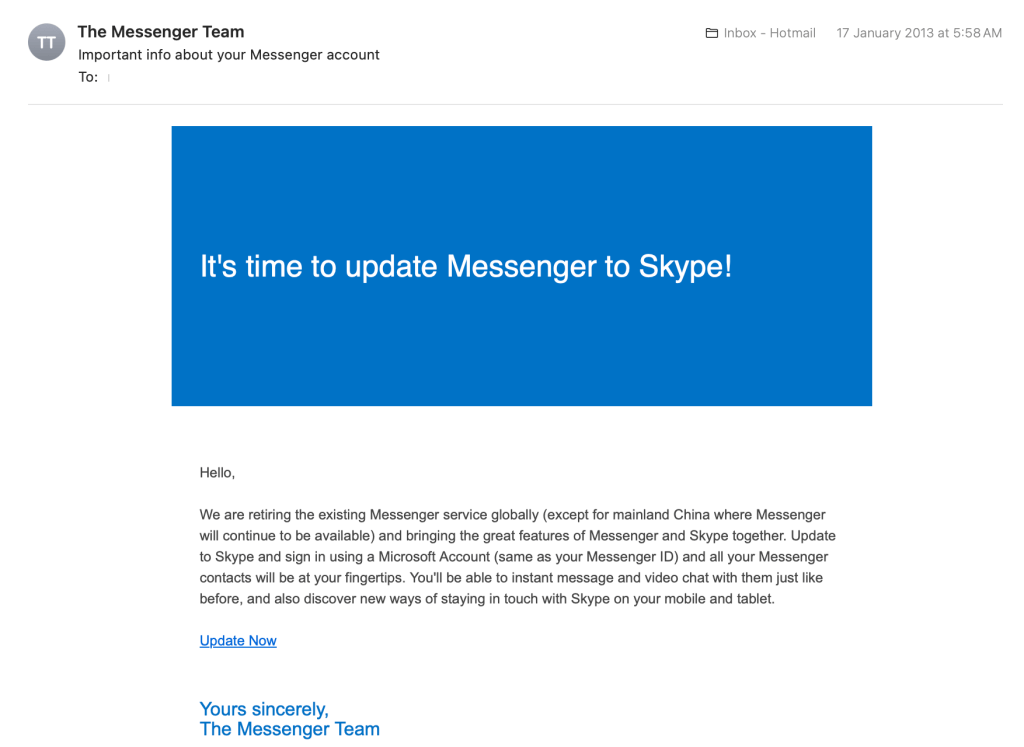
In early 2013, Microsoft sent me an email asking me to upgrade Messenger to Skype! I couldn’t help but smile. A dozen years later, Skype has now been replaced by Teams. It reminded me of the ephemeral nature of the digital world. When digital products can evolve and fade away, why should we hold on to clutter? The verdict on the email: Delete.
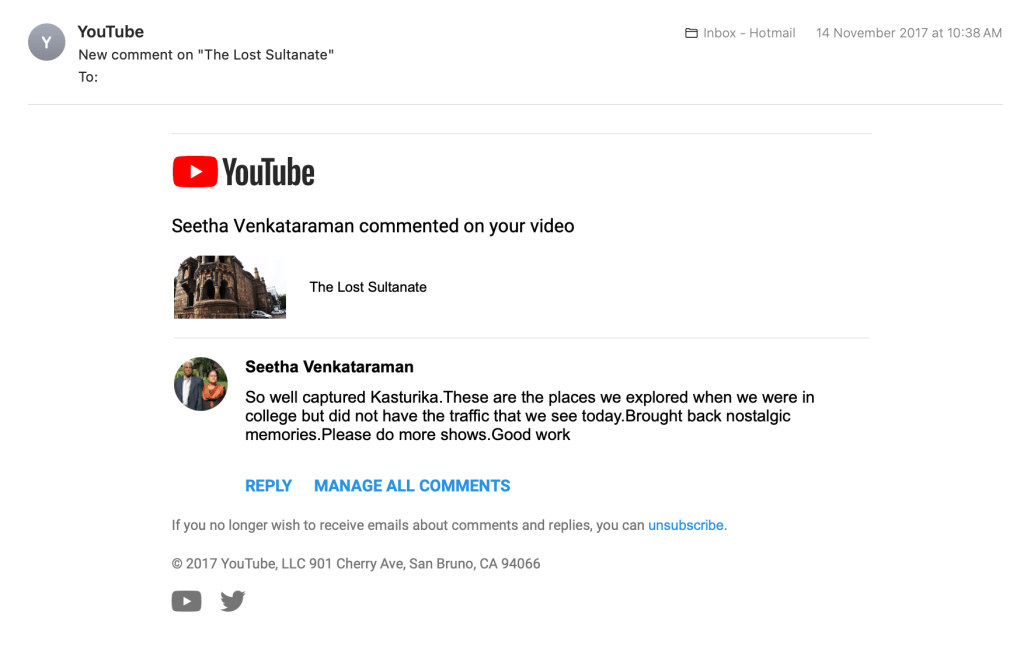
I found a series of emails from YouTube, notifying me about comments on the videos I’d posted. I read and deleted them one by one. Until I stumbled into one from my late aunt. My aunt had been quite enthusiastic about my adventures in digital storytelling, always finding time to read my blog and watch the videos. That comment was a digital remnant of her constant encouragement and a reminder of the void in our lives since her passing. The verdict on this one: Keep.
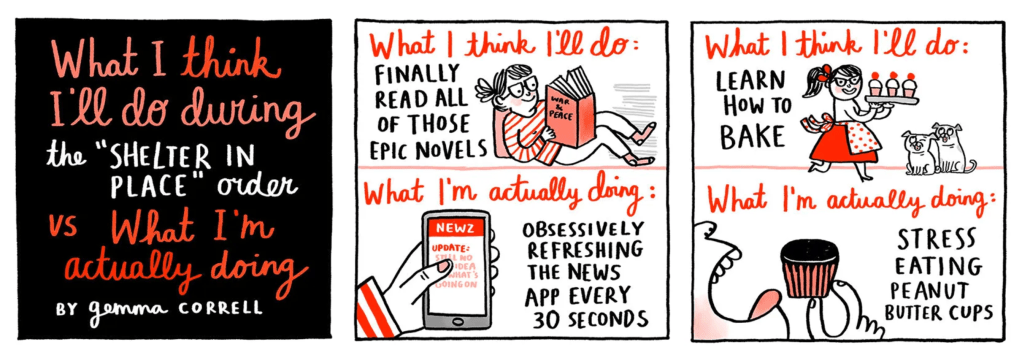
Ever since I began this trip down my archives, I’ve encountered surprises. I rediscovered publications I’d forgotten (like The Nib), and email courses I’d signed up for years ago, but never got around to reading (example: a course from the now non-existent InVision).
My inbox feels like a wonderland again. Every trip feels like an adventure. What other surprises hide inside my archives? I can’t wait to (re)discover.
You can watch the documentary, The Lost Sultanate, on YouTube.
I wrote about the struggles of making the video, The Lost Sultanate in Getting the monkey off my back.













 Musings of an eccentric mind