Categories
Stories

The Eternal Smile


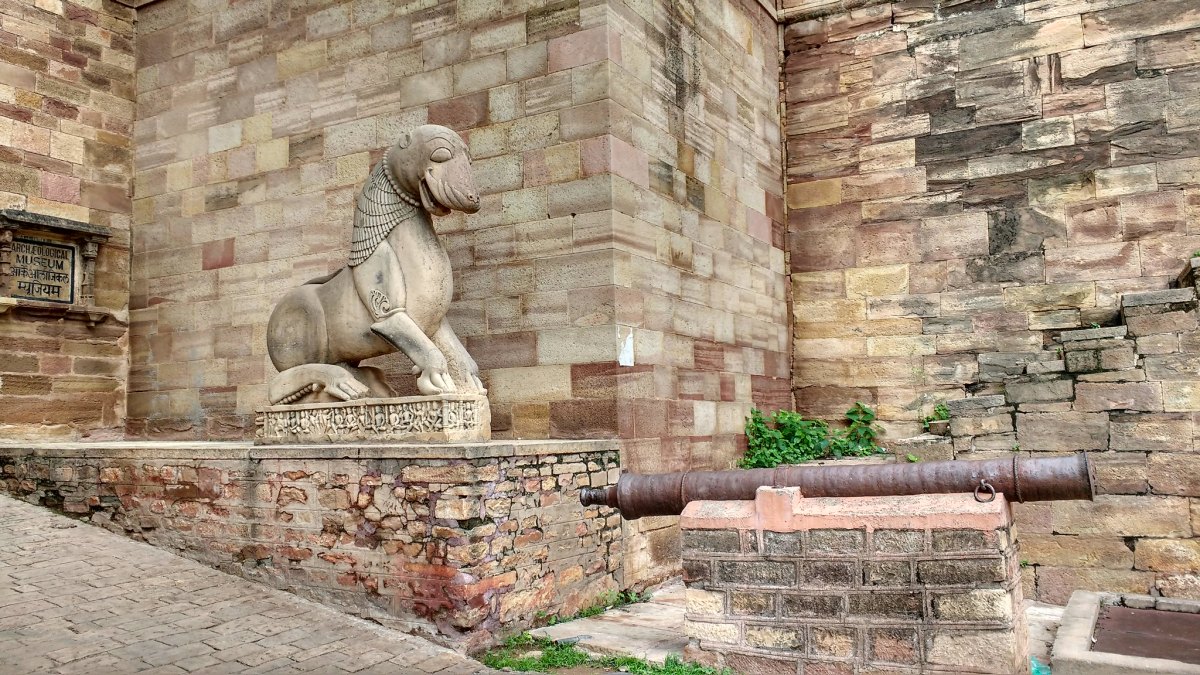
We walked past the stony gaze of the lions guarding the giant entrance. Fresh monsoon grass peered from beneath the sandstone tiles. The wings of the Fort kept a keen watch from above. The ninth Queen of Raja Maan Singh surely must have been special to get this much attention.

We walked on what was the front porch of the Gurjari Mahal and trekked up a steep path leading to the Palace. To our right was a well-manicured lawn. And to the left, a steep rocky path that seemed to lead nowhere.

The Palace had a short and narrow flight of stairs that led to a beautiful courtyard. Intricately carved stone statues of God and Goddesses here, pieces of floral patterned pillars and walls there.

The word museum was, perhaps, not very appealing to most tourists. Even those who strolled in didn’t stay long. The cool breeze only enhanced the peaceful ambiance of the courtyard.

“Do you have a ticket for your camera?” A portly man asked as we began freezing moments for our album.

We showed our ticket.

“Well, then please use only one—either your phone or the camera. Please!” Beneath his small smile, the request was firm.

I put away my phone and smiled sheepishly. Half expecting the man to run back into his administrative chamber after we had complied with his request, we turned to continue our exploration.

“Oh but first you must come and see the Salabhanjika!”

The Salabhanjika is the museum’s prized possession—a miniature statue that epitomizes femininity. We had read about the sculpture being guarded closely and were under the impression that we’d need special permissions to see her. So when the gentleman invited us to take a look, we happily accepted.

We followed him to his office. A small dark room furnished with a simple desk and a few plastic chairs. The medieval walls were covered with yellowing photographs and newspaper clippings about the sculpture. Behind the desk was a cell. Deep inside behind steel bars, stood the small, smiling Salabhanjika.

“She’s called the Indian Monalisa!” His voice was filled with pride at being the guardian of a rare sculpture. Like many of the exquisite sculptures that we’ve now become accustomed to seeing, Salabhanjika was breathtaking.

“When she was first found, she looked like this,” he said, pointing towards a grainy print stuck on the wall. “Her head was found later and was fully intact, so we could piece her together. We were lucky.”

“Look at her carefully. The more you look at her, the more she’ll smile back at you! Look at her from any direction and she’ll look towards you.”

We looked again. And she did, indeed, appear to be smiling more than before.

“Please take a picture. Go on, go closer. Make sure you switch off the flash!”

We leaned in, the lens of our camera wedged between the steel bars. Click!

“She’s been insured for five crores!” our host could hardly contain his excitement.

Five crore rupees. The Monalisa is insured for a hundred million dollars.

Salabhanjika’s smile grew wider.

I wondered, if she had been discovered before the Monalisa, would Leonardo Da Vinci’s painting be called the Italian Salabhanjika?

She stood there silently. Still smiling, and letting the question remain unanswered.


Salabhanjika is a Sanskrit word meaning ‘breaking a branch of a sala tree’. There are many intricate sculptures of Salabhanjika in Hoysala and Bednur. But the one in Gwalior is reportedly the only one that smiles.


This story is part of my digital book, The Speaking Rock.

Originally written in 2017, the ebook was published on the Juggernaut platform. 

For those who aren’t aware, Juggernaut was a publishing platform that claimed to democratise publishing. It’s slogan, “You don’t need to know anyone to get published.” It provided writers access to publishing tools and a marketplace where readers could connect with writers directly. The Speaking Rock was one of three ebooks I had published with them. My story Free Bird also won a short story contest and was featured in their anthology collection.

I loved that platform, even from a design perspective. I even wrote a glowing review on Design Tuesdays.

Unfortunately, the platform soon introduced a paywall and put my stories behind a paywall (without offering any royalties). And thereafter, the platform disappeared altogether, taking my work with it, leaving me hanging high and dry. I felt betrayed. I felt bitter. I kicked myself for being naive. Of course, their business model wouldn’t pay their bills.

For a good three years, the site just showed an ugly “under construction” message. No way to get in touch with them. No way to retrieve my work. I had made peace with the fact that I’d lost my stories—until a few days ago, when I found a draft on Google Docs that had one of the stories. And when I saw the draft of the Eternal Smile sitting right under my nose on WordPress, I almost cried.

Funnily, when I opened Juggernaut’s website today, I found that it was no longer under construction. (The internet archive’s Wayback Machine reveals that the site was still down as recently as 5 days ago!)

There is no mention of a writer’s platform, and no way for any one to log in and retrieve their work. Today, the website is just like another publishing site that displays influencers and popular media icons who’ve published with them. So much for democratising publishing!

As for me, I’m happy that I can finally share Salabhanjika’s smile with you. I’m still looking for that photograph we took. I’m sure it’s there somewhere in our virtual closet.
Categories
Stories

Resilience


It is not the beauty of a building you should look at; its the construction of the foundation that will stand the test of time.

–David Allan Coe

The Gwalior Fort, constructed atop a hill, is a mammoth structure. Legends say its construction began in the 3rd Century, while historical accounts put it anywhere between the 8th and 14th Century. This Fort has seen numerous rulers and severe onslaughts across the centuries and withstood all that has been thrown at it.

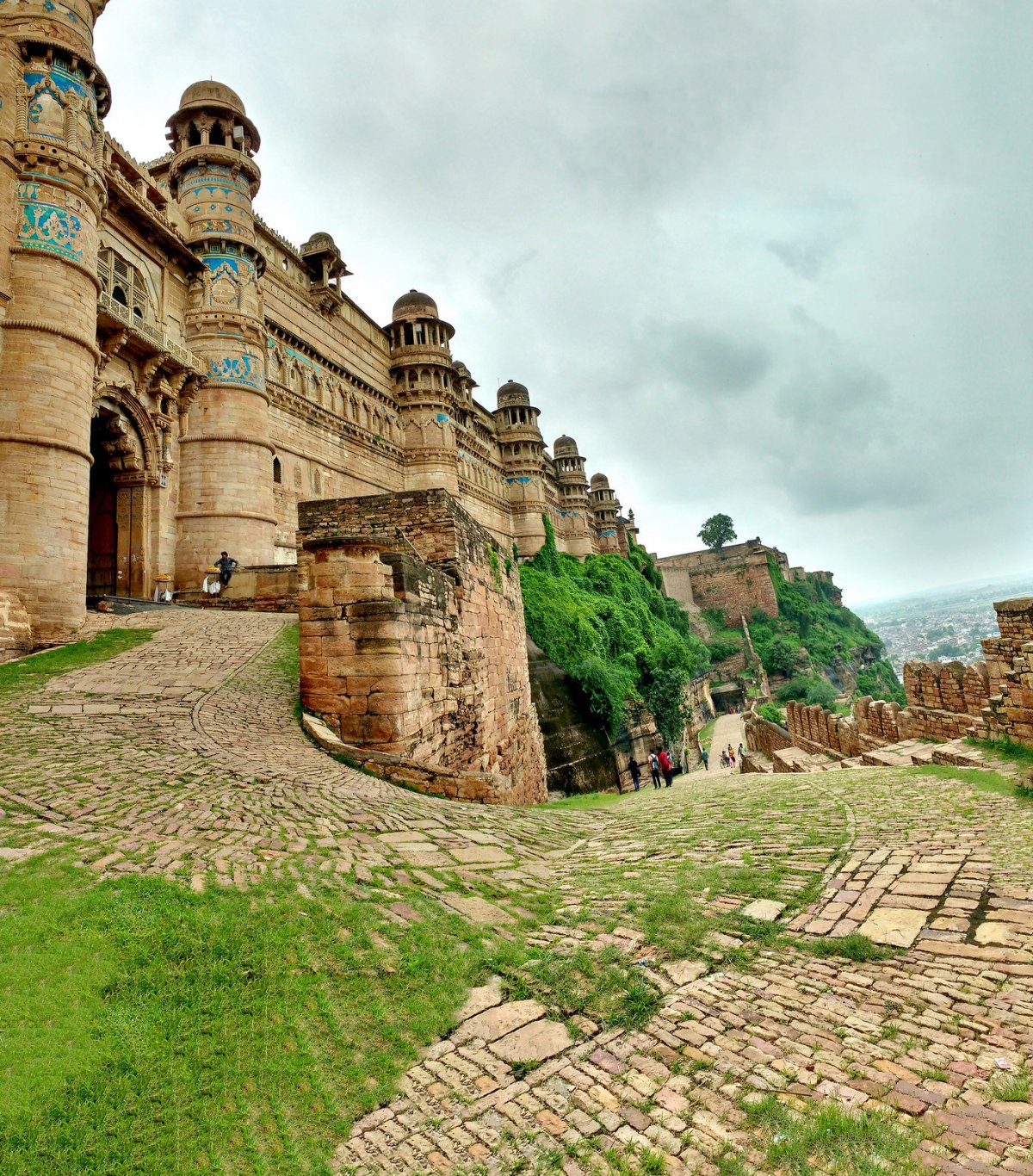
As with many of the places we have visited, it is extremely difficult to paint a true picture of the scale of the structure. I could write about the long trek to the top, and the sweeping views of the city, but the closest that I can get to explaining it, is to point to the size of the people in this (incomplete) picture below.

A long way to the top
The entrance of Gwalior Fort

Photo taken with a Moto G3, edited with Image Composite Editor and Befunky. Click/tap to enter my Flickr Photostream


This is post #12 in this year’s NaBloPoMo, or as Ra calls it Nano Poblano

NaBloPoMo = National Blog Posting Month = Thirty straight days of blogging

Categories
Stories

The White Palace


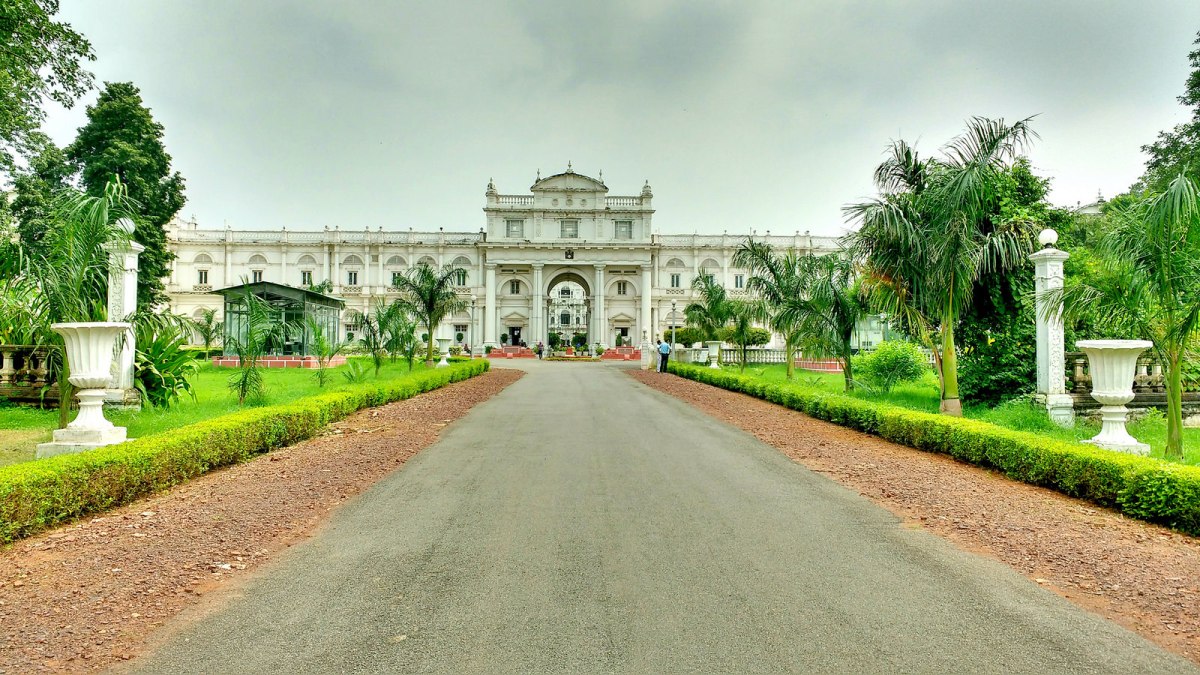
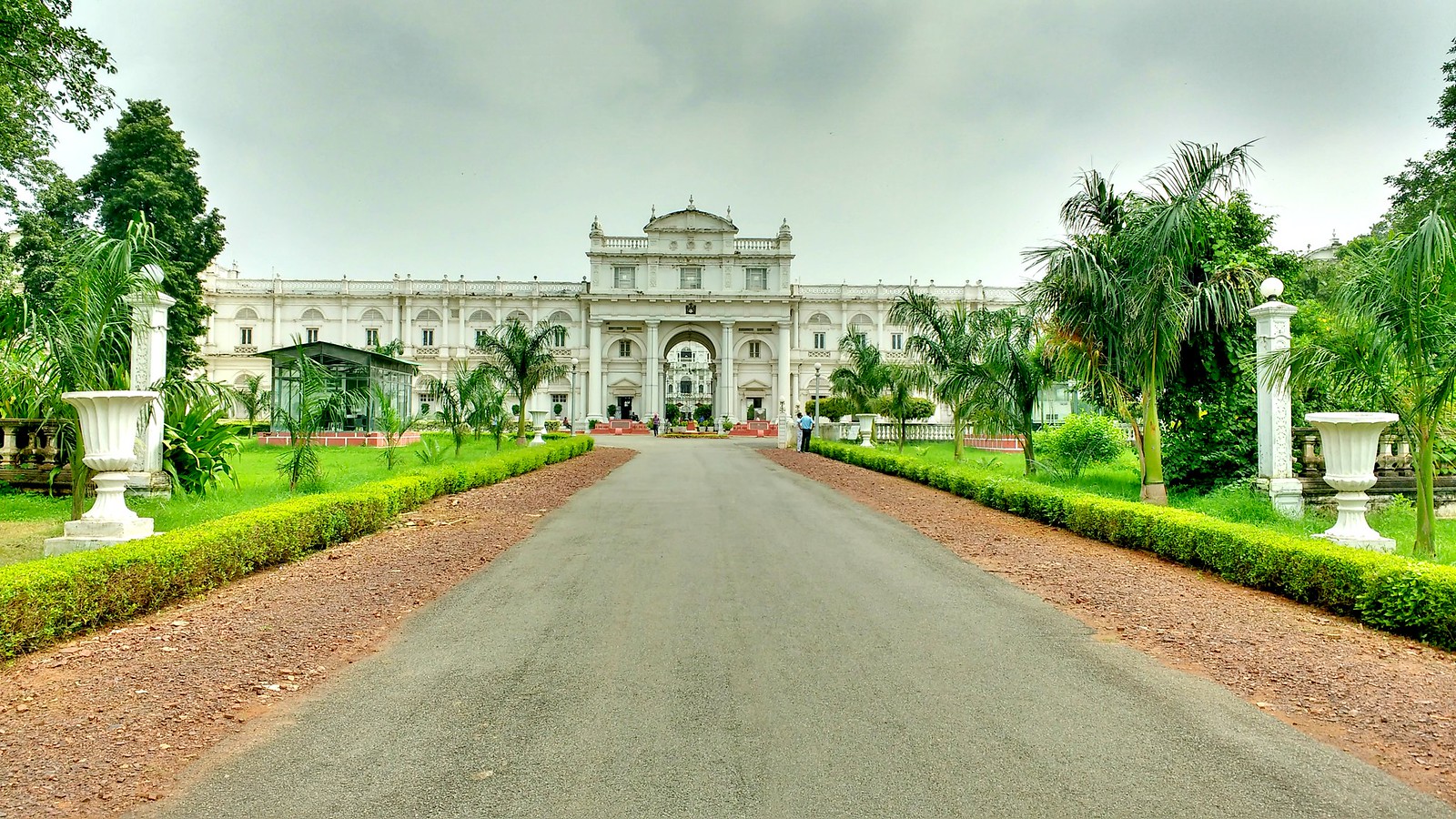
The Jai Vilas Palace in Gwalior combines three European architectural styles—the first storey is Tuscan, the second Italian-Doric and the third Corinthian.

There is an eclectic collection of items housed inside the museum, which can be visited by the public. One section still serves as the residence of the heirs of this Palace.

We weren’t allowed to carry bags inside (there is a provision of a locker), and strangely, we weren’t allowed to carry umbrellas inside either. While the museum itself is entirely indoor, to exit the Palace, one must pass through the central lawn. As luck would have it, it began pouring just before we were about to complete our tour.

If you plan to visit this Palace in Gwalior, make sure you have sufficient time—we spent over two hours (excluding the rain delay), as there is much to see. And if you are short on time, pace yourself to keep the maximum time for the last section—the opulent Durbar Hall. We had read about the extravagant decor and seen pictures of the massive chandeliers. But it was only when we saw the hall that the reality of its grandeur hit us.

In our limited exposure to exotic places, some places leave a lasting impression, some of romance, others of awe. The Jai Vilas Palace, even with all its magnificence, left a somewhat cold and distant feeling. It’s hard to tell why – perhaps it’s the excessive indulgences; or the exclusively European architecture; or perhaps it was the weather; or just maybe, the contrast between the lifestyles of the common people, and that of their representatives, that is so blatantly visible to the casual observer.

Jai Vilas Palace
Jai Vilas Palace, house of the Scindias. The imposing structure and all its extravagance is visible right from the entrance.


Photo taken with Moto G3. Click/tap to enter my Flickr Photostream.


This is post #11 in this year’s NaBloPoMo, or as Ra calls it Nano Poblano

NaBloPoMo = National Blog Posting Month = Thirty straight days of blogging

Categories
Stories

Guest Post : Jal Satyagrah


As the world reflects on the ‘Occupy Wall Street’ protests, residents of a small village in India protest against the government for their basic human rights…

The government of Madhya Pradesh decided to raise the water level of the Omkareshwar dam, without providing rehabilitation for the residents of the villages, which would be submerged. Residents of the submerged villages protested – by standing their ground.

From the perspective of a volunteer who saw the struggle first-hand, penned by my good friend, Sneha Chandna:

Kanshi Lal Bhai* sat in water for 17 days along with 50 other people in Ghoghalgaon, to protest against the illegal raising of the water level in Omkareshwar dam. Ghoghalgaon is one of the 30 villages that will submerge, when the Omkareshwar dam reservoir is filled up to its full capacity.

That Kanshi Lal Bhai is beyond 55 years of age, and is completely blind, complicates the situation a bit, but doesn’t stop him from supporting other protesters.

The Government made an official announcement to raise the water level in Omkareshwar dam (from 189 to 193 metres), in the month of May, and started raising the water level in August, 2012. This was an open and blatant violation of the Supreme Court and High Court order, that says that the government can submerge a region only after 6 months of the Resettlement and Rehabilitation of its people.

It seems the distance between a blind, displaced, illiterate, yet determined Kanshi Lal ji, and the machinery for the Delivery of Justice, (which includes the National Hydroelectric Development Corporation, Madhya Pradesh Government, High Court of MP and the Supreme Court), is more than the distance between the Earth and the Sun. It is this distance that makes the victory of the protesters at Omkareshwar Dam, all the more special.

Being a participant in the whole process, one is deeply humbled. In fact, as the protest progressed before my eyes, with each passing day I found it difficult to believe that a small set of people with their truly limited resources could manage to keep the state machinery on its toes and the print and electronic media on their side. As I expressed my disbelief to a senior NBA activist Sh. Ramesh Billorey, he said that in spite of the differences between the resources and power, it’s the truth that helps one sail through, “Satya Hamesha Jhoot par Bhaari Padta hai”.

During the time of the protest, Print and Electronic media played a very crucial role in highlighting the issue all over the country and put pressure on all decision-making institutions to agree to people’s demands. Media persons had, in fact, become a part of the support system for the movement. Also, as the protest ended, realization dawned that the movement had made history, by awakening the conscience of a nation, that is otherwise too busy to notice anything that the tribal or rural folks have to say. Also, it led to similar protests in other parts of the country, where development-led displacement has happened, or is about to happen, such as the issue of Koodankulam nuclear plant.

The victory of those displaced by the Omkareshwar dam, was followed by strong police action in the Harda District of Indira Sagar Dam, where the MP government refused to agree to people’s demands, and removed them forcefully from the Satyagraha site. A lot of media persons asked NBA activists why would the government agree to demands in the case of one dam, and not agree to similar demands by those affected by another dam?

Had the government agreed to the demands of those affected by the Indira Sagar dam, they would have had to allot more than double the amount of land they will now allot to those displaced by Omkareshwar dam.

As a lay person, often times I’ve been forced to wonder, what if someday some of my own rights are violated. It will take so much of time, money and effort to figure out a way to access the legal machinery, that it might as well become the single-most important pursuit of my life.

If it could be this way for an educated young person of the country, imagine what the situation would be for the tribal communities of a village, which has not known any vocation other than farming, which grows most of what it consumes, or which has little money, if at all. All the arguments of the government seem skewed in the scheme of things.

Some 30 villages will submerge because of the Omkareshwar dam, and 268 villages will submerge due to the Indira Sagar Dam. These dams will produce electricity.

Interestingly a short stay in one of the villages that will submerge, will make one notice that electricity in these very villages is available only for 8-10 hours. Yes, it’s true that Foreign Direct Investment might attract investors, but let’s first try to impress them with roads and electricity in every village of the country.

* * *

* Name changed

About the writer: Sneha has just returned from Khandwa, Madhya Pradesh, where she was actively involved with the Jal Satyagrah. She is currently working with ‘Koshish’.

Narmada Bachao Andolan was established in 1989 by Ms Medha Patkar, protesting against construction of dams across the River Narmada. While Ms Patkar works more at the national level now, the Jal Satyagrah was coordinated in Khandwa, by Alok and Silvy. Silvy sat in the water for 17 days, and that is how people sat along with her, and Alok coordinated fully with the media.

For more information on the Narmade Bachao Andolan, and the Jal Satyagrah, please visit their blog, right here on wordpress : Tales Of Narmada