Categories
Hobbies Stories

We Created A Monster!


After months of procrastination, we present to you, our creation. That the topic for this week’s photo challenge happens to be ‘create’, is a lucky coincidence!

The Project:

A 2d animated short film, being made for a student’s competition, on behalf of our institute.

The Concept:
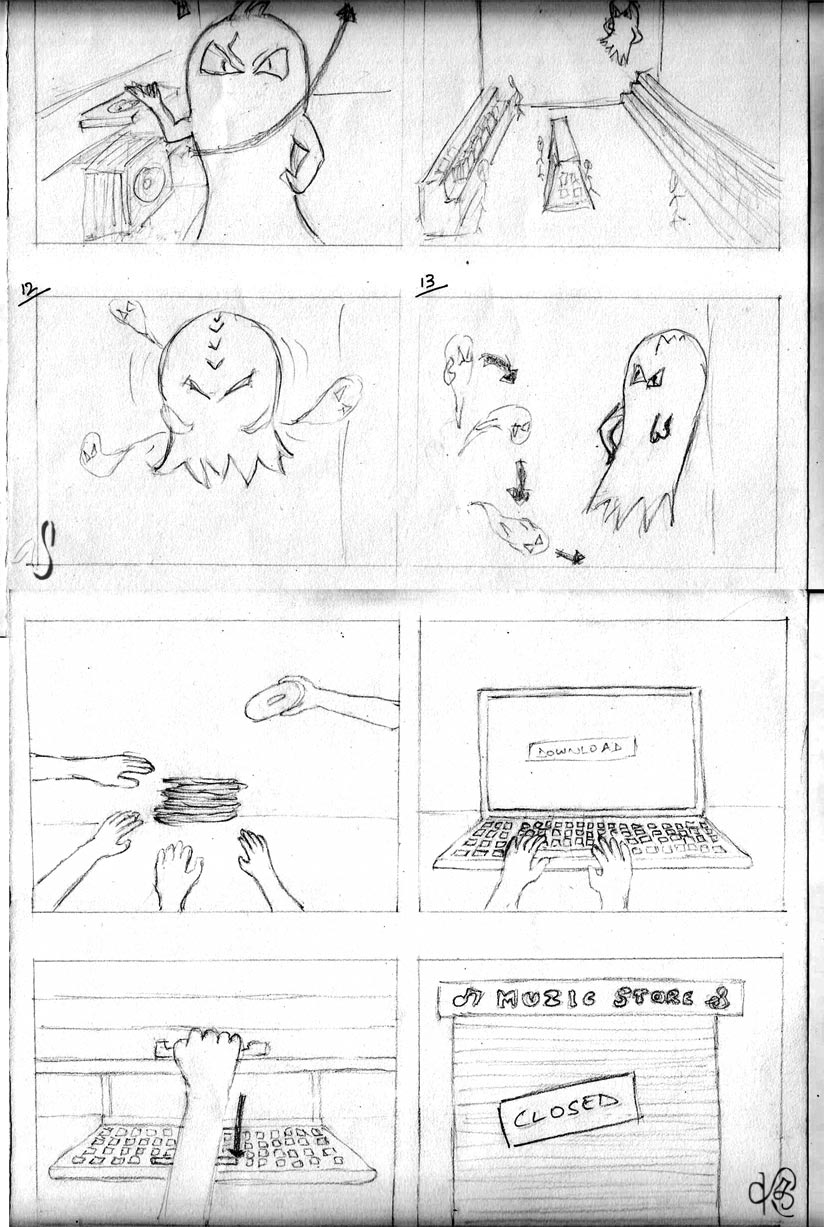
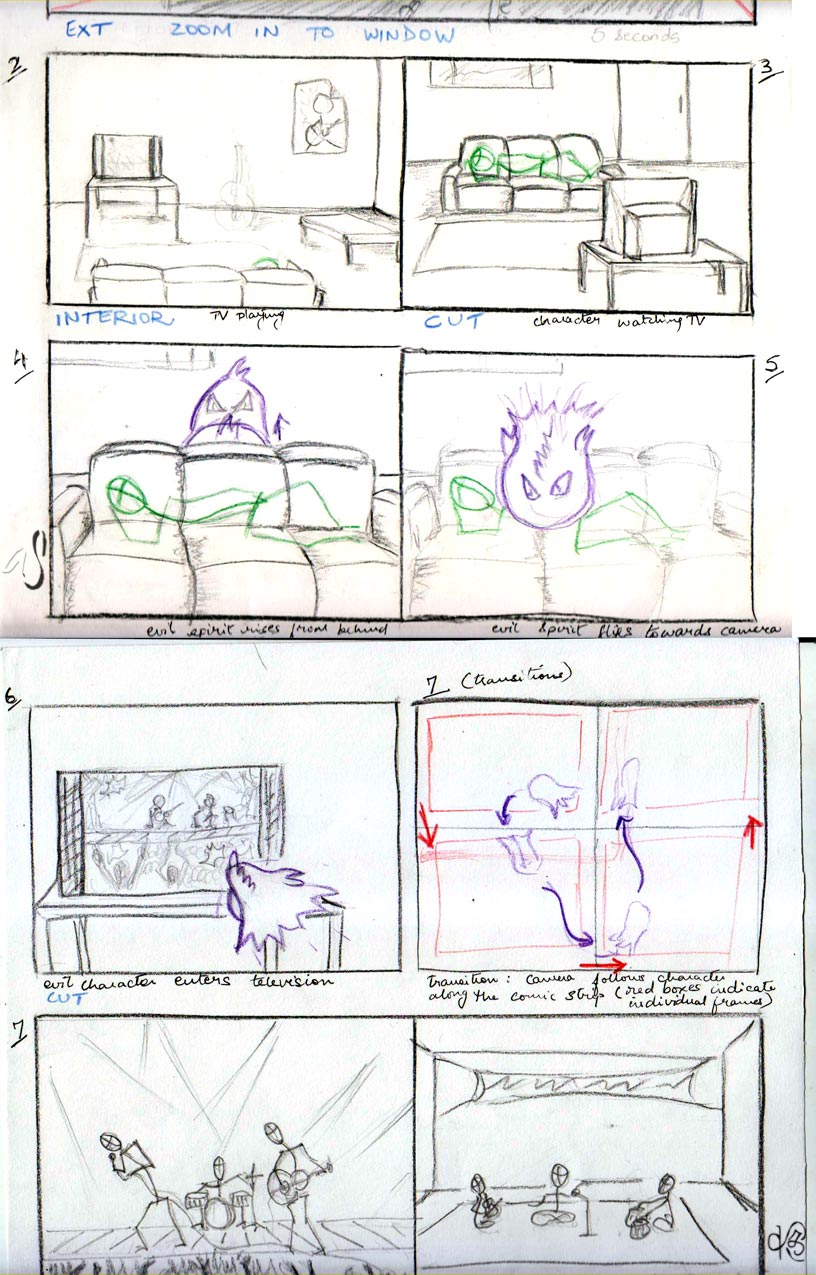
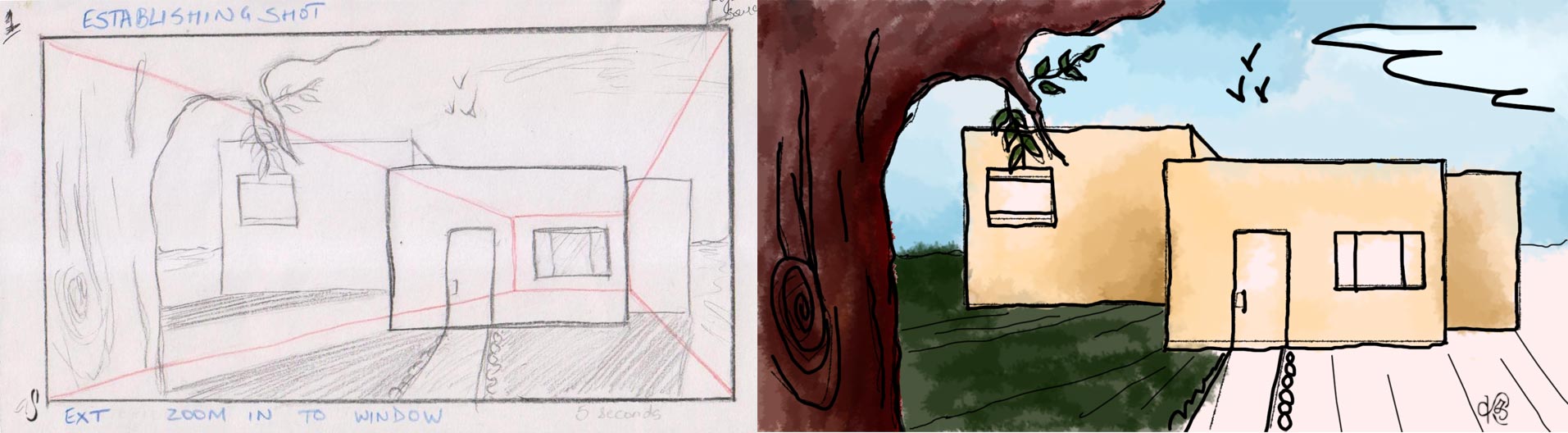
Story Board Extract
Thumbnail story board extract
Story Board Extract
An extract from the story board

Theft of content discourages the the creators of original content. This, in turn, hinders creativity, and ultimately, when creation stops, everything comes to an end.

While this is rather extreme, we used it as the basis for creating our protagonist.

The Protagonist:
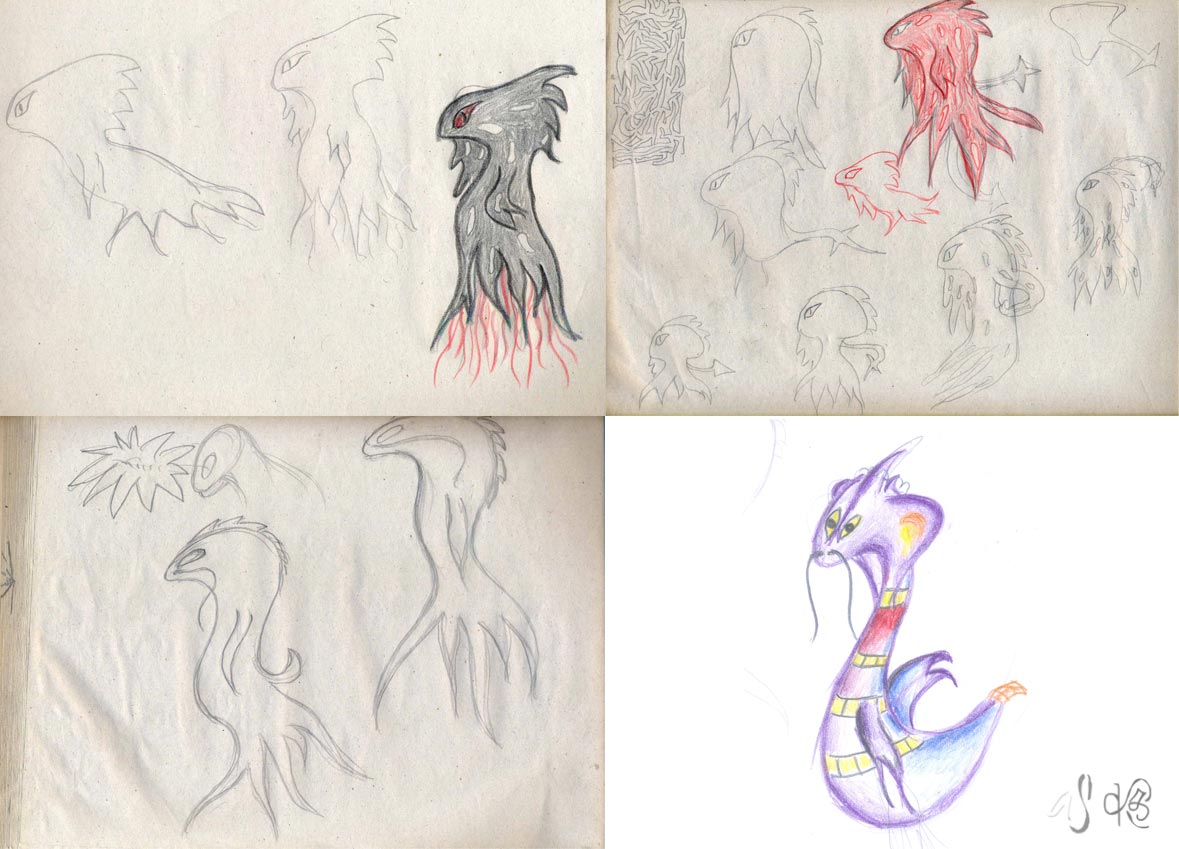
Concept Character
In search of our spirit

A formless spirit. People cannot see it, but it watches our every action. It has always existed in some form, but over the years it has grown exponentially. We needed a simple, yet mean creature. After unsuccessfully creating several rather cuddly creatures, we finally managed to locate our spirit.

The Plan:
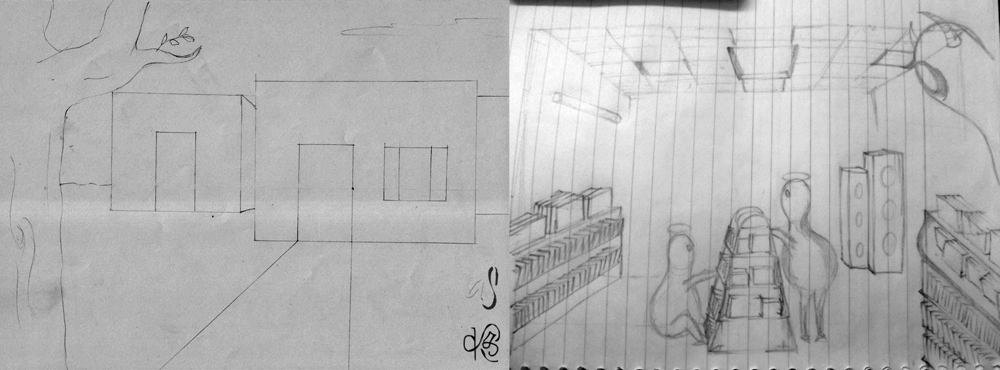
Putting ideas to paper

We began with a simple story, with simple line art for presentation. It eventually grew more complicated, with more supplementary characters, and more complicated animation.

The Resources:

A lab – which we shared with five other students, two computers and a pen – tablet.

For the next three months, this room would virtually become our second home. We entered early morning and left late in the evenings – including Sundays. The windows were covered with black paper. The air-conditioning, at times, prevented us from suffocating, and at times made us shiver. The pen tablet came close to becoming my best friend!

The Human Resources:

We searched, and searched, and searched. We knew we needed a character artist. We found none. Eventually, we decided to handle it ourselves.

The Implementation:
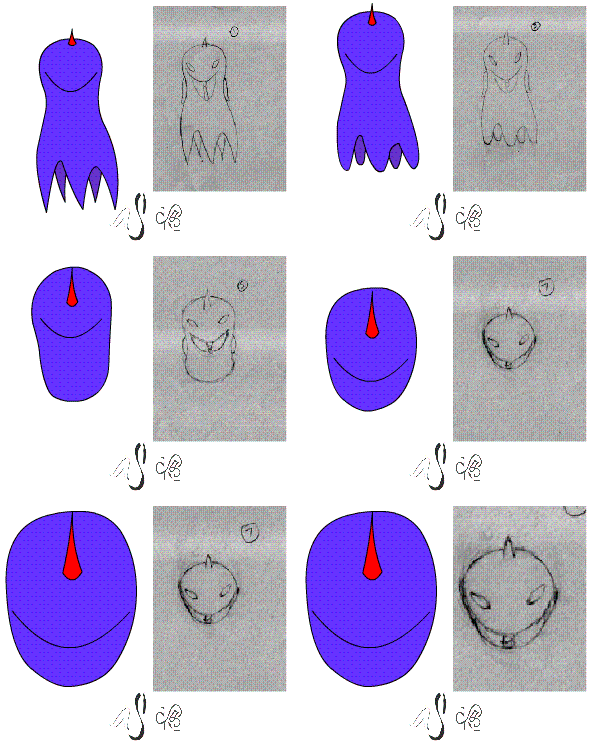
Trying out animation
Trying out animation – manually, and digitally

To create one second of an animated clip, we needed 24 frames. A software can make things move smoothly and blend frames, saving a lot of work. But it has its limitations. There are times, when everything must be done manually. For our story, every bit of animation involved manually creating unique frames.

Back when early Walt-Disney animations began appearing, there was no software which could blend and create frames. There was no copy and paste. The artists created each of the frames from scratch. The colours couldn’t be picked from a digital colour palette. They had to mix paints and inks for every frame. Yet they managed to create believable, realistic characters, which had a consistent form, and colour across every frame!

Where We Messed Up:
Testing style
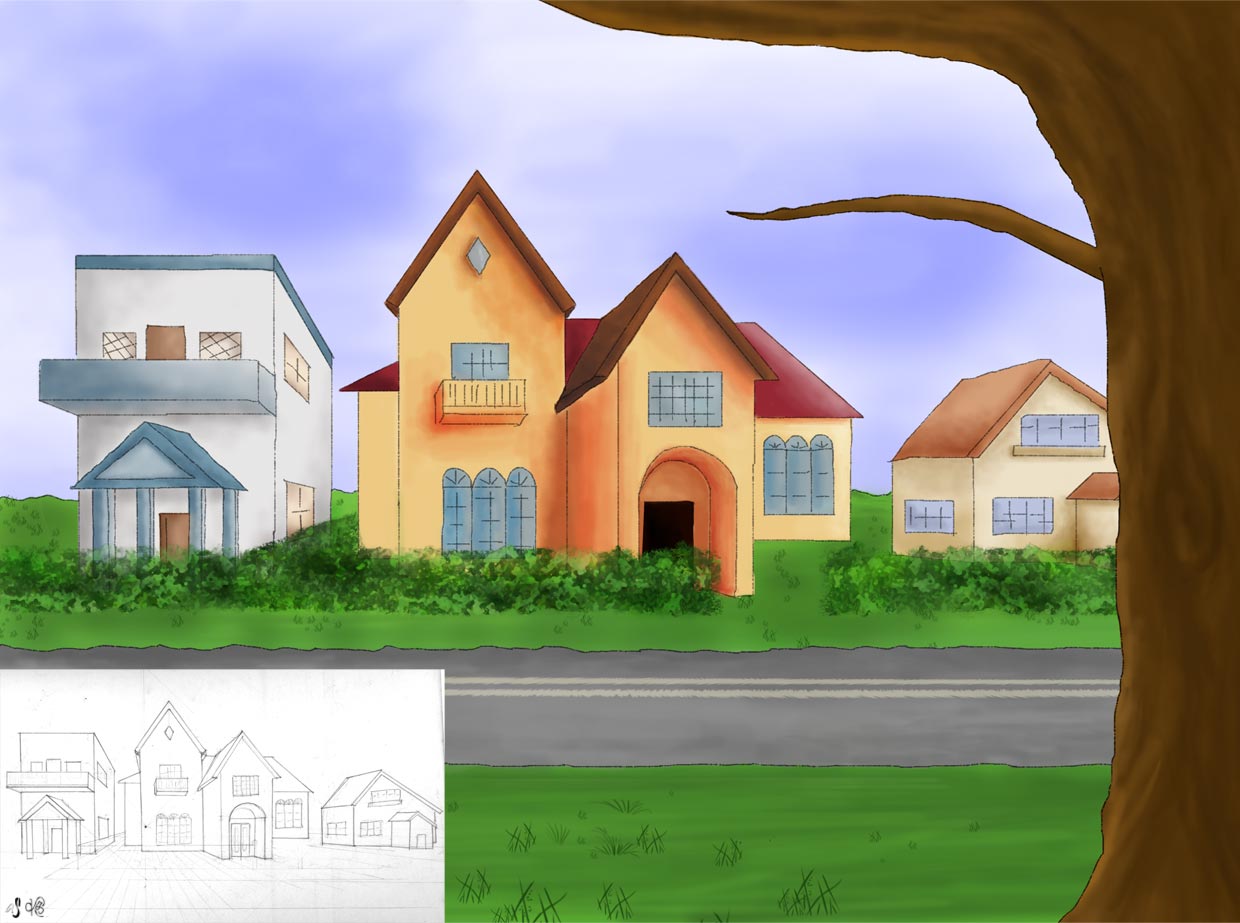
Trying to establish a style
Becoming a little complex
Still trying to establish a style… Becoming a little complex

During the process, we fought. A lot – with each other and with our own teachers. We argued about the best approach towards solving issues. We lost a lot of time, just trying to figure out the style for the film – something that should actually have been a part of the planning stage. While we did do a lot of planning, our paper work was inadequate. It threw our schedule so far away, that our mentors, peers, and even we, began to lose hope of it even being completed. We lacked the foresight, and the skills which, we realised, were essential for taking on a project of this magnitude.

It seemed like our project had been set up to fail.

The Controversy:

Piracy is a sensitive issue, and a grey area. After all, sales of recorded music hardly account for an artist’s income. They benefit distributors. And artists earn millions from live concerts anyway. The concept seemed irrelevant for the digital age. The internet makes the cost of producing and distributing intellectual property almost negligible. A viral video on a video-sharing site is all it takes to get famous!

Ironically, we used music with creative commons licenses for our film on piracy!

At home, debates and arguments surrounding our project became a regular feature. My spending long hours working, only added to the gloomy atmosphere in the house.

The Final Touches:

With just about 3 weeks left, tension and tempers were rising. We asked Google for help. We analysed footage from videos, and animated clips. We searched for music, and shot footage of ourselves for reference. Desperate to finish what we started, we used videos and images as templates, and traced over them!

With just a couple of days left for the deadline, we had a few animations still left to do, and some of the backgrounds were incomplete. We had not compiled our work even once to check if all the pieces fit the puzzle. In a last ditch effort, we worked for 24 hours straight to complete the little bits. There were some glaring mistakes. But we ignored them. Ultimately, we rendered it – just in time for submission.

The title for our project was decided on the very last day!
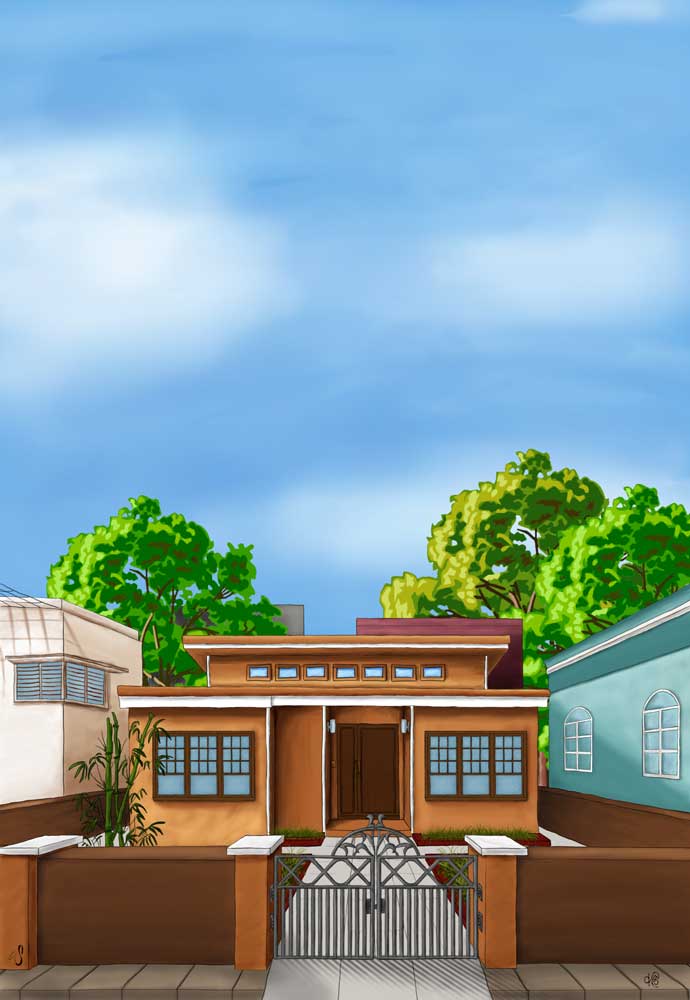
Final shot
Final shot – The pen tablet came close to becoming my best friend

The Aftermath:

The consequences of the marathon effort on my health were explained in detail in my previous post.

After nearly six months, we blew the dust from the project to fix some of the major glitches. During the rendering, our ghost showed up in a few frames, where we did not put it, and disappeared from some other frames. What can I say… It was being true to its nature.

The Perfect Monster:

The debate surrounding the definition of what constitutes piracy sparked a debate around our house, and divided the family. Several issues popped up during the planning and animation stage, which put some wonderful friendships in jeopardy. Our ghost didn’t help either. It distorted in unusual ways while animating, which caused a lot of head ache. It skipped frames on rendering, and appeared in places where it clearly didn’t exist. It ensured that we spent months, cooked up inside a sun-proofed room. While we brought packed lunch with us, it did not prevent us from eating out. Our health took a severe beating.

It seemed, that we had created the perfect monster.

The Other Side:

While we were blaming our creation for our troubles, the spirit was subtly doing its part to put us in our place! Working on the project, was a huge learning curve. We bit way more than we could chew, and that made us push our limits. We learnt the importance of pre-production, the importance of paper-work, the limitations of our skills, tricks to overcome it, the long road that lay ahead of us before we could even think about calling ourselves animators, how to work in a team (even if it was just the two of us), and to believe in ourselves, and our vision. Most importantly, we realised that nothing can ever be more important than our health.

We had to use every trick in the book to reel in the spirit which was running amok. I’m happy to report, that it has been caught and placed inside a container. It is on display as a video on Youtube. Its still not perfect, but considering that there were only the two of us, working on our very first animated clip, and practically the whole world betting against it, I think it turned out fine 🙂

Please visit the blog of my partner-in-crime, guilty of creating the monster!

The Disclaimer:

We admit we used a lot of references from the internet world. We have tried our best to give credit to our sources. Further, this project was not made for any commercial purposes. It was just an idea, which we feel extremely proud to be a part of, and hope you too enjoy it!

Categories
Stories

Patterns On The Floor


As the sun prepares to visit this part of the world, a few of its rays have jumped ahead, trying to take a peak at our front entrance. While most of the city is either asleep, or busy getting ready to take on the day’s work, my mother opens the door and thoroughly cleans the floor with water. She then opens a small box and picks up a pinch of the white powder that it contains.

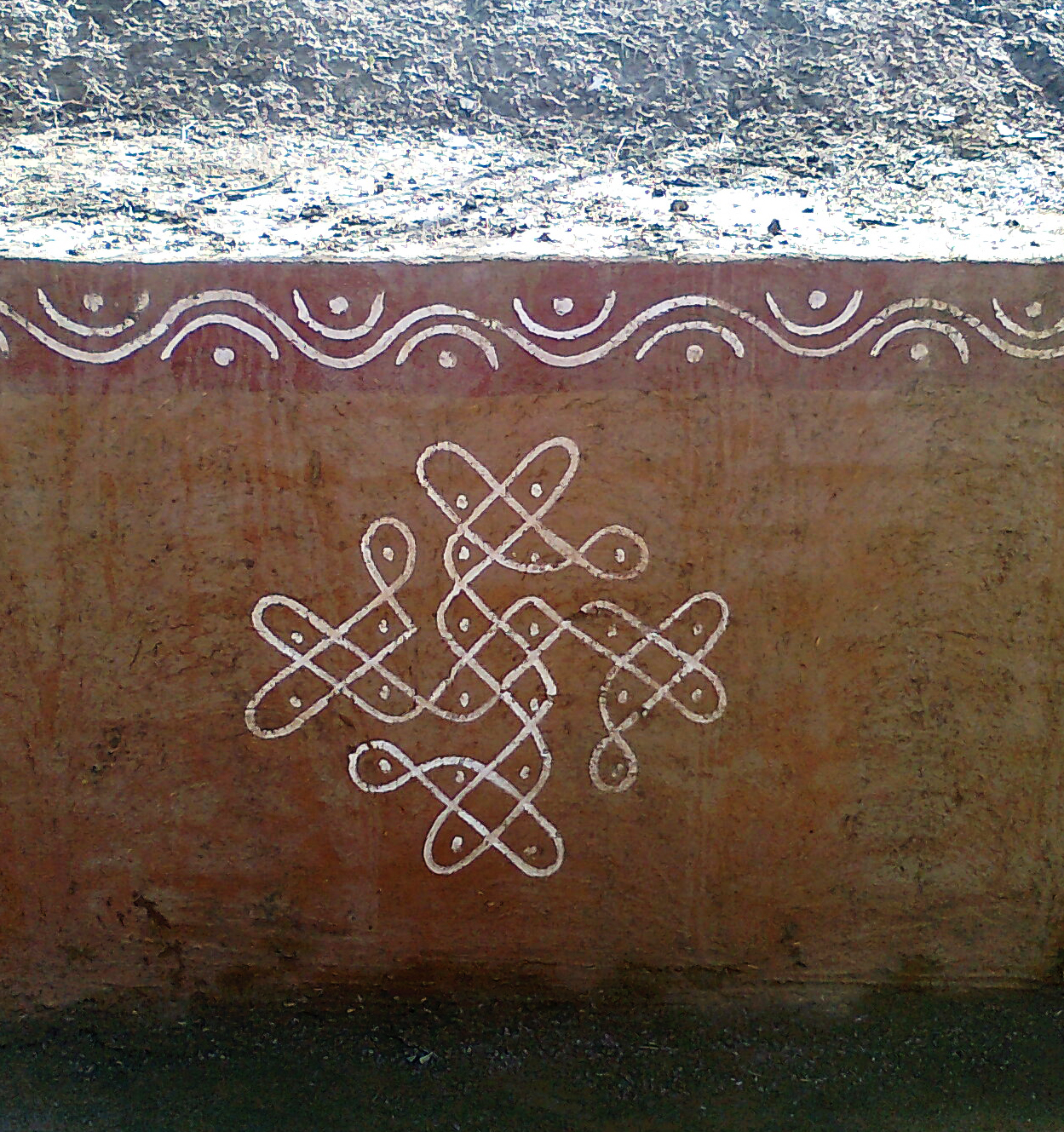
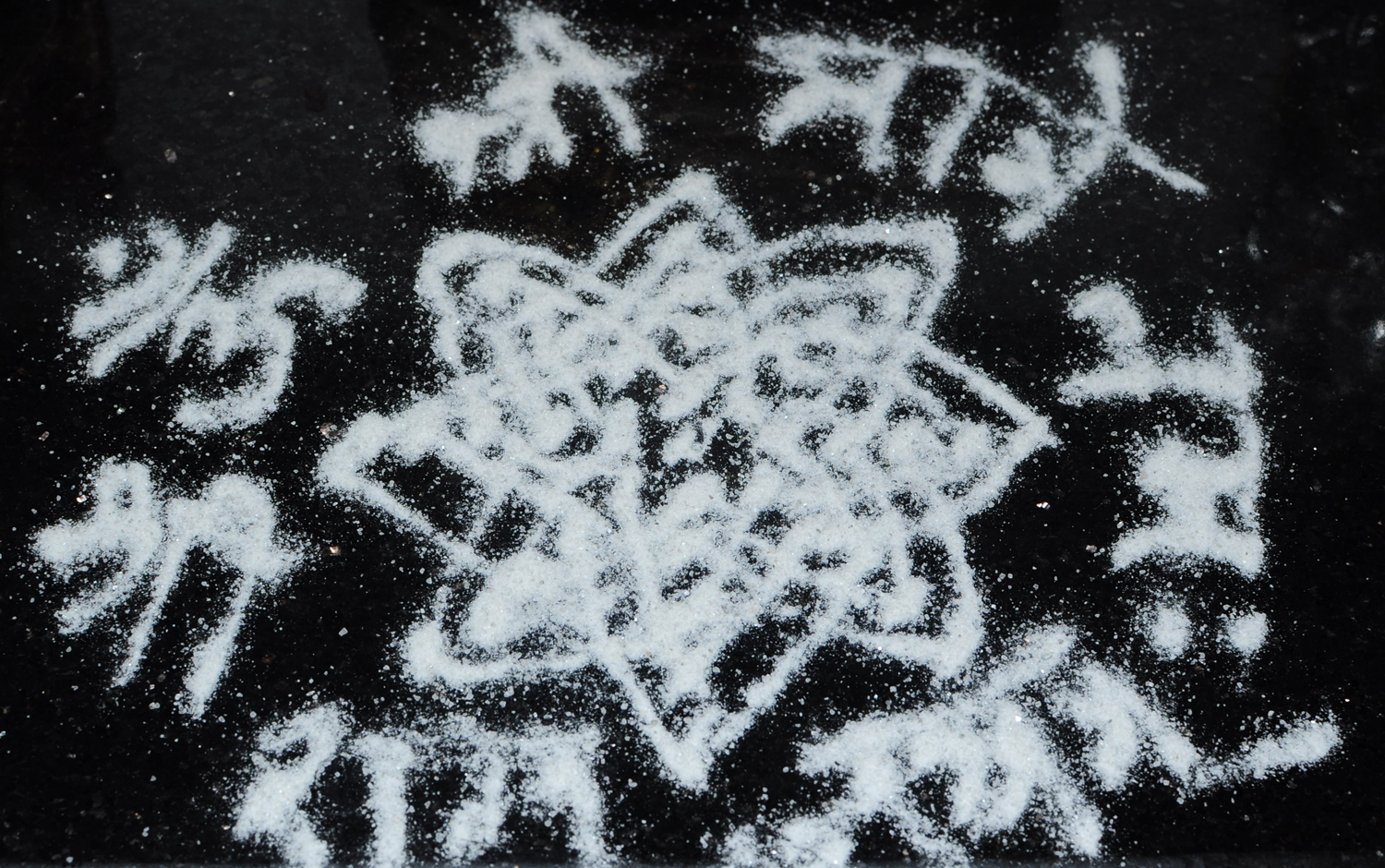
The Hrydayakamalam
The Hrydayakamalam

She rolls the powder between her thumb and index finger and makes a series of dots. They are perfectly arranged in a symmetrical pattern – drawn with pin-point accuracy. She picks up more powder and with a steady hand, draws several even lines – some connecting the dots, others, encircling them.

Ever since I can remember, my mother has performed this fascinating ritual, every single day, without fail.

Traditional dots at the Surajkund crafts fair

Earlier, the only source of obtaining the kolam podi*, was relatives who visited us. Our trips to Chennai would be incomplete without buying the white stone powder, which she used for making the designs. Now the powder is available more readily. Kolams are not common in Delhi. Here, elaborate ‘rangolis‘** are made with colourful powders and flowers, that too only on Diwali, or special occasions. Some other migrants like us make the kolams with a more long lasting wet ‘paint’ made using rice flour. Others use ready-made stickers.

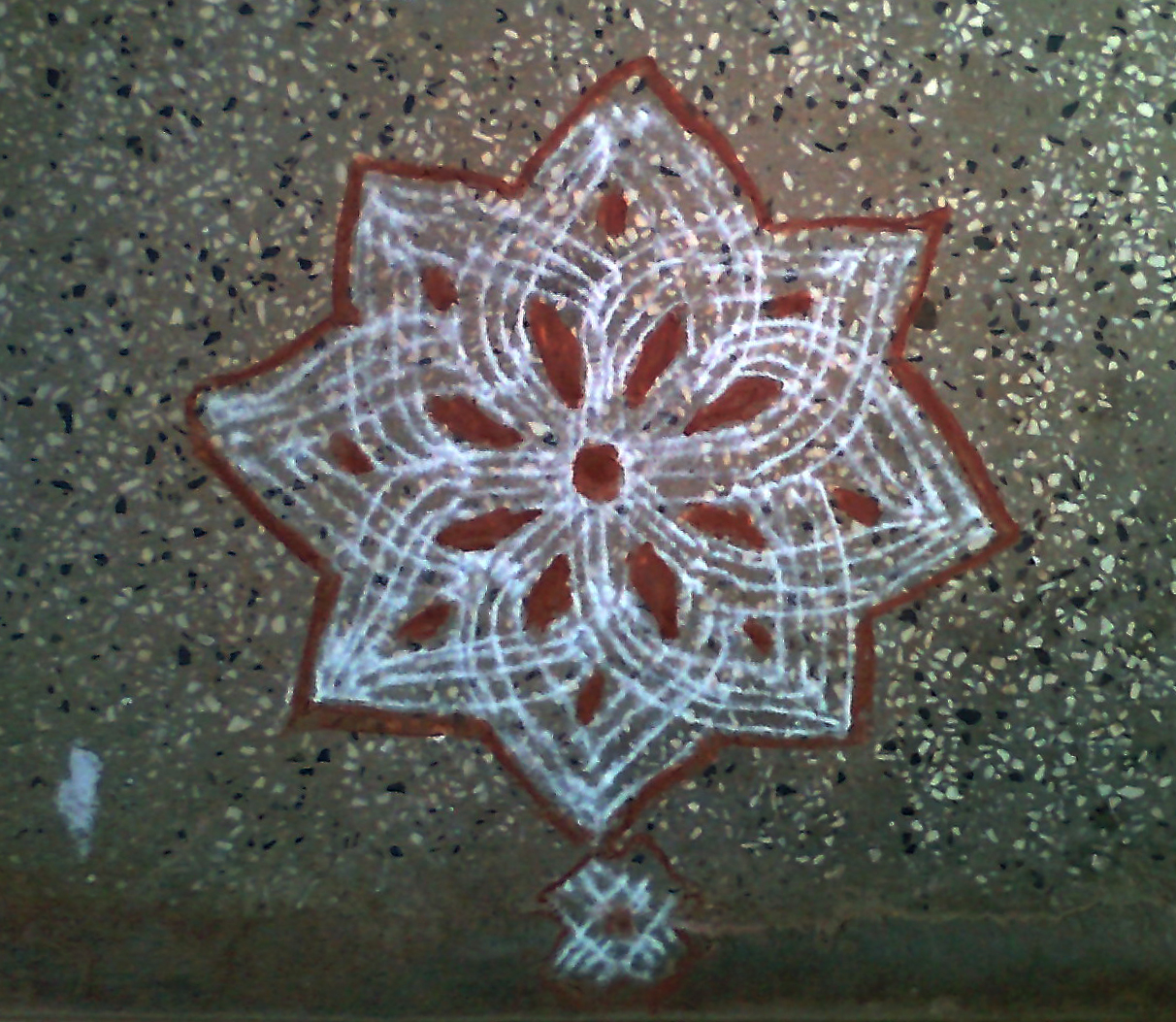
Traditional Kolam made with lines and filled with red stone color
Traditional Kolam made with lines and filled with red stone colour

Visitors often ignore the kolam at the entrance and sometimes step over them. Some mischief makers deliberately destroy them. And on several occasions, the sweeper sweeps them away. It infuriates my mother… “Kolams are swept away only when the family is in mourning… Wiping it away is a sin”, she would shout. But nothing has ever deterred my mother from starting afresh the next morning.

In Chennai, though, kolams are found everywhere – at the entrance of every house, temples, and even public buildings. Friday belongs to Devi, and so, the kolams are extra special on these days. On festive occasions, the red stone comes out of the shelf. The stone is dipped in a little water and the kolam is painted with a deep red colour.

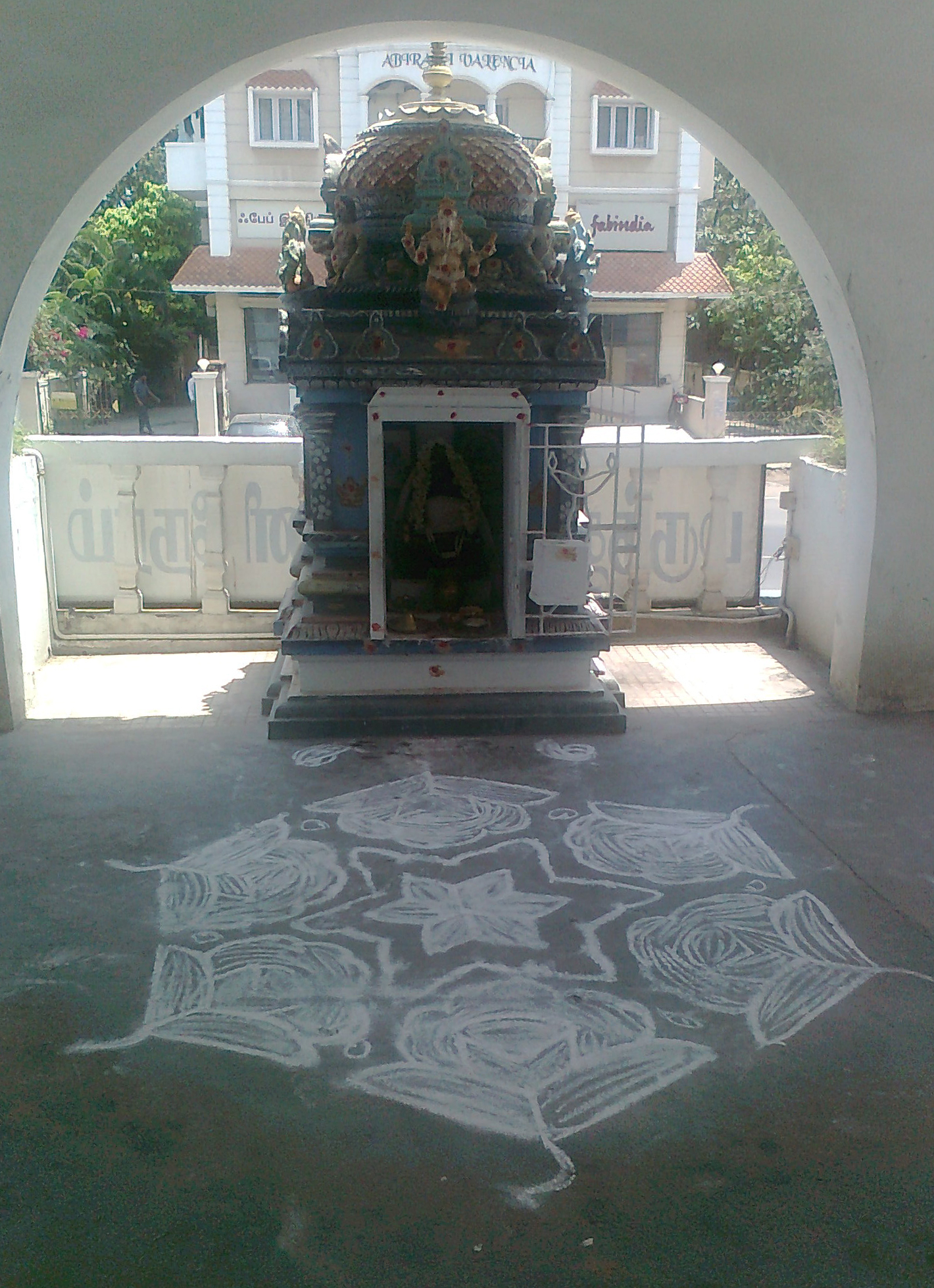
A small temple in a hospital (Chennai)
Kolam in a hospital (Chennai)

Celebrations like marriages present a much larger canvas for the ladies. Rice flour kolams are prepared the night before the auspicious event, and, covering large areas, they are grander than what one can imagine. That they will be hidden beneath the holy flame, does not matter to the artists.

As the years have rolled by, my mother’s kolams have evolved. They are no longer limited to the strict geometrical patterns. Nor are the materials restricted to the traditional ones. The kolams are now more abstract, and created spontaneously. On special occasions, she adds more colour – something that she has adopted from the North Indian rangolis. There are times when she is unable to make it early in the morning, but even today, she does not allow anyone to step out of the house before the kolam is drawn. And we don’t mind – the entire process takes just a few minutes – the years of practice have made it second nature to her.

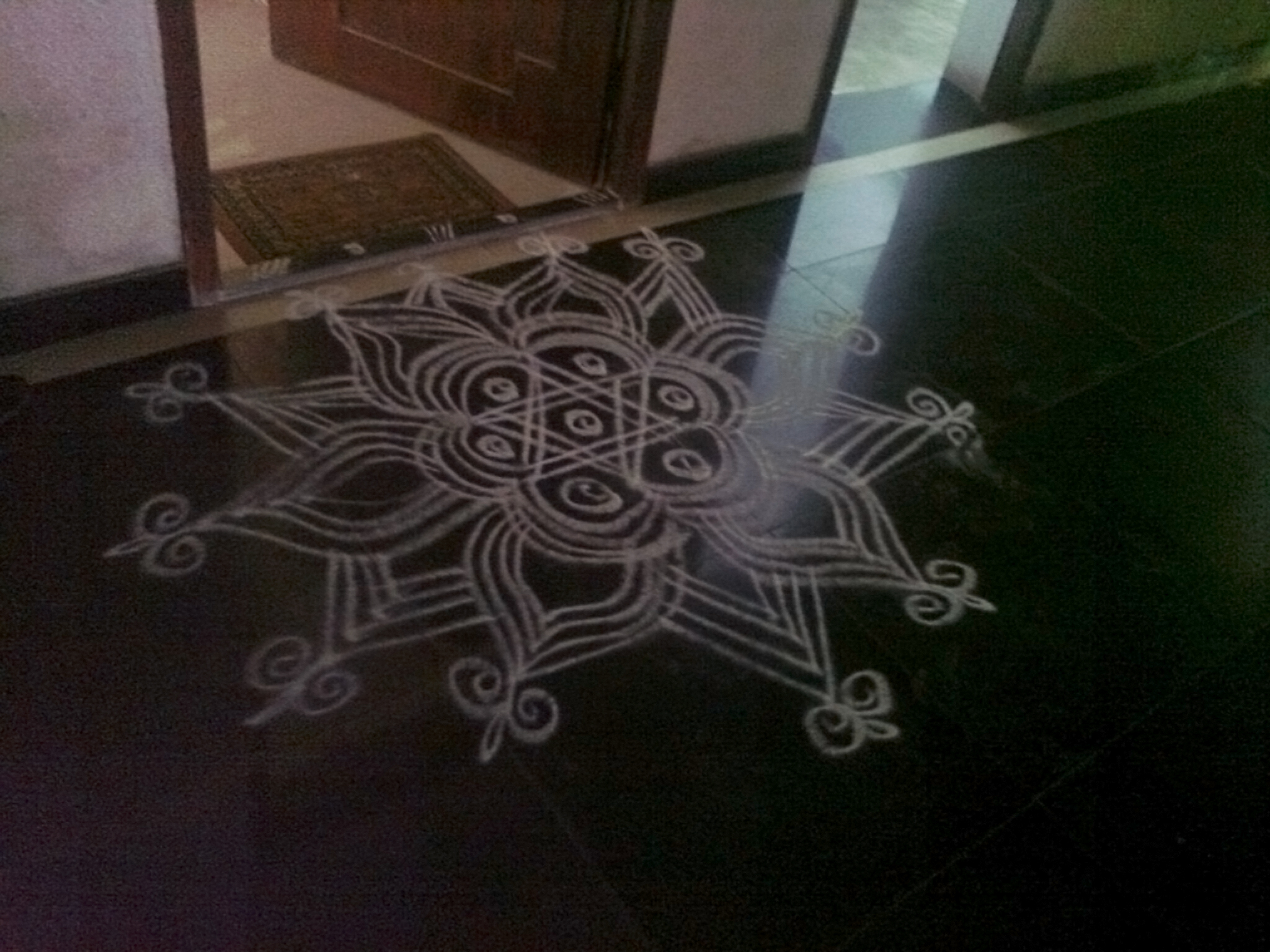
The neighbour's kolam (Chennai)
The neighbour’s kolam (Chennai)

It is this art form, and my mother’s interpretations and designs, that inspired me to create something of my own. Based on the traditional paisley motif – the  ‘aam‘, or the ‘mangai‘***, it is a tribute to the millions of women who practice traditional art forms as part of their daily lives. It is a tribute to the art form that encourages everybody to become an artist.

But above all, it is a tribute to my mother – who expresses her creativity and skill through patterns on the floor every single day, only to sweep it away the next morning.

This slideshow requires JavaScript.

* * *

* Podi – powder
** Rangoli – Hindi term designs made on the floor.
*** aam – Hindi for mango
mangai – Tamil for unripe mango

Categories
Stories

The Journey


Last weekend, I had been invited to attend a cultural programme. It was the Annual Day Celebrations of a social organisation, which provided foster care for street children.

The course of the programme seemed to follow the pattern of the lives of the children taking part in it.

The show began with a group of children singing the anthem of the organisation, an old Hindi classic film song – ‘Aa chal ke tujhe…‘* They seemed nervous as they missed a few beats and struggled with the correct notes. As another group sang, their voices revealed their state of mind – hesitant and unsure.

Young children then came out in their colourful attire, and enlightened the audience about real life examples of women’s entrepreneurship, and staged a play about rural life.

As the evening grew, the atmosphere became more lively. The children in the audience cheered loudly during the award ceremony, as their caretakers, and some older children, were being felicitated.

The convocation ceremony showed how contrasting our lives were. For us, attending school was as integral a part of our lives, as eating and sleeping. But for the children of the home, simply clearing the examinations was a huge milestone. They weren’t as lucky as we were – abandoned by their own parents, left to fend for themselves at a tender age, victims of various types of abuse.

As the older children began their dance performances, their eyes glowing with pride, their movements synchronised, and expressions filled with confidence, it was clear, that they had put their past behind them and were now ready to embrace their new lives.

The event was nothing short of being grand – and I’m glad I was there to witness it.

* * *

*Aa chal ke tujhe, mai leke chalun, ik aise gagan ke tale, jahaan gum bhi na ho, aansu bhi na ho, bas pyaar hi pyaar pale…

Come, I’ll take you to a place so beautiful, where there is no sorrow, no tears, only love…

Categories
Stories

The Taste Of Life


The summer has already set in and the heat is becoming unbearable. If its this hot in April, I fear to even think about May and June.

The past couple of days, have been a little different though.

Today, the wind is blowing hard. The sky is overcast, but there are some rays of light, which have managed to sneak past the clouds to get a glimpse of the world.

In the balcony, the plants are having a ball. For the past few weeks, they’ve gone crazy. Everyday they’ve been dressing up in their best outfits. The Nandiyavattai*, the common purple Flowers*, Hibiscuses, Loudspeaker* Lilies, and even Jasmine flowers, have come out in large numbers after a long, long time.

Today, also happens to be the Tamil New Year. Although there isn’t much we do to celebrate the new year, our mother draws a special kolam** at the entrance of the house, and prepares a special dish.

This dish has all flavours – sweet, salty, sour, bitter, spice, and pungent. The dish represents life, and its ingredients, its different flavours. In life, some moments are sweet, others, bitter. We experience a wide variety of emotions. On the first day of the year, this dish is prepared to remind us, that the future will be filled with varying emotions. We must, not only prepare ourselves to face life, but also learn to enjoy its different flavours.

Puthandu vazthukal (happy new year), and a happy Baisakhi to all.

* * *

Nandiyavattai – The Tamil name of a plant, whose name I did not know – till now. Called ‘Moonbeam’ or ‘Wax Flower’ in English, ‘Chandni’ in Hindi and ‘Tabernaemontana coronaria’ in Science.

The Common purple Flowers – Another plant whose name I found out today. Called ‘Madagascar Periwinkle’ in English,  ‘Sadabahar’ in Hindi and ‘Cantharanthus roseus’ in Science.

Loudspeaker Lilies – They look like a pair of loudspeakers, hence we call them that. The internet world does not seem to recognise that name. So its just plain old lilies.

**Kolam – Patterns drawn with stone powder at the entrance of the house.

Categories
Stories

For the love of the game


April 4, 2012 (sometime at night)

The flu season is here. The newspaper is full of reports about this bug called IPL* that seems to have infected thousands, if not millions of people. A few years ago, I too, had been a victim of this bug. It had crippled me during evenings. I couldn’t move out of the couch and would get into a fit every now and then, which would set my pulse racing.

I am happy to report, that I have since, become immune. Although the front page, back page, and practically every page in between, was covered with ‘news’ about the opening ceremony, I found it easy to ignore them.

In the middle of all these reports, one article, stood out like a sore thumb. It was about an archer who had won several titles for the country in the recent past**. She revealed that during her stay at the academy, she was paid a ‘stipend’ of Rupees 500. Her family is living in poverty. To make ends meet, she sold a silver bow for a song. The saving grace for this lady was that it caught the attention of someone who reported it.

Cricket is a popular sport in the country. Why? I don’t know. Those who make it big even for a short while can live a luxurious life. And so every kid wants to become a cricketer. And every business house wants to sponsor them.

* * *

There is a sports complex nearby. On week days, children attend football coaching sessions there. At the end of the session, they run away from the ground like prisoners escaping from jail. Some of the older kids lean on trees at the edge of the park wearing large headphones, sipping sports drinks. Sometimes, I wonder if they really play because they want to, or because it looks cool.

As the week draws to an end, I am reminded about what’s in store for the next two days.

On week ends, the park has a different story to tell. It becomes a training ground for professional rugby players of the local club. They come early in the morning and spend several hours running and playing.

A certain energy engulfs the ground when they run and pass the ball. The energy is contagious. People, out on their morning walks, seem to walk faster, and the joggers put in extra miles.

The players train for national events, most of them, hoping to make it to the national team. The sport probably does not give them a handsome pay cheque. And it doesn’t get any dedicated columns in newspapers and magazines. But the players still play – because they love the game.

* * *

*IPL – Indian premier league – a deadly mixture of money, politics, business, glamour and cricket.

**Poverty forces former archer to sell bow

Categories
Musings Stories

Letting go


When I was in school, there was a dance teacher who had once asked us to submit an assignment. She had asked us to find out about the various dance forms of India and prepare a scrapbook with pictures and information that we had collected.

I was just going to enter middle school, and this was a time when we did not have such great access to the internet. Broadband was many years away. We did not even have a dial up connection.

What we did have was a very good newspaper which focussed more on culture and art, rather than on gossip and glamour. My aunt pitched in and provided us with glossy brochures of cultural programmes.

My mother and I set about cutting sheets of cartridge paper and folded them to form the book. We punched holes at the joints and tied a shiny brown ribbon into a bow to hold the book. We pasted the photographs from the newspapers and brochures and outlined the pictures with colour.

I had a very bad handwriting at that time. So with colourful felt pens my mother wrote little descriptions of each art form. The pages were numbered, and we even made an index. Every few pages, my mother made little abstract designs to fill in the blank spaces.

Now that I think about it, my mother made the whole thing! And I think she had a great time too.

When it was done, I submitted it to our dance teacher. She was impressed.

After assigning grades to all the students’ assignments, she returned them. She said never in her life had she ever given a student an A1. But she said she loved my assignment, and she wanted to show it to other students. She said she wouldn’t give it back to me.

I was quite upset. I felt it was my assignment. I should keep it with myself. Every week I would ask her for the scrapbook. And she would refuse to give it. She showed it to students of all the classses she took.

A few friends from another class one day came and told me that they had seen my assignment, and that they loved it too. It made me feel proud. But it made me feel even more possessive about it.

Seeing how much I wanted it back, at the end of the year, our dance teacher finally relented to my request and returned it to me.

On the cover page, with a shiny brown glitter pen, she had written A1. I felt very happy.

But the happiness didn’t last long. After a few months, I began feeling guilty. That scrapbook was lying idle in the house. No one would see it. My mother told me I should have let it remain in the school. She even suggested that I return it to her. She said after a few years, it will end up going to the kabaadiwala *. I didn’t want that. I told her I would keep it with me. But in my heart, I wished I had let it remain with my teacher. I couldn’t bring myself to return it to her. My pride didn’t allow me to.

And so, even to this day, it is lying in my cupboard, with some other memorabilia from school. A reminder of a very important lesson. It is important to let go. Ultimately, time will wither away all attachments.

***

* kabaadiwala : Scrap dealer. Old newspapers, magazines, and sometimes other used household items are sold to scrap dealers who in turn send it to be recycled

Update: I scanned and uploaded the pages of the scrapbook

Categories
Stories

Colours of joy and nostalgia


With this post, I have exhausted my all my reserves! I wrote this piece on the 21th of March in 2008. Since the festival of holi is just a couple of days away, I decided to finally publish this. Wishing you a very happy and safe holi 🙂

It is the 21st of March. Hardly three weeks are left for my exams and I feel like I always feel before any exam. I realise what the goal of my life is… do anything but study. I want to listen to loud music and scream my heart out. Go for long walks and just drown in the sights and sounds of the surroundings.

I was standing and staring at my books wondering how to execute the strategy I had so carefully devised to counter the enemy. The plan was simple really. All I had to do was study as much as possible, take down little notes here and there and then pray to God.

As I was going over this plan, I heard a squeal downstairs. It was followed by more screams of little girls. I looked out of my window. What I saw filled my heart with joy. I recalled some of my own memories of this colourful annual occasion.

Little girls were squealing – partly out of excitement and partly out of fear. They ran in circles while boys came charging with their buckets. The little girls prayed for mercy and then ran home accusing them of attacking from behind and screaming that they would take revenge.

Tomorrow is Holi – the festival of colours. It has been a while since I took part in any of the proceedings. After almost a decade, I had got an invitation to play with my school friends. Due to ill health I turned down the offer to join the get-together.

But as I looked through the clear glass, memories of my childhood flooded me. The festival of Holi has always filled me with fear. Year after year we would go outside, chase down each other and throw buckets of water over each other, try to dodge the water balloons and scream out of sheer excitement. We’d scream on being chased down, jump for joy on a hit, devise devious plans to counter the boys – yes, back then too it invariably was, as is today, a battle between the girls and boys. Kids from all blocks used to patrol the streets, those whom we had never even spoken to would jump out from nowhere and then the warfare would begin!

And then there were the snipers! I remember once I had the privilege of watching an expert in action. We were on the ninth floor. I was perhaps four years old and my brother around nine. I saw him load his water balloons with colourful ammunition and when an innocent civilian walked by, he would drop the bombs. I was instructed to hide as soon as the balloons were released. I prayed that I be allowed to know whether it was a hit or a miss. But the orders were clear. My brother said we’d know if it were a hit. And true to his prediction, there were screams downstairs! Success!

There is something about this festival that puts a smile on your face no matter what you do, how old you are, whether you are out there fighting, or just looking out of the window.

Now I sit here and wonder how to get back to reality. Something is missing. Yes. I know what it is. I can now study. All that was required was some loud music.

* * *
I couldn’t resist the temptation to use colours 🙂

Categories
Stories

Carrot Cake and Classical Concert


I had written this on the 19th, but I didn’t feel like publishing it. A little encouragement made me publish it now. So it’s a belated happy birthday to pati and me 🙂

It would have been just another ordinary Sunday, had athai *, (my aunt) not decided to pay us a visit without notice.

It’s always a pleasure to welcome family members, and indeed any one else for that matter. Every time we have visitors, there is such variety of conversation. There are times I wish I had secretly recorded everything that was said, every expression that was made. It would provide plenty of fodder for a blog post!

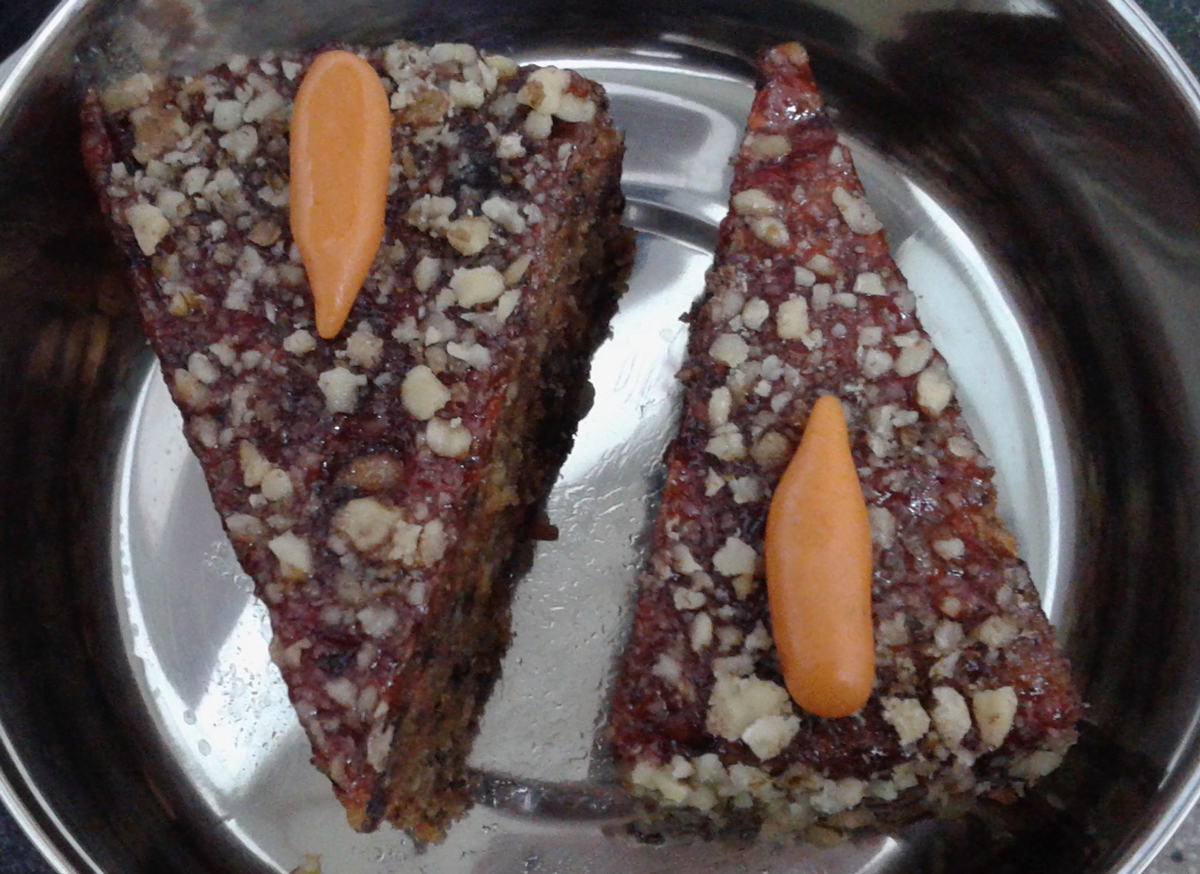
Athai brought with her, carrot cake from a famous bakery, which happened to be en route. While it is customary to bring something in hand, carrot cake was quite unusual. I had never eaten carrot cake before, and was even apprehensive about it, but nevertheless, it looked inviting. She also brought a present for me (she always likes to shower me with gifts :)), and lots’ of stories of her recent travels.

Over lunch, she told us about the music festival that she visited. Called the Thyagaraja Aradhana, it is held every year around January and February. Saint Thyagaraja is one of the three great composers of classical music in south India. He led a very simple life and travelled to temples singing devotional songs.

Athai told us that the music festival was organised on the banks of the river Kaveri in a village called Thiruvaiyaru. There were no chairs and everyone sat on the ground. To maintain the sanctity of the place, people removed their footwear. The musicians arranged for their own travel and accommodation. No one is ever paid to perform. She told us that anyone with reasonable skills could go and perform there, and for serious musicians, singing at the festival was like a pilgrimage.

Since music is an integral part of life in Tamil Nadu, people are assumed to have atleast some knowledge of classical music. Everone is given a copy of the Saint’s most famous compositions called ‘Pancharatna Krithi‘ **. And so, along with fifteen thousand people, on the banks of the river, athai sang the kritis.

Athai told us that during the festival, the doors of all the villagers were open to everyone. Anyone could enter a house and would be served a hot lunch, complete with vadai and payasam ***, which are normally prepared only on festivals and special occasions.

She said it was a wonderful experience, and I couldn’t help envying her. I wished I too knew how to sing the compositions, and that I could one day go there myself and sing in unison with so many people, especially because the village lies in the district where my ancestors lived.

Our conversation then moved towards the food that we were enjoying and how it was my pati’s favourite dish. We then began sharing some lovely memories of her. And then it struck me… It was the 19th of February – Pati’s birthday. The mood at the dining table changed. Here we were, eating a dish that pati loved, and there was delicious cake waiting to be devoured!

The extraordinary Sunday, became even more special.


* athai – father’s sister

** pancharatna kriti is a collection of five musical compositions
pancha – five ;
ratna – gems ;
kriti – composition

*** vadai – a salty fried snack / side dish / appetizer / breakfast
payasam – a sweet dish made with milk (a.k.a kheer)

Categories
Stories

Bonsai


The characters and events of this story are only partly true. Many details have been lost due to my hazy memory, and some have been added to suit myself! Hope you enjoy.

A few years ago, my grandparents (mother’s parents) had hired the services of a man named Davis.

Every year, when we visited Chennai, we would see him at least once. He lived nearby, and would come whenever the services of a driver was needed.

Most of the time, I was too lost in my own world to consider talking to him. His lean figure, silver hair, and wrinkled face, combined with my rather poor judgement of age, suggested he was at least sixty years of age, if not more. That was all I knew about him.

He would often talk, and sometimes argue, with my grandmother about gardening. It was something that both of them were very fond of.

During one of our annual visits, he promised to gift us a plant. And true to his word, on the day we were to leave, he handed over a beautiful bonsai to me.

It was a shallow pot, and the top soil had been covered with smooth white pebbles. One look at the plant, and the way it was presented, showed just how much he cared for it.

While everyone was busy packing, he found a curious listener in me. He explained to me in detail the procedure of growing a bonsai. It had taken him fifteen years to craft the bonsai that was now in my palms. Perhaps he saw something in my expression, and gave me instructions on how to maintain it.

He told me to carefully uproot the plant periodically and trim away the excess roots. He told me to cut away the extra branches. He said that to make the trunk grow thicker, it should not be allowed to grow taller. I told him that I would keep that in mind. It sounded quite scary. I was sure if I tried it, I would surely kill it.

The plant looked beautiful, and the fact that it had taken so many years of hard work, made me feel proud to hold it.

Mr Davis gave me one more piece of advice. He told me, to always keep it in the sun. I told him that the summers are harsh, it would die. He repeated himself, in a more peruasive tone, ” Let it face the harshest sun, the most severe monsoon, but never ever keep it in the shade. Let it face the elements”.

Once we reached home we placed the bonsai along with the rest of the plants. It looked like the only graceful one amongst a bunch of wild hooligans.

Many months passed, and its branches began growing. I asked my father if we should cut it. He said, “Do it yourself if you are so sure”.

I trembled.

On the one hand, I felt sad for the plant. How it must have yearned to grow. What hardships it went through for our pleasure. It was barbaric to admire something that involved such cruelty.

On the other hand, I remembered what Mr Davis had told me. He had spent so many years doing what I couldn’t dare. All of his hard work would now go away. I felt I had let him down.

My grandparents had shifted to another house by the time I visited them again and I haven’t seen Mr Davis since. I do not know where he is. I do not remember his words. But the meaning of his conversation is clear in my head.

The bonsai was never cut. Now its branches have spread far and it has been shifted to a larger pot. I did not follow his instructions and let the bonsai grow wild like the others. But, if you are reading this, Mr Davis, I did follow one advice. I never let it be in the shade. Even as some plants were kept inside to protect them from the harsh climate, I let it face the elements.

Categories
Musings Stories

Rebellion


As the year draws to an end, most people have been trying to summarize the events of the year gone by. Arguably, revolts and revolutions have been the most significant part of the year. A common thread connects WikiLeaks, revolts in several African and middle-east countries, the Occupy Wall Street Movement, and closer home, heightening protests against corruption. Perhaps Mother Earth too is getting frustrated after such prolonged abuse. Rebellion, it seems is in every human’s blood.

Keeping in spirit with the theme of the year, here is a piece of frustration shared by several women who travel by public transport in the Capital…

The Delhi Metro is one of many things a resident of the city is proud of. State of the art technology, on-time performance, and (gasp!) cleanliness. So when the first compartment of the train was reserved for ladies, it was another hurrah moment.

With jam-packed trains, the first compartment of the train provided a huge relief for women against a rather unruly and unsafe public. While it provided a sense of security, there was still something disturbing.

Very often, men would enter the compartment and stand at the divider between the first coach and the rest of the train. If a lady wished to enter the first coach, she had to move past a wall of men. It was virtually impossible to get past this human barricade without a huge struggle. Very often, the whole train would be empty, and only the second coach of the train would be over-crowded.

One morning, things got out of control. The ladies’ coach was brimming with men. Women spoke in hushed voices, speaking about the crowd. But no one seemed to object openly. And then a girl screamed. She pleaded and wailed to move past a huge group of people. No one yielded. Some hooligans in the crowd began hooting when a few women made some noise. They refused to move away, even when told to do so.

And then something amazing happened. A couple of women blocked the gate to the entrance of the coach and shouted. ‘This train will not move till the women’s coach has men in it’. The doors of the metro train are programmed to open automatically when there is an obstruction.Taking advantage of this, the ladies held up the train.

Even after this move, men refused to budge, even shamelessly smiling at the ladies. Then a few ladies, getting frustrated began manually pushing men out. Most of the men complained saying there was no space in the train. But a few minutes later, we came to know that they had magically found some space in other parts of the same train!

Soon order was restored and the train was allowed to move. A few ladies, unknown to each other, formed an instant union and coordinated with each other to get rid of the men in the compartment. It was heartening to see such unity among women, who are willing to step up and fight for themselves. No knight in shining armour needed. But how did we get into this mess in the first place?

In a way, we are responsible for it. When men started entering the compartment, no one said anything. Only when it reached a tipping point did something happen. And even then, it was only a handful of women who managed to get the courage to do something about the situation, while the majority just stood watching.

From the very beginning, girls are told to learn to adjust to their surroundings. Sacrifice and selflessness are virtues that are the hallmark of a lady. It is all very well. But then subconsciously, the feeling of inferiority, and subservience is instilled into them. And most often, women themselves propagate such ‘values’. It is most unlady-like to do certain things. There are unwritten, yet deeply entrenched rules regarding the behaviour of a lady. Yet, the behaviour of the other half (the majority, to be more precise) is unchecked.

Women themselves have brought upon this situation. By allowing people to trample over us, we cannot really complain. But it is time we stepped up and stopped being bullied. If a lady is not offered the courtesy and shown the respect she deserves, there is absolutely no reason for her to still act lady-like (read meek and docile).

Gandhiji was an advocate for empowerment of women. During the freedom struggle, men and women fought beside each other. When Ms Indira Gandhi was assasinated, it was looked upon in horror. ‘Stree hatya!’, they said. The worst crime that can ever be committed. How then, did India reach this low? If we look back at the lessons from our historic texts, one cord that is common to all is this: The land where a woman is disrespected, is doomed.