Categories
Musings

Finding Joy in Digital Decluttering


In the very first company I worked for, I had a colleague who was obsessed with a clean inbox. Only things that need immediate attention should remain in the inbox, he explained to me. The rest should either be archived or deleted. He mercilessly deleted emails even as he spoke. I was shocked.

The Hoarder’s Dilemma

In school, our teacher encouraged us to keep newspaper clippings of things that interested us. It was a fun activity, and I retained those notebooks long after I’d completed my schooling. Recently, as I was clearing out an old shelf, I discovered these notebooks, the newspaper clippings now yellow, and some of them quite amusing. I thanked my younger self for keeping them.

Over the years, I’ve kept things for posterity. Some of them are reminders of good times. Like tickets to the Davis Cup match from 2005, and the tennis ball that a player lobbed into the crowd after winning her match during the Commonwealth Games in 2010.

A tennis ball, along with tickets to a Davis Cup match from 2005 and the Commonwealth Games in 2010.

Then there are mundane, but important things—payment receipts, warranty cards, service contracts…

Every once in a while, we review what we keep and what we discard. Such cleaning is necessary in households where space is finite. The old must make way for the new. What was relevant once may now be better dispatched to the kabaadiwaala (scrap dealer) for recycling.

For sentimental folks like us, this sort of cleaning can become challenging. For example, when I discovered a yellowing piece of paper with some handwritten Tamil script, I couldn’t bring myself to discard it—perhaps it had been written by one of my grandparents. That paper magically made me feel connected with them. I gently blew the dust away from the paper and filed it away.

I did manage to locate some things I could throw away, but not before I took pictures of the items I was discarding.
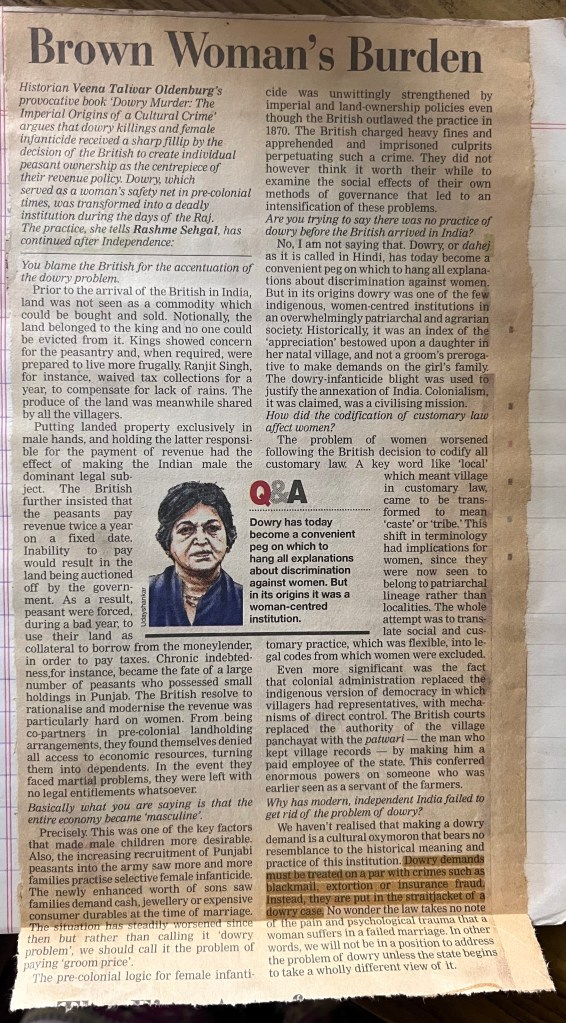
An old newspaper clipping from my school notebook. The article, “Brown Woman’s Burden”, is from The Times of India, dated 30 Jan 2003. If you’re interested, you can read the digital version of this clipping on the TOI website’s archive.

Then: Lost and Found

Back in the day, it was easy to lose things. Photographs, phone numbers, notebooks, drawings, clothes. They could get damaged during relocation, be eaten by insects, or simply be carried away by the wind. We’d feel sad for a while. But then we’d find ways to fill in the void. We could make new memories or connect with mutual friends to catch hold of lost ones. Our minds were as new and fresh as our cupboards.

And then there was the hidden joy of rediscovering items while decluttering.

Now: Never Lost, Never Found

With digital storage, however, things are different. We don’t lose things anymore. Things stay with us forever. And we never go back to look for anything either. Our virtual shelves barely distinguish between the old and the new.

We’re no longer limited to the 36 photographs of a reel. So we take hundreds of them that we otherwise may not have bothered with in another time. Case in point: the picture of the newspaper clipping above. While we occasionally flip past the old physical albums at home, when was the last time any of us looked at our digital photographs from 5 years ago?

Our phone books never get filled, so we don’t migrate to a new one. Thus, we don’t need to weed out irrelevant numbers with the fresh book. Why are there so many people in my contacts list?

We don’t bother with our personal emails. They are far too overwhelming to look into.

We gather virtual items—sometimes consciously, but mostly without paying much attention. They don’t take up physical space in our homes. So our hands aren’t forced into taking action to routinely prune what we own. But they do take up space in some remote server, guzzling electricity to keep our trash alive.

Digital Declutter Mode Activated

Over the past few years, my inbox has been warning me that my space is about to run out. Finally! There is now an incentive to do some digital housekeeping.

Why do I have so much stuff in my inbox? And why should I have to pay to keep all that trash? And so, I began on a slow marathon to actively make space. I recalled how a dozen years ago, my colleague ruthlessly cleaned his work email. And I went to work.

Over the past several months, I’ve been rummaging through my inboxes and taking split-second decisions on what deserves to remain as an archive and what needs to go. I started with the latest emails first. The earlier we take decisions on incoming traffic, the easier it becomes to maintain later on.

Happily, I have now found joy in this activity. Visiting my personal, spam and notification-filled inbox has now become quite a satisfactory pastime. Seeing the number on the notifications badge reduce feels like a game.

Where once, my screentime was dominated by social media algorithms and games, I now spend some swiping left to delete, or discovering interesting reads.

I began with 8000+ unread emails across all my inboxes. Today, I’m looking at less than 500 on the tiny badge on the email app. My ultimate goal is to come down to as few unread emails as possible, deleting them as I finish reading them.

Levelling Up: Discovering A Forgotten Civilisation

Having managed to declutter two lesser-used inboxes, I have now begun exploring the archives to see what else I can clear out. Much like physical decluttering, digging through the archives unearthed curious bits from a bygone era.
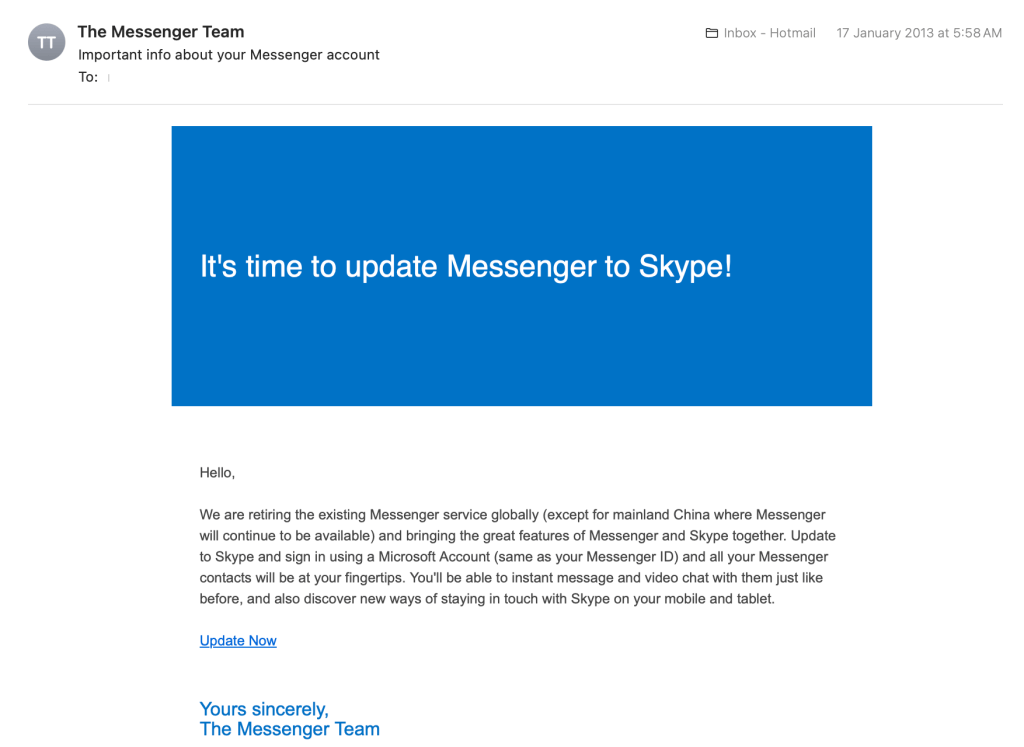
An email notification from Microsoft, encouraging users to switch from Messenger to Skype.

In early 2013, Microsoft sent me an email asking me to upgrade Messenger to Skype! I couldn’t help but smile. A dozen years later, Skype has now been replaced by Teams. It reminded me of the ephemeral nature of the digital world. When digital products can evolve and fade away, why should we hold on to clutter? The verdict on the email: Delete.
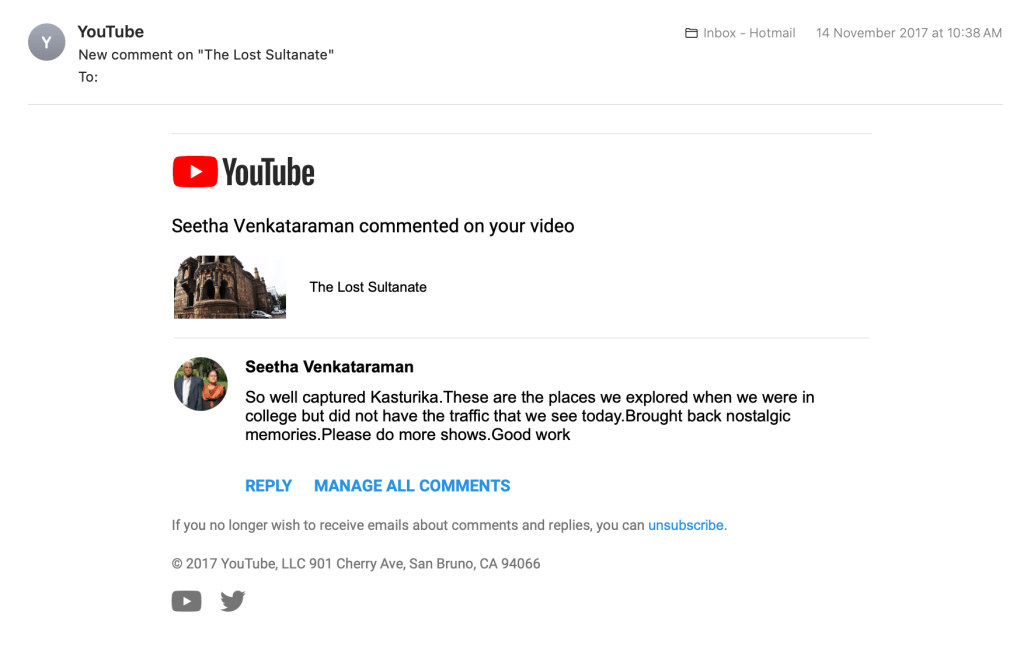
An email notification from YouTube about a new comment.
A comment on YouTube from 2017. The Lost Sultanate was a short documentary I’d made as a student in 2010.

I found a series of emails from YouTube, notifying me about comments on the videos I’d posted. I read and deleted them one by one. Until I stumbled into one from my late aunt. My aunt had been quite enthusiastic about my adventures in digital storytelling, always finding time to read my blog and watch the videos. That comment was a digital remnant of her constant encouragement and a reminder of the void in our lives since her passing. The verdict on this one: Keep.
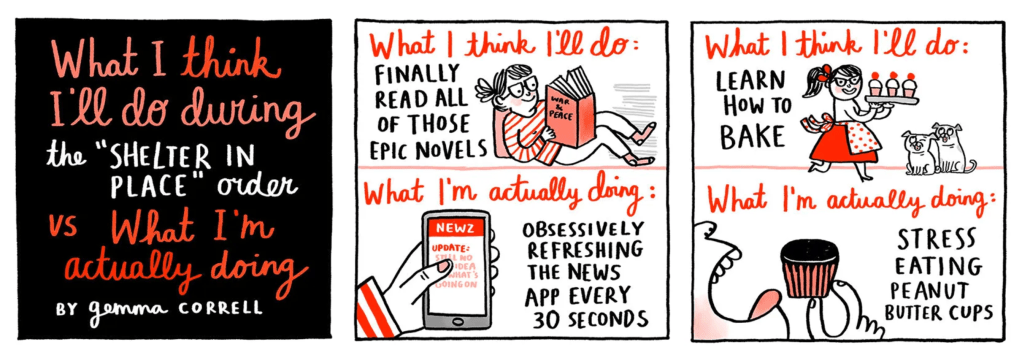
Panel of graphics from a comic strip titled: What I think I'll do during the "Shelter in place" order vs what I'm actually doing. One panel reads: What I think I'll do—Finally read all of those epic novels. What I'm actually doing—Obsessively refreshing the news app every 30 seconds. The second panel reads: What I think I'll do—Learn how to bake. What I'm actually doing—Stress eating peanut butter cups.
A comic strip by Gemma Correll during the initial days of the COVID-19 pandemic. To see the whole panel, visit The Nib’s publication on Medium.

Ever since I began this trip down my archives, I’ve encountered surprises. I rediscovered publications I’d forgotten (like The Nib), and email courses I’d signed up for years ago, but never got around to reading (example: a course from the now non-existent InVision).

My inbox feels like a wonderland again. Every trip feels like an adventure. What other surprises hide inside my archives? I can’t wait to (re)discover.


You can watch the documentary, The Lost Sultanate, on YouTube.

I wrote about the struggles of making the video, The Lost Sultanate in Getting the monkey off my back.
Categories
Musings

One More Thing…


How do you do it?

How do you manage to read all those tweets, post comments on YouTube, react to Instagram stories, finish the long reads on Medium and WordPress and catch up with emails? All while having a day job, socialising with friends, managing a decent workout and being up to date with current affairs and pop-culture.

I know I can’t.

I was a very, very late adopter of social media, primarily because I felt it was meant for lesser mortals, those who indulged in gossip. The narcissist that I am, I didn’t quite care about what other people did around me. I only wanted to write and share my thoughts to as wide an audience as I could.

I sceptically joined Facebook in mid 2013. And it wasn’t till 2017 that I joined Instagram. These occasions were so significant, that I wrote blog posts to confess about these mis-adventures. The only reason I have a Twitter account (I don’t care what they call it now, but I refuse to call it by any other name) is because my employer demanded I create one. Without that coercion, I would probably not have created it in 2014.

Then there’s LinkedIn, Flickr, Pinterest, YouTube, Behance… the list is far, far too long.

Over the years, I have tried to keep up with these services in patches and failed. I wonder how other people do it. And it bothers me that I am so digitally incompetent. I am everywhere, and yet, nowhere. At any given point of time, I can keep up with only one service. Everyone else is active everywhere.

When I think about all the different services that aim to ‘connect’ us in the world, all I see is this relentless barrage of information, and how miserable it makes me feel.

One More Thing

In 2019, I tried an experiment. I called it, the “Reverse Social Media.” I wanted to stop using social media, and instead focus on creating a community. I’d send out emails to people so that we could start one-on-one conversations. Needless to say, that experiment failed. I had ended up creating yet another digital footprint that I couldn’t manage. If you’re interested, you can find the archives of this experiment on Design Tuesdays.

In these first two decades of the twenty-first century, a certain Mr. Jobs made a catchphrase his own. “One more thing…” he’d say, at the end of his keynote, and announce something new. Steve Jobs’ characteristic style of delivering keynotes even has a name: Stevenote!

A side note: To me, those words will always belong to Uncle from Jackie Chan Adventures. The series aired during a time when information wasn’t as free-flowing as it is today, and when tech was only for geeks. What use was a business presentation to a teenager? So please allow me to indulge myself with TV memories from the early 2000s.

Source: Imgur

With the newsletters, I had created Uncle’s one more thing. More recently, that one more thing is Threads, from Meta. Sure, I’ve ‘created’ the ghost account, but it holds no meaning for me. To me, it’s just another username that’s gathering virtual dust.

The Digital Cobwebs

Remember the old days when we had hard disks and had backups of folders and backups of backups? Ah, those were simpler times. Those hard disks are gathering dust in a shelf somewhere.

Our digital clutter, on the other hand, is invisible, but several times worse. This digital clutter that we’ve chosen to create haunts me. Over the past few years, I’ve lost very close loved ones. But their profiles show up in recommendation feeds on social media. I don’t want to tell these behemoth companies that those are my dead relatives. The large tech companies have no business knowing this private information. But, at the same time, I don’t want their click-hungry algorithms to be so insensitive.

In my curiosity to explore the internet, I wonder how far my own footprint has landed. Who has my email address? Which database has a username attached to me?

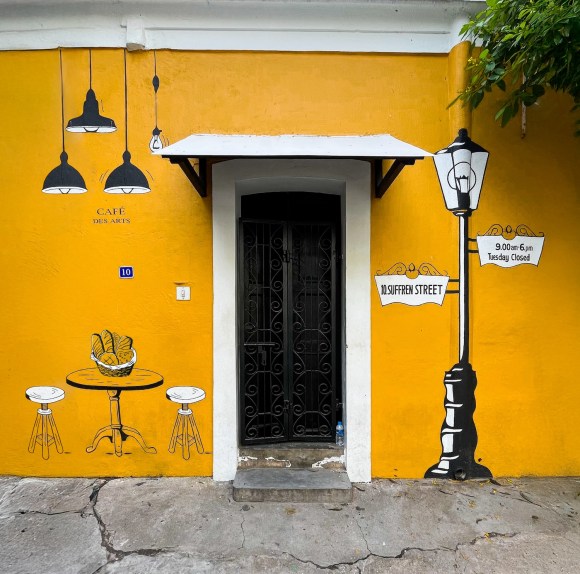
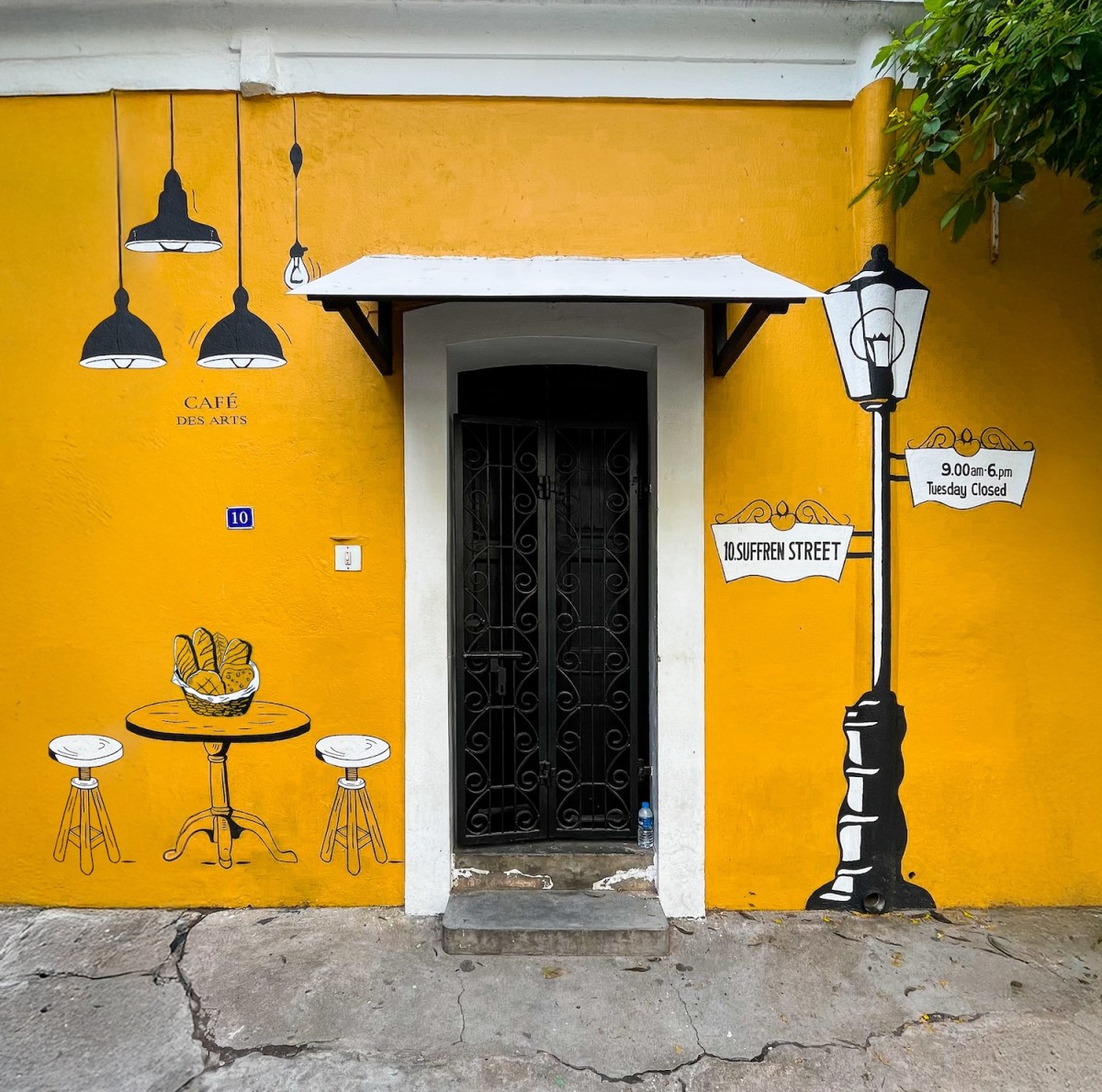
Entrance to a cafe with yellow-coloured walls and black and white murals showing a coffee table and bar stools.
In our quest to share virtual memories, we’ve built physical spaces to be Instagrammable. How many people would have half-squatted to “sit” on the painted chairs on this pretty yellow wall? Guilty as charged. Location: Puducherry, India

Worse still are the chains I’ve tied around myself. Those accounts that I do know about, I find it hard to let go. It was easy to delete my Facebook (now Meta) account over three years ago. But Twitter is giving me a hard time. Not because I use it. I don’t. But because once I delete the account, my username will be available for use by someone else. And I shudder to think someone else will take on my identity. So much for me championing reuse and recycle.

There’s so much digital waste we’ve generated. All that waste is sitting on some server. Consuming electricity. Generating heat. And consuming more electricity to cool down. Every little piece of digital information I leave unattended reeks of a hypocritical sustainability advocate.

The Way Forward

I don’t have an easy answer to this mess. In this virtual chaos we’ve created, it’s a daily struggle to decide what to keep and what to discard. Which memories to hold on to, and which to let go.

A couple of months ago, out of sheer frustration, I embarked on a virtual housekeeping project. The task looked insurmountable, but I had to begin somewhere.

So, I looked for low-hanging fruits. I located those physical hard disks. I thought to myself, if I haven’t needed it in the last ten years, I won’t need it again. First, I transferred them to my Dropbox folder, so that everything was in one place, and then I began reviewing them.

So many duplicate photographs. Old portfolio files that I was once proud of, but now find ghastly. And those legacy file formats that I can neither open, nor have had the need to edit. I began hitting the delete key.

As Dropbox later informed me, I had deleted about 15000 files in the span of a week. It was a statistic I didn’t know I needed to hear. And it was so cathartic.

This was just the tip of the iceberg. There are several more files and photographs to go through. I’ve hit pause on that activity because, as I’ve now learned, I can’t focus on one thing constantly. Plus, frustration and adrenaline can fuel such binge-deleting sprees for only so long. But I hope to pick it up in patches.

My current project is to clear up the cobwebs of my blog drafts. Several of my last few posts have indeed been 3 – 4 year old drafts (this one included!) I’m still only 10% in, but seeing some virtual dust being cleaned up is helping me mentally.

I don’t know how far I’ll get. But I’m going to try. It’s a marathon, not a sprint. And the only way to tackle it is to take it one thing at a time.


On an unrelated note, how would you like me to narrate these stories via a podcast?