
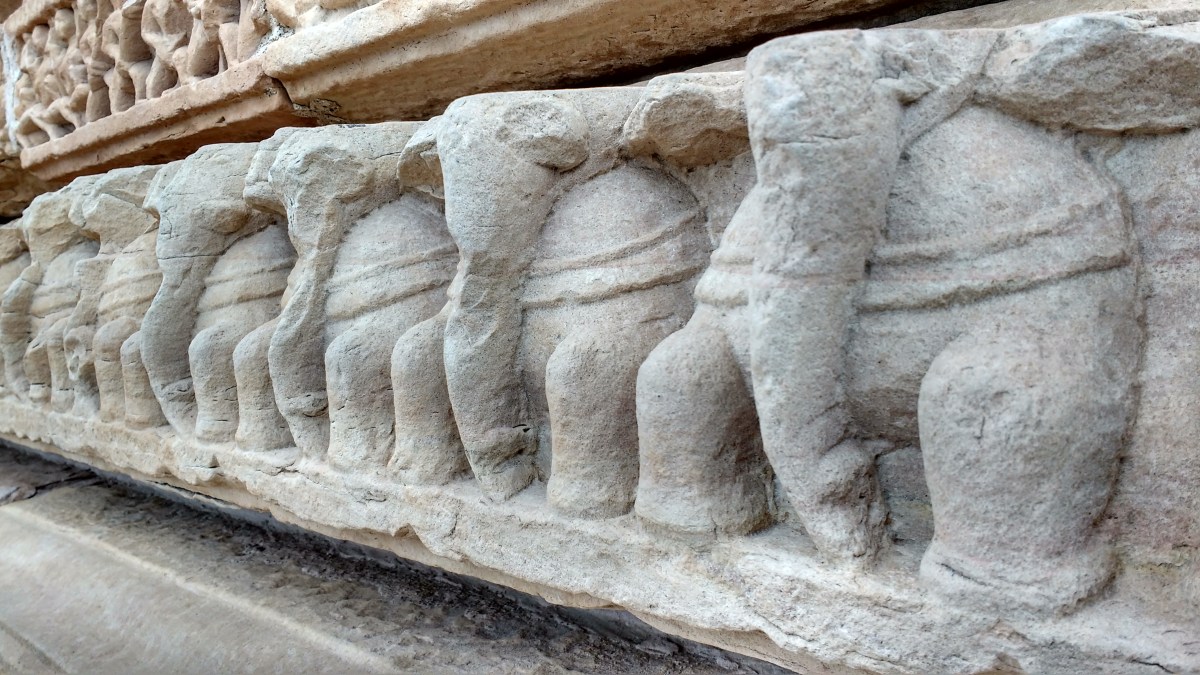
The elaborate sculptures adorning the temples in the Gwalior Fort are too many to count and too beautiful to describe. Many have been weathered by the strong wind. The many kings who fought, captured, and lost the Fort seem to have left the temples untouched.
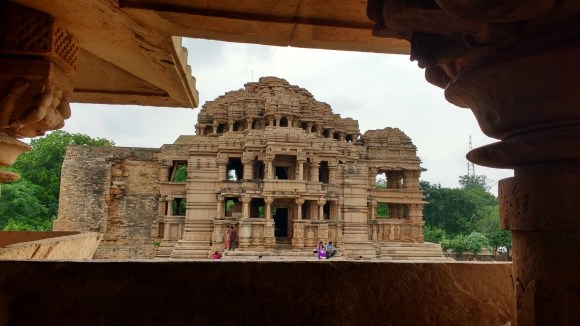
That they have very strange names takes nothing away from their beauty. The “saas” is big, bod and stands proudly, imposing her might on anyone who dares think contrary to her wishes.
The “bahu” stands at a distance, more towards the edge of a cliff and doesn’t care for attention.
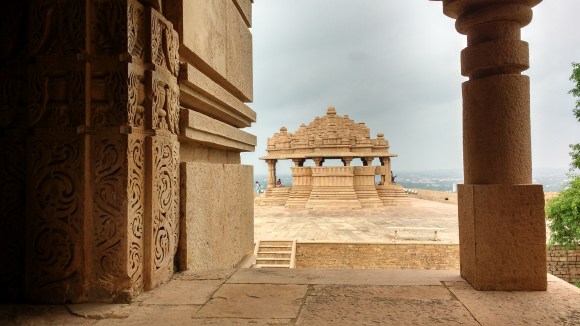
Inside the large temple, one gets the feeling of being engulfed by Sahasrabahu, the one with a thousand hands—hands that are dancing, playing music, worshipping, meditating.
Who was the guardian deity of these temples? No one can tell for sure. There are conflicting tales about Shiva and Vishnu. Some claim that these are Jain temples.
Folklore says that the ruling king dedicated the large central structure to his mother, an ardent devotee of Lord Vishnu. The smaller temple was to pacify the king’s wife—a Shaivite.
Tourists take pictures, climb over the walls, and walk precariously along the beams that form the triangles overhead. But few venture close to the sanctum sanctorum.
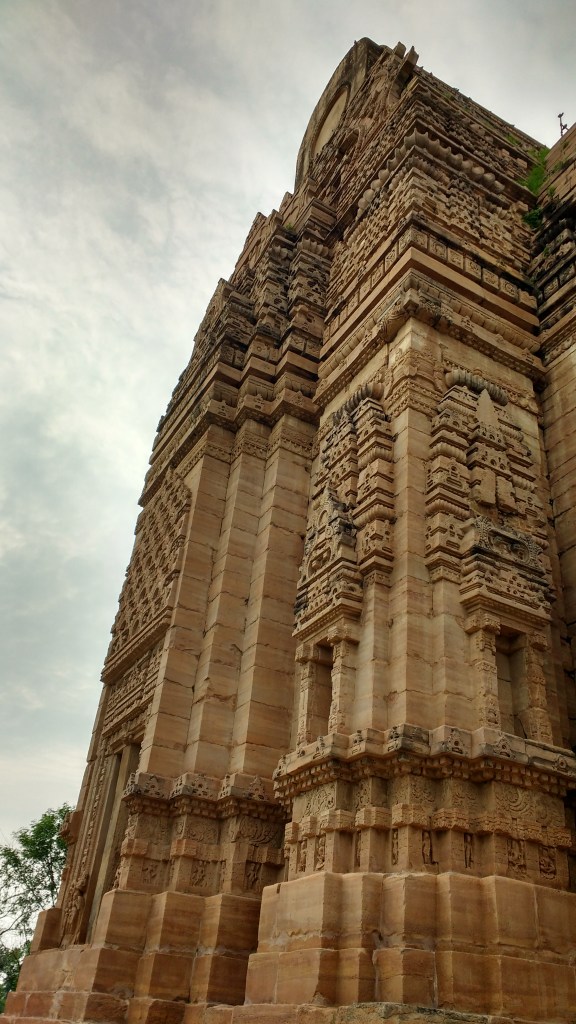
A short distance away, the Teli ka Mandir stands tall. If the building could speak, I might have said, “I am Dravidian.” As I was imagining the walls speaking to me, a man hurried out from inside the temple, cursing under his breath. He looked livid and frantically looked around so he could vent his rage. When he found someone who looked like a caretaker, he let him have it.
“This is a temple! Why are people wearing shoes and trampling all over? Have you stepped inside? It reeks of bat filth.”
“Such a fine architectural monument and you are letting it go to waste. Is this the devotion this was built for?”
The man’s lament fell on deaf ears. The caretaker gave an indifferent glance. “It is no longer in use, sir,” he said, and walked away.
The sanctum sanctorum of all three magnificent temples were dark portals. Beauty graced all the walls outside and inside the halls leading to the small room meant to be the throne of the presiding deity.
If the walls could speak, they might have been as indifferent to our presence as the caretaker was to their plight. With their structure reduced to architectural candy, and the real purpose long given for bats to live in, there was no longer anything left to say.
Still salvaging old work from the archives, I discovered this story’s handwritten draft from May 2017. This too, is a part of the ebook The Speaking Rock. If the pictures are grainy, it’s because they’re from a phone camera from 2016.
I was both proud and awestruck by my phone camera’s prowess back then. It pales in comparison to what my phone can do now. And digital technology today still doesn’t match up to film camera clarity. But grainy footage notwithstanding, it reminds me of some wonderful memories we made almost nine years ago. Isn’t that what pictures are for?

 Musings of an eccentric mind